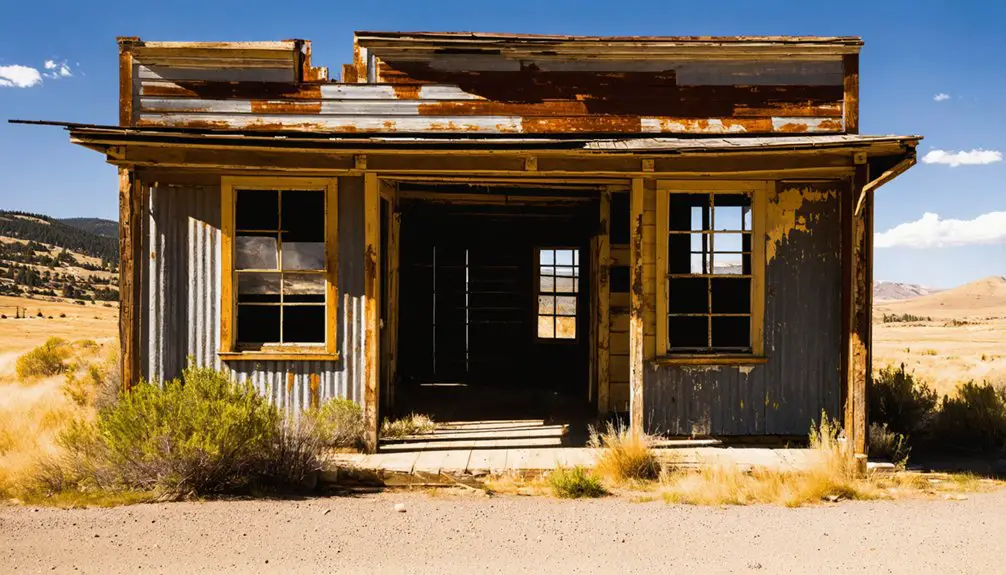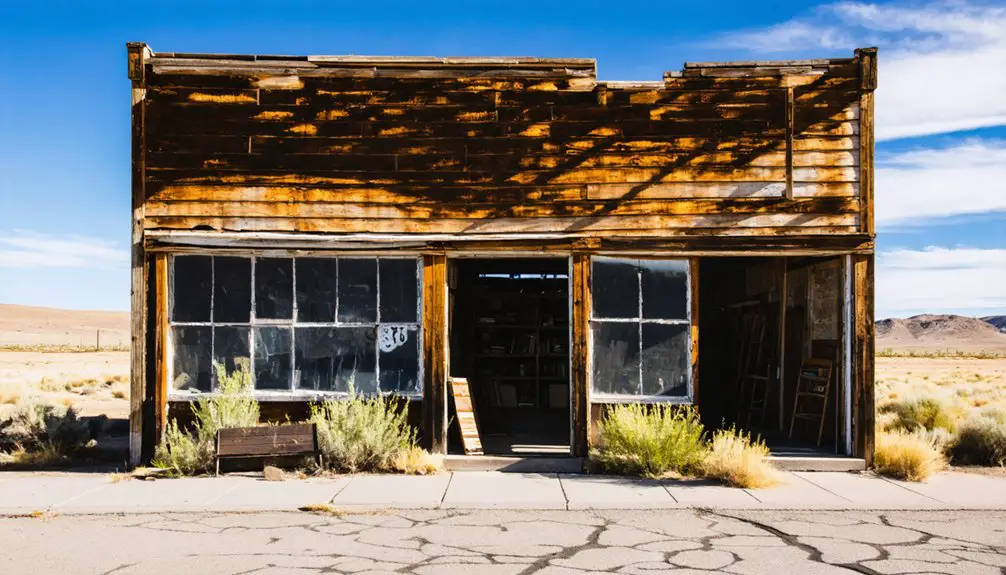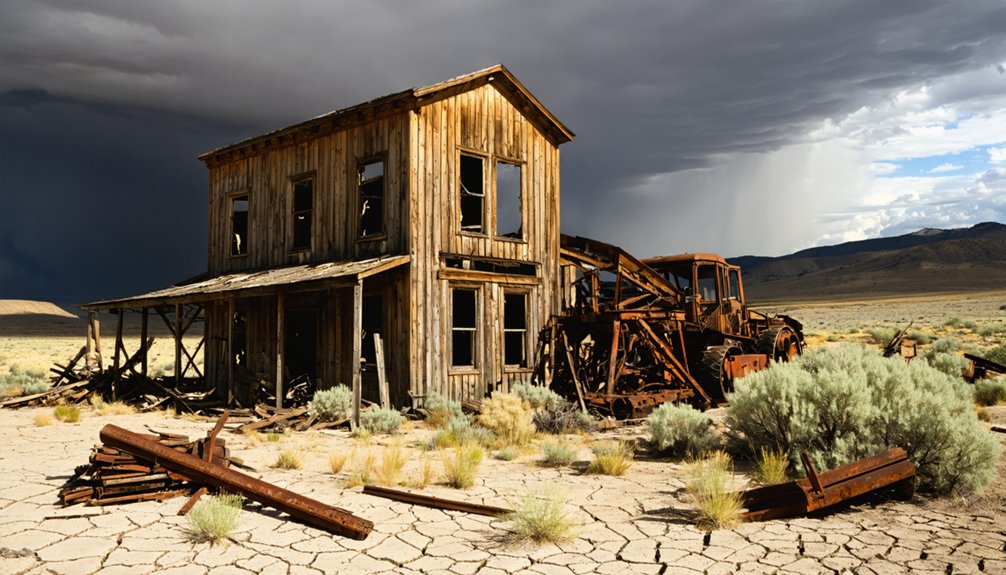
Oregon’s 200-plus mining ghost towns are scattered remnants of gold rushes, timber booms, and economic collapses that once transformed remote valleys overnight. You’ll find weathered structures across Eastern and Southern Oregon, from Sumpter’s preserved gold rush relics to Golden’s four original buildings, now a free State Heritage Site. These towns rose fast and fell faster when ore ran dry and supply routes failed. There’s far more to uncover about each town’s unique story.
Key Takeaways
- Oregon has over 200 documented ghost towns, many born from 19th-century gold rush mining camps that collapsed after resources were depleted.
- Notable mining ghost towns include Sumpter, Cornucopia, Bourne, Granite, and Golden, each reflecting the boom-and-bust cycle of the era.
- Golden, established in the 1890s, is a free State Heritage Site with four original surviving structures, including a church and post office.
- Most ghost towns are located in Eastern and Southern Oregon, accessible via unpaved backcountry roads requiring maps and trip preparation.
- Visiting during warmer months is recommended, as seasonal conditions significantly affect road accessibility and overall exploration experience.
Why Oregon Has More Than 200 Mining Ghost Towns
Oregon’s frontier history left behind a striking legacy: over 200 documented ghost towns scattered across the state, with historian and professor Stephen Arndt counting as many as 256. These numbers aren’t accidental. They reflect the raw ambition of 19th-century pioneers who carved communities out of wilderness, chasing gold, timber, and opportunity.
You can trace this pattern directly to frontier life itself. Towns formed fast around mining camps, mills, and trade posts, then collapsed just as quickly when resources dried up.
The mining heritage embedded in Oregon’s landscape tells a story of boom-and-bust cycles that defined an era. When the ore ran out or lumber camps folded, residents moved on, leaving structures, streets, and memories frozen in place across the state’s rugged terrain.
The Boom-and-Bust Cycle That Built Oregon’s Ghost Towns
When you trace Oregon’s mining history, you’ll find a pattern that repeats itself across the state: gold discovery triggers a frenzy, transforming remote valleys into bustling boomtowns almost overnight.
Railroads follow, industry expands, and communities take root—only to collapse once the ore runs out or operating costs make continued mining impossible.
You can see this cycle written into the landscape itself, from the weathered structures of Bourne to the frozen streets of Sumpter, each town a reminder of how quickly economic fortune both builds and abandons a place.
Mining Frenzy Transforms Towns
The discovery of gold in the Pacific Northwest sparked a frenzy that transformed quiet valleys into roaring boomtowns almost overnight.
You’d witness entire communities rising from raw wilderness within months, driven by ambition and necessity. Pioneer life demanded resilience — settlers built homes, stores, churches, and post offices while simultaneously extracting wealth from the earth beneath them.
Mining innovations accelerated this transformation, allowing prospectors to process ore faster and more efficiently, drawing even greater populations westward.
Railroads followed the mines, connecting isolated camps to broader markets and cementing regional economies. Towns like Sumpter and Golden flourished under this momentum, briefly holding genuine cultural and commercial importance.
Yet these same forces that built communities could dismantle them just as swiftly once the ore ran dry.
Economic Shifts Cause Collapse
Boom-and-bust cycles defined Oregon’s mining towns with brutal efficiency, and once the ore ran dry, economic collapse followed swiftly.
Economic downturns didn’t creep in slowly — they struck hard, leaving communities hollow overnight. Mining sustainability proved impossible when profits vanished and operating costs soared.
Four key forces drove these towns into abandonment:
- Depleted ore reserves made continued extraction financially impossible.
- Rising operating costs outpaced diminishing returns from exhausted mines.
- Failed access routes isolated communities from essential supply chains.
- Shifting regional economies eliminated industrial purposes supporting local populations.
You can still see these consequences etched into weathered structures across Eastern and Southern Oregon.
Each collapsed shaft and abandoned building tells you exactly what happens when extraction economies outlive their resources.
The Most Famous Mining Ghost Towns in Oregon
Oregon’s mining history has left behind some truly fascinating ghost towns, each with its own story of fleeting prosperity and eventual abandonment.
You’ll find ghost town legends woven deeply into places like Golden, a 1890s settlement near Coyote Creek that housed 150 residents, two churches, and a post office before its mine tapped out within 20 years.
Sumpter rose prominently during the gold rush, capturing mining camp culture at its most rugged.
Cornucopia, platted in 1886, thrived until its abandonment in 1942.
Bourne’s weathered structures echo miners’ untold stories, while Granite retains well-preserved relics reflecting 19th-century economic ambition.
These towns remind you that Oregon’s backcountry holds remarkable chapters of American frontier history, frozen in time and waiting to be explored.
Golden: Oregon’s Best-Preserved Mining Ghost Town
If you’re searching for Oregon’s most evocative mining ghost town, Golden stands as your finest destination.
Established in the 1890s near Coyote Creek in Josephine County, this tight-knit community of 150 residents once supported two churches, a mercantile, and a post office — yet the mine ran dry within 20 years, leaving the town frozen in time.
Today, Oregon State Parks manages Golden as a free, year-round Heritage Site, where four original structures still whisper the stories of those who briefly called this forgotten boomtown home.
Golden’s Rich Mining History
Nestled near Coyote Creek in Josephine County, Golden emerged in the 1890s as a modest but thriving mining community of roughly 150 residents. Its Golden Mining operations defined an era of raw ambition and frontier independence.
The town’s Historical Significance endures through what it built and left behind:
- Two churches served a community unusually committed to moral order
- A mercantile and post office connected residents to broader commerce
- Zero saloons, distinguishing Golden from rougher mining settlements
- A tapped-out mine, exhausted within 20 years, sealing the town’s fate
You can trace Golden’s arc from boomtown to ghost town through these details — a community that flourished briefly, then surrendered quietly to economic reality when the gold simply ran out.
Visiting Golden Today
What the mine took away, time has preserved. Today, you can visit Golden as a State Heritage Site managed by Oregon State Parks, completely free of charge, year-round. OPRD purchased the property in 2002 following its listing on the National Register of Historic Places, ensuring its survival for future generations.
Your visitor experience includes four remaining structures: a church, former residence, shed, and post office/store — each echoing the self-sufficient community that once thrived here.
Among Golden Attractions, the absence of commercialization feels intentional, even liberating. No entry fees. No crowds. Just history standing quietly on its own terms.
You’ll find Golden via coordinates 42°41’04.6″N 123°20’21.8″W near Coyote Creek in Josephine County — a rare, unfiltered glimpse into Oregon’s frontier past.
Sumpter: The Gold Rush Ghost Town Frozen in Time
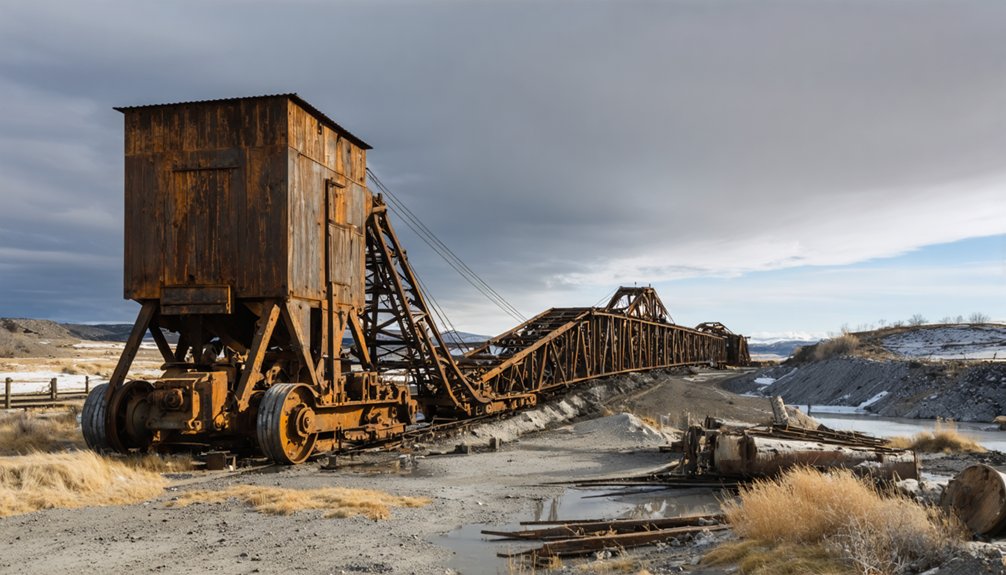
During Oregon’s 19th-century gold rush, Sumpter emerged as a thriving center of mining activity, drawing prospectors and settlers who transformed it into a bustling boomtown.
Today, Sumpter stories carry deep historical significance, offering you a rare glimpse into Oregon’s rugged mining past.
When you visit, you’ll find a town frozen in time, preserving the spirit of those who once chased golden dreams.
Here’s what defines Sumpter’s legacy:
- Gold Rush Origins – Prospectors flooded the region seeking fortune during the 19th century.
- Boomtown Growth – Industry and railroads rapidly expanded the settlement.
- Economic Collapse – Mining decline emptied the once-thriving community.
- Preserved Remnants – Weathered structures still echo the miners’ untamed lifestyle.
Sumpter stands as a monument to Oregon’s frontier independence.
Eastern Oregon Mining Ghost Towns That Reward the Long Drive
Eastern Oregon’s Pine Valley mountains near Baker City hold some of the state’s most rewarding ghost towns for those willing to make the drive.
Towns like Cornucopia, platted in 1886 and abandoned in 1942, and Bourne, with its weathered structures echoing miners’ stories, carry deep historical significance.
Granite preserves well-maintained 19th-century relics that reflect the economic forces that once shaped the region.
Eastern Oregon’s scenic routes reward your patience with sweeping landscapes and authentic remnants of frontier life.
You’ll find communities that boomed, collapsed, and were simply left behind when the gold stopped paying.
For visitor tips, plan your trip during warmer months, carry detailed maps, and expect remote conditions.
These towns don’t advertise themselves — that’s precisely what makes them worth finding.
Oregon’s Illinois Valley: The Ghost Town Corridor Most Visitors Miss
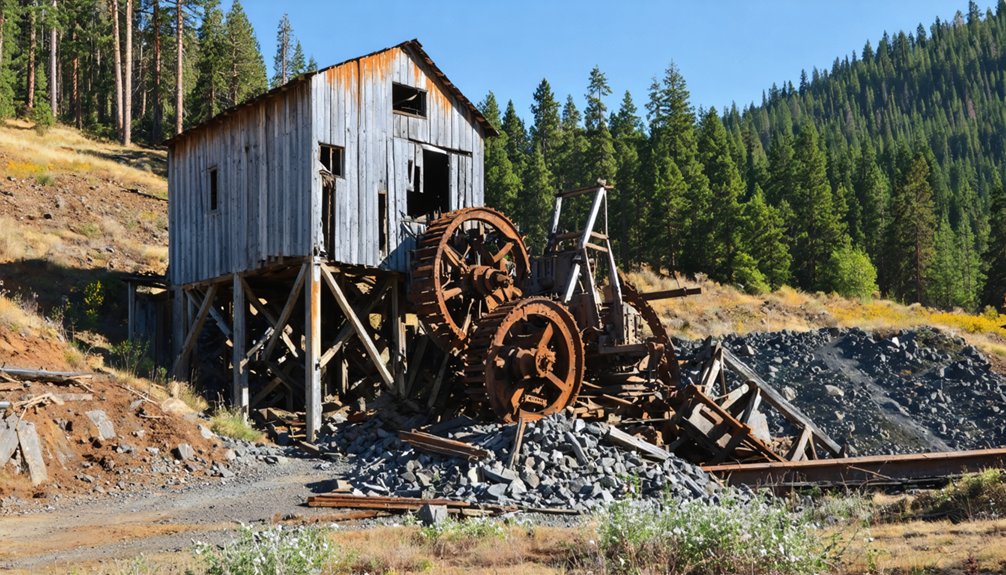
Southern Oregon’s Illinois River Valley hides a corridor of mining ghost towns that most visitors drive past without realizing what they’ve missed.
This region’s hidden treasures reveal communities that once thrived on gold fever before economic collapse silenced them permanently.
When you explore these scenic routes, keep these visitor insights in mind:
- Historical Significance — Mining camps shaped Josephine County’s entire economic identity during the 19th century.
- Ghost Towns — Multiple abandoned settlements cluster within the Illinois Valley, rewarding patient explorers.
- Access — Unpaved backcountry roads require preparation but deliver authentic discovery experiences.
- Golden — Oregon State Parks maintains this preserved site near Coyote Creek, offering free year-round access.
You’ll leave understanding why this overlooked corridor deserves far more recognition than it currently receives.
Which Oregon Mining Ghost Towns Are Free to Visit?
If you’re planning a visit to Oregon’s mining ghost towns, you’ll be glad to know that Golden State Heritage Site offers free day-use access year-round, making it one of the most accessible preserved sites in the state.
Oregon State Parks purchased the Golden property in 2002, and today you can walk among four surviving structures — a church, residence, shed, and post office/store — without paying an entry fee.
As you map out your itinerary, coordinates 42°41’04.6″N 123°20’21.8″W will guide you directly to Golden, while sites like Cornucopia and Granite also welcome visitors at no cost, rewarding your curiosity with unfiltered glimpses into Oregon’s rugged mining past.
Golden’s Free Entry Details
Golden’s gates won’t cost you a dime—Oregon State Parks maintains this heritage site as a free day-use destination open year-round.
Your Golden Heritage Visitor Experience includes unrestricted access to four preserved structures that echo Oregon’s mining past.
Here’s what awaits you:
- A historic church — standing as a symbol of frontier community life
- A former residence — revealing how miners and families actually lived
- A shed — a humble reminder of daily pioneer labor
- A post office/store — once the commercial heartbeat of Golden’s 150 residents
OPRD purchased this property in 2002 following its National Register of Historic Places listing.
Navigate there using coordinates 42°41’04.6″N 123°20’21.8″W, and explore freely without entry fees or seasonal restrictions limiting your visit.
Other No-Cost Sites
Beyond Golden, several other Oregon mining ghost towns welcome visitors at no cost, letting you step into the state’s rugged frontier past without spending a cent.
Cornucopia, platted in 1886 and abandoned in 1942, offers open access for mining relics exploration among weathered structures that once supported a thriving gold operation.
Bourne and Granite, both nestled in Eastern Oregon near Baker City, preserve echoes of 19th-century ambition through ghost town preservation efforts that keep their remaining structures accessible.
Susanville similarly invites you to roam freely through abandoned relics reflecting the region’s mining heritage.
These sites demand nothing financially, only your curiosity and respect. You’ll find each location rewards careful exploration, connecting you directly to the communities that shaped Oregon’s frontier identity.
Planning Your Visit
Mapping out your trip to these no-cost ghost towns takes a bit of forethought, but the payoff is well worth it. Ghost town exploration rewards those who prepare carefully before heading into Oregon’s backcountry or heritage sites.
- Confirm access routes — Some locations involve unpaved roads requiring high-clearance vehicles.
- Check seasonal conditions — Weather affects backcountry accessibility, particularly in Eastern Oregon’s mountains.
- Use precise coordinates — Navigate to Golden using 42°41’04.6″N 123°20’21.8″W for accuracy.
- Research historical significance — Understanding each town’s mining era enriches your experience on-site.
Golden remains open year-round with free day use managed by Oregon State Parks.
You’ll walk through preserved structures carrying genuine stories of 19th-century miners who built and abandoned entire communities within decades.
How Do You Get to Oregon’s Most Accessible Ghost Towns?
Whether you’re chasing gold rush legends or simply want to walk through living history, reaching Oregon’s most accessible mining ghost towns is easier than you might expect.
Ghost town accessibility varies by site, but Golden stands out as one of the most visitor-friendly destinations. You’ll find it in Josephine County near Coyote Creek, accessible via coordinates 42°41’04.6″N 123°20’21.8″W on Google Maps.
Golden, nestled in Josephine County near Coyote Creek, ranks among Oregon’s most visitor-friendly ghost towns.
For mining heritage exploration in Eastern Oregon, head toward Baker City, where towns like Cornucopia and Bourne await in the Pine Valley mountains.
Sumpter sits within reasonable driving distance from Baker City as well. Most sites require no entry fee, and Oregon State Parks maintains Golden year-round.
Pack comfortable footwear, a map, and a sense of historical curiosity before you go.
What Structures Survive at Oregon’s Most-Visited Mining Sites?
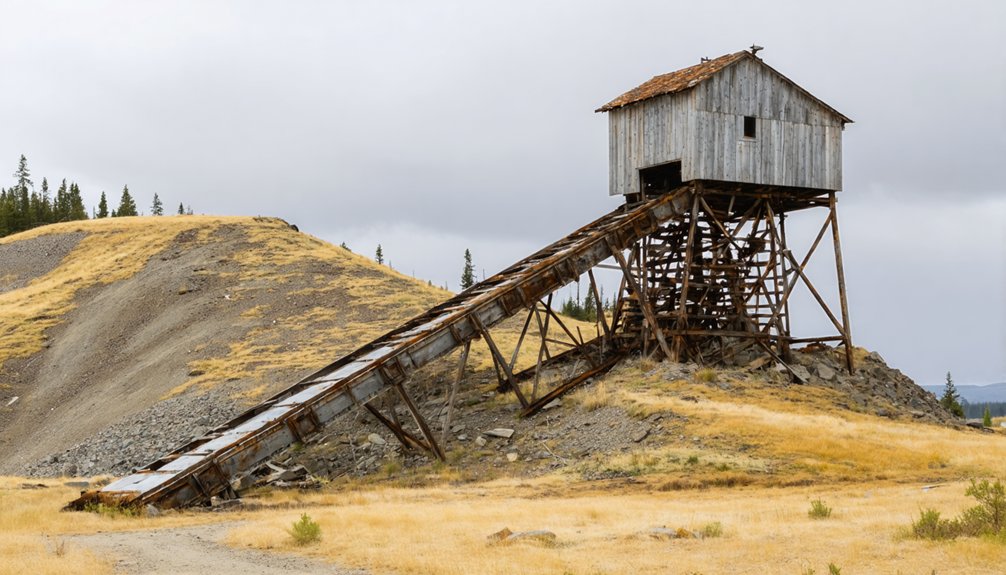
When you walk through Golden, Oregon’s most preserved mining ghost town, four structures still stand as quiet reminders of a community that once housed 150 residents: a church, a former residence, a shed, and a combined post office and store.
These structures surviving decades of abandonment make Golden one of Oregon’s most compelling tourist attractions. Oregon State Parks purchased the property in 2002, preserving what remains for future exploration.
Here’s what you’ll find standing today:
- Church – A reflection of the town’s moral fabric
- Former residence – Echoing domestic life from the 1890s
- Shed – A functional remnant of daily operations
- Post office/store – Where commerce and communication converged
Access remains free year-round, giving you unrestricted entry into Oregon’s mining past.
Frequently Asked Questions
Are Oregon’s Mining Ghost Towns Safe to Explore With Young Children?
You can safely explore Oregon’s mining ghost towns with young children if you follow key exploration tips. Watch for unstable structures, stay on marked paths, and prioritize child safety while embracing these historically rich, adventurous destinations.
Can You Legally Collect Artifacts or Souvenirs From Oregon Ghost Towns?
Don’t pocket what history left behind—you can’t legally collect artifacts from protected sites. Artifact preservation laws and legal regulations prohibit removing items, especially at state-managed locations like Golden, where rules safeguard Oregon’s irreplaceable mining heritage for future generations.
Which Oregon Mining Ghost Towns Allow Overnight Camping Nearby?
You’ll find camping regulations near Sumpter and Cornucopia allow overnight stays at nearby campgrounds. Explore nearby attractions steeped in gold rush history, where you’re free to immerse yourself in Oregon’s rugged, untamed mining heritage.
Do Any Oregon Ghost Towns Offer Guided Tours or Educational Programs?
With 256 ghost towns statewide, you’ll find Golden offers guided exploration through its preserved structures and educational exhibits. It’s free year-round, letting you roam freely while connecting nostalgically with Oregon’s rich mining heritage.
Are Oregon’s Remote Mining Ghost Towns Accessible During Winter Months?
You’ll find winter accessibility to Oregon’s remote mining ghost towns challenging, as harsh road conditions often close backcountry routes. Golden, however, welcomes you year-round, offering that timeless, free-spirited connection to frontier history whenever you’re ready.
References
- https://stateparks.oregon.gov/index.cfm?do=park.profile&parkId=189
- https://en.wikipedia.org/wiki/List_of_ghost_towns_in_Oregon
- https://www.worldatlas.com/cities/6-old-timey-mining-towns-in-oregon.html
- https://en.wikipedia.org/wiki/Cornucopia
- https://www.youtube.com/watch?v=knJcpdeY2Ko
- https://oregonoutdoorfamily.com/golden-oregon-a-ghost-town/
- https://www.youtube.com/watch?v=OSjwSvbTQtQ
- https://www.youtube.com/watch?v=i48EmIvqH3c
- https://www.oregonencyclopedia.org/articles/ghost_towns_illinois_river_valley/
- https://stage-sos.oregon.gov/archives/exhibits/ghost/Pages/mining.aspx