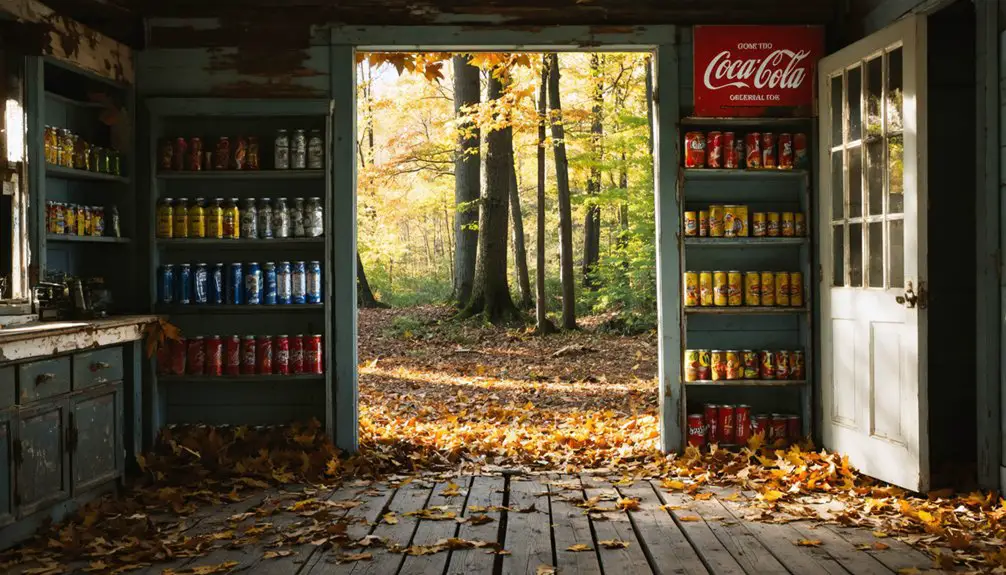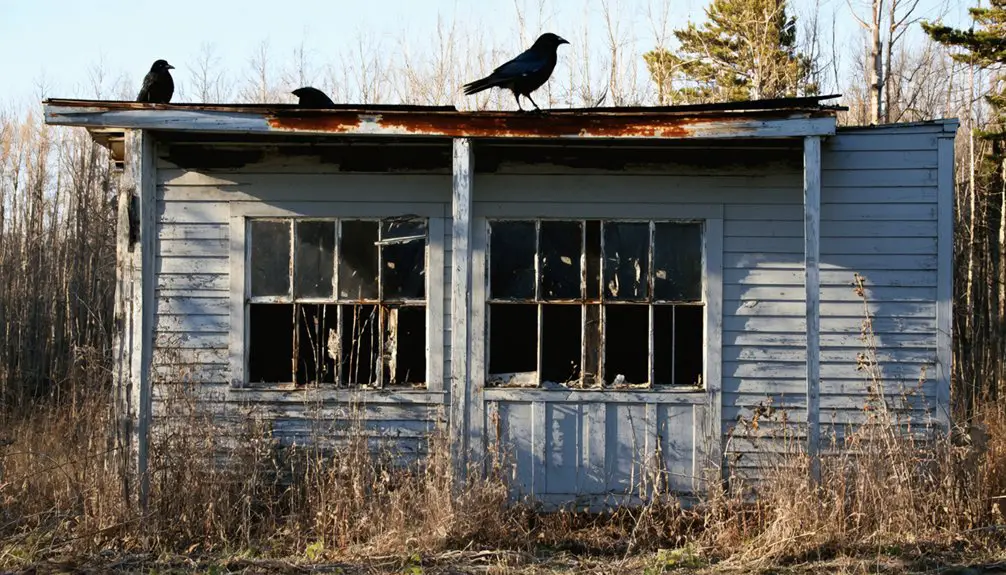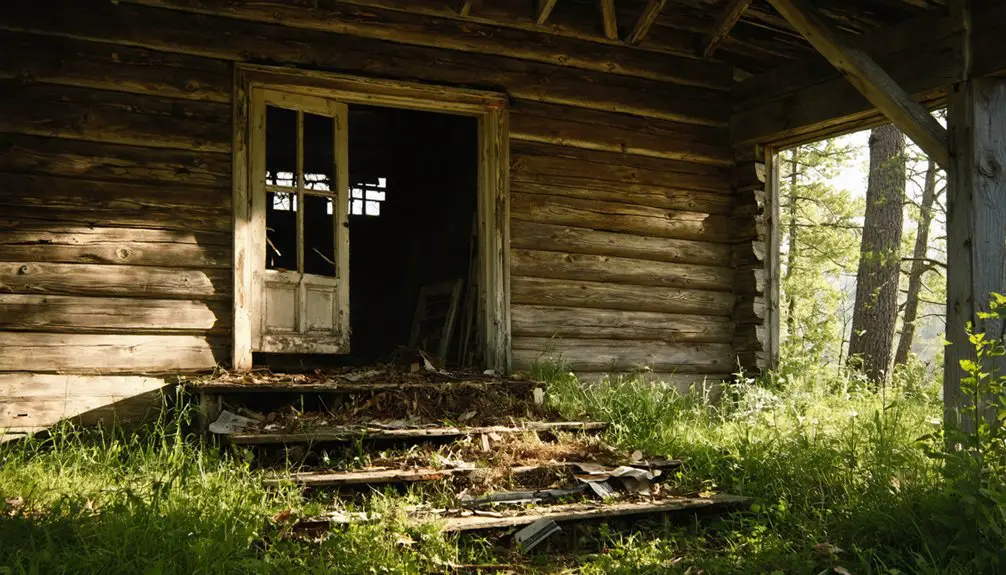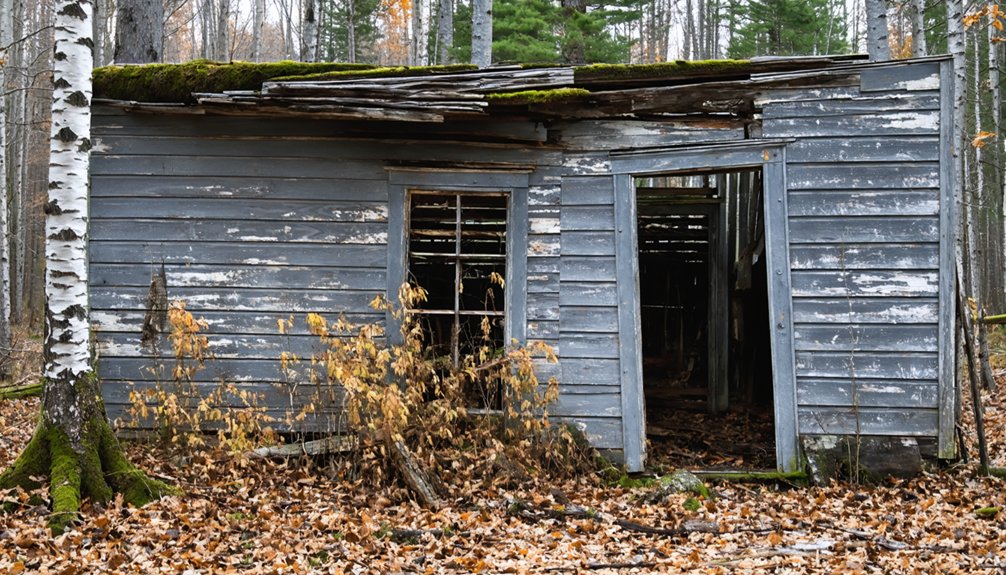
Maine’s ghost towns take many forms — you’ll find submerged communities, forest-swallowed settlements, and neighborhoods buried under modern development. Flagstaff was flooded in 1950 for hydroelectric power, while Riceville collapsed after its tannery burned in 1905. Swan Island depopulated from river pollution, and rail towns like Askwith simply faded when resources ran out. Each site leaves behind cellar holes, foundation stones, or cemeteries. There’s far more to uncover about these lost communities than their quiet remnants suggest.
Key Takeaways
- Flagstaff, submerged by Flagstaff Lake in 1950, reveals cellar holes and buried streets when water levels drop in spring.
- Riceville was built around a tannery employing 75 workers until it burned down in 1905, leaving foundation stones and a cemetery.
- Swan Island declined due to economic stress and river pollution, eventually disincorporating and becoming managed preservation land.
- Ligonia Village in South Portland vanished after Portland Rolling Mills failed, leaving behind industrial remnants and a cemetery.
- Askwith and Tarrantine thrived through rail access but were abandoned as natural resources declined, with rail remnants still visible.
What Makes a Maine Town a Ghost Town?
Maine’s ghost towns don’t fit a single mold. When you look at ghost town characteristics across the state, you’ll find submerged communities, abandoned neighborhoods, and overgrown settlements that each tell a different story.
What they share is a pattern of collapse — economic failure, fire, flooding, pollution, or population loss stripped them of viability.
Maine town origins often tied directly to a single industry: logging, milling, fishing, or rail transport. Once that industry failed, residents left and nature reclaimed what remained.
Many Maine towns were built around a single industry — and when that industry died, the towns died with it.
You can still find cellar holes, foundation stones, cemeteries, and rail remnants marking where communities once stood. Some towns were literally buried under water. Others dissolved quietly into surrounding landscapes.
A Maine ghost town isn’t always dramatic — sometimes it’s just silence where there used to be life.
Flagstaff: Maine’s Most Famous Sunken Ghost Town
Of all the ghost towns that fit that pattern, Flagstaff stands out — not because it faded quietly, but because it’s literally underwater. In 1950, the Dead River Valley was dammed, and Flagstaff history ended when the rising waters of Flagstaff Lake swallowed the town whole.
Families were displaced, buildings demolished, and an entire community was sacrificed for hydroelectric development. What the state took, the lake kept.
Today, submerged remnants of cellar holes and buried streets still lie beneath the surface. When water levels drop, pieces of that lost world briefly reappear — foundations breaking through the waterline like quiet testimony.
You can visit the lake’s edge in Somerset County and stand directly above what was once a functioning Maine town. That’s not metaphor. That’s geography.
Riceville: The Lost Tannery Village of Hancock County
If you venture into Hancock County, you’ll find what remains of Riceville, a remote woods settlement that once sustained itself on the strength of a single tannery employing 75 workers.
That operation anchored the community until 1905, when fire destroyed it and stripped the town of its economic foundation.
Today, you can still locate the site by its scattered foundation stones and a cemetery where the headstones have long since disappeared.
Riceville’s Tannery Origins
Deep in Hancock County, Riceville—also known as Township 39—once built its entire identity around a single industry: tanning. The tannery history here wasn’t incidental; it was foundational. At its peak, the operation employed roughly 75 workers, making it the economic engine that justified the settlement’s existence.
The economic impacts extended beyond wages. Families relocated, infrastructure developed, and a community took shape around that single facility.
When the tannery burned in 1905, it didn’t just destroy a building—it severed the one thread holding Riceville together. Without that anchor, workers left, businesses closed, and the settlement unraveled quickly.
You can trace this pattern across Maine’s interior: remove the industry, and the town follows. Riceville offers one of the clearest examples of that hard reality.
The 1905 Fire
The tannery’s destruction in 1905 wasn’t a slow decline—it was a single, decisive break. When fire consumed Riceville’s central industry, it didn’t just destroy a building—it erased the economic foundation holding the community together.
The 1905 fire’s impact reached every household, every worker, every family that had built a life around those operations. With 75 jobs gone overnight, there wasn’t enough left to rebuild around.
The tannery’s legacy, however, isn’t entirely erased. You can still find foundation stones scattered through the woods, quiet evidence of what once operated there.
A headstone-less cemetery marks where residents were buried, unnamed and largely forgotten. Riceville’s story reminds you that a single event can permanently redirect a community’s fate—and that nature reclaims abandoned ground faster than history records it.
Ruins Left Behind
What remains of Riceville isn’t dramatic—it’s quiet and easy to miss. Foundation stones push up through the forest floor, and a cemetery sits nearby with no headstones to identify who’s buried there.
That anonymity carries its own historical significance—these were real people who built a working community around a tannery that once employed 75 workers.
You won’t find markers or guided tours. You’ll find nature reclaiming what industry left behind.
The cultural impact of places like Riceville lies precisely in their silence. They remind you that economic collapse doesn’t announce itself—it just stops showing up.
Walking through the overgrowth, you’re reading a story written in stone and soil. Riceville doesn’t ask for your attention, but it rewards you for paying it.
Swan Island and the Collapse of Perkins Township
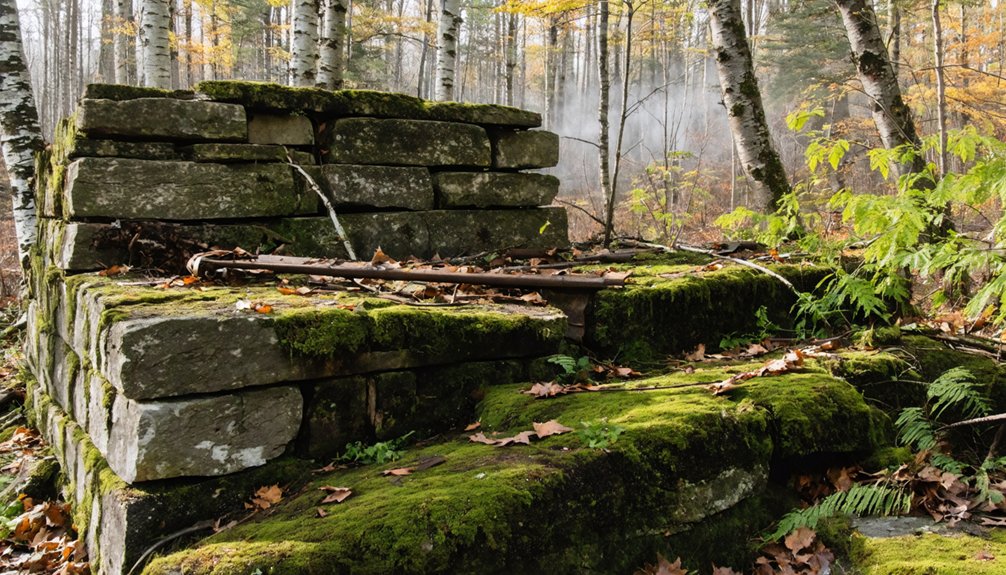
Nestled in the Kennebec River, Swan Island once supported a recognized township known as Perkins, home to nearly 100 residents at its peak.
Perkins History shows a community that functioned with real economic purpose before population decline took hold. By 1918, only 61 residents remained on Swan Island, and disincorporation followed shortly after.
Perkins once held real economic weight — by 1918, only 61 residents remained before disincorporation quietly followed.
Economic stress and river pollution stripped the township of its viability. You can trace its collapse through documented records showing steady population loss rather than a single catastrophic event.
No disaster erased Perkins — sustained pressure did. The state eventually absorbed the island into managed land, limiting public access and preserving what remained.
Today, Swan Island stands as evidence that communities don’t always fall dramatically; sometimes they simply lose the conditions that made them worth staying for.
Askwith and Tarrantine: Maine Ghost Towns Along the Rails
While Perkins Township faded through slow depopulation, Askwith and Tarrantine in Piscataquis County followed a different but equally documented arc — growth driven by rail access, then abandonment once that infrastructure lost relevance.
These settlements built real community infrastructure: churches, schools, a post office, and businesses tied directly to railroad history and the region’s natural resources.
When resource decline hit — timber depleted, markets shifted, rail lines losing traffic — neither town could sustain itself.
You can still trace their outlines today along former rail corridors now converted to trails. Overgrown outposts and scattered remnants mark where structured community life once operated.
Askwith and Tarrantine remind you that Maine’s ghost towns weren’t accidents — they were predictable outcomes of economies built on extraction without long-term diversification.
Ligonia Village: South Portland’s Vanished Neighborhood
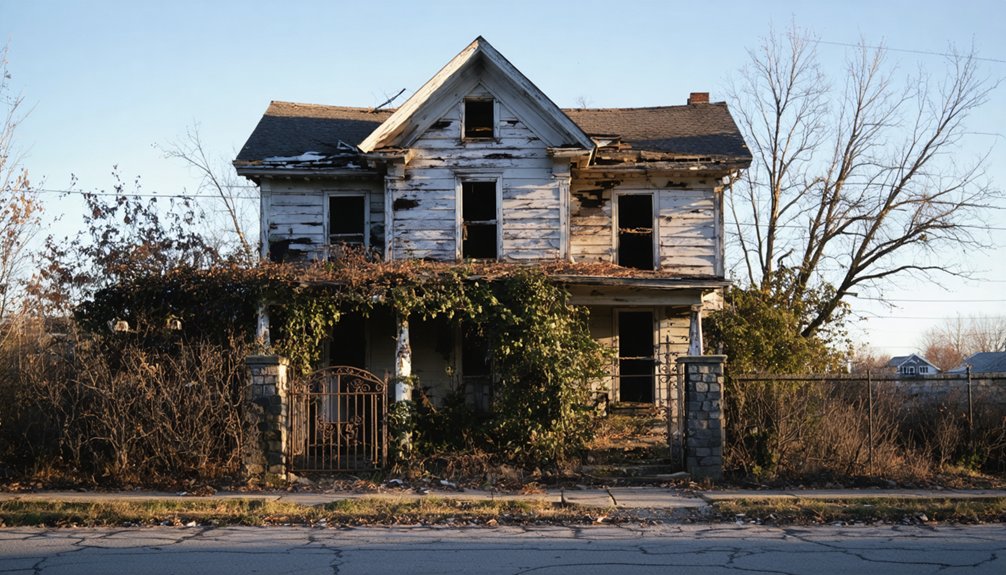
Not every ghost town sits in a remote forest or beneath a reservoir — Ligonia Village vanished inside a city.
Once anchored to the Portland Rolling Mills, this South Portland neighborhood housed workers tied directly to industrial output. When that economic engine failed, Ligonia’s Ligonian Legacy dissolved with it.
You won’t find dramatic ruins here. Instead, Industrial Remnants surface quietly — oil tanks now occupy land where families once lived, and a cemetery persists nearby as one of the few visible markers of what stood before.
A spur connecting Main Street to Route 295 and Veteran’s Bridge cuts through the area today.
Ligonia’s erasure wasn’t flood or fire — it was absorption. The city simply grew over it, leaving little trace for those willing to look.
How Fires, Floods, and Rail Decline Killed Maine Towns
Maine’s ghost towns didn’t fade quietly — fire, flooding, and rail abandonment actively dismantled them. Understanding these abandonment causes gives you a clearer picture of their historical significance.
Riceville’s tannery burned in 1905, eliminating 75 jobs and gutting the local economy overnight.
Flagstaff drowned in 1950 when the Dead River Valley was dammed, displacing an entire community beneath Flagstaff Lake.
Rail decline gutted towns like Askwith, where a railroad station once anchored commerce and connection. Once the trains stopped running, businesses closed and residents left.
You’ll find that these weren’t slow declines — they were abrupt disruptions.
What remains are cellar holes, submerged streets, and overgrown foundations that document how quickly a thriving settlement can collapse when its economic lifeline disappears.
Can You Visit Maine Ghost Towns Today?
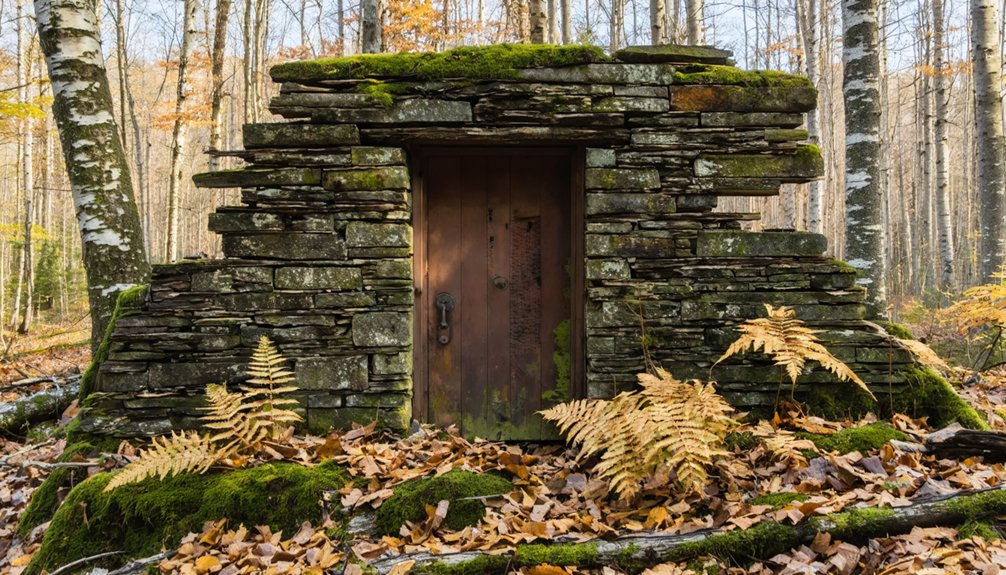
You can visit several of Maine’s ghost towns today, including Flagstaff Lake‘s shoreline, where dropping water levels occasionally expose cellar holes and buried remnants of the flooded village.
Rail trails near former settlements like Askwith/Tarrantine offer accessible entry points, though you should watch for unstable foundations, overgrown terrain, and posted private property.
Late summer and early fall tend to offer the clearest conditions for exploration, with lower water levels on lakes and reduced undergrowth obscuring historic remnants.
Accessible Ghost Town Sites
While some of Maine’s ghost towns have been swallowed by water or reclaimed by forest, many sites remain accessible to curious visitors today.
Whether you’re drawn to urban exploration or historical preservation, these locations reward the effort:
- Flagstaff Lake – Watch for cellar holes and buried streets when water levels drop in Somerset County.
- Riceville (Township 39) – Explore foundation stones and a headstone-less cemetery in Hancock County’s woods.
- Askwith/Tarrantine – Walk former rail trails through Piscataquis County’s overgrown outpost settlements.
- Ligonia Village – Visit South Portland’s ghost neighborhood near the Route 295 corridor, where industrial history quietly persists.
You’ll find no guided tours at most sites, so research conditions, respect private land, and go prepared.
Visiting Safety Considerations
Visiting these sites comes with real risks that deserve straight attention before you head out. Unstable foundations, collapsed cellar holes, and rotting timber can give way without warning.
You’ll want proper safety gear — sturdy boots, gloves, and a first aid kit — especially at forested interior sites like Riceville or Askwith where trails are unmarked and help is distant.
Wildlife awareness matters equally. Maine’s rural counties host black bears, coyotes, and venomous snakes, particularly in overgrown settlements reclaimed by dense woodland.
Submerged sites like Flagstaff Lake carry water hazards when levels drop and surfaces become unpredictable.
Always tell someone your location before entering remote areas. Check land ownership beforehand, since trespassing laws apply even to abandoned sites.
Preparation isn’t optional — it’s what keeps the visit worthwhile.
Best Times To Visit
Most of Maine’s ghost towns are accessible today, though the best time to visit depends heavily on the specific site. Seasons shape access, visibility, and ghost town photography opportunities greatly.
- Spring – Low water levels may reveal Flagstaff Lake’s submerged remnants and cellar holes.
- Summer – Trails to sites like Askwith and Riceville are most passable, though vegetation obscures foundations.
- Fall – Thinning foliage improves visibility of ruins; best seasons for photography due to light and color contrast.
- Winter – Snow highlights structural outlines but limits road access in remote interior counties.
You’ll find early morning visits produce the sharpest ghost town photography with minimal crowds.
Always confirm land access status before exploring forested or privately held sites.
Cellar Holes, Cemeteries, and Submerged Streets: What Survives
Beneath lakes, inside forests, and along overgrown rail corridors, Maine’s ghost towns leave behind a fragmented but traceable record.
You’ll find cellar exploration rewarding at sites like Riceville, where foundation stones outline former structures reclaimed by forest.
Cemetery preservation remains an ongoing concern at locations lacking marked headstones, as at Township 39 in Hancock County.
Flagstaff offers a different challenge entirely — its streets and cellar holes lie submerged beneath Flagstaff Lake, surfacing only when water levels drop.
At Askwith, rail remnants and overgrown outposts mark where a full community once operated.
Each surviving element — stone foundation, buried road, unmarked grave — functions as a primary document.
You don’t need official infrastructure to read these landscapes; you need observation, patience, and a working knowledge of what once stood there.
Five More Maine Ghost Towns That Disappeared Quietly
The sites covered so far represent only a fraction of Maine’s lost communities. Hidden histories persist across the state’s rural counties, river valleys, and forested interiors. You’ll find evidence of these lost communities if you know where to look.
Four patterns define how these towns disappeared quietly:
Four patterns quietly erased these towns — economic collapse, population loss, environmental damage, and geographic isolation compounding until nothing remained.
- Economic collapse following mill closures or tannery fires severed livelihoods overnight.
- Population decline rendered infrastructure unsustainable, forcing disincorporation.
- Environmental damage from pollution or flooding displaced remaining residents.
- Geographic isolation accelerated abandonment when rail or river access ended.
Riceville’s headstone-less cemetery, Askwith’s overgrown rail outposts, and Perkins Township’s declining riverfront all reflect these forces.
Maine’s ghost towns didn’t vanish dramatically — they faded through compounding pressures that stripped away economic purpose, leaving only foundations and silence.
Frequently Asked Questions
Are Any Maine Ghost Towns Protected as Official Historical Landmarks?
Yes, some qualify for historical preservation based on site significance. You’ll find listings on the National Register of Historic Places, though formal landmark status varies—many sites remain unprotected, leaving you free to explore their raw, undocumented history.
Did Maine Ghost Towns Ever Inspire Local Literature or Folklore?
Yes, you’ll find that Maine’s ghost towns have sparked literary influences and folklore origins — submerged Flagstaff and abandoned settlements like Riceville actively inspired regional writers, storytellers, and historians documenting loss, resilience, and the wilderness reclaiming human ambition.
How Many Total Ghost Towns Are Estimated to Exist in Maine?
Estimates suggest you’ll find over 100 hidden histories and abandoned dreams scattered across Maine. That’s a striking number — each site representing a community that once thrived, then vanished, quietly reclaimed by forests, rivers, and time.
Were Children Born in Maine Ghost Towns Recorded in State Census Data?
Yes, you’d find that census records did capture children born in Maine’s ghost towns, documenting births, households, and child mortality rates that reflect the harsh realities families faced in these remote, resource-dependent settlements.
Do Any Maine Ghost Town Descendants Hold Reunions or Memorials Today?
Like roots pushing through concrete, descendant gatherings keep these communities alive. You’ll find memorial traditions documented for Flagstaff, where former residents and their descendants actively reunite, honoring submerged streets and preserving the living memory of Maine’s lost towns.
References
- https://en.wikipedia.org/wiki/List_of_ghost_towns_in_Maine
- http://strangemaine.blogspot.com/2012/02/ghost-towns-of-maine.html
- http://freepages.rootsweb.com/~gtusa/history/usa/me.htm
- https://b985.fm/6-maine-ghost-towns-you-never-knew-existed/
- https://newenglandhistoricalsociety.com/six-new-england-ghost-towns/
- https://www.mooseriverlookout.com/post/ghost-towns-in-maine-9-fascinating-places-that-rose-fell
- https://mooseheadnews.com/ghost-towns-in-maine-9-haunted-places-to-explore-this-fall-2025-guide/
- https://www.facebook.com/groups/forgottenmaine/posts/1339234080373933/
- https://www.hotels.com/go/usa/ghost-towns-maine