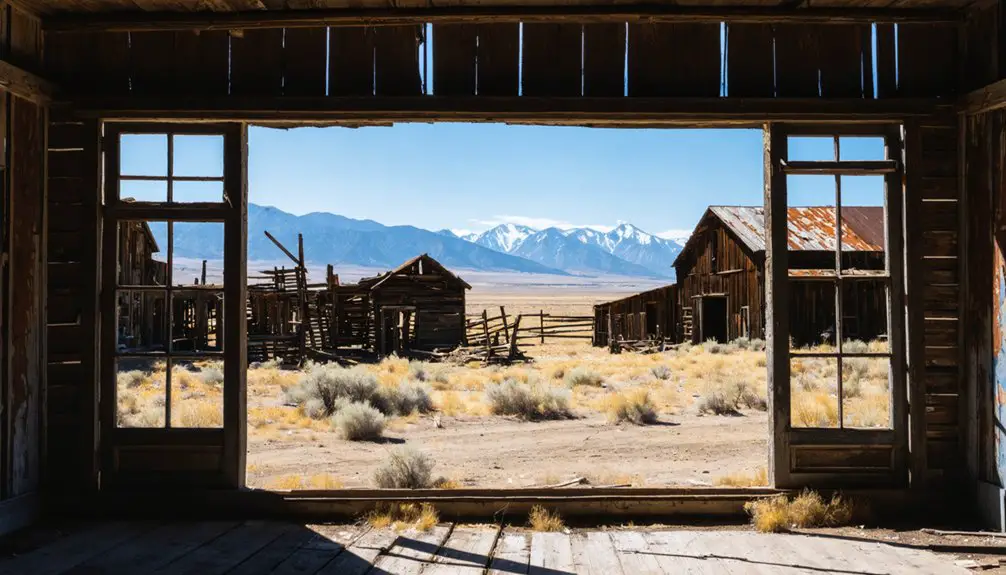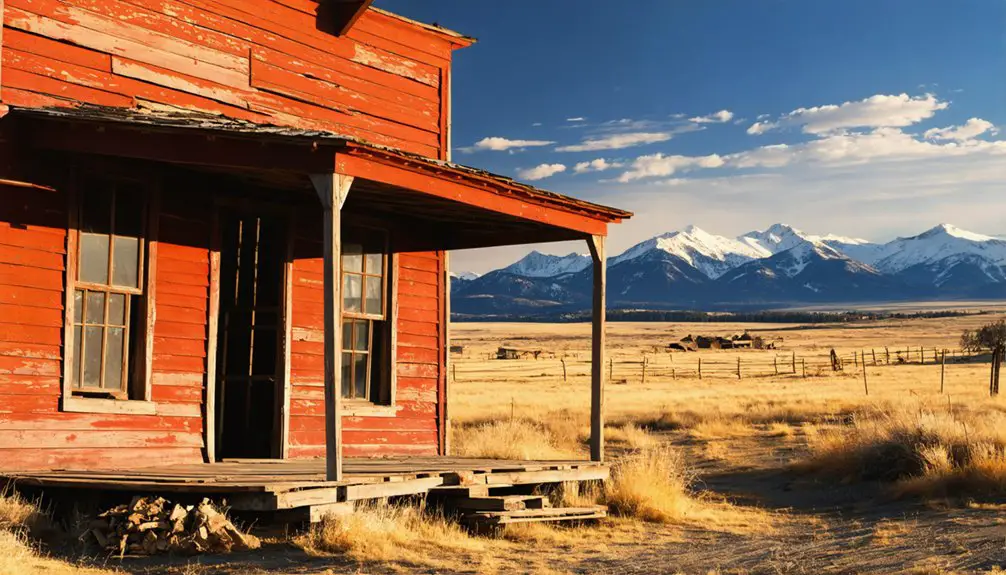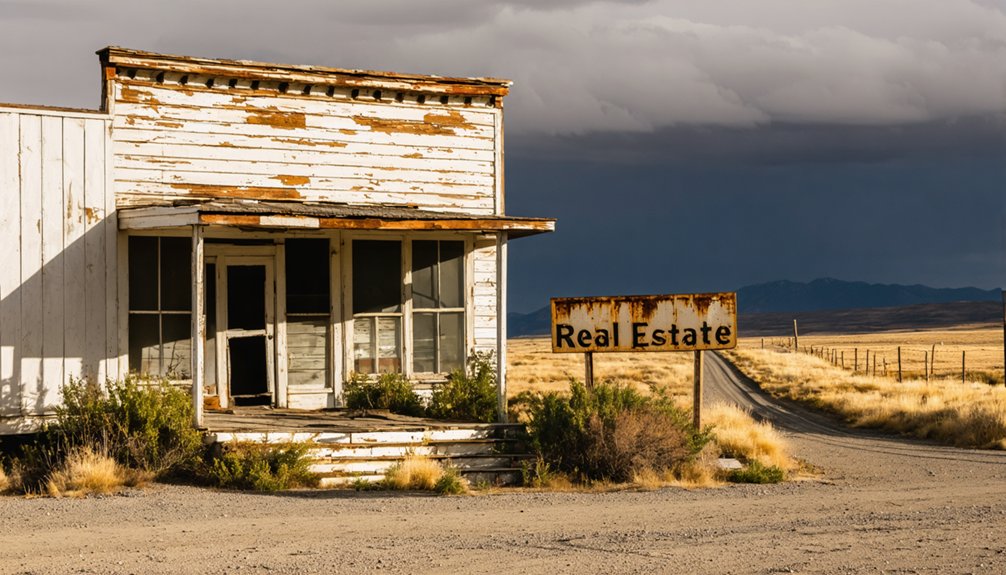
If you’re searching for a Montana ghost town to buy, you’ll find the market is surprisingly thin—only a handful of private listings exist at any given moment. Many iconic sites like Bannack and Garnet are state or federally managed, putting them permanently off the market. What’s available often comes bundled with active leases, zoning restrictions, and preservation designations. Stick around to uncover what these layered acquisitions actually involve.
Key Takeaways
- Few Montana ghost towns are privately available at any time, with most significant sites protected as state parks or managed by federal agencies.
- Available listings typically bundle land, historical structures, and active commercial leases, such as post offices or general stores.
- Recent prices range widely, from ~$250K at auction to $2.6M for properties near Yellowstone or with income streams.
- Properties fall into three categories: true ghost towns, partially inhabited historic settlements, and themed tourist attractions like Frontier Town.
- Buyers must verify lease agreements, zoning classifications, and preservation designations that may restrict modifications or limit ownership rights.
Are Montana Ghost Towns Actually for Sale?
While Montana’s ghost towns capture the imagination, only a handful ever make it to the open market at any given time. Most of the state’s historically significant sites are protected as state parks, privately held for generations, or simply never listed.
When properties do surface, they’re rarely fully abandoned settlements. Instead, you’re looking at hybrid assets that blend historical authenticity with active commercial components — working post offices, leased storefronts, or short-term rentals. Commercial viability often drives these listings more than romantic decay.
Montana’s GNIS records document over 400 historical populated places, yet documented sale opportunities number in the single digits at any given moment. If you’re serious about acquiring one, you need to move quickly and research thoroughly — these listings don’t stay quiet for long.
Ghost Town, Historic Settlement, or Themed Attraction: What’s the Difference?
Before you pursue any listing, you need to know exactly what you’re buying — and in Montana’s niche market, the label “ghost town” gets applied loosely. Three distinct categories define what’s actually available:
In Montana’s niche market, the label “ghost town” gets applied loosely — know exactly what you’re buying.
- True ghost towns — fully abandoned settlements with no active commerce, valued for cultural significance and historical record.
- Historic settlements — partially inhabited or commercially active communities retaining original infrastructure, often with leased assets and zoning constraints.
- Themed attractions — purpose-built or reimagined properties, like Frontier Town, designed around tourism potential rather than authentic abandonment.
Each category carries different legal structures, operational obligations, and ownership freedoms. Misreading the category means misreading your rights.
Study the listing’s lease agreements, active tenancies, and preservation designations before committing to any purchase.
Why Most Montana Ghost Towns Can’t Be Bought
If you’re searching for a Montana ghost town to buy, you’ll quickly find that most are simply off the table. The state controls its most significant sites — Bannack and Elkhorn both operate as state parks.
While countless others remain in private hands and never surface on the open market. That structural scarcity, not a lack of abandoned settlements, is what keeps your options so narrow.
Protected By The State
Although Montana’s ghost-town landscape looks vast on paper, state ownership removes most of it from the market entirely. When the state designates a site, you lose access to it as a buyer.
Two clear examples underscore the cultural significance of this restriction:
- Bannack, Montana’s best-preserved ghost town, operates as a state park—fully off the private market.
- Elkhorn carries the same protected status, managed by state authorities with preservation challenges built into its operating mandate.
- Garnet, overseen federally through the BLM, adds another layer of public control that forecloses private purchase.
These designations exist to protect historical integrity, but they also shrink your options considerably. If you want to own a piece of Montana’s frontier past, you’re working within an already narrow field.
Private And Off-Market
State protection accounts for only part of the supply problem—private ownership quietly removes far more. Families, ranching operations, and mining successors have held certain sites for generations, and they rarely advertise.
When land carries historical authenticity—original structures, documented settlement dates, recoverable records—owners often treat it as heritage rather than inventory. Commercial viability complicates the equation further; a site generating grazing income or mineral rights revenue gives an owner little incentive to list.
You won’t find these parcels on MLS platforms or auction sites. They transfer through estate settlements, private negotiations, or family trusts. If you’re serious about acquiring one, your path runs through county deed records, title companies, and local attorneys who know which families hold what.
Public listings represent only the visible surface.
Limited Supply Exists
Between state park designation, private family holdings, and active commercial operations, the pool of Montana ghost towns that can actually change hands shrinks to a narrow slice.
Historical authenticity makes these sites valuable, but that same value triggers preservation challenges that restrict ownership transfers.
Three structural barriers limit supply:
- State protection removes landmark sites like Bannack and Elkhorn from private sale entirely.
- Family retention keeps inherited parcels off public markets for generations.
- Active commercial use means many “abandoned” towns still operate under leases or business licenses.
You’re competing against institutional preservation interests, zoning constraints, and heritage organizations whenever a listing appears.
That scarcity isn’t accidental—it reflects deliberate choices made across decades to keep Montana’s documented historical record intact and out of speculative circulation.
Montana Ghost Towns That Have Hit the Market
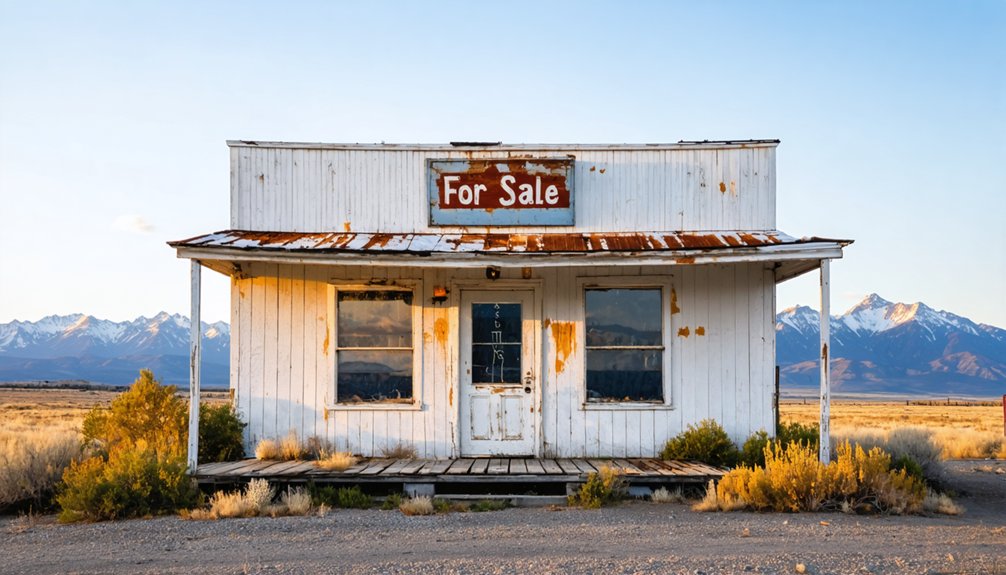
When Montana ghost towns do surface on the open market, you’re rarely looking at a fully abandoned settlement — you’re examining a curated package of land, buildings, and often active commercial leases.
Pray, Montana, for instance, listed at $2.6 million and included a U.S. Postal Service–leased post office, a historic general store, short-term rental units, and roughly 5 acres in Paradise Valley near Yellowstone.
Frontier Town, a Wild West–themed attraction, carried a $1.7 million asking price in 2024, signaling that what you buy is frequently as much a going concern as it’s a piece of Western history.
Notable Properties Listed
Although true ghost towns rarely hit the open market, a handful of Montana properties have surfaced as legitimate listings in recent years, each carrying its own mix of land, structures, and operational history.
Historical authenticity drives buyer interest, yet preservation challenges shape what you actually acquire.
Three documented listings stand out:
- Pray, Montana – Listed at $2.6 million, this ~5-acre Paradise Valley property included a leased post office, general store, and rental units near Yellowstone.
- Frontier Town – A Wild West-themed attraction listed at $1.7 million in 2024, blending roadside heritage with commercial infrastructure.
- Little Bighorn-Connected Town – Auctioned in 2012 with a $250,000 opening bid, reflecting how age and historical weight don’t always command premium prices.
What Buyers Receive
Purchasing a Montana ghost town listing rarely means acquiring a windswept collection of empty buildings—what you actually get depends on the specific package of land, structures, leases, and active operations bundled into each deal.
Pray, Montana’s $2.6 million listing included a postal lease, a general store, short-term rentals, and development space across roughly five acres.
Frontier Town’s $1.7 million package centered on tourism potential tied to its Wild West character.
You’re often buying historical authenticity alongside working infrastructure—leased commercial space, preserved structures, or hospitality assets already generating revenue.
Zoning conditions and retained business operations shape exactly what transfers at closing.
Understanding the full bundle—land title, active leases, existing income streams, and heritage value—lets you assess whether the property matches your vision for independent ownership.
How Much Do Montana Ghost Towns Cost?
Prices for Montana ghost town properties vary widely depending on what’s actually included in the sale. Historical authenticity and tourism potential both shape valuations considerably. Here’s what recent listings reveal:
Montana ghost town prices vary widely—historical authenticity and tourism potential shape valuations considerably.
- $250,000 – A 2012 auction opening bid for a historic town tied to the Little Bighorn story.
- $1.7 million – Frontier Town, a Wild West-themed roadside attraction, listed in 2024.
- $2.6 million – Pray, Montana, a 5-acre Paradise Valley property near Yellowstone with active commercial leases.
You’ll notice that proximity to major corridors like Yellowstone drives prices upward. Properties bundling land, structures, and operating businesses command premiums.
Expect limited inventory at any given time, meaning when something surfaces, you’ll want to act with full market context already in hand.
What You Actually Get When You Buy a Montana Ghost Town
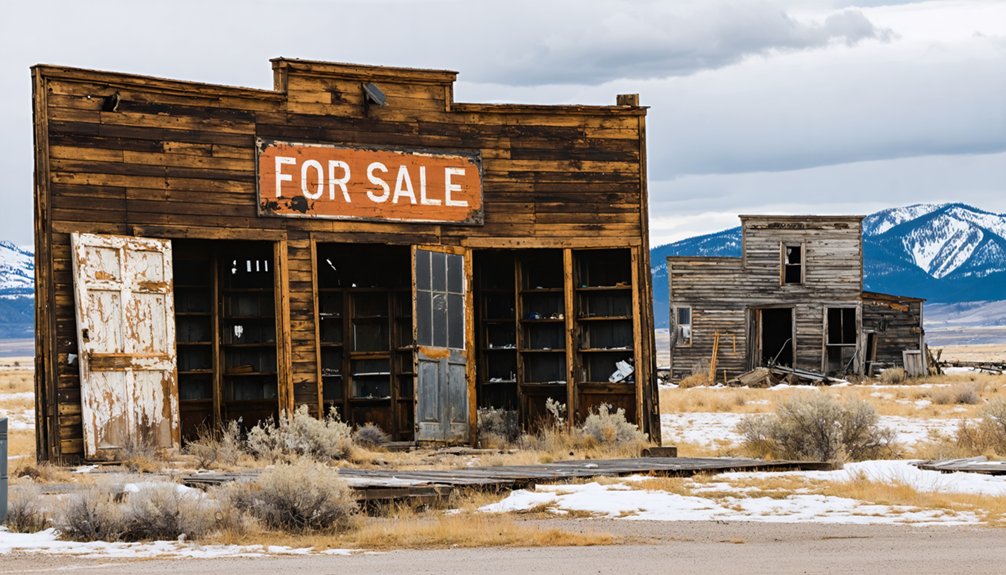
What exactly lands in your hands when you close on one of these properties? Typically, you’re acquiring a bundled package — land, historic structures, and whatever operational leases remain active.
The Pray listing, for example, delivered roughly five acres, a general store, short-term rental units, and a post office still leased by the U.S. Postal Service.
You’re not buying pure abandonment. You’re buying layered history with measurable tourist appeal and documented cultural significance attached to every weathered board and surveyed parcel.
Some properties carry zoning restrictions or retained business rights that shape what you can build or change. Understand what’s freehold versus leased before signing.
The deed transfers the land, but the story — and its income potential — transfers only if you manage both carefully.
Leases, Zoning, and Preservation Status: What to Verify Before You Buy
Before you sign anything, verify three distinct layers of encumbrance: active leases, local zoning classifications, and any preservation designations tied to the structures or land. Each layer restricts what you can build, demolish, or monetize.
- Lease agreements — A working post office or commercial tenant transfers with the deed, binding you to existing terms and timelines.
- Zoning restrictions — Rural Montana counties classify land differently; confirm whether commercial, agricultural, or mixed-use designations match your intended operation.
- Preservation designations — State or National Register listings limit structural alterations and may require approved contractors for any rehabilitation work.
Pull the title report, contact the county planning office, and request copies of all active lease agreements before closing. Your autonomy over the property depends entirely on what those documents reveal.
Frequently Asked Questions
Can Foreign Buyers Legally Purchase a Montana Ghost Town Property?
Yes, you can legally purchase Montana ghost town property as a foreign buyer, though you’ll navigate zoning regulations and historical preservation requirements that shape what you’re permitted to develop, modify, or commercially operate on the land.
Are There Financing Options Available for Ghost Town Real Estate Purchases?
You’ll find financing options limited for ghost town purchases. Lenders often hesitate due to historical preservation complexities and unpredictable restoration costs. You’d typically need substantial cash reserves, private lending, or seller financing to secure these unconventional properties.
What Insurance Challenges Come With Owning a Historic Ghost Town Property?
Owning history has its price—you’ll face steep insurance liability hurdles covering aging structures, fire risks, and visitor injuries. Historic preservation status can limit renovations, making insurers cautious and premiums costly for your unique Western property.
How Do Property Taxes Work for Ghost Town Parcels in Montana?
You’ll pay taxes based on assessed land and building value, but historical preservation status and zoning restrictions can qualify you for reduced rates, giving you financial breathing room while you steward Montana’s authentic Western legacy.
Can You Legally Live Full-Time in a Purchased Montana Ghost Town?
Yes, you can legally live full-time in a purchased Montana ghost town, though historical preservation rules and remote living realities shape what’s possible—zoning, building codes, and lease agreements on active structures ultimately govern your residency rights.
References
- https://www.ghosttowns.com/states/mt/moalpha.html
- https://www.reuters.com/article/lifestyle/for-sale-historic-montana-town-where-custer-fell-idUSDEE87408U/
- https://nypost.com/2024/04/26/real-estate/wild-west-themed-town-in-montana-lists-for-1-7m/
- https://cowboystatedaily.com/2025/04/19/a-whole-town-near-yellowstone-is-for-sale-for-less-than-3-million/
- https://discoveringmontana.com/montana/ghost-towns/
- https://en.wikipedia.org/wiki/List_of_ghost_towns_in_Montana
- https://bozemanrealestate.group/blog/pray-montana-for-sale
- https://www.realtor.com/news/unique-homes/woman-snapped-up-montana-town-for-2-25m/
- https://ghost-towns.close-to-me.com/states/montana/
- https://billingsmix.com/for-sale-old-wild-west-theme-town-attraction-in-montana/