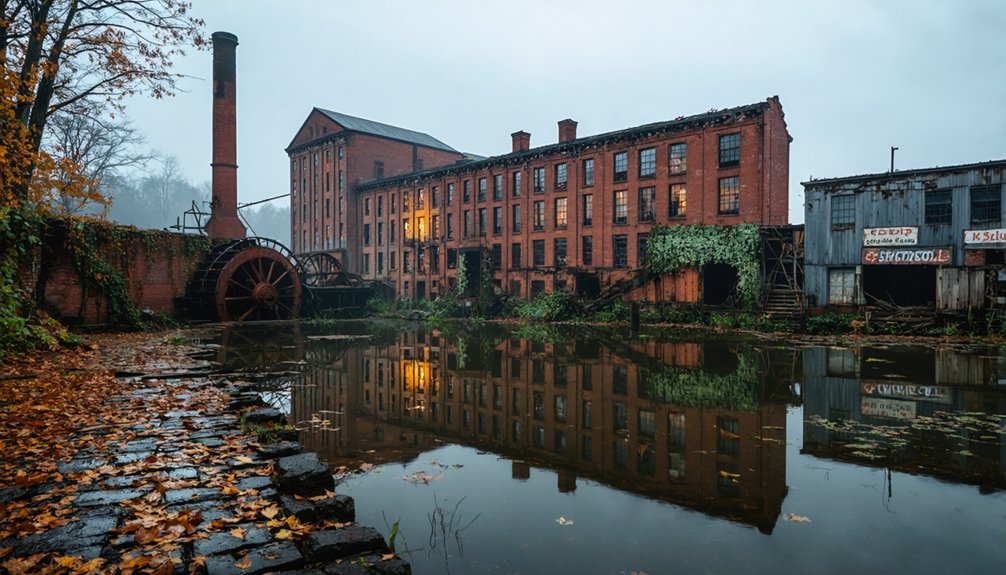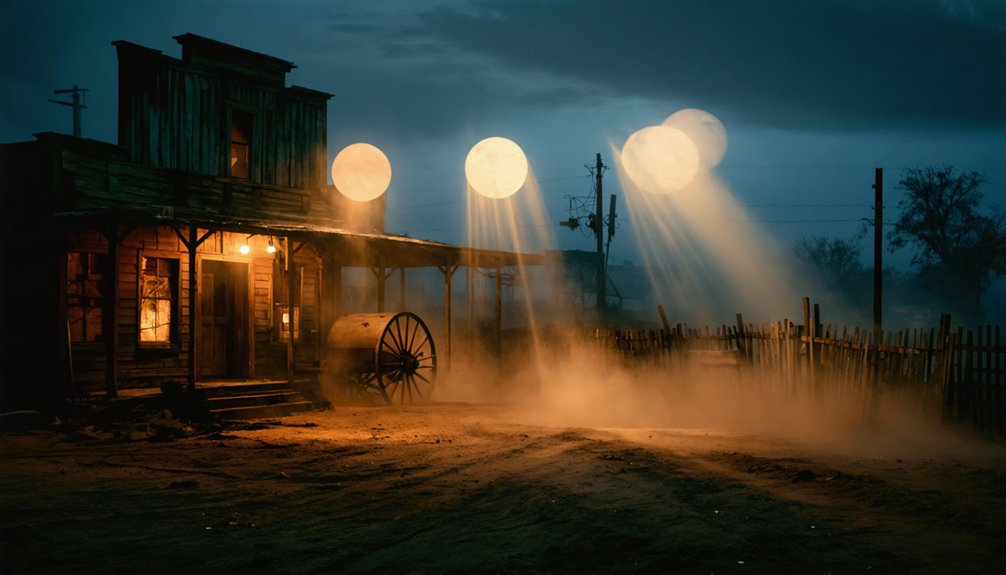
Ghost towns reveal fascinating phenomena that require methodical investigation. You’ll need to study historical markers as your primary storytellers, revealing a settlement’s rise and fall. Always verify legal access and bring proper safety gear, including respirators and offline maps. When photographing, capture decay through wide-angle lenses and manual exposure techniques. These abandoned places offer more than empty buildings—they present a complex intersection of history, nature’s reclamation, and human impermanence.
Key Takeaways
- Unexplained sounds and temperature drops often occur in abandoned structures due to settling materials and poor insulation.
- Document mysterious orbs or light anomalies in photographs using long exposures and a tripod for stability.
- Bring EMF meters and audio recorders to capture potential paranormal activity not detectable by human senses.
- Research historical tragedies or sudden abandonments that might contribute to reported paranormal phenomena.
- Explore at dawn or dusk when lighting conditions create natural optical illusions mistaken for supernatural occurrences.
Understanding the Silent Storytellers: Identifying Ghost Town Historical Markers
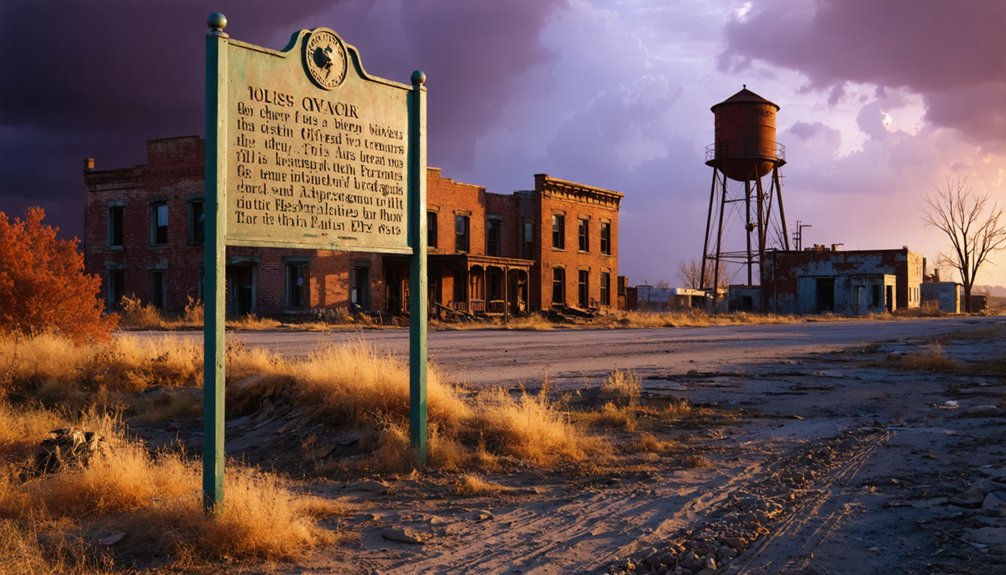
When investigating ghost town historical markers, you’ll discover a complex system of commemoration that varies considerably by state and preservation authority.
Look for state-shaped markers in Nevada, while Texas often positions theirs at intersections near remaining structures. These silent storytellers typically reveal a town’s birth, boom, and decline in concise paragraphs.
Don’t accept marker information without scrutiny. Many have been replaced with anniversary editions or updated with revised historical context. The marker’s significance extends beyond mere information—it’s often the last official acknowledgment of places erased from modern maps.
Historical markers are artifacts themselves, sometimes the final testament to communities time has otherwise forgotten.
Note the marker’s classification system, which differs by state. Some distinguish between ghost towns, historic buildings, and cemeteries. In Texas, historical markers serve an educational purpose to highlight the significance of local history without imposing restrictions on property use. In Nevada specifically, be aware that some markers are missing, having been stolen or removed without replacement over the years.
For deeper understanding, compare the marker’s historical context with other sources to uncover potential discrepancies or omissions.
Despite the romantic allure of ghost town exploration, venturing into these abandoned sites requires methodical preparation and vigilant caution. Before setting out, verify the legal status of your destination—trespassing carries serious consequences. Always obtain explicit permission from property owners, even when sites appear completely deserted.
Your safety protocols should include carrying offline maps and GPS devices, as cell service is typically nonexistent. Don’t explore alone—groups of three provide essential redundancy if someone is injured. Equip yourself with respirators (N95 or better), sturdy footwear, gloves, and flashlights. Be aware that many abandoned mines contain poisonous air that can be lethal without proper respiratory protection.
Legal considerations extend beyond permission; understand specific regulations governing public lands you’re visiting. Use county assessor’s websites to research property ownership before your trip.
When examining structures, stay near walls where floors are strongest, and avoid buildings showing water damage or collapse risk. Always inform someone reliable about your itinerary and expected return time.
Capturing the Past: Photography Techniques for Abandoned Settlements

The art of photographing abandoned settlements demands technical precision and artistic vision to truly capture their haunting essence. Your equipment selection directly influences your ability to document these forgotten places—always pack a reliable flashlight, tripod, remote shutter release, and wide-angle lens for ideal results. Shooting with a versatile 17-50mm f/2.8 lens can give you exceptional flexibility when navigating various lighting conditions in abandoned structures. Always inform someone of your exploration plans and carry a detailed exit strategy for safety when photographing these potentially hazardous locations.
Master composition techniques by leveraging architectural elements as leading lines and using doorways as natural frames. The most compelling ghost town images emerge when you control exposure manually, often requiring long exposures in dim environments to reveal hidden details without compromising quality.
Abandoned doorframes aren’t just barriers—they’re compositional gold for photographers willing to wait for the perfect long exposure.
- Light painting selectively illuminates subjects during long exposures
- Desaturation techniques enhance the melancholy aesthetic of decay
- Strategic vignetting subtly directs viewer attention to focal points
- Split toning creates mood enhancement through temperature contrast
Your post-processing approach should remain subtle, preserving authenticity while amplifying the emotional narrative these abandoned places naturally convey.
Frequently Asked Questions
Can Ghost Towns Be Legally Claimed by New Residents?
No, you can’t simply claim ghost towns. They retain legal ownership status despite abandonment, requiring proper acquisition through purchase, auction, or meeting strict adverse possession requirements.
Why Do Some Ghost Towns Maintain Electricity Despite Abandonment?
In Colorado’s Pitkin, you’ll find abandoned infrastructure still powered because regional grids maintain connection points, energy sources serve broader areas, and tourism or preservation efforts justify ongoing utility investments despite depopulation.
How Do Weather Patterns Affect Ghost Town Deterioration Rates?
You’ll find weather extremes accelerate deterioration dramatically. Excessive humidity impact causes rapid wood rot and metal corrosion, while freeze-thaw cycles crumble foundations. Drought conditions preserve structures but increase fire vulnerability.
Are There Seasonal Differences in Ghost Town Accessibility?
Yes, seasonal accessibility varies dramatically. You’ll find summer offers ideal access, while winter’s snow blocks roads. Spring mud and fall rains impact travel conditions. Weather impacts every exploration opportunity you’re seeking.
Do Ghost Towns Have Different Characteristics Across Various Cultures?
Like time’s forgotten canvas, ghost towns indeed vary greatly. You’ll observe distinct cultural significance in resource-driven Western towns versus China’s empty developments, with architectural styles reflecting regional materials and traditions.
The allure of these places often extends to their secrets, like the mysterious apparitions in Colorado mines that draw thrill-seekers and paranormal enthusiasts alike. Each tale adds another layer to the rich tapestry of history, leaving visitors to wonder what truths lie beneath the surface. As night falls, the shadows of the past seem to dance among the remnants of forgotten lives, igniting a sense of curiosity and reverence for the stories untold.
References
- https://www.lindasellsmoore.com/blog/what-is-a-ghost-town/
- https://www.merriam-webster.com/dictionary/ghost town
- https://westernmininghistory.com/664/what-is-a-ghost-town-wmh-town-classifications-explained/
- https://history.howstuffworks.com/history-vs-myth/ghost-towns.htm
- https://en.wikipedia.org/wiki/Ghost_town
- https://www.britannica.com/topic/ghost-town
- https://grokipedia.com/page/Ghost_Town
- https://www.nps.gov/thingstodo/ghost-towns.htm
- https://www.nevadaghosttownsandmininghistory.com/copy-of-links-and-books
- https://www.bosquechc.org/sites-markers.shtml