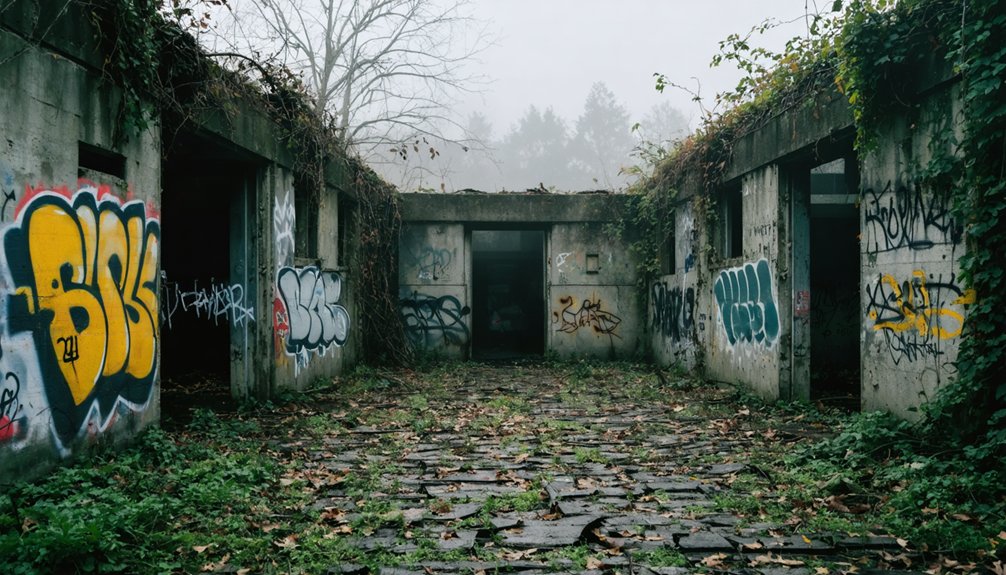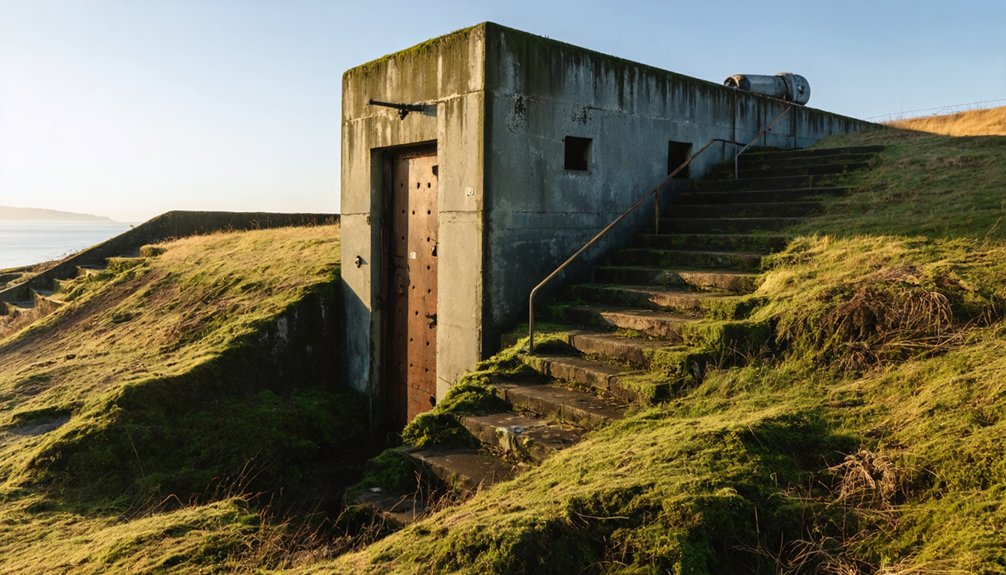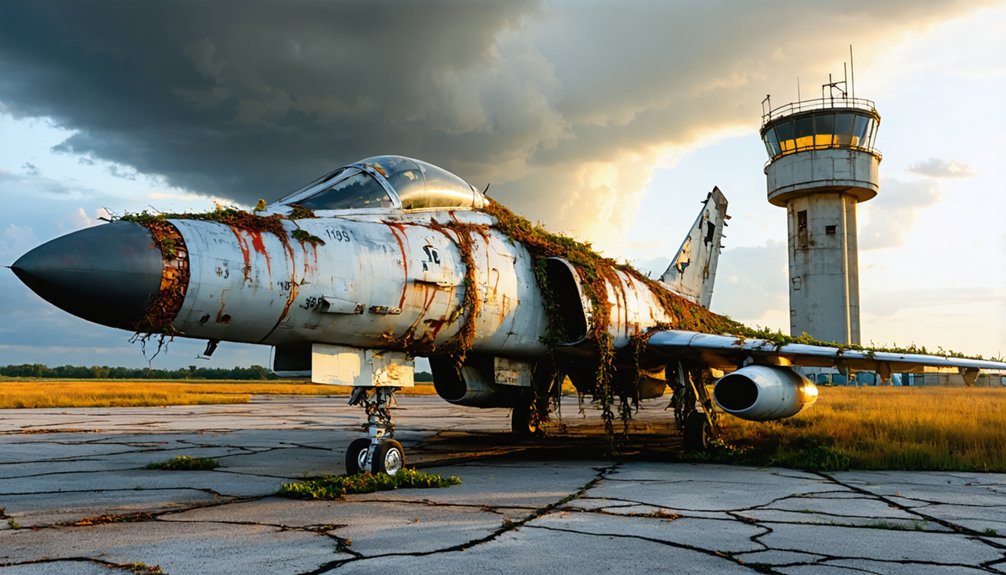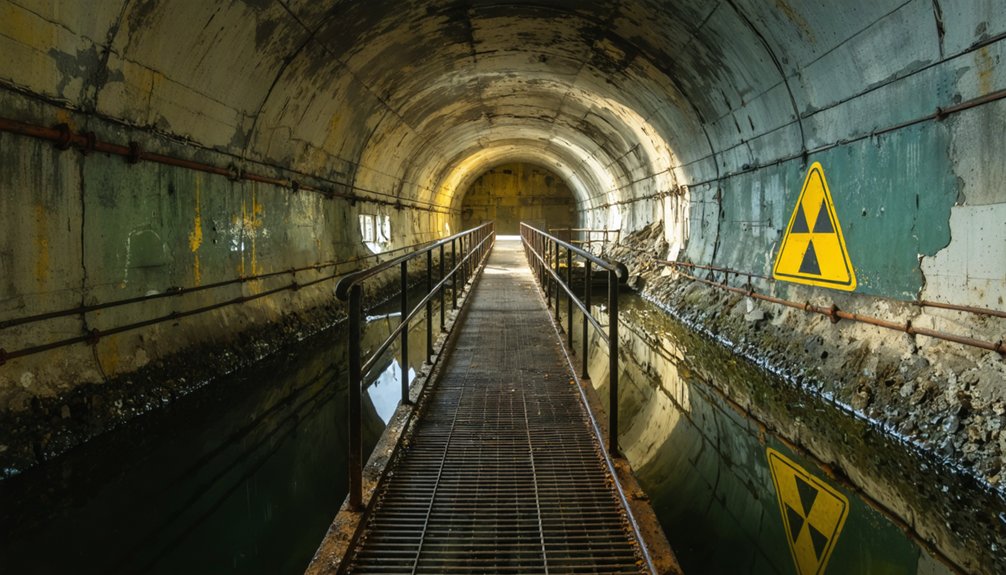
When exploring abandoned military sites in the USA, always obtain proper authorization as trespassing carries federal penalties under 18 U.S.C. § 1382. Watch for contamination indicators like discolored soil and avoid potential unexploded ordnance areas. Research property ownership through local assessor offices before visiting. Consider joining organized tours at former bases like Fort Ord or the Presidio of San Francisco. The transformation stories of these sites reveal America’s evolving military footprint.
Key Takeaways
- Military sites require written authorization for legal access under 18 U.S.C. § 1382, with penalties including imprisonment and fines.
- Stay vigilant for contamination indicators like discolored soil, chemical storage areas, and warning signs when exploring.
- Never touch or disturb suspected unexploded ordnance (UXO), which remains dangerous for decades across 40,000 square kilometers.
- Research sites through National Archives, EPA’s Federal Facility Restoration Office, or university historical collections before visiting.
- Consider participating in organized tours or special public events for safe, legal access to abandoned military installations.
The Legacy of BRAC: Understanding Abandoned Military Landscapes
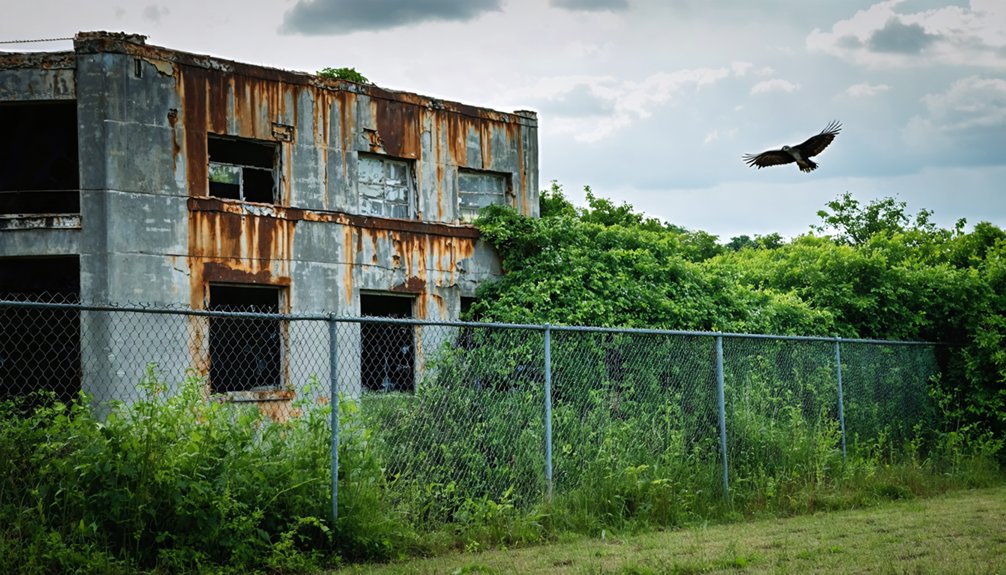
When the United States Congress established the Base Realignment and Closure (BRAC) Commission in 1988, it forever altered America’s military landscape. This bipartisan, independent commission was designed to objectively evaluate military installations without political interference, systematically closing over 350 bases across five rounds ending in 2005.
The BRAC impacts extend far beyond military operations. You’re witnessing the historical significance of a process that saved approximately $12 billion annually while transforming communities nationwide.
These abandoned sites tell a complex story of government efficiency and local disruption. The BRAC process arose partly because political influence had previously dominated base closure decisions before 1988. Some bases have successfully shifted into civilian use as airports or industrial parks, while others remain derelict due to environmental contamination.
The commission’s legacy lives on in these repurposed spaces—physical reminders of how military priorities shift and how communities must adapt when bases close their gates. The final recommendations from each BRAC round required all-or-nothing approval, ensuring that Congress could not selectively protect bases in their districts.
Safety First: Hazards and Precautions When Exploring Former Bases
You’ll need to recognize potential contamination indicators such as discolored soil, chemical storage areas, or warning signs that suggest the presence of PFAS, TCE, or other persistent pollutants.
When identifying potential unexploded ordnance (UXO), watch for partially exposed metal objects, disturbed soil patterns, or concrete structures that may have housed munitions.
Always maintain a safe distance from suspicious objects, never attempt to handle them, and report any UXO discoveries immediately to local authorities or military personnel.
Be aware that many former military sites like Fort Ord have a history of toxic legacy from burn pits, fire-retardant foam, and chemical solvents that may have contaminated soil and groundwater.
Remember that over 400 installations across the United States have documented water contamination issues that may affect nearby exploration areas.
Identifying Contamination Risks
Exploring abandoned military sites requires an acute awareness of the serious contamination risks that persist long after base closures.
You’ll need to watch for PFAS “forever chemicals” from firefighting foam (AFFF) that contaminate soil, groundwater, and surface water at roughly 80% of military installations. These invisible contamination sources create dangerous exposure pathways through drinking water and soil contact.
Be especially vigilant near aircraft maintenance areas, firefighting training zones, and disposal sites where concentrated toxins exist.
The environmental impact extends far beyond base boundaries, affecting surrounding communities through contaminated aquifers. Testing has revealed unsafe water in wells near 63 military bases across 29 different states.
When exploring, avoid collecting water samples, disturbing soil in suspicious areas, and entering buildings with visible chemical residue or storage containers.
The presence of warning signs and fencing may indicate Superfund status requiring heightened caution.
The Department of Defense has identified 581 military installations needing PFAS cleanup, with extensive assessments determining that remediation is necessary due to significant contamination levels.
Unexploded Ordnance Awareness
Beyond the invisible threats of chemical contamination lies an even more immediate danger at abandoned military sites: unexploded ordnance (UXO).
These deadly remnants span over 40,000 square kilometers of American soil, with approximately 1,400-2,000 former military sites harboring these hidden hazards.
Never touch or disturb suspected UXO—maintain distance and report findings to authorities. Advanced UXO detection technologies now achieve 95-98% accuracy, dramatically improving public safety during cleanup operations.
When exploring these areas, consult official maps identifying known contamination zones, follow marked pathways, and carry appropriate protective equipment. In the United States, millions of acres may contain UXO from historical military activities and training exercises.
Traditional detection methods struggle to differentiate between actual UXO and non-UXO anomalies, leading to costly and time-consuming remediation efforts.
Remember that UXO can remain dangerous for decades, containing both explosive and toxic chemical compounds. The financial burden of remediation exceeds $14 billion, reflecting the massive scale of this national safety challenge.
Five Must-Visit Decommissioned Military Sites Across America
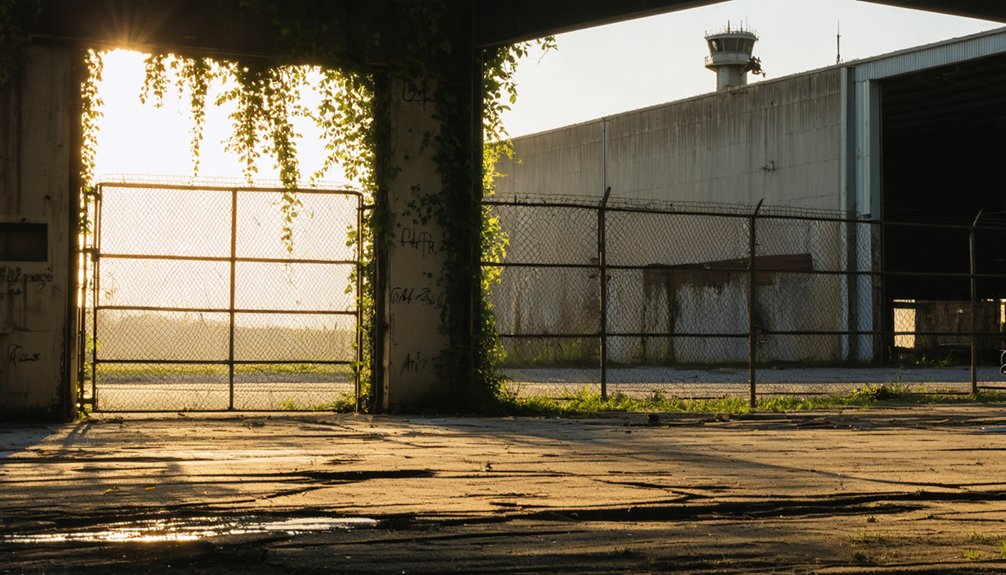
These five abandoned military installations represent America’s complex defense history and offer unique exploration opportunities for history enthusiasts and adventure seekers alike.
Each site showcases different eras of American military preparedness while providing remarkable historical significance. The Port of Whittier in Alaska served as a critical strategic military installation during World War II.
- Fort Ord – California’s sprawling 30,000-acre former infantry training ground where over one million soldiers prepared for combat. Built in 1917, this primary military training facility on the West Coast has now fallen into ruin and experienced significant vandalism and deterioration.
- Presidio of San Francisco – 200-year-old military post with panoramic Golden Gate views, now repurposed for cultural preservation.
- Mare Island Naval Shipyard – Historic 1854 facility with impressive dry docks where wartime vessels were built and repaired.
- Charleston Naval Shipyard – Waterfront industrial complex that supported multiple wars before its 1995 closure.
- Nekoma Missile Base – Cold War pyramid structure in North Dakota that operated just three days despite its $6 billion investment.
Legal Access Guide: Permissions and Restrictions for Visitors
When visiting abandoned military sites in the United States, you’ll need to navigate a complex legal framework that governs access to these historically significant properties. Despite appearances of abandonment, these sites remain under federal jurisdiction.
Understand that trespassing laws apply regardless of whether fencing or signage exists. Federal law 18 U.S.C. § 1382 prohibits unauthorized entry, with penalties including up to six months imprisonment and fines.
Permission requirements are non-negotiable—you must obtain written authorization from the controlling agency or owner.
Check property records at local assessor offices to identify the current authority. Legal access options include organized tours and special public events.
Installation commanders have broad authority to restrict entry, and additional permits may be required under historic preservation laws. Respect these regulations to avoid federal prosecution.
From Barracks to Business Parks: Successful Redevelopment Stories
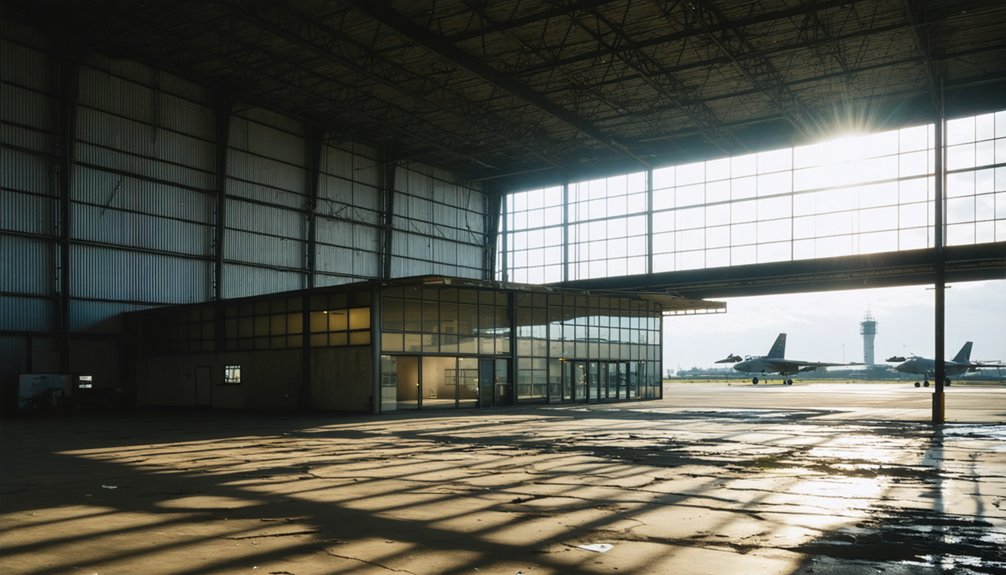
Abandoned military sites across America have undergone remarkable transformations, breathing new economic life into communities that once faced uncertainty after base closures.
These successful redevelopment stories emerged from extensive community engagement and strategic planning, often beginning before official closure announcements.
Proactive community involvement creates the foundation for successful military site transformations.
- Orlando Naval Training Center held 170+ public meetings over two years to build consensus on redevelopment.
- Myrtle Beach Air Force Base transformed 3,937 acres into mixed-use districts with housing, commercial spaces, and education facilities.
- Brooks City-Base evolved into a bioscience and technology hub, creating 1,500 jobs and attracting $42 million in private investment.
- Lowry Air Force Base preserved military history while developing homes, shops, and parks.
- Infrastructure investments through federal grants, bonds, and revenue sharing fueled economic revitalization.
You’ll find these former military properties now serve as regional economic engines through thoughtful mixed-use development strategies.
Research Tools and Resources for Military Site Enthusiasts
While successful redevelopment projects showcase the future potential of former military installations, serious enthusiasts often seek to understand these sites’ rich historical contexts before visiting or studying them.
You’ll find a wealth of research tools at your disposal. The National Archives houses Federal military records from the Revolutionary War through 1912, with many now digitized for remote access.
For environmental considerations, EPA’s Federal Facility Restoration Office maintains extensive cleanup documentation through the BRAC program.
Don’t overlook oral histories—UC Berkeley’s collection provides firsthand accounts that reveal details absent from official records.
Your archival research can include University of Washington Tacoma’s studies on military sites’ urban development impacts.
Popular Mechanics has compiled accessible databases of abandoned locations with historical context.
These resources empower your exploration of America’s military heritage without relying solely on physical site visits.
Understanding native American heritage at ghost towns provides insights into the cultural intersections that define these unique sites. By examining the stories and traditions that persist in these abandoned places, one can appreciate the resilience and adaptation of Native American communities. This exploration adds a rich layer to the overarching narrative of American history, revealing the complexities of heritage that often go unnoticed.
Frequently Asked Questions
Can I Collect Artifacts or Souvenirs From Abandoned Military Sites?
No, you can’t legally collect artifacts from abandoned military sites. Artifact legality prohibits unauthorized collection, and souvenir ethics demand leaving items undisturbed to preserve historical context and avoid serious legal penalties.
How Do Radiation Levels Compare at Different Decommissioned Cold War Sites?
Radiation levels vary considerably between sites; Nevada Test Site shows highest contamination. You’ll need radiation monitoring equipment and strict safety protocols when visiting these areas with measurable contamination persisting decades later.
Are There Seasonal Considerations for Visiting These Locations?
You’ll encounter significant seasonal variations at these sites. Harsh winter weather conditions limit access to many locations, while summer offers safer exploration. Spring thaws may create muddy hazards at formerly restricted installations.
What Photography Equipment Restrictions Exist at Partially Operational Facilities?
You’ll need photography permits for partially operational facilities, where officials restrict professional equipment, drones, and telephoto lenses. Equipment regulations often prohibit tripods and flash photography to maintain operational security.
How Do Abandoned U.S. Military Sites Differ Internationally?
U.S. sites face stricter international regulations but often lack the cultural significance of European bunkers. You’ll find American facilities are larger, more standardized, and typically undergo environmental remediation before public access.
References
- https://www.epa.gov/fedfacts/base-realignment-and-closure-act-sites
- https://www.afcec.af.mil/Home/BRAC/
- https://www.loveexploring.com/gallerylist/233478/americas-eeriest-abandoned-military-sites
- https://en.wikipedia.org/wiki/List_of_former_United_States_Army_installations
- https://catalog.data.gov/dataset/military-bases1
- https://www.congress.gov/crs-product/R48123
- https://www.ebsco.com/research-starters/history/brac-commission-established-close-us-military-bases
- https://www.everycrsreport.com/reports/R45705.html
- https://comptroller.defense.gov/Portals/45/Documents/defbudget/fy2024/budget_justification/pdfs/05_BRAC/FY2024_BRAC_Overview.pdf
- https://en.wikipedia.org/wiki/Base_Realignment_and_Closure