You’ll find fascinating ghost towns throughout the Pacific Northwest accessible via well-established hiking trails. From Monte Cristo’s silver mining remains to Franklin’s coal history along the Green River, each location offers unique historical remnants. Don’t miss Moncton’s submerged structures at Rattlesnake Lake or Northern State’s former mental hospital grounds. Remember to practice proper preservation ethics by staying on trails and never removing artifacts. The stories behind these abandoned communities await your discovery.
Key Takeaways
- Pacific Northwest ghost towns are accessible via established trails ranging from 2-10 miles with varying difficulty levels.
- Monte Cristo and Melmont offer 5-mile hiking trails featuring mining remnants and historic foundations.
- Trail conditions can change dramatically due to floods, avalanches, and seasonal water levels at sites like Moncton.
- Always practice preservation ethics: stay on trails, avoid climbing structures, and never remove artifacts.
- Check land ownership before visiting and respect posted signage to prevent trespassing on private property.
The Mining Legacy of Monte Cristo: Trail Details and History
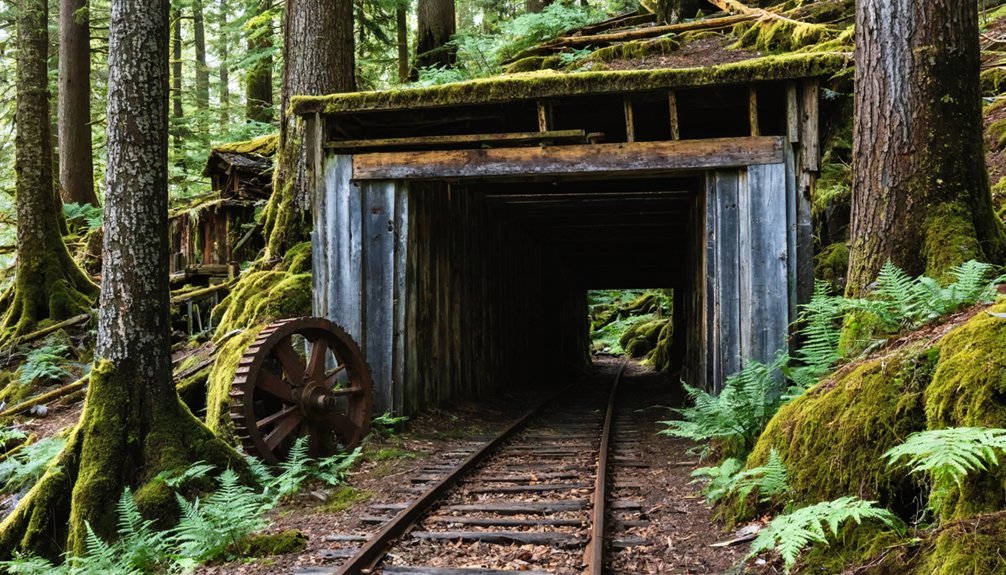
Tucked deep within the Northern Cascade Mountains of Washington, the ghost town of Monte Cristo stands as a monument to the region’s rich mining history that began with a fateful silver ore discovery in 1889.
Today, hiking trails follow the original wagon roads constructed in 1891, offering you a journey through time as you ascend to this historic site.
The main trail starts near Granite Falls and follows the South Fork Sauk River to the former boomtown where over 1,000 people once lived. The roughly 5-mile hike follows the old Monte Cristo Railroad grade, with sections where ancient rails have been exposed by washouts.
As you explore, you’ll encounter remnants of the Pride of the Mountains, Mystery, and Comet mines—the latter perched 2,700 feet above the townsite. These mines once produced valuable gold, silver, and copper until operations ceased in the early 1900s.
Be prepared for changing trail conditions, as this area’s history is marked by floods and avalanches that eventually forced miners to abandon their claims.
Franklin Ghost Town: Coal Mining Remnants Along Green River
While Monte Cristo’s silver drew prospectors to the Cascades, coal fueled the development of Franklin—a once-bustling mining community along the Green River in Southeast King County.
This ghost town, established in the 1880s, peaked with 1,100 residents before declining after Washington’s second-worst mining disaster claimed 37 lives in 1894.
To experience Franklin’s coal mining history:
- Park at the trailhead off Green River Gorge Road ($5 fee) and hike the 2-mile former railroad grade
- Wear long pants to protect against overgrowth while exploring foundations, abandoned mine shafts, and historic cemetery
- Look for the repurposed Cannon Mine bridge, which now carries spring water to nearby Black Diamond
The site remains largely reclaimed by nature, offering a poignant glimpse into Pacific Northwest industrial heritage. During its heyday, the Columbia & Puget Sound Railroad that extended to Franklin in 1885 enabled coal transport operations that shipped the first trainload on July 21 that same year. The area was once known as the “Pennsylvania of the West” due to its extensive coal reserves and mining operations.
Exploring Rattlesnake Lake’s Submerged Past at Moncton
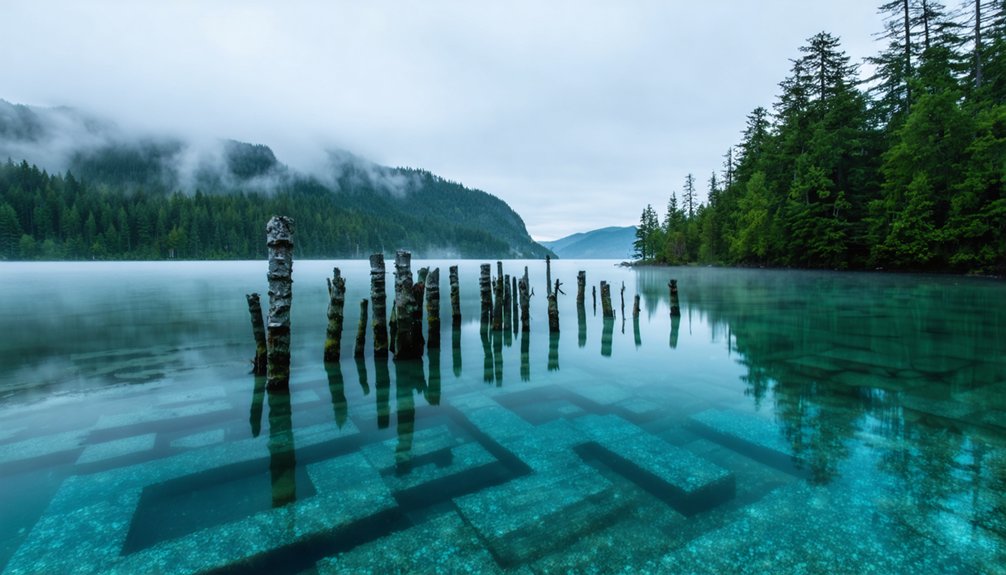
Unlike other ghost towns that remain visible amid nature’s reclamation, the remains of Moncton lie beneath the placid waters of Rattlesnake Lake near North Bend.
This railroad town, established in 1906, met a slow demise when the masonry dam completed in 1915 caused groundwater to saturate the porous glacial moraine beneath.
You’ll find the best viewing during fall or drought periods when water levels drop, revealing foundations, concrete blocks, and wooden remnants along the shoreline.
The easy 2.5-mile trail with minimal elevation gain makes this accessible for most hikers. This trail features a mere 20 feet gain in elevation, making it ideal for families and beginners.
For a glimpse into Moncton history, follow the paved paths around Rattlesnake Lake. The town once had over 200 residents by 1915, with various amenities including a school that remained open until storm damage.
Remember that scuba diving is restricted in this watershed area, so stick to shoreline exploration during low water periods.
Sunken towns along the Mississippi river tell a haunting story of the past, with remnants of buildings and pathways submerged beneath the water. Exploring the remnants can provide a unique glimpse into the lives that once thrived in these now-inaccessible communities. Be sure to research the history behind them to enhance your shoreline exploration experience.
Northern State Recreation Area: From Mental Hospital to Hiking Haven
The haunting ruins of Northern State Mental Hospital stand as an extraordinary tribute to Washington’s complex mental health history.
As you explore this 1,100-acre site near Sedro-Woolley, you’re walking through the remains of what was once a self-sustaining community designed with therapeutic landscape principles by the famed Olmsted Brothers. The facility housed up to 2,700 patients at its peak in 1953, many of whom were not actually mentally ill. The cemetery, though facing years of neglect, is now being restored through the dedicated efforts of volunteers like John Horne.
The hospital closed in 1973, but its story lives on through crumbling structures and overgrown pathways.
- Follow marked trails to discover remnants of the dairy, bakery, and farm where patients once worked as part of their treatment.
- Visit the peaceful cemetery that honors former residents who lived within these grounds.
- Observe the deliberate design elements that showcased how nature was incorporated into mental health treatment.
Melmont’s Hidden Foundations: Hiking the Carbon River Railway Grade
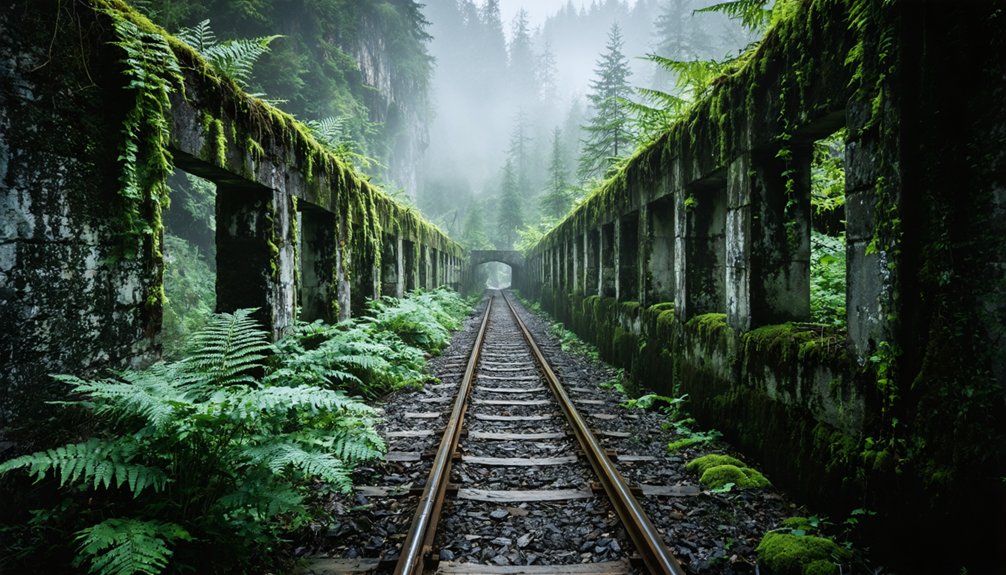
Hidden among the verdant forests of the Mount Rainier region, Melmont’s forgotten foundations offer a fascinating glimpse into Washington’s coal mining past.
Your Melmont exploration begins at the Fairfax Bridge parking area on SR-165, where a short descent leads to the old Northern Pacific Railroad grade.
Follow this flat, easy trail as it contours above the Carbon River, traveling about a mile to reach the ghost town’s remnants. The Carbon River trails provide year-round access, though river levels can affect some side paths. Similar to the Railroad Grade trail in the North Cascades, this path follows along a glacial moraine edge with impressive views below.
At the junction (N 47° 01′ 03″, W 122° 01′ 33″), you’ll find spur trails to river bars and continuing paths to other abandoned settlements.
Watch carefully—the town’s overgrown foundations require observant eyes. No interpretive signs exist, making this a true adventure for those seeking freedom in historical discovery.
The hike covers approximately 5 miles one way from Fairfax Bridge to Manley Moore Road, making for a 10-mile round trip journey.
Ghost Town Etiquette: Preservation Tips for Historical Explorers
Visiting these historic remnants comes with responsibility for their preservation. When exploring Pacific Northwest ghost towns, your actions directly impact whether these sites survive for future generations. Proper ghost town etiquette means treating each location as a museum without walls—observe but don’t disturb.
- Leave structures untouched – Never climb on buildings, remove artifacts, or alter stonework. These fragile remnants can’t withstand physical interaction.
- Obtain proper permission – Always check land ownership and respect posted signs. Trespassing damages relationships with communities protecting these sites.
- Practice true Leave No Trace – Pack out all trash, stay on established trails, and avoid creating new paths. Proper preservation practices include dispersing dishwater 200 feet from water sources and refraining from metal detecting.
Frequently Asked Questions
Are Ghost Towns Accessible in Winter Months?
Yes, you can access many ghost towns in winter, but check winter accessibility conditions first. At higher elevations, you’ll need snowshoes or snowmobiles, and always prioritize snow safety.
What Wildlife Encounters Are Common Near These Ghost Towns?
You’ll encounter bears, deer, eagles and smaller mammals in ghost town ecosystems. Bring your wildlife photography gear but maintain safe distances, especially from bears and mountain lions.
Can I Bring My Dog on These Ghost Town Hikes?
Yes, most ghost town trails are dog-friendly. You’ll need to keep your four-legged friend on a leash at all times, clean up waste, and bring extra water for them.
Are There Guided Tours Available for These Locations?
Yes, guided tour options abound! In Portland, Slabtown Tours leads walks; in Seattle, Seattle Terrors navigates haunted sites; and throughout Washington, local tour companies offer expert-led ghost town explorations with historical insights.
Are Camping Opportunities Available Near These Ghost Towns?
You can’t camp at Bodie, Melmont, or Sherman sites themselves, but you’ll find nearby campgrounds within an hour’s drive. Follow camping regulations and obtain permits for primitive camping where allowed.
References
- https://www.wta.org/go-hiking/hikes/monte-cristo-143
- https://www.wta.org/go-outside/seasonal-hikes/fall-destinations/hidden-history-ghost-town-hikes
- https://bestofthenorthwest.com/northwest-travel-ideas/northwest-ghost-towns/
- https://www.mountaineers.org/activities/routes-places/northern-state-ghost-town
- https://stateofwatourism.com/ghost-towns-of-washington-state/
- https://www.trailforks.com/route/melmont-ghost-town/
- https://www.newmexico.org/places-to-visit/ghost-towns/
- https://www.parentmap.com/article/ghost-town-hikes-for-families-western-washington
- https://www.youtube.com/watch?v=FVveO9uJBvc
- https://www.youtube.com/watch?v=v5RId9XNqI8