North Idaho’s ghost towns are scattered remnants of the 1884 silver, zinc, and lead boom that transformed Shoshone County almost overnight. You’ll find semi-abandoned brick structures in Burke, original gold-rush buildings in Murray, and Idaho’s oldest courthouse in Pierce. Some sites, like Eagle City and Pritchard, have nearly vanished entirely. Before you visit, research land ownership, respect private property, and follow Idaho’s artifact preservation laws. There’s much more to uncover about these historically significant communities.
Key Takeaways
- Silver, zinc, and lead discoveries in 1884 sparked rapid growth in Shoshone County, creating towns like Burke that later became ghost towns.
- Notable North Idaho ghost towns include Burke, Murray, Pierce, Eagle City, and Pritchard, each offering varying degrees of historical remnants.
- Pierce hosts Idaho’s oldest courthouse from 1862, while Murray retains original buildings alongside a small active community.
- Before visiting, research land ownership, as many ghost town sites involve private property, active mining claims, and legal restrictions.
- Idaho law prohibits artifact removal; explore responsibly by staying on designated paths and respecting historical preservation efforts.
Silver Booms and Abandoned Towns: North Idaho’s Ghost Town History
When silver, zinc, and lead deposits were discovered across Shoshone County in 1884, North Idaho’s landscape transformed almost overnight. Towns like Burke erupted from wilderness, drawing miners who applied aggressive extraction mining techniques that reshaped entire canyon systems.
The economic impacts were substantial — brick buildings rose, commerce flourished, and thousands staked their independence on the land’s mineral wealth.
Yet that freedom came with fragility. Fire, avalanche, and market collapse erased most wooden settlements, leaving only stone foundations and rusted machinery behind.
You’ll find roughly 100 ghost towns scattered across northern Idaho today, each representing a community that rose and fell alongside commodity prices. These weren’t failures — they were bold experiments in self-determination, now preserved in silence across the region’s rugged terrain.
North Idaho’s Best Ghost Towns
If you’re exploring North Idaho’s most historically significant ghost towns, you’ll want to start with Burke, Murray, and the Pierce area, each offering distinct windows into the region’s mining past.
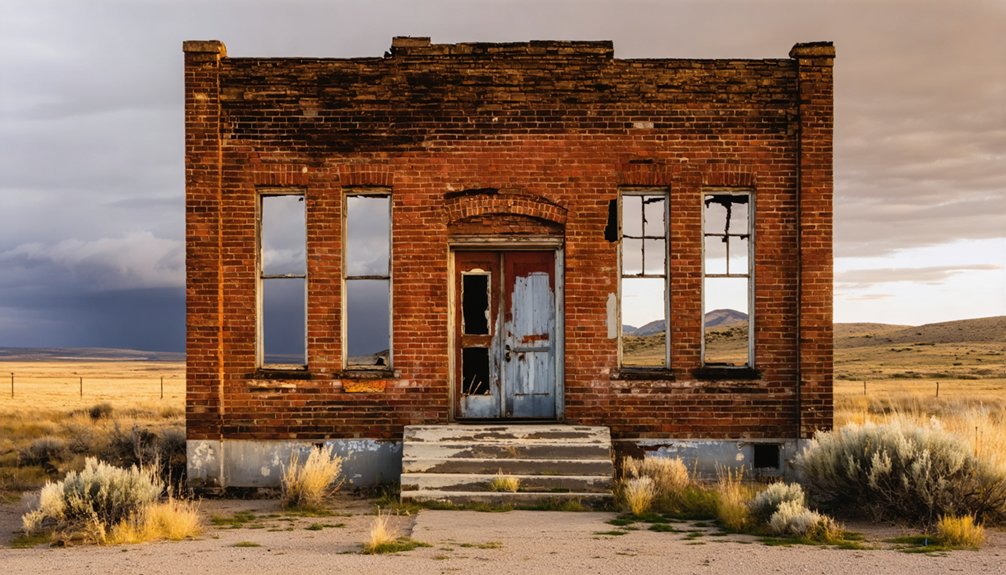
Burke, a semi-abandoned settlement north of Wallace in Shoshone County, still stands as a monument to the nation’s richest silver, zinc, and lead deposits, with brick and stone structures surviving the fires and avalanches that claimed most wooden buildings.
Murray, a gold mining town along the Coeur d’Alene River, retains both buildings and a small population from the 1884 Coeur d’Alene rush, while Pierce preserves its 1862 courthouse as a reminder of Idaho’s earliest mining era.
Burke’s Silver Mining Legacy
Tucked into a narrow canyon north of Wallace in Shoshone County, Burke stands as one of North Idaho’s most compelling semi-abandoned settlements. Its surviving brick and stone structures bear witness to the mineral wealth that once drew thousands to the region.
Burke history traces back to 1884, when miners discovered what became the nation’s richest silver, zinc, and lead deposits. You’ll find massive mining operation remnants still standing throughout the canyon, though most sit on private property, so respect those boundaries.
The mining techniques employed here drove industrial-scale extraction, transforming raw canyon terrain into a powerhouse of American mineral production. Fire and avalanche claimed Burke’s wooden structures over the decades, yet the remaining stone buildings let you connect directly with that era’s relentless, freedom-driven pursuit of underground wealth.
Murray and Coeur d’Alene Rush
From Burke’s silver corridors, the Coeur d’Alene River valley opens another chapter of North Idaho’s mining history, anchored by Murray, a gold town that still holds both buildings and a handful of residents along its weathered streets.
Murray exploration reveals the 1884 Coeur d’Alene history rush that transformed this region overnight.
Contrast Murray against its contemporaries:
- Murray — original structures standing; active community remnants
- Eagle City — little physical evidence survives today
- Pritchard — similarly stripped by time and neglect
- Canyon Creek — near Burke; small resident population persists
You’ll find Murray uniquely rewards independent exploration.
Where Eagle City and Pritchard surrendered their bones to weather and abandonment, Murray stubbornly holds its ground, offering you direct, unmediated contact with North Idaho’s raw mining past.
Pierce Area Historical Remnants
Established in 1860, Pierce anchors the Pierce Area as North Idaho’s earliest mining settlement, and its surviving 1862 courthouse stands as the region’s most tangible link to frontier justice and gold-rush governance.
When you visit the Pierce Courthouse, you’re standing inside Idaho’s oldest public building, a direct artifact of Historic Mining-era governance that predates statehood by decades.
Nearby Florence, once crowded by 10,000 miners in 1862, now shows only old diggings scarring the landscape.
Warrens retains original structures and a small population, while Elk City carries a ghost town atmosphere despite current residents.
These sites reward serious explorers who respect active claims and private property boundaries.
Bring reliable maps, sturdy boots, and weather awareness — this territory doesn’t accommodate the unprepared.
Ghost Towns Near Wallace and the Silver Valley
The Silver Valley region surrounding Wallace, Idaho, harbors some of the most compelling ghost town remnants in the American West, with Burke standing as the area’s most prominent example.
Burke exploration reveals a semi-abandoned settlement that once produced the nation’s richest silver, zinc, and lead deposits following 1884 mineral discoveries. Wallace history connects directly to this industrial legacy.
Burke’s semi-abandoned corridors echo an era when Silver Valley claimed the nation’s richest mineral wealth.
When you visit, you’ll encounter:
- Surviving brick and stone buildings that outlasted devastating fires and avalanches
- Massive mining operation remnants still structurally present
- Canyon Creek settlements retaining a handful of residents
- Private property boundaries requiring respectful navigation
You’re stepping into an authentically preserved industrial corridor.
Respect active claims, stay on designated paths, and bring proper maps before exploring this remarkable stretch of mining heritage.
Ghost Towns Along the Coeur d’Alene River
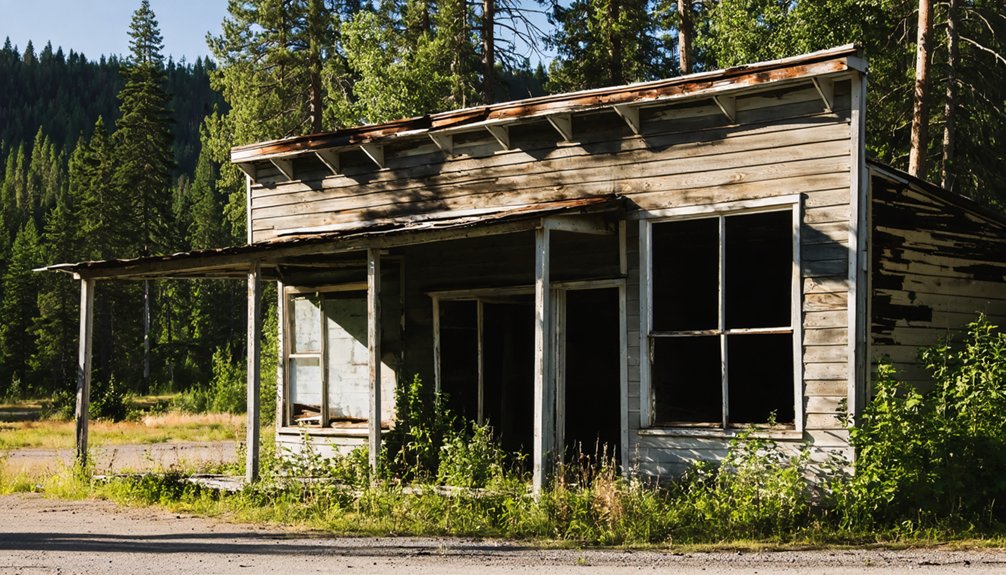
Stretching along the Coeur d’Alene River, Murray anchors a cluster of gold rush settlements that emerged prominently during the 1884 Coeur d’Alene mining rush.
You’ll find Murray retains both buildings and residents, making it one of the more accessible Coeur d’Alene ghost towns in the region.
Eagle City and Pritchard, two companion settlements from that same rush, have largely vanished, leaving little for you to examine beyond scattered remnants.
The Canyon Creek area near Burke also harbors a handful of residents amid its mining relics.
This river mining history reflects a transient settlement pattern — camps frequently began as tent cities before evolving into more permanent structures.
Respect active claims and private property boundaries as you explore these historically significant corridors along the river.
Pierce and Elk City’s Hidden Ghost Towns
Founded in 1860, Pierce anchors one of North Idaho’s most historically layered ghost town corridors, where you’ll find an 1862 courthouse still standing as tangible evidence of early mining-era governance.
These hidden treasures reward independent explorers willing to seek forgotten stories beyond maintained roads.
Nearby sites worth exploring:
- Florence – Only old diggings remain where 10,000 miners once worked.
- Warrens – Retains original buildings and a small living population.
- Elk City – Evokes abandonment despite current residents.
- Dixie and Orogrande – Remote mining-era remnants demanding rugged access.
Respect active claims and private property throughout this corridor.
Carry maps, wear appropriate boots, and verify weather conditions before departing.
How to Visit North Idaho Ghost Towns Without Getting Into Trouble
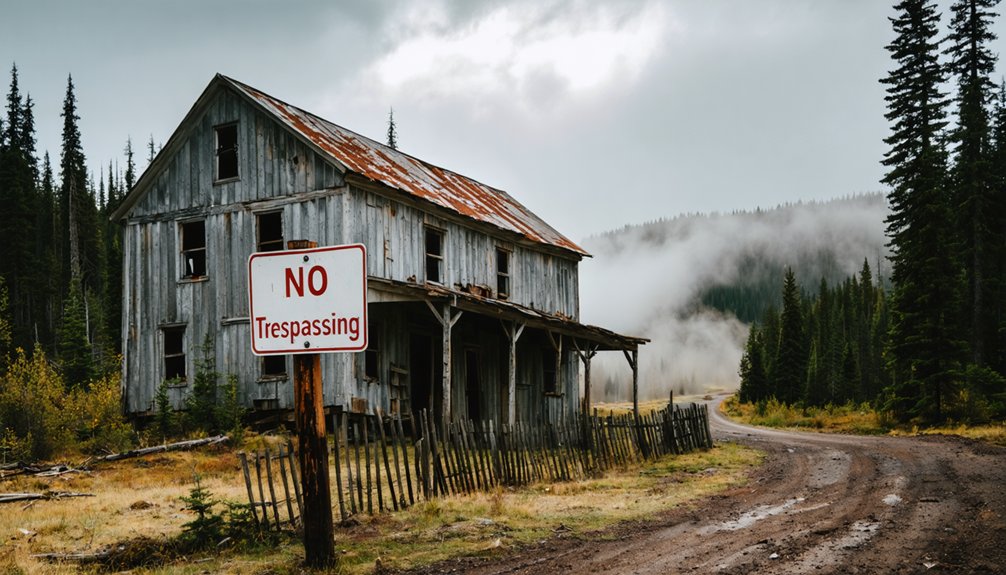
Exploring North Idaho’s ghost towns safely means understanding that many sites involve private property, active mining claims, and protected structures — all of which carry legal consequences if ignored.
Ghost town etiquette starts with research: confirm land ownership before you go. You’ll find that Burke, Canyon Creek, and similar sites include structures on private land requiring permission to access.
Follow these visiting tips to stay out of trouble: bring current maps, wear sturdy boots, and check seasonal weather conditions.
Don’t remove artifacts — Idaho law prohibits it. Stick to established paths, respect posted boundaries, and never enter structurally compromised buildings.
Active mining claims exist throughout Shoshone County, so trespassing carries real legal risk. Preparation and respect protect both you and the historical record these communities represent.
Frequently Asked Questions
Are There Guided Ghost Town Tours Available in North Idaho?
The knowledge doesn’t confirm guided explorations are officially available, but you’re free to independently discover these historic sites. Research local outfitters in Wallace or Murray, as they sometimes organize regionally-focused tours of North Idaho’s remarkable ghost towns.
What Wildlife Might I Encounter While Exploring North Idaho Ghost Towns?
With over 300 wildlife species in northern Idaho, you’ll likely encounter deer, black bears, and elk during wildlife sightings. Historic animals like wolves have also returned, roaming the same landscapes these abandoned settlements once thrived in.
Can Metal Detectors Legally Be Used at North Idaho Ghost Town Sites?
You’ll need to check site ownership before treasure hunting, as metal detectors aren’t permitted on state or federal lands due to historical significance protections, but you’re free to use them on private property with owner permission.
What Is the Best Time of Year to Visit These Ghost Towns?
With 300+ annual snowfall inches historically recorded, you’ll find ghost town seasons peak in summer. Plan weather considerations carefully—June through September lets you explore freely, accessing remote sites like Burke and Murray without harsh conditions blocking your path.
Are There Any Ghost Town Photography Permits Required in North Idaho?
Most sites don’t require photography permits, but you’ll want to respect private property boundaries. Research each location’s historical significance beforehand, and apply responsible photography tips to preserve these regionally important, evidence-rich remnants of North Idaho’s mining heritage.
References
- https://www.reddit.com/r/Idaho/comments/1i941p2/ghost_towns_in_northern_idaho/
- https://en.wikipedia.org/wiki/List_of_ghost_towns_in_Idaho
- https://foodtravelfamily.com/northern-idaho-ghost-towns/
- https://history.idaho.gov/wp-content/uploads/2018/08/0064.pdf
- https://idaho-forged.com/idahos-ghost-towns-eerie-yet-approachable/
- https://visitidaho.org/things-to-do/ghost-towns-mining-history/
- https://cdapress.com/news/2024/sep/05/over-the-hill-exploring-north-idahos-very-own-ghost-town/
- https://visitidaho.org/travel-tips/boom-or-bust-exploring-idaho-ghost-towns/
- https://www.startpackingidaho.com/blog/idahos-ghost-towns/
- http://archives.idgenweb.org/history-ghost+towns.html