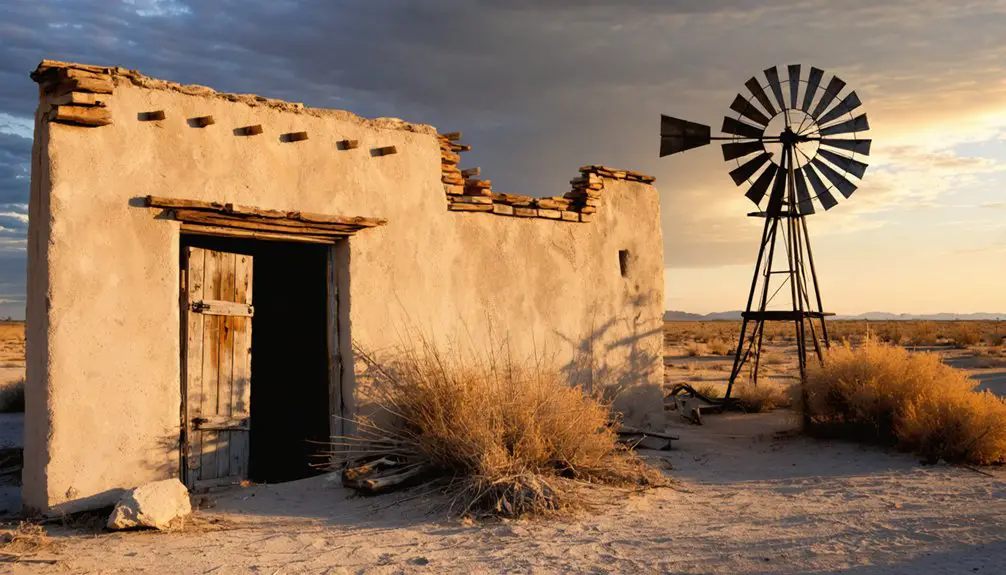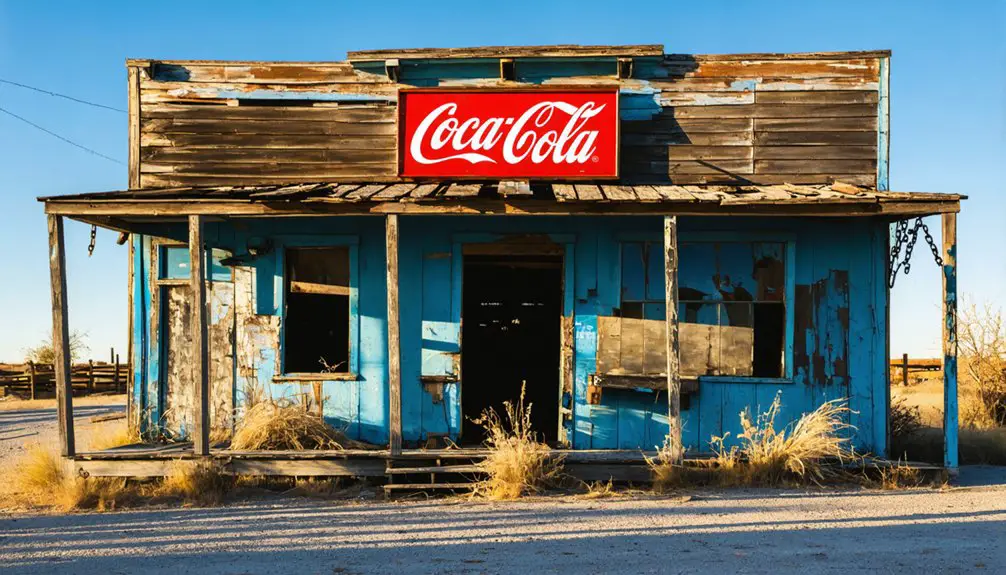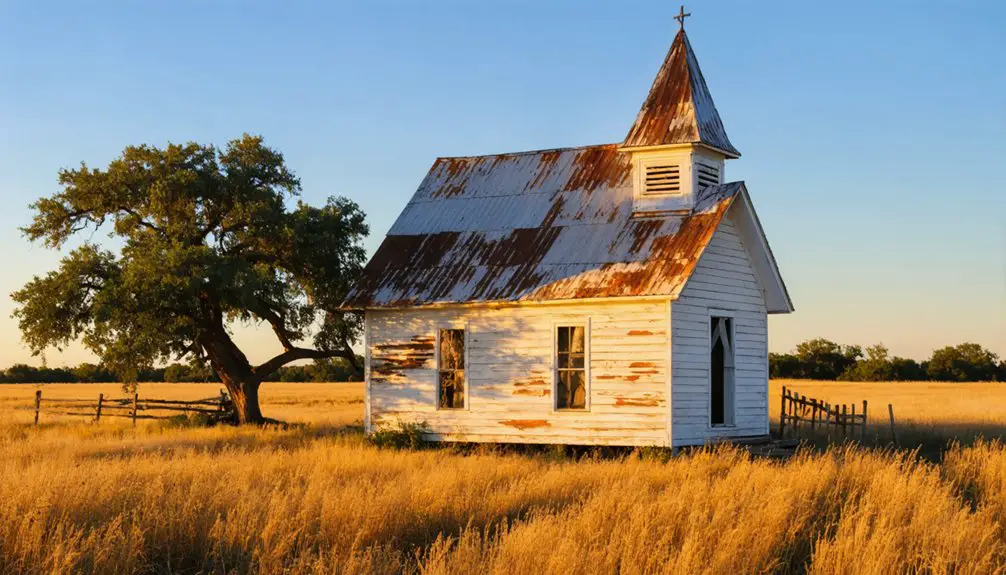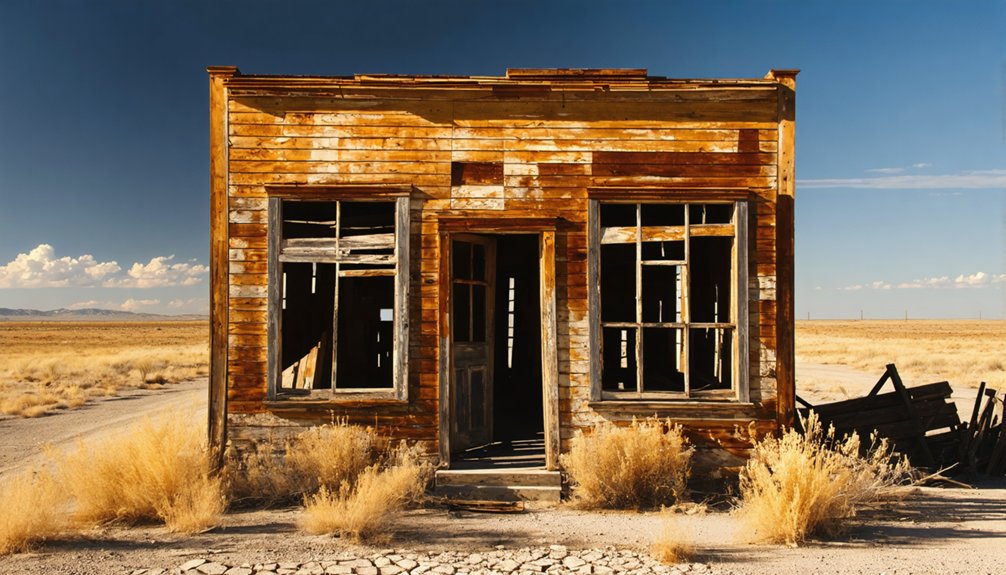
Drive south from Junction on US 377 for about 13 to 15 miles, and you’ll reach Telegraph, Texas — a ghost town that once peaked at just 56 residents. You can explore the iconic Telegraph Store and Post Office, hike through Telegraph Canyon’s old army fort ruins, and chase nearby ghost towns like Rocksprings and London. Spring wildflowers and fall light make ideal visiting seasons. There’s far more to this forgotten Hill Country gem than meets the eye.
Key Takeaways
- Telegraph, Texas, located 13–15 miles south of Junction on US 377, is an accessible ghost town requiring only a standard 2WD vehicle.
- The 1996 historical marker, Telegraph Store, and Post Office are must-see landmarks documenting the town’s fascinating frontier history.
- Hike Telegraph Canyon to explore crumbling army fort ruins and remnants of the historic military telegraph line corridor.
- Fall and spring offer the best road trip conditions, with mild temperatures, scenic wildflowers, and golden photography light.
- Combine your visit with nearby ghost towns like Rocksprings and London to create a complete ghost town circuit along US 377.
Telegraph, Texas: The Ghost Town That Peaked at 56 People
Tucked along U.S. Route 377 in Kimble County, Telegraph, Texas, carries a quiet, weathered charm that draws curious road trippers seeking something real.
Before 1900, this small settlement carved out its identity near the Llano River, eventually opening a post office in 1900. Its population peaked at just 56 residents in the mid-1960s — a modest milestone that makes its population decline even more striking.
A settlement born before 1900, Telegraph peaked at just 56 souls before fading into the Texas dust.
By 1974, only 11 people remained, and today it’s practically a ghost town, possibly home to a single resident named Charlotte.
Yet that ghost town allure is exactly what makes Telegraph worth your detour. You’re not chasing crowds here — you’re chasing history, solitude, and the freedom of open Texas Hill Country roads.
How Telegraph Got Its Unusual Name
Every ghost town has a story behind its name, and Telegraph’s origin is more layered than you might expect.
Two competing theories explain this town’s telegraph history and name origin. The first points to the telegraph poles cut from the nearby canyon’s timber — settlers harvested those trees to build communication lines stretching across the frontier.
The second credits a military telegraph line that once ran through the area, connecting isolated army forts during a time when Texas was still wild and unpredictable.
Both theories ground the name in genuine historical purpose rather than romanticized legend.
When you stand at that 1996 historical marker on US 377, you’re reading the documented record of how communication technology literally shaped this community’s identity — right down to its name.
Best Time to Make the Drive From Junction
The 15-mile drive southwest from Junction on US 377 works well in any season, but each one brings a different character to the Hill Country landscape.
Choosing your best season depends on what experience you’re chasing along these scenic routes:
Choosing your best season shapes everything — the light, the crowds, and the stories waiting along these scenic routes.
- Spring – Wildflowers carpet the roadside, making the drive visually stunning.
- Summer – Hot and dry, but early morning departures keep things manageable.
- Fall – Mild temperatures and golden light make photography effortless.
- Winter – Cool, crowd-free conditions let you explore Telegraph without distractions.
You’ll reach the ghost town quickly, so combine the trip with nearby Hill Country stops.
The Llano River adds a scenic bonus regardless of when you roll through.
How to Get to Telegraph on US 377
Getting to Telegraph couldn’t be simpler — you’ll head south out of Junction on US 377 and drive roughly 13 to 15 miles until the ghost town appears on your left.
The road trip itself sets the tone beautifully, carrying you through the rolling Texas Hill Country where open skies stretch wide and the landscape feels genuinely untamed.
You won’t need a high-clearance vehicle or special gear — standard 2WD roads handle the route without trouble, keeping this adventure accessible for almost any traveler.
As you approach, the Llano River runs nearby, offering scenic views that make pulling over feel completely worthwhile.
Watch for the 1996 historical marker along US 377; it signals you’ve arrived and gives you the perfect starting point for exploring what little remains of Telegraph.
What’s Left to See in Telegraph Today?
Once you arrive, you’ll spot the 1996 historical marker along US 377, which recounts the fascinating story of telegraph poles cut from the nearby canyon.
The old Telegraph Store and Post Office still stands as the town’s most iconic photo opportunity, giving you a tangible glimpse into a community that once bustled with 56 residents.
If you’re up for more exploration, head toward Telegraph Canyon, where remnants of old military installations await you just beyond the ghost town’s quiet edges.
Historical Marker and Signage
Standing along US 377, a historical marker erected in 1996 tells Telegraph’s quiet story — how the town got its name from either the telegraph poles cut from the nearby canyon or the old military telegraph line that once ran through the area.
It’s your gateway into the town’s historical context and local legends. The marker highlights four key details worth reading:
- The canyon’s role in supplying telegraph poles
- The military’s presence through early communication lines
- The town’s rise and slow fade into obscurity
- The surrounding Hill Country landscape that shaped it all
Snap a photo, absorb the history, and let the signage ground you before you explore what little remains.
It’s a small stop that carries serious weight.
Telegraph Store Remnants
After soaking in the history from the marker, your eyes naturally drift toward the Telegraph Store and Post Office — the town’s most iconic surviving structure and your best reason to linger.
The Telegraph architecture speaks quietly but powerfully, its weathered walls carrying decades of frontier commerce and community life. You’ll notice how remarkably intact it remains compared to the scattered ruins surrounding it.
Local folklore suggests the building once buzzed with ranchers, travelers, and soldiers passing through. Snap your photos, walk the perimeter, and let the silence fill in the gaps.
Beyond the store, a handful of crumbling structures hint at Telegraph’s 1920s tourist park era. There isn’t much left, but what stands delivers exactly what ghost town explorers crave — raw, unfiltered history you can actually touch.
Nearby Military Fort Ruins
Beyond the store, Telegraph Canyon pulls you deeper into the town’s layered past — and that’s where the old army fort ruins wait. This canyon exploration connects you directly to Texas’s military history in a raw, unfiltered way.
Here’s what you’ll encounter:
- Crumbling fort foundations that once housed frontier soldiers
- Stone remnants telling stories of military strategy and survival
- Natural canyon walls that sheltered troops from harsh Hill Country elements
- Trails winding past structures reclaimed slowly by Texas brush
You’re not walking through a curated museum — you’re stepping into actual history. The canyon’s silence amplifies everything, making each crumbling wall feel significant.
Bring sturdy shoes, water, and curiosity. Telegraph Canyon rewards explorers who appreciate freedom and unpolished, authentic American heritage.
Inside the Telegraph Store and Post Office
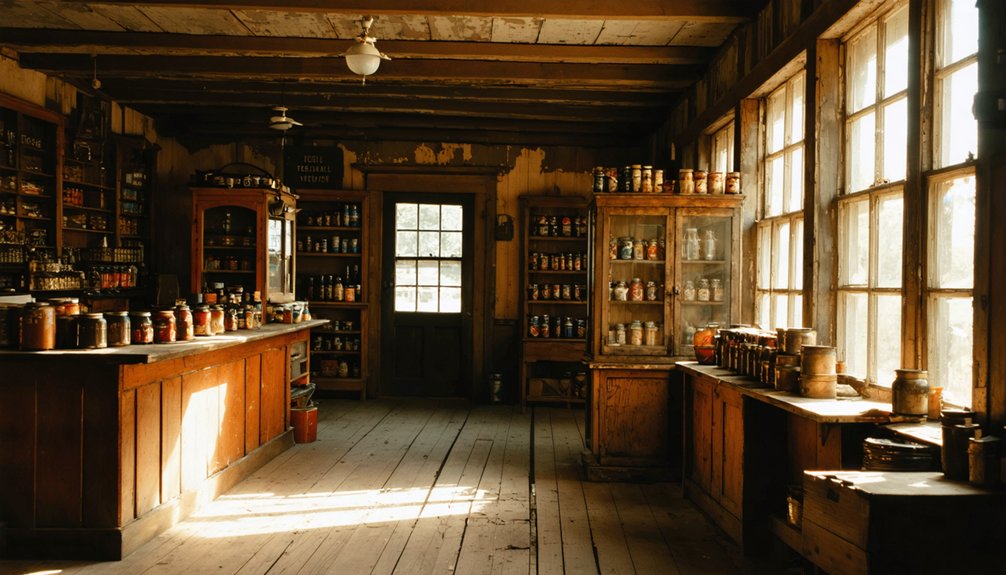
When you step inside the Telegraph Store and Post Office, you’re walking into one of the few remaining anchors of this fading Hill Country community.
The store’s weathered shelves and worn counters tell a quiet story of a town that once buzzed with ranchers, travelers, and postmasters who kept daily life moving along US 377.
You’ll find artifacts and remnants that hint at the personalities behind the counter — the people who sorted mail, passed along news, and held this small community together long after its population began its steep decline.
Historic Store’s Lasting Legacy
Stepping inside the Telegraph Store and Post Office feels like crossing a threshold into another era. This store legacy isn’t just wood and weathered shelves — it’s community memories etched into every corner.
You’re standing where locals once gathered, traded stories, and built a life far from city noise.
Four reasons this landmark resonates:
- It served as the town’s social and commercial hub for decades.
- Residents relied on it for mail, supplies, and connection.
- Its survival makes Telegraph’s history tangible, not just textbook.
- It offers you a rare, unfiltered glimpse into rural Texas life.
You won’t find a gift shop or guided tour here — just honest history waiting quietly for curious travelers willing to seek it out on their own terms.
Postmaster Tales And Artifacts
The Telegraph Store and Post Office holds more than dusty shelves — it holds the quiet authority of every postmaster who sorted mail here, connecting isolated ranchers to the outside world.
When you step inside, postmaster anecdotes practically echo off the worn walls. Imagine the sole postal worker hand-stamping envelopes bound for San Antonio while cattle grazed just outside the door.
Artifact preservation here isn’t institutional — it’s personal, driven by the few souls who refused to let Telegraph vanish entirely.
You’ll spot remnants of daily frontier life: old ledgers, rusted postal fixtures, faded correspondence windows. These objects tell stories no history book captures cleanly.
Run your fingers along the counter, and you’re touching the same surface that once anchored an entire community’s connection to the wider world.
The Old Army Forts Hidden in Telegraph Canyon
Just beyond Telegraph’s weathered store and rusted signage, Telegraph Canyon holds one of the area’s most intriguing secrets — old army forts that once served as strategic military installations.
Your fort exploration starts where the canyon’s rocky terrain opens up, revealing remnants of structures built when soldiers patrolled this rugged Hill Country landscape.
Where the canyon opens, crumbling remnants wait — silent witnesses to soldiers who once called this rugged landscape home.
Here’s what makes canyon hiking worth every step:
- Crumbling fort walls that tell stories of frontier military life
- Natural canyon vistas framing dramatic Texas Hill Country scenery
- Remnants of the original military telegraph line corridor
- Untouched terrain preserving authentic 19th-century history
You’re walking ground where soldiers once stood watch.
Bring sturdy boots, carry water, and give yourself enough time to absorb the raw, unfiltered history surrounding you at every turn.
Ghost Towns Near Telegraph Worth a Detour
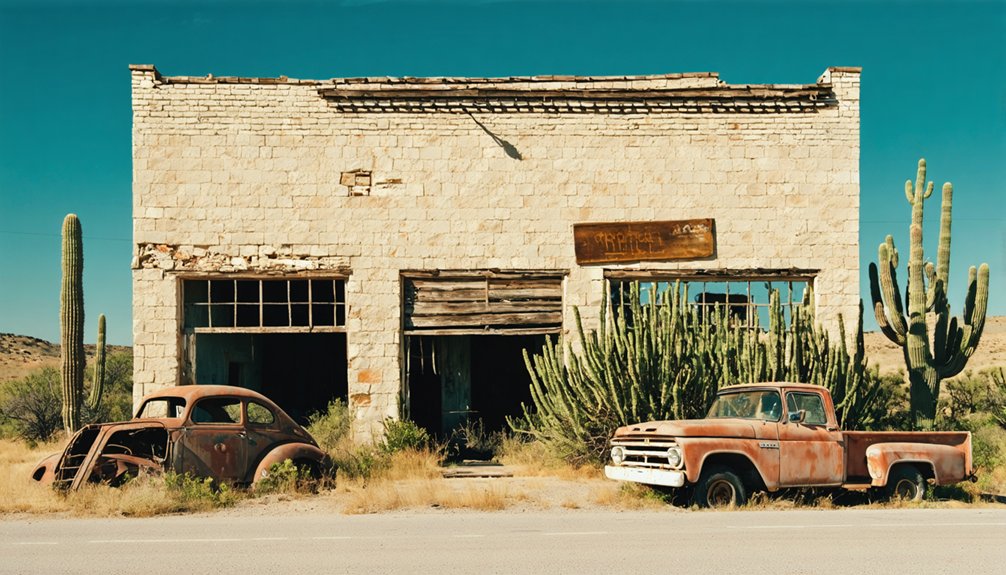
After leaving Telegraph Canyon’s fort ruins behind, you’ll find that Texas Hill Country rewards curious travelers who push a little further down the road.
The region’s nearby scenic routes connect you to several forgotten communities that rival Telegraph’s quiet, weathered charm. Rocksprings to the southwest and London to the east both offer ghost town attractions worth adding to your itinerary.
Each settlement carries its own collapsed storefronts, crumbling foundations, and historical markers that tell hard stories of boom-and-bust frontier life.
You won’t need special permits or guided tours — just fuel your tank, download an offline map, and follow US 377 and its connecting roads.
Texas Hill Country practically hands you an entire ghost town circuit if you’re willing to explore it.
Before You Go: Safety at Abandoned Sites
Ghost town structures have stood without maintenance for decades. Floors, stairs and roof timbers fail without warning, and a building that looks solid from outside may not hold your weight. Stay out of standing structures unless the site is actively maintained and open to visitors.
Mine workings are the more serious hazard. Vertical shafts can be hundreds of feet deep, are often unfenced, and may be hidden by brush or capped with rotted boards. Never enter an adit, tunnel or shaft: abandoned workings can hold oxygen-poor or toxic air that gives no warning before you lose consciousness.
Enclosed spaces with rodent droppings carry a risk of hantavirus, which is contracted by breathing contaminated dust. Do not sweep or stir up dust inside old cabins and outbuildings.
Cell coverage at these sites is usually poor or absent. Tell someone your route and expected return time, and carry more water than you think you need.
Frequently Asked Questions
Can You Swim or Fish in the Llano River Near Telegraph?
You’ll find the Llano River near Telegraph perfect for swimming safety and fishing adventures! Immerse yourself in invigorating Llano River activities, cast your line, and embrace the freedom of Texas Hill Country’s stunning natural waterways.
Is There Any Cell Phone Service Available in Telegraph, Texas?
Cell coverage in Telegraph, Texas is spotty at best! You’ll likely find limited or no signal from most service providers, so don’t rely on your phone — embrace the freedom of truly disconnecting in this remote ghost town!
Are There Any Camping Facilities Near Telegraph for Overnight Stays?
The knowledge doesn’t mention specific camping amenities, but you’ll find overnight options near the scenic Llano River. Explore the surrounding Hill Country’s open spaces, where freedom-seekers like you can embrace the rugged, untamed spirit of Telegraph, Texas!
Do Any Guided Tours of Telegraph Ghost Town Currently Exist?
Touring Telegraph’s terrific ghost town history isn’t offered through formal guided exploration currently. You’ll freely forge your own path, discovering the historical marker, old store, and remnants independently — making your adventure uniquely personal and thrillingly unrestricted.
What Nearby Towns Have Gas Stations Before Reaching Telegraph?
Junction’s your best bet for fuel availability before heading out — it’s just 13-15 miles northeast on US 377. Fill up there, explore its nearby attractions, and you’re set for Telegraph’s ghost town adventure!
References
- https://www.texasescapes.com/TexasHillCountryTowns/Telegraph-Texas.htm
- https://www.facebook.com/groups/873928379320499/posts/8023445941035338/
- https://en.wikipedia.org/wiki/Telegraph
- https://en.wikipedia.org/wiki/List_of_ghost_towns_in_Texas
- https://www.youtube.com/watch?v=-F_4OTlVLA0
- https://www.ghosttowns.com/states/tx/telegraph.html
- https://www.ghostsandgetaways.com/blog-1/27-fascinating-ghost-towns-in-texas
- https://dfwurbanwildlife.com/2011/05/29/chris-jacksons-dfw-urban-wildlife/march-28-2005-ghost-towns-in-north-texas/