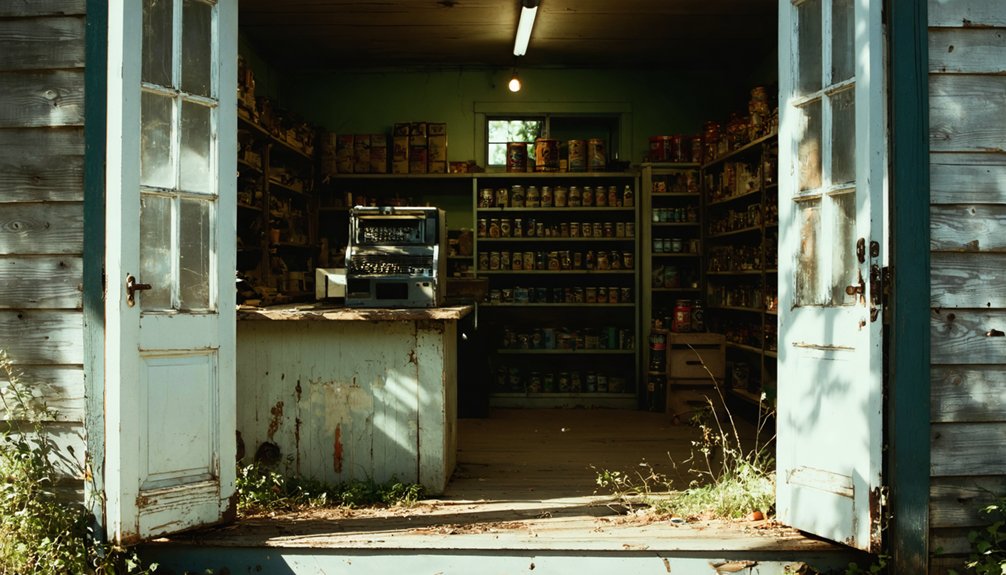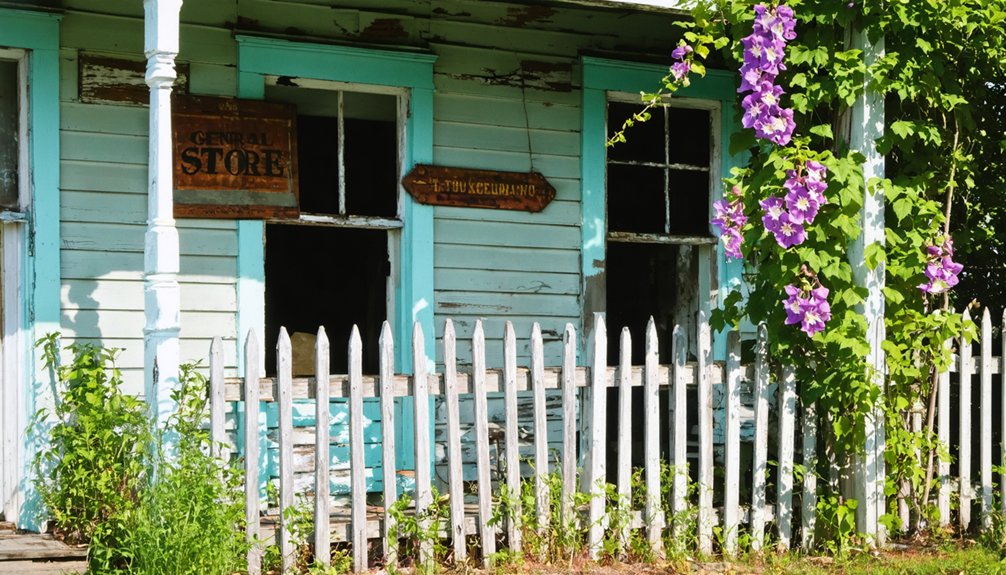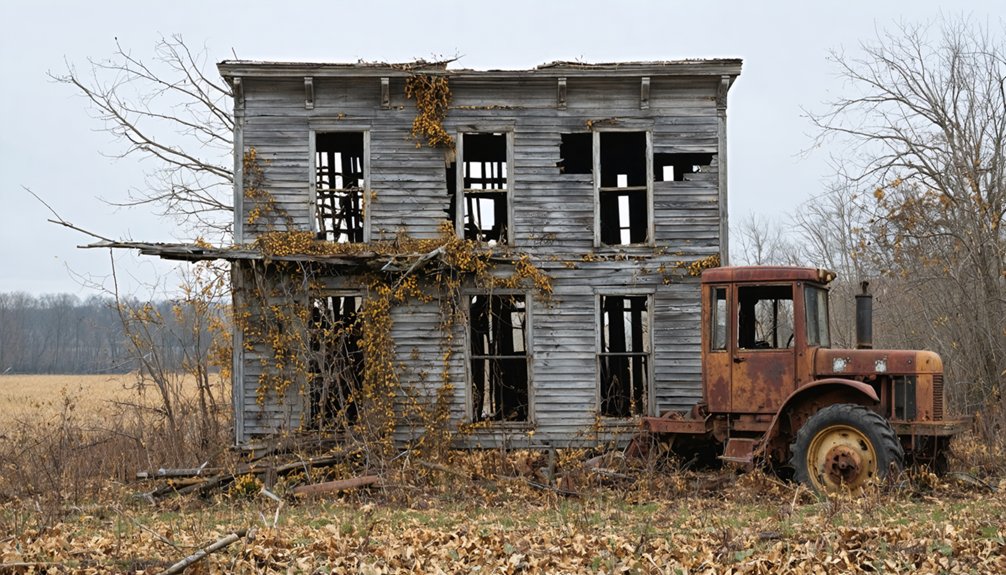
You’ll find nine documented ghost towns scattered across Delaware, from the Dutch colonial ruins of Zwaanendael near Delaware Bay to the crumbling mill complexes along the Brandywine River. Sussex County hides decaying granaries and forgotten silos, while neglected lighthouses still stand near Taylor’s Bridge and Lewes. Each site carries distinct regional history buried beneath overgrowth and rusted machinery. Before you venture out, there’s considerably more to know about legal access, safety risks, and exactly where these forgotten places are hiding.
Key Takeaways
- Delaware has nine documented ghost towns, ranging from abandoned mining camps to semi-inhabited settlements, each holding distinct historical significance.
- The Zwaanendael Settlement, established in 1631 by Dutch colonists, was abandoned after a Native American attack killed all settlers within one year.
- Bancroft Mills along the Brandywine River and the Garrett Snuff Mill in Yorklyn represent Delaware’s industrial ghost town legacy.
- Sussex County features decaying granaries, barns, and silos, while neglected lighthouses like Reedy Island Range Light offer hidden exploration opportunities.
- Explorers must verify land ownership through county records and respect strict trespassing laws across New Castle, Kent, and Sussex counties.
Delaware’s Ghost Towns and Where to Find Them
Delaware harbors nine documented ghost towns, ranging from completely abandoned mining camps to semi-inhabited historic settlements scattered across the state’s compact landscape. Each site carries distinct historical significance, preserving layers of Delaware’s forgotten past beneath overgrowth and crumbling architecture.
Before you begin ghost town exploration, you’ll need to verify access rules carefully. Some locations sit on private property, requiring permission before entry. Others welcome independent visitors but demand reasonable caution around unstable structures, open mine shafts, and local wildlife.
What makes Delaware’s abandoned places compelling is their authenticity. Nature’s reclamation process remains visible everywhere you look, from vine-covered facades to collapsed rooflines slowly returning to earth.
You’re not visiting reconstructed heritage sites here. You’re walking through genuinely abandoned spaces where Delaware’s history stopped moving forward.
The Oldest Ghost Town in Delaware
If you trace Delaware’s ghostly history back to its earliest roots, you’ll find the Zwaanendael Settlement, established in 1631 by Dutch colonists near Delaware Bay with ambitions of building a thriving whaling community.
The settlers aimed to exploit the Bay’s rich resources, staking their claim on land that promised maritime prosperity.
Within a single year, however, a devastating Native American attack killed every colonist, erasing the settlement entirely and making Zwaanendael Delaware’s first ghost town.
Dutch Settlement Origins
Among Delaware’s earliest colonial ventures, the Dutch settlement of Zwaanendael stands as the state’s first ghost town. In 1631, Early Settlers arrived near Delaware Bay, driven by Dutch Heritage and ambitions of building a thriving whaling community.
Their story carries weight you can’t ignore:
- They crossed an ocean seeking freedom and resource-rich shores.
- They built with determination, establishing Delaware’s first colonial footprint.
- A conflict with Native Americans erased every settler within one year.
- No survivors remained to document what truly happened that fateful day.
You’re standing on ground where an entire community simply vanished. Zwaanendael’s tragic end transformed ambitious colonial dreams into silence.
Their brief existence shaped Delaware’s foundational history, reminding you that freedom’s pursuit has always carried profound, irreversible consequences.
Whaling Community Ambitions
The Dutch who sailed to Delaware Bay in 1631 carried one clear economic purpose: harvest the bay’s whale populations and establish a self-sustaining whaling trade.
They envisioned a colony built on maritime independence, free from reliance on distant European supply chains.
Their whaling history, though brief, marks Delaware’s earliest commercial ambition.
You’re looking at settlers who understood that controlling local resources meant controlling your own destiny.
They constructed Zwaanendael with deliberate infrastructure, positioning it to process whale oil and export profits directly back to Dutch investors.
The cultural impact of this settlement runs deeper than its short lifespan suggests.
It represents Delaware’s first organized attempt at economic self-determination.
Within a year, conflict with local Native Americans destroyed the colony entirely, cementing Zwaanendael as Delaware’s oldest ghost town.
Devastating Native American Attack
Within a single year of its founding, Zwaanendael‘s entire settler population was wiped out in a conflict with local Native Americans, making it Delaware’s first—and most abruptly terminated—colonial settlement.
You’re looking at a moment where Native American resilience directly shaped Delaware’s earliest historical impact.
- Every Dutch settler perished, leaving no survivors to record their final days.
- The land reclaimed its original stewards almost immediately after colonization began.
- No graves, no ruins—just silence where ambition once stood.
- A sovereign people defended their territory before outside forces could permanently take hold.
This wasn’t merely colonial failure. It was a decisive assertion of Indigenous authority over Delaware Bay’s shores.
The settlement vanished completely, preserved now only within archival records and regional memory.
Delaware’s Abandoned Mills and Factories Worth Exploring
Delaware’s abandoned mills and factories carry stories that you won’t find in any single archive, but scattered across crumbling brickwork and rusted machinery left behind by industries that once defined the region.
Delaware’s abandoned mills hold stories scattered across crumbling brickwork and rusted machinery, waiting to be read.
You’ll encounter two standout abandoned structures worth your time.
In Yorklyn, the Garrett Snuff Mill operated from 1846, producing snuff tobacco across 14 buildings until operations ceased. You can still walk through this preserved industrial history complex today.
Along Wilmington’s Brandywine River, Bancroft Mills dates to Delaware’s earliest statehood years.
Buildings officially closed in 1961, and multiple fires have since damaged remaining ruins, though portions were renovated into condominiums.
Both sites let you experience Delaware’s manufacturing past firsthand, reading its decline through weathered walls and silent machinery.
Forgotten Delaware Mansions Reclaimed by Nature
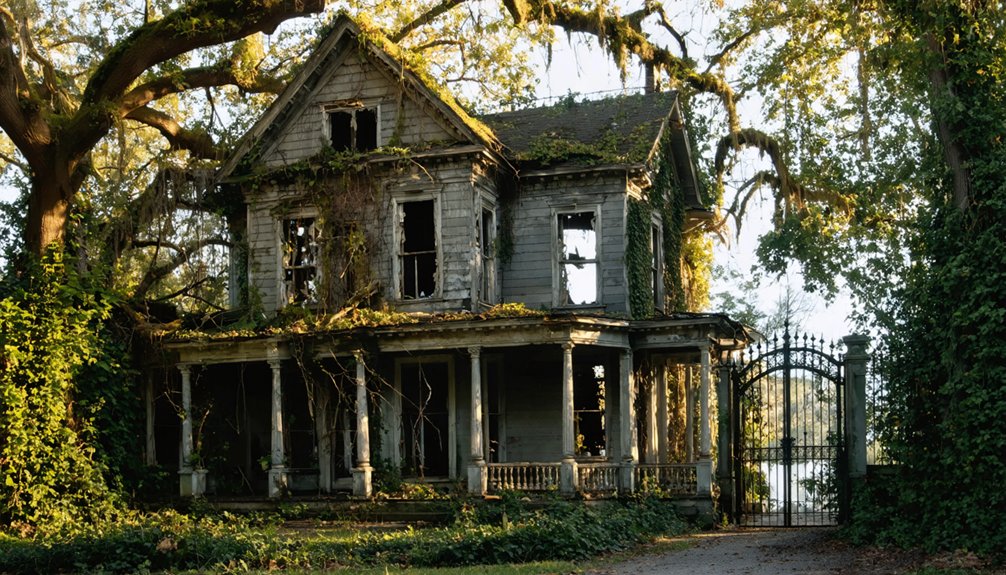
Amid Wilmington’s quieter neighborhoods, nature has been methodically reclaiming Gibraltar Mansion since its abandonment following construction in the mid-1840s.
Wisteria consumed the structure’s exterior, becoming nature’s reclaim made visible. Mansion restoration efforts finally began in 1997, rescuing what remained.
You’ll find something deeply moving when visiting today’s Marion Coffin Gardens:
- Vines that once swallowed entire walls, representing unchecked wildness reclaiming human ambition
- Gardens restored from decades of neglect, proving preservation still matters
- Architectural bones surviving abandonment, connecting you directly to Delaware’s mid-19th century past
- Open grounds where visitors freely walk paths that were lost for generations
Gibraltar stands as Delaware’s archive of resilience — a place where nature’s patience and human determination negotiated terms, ultimately producing something worth protecting and exploring.
Lesser-Known Ghost Towns and Ruins Hidden Across Delaware
Beyond Gibraltar’s negotiated survival, Delaware holds quieter losses — ruins and remnants that never attracted restoration efforts or preservation campaigns.
Sussex County’s decaying granaries, barns, and silos stand as agriculture’s silent obituaries, scattered across farmland few outsiders traverse.
Taylor’s Bridge holds the neglected Reedy Island Range Light, while Lewes preserves the abandoned Caretaker’s House near Delaware Breakwater Rear Range Light.
These hidden treasures reward those willing to research access rules beforehand.
Urban exploration here demands genuine preparation — unstable structures, mine shafts, and wildlife present real risks. Some sites occupy private property, requiring explicit permission before entry.
Delaware’s nine documented ghost towns collectively represent forgotten chapters you won’t find prominently marked on tourist maps.
Seek them deliberately, document them carefully, and respect what little remains standing.
Trespassing Laws, Safety Risks, and How to Access Delaware Ghost Towns
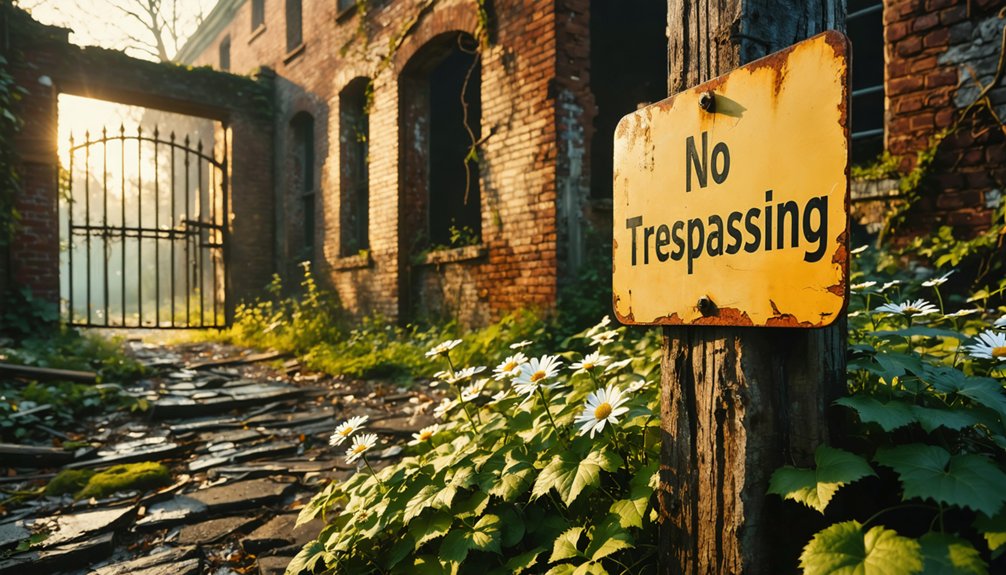
Exploring Delaware’s ghost towns responsibly starts with understanding the state’s trespassing statutes before you set foot on any abandoned property.
Delaware enforces strict trespassing laws, and posted signs mean prosecution. Always verify ownership through New Castle, Kent, or Sussex County land records before entering.
Follow these safety precautions every visit:
- Watch for collapsed floors and mine shafts — one wrong step ends your exploration permanently
- Carry emergency contact information — remote sites like Taylor’s Bridge offer zero cell service
- Respect wildlife habitats — reclaimed structures shelter unpredictable animals
- Document your planned route — leave it with someone who’ll act if you don’t return
Your freedom to explore Delaware’s forgotten history depends entirely on honoring boundaries, both legal and structural.
Research first, then roam.
Frequently Asked Questions
Are Any Delaware Ghost Towns Suitable for Children to Visit?
You’ll find family friendly activities at Gibraltar Mansion’s Marion Coffin Gardens and Garrett Snuff Mill, both offering historical significance. They’re safe, engaging spots where you can explore Delaware’s rich, regional past with children confidently.
What Is the Best Time of Year to Explore Delaware Ghost Towns?
Spring and fall offer you the best seasonal activities for exploring Delaware’s ghost towns. You’ll find weather considerations favor mild temperatures, clearer visibility through reclaimed vegetation, and safer conditions for traversing unstable historic structures throughout the region.
Do Any Delaware Ghost Towns Have Guided Tours Available?
Like a key revealing forgotten doors, Gibraltar Mansion’s Marion Coffin Gardens and Delaware, Michigan’s mine tours offer you guided tour options to explore ghost town history firsthand. You’ll uncover these regions’ rich, archived past beautifully.
Have Any Delaware Ghost Towns Been Featured in Movies or Television?
You won’t find documented evidence of Delaware’s ghost towns serving as movie locations or haunted sites featured in film or television, but their archival history and regional authenticity make them genuinely compelling candidates for future productions.
Are There Any Ghost Town Photography Restrictions in Delaware?
Want to capture Delaware’s haunted past freely? You’ll need to respect photography ethics and legal considerations — always check private property rules first, as some sites restrict access, potentially limiting your shots of these remarkable, regionally significant abandoned places.
References
- https://99wfmk.com/delaware-ghost-town-and-abandoned-mine/
- https://ghost-towns.close-to-me.com/states/delaware/
- https://www.youtube.com/watch?v=ex8Hld_imPU
- https://www.onlyinyourstate.com/experiences/delaware/abandoned-places-delaware
- https://www.youtube.com/watch?v=UT_OjLP_geM
- https://www.visitkeweenaw.com/listing/delaware-the-ghost-town/515/