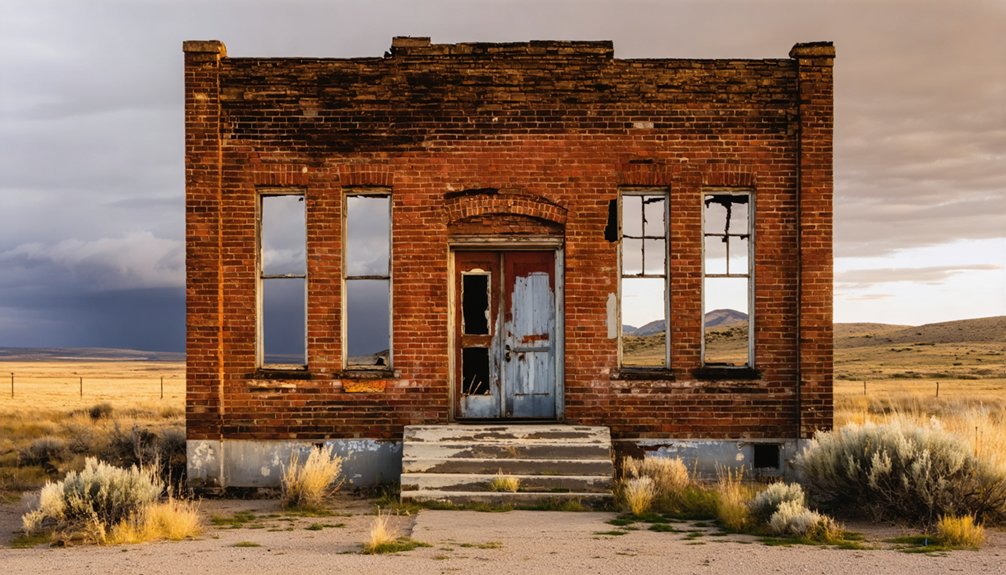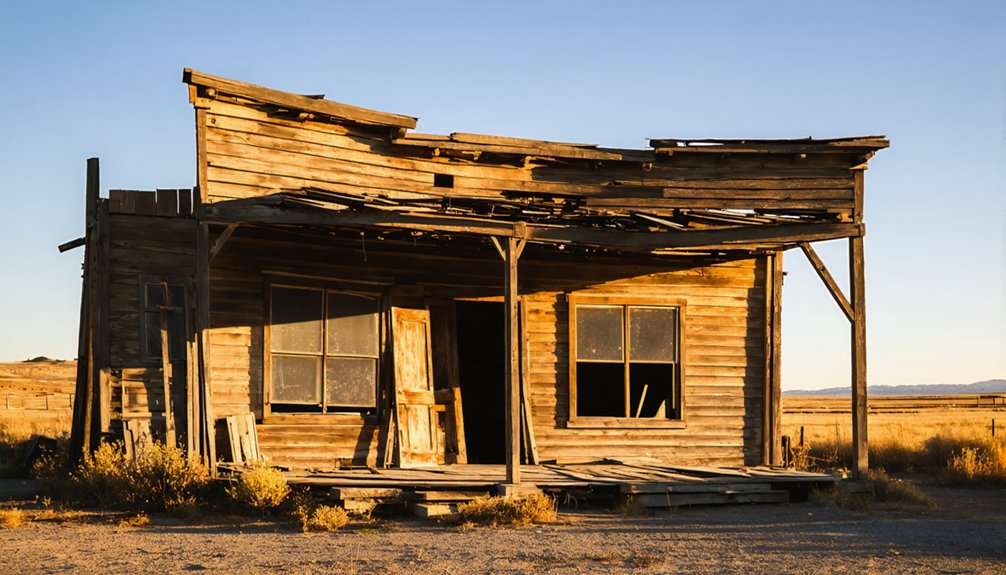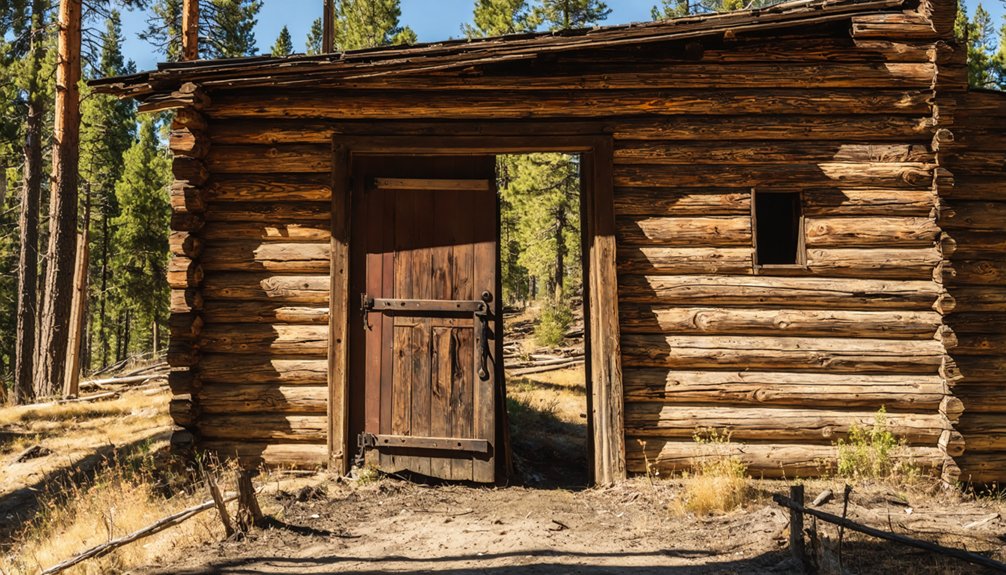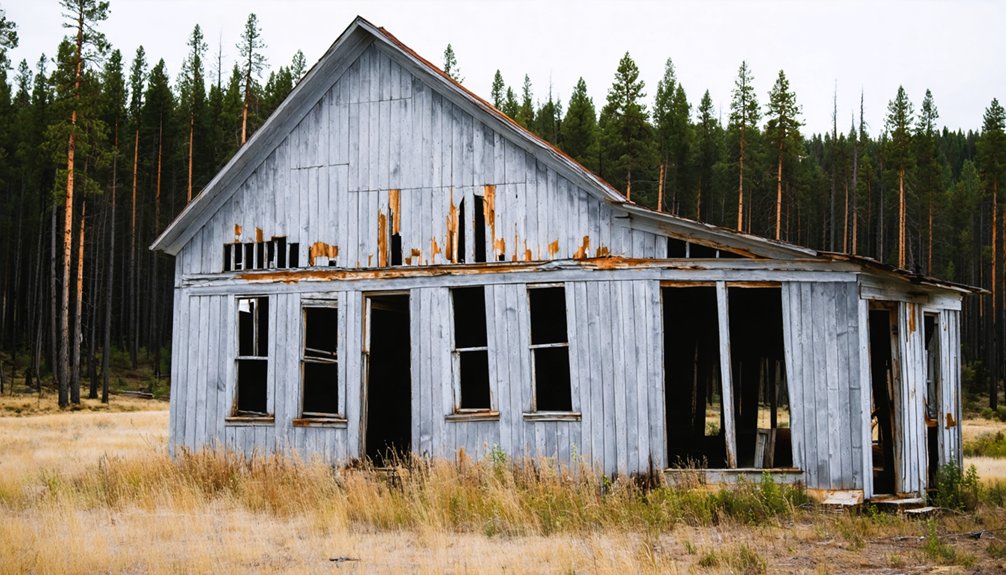
North Idaho’s ghost towns trace back to the late 1800s mining booms that drew thousands of prospectors chasing gold, silver, lead, and zinc. Towns like Burke, Florence, and Bayhorse exploded overnight and collapsed just as fast once the ore ran out. You’ll find crumbling cabins, mine shafts, smelter foundations, and railroad ruins scattered across remote mountain canyons. Some sites like Murray and Elk City still have living residents. There’s far more to uncover about each town’s rise, fall, and how to reach them safely.
Key Takeaways
- North Idaho ghost towns originated from late 1800s mining booms, with gold, silver, lead, and zinc discoveries attracting thousands of settlers overnight.
- Florence drew over 10,000 miners in 1862 but quickly vanished, leaving only scattered diggings with almost no remaining structures today.
- Burke operated from 1887 until 1991, leaving behind industrial ruins including smelter foundations and railroad remnants layered with environmental impacts.
- Bayhorse, established in 1877, is now a protected State Historic Site, well-preserved and accessible to the public for interpretive tourism.
- Many sites require careful preparation, including extra fuel, water, and recovery gear, as unpaved mountain roads can become impassable after weather events.
Why North Idaho Became a Ghost Town Hotspot
Northern Idaho’s ghost towns didn’t appear by accident—they grew directly from the region’s mining rushes, timber corridors, and rail lines that pushed into the Coeur d’Alene and Salmon River areas during the late 1800s. Gold, silver, lead, and zinc discoveries pulled thousands of people into remote backcountry fast, building towns almost overnight.
Northern Idaho’s ghost towns rose almost overnight—born from mining rushes, timber, and rail lines pushing into remote backcountry.
You’ll notice the cultural impacts were immediate: communities, economies, and identities formed around extraction. When ore depleted or prices collapsed, those same communities dissolved just as quickly.
Environmental effects followed every boom—stripped hillsides, diverted streams, and scarred landscapes that still mark former townsites today.
What’s left tells the full story. Idaho counts hundreds of vanished or semi-abandoned places, proof that the forces driving settlement here were powerful but rarely permanent.
The Mining Rushes That Built and Buried These Towns
When you trace North Idaho’s ghost towns back to their origins, you find gold at the center of nearly every story — Florence alone drew over 10,000 miners in 1862, practically overnight.
Once the ore ran out or prices dropped, those same towns lost their reason to exist, and most couldn’t survive the shift.
What you’re left with today are the physical remainders of that cycle: abandoned shafts, crumbling cabins, and townsites that boomed fast and collapsed just as quickly.
Gold Rush Origins
Thousands of prospectors flooded into northern Idaho’s backcountry during the late 1800s, and the settlements they built rose and collapsed almost as fast as the ore prices that drove them. Florence drew 10,000 or more miners in 1862 alone, yet it left almost no standing structures behind.
Burke followed in 1887, anchored by lead and silver extraction until it closed in 1991. These origins carry strong cultural influences tied to independence, risk, and resource-driven migration — values that still resonate if you study the region today.
Modern tourism now routes visitors through these remnants, offering you a direct look at how quickly prosperity can vanish. Understanding the gold-rush catalyst helps you interpret why so many northern Idaho communities exist only as scattered diggings and faded historical records.
Ore Depletion And Decline
Ore depletion ended these towns as decisively as gold discoveries created them. When silver, lead, and zinc veins ran dry, populations collapsed within months. Burke closed in 1991 after natural disasters compounded falling ore yields, leaving behind industrial ruins you can still examine today.
Florence vanished even faster — 10,000 miners arrived in 1862, then disappeared when placer gold ran out.
You’ll notice that cultural influences shaped abandonment patterns too. Rail access, commodity prices, and community investment determined whether towns lingered or dissolved overnight.
Environmental impacts proved equally decisive — floods, fires, and scarred tailings accelerated decline and made resettlement impractical.
The pattern repeated across Shoshone and Custer counties: rapid extraction, infrastructure collapse, then silence. These weren’t failures of character but predictable consequences of resource-dependent economies with no fallback.
Mining Towns Left Behind
Gold discoveries didn’t just attract miners — they assembled entire economies overnight. When ore dried up, those economies collapsed just as fast, leaving behind physical evidence of ambition and loss. You can trace the cultural impacts of these booms through what remains: smelter foundations, collapsed shafts, and half-standing cabins that document how quickly communities rose and fell.
Burke operated from 1887 until 1991. Florence drew over 10,000 miners in 1862, then vanished. Bayhorse lasted just two decades before abandonment. Each site tells a compressed story of extraction, dependence, and departure.
Today, modern tourism draws people to these remnants because they represent unfiltered history. You’re not seeing a reconstruction — you’re standing inside an economy that failed and never cleaned up after itself.
Burke: The Coeur d’Alene District’s Most Storied North Idaho Ghost Town
Few ghost towns in North Idaho carry the layered history that Burke does. Founded in 1887 within the Coeur d’Alene mining belt, Burke drove silver, lead, and zinc production until cultural influences from industrial decline and environmental impacts from repeated natural disasters sealed its fate.
It closed in 1991, leaving behind railroad remnants and industrial infrastructure you can still examine today.
Here’s what makes Burke worth your attention:
- Founded 1887 — one of North Idaho’s earliest major mining settlements
- Environmental impacts — floods and disasters repeatedly damaged the townsite
- Semi-abandoned status — partial occupancy distinguishes it from fully deserted sites
Burke isn’t a clean ruin. It’s a documented, layered record of how extraction economies rise, strain, and ultimately collapse.
Florence: The North Idaho Gold Rush That Vanished Overnight
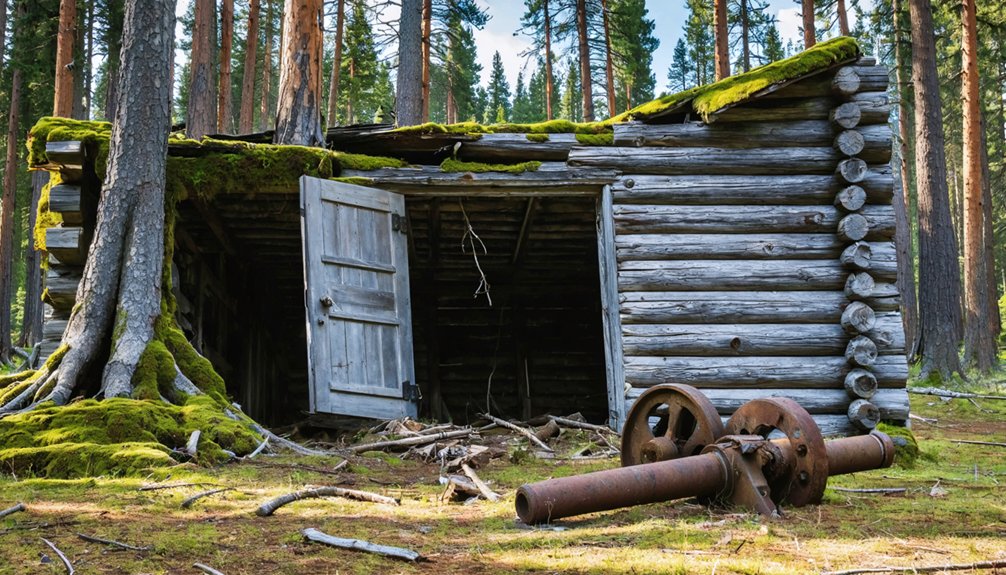
While Burke left behind industrial bones you can still walk among, Florence left almost nothing. Sitting at 6,080 feet in Idaho County, roughly 14 air miles east-northeast of Riggins, Florence exploded when gold appeared in 1862. Over 10,000 miners arrived almost immediately, making it one of the largest early gold-rush camps in the region.
Then it emptied just as fast. Today, you’ll find scattered diggings and faint remnants where thousands once crowded together. Local legends still circulate about buried caches and forgotten claims, and cultural influences from that frantic 1862 rush shaped surrounding communities long after Florence itself dissolved.
Florence represents something important: the freedom to chase opportunity often meant building on ground that couldn’t hold. The town proves how quickly wilderness reclaims what ambition abandons.
Murray and Elk City: North Idaho Ghost Towns Still Clinging to Life
Not every North Idaho ghost town fully surrendered. Murray and Elk City still hold residents, standing structures, and active historical preservation efforts that separate them from fully abandoned sites. You’ll find these towns occupying a rare middle ground — neither thriving nor completely lost.
Community resilience kept both places breathing when mining contracts faded and populations scattered. Evidence of that survival remains visible today.
When you visit or research either location, watch for these documented features:
- Surviving buildings that reflect original mining-era construction methods
- Nearby remnants including Dixie, Orogrande, and Newsome — associated ghost sites within the same corridor
- Active local presence confirming that residents still occupy portions of each townsite
These towns prove that abandonment rarely happens all at once.
Bayhorse: From Silver Boom to North Idaho State Historic Site
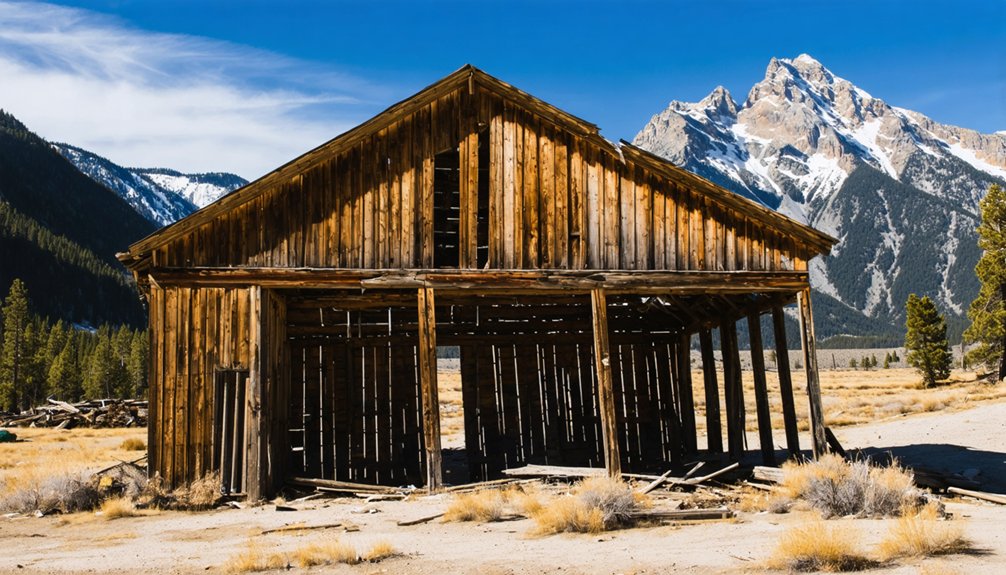
Bayhorse tells one of North Idaho’s cleaner preservation stories. Settlers founded it in 1877, drawn by silver and lead deposits in Custer County. Mining techniques there reflected the era’s industrial ambitions, with extraction operations scaling quickly before ore returns dropped.
By 1897, the town was abandoned.
What you’ll find today differs from most ghost-town visits. The state manages Bayhorse as a protected historic site, meaning town architecture — cabins, smelter remnants, and associated structures — survives in documented condition rather than slow collapse.
You’re walking through a controlled record of a working mining community, not just scattered debris.
That distinction matters. Bayhorse shows how deliberate preservation converts a failed extraction site into a legible historical resource, giving you direct contact with the physical evidence of North Idaho’s silver-boom period.
Dixie, Orogrande, and the Forgotten North Idaho Backcountry Towns
If you trace the Elk City region’s mining history outward, you’ll find Dixie and Orogrande among the backcountry remnants that developed during the same regional gold and silver rushes.
Both towns grew from extraction-driven demand and contracted sharply once production faded, leaving behind scattered structures and old diggings rather than functioning communities.
You can study these sites as documented examples of how quickly North Idaho’s backcountry settlements rose and collapsed when the ore ran out.
Mining Roots Of Dixie
Deep in the Idaho County backcountry, Dixie, Orogrande, and Newsome emerged during the regional gold rushes of the mid-to-late 1800s. Each one was tied directly to the same extractive economy that built and then emptied dozens of North Idaho settlements.
You’ll find that mining wasn’t incidental here—it was the sole reason these towns existed.
Three documented patterns define their rise and fall:
- Gold extraction drove initial settlement, pulling workers away from established communities.
- Cultural influences from diverse miner populations shaped local infrastructure and social organization.
- Modern tourism now represents the primary economic activity keeping these remote sites visible and accessible.
When ore diminished, population collapsed quickly.
What remains today are scattered structural remnants that reward historically minded travelers willing to navigate Idaho County’s rugged backcountry roads independently.
Orogrande’s Abandoned Legacy
What little remains of Orogrande tells a story consistent with dozens of other North Idaho backcountry settlements: a mining-driven founding, a population that evaporated when ore production declined, and structural remnants that now define the site more than any living community does.
You’ll find Orogrande situated near Elk City, embedded within a corridor that includes Dixie and Newsome — all products of regional mining rushes that contracted sharply once production faded.
The surviving physical evidence carries real cultural heritage value, documenting labor patterns, extraction methods, and settlement geography that formal records alone can’t fully convey.
Modern tourism increasingly draws independent travelers toward these backcountry sites precisely because they offer unmediated historical contact.
You’re not viewing a reconstruction; you’re reading a landscape that economic forces shaped and then largely abandoned.
What Ruins and Relics Survive at North Idaho Ghost Towns Today?
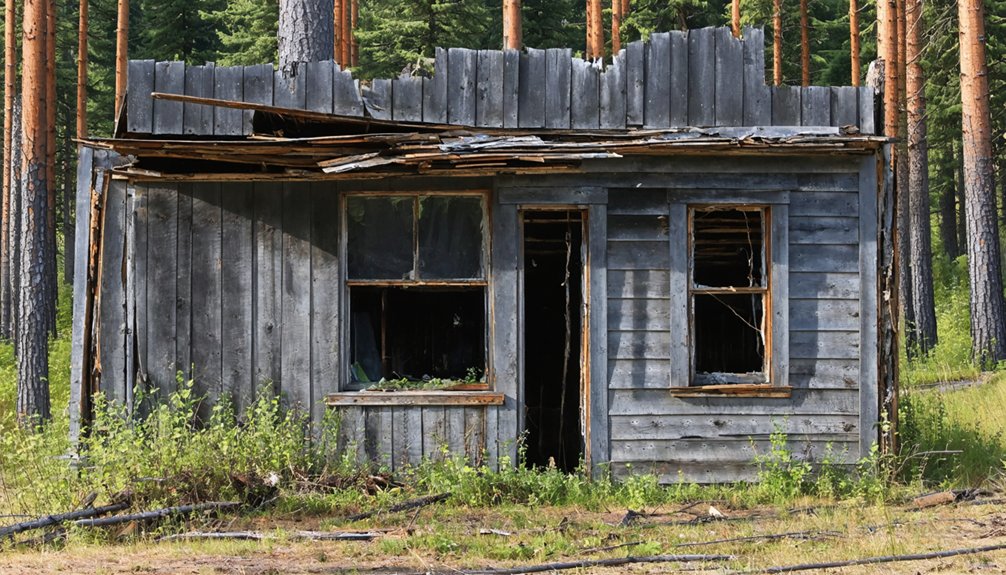
Though the degree of preservation varies widely across sites, North Idaho’s ghost towns still hold tangible remnants of their industrial and frontier past. When you visit these locations, you’ll encounter evidence that artifacts preservation efforts have protected key structures from complete deterioration, while tourism development has made several sites more accessible.
Surviving ruins and relics commonly include:
- Smelter foundations and mine shaft entrances at sites like Bayhorse, where silver and lead extraction infrastructure remains partially intact.
- Cabin ruins and courthouse remnants at Florence, where old diggings mark where thousands once worked.
- Railroad infrastructure and industrial equipment around Burke, reflecting the mining-transport systems that once drove Shoshone County’s economy.
You’re free to explore many of these sites independently, though conditions vary profoundly.
How to Reach North Idaho Ghost Towns Without Getting Stranded
Reaching North Idaho’s ghost towns requires planning, because many sites sit along unpaved mountain roads that become impassable after heavy rain or early snowfall. Before you head out, verify current road conditions through local ranger stations or county road departments. Carry extra fuel, water, and basic recovery gear, since cell service disappears fast in the backcountry.
Florence sits at 6,080 feet, meaning early September snowfall can strand unprepared visitors. Burke’s canyon road floods seasonally. For sites tied to active preservation efforts, like Bayhorse State Park, managed access makes logistics easier.
Elsewhere, you’re steering on your own judgment.
Talk to locals before entering remote corridors. They carry practical knowledge, and sometimes local legends point you toward surviving remnants that no map documents. Preparation separates a productive visit from a dangerous one.
North Idaho Ghost Towns Worth Visiting by Region and Difficulty
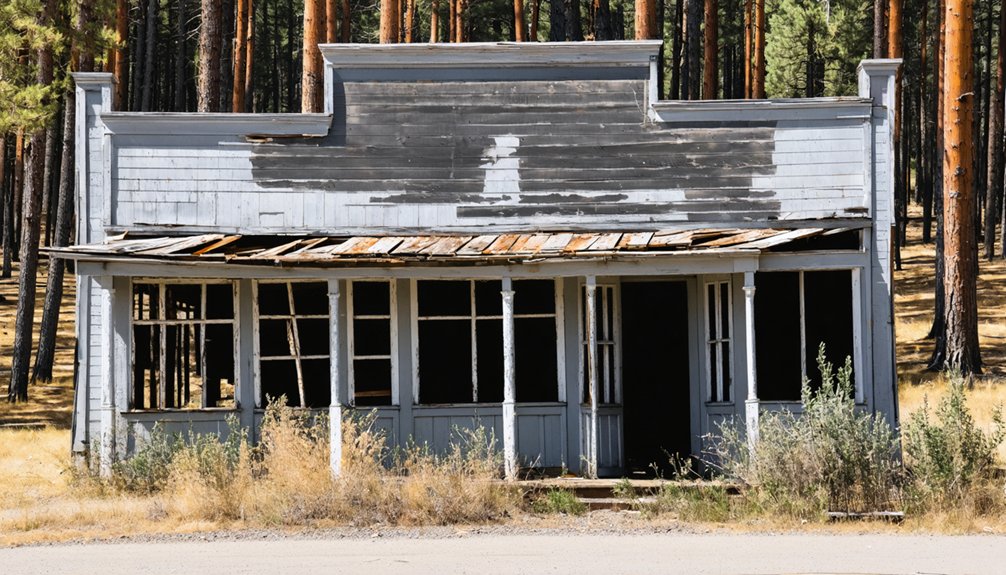
North Idaho’s ghost towns cluster into distinct regional corridors, and matching each site to your skill level prevents wasted trips. Settlement patterns followed mining technology, meaning harder-to-reach veins produced harder-to-reach towns.
- Beginner – Bayhorse (Custer County): State-managed, accessible roads, preserved silver and lead mining structures you can walk through safely.
- Intermediate – Burke (Shoshone County): Semi-abandoned Coeur d’Alene mining belt town with industrial remnants; requires traversing narrow canyon terrain and understanding private-property boundaries.
- Advanced – Florence (Idaho County): Sits at 6,080 feet, roughly 14 air miles east-northeast of Riggins, with minimal remaining structures and backcountry-only access requiring solid orientation skills.
Prioritize sites matching your gear and experience. Each corridor rewards preparation with documented history you can physically observe.
Frequently Asked Questions
Are North Idaho Ghost Towns Legally Open for Artifact Collecting or Removal?
No, you can’t legally collect artifacts. Preservation laws protect these sites—artifact theft carries serious federal penalties. You’re free to explore, but leave history where it stands for future generations to discover.
Which North Idaho Ghost Towns Are Private Property Requiring Owner Permission?
You’ll find that ghost town preservation records don’t specifically document which North Idaho sites are private. For historical site management accuracy, you should contact Idaho’s State Historical Society to verify ownership before visiting any location.
Do Any North Idaho Ghost Towns Offer Guided Tours or Educational Programs?
You’ll find guided tours and educational programs at Bayhorse, now a state park prioritizing historical preservation, and Chesterfield, both functioning as tourist attractions where you can explore documented pioneer and mining heritage through organized, informative visits.
Are There North Idaho Ghost Town Sites Sacred to Indigenous Communities?
Yes, you’ll find that many North Idaho ghost town sites overlap with Indigenous history and Sacred sites. You should consult tribal nations directly, as documented ancestral territories predate mining settlements and tribes actively protect these culturally significant locations.
Can You Camp Overnight Legally Near North Idaho Ghost Town Sites?
You can often camp legally near these sites, but you’ll need to check land jurisdiction first. Historical preservation rules and wildlife habitat protections actively shape what’s permitted on BLM, Forest Service, or state-managed parcels.
References
- https://en.wikipedia.org/wiki/List_of_ghost_towns_in_Idaho
- https://history.idaho.gov/wp-content/uploads/2018/08/0064.pdf
- https://www.reddit.com/r/Idaho/comments/1i941p2/ghost_towns_in_northern_idaho/
- https://www.travelingspud.com/ghost-towns-in-idaho/
- https://foodtravelfamily.com/northern-idaho-ghost-towns/
- https://idaho-forged.com/idahos-ghost-towns-eerie-yet-approachable/
- https://en.wikipedia.org/wiki/Florence
- https://www.startpackingidaho.com/blog/idahos-ghost-towns/
- https://pinintheatlas.com/travel-blogs/ghost-towns-of-idaho/
- https://ghosttowntrails.com/idaho