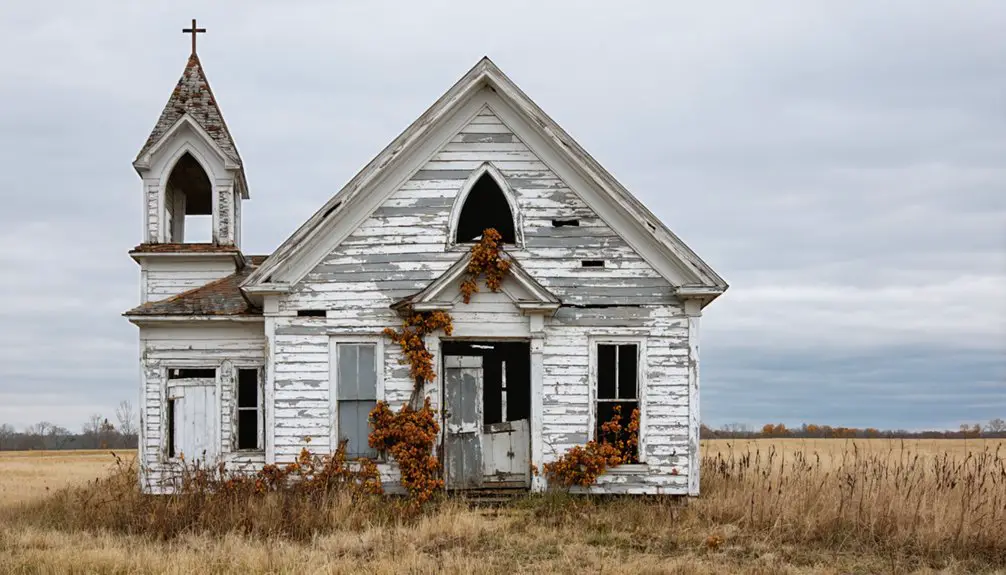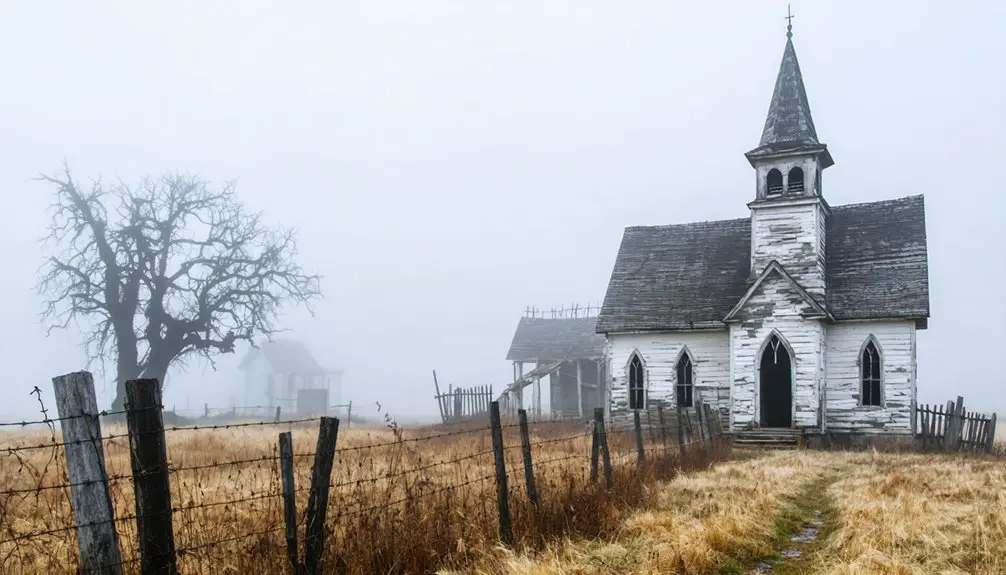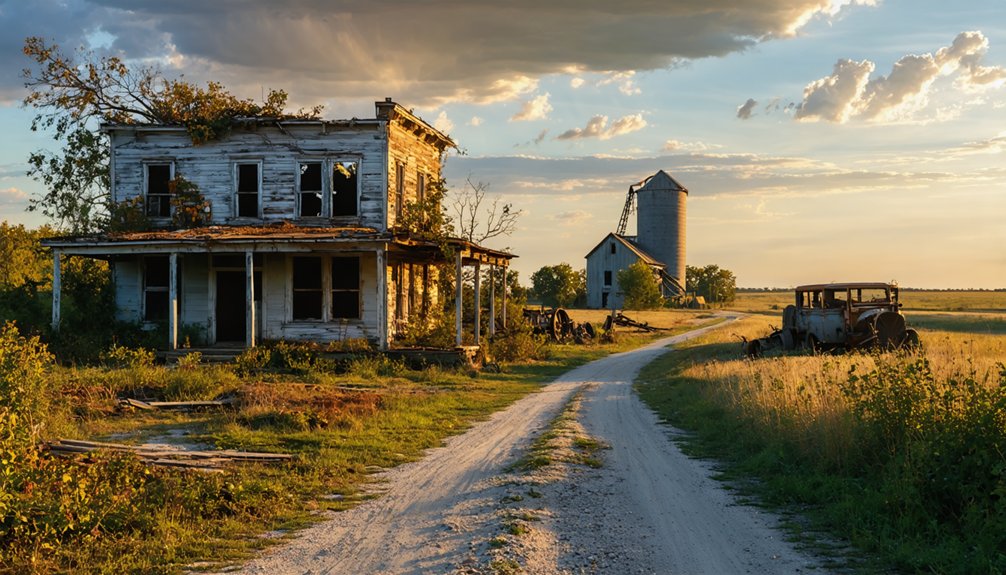
Planning a ghost town road trip to Wayman, Missouri means chasing a settlement that vanished before anyone thought to document it. Located in Pulaski County, Wayman disappeared so quietly it left behind no ruins, no markers, and no precise coordinates. You’ll rely on old plat maps, deed records, and cemetery databases to piece its story together. Use Waynesville as your base—and if you’re serious about finding Wayman, there’s much more to uncover ahead.
Key Takeaways
- Wayman, Missouri, is a ghost town in Pulaski County that vanished before 1938, leaving no physical markers, ruins, or roadside plaques.
- Use Waynesville as your base, visiting the Pulaski County Courthouse to examine old plats, deed records, and township surveys.
- Cross-reference the nearby Wayman/Pillman cemetery with old plat maps and land transfer records to approximate the town’s former location.
- Nearby ghost towns Spring Creek, Belmont, and Fort Leonard Wood serve as geographic reference points and historical context for your road trip.
- Engage locals for folklore and geographic insights, and respect the site’s cultural importance when exploring this vanished community.
What Was Wayman, Missouri? A Ghost Town in Pulaski County
Tucked into the history of Pulaski County, Missouri, Wayman was a small settlement that vanished long before most people had a chance to notice it. Named for a pioneer family, this ghost town sat southeast of Waynesville and had already been abandoned by 1938.
Unlike ghost towns wrapped in urban legends or rich folklore stories, Wayman’s disappearance was straightforward — the community simply faded away.
What makes it particularly intriguing for researchers and road trippers like you is that its precise original location remains unknown. No marker confirms where it stood.
That mystery transforms a simple drive into genuine historical detective work. You’ll need old plats, county records, and cemetery references to piece together where Wayman once existed on the Missouri landscape.
Why No One Can Pinpoint the Original Site
Unlike ghost towns marked by crumbling storefronts or roadside historical plaques, Wayman left almost no physical evidence behind. No abandoned buildings remain to photograph, and no local legends have kept the exact location alive in public memory.
The town simply faded before anyone thought to document its precise coordinates. You won’t find a pin to drop on a modern map. Researchers rely on old plats, cemetery references, and county records to narrow things down, but even those sources remain frustratingly vague.
The Wayman/Pillman cemetery offers the strongest geographic clue, placing the settlement somewhere in western Pulaski County near Waynesville.
That uncertainty is actually part of Wayman’s appeal. You’re not visiting a preserved site — you’re chasing a place that history quietly swallowed whole.
Start Your Ghost-Town Research in Waynesville and Pulaski County Records
Waynesville is your logical starting point when the site itself can’t be found on a map. Head to the Pulaski County Courthouse and dig into old plats, deed records, and cemetery references — these archives hold clues that no modern GPS can offer.
The county clerk’s office often preserves documents that casual tourist attractions never advertise, yet they’re goldmines for serious ghost-town hunters. Ask locals too; local legends about the Wayman pioneer family occasionally surface in conversation, filling gaps that written records leave behind.
Cross-reference what you find against cemetery databases, particularly the Wayman/Pillman cemetery noted west of the county line. You’re not just sightseeing — you’re reconstructing a place that vanished before 1938, and Pulaski County’s records give you the best foundation for that work.
Spring Creek and Belmont: The Ghost Towns Closest to Wayman
While you’re researching Wayman’s lost location, two nearby ghost towns give your road trip some concrete destinations to anchor the journey. Spring Creek operated a post office from 1868 to 1943 near the Phelps-Pulaski county line, and Fort Leonard Wood sits just two miles west along Missouri Route J, making the area easy to explore in a single drive.
Belmont tells a different story—its post offices ran from 1867 to 1923 before repeated flooding ultimately drove the community to abandonment, illustrating how Missouri ghost towns disappeared through forces far beyond simple neglect.
Spring Creek’s Post Office History
Spring Creek’s post office operated for 75 years — from 1868 to 1943 — making it one of the more enduring postal stops in the Phelps-Pulaski county line area. That kind of staying power matters for historical preservation efforts, since a long-running post office typically leaves behind records, plat references, and community documents you can actually trace.
When you’re researching a road trip through this region, Spring Creek gives you a tangible anchor that Wayman simply can’t offer. Local legends tied to the area often reference the post office as a community gathering point, which tells you something about how tight-knit these small settlements were.
Fort Leonard Wood sits roughly two miles west along Missouri Route J, adding military history to an already layered regional story worth exploring.
Belmont’s Flood-Driven Abandonment
Belmont’s story hits differently than Wayman’s because you’ve got a clear reason for its disappearance: repeated flooding eventually made the town unlivable. Belmont operated post offices from 1867 to 1923, giving you a concrete timeline to trace.
Where Wayman leaves you guessing about its original site, Belmont offers a clearer narrative arc — a functioning community slowly surrendered to rising water.
When you roll through this stretch of Pulaski County, local legends about Belmont’s final years still circulate among longtime residents. Unlike abandoned buildings that stand as physical markers, Belmont’s flood-driven losses swept away most visible evidence.
That absence makes the town intellectually compelling for road-trippers who prefer piecing together history from fragments. Pair Belmont with Spring Creek and Wayman for a fuller picture of how this region’s communities quietly vanished.
Regional Ghost Town Connections
Pairing Belmont with its closest regional counterpart, Spring Creek, gives your road trip a richer framework for understanding how communities vanished across this stretch of Missouri.
Spring Creek maintained a post office from 1868 to 1943 and sits near the Phelps-Pulaski county line, close to Fort Leonard Wood. Like Belmont, it left behind fragments worth tracing.
Together, these three towns — Wayman, Belmont, and Spring Creek — form a regional cluster that rewards serious exploration. You won’t find flashy urban legends or dramatized ghost stories attached to these places.
What you’ll find instead is quieter, more honest: cemeteries, old plat records, and erased roads that once connected living communities. That authenticity is exactly what makes this corridor worth your time and mileage.
When Cemeteries and Plat Maps Replace Road Signs
When a ghost town’s original site is unknown, cemeteries and plat maps become your most reliable navigational tools. Wayman’s precise location remains unidentified, so you’ll need to dig deeper than a GPS search.
The Wayman/Pillman cemetery in Pulaski County serves as a critical anchor for cemetery mapping, offering a physical landmark where modern ground meets lost history.
Pull old county plat maps from local archives in Waynesville and cross-reference land ownership records. Historical preservation efforts occasionally surface in courthouse documents, township surveys, and post-office establishment records.
These sources reveal settlement patterns that road signs never will.
You’re fundamentally working like a field researcher, piecing together a location from fragments. That process itself becomes the adventure, trading convenience for genuine discovery.
What a Wayman Research Trip Actually Looks Like

Turning that research framework into an actual trip means treating Waynesville as your base camp rather than your destination. From there, you’ll fan outward into Pulaski County’s archives, cemetery registries, and old plat maps, hunting for any trace of Wayman’s footprint.
Visit the county courthouse first. Pull deed records, township surveys, and historical land transfers. Cross-reference the Wayman/Pillman cemetery location, since burial grounds often outlast the towns they served.
Talk to locals too. Urban legends and folklore stories frequently preserve geographic details that official records miss. Someone’s grandfather might remember a road, a foundation, or a field name tied to the original settlement.
Your reward isn’t a dramatic ruin. It’s assembling fragments into something resembling a clear picture of a place that quietly vanished before 1938.
Frequently Asked Questions
Is There a Historical Marker or Monument Dedicated to Wayman Today?
Like a whisper lost to wind, Wayman leaves no historical marker or monument behind. You’ll find its historical significance fading, with preservation efforts absent—freedom to explore means embracing this ghost town’s beautifully uncharted, undocumented mystery.
Were Any Photographs of Wayman Ever Taken Before Abandonment?
You won’t find confirmed ghost town photography or abandoned town visuals of Wayman — no known photographs exist before its 1938 abandonment. Its sparse documentation leaves you imagining this vanished Pulaski County settlement through historical records alone.
Did Wayman Ever Have Its Own Post Office Before 1938?
The available records don’t confirm Wayman ever had its own post office. Its postal history remains undocumented, leaving you to piece together the story of these pioneer families through sparse county archives and old plats.
How Many Residents Lived in Wayman at Its Peak Population?
You won’t find a recorded peak population for Wayman—the records simply don’t exist. When you explore these ghost town attractions, you’ll discover abandoned buildings tell richer stories than any census ever could.
Are There Any Descendants of the Wayman Pioneer Family Still Living Nearby?
Over 180 years of family genealogy remain untraced. You might uncover descendants still living near Waynesville through local legends, county records, and cemetery research — connections that could breathe life into Wayman’s forgotten pioneer story.
References
- https://en.wikipedia.org/wiki/Wayman
- https://en.wikipedia.org/wiki/List_of_ghost_towns_in_Missouri
- https://kids.kiddle.co/List_of_ghost_towns_in_Missouri
- https://en.wikipedia.org/wiki/Spring_Creek
- https://en.wikipedia.org/wiki/Belmont
- https://sites.rootsweb.com/~motttp/history/ghost_towns/index.htm
- https://www.youtube.com/watch?v=eXBMX4O1-pQ
- https://missourilife.com/photos-explore-7-missouri-ghost-towns-2/
- https://www.youtube.com/watch?v=3ElM_xAtbAY
- https://www.youtube.com/watch?v=ERFnlJ5pjBg