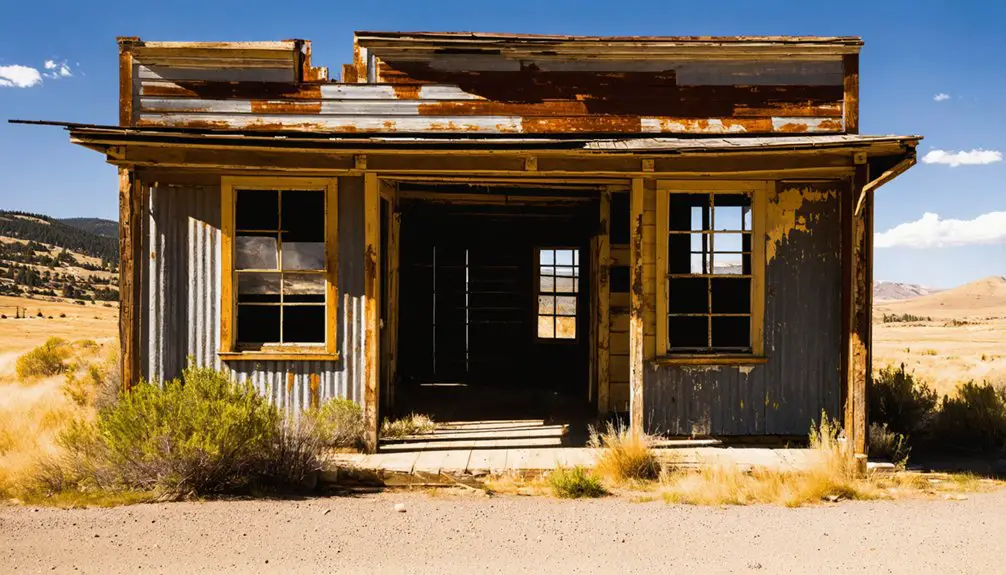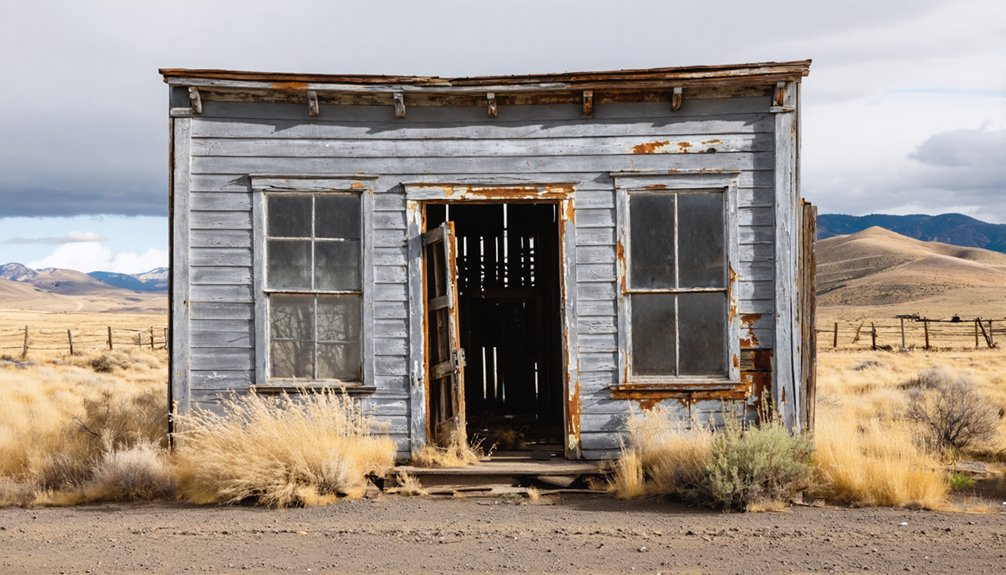
Oregon’s ghost towns stretch across four distinct regions, each preserving a unique chapter of frontier history. You’ll find gold rush remnants like Buncom and Golden in the south, while Eastern Oregon holds mining relics like Greenhorn and Shaniko. Central Oregon blends ranching heritage with dramatic landscapes, and the Willamette Valley hides quieter stories like Champoeg’s flood-ended history. Whether you’re drawn to preserved structures or remote cemeteries, Oregon’s abandoned settlements reward those who explore further.
Key Takeaways
- Buncom, established in 1851, is Southern Oregon’s best-preserved ghost town, featuring multilayered mining heritage and preserved structures.
- Eastern Oregon towns like Shaniko, Greenhorn, and Sumpter reflect the boom-and-bust cycle of 19th-century mining extraction.
- Golden is recognized as an Oregon State Heritage Site, retaining a church, general store, and orchard.
- Lesser-known towns like Champoeg and Chitwood reward independent travelers seeking off-the-beaten-path coastal and valley exploration.
- Visiting Oregon ghost towns requires detailed maps, confirmed road conditions, and preparation for limited cell service.
Oregon Ghost Towns Worth Visiting Today
Oregon’s ghost towns offer more than abandoned structures—they’re living windows into the state’s mining booms, agricultural settlements, and frontier commerce.
Whether you’re drawn to haunted histories or abandoned architecture, each site delivers a distinct regional story.
Buncom’s preserved structures reveal multilayered mining heritage spanning gold, silver, and chromite.
Buncom’s ruins speak in layers—gold first, then silver, then chromite, each era etched into what remains.
Golden’s church, general store, and orchard sit quietly within a designated Oregon State Heritage Site.
Shaniko’s reopened hotel and annual events make it uniquely accessible among eastern Oregon’s remnants.
Greenhorn, fully abandoned by 2010, offers seven standing homes amid Elkhorn Mountain solitude.
You can explore these sites independently, following backroads through landscapes largely unchanged since settlement.
Each town rewards careful attention—read the architecture, walk the grounds, and you’ll encounter Oregon’s frontier past on your own terms.
Southern Oregon’s Best-Preserved Gold Rush Towns
Southern Oregon’s gold rush legacy endures most visibly in three towns—Buncom, Golden, and Sterlingville—each representing a distinct stage of preservation and loss.
Buncom history begins in 1851, when Chinese miners pioneered extraction of gold, silver, chromite, and cinnabar following Jacksonville’s discovery. It remains the region’s best-preserved ghost town.
When you visit Golden, its architecture tells a quieter story—a church, general store, post office, and orchard survive within an Oregon State Heritage Site designated in 2011, reflecting a community that rejected saloons entirely. Mining techniques employed along Coyote Creek once sustained 150 residents.
The Sterlingville legacy is starker: only its cemetery persists from a 1,200-person settlement that once supported a saloon, bakery, boarding house, and warehouse before abandonment claimed everything else.
Eastern Oregon Ghost Towns Frozen in Time
As you explore Eastern Oregon’s ghost towns, Shaniko stands out as one of the region’s most resilient historic sites—planned in 1900 by bankers, it still hosts annual events, maintains 30 residents, and has seen its historic hotel reopen to visitors.
You’ll find that abandoned mining towns like Greenhorn tell a starker story, having originated in 1860s gold prospecting in the Elkhorn Mountains before its population dropped two-thirds between 1900 and 1910, with full abandonment finally occurring in 2010.
Sumpter, renamed from Fort Sumter after the Civil War, and Hardman, which declined with the rise of automobiles and trucks following its 1870s founding, round out a collection of Eastern Oregon towns you can visit to witness the region’s frozen-in-time mining and settlement heritage.
Shaniko’s Enduring Historic Legacy
Few ghost towns in the American West capture the tension between decay and preservation quite like Shaniko, a meticulously planned Eastern Oregon settlement that bankers established in 1900.
Shaniko history reveals deliberate civic ambition — you’ll find a historic hotel, City Hall, Fire Hall, and jail still anchoring the townscape. Shaniko architecture reflects turn-of-the-century planning rarely seen in frontier settlements, where function and permanence guided every structure’s design.
Today, only about 30 residents remain, yet the community actively hosts annual events that draw visitors seeking authentic Western heritage. The historic hotel’s reopening signals ongoing preservation efforts, offering you direct engagement with Oregon’s living past.
Shaniko doesn’t simply sit abandoned — it actively negotiates its identity between historical artifact and functional community.
Abandoned Mining Town Stories
Where Shaniko negotiated survival through civic reinvention, other Eastern Oregon mining towns never got that chance — they froze mid-collapse, preserving the raw mechanics of boom-and-bust extraction in startling detail.
You’ll find ghost town mysteries etched into four distinct settlements:
- Greenhorn — platted 1904, fully abandoned 2010, with seven homes still standing amid Elkhorn Mountain gold country.
- Sumpter — renamed post-Civil War from Fort Sumter, its mining legacy embedded in 1860s settlement patterns.
- Granite — an 1867 Grant County remnant classified Class D, holding fragmented structural evidence.
- Pocahontas — Baker County’s 1862 Class A site, representing the region’s most intact abandoned mining infrastructure.
Each town surrendered differently, yet collectively they document extraction’s brutal economics across Eastern Oregon’s mineral-rich terrain.
Central Oregon Ghost Towns Still Worth the Drive
Central Oregon’s ghost towns reward the curious traveler with a rare combination of frontier history and striking landscape.
You’ll find hidden gems scattered across scenic drives that connect abandoned places with genuine rustic charm.
Antelope, once a quiet Central Oregon ranching settlement, briefly became a Rajneeshee commune before reclaiming its identity as a historic site.
Nearby Shaniko, though supporting roughly 30 residents, preserves its cultural heritage through a reopened historic hotel and annual community events.
Boyd’s 1883 granary still stands as a quiet monument to frontier agriculture.
These ghost towns aren’t merely relics — they’re active conversations between past and present.
You don’t need a guided tour; just an open road, a reliable map, and genuine curiosity about Oregon’s forgotten communities.
Southeastern Oregon’s Most Isolated Ghost Towns
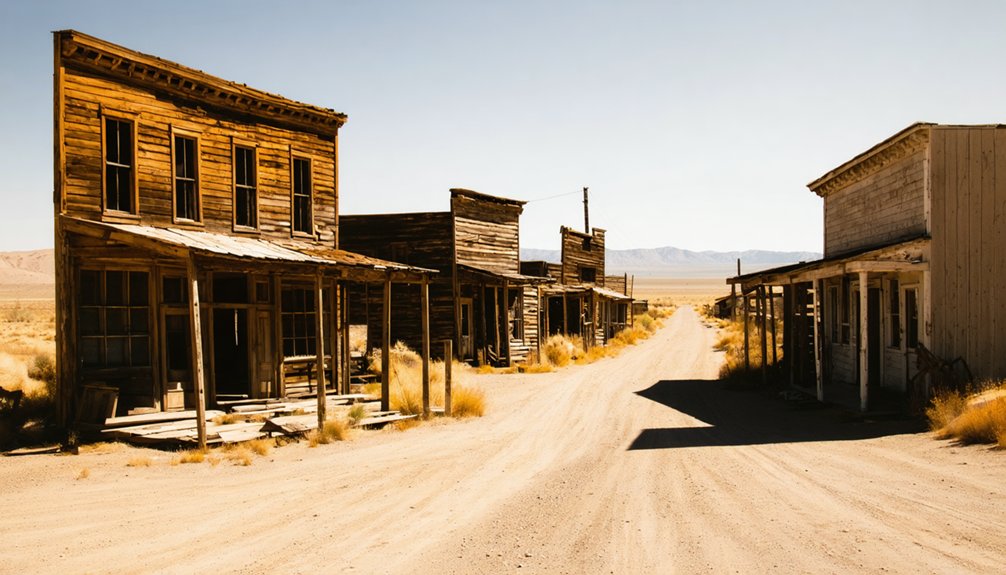
Southeastern Oregon pushes isolation to its logical extreme, stretching Central Oregon’s frontier character into a vast, high-desert expanse where ghost towns sit miles apart along unpaved backroads.
Here, remote exploration rewards those craving unfiltered freedom.
Start your journey at Jordan Valley and navigate backroads toward Bend, encountering:
- Arock – Named in 1922 for Native American petroglyphs; its Arock history carries deep cultural significance near Sheep Ranch Fort.
- Rome – Features striking Pillars of Rome formations amid dramatic natural surroundings.
- Danner & Burns Junction – Abandoned structures punctuate the silence; ghost town artifacts remain scattered throughout.
- Hampton & Millican – Old stagecoach stops carrying local legends of Oregon’s frontier past.
Each stop delivers genuine visitor experiences that no curated trail replicates.
Lesser-Known Ghost Towns Along Oregon’s Willamette Valley and Coast
Shifting westward from Oregon’s high desert, the Willamette Valley and coastal regions harbor ghost towns that rarely appear on mainstream heritage itineraries.
Champoeg, established in 1841 in Marion County, met its end through a catastrophic 1862 flood rather than economic decline—a distinction that sets it apart from Oregon’s mining casualties. Its class C-F designation reflects fragmentary survival.
In Clackamas County, Cherryville’s 1884 settlement endures primarily through its cemetery, designated a historic site in 2014—a reminder that burial grounds often outlast commerce.
Lincoln County’s Chitwood, founded in 1887, offers scattered Chitwood remnants for those pursuing coastal exploration off Highway 20.
Meanwhile, Pittsburg in Columbia County holds class D ghost town status, established in 1879 with minimal physical evidence remaining.
These sites reward independent travelers willing to navigate beyond curated tourist corridors.
How to Route a Ghost Town Road Trip Across Oregon
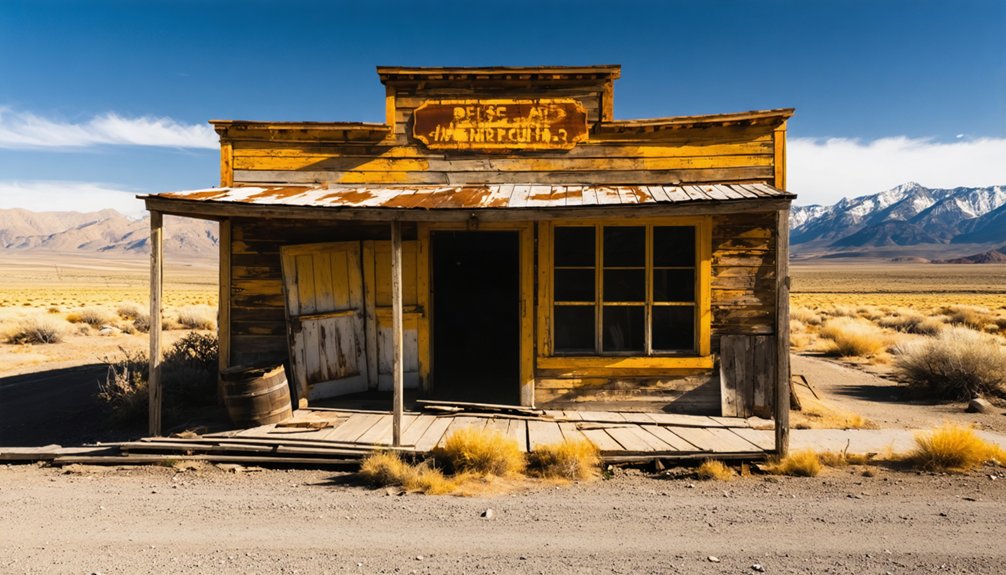
To plan your Oregon ghost town road trip, you’ll want to divide the state into its four major regions—Southern, Eastern, Central/Northern, and Southeastern—and map your stops accordingly.
In Southern Oregon, anchor your route around Buncom and Golden before heading east to Shaniko, Hardman, and Greenhorn, then looping south through Sumpter and the remote Southeastern corridor from Jordan Valley to Bend.
Pack detailed paper maps alongside your GPS, as many of these sites sit along unpaved backroads with limited cell service, and confirm seasonal road conditions before you depart.
Plan Your Oregon Route
Oregon’s ghost towns span every corner of the state, so planning a cohesive road trip means grouping sites by region and building logical driving corridors between them.
Structure your journey around four distinct corridors:
- Southwest Oregon – Follow scenic routes through Jacksonville to Buncom, Golden, and Sterlingville, each carrying deep historical significance tied to gold rush mining.
- Eastern Oregon – Connect Shaniko, Hardman, and Greenhorn along Highway 395 and adjacent backroads.
- Southeastern Oregon – Begin in Jordan Valley, tracking remote routes through Rome, Arock, and Burns Junction toward Bend.
- Central Oregon – Link Hampton, Brothers, and Millican via old stagecoach corridors.
Prioritize routes that minimize backtracking while maximizing exposure to preserved structures, cemeteries, and heritage landscapes unique to each region.
Key Ghost Towns To Visit
Southeastern routes connecting Jordan Valley through Rome and its Pillars reward travelers valuing remote discovery.
Prioritize towns with Class A–C heritage designations, like Pocahontas and Buncom, where structural and narrative richness justifies extended stops.
Essential Road Trip Tips
Routing a ghost town road trip across Oregon rewards careful geographic clustering, since the state’s abandoned settlements span dramatically different terrain—from the coastal ranges to the high desert basin.
Pack your road trip essentials before departing, and you’ll maximize every scenic stop without backtracking unnecessarily.
- Start in Jacksonville — explore Buncom and Golden across Josephine County’s mining corridor.
- Head northeast — shift through Sumpter, Greenhorn, and Granite across Baker and Grant Counties.
- Drive north toward Shaniko — connect Hardman, Antelope, and Boyd through Central Oregon’s agricultural ghost towns.
- Loop southeast — navigate Jordan Valley’s backroads through Rome, Arock, and Hampton toward Bend.
Carry detailed topographic maps, since remote southeastern routes lack reliable cell service and fuel stations.
Frequently Asked Questions
What Ghost Town Classification System Is Used to Rank Oregon Ghost Towns?
Oregon’s ghost towns use a letter-based classification system (A–F) to rank them. You’ll find this system reflects each site’s ghost town history and mining impact, helping you gauge preservation levels across the region’s abandoned communities.
Which Oregon Ghost Towns Were Originally Founded by Chinese Miners?
Like Gold Mountain’s forgotten dreamers, you’ll find Buncom stands as Oregon’s premier Chinese Mining History landmark — a Cultural Heritage Site founded in 1851 by Chinese miners following Jacksonville’s legendary gold discovery, echoing their enduring pioneering spirit.
Are There Any Oregon Ghost Towns That Prohibited Saloons Entirely?
You’ll find Golden, established in the 1840s on Coyote Creek, enforced strict saloon restrictions through historic regulations — it’s particularly one of Oregon’s ghost towns where you’d discover no saloons ever operated within its boundaries.
Which Oregon Ghost Towns Have Achieved Official State Heritage Site Designation?
You’ll find Golden’s your standout example — it earned Oregon State Heritage Site designation in 2011, reflecting genuine heritage significance and dedicated preservation efforts that’ve protected its four remaining historic structures in Josephine County.
What Natural Disasters Have Caused the Destruction of Oregon Ghost Towns?
You’ll find flood damage devastated Champoeg in 1862, completely destroying this once-thriving Willamette Valley settlement. While wildfire impact isn’t prominently documented in available records, Oregon’s ghost towns faced nature’s relentless forces shaping their ultimate abandonment.
References
- https://en.wikipedia.org/wiki/List_of_ghost_towns_in_Oregon
- https://www.travelmedford.org/southern-oregon-ghost-towns-
- https://thatoregonlife.com/2016/04/road-trip-ghost-towns-eastern-oregon/
- https://www.reddit.com/r/oregon/comments/13gx5xv/favorite_ghost_towns_or_random_spots_towns_off/
- https://www.pdxmonthly.com/travel-and-outdoors/oregon-ghost-towns
- https://www.youtube.com/watch?v=GaS3xjrQ-_I
- https://traveloregon.com/things-to-do/culture-history/ghost-towns/
- https://www.facebook.com/TravelOregon/videos/have-you-visited-oregons-ghost-towns-shaniko-and-other-remote-towns-were-once-th/1614675022836579/
- https://www.facebook.com/groups/ForgottenOregon/posts/2019015351699726/
- https://nationaldaycalendar.com/lists/12-oregon-ghost-towns