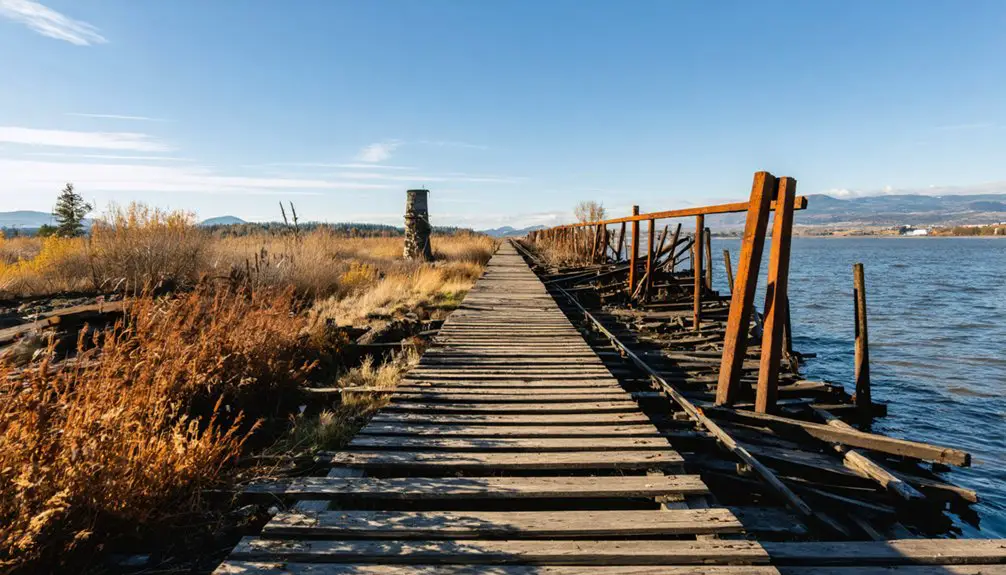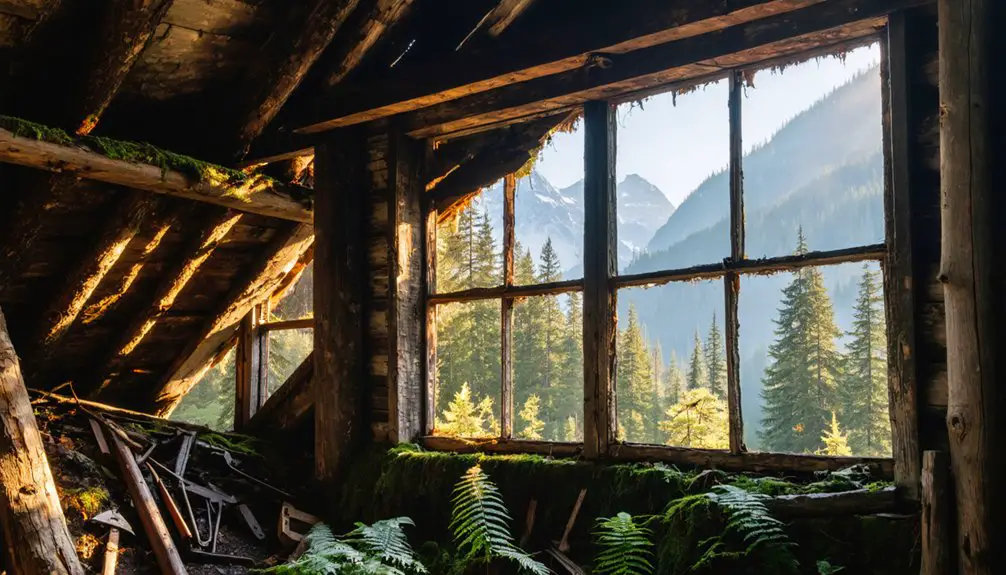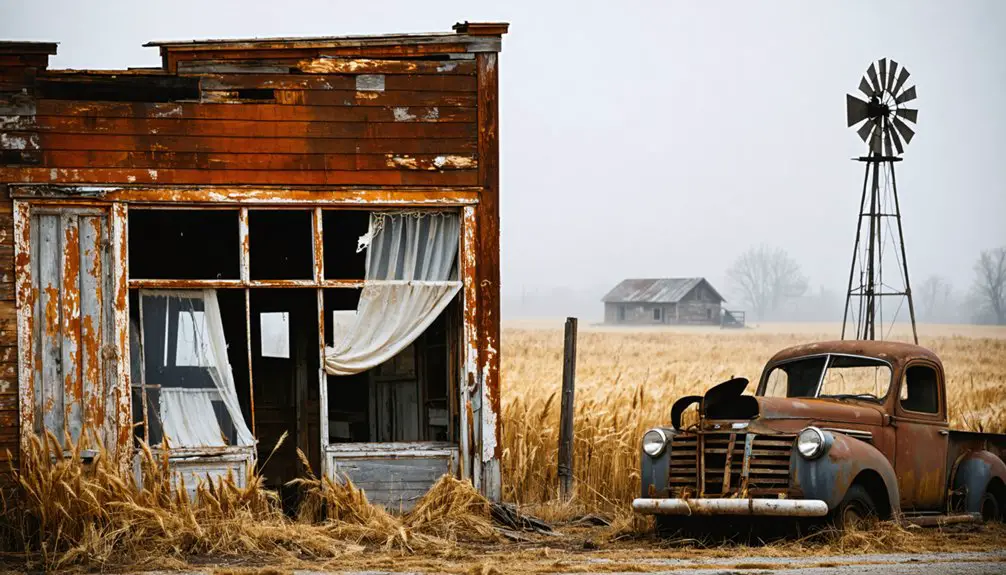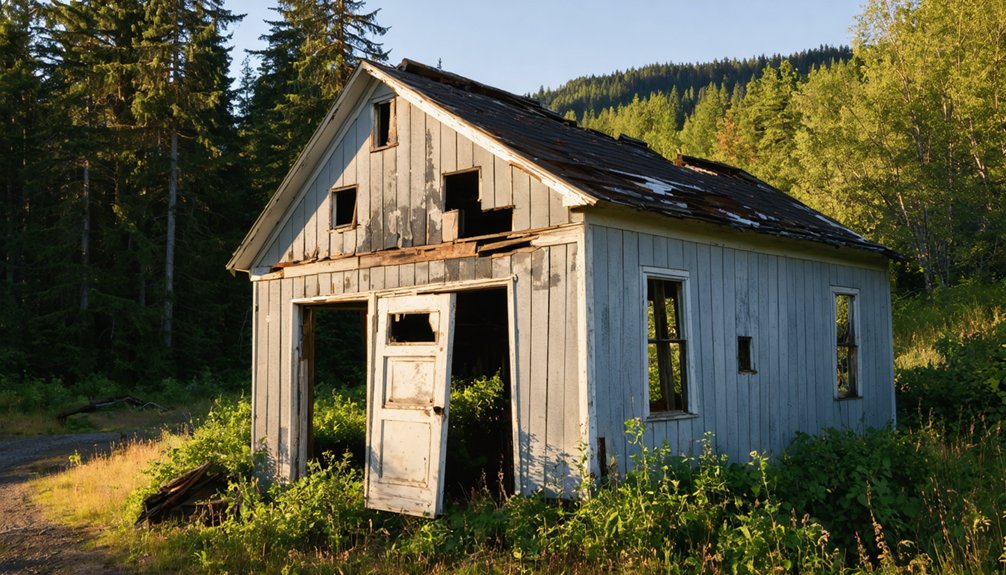
Washington’s ghost towns give you direct access to frontier history without museum barriers. Nighthawk’s 1860s mining ruins, Liberty’s preserved Gold Rush buildings, and Monte Cristo’s silver and gold remnants each tell a distinct story of economic boom and collapse. Ruby Townsite, Claquato, and Govan round out the state’s abandoned landscape with their own buried histories. Before you visit, there’s much more to know about what sets each site apart.
Key Takeaways
- Washington’s ghost towns include notable sites like Liberty, Nighthawk, Monte Cristo, Ruby Townsite, Claquato, and Govan, each with unique historical significance.
- Liberty is Washington’s oldest mining town, listed on the National Register of Historic Places since 1974, with preserved historic buildings.
- Monte Cristo, a gold and silver mining site, is accessible via an 8-mile roundtrip hike and is popular for ghost town photography.
- Nighthawk, dating to the 1860s, features original structures like a hotel, schoolhouse, and mining office, registered as an official ghost town.
- Visitors should research access conditions, follow preservation laws, and exercise caution around structurally unstable buildings before exploring ghost towns.
What Makes Washington’s Ghost Towns Worth Visiting?
Washington’s ghost towns offer more than abandoned buildings — they’re tangible records of the state’s mining heritage, pioneer settlements, and economic booms that shaped the Pacific Northwest.
When you walk through these sites, you’re stepping directly into ghost town history that textbooks can’t replicate.
You’ll find working-class stories embedded in rusted equipment at Monte Cristo, century-old churches at Claquato, and stone foundations marking Ruby City’s once-thriving streets.
Each location reflects a distinct economic collapse — whether from metal value drops, funding failures, or shifting county politics.
These sites give you unfiltered access to Washington’s past without museum barriers or curated narratives.
You decide how deeply to engage with the history, making each visit a self-directed exploration of the forces that built and dismantled entire communities.
Nighthawk: Okanogan County’s Forgotten Mining District
Nestled in Okanogan County, Nighthawk stands as one of the state’s oldest mining districts, with roots stretching back to the 1860s. When you visit, you’ll encounter original structures that have survived the test of time, including the Nighthawk hotel, schoolhouse, mining office, and an old mill built in 1903.
Nighthawk’s mining heritage reveals a once-thriving operation that served six concentration mills during its boom years. However, rising operating costs and dropping metal values ultimately forced the mines to shut down.
At its peak, Nighthawk’s mines powered six concentration mills before economic pressures forced their permanent closure.
The Historical Society has since registered Nighthawk as an official ghost town, preserving its legacy.
Exploring Nighthawk history gives you a rare, unfiltered look at Washington’s industrial past, where ambition and economic reality collided, leaving behind a remarkably intact snapshot of frontier mining life.
Liberty: Washington’s Oldest Gold Rush Town Still Standing
Tucked east of Cle Elum in the Cascade Mountains, Liberty holds the distinction of being Washington’s oldest mining town, originally operating under the name Meaghersville. Its historical significance earned it a place on the National Register of Historic Places in 1974, recognizing its central role in Washington’s Gold Rush during the 1870s.
Unlike fully abandoned ghost towns, Liberty’s a living settlement where a handful of residents still call home. When you visit, you’ll encounter old mining equipment, interpretive signs, and preserved historic buildings that authentically document the town’s prosperous past.
Liberty’s accessible layout makes it ideal for families seeking a genuine Gold Rush history experience.
You’re fundamentally walking through Washington’s mining heritage, where the evidence of a once-thriving community remains largely intact and explorable.
Monte Cristo: The Hike-In Ghost Town With Gold and Silver Ruins
Located in eastern Snohomish County northwest of Monte Cristo Peak, the ghost town of Monte Cristo operated as an active gold and silver mining site from 1889 to 1907 before being fully abandoned by 1983.
Funding issues and a dip in mining potential ultimately ended operations.
Today, you can reach the site via an 8-mile roundtrip hike off Mountain Loop Highway, which includes a log crossing — keep that in mind when planning your trip.
For hiking tips, wear sturdy boots and bring trekking poles for uneven terrain.
Once there, you’ll find rusty signage, abandoned equipment, and deteriorating buildings throughout the area.
Ghost town photography enthusiasts will appreciate the raw, untouched atmosphere these ruins provide, making Monte Cristo one of Washington’s most visually compelling abandoned sites.
Ruby Townsite: Where Okanogan County’s Boomtown Boom Went Silent
If you’re tracing Washington’s most dramatic mining rises and falls, Ruby Townsite belongs near the top of your list.
Once known as the “Babylon of the West,” this former Okanogan County seat boasted six general stores, multiple saloons, and several hotels during its peak stretch in the 1880s.
Today, you’ll find only stone foundations where that frenzied boomtown once stood.
Ruby’s Rise To Prominence
Once known as the “Babylon of the West,” Ruby Townsite rose fast and hard in Okanogan County, drawing miners, merchants, and opportunists into its orbit during the region’s mining boom.
Ruby’s Economy thrived quickly, and its Ghost Town Legends still echo through the valley today.
At its peak, Ruby featured:
- Six general stores supplying a relentless flood of prospectors
- Multiple saloons and hotels fueling commerce and chaos
- An 11-month run as the Okanogan County seat
You’re looking at a settlement that built institutional legitimacy almost overnight.
County governance, retail infrastructure, and hospitality industries converged rapidly, signaling genuine economic momentum.
Ruby wasn’t just rowdy — it was organized, ambitious, and consequential.
That combination made its eventual silence all the more striking.
Stone Foundations Left Behind
What remains of Ruby Townsite today are stone foundations — silent structural evidence of a boomtown that couldn’t sustain its own momentum. Once called “Babylon of the West,” Ruby held Okanogan County’s seat for just 11 months before its rapid decline stripped the town of everything but its stone remnants.
When you visit today, you’re walking ground that once supported six general stores, multiple saloons, and several hotels. That commercial density reflects real historical significance — Ruby wasn’t a minor settlement; it was a regional power center that collapsed fast.
The foundations don’t offer much visually, but they’re honest. They tell you exactly what happened: ambitious growth followed by swift abandonment.
You can reach the site through the Loomis-Similkameen-Oroville loop, making it accessible on your own terms.
Claquato and Govan: Washington Ghost Towns Beyond the Mining Era
Not all of Washington’s ghost towns owe their fate to the boom-and-bust cycles of mining. Claquato history reveals a former Lewis County seat that survived abandonment through two enduring landmarks:
- Washington’s oldest standing church, restored in the 1950s, retaining its original bell and crown of thorns steeple
- A cemetery sheltered by a famous fir tree, marking pioneer lives
- A National Register of Historic Places designation preserving what little remains
Govan remnants tell a quieter story. Located just off Highway 2, roughly 50 miles west of Spokane, this late 19th-century eastern Washington settlement offers sparse but authentic traces of a vanished community.
You’ll find no dramatic ruins here—just honest evidence of lives once lived beyond civilization’s comfortable edges, accessible and unadorned.
Which Washington Ghost Towns Are Worth the Drive?
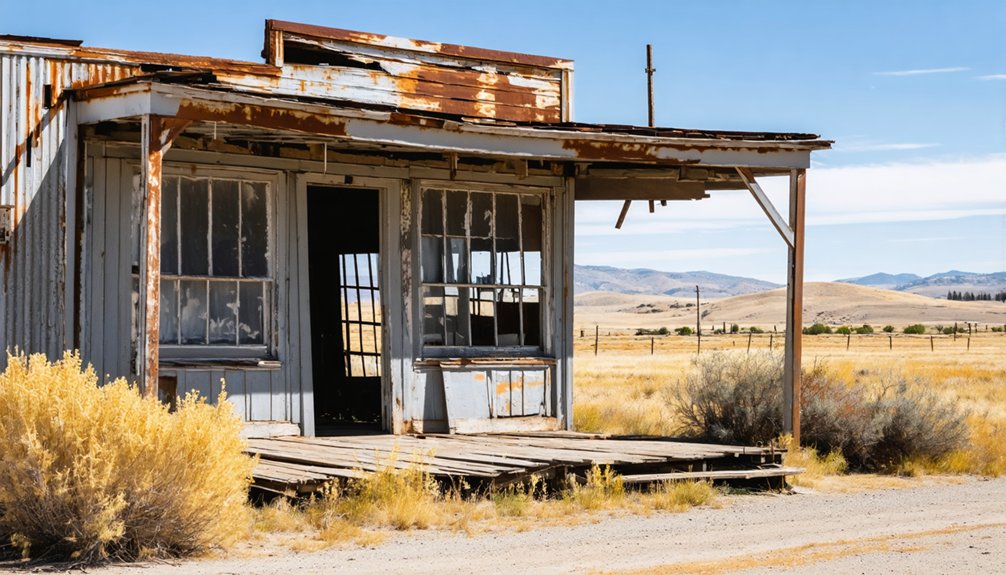
Whether a ghost town earns the drive depends on what you’re after—ruins, history, hiking, or a mix of all three.
Liberty tops the list for family activities and cultural heritage, offering walkable grounds, interpretive signs, and deep mining history as Washington’s oldest gold town.
Monte Cristo rewards hikers with strong photography spots and raw ghost town preservation along scenic mountain terrain.
Nighthawk and Ruby Townsite fit naturally into scenic routes through Okanogan County, connecting local legends of boomtown excess with visible remnants.
Claquato delivers concentrated historical significance through its preserved church and cemetery without requiring much travel.
Each site offers something distinct—your priorities determine the winner.
Cross-reference your interests against accessibility, and you’ll spend less time second-guessing and more time exploring.
What to Know Before Visiting Washington Ghost Towns
Before heading out to any of these sites, you’ll want to account for access conditions, preservation rules, and safety considerations that vary greatly by location.
Ghost town etiquette and historical preservation aren’t bureaucratic formalities—they’re what keep these sites accessible for everyone.
Ghost town etiquette isn’t red tape—it’s what keeps these crumbling, irreplaceable places open for the rest of us.
Key considerations before you go:
- Access varies greatly: Monte Cristo requires an 8-mile roundtrip hike, while Govan sits just off Highway 2. Plan accordingly.
- Leave everything intact: Removing artifacts violates federal and state preservation laws. Document with photos instead.
- Structural instability is real: Abandoned buildings at sites like Nighthawk and Monte Cristo can be hazardous. Keep your distance from deteriorating structures.
Respecting historical preservation protects these irreplaceable sites and guarantees future visitors experience the same raw, unfiltered history you came to find.
Frequently Asked Questions
Are Washington Ghost Towns Open to Visitors Year-Round?
Most are open year-round, but you’ll want to practice visitor etiquette and respect historic preservation efforts. Some sites, like Monte Cristo, require seasonal hiking access, so check conditions before you plan your visit.
Can You Legally Take Artifacts or Souvenirs From Ghost Towns?
You shouldn’t remove artifacts from ghost towns like Liberty or Monte Cristo. It’s illegal on protected sites, carrying serious legal implications. Artifact preservation laws exist to protect history, so you’re better off leaving everything in place.
Are Pets Allowed at Washington’s Ghost Town Sites?
Pet policies vary like the wind across Washington’s ghost towns. You’ll want to check each site’s rules, but practicing good ghost town etiquette means keeping pets leashed and ensuring they don’t disturb historical remnants or wildlife.
Do Any Washington Ghost Towns Offer Guided Tours or Ranger Programs?
Based on the available knowledge, you won’t find formal guided tours or ranger programs at most of these ghost towns. Liberty’s interpretive signs offer self-guided exploration, letting you roam freely and independently discover Washington’s fascinating mining history.
Is There an Entrance Fee to Visit Washington’s Ghost Towns?
Like open doors to history, most Washington ghost towns don’t charge entrance fees, ensuring ghost town accessibility for all. You’ll freely explore Liberty, Monte Cristo, and Nighthawk without worrying about entrance fees breaking your adventure budget.
References
- https://stateofwatourism.com/ghost-towns-of-washington-state/
- https://www.youtube.com/watch?v=FVveO9uJBvc
- https://en.wikipedia.org/wiki/List_of_ghost_towns_in_Washington
- https://okanogancountry.com/ghost-towns
- https://www.tripsavvy.com/ghost-towns-in-washington-state-4692240
- https://www.reddit.com/r/Washington/comments/14ptcnf/any_cool_ghost_towns_or_large_abandoned/
- https://www.cascadeloop.com/ghost-towns-and-haunted-places-in-the-washington-cascades
- https://www.facebook.com/groups/1064379881480462/posts/1078494016735715/
- https://www.wta.org/go-outside/seasonal-hikes/fall-destinations/hidden-history-ghost-town-hikes
- https://www.ghosttownsofwashington.com