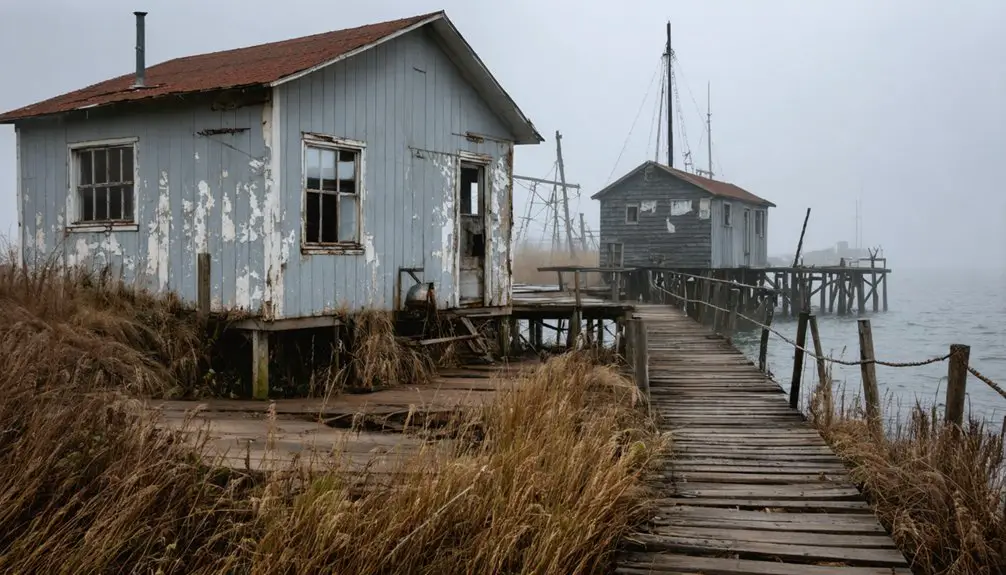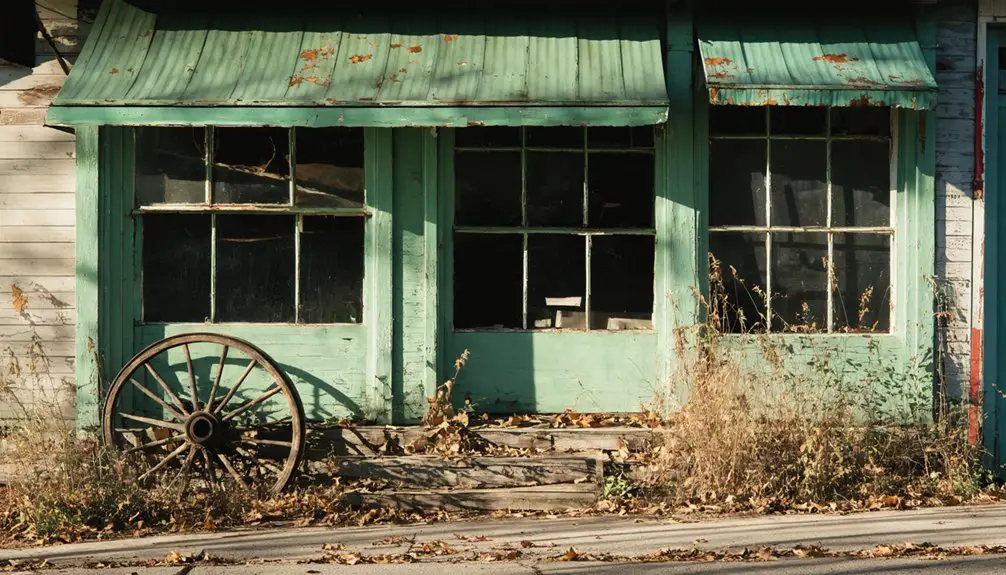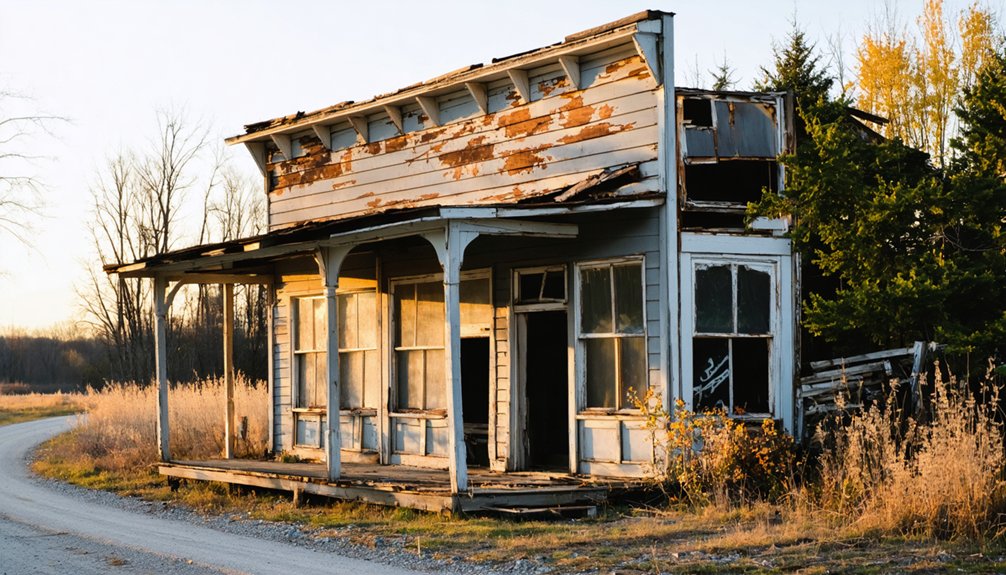
Wisconsin’s roughly 155 documented ghost towns invite you to walk through collapsed ambitions and forgotten lives. You’ll find mining settlements near Montreal, logging camps swallowed by regrown forests, and trade towns that withered once railroads bypassed them. Fire claimed Williamsonville overnight, while disease silenced Sinipee completely. These aren’t just ruins — they’re layered chapters of industrial failure, natural disaster, and human resilience waiting to be uncovered. Stick around, and you’ll discover exactly where these forgotten places still stand today.
Key Takeaways
- Wisconsin has approximately 155 documented ghost towns, abandoned due to economic collapse, natural disasters, or being bypassed by railroads.
- Industries like logging and mining created boom towns that disappeared once resources were exhausted, particularly near Clam Lake and Montreal.
- Williamsonville in Door County burned to the ground in one night, leaving ruins that still echo its tragic history.
- Disease wiped out the southern Wisconsin town of Sinipee entirely, while Voree and Ulao also hold significant abandoned histories.
- Physical remnants like crumbling foundations, cemeteries, and preserved sites like Pendarvis document Wisconsin’s forgotten communities for explorers today.
What Qualifies as a Ghost Town in Wisconsin?
What exactly transforms a forgotten settlement into a ghost town? It’s a place once alive with human ambition that’s since been abandoned — left to decay, reclaim, or simply vanish.
In Wisconsin, you’ll find settlements that qualify through economic collapse, natural disaster, or infrastructure bypasses that stripped communities of relevance overnight.
Ghost town preservation matters because these sites carry undeniable historical significance. They reveal how industries failed, how fires erased entire neighborhoods, and how opportunity moved on without warning.
Some Wisconsin ghost towns left behind crumbling structures and church cemeteries. Others disappeared so completely that forests swallowed every trace.
You’re looking at roughly 155 documented ghost towns across the Badger State — each one a quiet reminder of lives once lived, dreams once pursued, and communities that simply couldn’t survive the weight of time.
The Industries and Disasters That Killed Wisconsin’s Towns
Behind every Wisconsin ghost town lies a specific moment of collapse — an industry that dried up, a fire that refused to stop, or a railroad decision made hundreds of miles away that quietly sealed a community’s fate.
Economic decline gutted mining settlements near Clam Lake and Montreal once ore production stopped. Logging camps vanished when timber supplies ran out.
Natural disasters struck without mercy — Williamsonville in Door County burned in a single night, while Sinipee in Grant County was wiped out entirely by disease.
Some towns didn’t fade — they were erased, swallowed by fire or disease in a single, unforgiving moment.
Railroad bypasses quietly strangled towns that depended on connected trade routes.
You’ll find that these communities didn’t disappear randomly — each collapse followed a distinct pattern of industrial failure or catastrophic loss, leaving only ruins, cemeteries, and forest-swallowed foundations behind.
Door County Ghost Towns Worth Exploring
If you’re drawn to haunting histories, Door County’s ghost town of Williamsonville will stop you cold — in a single night, a catastrophic fire consumed the entire settlement, leaving nothing but ash and memory.
You can still visit the ruins today, where the landscape quietly holds the weight of that tragedy beneath its tree cover.
Door County’s forgotten corners reward the curious traveler who takes time to look beyond its polished shorelines and seek out what history buried there.
Williamsonville’s Tragic Fire
Tucked within Door County’s forested landscape, Williamsonville once stood as a quiet settlement that met its end in a single catastrophic night of fire.
The Williamsonville fire consumed everything residents had built, leaving behind ghost town memories that still echo through the surrounding woods today.
You can almost feel the weight of that loss when you visit the site.
No grand ruins greet you, no restored structures invite exploration.
What remains is largely silence and scattered traces beneath the trees.
The fire moved so swiftly that the community never recovered, and the settlement simply vanished from Wisconsin’s living map.
Williamsonville’s story reminds you that some communities don’t fade gradually — they’re erased in a single, devastating moment that history refuses to forget.
Door County Ruins Today
Door County holds more ghost town history than a single fire can contain, and exploring its ruins today connects you to layers of settlement, struggle, and quiet disappearance that shaped this peninsula’s character.
You’ll find abandoned structures half-swallowed by forest, each carrying historical significance rooted in industries that once thrived then vanished completely.
Local legends preserve community memories that official records often overlook, giving you richer context when you walk these forgotten landscapes.
Preservation efforts remain uneven across the county, meaning some sites reward careful exploration while others have nearly dissolved into the earth.
You owe it to yourself to seek these places deliberately, document what you find, and respect what fragile remnants survive.
Door County’s ghost towns don’t announce themselves; they wait for you to look.
Southern Wisconsin’s Forgotten Ghost Towns
If you venture through southern Wisconsin, you’ll find ghost towns that carry essential stories of the past buried beneath overgrown landscapes.
Walworth County’s Voree once stood as a self-proclaimed kingdom, while Grant County’s Sinipee was completely wiped out by disease, leaving behind only faint traces of what once thrived.
You can still uncover remnants like crumbling foundations, forgotten cemeteries, and abandoned structures that quietly testify to these settlements’ brief but significant existences.
Notable Southern Ghost Towns
Southern Wisconsin harbors some of the state’s most compelling forgotten settlements, each carrying a story of ambition, tragedy, and quiet disappearance. You’ll find these abandoned landmarks scattered across counties that once buzzed with promise and purpose.
In Walworth County, Voree stands as a peculiar chapter in southern history — a self-proclaimed kingdom that collapsed as quickly as it rose.
Grant County’s Sinipee tells an even darker tale, where disease swept through an entire community, leaving nothing behind.
Ozaukee County’s Ulao once thrived as an active port town before quietly fading into obscurity, its ruins among the region’s most striking remnants.
These places don’t just haunt the landscape — they challenge you to remember what ambition without permanence truly looks like.
Remnants Of Forgotten Settlements
What these vanished communities left behind speaks louder than their histories ever could. When you walk through southern Wisconsin’s forgotten landscapes, you’ll encounter remnants that carry the full weight of lost histories — crumbling foundations, weathered cemeteries, and forgotten architectures slowly reclaimed by forest and field.
Some settlements vanished so completely that only faint depressions in the earth mark where families once built their lives. Others, like Ulao, preserve scattered ruins and abandoned homes that still whisper stories of ambition and collapse.
You can trace the outlines of entire communities beneath overgrown canopies if you know where to look.
These remnants aren’t merely ruins — they’re tangible connections to lives lived freely, communities built boldly, and worlds that ultimately surrendered to time’s quiet, indifferent advance.
Ghost Towns in Northern Wisconsin Swallowed by Forest
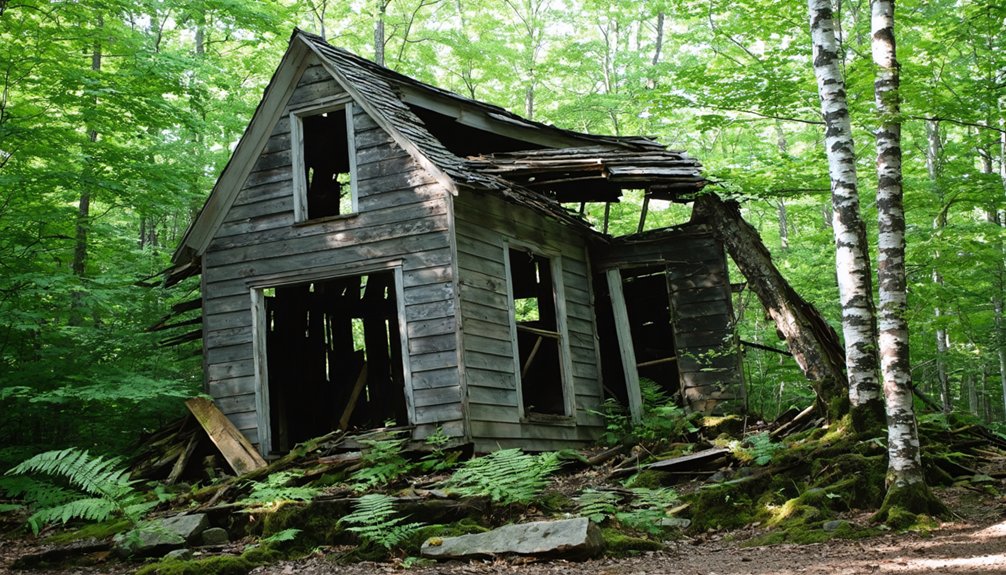
Northern Wisconsin’s dense forests have quietly swallowed dozens of once-thriving communities, leaving behind little more than crumbling foundations and the occasional cemetery marker.
As you venture into the Northern Wilderness, forest encroachment becomes undeniable — trees reclaim roads, vines consume structural remnants, and silence replaces what were once bustling streets.
Mining settlements near Clam Lake and Montreal collapsed when industries failed, surrendering entirely to surrounding woodlands.
You’ll find that some locations have vanished so completely that even seasoned explorers struggle to confirm their existence without historical maps.
These forests don’t just hide ruins; they erase stories.
Walking through these landscapes, you’re confronting communities that infrastructure and opportunity simply bypassed.
The Badger State’s northern terrain remains both a beautiful wilderness and an unintentional graveyard of forgotten ambition.
Wisconsin Ghost Towns Destroyed by Fire, Flood, and Disease
When you explore Wisconsin’s ghost towns, you’ll find that nature and disease claimed entire communities in sudden, devastating ways.
Williamsonville in Door County burned to the ground in a single night, while Sinipee in Grant County was wiped out by disease, leaving behind little more than silence.
These communities remind you that Wisconsin’s abandoned settlements weren’t always the product of slow economic decline — sometimes, destruction came swiftly and without mercy.
Fire-Ravaged Wisconsin Communities
Fire, flood, and disease carved some of the most haunting chapters into Wisconsin’s history, erasing entire communities that had taken generations to build. Few examples illustrate fire destruction more vividly than Williamsonville in Door County, a settlement consumed in a single night.
You can almost feel the weight of that loss when you stand where a once-living community simply ceased to exist.
Yet what’s equally striking is community resilience — the stubborn human impulse to rebuild, remember, and bear witness. These weren’t just structures that burned; they were schools, churches, and family homes representing hard-won freedom on the frontier.
Wisconsin’s fire-ravaged towns remind you that progress is fragile, and that the land holds memories long after the last ember cools.
Disease And Flood Destruction
Disease and flood wrote their own merciless chapters in Wisconsin’s ghost town story, erasing settlements with a swiftness that left survivors little time to mourn.
The disease impact on Grant County’s Sinipee proved total and unforgiving — illness swept through, leaving behind silence where a thriving community once stood. You can almost feel the weight of that loss when you walk what remains of these forsaken grounds.
The flood aftermath tells an equally grim story across Wisconsin’s waterways, where rising rivers consumed entire neighborhoods overnight. These weren’t slow declines; they were sudden erasures.
Communities that had carved independence from the wilderness simply vanished beneath water or surrendered to contagion. Their absence reminds you that nature has always held the final authority over human ambition.
The Most Haunting Ghost Towns in Wisconsin
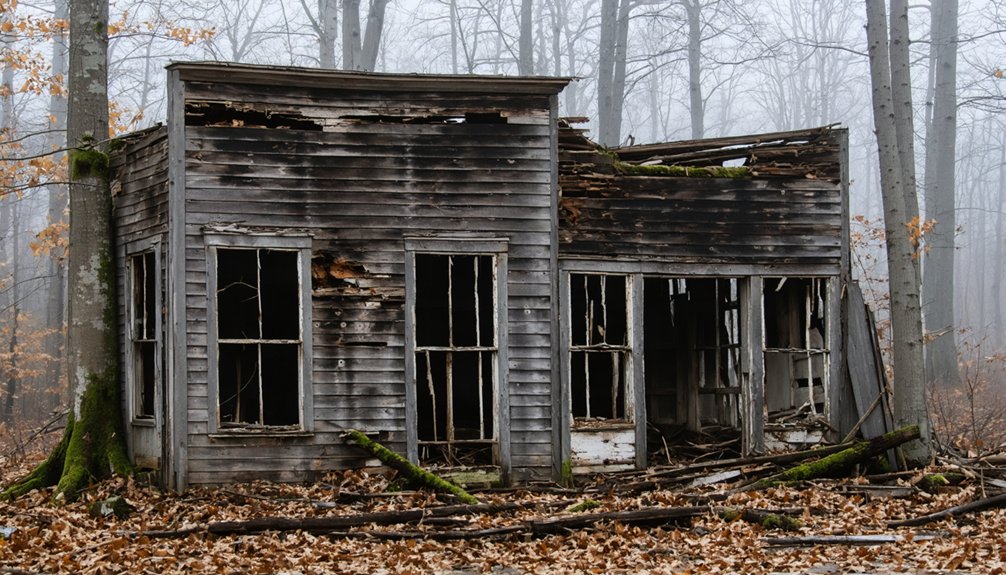
Scattered across Wisconsin’s landscape, some ghost towns leave behind more than just ruins — they leave behind an almost palpable sense of loss that you can feel the moment you set foot on their grounds.
Williamsonville in Door County burned in a single night, leaving eerie landscapes that still whisper of tragedy.
Ulao, once a thriving Ozaukee County port, offers ghost town legends tied to faded commerce and forgotten ambition.
Voree in Walworth County collapsed under the weight of its own utopian ideals.
Sinipee in Grant County vanished after disease consumed its population.
These aren’t merely abandoned places — they’re testimonies to human vulnerability.
When you walk through them, you’re confronting Wisconsin’s rawest, most unfiltered history, preserved not in museums, but in silence.
What Physical Remnants Survive at These Abandoned Sites?
Where ghost towns once hummed with daily life, physical remnants still anchor their stories to the soil. When you visit these sites, you’ll find abandoned structures ranging from crumbling foundations to preserved mining settlements like Pendarvis, each carrying deep historical significance.
Church cemeteries mark Harrison in Calumet County, while Ulao’s ruins reveal its former life as a thriving port town.
Some locations have surrendered entirely to Wisconsin’s forests, leaving you searching beneath dense canopies for scattered traces. Others preserve enough architectural evidence to reconstruct entire community narratives.
You’ll discover abandoned homes, old restored structures, and quiet cemeteries that collectively document lives once fully lived. These remnants don’t just sit idle — they actively challenge you to piece together Wisconsin’s forgotten but essential past.
Wisconsin Ghost Towns You Can Still Visit Today
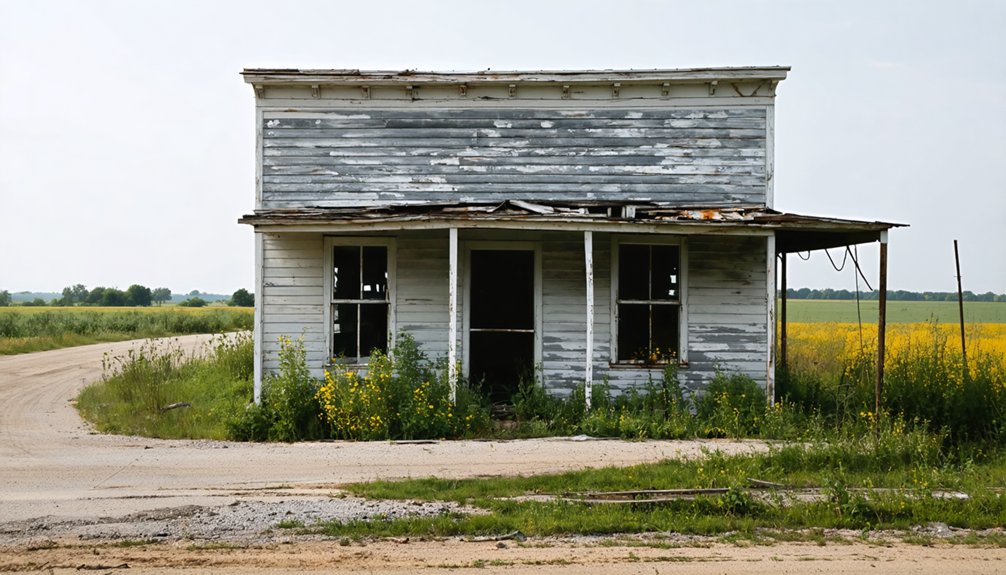
Several of Wisconsin’s ghost towns still welcome curious visitors today, offering rare glimpses into communities that time quietly swallowed.
Whether you’re drawn to ghost town photography or historical preservation, these sites reward the independent explorer.
- Pendarvis in Mineral Point preserves a Welsh-Cornish mining settlement, offering restored structures and guided context.
- Ulao in Ozaukee County delivers authentic abandonment—crumbling ruins and overgrown remnants of a once-active Lake Michigan port.
- Williamsonville in Door County marks where an entire community burned in a single catastrophic night, leaving haunting stillness behind.
You’ll find each location carries its own emotional weight.
Walking these grounds connects you directly to Wisconsin’s forgotten chapters.
Every step through these ghost towns places Wisconsin’s buried past directly beneath your feet.
Bring a camera, respect the land, and let the silence tell its story.
How to Plan a Wisconsin Ghost Town Road Trip
Planning a Wisconsin ghost town road trip rewards you most when you map your route around regional clusters rather than chasing isolated sites one by one. Group Door County stops like Williamsonville alongside Ozaukee County’s Ulao to cover the eastern corridor efficiently.
Before you leave, conduct thorough historical research using county records, old railroad maps, and settlement documentation to confirm what actually remains at each location.
Carry reliable ghost town photography equipment, because lighting shifts quickly among dense forest ruins and crumbling structures. Southern Wisconsin’s Grant County offers Sinipee, while Walworth County holds Voree, making both natural companions on a single southwestern swing.
Always check land access permissions beforehand. Freedom means exploring deliberately, not trespassing. A well-researched route transforms scattered abandoned settlements into a coherent, deeply rewarding historical journey through Wisconsin’s forgotten past.
Frequently Asked Questions
How Many Total Ghost Towns Have Been Documented Across Wisconsin?
You’ll find approximately 155 abandoned settlements documented across Wisconsin’s ghost town history, though about 15 have been recently mapped in detail, each carrying nostalgic stories of communities that once thrived before fading into forgotten wilderness.
Which Wisconsin Ghost Town Lasted the Shortest Amount of Time Before Abandonment?
Williamsonville’s your best example of short-lived settlements, as it burned down in a single night in Door County. Its historical significance reminds you how quickly thriving communities can vanish, leaving only haunting memories behind.
Are There Any Wisconsin Ghost Towns Located on Tribal or Reservation Lands?
Like buried seeds awaiting rediscovery, the knowledge base doesn’t confirm ghost towns on tribal lands, but you’ll find that tribal heritage and historical significance deeply intertwine with Wisconsin’s abandoned settlements worth exploring further.
Have Any Wisconsin Ghost Towns Been Featured in National Media or Publications?
You’ll find that Wisconsin’s ghost town history, like Pendarvis and Ulao, has attracted media coverage in national publications, letting you discover these forgotten communities through scholarly features that nostalgically celebrate their vanished yet freedom-defining American heritage.
Do Any Wisconsin Ghost Towns Have Legal Restrictions Preventing Public Access or Exploration?
Yes, some sites sit under strict legal ownership, so you’ll want to research before roaming. Privately possessed properties prioritize public safety, meaning you can’t freely explore without risking trespassing consequences that could restrict your adventurous spirit.
References
- https://en.wikipedia.org/wiki/List_of_ghost_towns_in_Wisconsin
- https://www.onlyinyourstate.com/experiences/wisconsin/ghost-towns-wi
- https://upnorthnewswi.com/local/the-fascinating-stories-behind-7-wisconsin-ghost-towns/
- https://www.youtube.com/watch?v=kG-k_9O1OTE
- https://urbexunderground.com/ghost-towns-in-wisconsin/
- https://www.youtube.com/watch?v=ZxDS35VICKs
- https://www.ghosttowns.com/states/wi/wi.html
- https://pbswisconsin.org/news-item/southern-wisconsins-ghost-towns-leave-behind-vital-stories/
- https://en.wikipedia.org/wiki/Category:Ghost_towns_in_Wisconsin