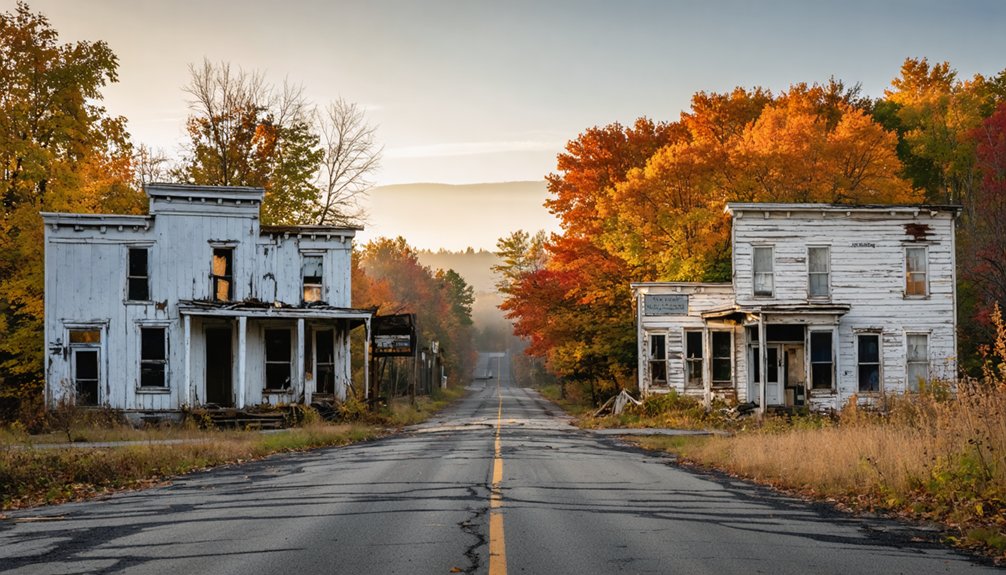
If you’re planning a ghost town road trip to Hillwest, Vermont, you’ll hit your first roadblock before you even pack your bags — Hillwest doesn’t exist. It appears in no state records, historical archives, or verified ghost town registries. But don’t cancel your adventure yet. Vermont’s actually home to fascinating, documented abandoned settlements with rich histories, mysterious legends, and stunning natural reclamation. Stick around, and you’ll discover where the real ghost town experiences are hiding.
Key Takeaways
- Hillwest, Vermont, does not exist as a ghost town; it appears in fictional content and is absent from historical archives and state maps.
- Consider visiting documented Vermont ghost towns like Glastenbury, Somerset, Ricker Basin, West Castleton, or Tyson Furnace instead.
- Pack sturdy hiking boots, offline maps, layered clothing, a first aid kit, and a camera for ghost town exploration.
- Ghost town sites feature cellar holes, stone foundations, weathered cemeteries, and nature-reclaimed structures telling stories of forgotten communities.
- Always inform someone of your itinerary, plan routes in advance, and stay hydrated during remote Vermont explorations.
The Truth About Hillwest, Vermont Ghost Town
Although Vermont is home to several genuinely eerie and well-documented ghost towns, Hillwest isn’t one of them. You won’t find it on any state map, postal record, or historical archive.
No ghost town legends tie back to it, and Vermont’s ghost town registries don’t list it among their mythical settlements or otherwise. The name appears only in fictional or erroneous travel content with zero geographic backing.
If you’ve been planning a road trip to Hillwest, you’ll want to redirect your route. Vermont does offer real abandoned settlements worth exploring — places with actual cellar holes, forgotten cemeteries, and documented histories.
Don’t waste your adventure chasing a location that doesn’t exist when genuinely haunting destinations are already waiting for you across the state.
What Vermont Ghost Towns Actually Look Like
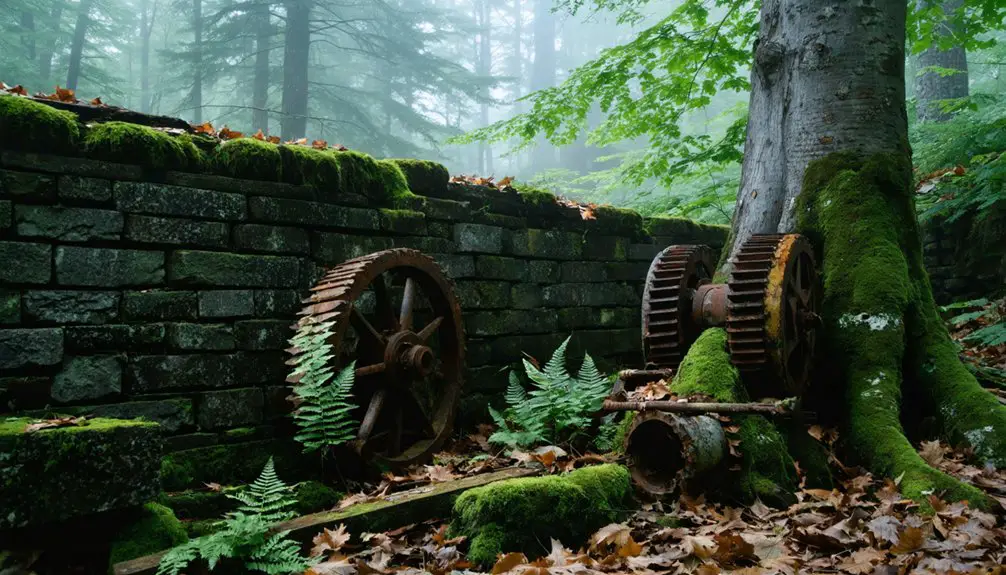
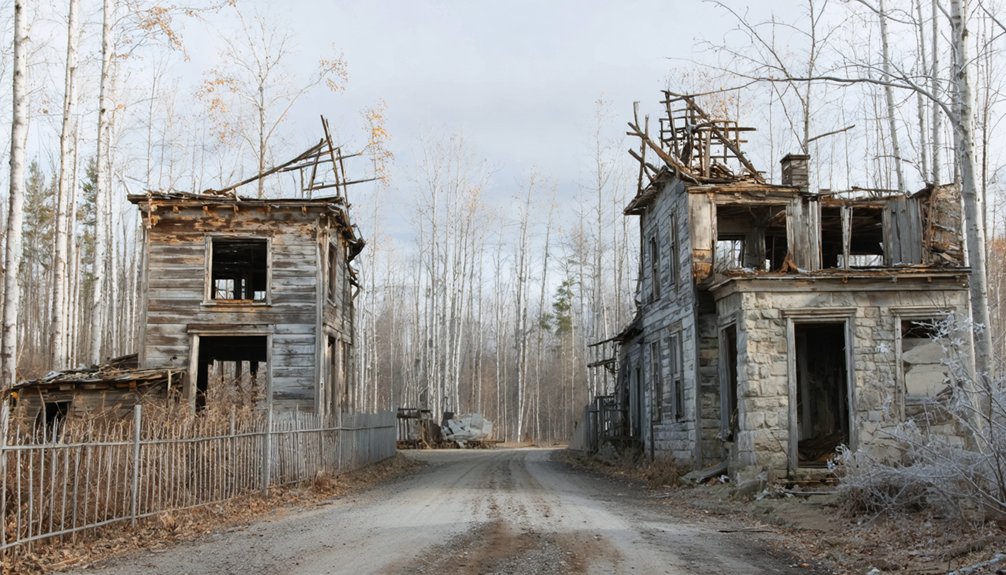
When you step into a real Vermont ghost town, you’ll find cellar holes punching into the earth where houses once stood, their stone foundations slowly surrendering to moss and tree roots.
Nature doesn’t wait — saplings push through old floorboards, vines consume chimneys, and forests swallow entire farmsteads within a generation.
Yet the cemeteries stubbornly remain, their weathered slate markers still legible, quietly outlasting everything else the settlers left behind.
Cellar Holes And Foundations
Most Vermont ghost towns won’t greet you with crumbling facades or dramatic ruins — instead, you’ll find subtle scars in the earth that tell a quieter story.
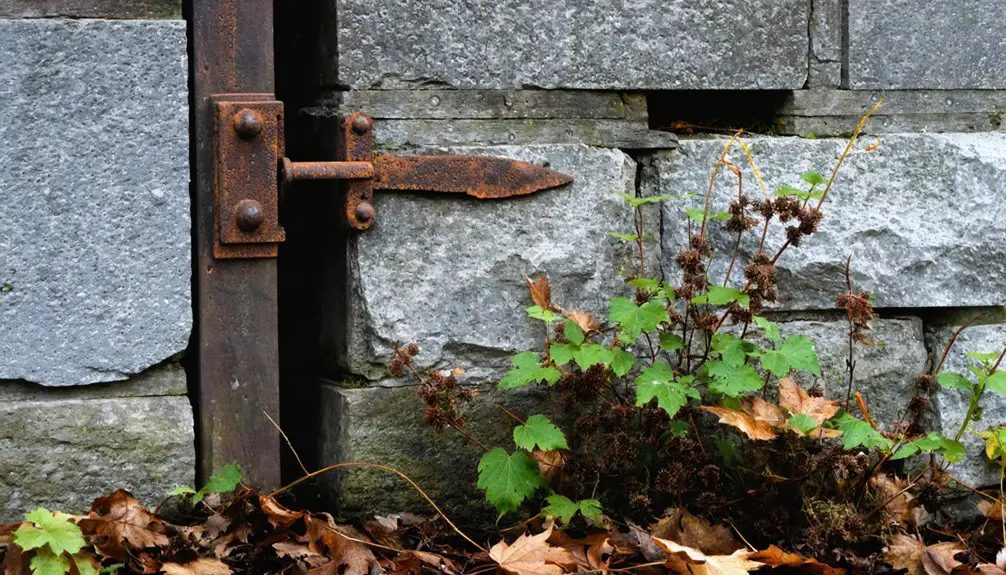
Rectangular depressions mark where families once gathered around hearths. Stone walls border invisible property lines through thick forest. Cellar exploration reveals hand-laid granite blocks descending into shadowed pits, still precise after a century of abandonment.
Foundation mapping helps you reconstruct entire neighborhoods from what looks like random rubble. You’ll trace doorways, identify kitchen areas, and distinguish barns from homes simply by reading dimensions and placement.
Moss-covered granite tells you more than any museum exhibit could.
Walk slowly. Crouch down. Let your eyes adjust to what the forest is quietly hiding.
These foundations don’t shout — they whisper, and you’ll need to listen carefully.
Nature Reclaiming Structures
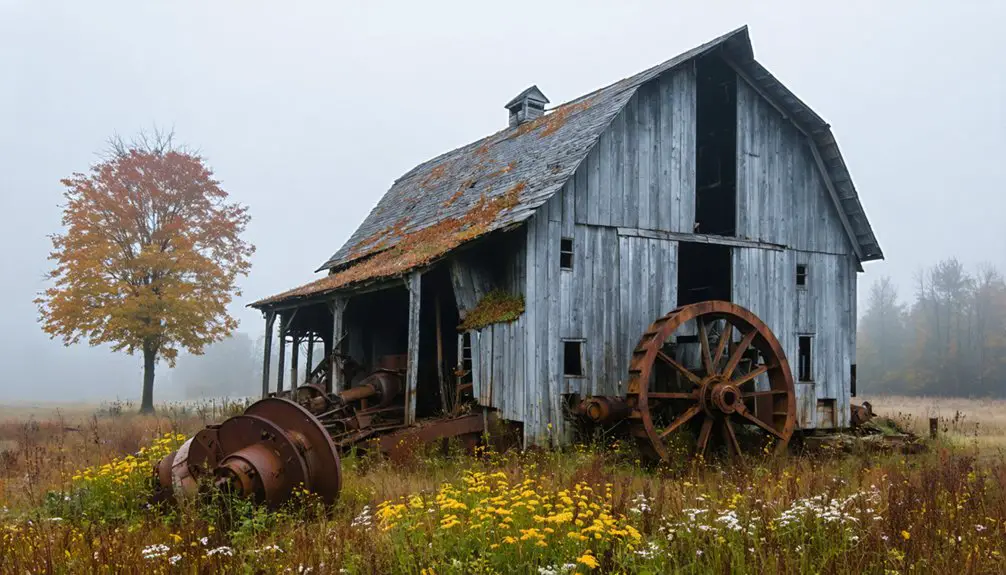
Vermont ghost towns don’t fade quietly — nature dismantles them with relentless, almost architectural precision. You’ll witness nature’s reclamation firsthand, where forests swallow entire homesteads and abandoned beauty replaces human order with wild, stunning chaos.
- Tree roots split granite foundations like slow-motion explosions
- Moss carpets every horizontal surface, softening sharp stone edges
- Birch saplings grow straight through collapsed barn floors
- Vines drape crumbling chimneys in thick, living curtains
- Ferns colonize cellar holes, turning excavations into green bowls
Walking through these sites, you’re watching two timelines collide — human ambition dissolving into ecological reclamation. Nothing stays still. Every visit reveals something shifting, growing, or collapsing.
Vermont’s abandoned landscapes reward those who look closely and move freely through forgotten spaces.
Historic Cemeteries Remain
Among the most haunting features you’ll encounter in Vermont’s ghost towns, historic cemeteries outlast nearly every other human structure. Stone markers rise from mossy ground, their carved names and dates carrying real historic significance long after surrounding homes and mills have crumbled entirely away.
You’ll find these burial grounds tucked behind tree lines, sometimes unmarked on modern maps. Glastenbury, Ricker Basin, and Somerset each hold small family plots where generations of settlers rest beneath decades of forest growth.
Practice proper cemetery etiquette when you visit. Don’t step on graves, touch fragile markers, or remove any objects. Photograph headstones respectfully and document inscriptions if they’re still legible.
These sites connect you directly to Vermont’s forgotten communities, offering quiet, powerful reminders that real people once built lives here.
Where Vermont’s Most Documented Ghost Towns Are Located
Scattered across Vermont’s woodlands, valleys, and lakeshores, the state’s most documented ghost towns each tell a distinct story of industry, isolation, and abandonment.
You’ll find raw history waiting along hiking trails, beside reservoir shorelines, and deep within state parks.
- Glastenbury – Wooded highlands northeast of Bennington, thick with Glastenbury legends and eerie disappearance folklore.
- Somerset – Southwestern Vermont’s quiet reservoir corridor carrying rich Somerset history beneath second-growth forest.
- Ricker Basin – Tucked inside Little River State Park, Waterbury, with interpretive signs marking former homesteads.
- West Castleton – Lake Bomoseen’s shoreline holds West Castleton ruins tied directly to Vermont’s slate quarrying era.
- Tyson Furnace – Stone foundations along Route 100 mark where Tyson Furnace once drove local iron production.
Each site rewards curious, freedom-seeking explorers willing to walk off the beaten path.
The Best Season to Explore Vermont Abandoned Settlements
You’ll find that late spring through early fall gives you the best conditions for exploring Vermont’s abandoned settlements, with May and September offering cooler temps, fewer bugs, and clear sightlines before full foliage blocks cellar holes and stone walls.
Summer brings longer daylight hours, but thick vegetation can obscure foundations and make navigation harder in dense woodland areas.
If you visit in late October, you’ll catch brilliant fall color alongside improved visibility as leaves drop, though you should always check trail conditions and pack rain gear since Vermont weather shifts fast.
Ideal Exploration Seasons
Late spring and early fall offer the best windows for exploring Vermont’s abandoned settlements, giving you clear sightlines through thinning vegetation while keeping the terrain manageable.
These seasons align your exploration tips perfectly with conditions that reward curiosity and movement. Seasonal activities shift dramatically here, so timing your arrival matters.
- Mud season fades by late May, revealing stone foundations emerging from thawing earth.
- October foliage burns red and gold above crumbling cellar holes and forgotten cemeteries.
- Morning frost in September sharpens the silence around moss-covered chimney stacks.
- Spring wildflowers push through rotting floorboards of long-collapsed farmhouse floors.
- Bare November branches frame weathered gravestones against steel-grey Vermont skies.
Winter locks these sites under deep snow, and summer’s thick canopy swallows the details you’re actually there to find.
Weather And Trail Conditions
Trail conditions shift fast in Vermont’s backcountry, and knowing what season you’re stepping into shapes everything from your footwear choice to how far you can safely push into the woods.
Weather patterns in Vermont swing hard between seasons, so you’ve got to read them carefully before heading out toward Hillwest’s abandoned terrain.
Late spring brings muddy, saturated trails from snowmelt, making footing unpredictable.
Summer opens the clearest windows for trail safety, with dry paths and long daylight hours giving you maximum range.
Fall delivers stunning visibility through bare trees, though early frost can make rocky surfaces dangerously slick.
Winter locks most backcountry routes under snow, demanding snowshoes and serious navigation skills.
Check forecasts daily, layer your clothing smartly, and never underestimate how quickly Vermont’s weather can turn against you.
What to Pack for a Vermont Ghost Town Road Trip
Packing smart makes the difference between a frustrating backcountry scramble and a genuinely rewarding ghost town adventure. Use these packing essentials and exploration tips to stay prepared across Vermont’s rugged, unpredictable terrain:
The right gear turns a chaotic backcountry stumble into an unforgettable Vermont ghost town adventure.
- Sturdy hiking boots that grip wet roots, crumbling foundations, and uneven forest floors
- Offline maps or a GPS device since cell service vanishes fast in remote woodland areas
- A camera or charged smartphone to document stone walls, cellar holes, and reclaimed ruins
- Layered clothing and a rain shell because Vermont weather shifts without warning between trailheads
- A small first aid kit and snacks to sustain your energy during longer backcountry pushes
You’re stepping into forgotten history, so pack light, move freely, and leave every artifact exactly where you find it.
Vermont Ghost Towns Worth Building a Route Around
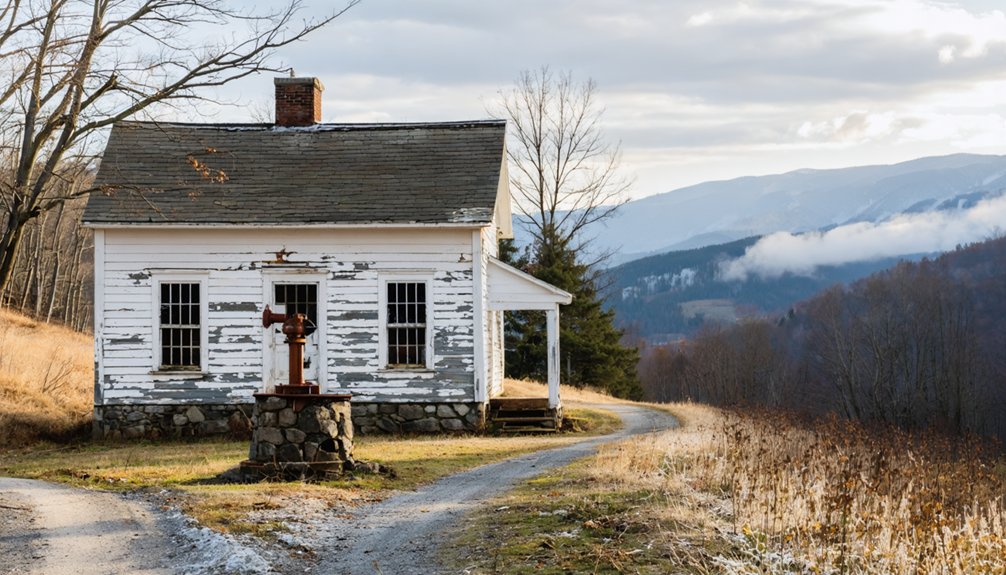
Once your pack’s loaded and you’re ready to move, the next step is mapping out which Vermont ghost towns actually deserve a spot on your route.
Start with Glastenbury, deep in the woodlands northeast of Bennington, where local legends about mysterious disappearances still draw curious explorers.
Somerset sits nearby, offering unexplored trails through southwestern Vermont’s quiet reservoir country.
If you’re heading north, Ricker Basin inside Little River State Park delivers interpreted history without sacrificing that abandoned-world feeling.
West Castleton’s slate quarry ruins along Lake Bomoseen reward anyone willing to wander off the main road.
Tyson Furnace along Route 100 rounds out a solid corridor worth driving.
Each site hands you something real — stone foundations, cellar holes, and forests reclaiming what people left behind.
Frequently Asked Questions
Are Guided Tours Available for Vermont Ghost Town Exploration Trips?
You’ll uncover ghost town history like a true pioneer! Guided tours are available at Little River State Park. Use these exploration tips: book ahead, wear sturdy boots, and embrace Vermont’s hauntingly beautiful abandoned past freely.
Can Children Safely Join Vermont Ghost Town Road Trips?
Yes, children can safely join Vermont ghost town trips! You’ll enjoy family safety by choosing well-marked trails like Ricker Basin. Pack essentials, supervise kids closely, and embrace kid-friendly activities like spotting stone foundations and historic cemetery exploration together.
Are Vermont Ghost Towns Accessible During Winter Months?
Like a frozen time capsule, Vermont’s ghost towns offer winter accessibility, though ghost town conditions turn rugged. You’ll find snow-buried trails and icy terrain, so gear up wisely and embrace the hauntingly beautiful, untamed freedom of exploring abandoned history.
Do Vermont Ghost Towns Require Permits or Fees to Visit?
Most Vermont ghost towns don’t require permits or fees! You’ll freely explore rich ghost town history on public lands. Follow basic exploration tips: respect boundaries, stay on trails, and you’re set for an unforgettable adventure.
Are Pets Allowed on Vermont Ghost Town Hiking Trails?
Paws and paths pair perfectly! You can bring pets to most Vermont ghost town trails, but you’ll follow pet friendly policies and hiking trail etiquette — keep dogs leashed, pack out waste, and respect fellow freedom-seeking explorers.
References
- https://en.wikipedia.org/wiki/List_of_ghost_towns_in_Vermont
- https://en.wikipedia.org/wiki/Lists_of_ghost_towns_in_Canada
- https://en.wikipedia.org/wiki/Category:Ghost_towns_in_Vermont
- https://www.ghosttowns.com
- https://www.youtube.com/watch?v=2fvPo9iQC-w
- https://ghost-towns.close-to-me.com/states/vermont/
- https://urbexunderground.com/ghost-towns-in-vermont/
- https://www.educationdirectory.net/articles/are-there-ghost-towns-in-vermont
- http://freepages.rootsweb.com/~gtusa/history/usa/vt.htm
- https://www.tripadvisor.com/Attractions-g28966-Activities-c47-t14-Vermont.html