Addington, Oklahoma sits off U.S. Highway 81 in Jefferson County, about six miles north of Waurika. You’ll find weathered storefronts, aging facades, and quiet streets that once buzzed with railroad and Chisholm Trail activity. The town peaked around 1901 but declined after the railroad era faded. Bring sturdy shoes, a full tank of gas, and a camera — because there’s far more to this forgotten corner of southern Oklahoma than you’d expect.
Key Takeaways
- Addington is located in Jefferson County, Oklahoma, along U.S. Highway 81, roughly six miles north and two miles east of Waurika.
- The town emerged around 1896 as a railroad stop tied to the Chisholm Trail, officially becoming a town by 1901.
- Weathered storefronts and abandoned buildings line the area, offering photographers and history enthusiasts a glimpse into Oklahoma’s past.
- Fuel up and gather supplies in Waurika beforehand, as services in Addington are extremely limited.
- Pack sturdy shoes, water, a camera, and a light jacket, and check weather forecasts before exploring unpaved side roads.
Where Addington Is Located in Oklahoma
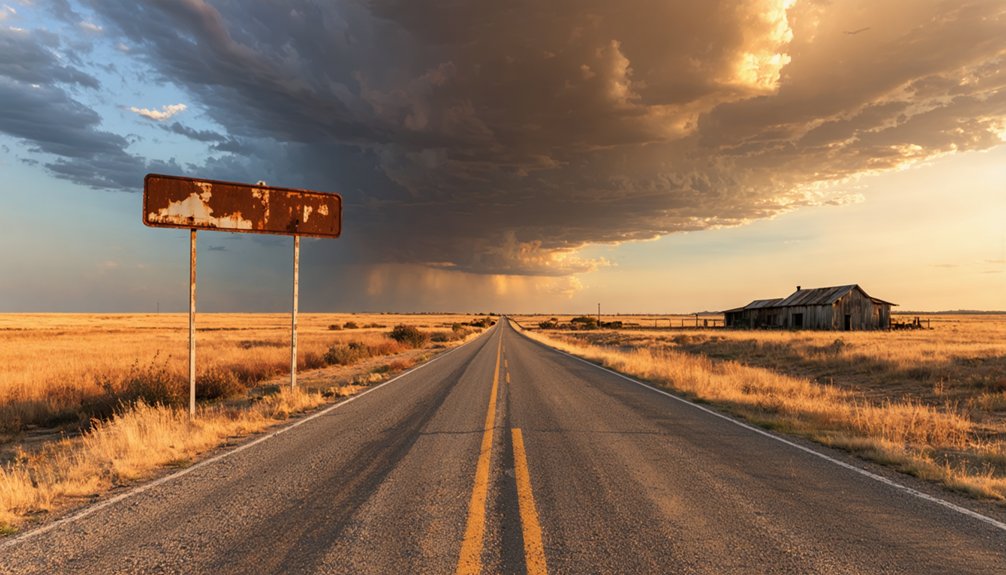
Tucked into Jefferson County in southern Oklahoma, Addington sits along U.S. Highway 81, roughly six miles north and two miles east of Waurika. That location makes it an easy addition to any southern Oklahoma road trip without a major detour.
You’ll find Addington within the historic Chisholm Trail corridor, a detail that adds real historical significance to what might otherwise seem like a simple rural stop. That cattle-trail legacy shaped the land you’re driving through long before the town itself appeared.
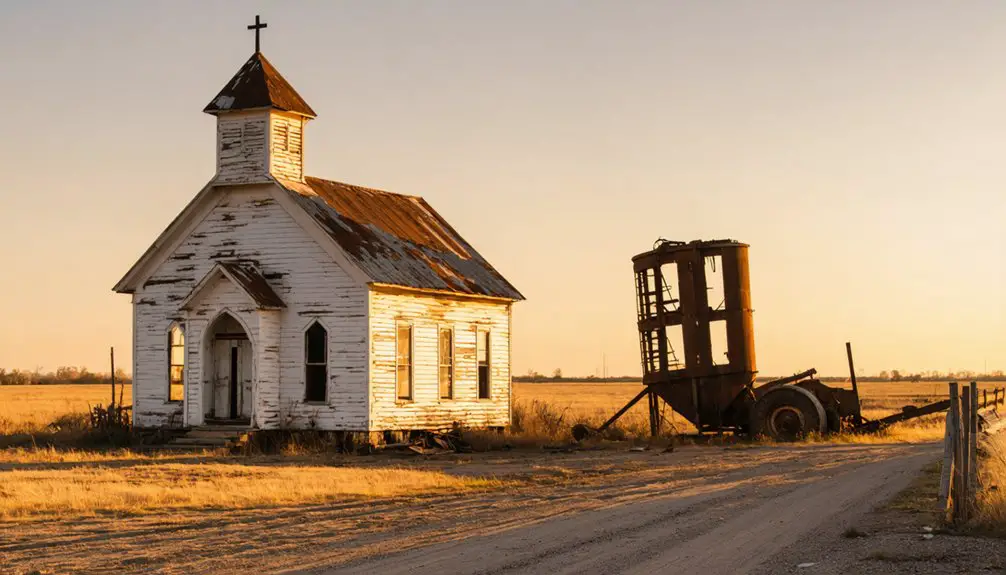
Once you arrive, the local architecture tells its own story. Standing structures mix with abandoned buildings, giving you a layered look at a town that peaked during the railroad era and never fully disappeared.
The buildings here speak plainly — some standing, some surrendered, all telling the story of a town that refused to vanish.
It’s the kind of place that rewards curiosity.
What Makes Addington Worth the Stop
Although Addington carries a ghost-town label, it’s the mix of railroad history, Chisholm Trail heritage, and still-standing architecture that makes it genuinely worth pulling off U.S. 81. You’re not walking into a completely deserted settlement — you’re stepping into a place that still breathes, however quietly.
The abandoned structures tell a story of a railroad town that once moved cattle, commerce, and people across southern Oklahoma. You can photograph weathered buildings, trace the echoes of trail-drive culture, and connect dots between the past and the present.
Pair your stop with nearby Waurika, where local cuisine and occasional cultural festivals give your road trip a living, breathing contrast to Addington’s faded silhouette. Together, they round out a southern Oklahoma experience that feels both historic and genuinely off the beaten path.
How a Railroad Town Became an Oklahoma Ghost Town
When you look at Addington’s origins, you find a town that railroad energy built and railroad decline eventually hollowed out.
The town emerged as a bustling railroad stop in the late 1800s, drawing settlers and commerce along a corridor already marked by the historic Chisholm Trail.
Railroad Roots And Rise
How does a thriving railroad town quietly fade into a ghost town over just a few decades? Addington’s story starts with ambition. Around 1896, the railroad arrived, and this small Jefferson County settlement transformed almost overnight into a bustling commercial hub. Merchants set up shop, residents put down roots, and the town’s historical architecture began taking shape along streets that hummed with real economic energy.
Addington also sat near the legendary Chisholm Trail, and local legends tied the town’s identity to cattle drives that had shaped southern Oklahoma’s entire character.
That combination of rail access and frontier heritage made Addington feel permanent. By 1901, the town had an official designation, a population, and a future that seemed secured. You can almost feel that momentum when you walk through what remains today.
Decline Into Ghost Town
By the 1930s, the same momentum that built Addington had quietly reversed itself. Businesses shuttered, residents drifted toward larger towns, and the railroad’s promise faded into memory.
What once hummed with commerce grew still, leaving behind abandoned structures and a handful of holdouts who refused to leave.
Yet that slow decline preserved something worth seeing. You won’t find cultural festivals or organized events drawing crowds here, but you’ll find local legends embedded in the landscape itself — stories carried by the few who stayed.
The empty storefronts and weathered buildings tell a history that busier towns have long since paved over.
Addington earned its ghost-town label honestly, but with 114 residents recorded in 2010, it never fully surrendered.
That stubborn survival is exactly what makes it worth your detour.
What Standing Structures You’ll Find on Site
When you pull off U.S. 81 and into Addington, you won’t find a completely deserted townsite — you’ll find a mix of abandoned structures and businesses that still show signs of presence.
Some buildings carry the architectural bones of a once-active railroad community, giving you tangible evidence of the town’s early twentieth-century past.
Bring your camera, because the contrast between what’s standing and what’s fading makes Addington one of the more visually rewarding stops on a southern Oklahoma ghost-town route.
Abandoned Buildings Still Standing
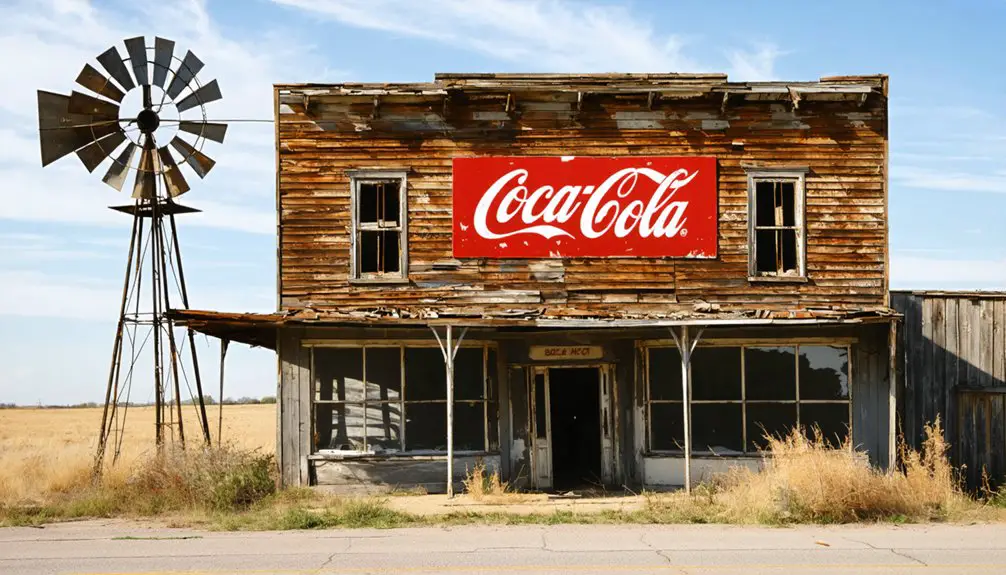
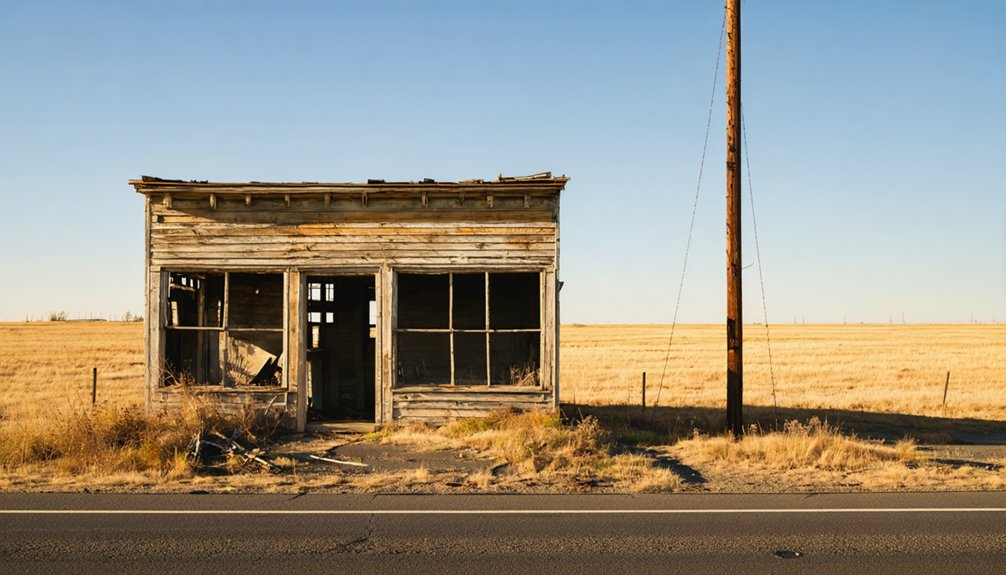
Though Addington isn’t a ghost town in the dramatic, tumbleweeds-and-crumbling-facades sense, you’ll still find standing structures that carry the weight of its railroad-era past. The historic architecture here speaks quietly but clearly — weathered storefronts, aging facades, and remnants of buildings that once served a thriving community along the Chisholm Trail corridor.
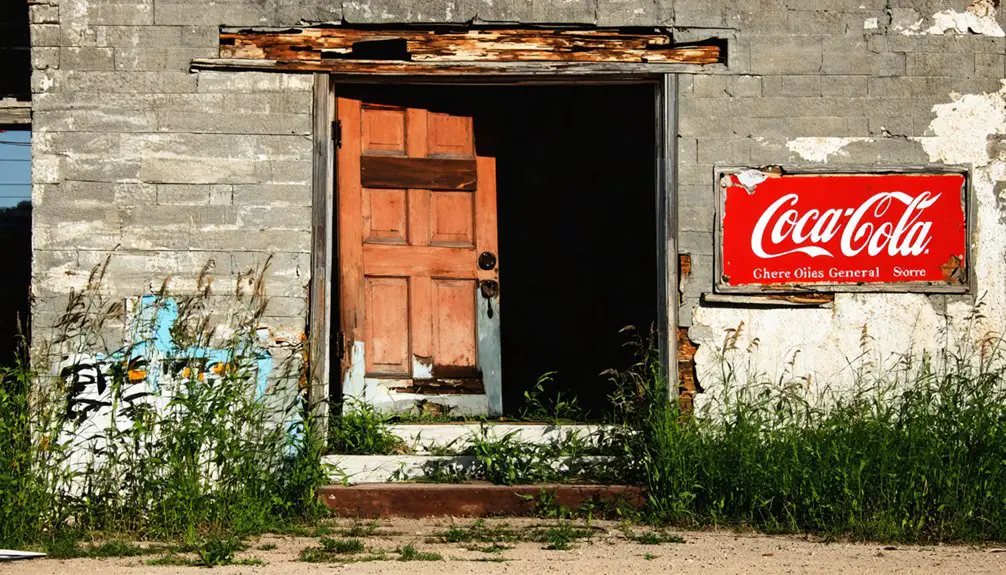
You can wander freely, framing shots of peeling paint and forgotten doorways without the crowds that follow more publicized stops. Local legends cling to these walls, stories of cattle drives, rail workers, and a town that briefly hummed with ambition before the decades stripped it down.
What remains isn’t ruins — it’s texture. Addington gives you something tangible to stand beside, photograph, and carry home as a genuine piece of Oklahoma’s overlooked history.
Businesses With Visible Presence
Not everything in Addington has gone quiet. Some businesses maintain a visible presence, giving you a glimpse into what daily life once looked like along U.S. 81. You won’t find local cuisine or scenic overlooks here, but you’ll find something rarer — a small town holding its ground.
Watch for these visible features as you explore:
- Standing storefronts with original facades still intact
- Operational or semi-active buildings mixed among abandoned structures
- Roadside signage marking businesses that served the railroad-era community
- Structures along U.S. 81 that confirm the town’s working corridor history
These remnants tell a story no museum could replicate. Addington isn’t fully asleep — it’s somewhere between memory and function, and that tension makes it worth your stop.
How to Drive the U.S. 81 Ghost Town Corridor
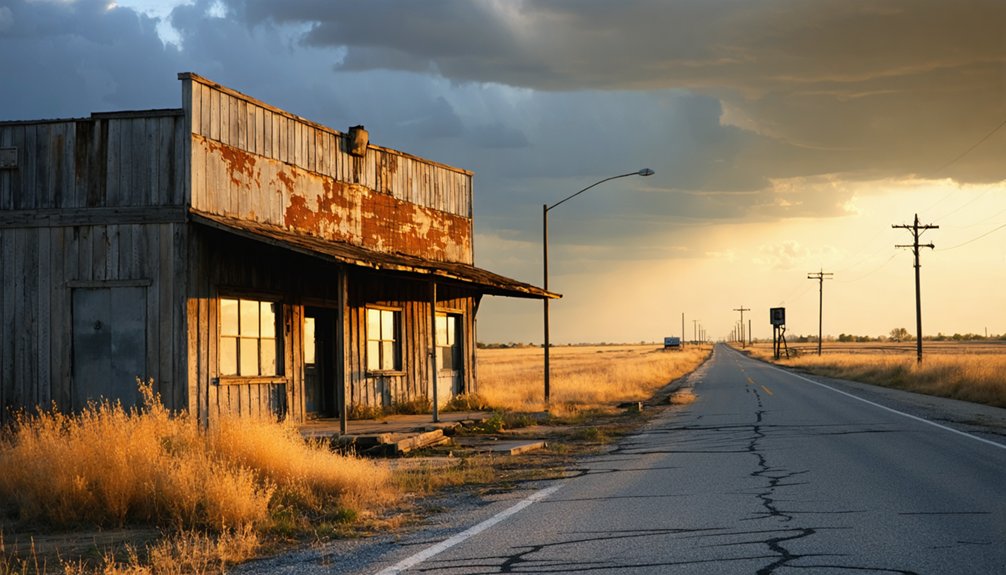
U.S. 81 cuts straight through southern Oklahoma like an old cattle drive route, and that’s no coincidence — this corridor traces the historic Chisholm Trail, making it one of the most story-rich drives in the state. You’ll find historical anecdotes tucked behind every weathered storefront and rusted grain elevator along the way.
Head north from Waurika about six miles, then shift two miles east to reach Addington. Keep your speed down once you’re in town — local legends about railroad booms and cattle drives deserve more than a passing glance.
Pair Addington with other Jefferson County stops for a fuller itinerary. Bring a full tank before you leave Waurika, since services thin out quickly.
U.S. 81 rewards patient drivers who treat the road itself as the destination.
Oklahoma Ghost Towns Along the Same U.S. 81 Route
While Addington makes a compelling anchor for your southern Oklahoma road trip, U.S. 81 strings together several other ghost towns worth pulling over for. Each stop adds another layer to the region’s railroad and cattle-trail story.
- Chickasha – Explore remnants of early commerce and sample local cuisine at surviving Main Street diners.
- Marlow – A former railroad hub with preserved storefronts and easy wildlife spotting along nearby creek corridors.
- Elmore City – Small, quiet, and photogenic, with weathered structures that reward patient explorers.
- Waurika – Just two miles from Addington, it serves as your practical base for fuel, food, and detours deeper into Jefferson County history.
String these stops together and you’ve built a focused, freedom-driven route through southern Oklahoma’s forgotten past.
Road Conditions, Access, and What to Bring
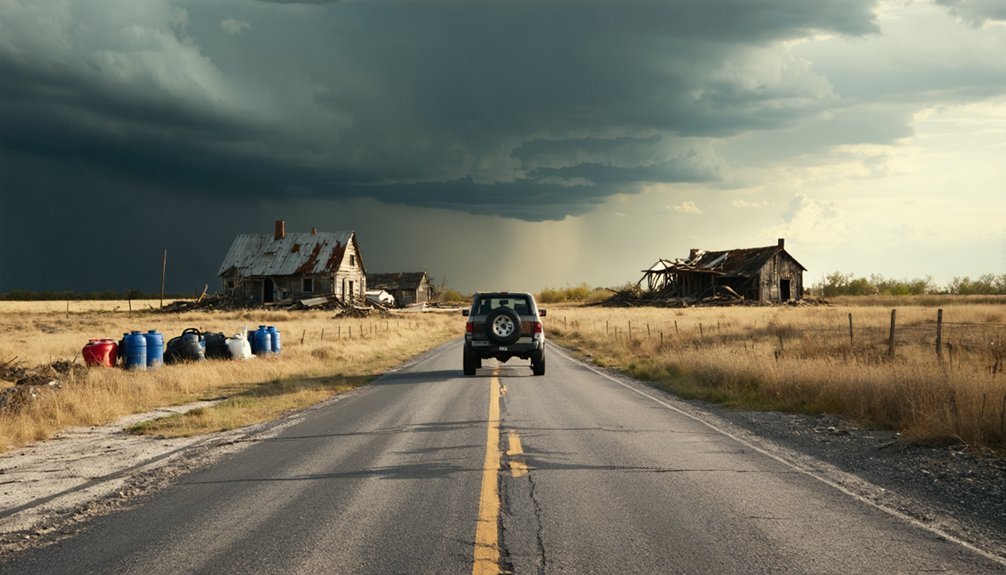
Highway 81 runs smooth and well-maintained through Jefferson County, so you won’t face any serious obstacles reaching Addington. Side roads near town may be unpaved, so check weather conditions before you go — Oklahoma’s clay-heavy soil turns slick after rain. Wear sturdy shoes if you plan to walk around abandoned structures, and bring water since services are limited on-site.
Pack a camera, a full tank of gas, and some cash. Waurika sits just six miles south and offers fuel, supplies, and local cuisine worth sampling before or after your stop.
A light jacket helps during shoulder seasons when temperatures swing. Keep your phone charged for navigation since rural signal can be inconsistent. Arrive with a flexible mindset and you’ll get the most from this quiet, history-rich stop.
Frequently Asked Questions
Is There an Admission Fee to Visit Addington, Oklahoma?
With 114 residents still calling it home, you’ll pay no admission fee to explore Addington’s historical landmarks and discover its local legends — this open ghost town welcomes freedom-seeking travelers absolutely free.
What County Is Addington, Oklahoma Officially Located In?
You’ll find Addington officially located in Jefferson County, Oklahoma. It’s a destination where you can explore incredible historic landmarks and capture stunning photography opportunities that’ll make your road trip feel like true freedom!
How Many People Still Live in Addington Today?
Like ancient scrolls recording lost civilizations, the 2010 census shows 114 people still call Addington home. You’ll find historical landmarks and local legends woven into this living community, proving it’s not entirely a ghost town.
Is Addington, Oklahoma Safe to Visit for Families?
Yes, you’ll find Addington a safe, family-friendly stop! Explore its fascinating historical architecture, share local legends with your kids, and enjoy the freedom of discovering southern Oklahoma’s rich, open-road heritage together.
Are There Guided Tours Available in Addington, Oklahoma?
You won’t find formal guided tours in Addington, but you’ll love exploring its haunted legends and local legends independently. Wander freely through its historic streets, uncover railroad mysteries, and craft your own unforgettable ghost town adventure.
References
- https://en.wikipedia.org/wiki/List_of_ghost_towns_in_Oklahoma
- https://www.youtube.com/watch?v=92ST9AoUHR4
- https://www.okhistory.org/publications/enc/entry?entry=AD006
- https://www.youtube.com/watch?v=WJF6vDJUuBI
- https://www.travelok.com/articles/oklahomaghosttowns