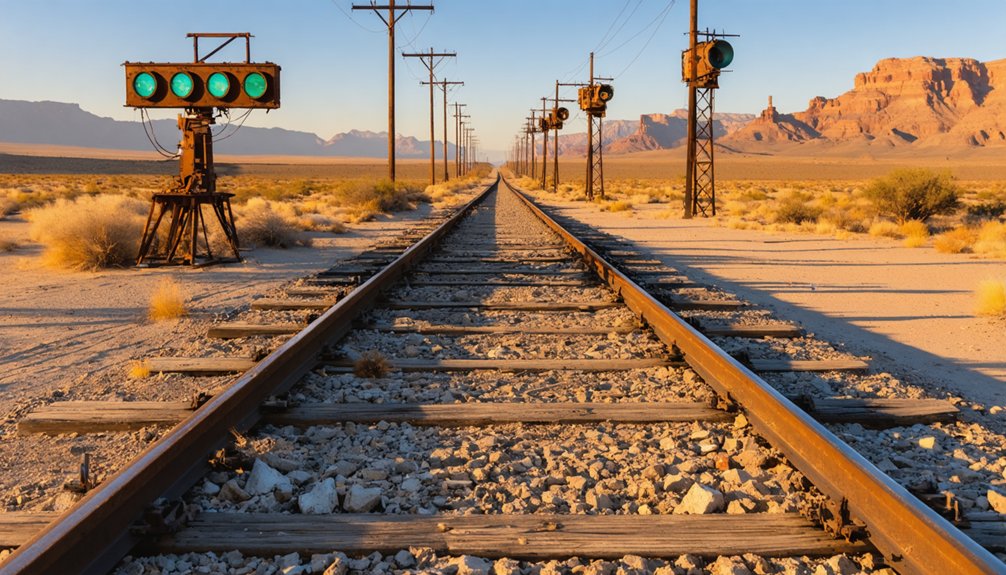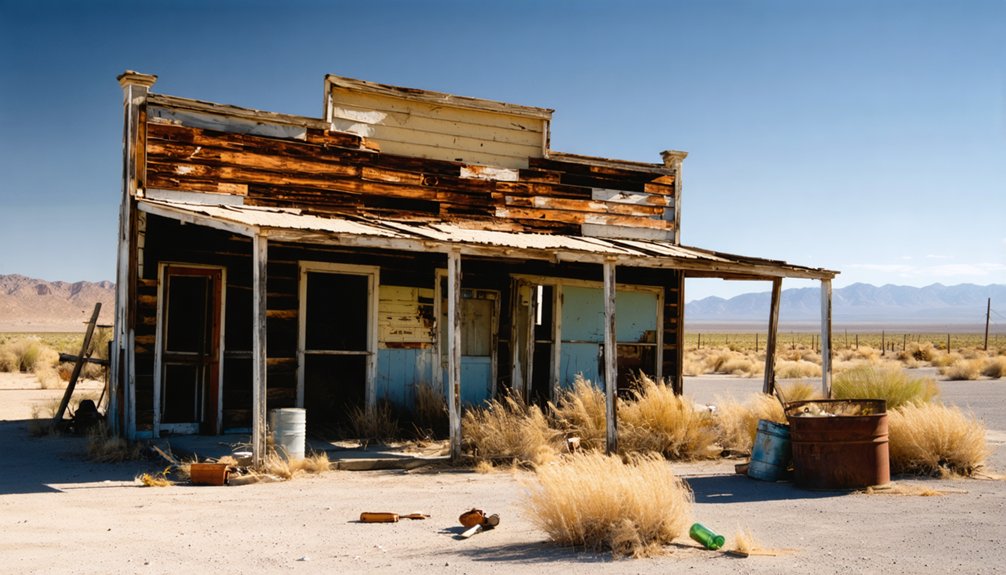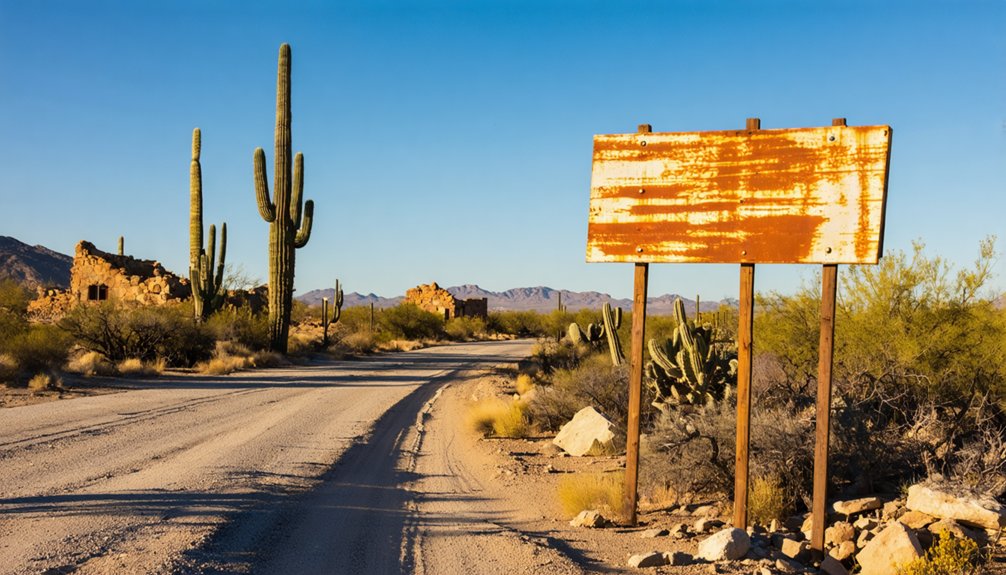
Big Bug sits about 12 miles southeast of Prescott, and you can reach it via Senator Highway or north from Mayer on State Route 69. You won’t find a preserved main street — just stone foundations, tailings piles, and the quiet weight of an 1862 gold rush. Plan your visit for summer or fall, bring water, and watch for active mines and rattlesnakes. There’s more to this story than the ruins let on.
Key Takeaways
- Big Bug, founded in 1862, sits 12 miles southeast of Prescott and is accessible via Senator Highway or State Route 69 without a trail rig.
- The site features stone foundations, tailings piles, crumbling headframes, and active mines rather than preserved ghost town structures or labeled landmarks.
- Pair Big Bug with nearby Mayer, Jerome, and other Bradshaw Mountain ghost towns to build a comprehensive Arizona mining history road trip.
- Visit in summer or fall for manageable weather, with early mornings ideal in summer and fall offering enhanced creek corridor photography.
- Carry water, a paper map, and a charged phone; respect private property boundaries and avoid active mine sites marked with posted warning signs.
What Is Big Bug, and Why Do People Still Drive Out Here?
Though it’s barely a mark on the map today, Big Bug was once a living, breathing mining camp carved out of the Bradshaw Mountains of Yavapai County, Arizona, back in 1862 — when gold fever pulled prospectors deep into rugged terrain southeast of what would become Prescott. You can still drive out here and feel that pull. Foundations poke through the brush, tailings piles scar the hillsides, and historical artifacts hint at lives built fast and abandoned faster.
Local legends tie the town to figures like Theodore Boggs — allegedly a Donner Party survivor and Daniel Boone descendant — adding a layer of myth to an already restless history. People come because Big Bug rewards curiosity, not comfort. It’s raw, unpreserved, and unapologetically real.
How to Get to Big Bug From Prescott or Mayer
Whether you’re heading out from Prescott or rolling up from Mayer, Big Bug sits roughly 12 miles southeast of Prescott in the rugged Bradshaw Mountains, close enough for a morning run but far enough to feel like you’ve crossed into another era.
From Prescott, you’ll follow roads southeast toward the old creek drainage, while from Mayer, you’re tracking northward through the same canyon country that drew prospectors here in 1862.
Either way, the roads are manageable with a standard 2WD vehicle, so you won’t need a trail rig — just a good eye for turnoffs and a healthy respect for the private land surrounding the site.
Route From Prescott
Since Big Bug sits roughly 12 miles southeast of Prescott, you’ve got a straightforward drive through the Bradshaw Mountains foothills to reach it. Head south on Senator Highway, a route that winds through ponderosa pines and open chaparral, delivering the kind of unhurried scenery that rewards patient travelers.
Keep your camera ready for photography tips worth remembering: golden-hour light hits the canyon walls beautifully, and pull-offs along the highway offer unobstructed frames. Watch for wildlife encounters too — mule deer and javelinas frequently cross these roads, especially near creek drainages.
The drive itself carries a quiet nostalgia, tracing the same general corridor that miners once traveled toward Big Bug Creek’s gold. Plan roughly 30 minutes from downtown Prescott, longer if you stop to soak it in.
Route From Mayer
Mayer offers another angle into Big Bug’s story, approaching from the south rather than the north. Head north on State Route 69, then follow local roads winding into the Bradshaw Mountains. Before you leave, check weather forecasts — mountain conditions shift fast.
- Distance runs shorter from Mayer, cutting your drive time considerably.
- Stock up on local cuisine in Mayer before heading into sparse terrain.
- Watch for private property boundaries once you’re near the site.
- Active mines mean unexpected road traffic, so stay alert.
You’ll feel the land’s raw, unfiltered history pressing close as elevation rises. The creek valley opens gradually, hinting at the gold-rush energy that once electrified this canyon.
Big Bug rewards those willing to navigate on their own terms.
The Gold Rush Origins That Put Big Bug on the Map
When gold was discovered along Big Bug Creek in 1862, it didn’t take long for prospectors to flood the Bradshaw Mountains, transforming a remote Arizona creek into a bustling mining camp. You can almost feel the urgency that drew ambitious men like Theodore Boggs — a Donner Party survivor and Daniel Boone descendant — into this rugged terrain chasing fortune.
Unlike polished historic landmarks, Big Bug grew raw and fast, driven purely by greed and grit. Gold and silver extraction fueled its rise, and the post office that opened in 1879 confirmed it had arrived.
Urban legends about the area’s wild territorial days still echo through the remaining foundations. By 1910, the post office closed, signaling a quiet surrender to time.
What You’ll Actually Find at the Site Today
When you arrive at Big Bug today, you won’t find a tidy preserved ghost town — instead, you’ll walk among scattered foundations and tailings piles that hint at what once bustled here.
Active mines still operate across the landscape, blurring the line between past and present in a way that few Arizona ghost towns can claim.
Original buildings are largely gone, leaving you to piece together the story from stone remnants and the earth itself.
Foundations And Tailings Piles
Though Big Bug won’t dazzle you with preserved storefronts or interpretive signage, what’s left tells its own quiet story. You’ll read history through what the earth keeps — stone foundations, scattered tailings piles, and silence thick with local legends of gold-hungry prospectors.
Watch your step; wildlife encounters are common here among the scrub and rock debris.
Look for these remnants as you explore:
- Stone foundations half-swallowed by desert vegetation
- Tailings piles marking where miners pulled gold and silver from the ground
- Scattered debris fields hinting at vanished structures
- Active mine workings blending past and present in unsettling ways
Nothing’s roped off or labeled. You’ll piece the story together yourself — which, for the freedom-minded explorer, is exactly the point.
Active Mines Still Operating
Big Bug isn’t frozen in amber — it’s still working. Active mines continue operating across the district, reminding you that this land never fully surrendered its purpose.
You’ll hear equipment before you see it, a low mechanical hum threading through canyon silence broken only by local wildlife — hawks, mule deer, the occasional rattlesnake crossing sun-baked ground.
These operations run alongside historic artifacts: rusted equipment, crumbling headframes, ore carts half-swallowed by brush. The past and present share the same dirt here.
That overlap makes Big Bug unlike tidier, roped-off ghost towns. Nobody sanitized this place for tourists.
What you’re walking through is living history — raw, unglamorous, and completely honest. Respect active mining boundaries, stay aware of your surroundings, and let the landscape speak on its own terms.
Few Original Buildings Remain
What remains at Big Bug won’t match any romantic vision of a classic ghost town. You’ll find echoes rather than evidence — fragments of a world that local wildlife and shifting weather conditions have slowly reclaimed.
Expect to discover:
- Crumbling foundations half-buried beneath desert brush
- Tailings piles marking where miners once worked with relentless ambition
- Scattered remnants of structures blurred by decades of sun and frost cycles
- Active residences sitting beside forgotten lots, blending past and present
The original buildings are largely gone. What’s left demands imagination. You’ll need to piece the story together yourself, reading the land like a map. That quiet detective work is exactly what makes Big Bug worth the drive.
Which Ghost Towns Are Worth Adding to a Big Bug Day Trip?
Since you’re already making the drive to Big Bug, the surrounding Bradshaw Mountains and Yavapai County desert are dotted with ghost towns worth folding into your route. Mayer sits just south and carries its own weight in local legends tied to Arizona’s mining boom.
The Bradshaw Mountains hide more than one ghost town — Mayer is just the first worth pulling over for.
Head northwest and you’ll reach Prescott’s orbit, where Jerome clings dramatically to Cleopatra Hill — its preserved streets and historic artifacts draw visitors who want the full territorial experience.
Humboldt offers quieter remnants closer to the valley floor. Each stop layers another chapter onto the same restless story: prospectors chasing fortune, towns rising fast, then fading just as quickly.
String these places together and you’re not just sightseeing — you’re tracing the raw, wandering spirit that shaped this whole corner of Arizona.
When Should You Actually Make the Trip?
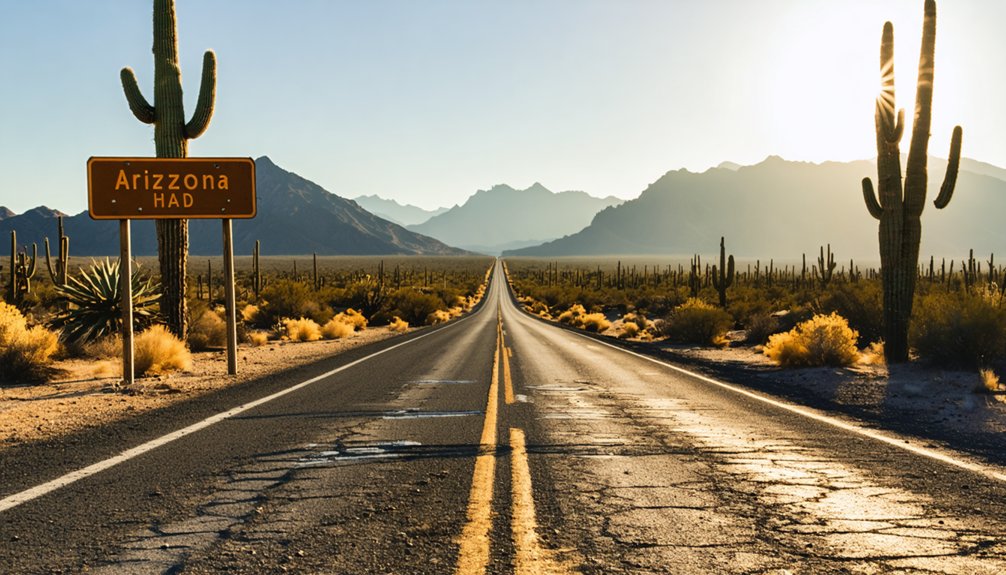
Once you’ve mapped out your ghost town string, the next question is when to actually load up the car and go. Summer and fall hit the sweet spot for Big Bug, when weather conditions stay manageable and the Bradshaw Mountains show their best colors.
Consider these timing factors before you commit:
- Summer mornings offer cooler temperatures before midday heat builds
- Fall foliage transforms the creek corridors into something worth photographing
- Local wildlife grows more active during shoulder-season visits, adding life to quiet ruins
- Winter roads can turn treacherous, limiting your freedom to explore spontaneously
You want flexibility out there, not frozen mud or blazing afternoon sun pinning you down. Plan around the season, and Big Bug rewards you with atmosphere most travelers never find.
How to Avoid Trespassing and Mine Hazards at Big Bug
Before you set foot on Big Bug’s soil, understand that much of the surrounding land is private property, and active mines still cut through the district. Trespassing here isn’t romantic rebellion — it’s genuinely dangerous and legally costly.
Seek permission before wandering beyond obvious access points. Posted signs aren’t suggestions; they mark working operations where cave-ins, unstable tailings piles, and heavy equipment present real threats.
Wildlife safety matters too — rattlesnakes favor abandoned foundations, and desert predators roam these Bradshaw foothills freely. Stay alert and step carefully around crumbling structures.
Emergency preparedness is non-negotiable in this remote corridor between Prescott and Mayer. Carry water, a charged phone, and a paper map. Cell coverage drops unexpectedly.
Big Bug rewards the respectful, prepared explorer — not the careless one.
Frequently Asked Questions
Is a Permit Required to Visit or Explore the Big Bug Site?
No formal permit’s required, but much of Big Bug’s land is privately owned. You’ll want permission before chasing historical artifacts across those sun-baked grounds, where Wildlife conservation and old boundaries quietly guard your freedom to roam.
Are There Any Guided Tours Available at Big Bug?
You won’t find guided tours at Big Bug, but you’re free to explore its historical significance independently. Wander through foundations, chase local legends of gold rushes, and let Arizona’s untamed, nostalgic spirit guide your own adventure.
What Insects Actually Inspired the Name Big Bug Creek?
The exact insect origins aren’t confirmed, but you’ll find the etymology of names like Big Bug Creek tied to the area’s particularly large local insects — a wild, free-spirited detail that’s stuck around since 1862.
Was Theodore Boggs Truly a Donner Party Survivor?
You’ll find historical legends suggest Boggs was truly a Donner Party survivor. His survivor stories echo through time — a free spirit tied to Daniel Boone’s legacy, wandering wild Arizona trails seeking gold and adventure.
Are Metal Detectors Allowed at Big Bug Creek Today?
No clear rules exist, but active mines and private land complicate your search. Over 160 years of history lies beneath Big Bug Creek — respect historical artifacts, wildlife preservation, and always secure landowner permission before you swing that detector.
References
- https://en.wikipedia.org/wiki/Big_Bug
- https://www.ghosttowns.com/states/az/bigbug.html
- https://www.youtube.com/watch?v=ZWRWXKBYIzw
- https://www.destination4x4.com/big-bug-arizona-yavapai-county/
- https://fr.wikipedia.org/wiki/Big_Bug_(Arizona)