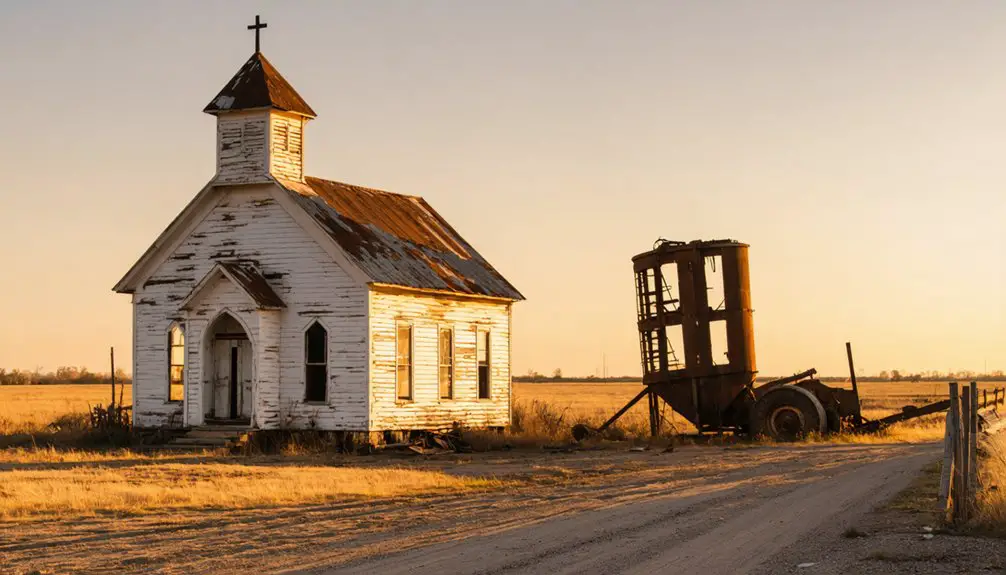
Planning a ghost town road trip to Bailey, Oklahoma means chasing a settlement that’s completely disappeared into the farmland northeast of Marlow. Named after a frontier wagon master, Bailey once supported a cotton gin, two doctors, a Methodist church, and a thriving general store. By 1949, nothing remained. You’ll reach the site via rural county roads about 12 miles from Marlow, but bring a reliable vehicle. There’s far more to Bailey’s fascinating rise and fall than meets the eye.
Key Takeaways
- Bailey, Oklahoma, sits approximately 12 miles northeast of Marlow, accessible only via rural county roads requiring a reliable vehicle.
- No visible structures remain; the site features open farmland and rolling countryside typical of rural Oklahoma.
- No official signs or markers identify the town’s location, so research the area thoroughly before visiting.
- The land is privately owned agricultural property, so visitors should respect boundaries and seek permission before exploring.
- Bailey’s post office closure in 1932 triggered its decline, making it a compelling example of Oklahoma’s boom-and-bust ghost town cycle.
What Was Bailey, Oklahoma Before It Vanished?
Before it faded into Oklahoma’s long list of forgotten places, Bailey was a surprisingly well-rounded small town that punched above its weight. By 1902, a 32.5-acre town plat laid the groundwork for genuine community life. You’d have found a cotton gin, Methodist church, general store, blacksmith shop, drug store, two doctors, and a school all operating within this compact settlement.
The town even carries local legends tied to its naming — J. J. Bailey, a wagon master on a stage line to Fort Sill, gave this place its identity. That frontier heritage echoes the kind of historic architecture and purposeful settlement that defined territorial Oklahoma.
Then, after its post office closed in 1932, Bailey quietly disappeared, leaving nothing visible by 1949.
How Bailey Got Its Name From a Frontier Wagon Master
The name Bailey didn’t come from a surveyor’s map or a railroad executive’s whim — it came from a working man on the frontier. J. J. Bailey was a wagon master on a stage line running to Fort Sill, and his role in early territorial logistics earned him a lasting tribute.
Historical anecdotes from this era remind you that towns weren’t always named for power or prestige — sometimes they honored the men who kept supplies moving across unforgiving land. Local legends like Bailey’s story reveal how deeply frontier communities valued practical leadership.
When you roll through Grady County today, that name on the map connects you directly to a time when wagon masters shaped the rhythms of daily life in Oklahoma Territory.
What Bailey Looked Like at Its Peak
If you could’ve visited Bailey around 1902, you’d have found a proper little town built around a 32.5-acre plat with real community infrastructure.
Businesses like a general store, blacksmith shop, drug store, and cotton gin gave residents everything they needed, while two practicing doctors added a level of self-sufficiency rarely seen in frontier settlements.
A Methodist church anchored community life, and a local school guaranteed the town was investing in its future — making Bailey far more than just a dusty crossroads.
Town Plat And Layout
By 1902, Bailey had taken on the shape of a real, functioning town, anchored by a 32.5-acre plat that laid out its ambitions in land and lots. That town layout gave the community a framework to grow around, carving out space for homes, businesses, and civic life on the south-central Oklahoma plains.
As you picture it, the historic architecture would’ve included a cotton gin, a Methodist church, a general store, a blacksmith shop, a drug store, a school, and two doctors’ offices — everything a frontier settlement needed to feel permanent. Each structure claimed its place within those platted acres, giving Bailey the look and feel of a town built to last.
It wasn’t just a cluster of buildings — it was an organized, intentional community.
Businesses And Services
What would it have taken to keep a frontier town running in territorial Oklahoma? Bailey answered that question with a surprisingly full roster of services.
At its peak, you’d have found a cotton gin, a Methodist church, a general store, a blacksmith shop, a drug store, two doctors, and a school all operating within this small community. These weren’t just historic landmarks on a map — they were the living infrastructure of daily life.
The cotton gin alone signals how deeply agriculture shaped Bailey’s economy. The two doctors suggest a population that needed real medical care, not just frontier luck.
Today, these local legends of small-town resilience make Bailey worth researching before your road trip, even if nothing physical remains to greet you when you arrive.
Community And Church Life
Though Bailey’s businesses kept the town functional, its Methodist church gave the community its social heartbeat. You can imagine neighbors gathering there for more than Sunday services — weddings, funerals, and seasonal celebrations all unfolded within its walls.
Historical architecture like this rarely survives in ghost towns, making Bailey’s story even more poignant.
Community gatherings extended beyond the church, too. Bailey’s school served as another anchor, bringing families together around shared purpose and local identity.
For a town platted at just 32.5 acres in 1902, Bailey packed remarkable social density into a small footprint.
When you visit the site today, none of that remains visible. But understanding what once stood there transforms a quiet rural stretch into something far more meaningful — a window into frontier Oklahoma‘s human ambition.
What You’ll Actually Find at the Bailey Town Site Today?
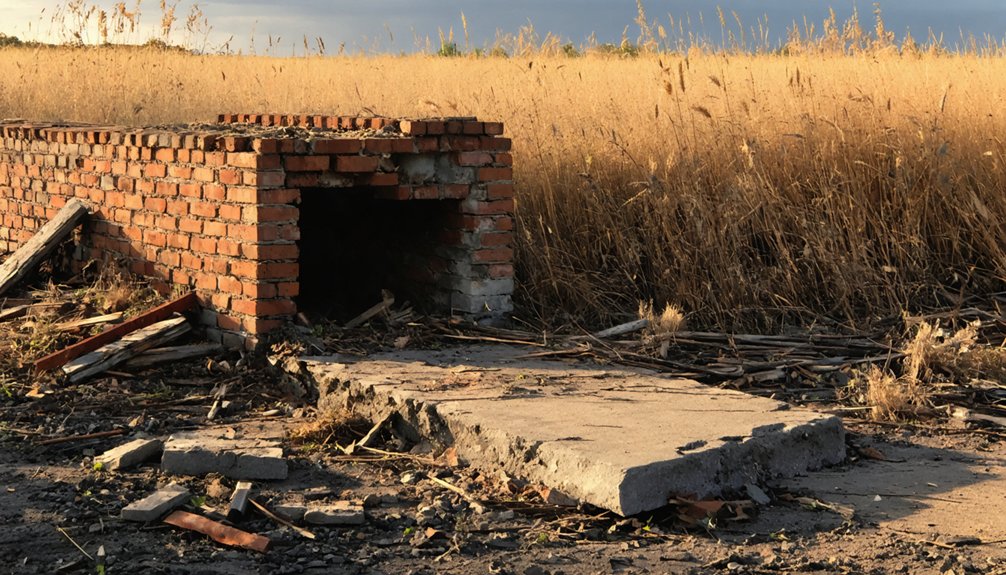
If you’re hoping to find crumbling storefronts or rusted relics at Bailey’s town site, you’ll likely leave empty-handed. By 1949, observers confirmed there were no historical artifacts or abandoned structures remaining. The land had already reclaimed everything.
Here’s what you’ll realistically encounter:
- Open rural landscape — rolling south-central Oklahoma terrain with no visible town markers
- Private agricultural land — former town plots converted to farmland, so respect boundaries
- Roadside context — the general area sits about 12 miles northeast of Marlow, making it a navigable detour
Bailey’s value isn’t visual — it’s historical. You’re standing where a cotton gin hummed, two doctors practiced, and a Methodist congregation gathered.
That invisible weight is exactly what makes ghost town exploration worth the drive.
How Far Bailey Is From Marlow and How to Get There
Getting to Bailey is straightforward once you anchor yourself to Marlow, the nearest reference town sitting roughly 12 miles to the southwest. From Marlow, head northeast along rural county roads through open south-central Oklahoma farmland.
You won’t find signs directing you toward abandoned buildings or historical markers — Bailey’s ghost-town status means the landscape itself is your primary guide.
Load your GPS coordinates beforehand and cross-reference with county road maps, since remote Oklahoma routes can shift without warning. A reliable vehicle handles the terrain better than a low-clearance car.
Give yourself extra time to explore the surrounding area, because the former town site blends almost seamlessly into the countryside. Freedom-seekers who enjoy unscripted travel will find the open road here genuinely rewarding.
Why Bailey’s Post Office Closing Sealed the Town’s Fate
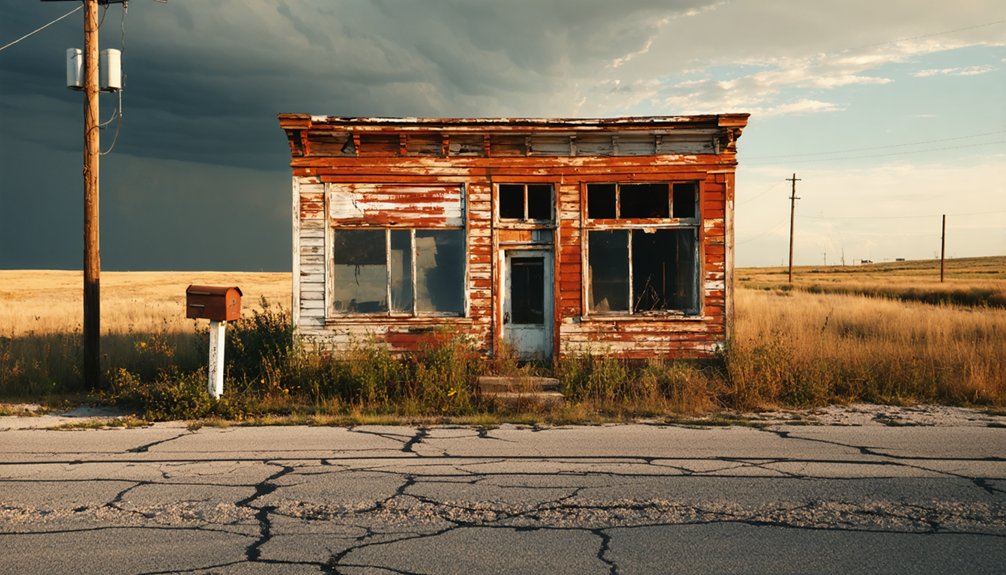
Established on June 25, 1892, Bailey’s post office did more than sort mail — it signaled that the community was real, recognized, and worth sustaining. When it closed on September 30, 1932, that recognition vanished. Without postal service, Bailey lost its official identity.
By 1949, nothing remained to mark the town’s existence — no historical artifacts, no preservation efforts, no visible past.
The post office closure triggered a chain reaction:
- Residents lost a central gathering point for communication and commerce.
- Businesses had less reason to stay once community traffic dried up.
- The town’s administrative legitimacy disappeared, accelerating population departure.
If you’re road-tripping through Grady County, Bailey reminds you how quickly freedom of place can dissolve when essential services disappear.
Which Oklahoma Ghost Towns Pair Best With Bailey?
Oklahoma’s ghost town landscape stretches across roughly 2,000 abandoned settlements, so you’ve got plenty of road-trip companions to pair with Bailey. Since Bailey sits about 12 miles northeast of Marlow in Grady County, you’re well-positioned to explore south-central Oklahoma’s forgotten communities in a single sweep.
Former mining towns and railroad settlements dot the region, each carrying its own collapse story. Some sites still feature historic landmarks like abandoned depots or crumbling storefronts worth photographing. Others benefit from active preservation efforts that keep local memory alive through signage or maintained cemeteries.
Mixing sites with different backstories — rail towns, cotton-era communities, liquor towns — keeps your route varied and your curiosity sharp. Let the open road guide you through Oklahoma’s layered, unfiltered history.
Why Does Oklahoma Have Nearly 2,000 Ghost Towns?
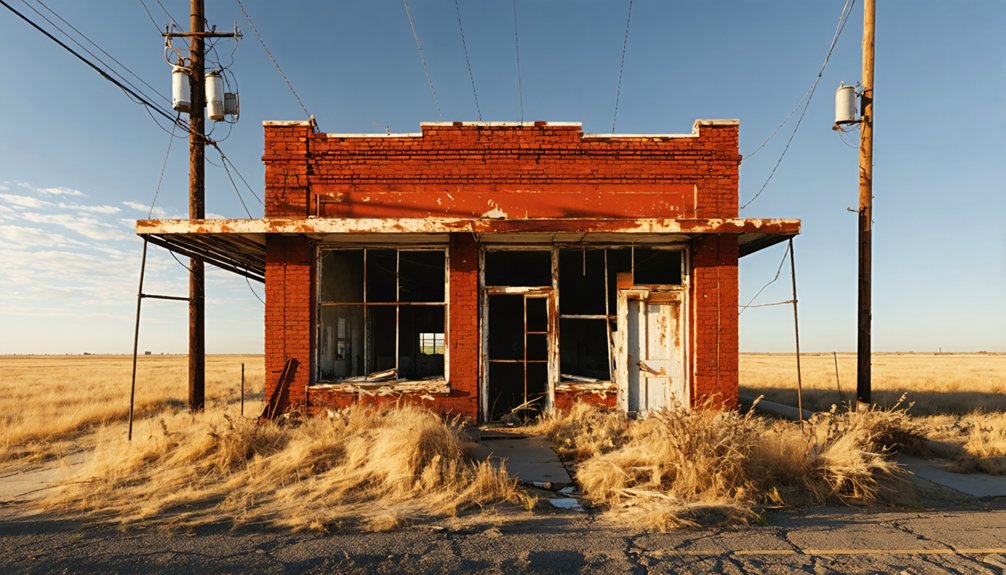
When you start exploring Oklahoma’s ghost town history, you’ll quickly notice that boom-and-bust development created communities almost overnight, only to abandon them just as fast.
Towns like Bailey sprang up around economic opportunities, but when those opportunities vanished, so did the residents.
Railroad routing shifts accelerated this cycle dramatically, as towns bypassed by rail lines lost their commercial lifelines and faded into memory.
Boom-And-Bust Development
Oklahoma didn’t earn its staggering count of nearly 2,000 ghost towns by accident — boom-and-bust development fueled the rise and fall of countless communities across the state. Towns exploded overnight when opportunity struck, then vanished just as fast when conditions shifted.
You’ll find historical architecture crumbling quietly across the landscape, and local legends trailing behind each abandoned settlement like smoke.
Three key boom-and-bust forces shaped Oklahoma’s ghost town story:
- Railroad routing decisions made or broke towns depending on whether tracks passed through or bypassed them entirely.
- Resource exhaustion emptied mining and agricultural communities once the land stopped producing.
- Town-promoter competition created duplicate settlements where only the strongest survived.
Bailey followed this exact pattern — built with purpose, then quietly swallowed by time.
Railroad Routing Shifts
Railroad routing decisions cut through Oklahoma’s ghost-town history like a blade — and no single force emptied more towns faster. When rail companies chose their paths, they chose winners and losers. Towns sitting along the tracks thrived. Towns bypassed by historical transportation routes withered quickly, losing merchants, residents, and purpose almost overnight.
You can see this pattern repeated across the state’s landscape. A community that once bustled with trade would face sudden economic decline the moment a railroad curved away from it. Businesses followed the rails, not loyalty.
Farmers needed efficient shipping routes, and without access, staying made little sense.
Bailey fits neatly into this broader story. Once essential services vanished and transportation connections weakened, nothing anchored people there — and the town quietly disappeared.
Frequently Asked Questions
When Exactly Was the Bailey Town Plat Officially Created and Recorded?
You’ll find Bailey’s town plat records show it was officially created in 1902, covering 32.5 acres — a fascinating piece of ghost town history that reveals just how organized this once-thriving Oklahoma community truly was!
Did Bailey Ever Have a Local Newspaper or Community Publication?
Like whispers lost to time, Bailey’s ghost town history holds no record of local community newspapers. You won’t find evidence of a publication there — the available historical accounts simply don’t mention one existing.
Were Any Buildings From Bailey Ever Relocated to Nearby Towns?
There’s no recorded evidence that Bailey’s buildings were relocated, but you’ll find haunted legends and ghost stories suggest the town’s spirit lingered long after its structures vanished into Oklahoma’s vast, freedom-filled plains forever.
Is the Bailey Town Site on Private Land or Publicly Accessible Property?
The available records don’t confirm whether private land restrictions or public access rules apply to Bailey’s town site. You’ll want to research local land ownership before visiting, so you’re not unintentionally trespassing on someone’s property.
Has Any Archaeological Survey Ever Been Conducted at the Bailey Site?
No records confirm you’ll find ancient artifacts or formal excavation techniques applied at Bailey’s site. The knowledge base doesn’t document any archaeological survey, so you’d want to contact Oklahoma’s State Historic Preservation Office directly.
References
- https://en.wikipedia.org/wiki/Bailey
- https://kids.kiddle.co/Bailey
- https://www.travelok.com/articles/oklahomaghosttowns
- https://de.abcdef.wiki/wiki/Bailey
- https://en.wikipedia.org/wiki/List_of_ghost_towns_in_Oklahoma
- https://www.okhistory.org/publications/enc/entry?entry=GH002
- http://files.usgwarchives.net/ok/okstate/history/bghosttowns.txt