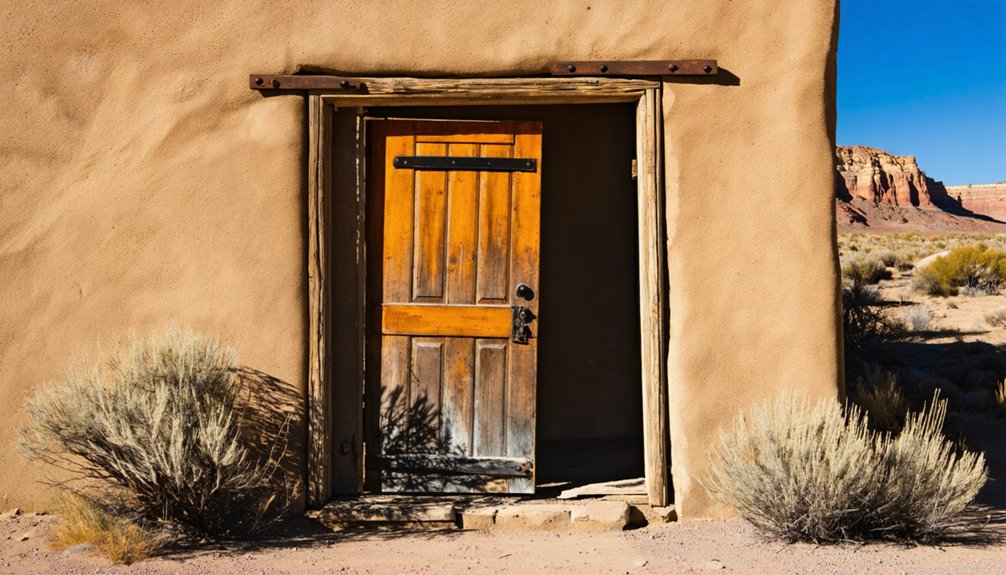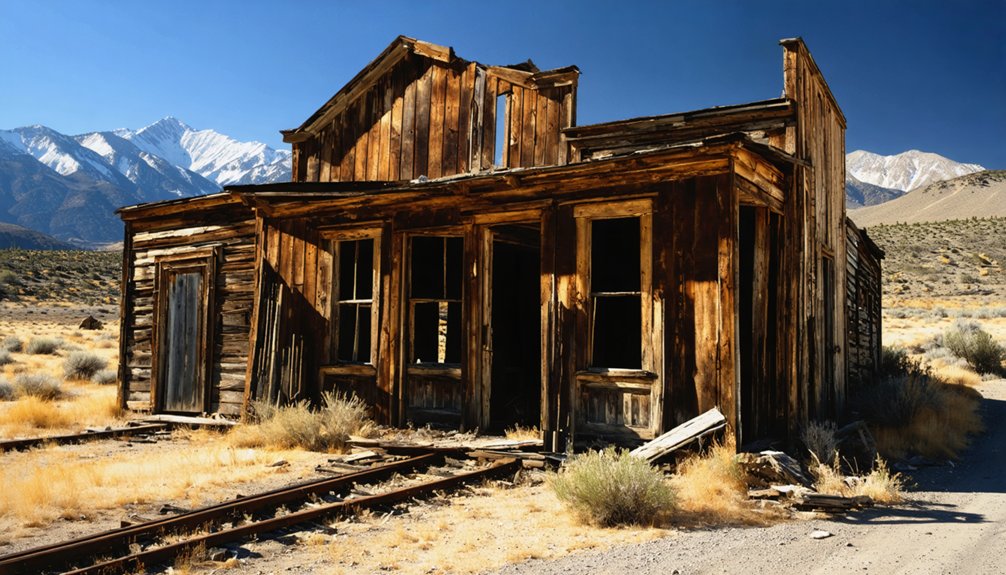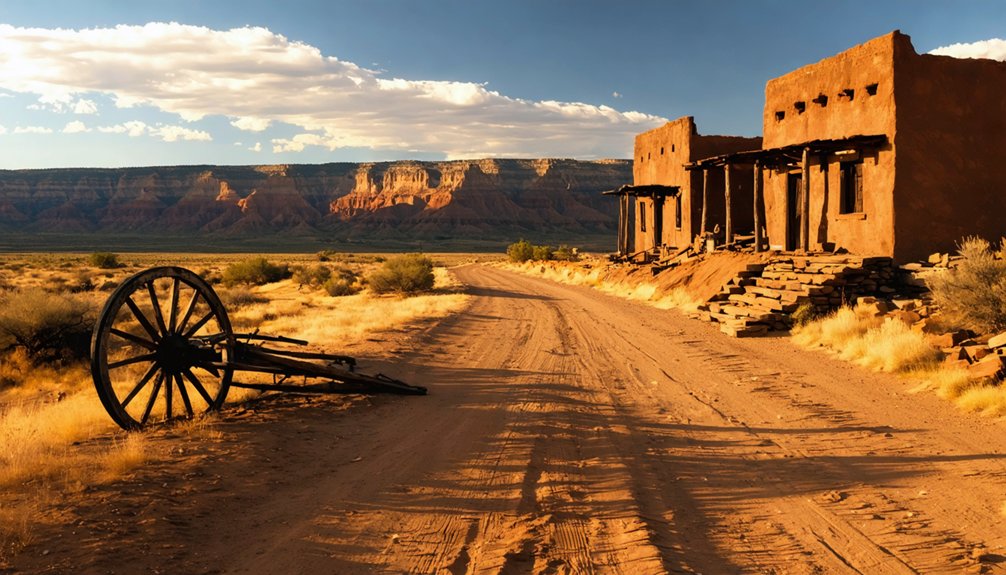
Planning a ghost town road trip to Upper Kanab, Utah means heading to Pahreah, a hauntingly beautiful settlement abandoned in 1929 after decades of flooding drove out nearly 47 pioneer families. You’ll turn off US 89 near milepost 30–31 and drive 4.6 miles of gravel road into the Paria River valley. Colorful badlands, crumbling ruins, and an old cemetery await you. There’s plenty more to discover about making the most of your visit.
Key Takeaways
- Pahreah Ghost Town in Kane County, Utah, is accessed via Paria River Valley Road off US 89 near milepost 30–31.
- High-clearance or 4WD vehicles are recommended; the gravel road becomes impassable when wet due to flash flooding.
- Key attractions include crumbling ruins, a cemetery, colorful badlands, and remnants of a former movie set.
- Dispersed camping on BLM land is free and permit-free; White House and Stateline campgrounds offer nearby structured options.
- Visit during dry conditions, check weather forecasts beforehand, and plan 1–2 hours for main exploration.
What Is the Pahreah Ghost Town?
Tucked into the Paria River valley of Kane County, Utah, Pahreah is a 19th-century Mormon settlement turned ghost town that now offers visitors little more than crumbling ruins, scattered foundations, and a quiet cemetery — yet that’s precisely what makes it worth the detour.
Mormon pioneers first settled here in 1865, and the community grew to nearly 47 families before repeated Paria River flooding drove everyone out by 1929.
The Southern Paiute originally called this land home, and the name itself reportedly means “muddy” or “elk river.”
Today, you won’t find polished historical artifacts behind glass — you’ll encounter raw, unfiltered cultural significance written directly into the landscape.
Walking these grounds connects you to a story of resilience, failure, and the unrelenting power of nature over human ambition.
How to Get to Paria: and Whether the Road Is Drivable?
To reach Paria, you’ll turn off US 89 between Kanab and Page near milepost 30–31 onto Paria River Valley Road.
Then drive roughly 4.6 miles to the day-use area. The road is typically a wide gravel surface that handles dry conditions well, but it turns impassable when wet and is vulnerable to flash flooding and washouts.
If rain is in the forecast or you’re pushing past the day-use area, bring a high-clearance or 4WD vehicle.
Getting There From US 89
Getting to Paria takes just one turn off US 89, between Kanab and Page near milepost 30–31, where Paria River Valley Road heads north into the badlands.
From Kanab, you’re looking at roughly 37 miles east, while Page sits about 39 miles northwest.
The gravel road stretches approximately 4.6 miles to the day-use area, where visitor facilities include parking, informational signage, and a privy. No parking pass is required, so you’re free to arrive on your own schedule.
The day-use area serves as your launching point for exploring the site’s historical preservation efforts, including the cemetery and townsite ruins beyond.
In dry conditions, most vehicles handle the road fine, though high-clearance or 4WD becomes essential if rain has moved through recently.
Road Conditions And Drivability
Whether you’re driving a sedan or a truck, road conditions at Paria can change fast. The wide gravel road stays manageable when dry, but weather considerations matter here — rain transforms it into an impassable, muddy mess almost instantly.
Watch for these key factors before heading out:
- Flash flooding can wash out sections without warning
- Wet conditions make the road dangerously slick and soft
- High-clearance or 4WD is strongly recommended beyond the day-use area
- Local wildlife crossing the road demands slow, alert driving throughout
Check forecasts before you leave, and don’t gamble on marginal conditions. The freedom to explore this remote corridor depends entirely on arriving prepared.
If rain’s in the forecast, delay your trip or plan to stay closer to the day-use area.
The Ghost Town, Cemetery, and Movie Set: What’s Actually There?
What remains at Pahreah today is modest but evocative: crumbled foundations, scattered ruins, a quiet cemetery, and the ghost of a community that flooding ultimately erased by 1929. You won’t find a restored townsite or museum, but that rawness is exactly what makes it worth the drive.
Wander carefully around the ruins, and you’ll notice historical artifacts embedded in the landscape — remnants of walls, building outlines, and weathered stone. Keep your eyes open for local wildlife moving through the valley’s colorful badlands.
The cemetery sits farther along the road and rewards the short walk with genuine solitude. Nearby, a false-front movie set connected to *The Outlaw Josey Wales* once stood, though fire claimed most of it. What’s left still hints at this corridor’s cinematic past.
Is the Paria Ghost Town Worth the Drive?
For a certain kind of traveler, the Paria ghost town absolutely delivers. If you crave wide-open landscapes, historical artifacts, and roads that feel genuinely off the beaten path, this spot earns every mile.
You’ll find real value in:
- Scenic viewpoints of striated red, orange, and purple badland cliffs
- Historical artifacts like foundations, ruins, and a pioneer cemetery
- A raw, uncrowded setting with no entrance fees
- Flexibility to explore by car or on foot
The catch is road conditions. Wet weather turns the dirt road dangerous fast, so you’ll want to check forecasts before heading out.
But on a dry day, the Paria valley rewards curious travelers with striking scenery, genuine frontier history, and the kind of quiet that’s increasingly hard to find.
How Long Should You Plan for Your Visit?
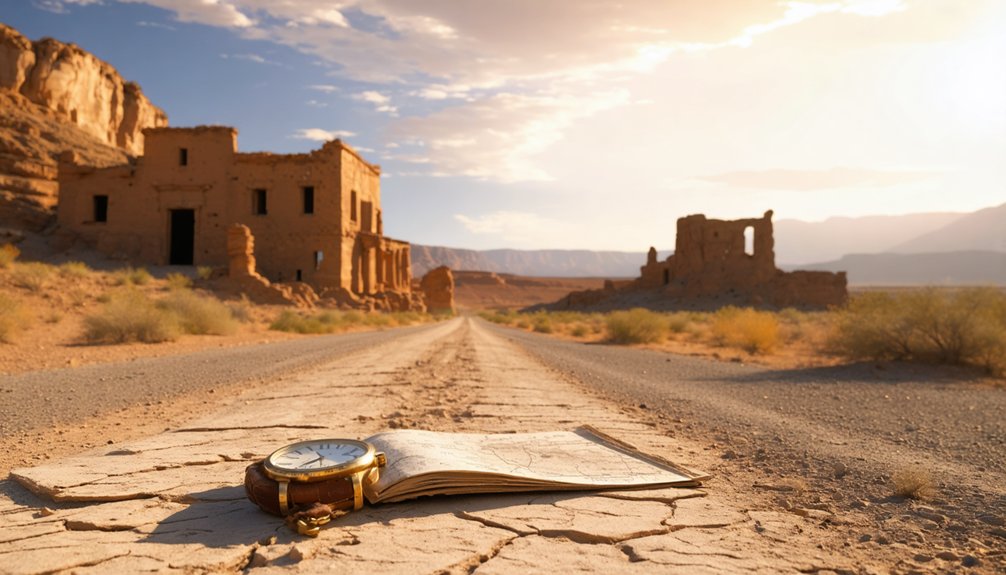
Once you’ve decided the drive is worth it, your next move is figuring out how much time to carve out. A quick stop hits the main sites in one to two hours, but that pace leaves little room for photography tips you’ll actually want to use — like catching the striated cliffs in golden-hour light.
If wildlife encounters matter to you, slow down and scan the Paria River valley carefully; you’ll need time for that. A half-day gives you space to explore the cemetery, wander the ruins, and absorb the badlands without rushing.
The cemetery hike runs about 1.5 miles round trip with minimal elevation gain, so it’s easy. Build in flexibility — dirt roads and desert light don’t follow schedules, and that freedom is the whole point.
Where to Camp Near the Paria Ghost Town?
If you’d like to extend your stay, you’ve got solid options right in the area. BLM land surrounding the ghost town allows dispersed camping, with primitive roadside pull-offs that put you close to the scenery without any permit hassle.
For a more structured base camp, White House Campground and Stateline Campground are both convenient choices that keep you well-positioned for exploring the Paria corridor.
BLM Dispersed Camping Options
Whether you’re looking to extend your ghost town adventure or simply sleep under Utah’s star-filled sky, BLM dispersed camping on the land surrounding Paria gives you a rugged, no-frills basecamp right at the doorstep of the site.
Primitive roadside pull-offs let you park, set up, and wake up steps from the badlands.
Keep these essentials in mind:
- Leave no trace to support historical preservation of this fragile landscape
- Watch for wildlife sightings at dawn and dusk along the Paria River valley
- No fees or permits are required on surrounding BLM land
- Dry conditions matter—wet roads can trap you overnight unexpectedly
You’re camping on your own terms here, with canyon walls as your backdrop and complete freedom as your only itinerary.
White House Campground Nearby
For travelers who prefer a more structured campsite without sacrificing proximity to the ghost town, White House Campground sits just off US 89 and serves as a popular basecamp for exploring the Paria area. Managed by the BLM, it puts you within easy striking distance of the townsite, cemetery, and surrounding badlands.
You’ll wake up surrounded by the same colorful canyon scenery that drew settlers here over a century ago. The location supports both historical preservation efforts and wildlife observation, as the Paria River corridor attracts birds and other desert species worth watching at dawn.
Sites are primitive but functional, keeping costs low and freedom high. From here, you can plan your timing, beat the midday heat, and explore the ghost town on your own terms.
Stateline Campground Base Camp
Sitting closer to the Arizona border than White House Campground, Stateline Campground gives you another solid BLM basecamp option for tackling the Paria ghost town without backtracking far each day. The open, primitive setting suits travelers who prefer fewer crowds and more sky.
From this base, you’re well-positioned to:
- Drive the gravel road toward Paria’s ruins and cemetery at your own pace
- Photograph the badlands and striated canyon walls in early morning light
- Watch for local wildlife moving through the valley at dusk
- Explore the historical significance of a settlement that survived flooding for decades before finally surrendering in 1929
No hookups, no fees, no fuss — just raw desert freedom with one of Utah’s most photogenic ghost towns sitting just up the road.
Frequently Asked Questions
Was the Pahreah Area Used by Indigenous Peoples Before Mormon Settlement?
Before Mormon settlers arrived, the Southern Paiute called this land home, honoring Native traditions across its rugged terrain. You’ll find the area’s Indigenous history runs deep, with the name meaning “muddy” or “elk river.”
What Does the Name “Paria” Actually Mean?
Wonder what’s hidden in a name? “Paria” carries cultural heritage rooted in the Southern Paiute language, meaning “muddy” or “elk river” — a detail of historical significance that connects you directly to the land’s indigenous story.
Which Specific Films Were Made Near the Paria Ghost Town Area?
You’ll find haunting film locations tied to *Outlaw Josey Wales* near Paria’s historic film sites. Numerous Westerns and sci-fi productions also used this dramatic scenery, though specific titles beyond Josey Wales aren’t fully documented here.
Do Visitors Need a Parking Pass to Access the Day-Use Area?
With 47 families once calling Paria home, it’s now free to explore! You don’t need a parking pass — there aren’t any access restrictions or parking regulations, so you can arrive and roam freely.
What Camping Options Are Available Closest to the Paria Ghost Town?
You’ll find dispersed BLM camping with primitive pull-offs right nearby—perfect for your camping gear and campfire safety rituals. White House and Stateline Campgrounds also offer solid basecamp options, keeping you close to Paria’s wild, untamed freedom.
References
- https://musthikemusteat.com/beyond-the-pnw/paria-pahreah-ghost-town-cemetery/
- https://www.visitutah.com/things-to-do/history-culture/ghost-towns
- https://roadtrippers.com/magazine/kanab-utah-little-hollywood/
- https://www.sussner.net/en/der-suedwesten/utah/rund-um-kanab/paria-townsite/
- https://www.fodors.com/community/road-trips/ghost-towns-on-grand-circle-road-trip-923952/
- https://www.theoutbound.com/utah/photography/explore-pahreah-ghost-town
- https://www.rexby.com/Meeshuno/ttd/old-west-ghost-town-adventure