Planning a road trip to Bend City means chasing a ghost town that nature itself erased. You’ll follow Mazourka Canyon Road out of Independence, California, into open desert shaped by the catastrophic 1872 earthquake that shifted the Owens River and sealed the town’s fate overnight. What remains are iron scraps, melted adobe mounds, and whispers of 1860s mining ambition. It’s a California Historical Landmark worth every dusty mile — and there’s much more to uncover ahead.
Key Takeaways
- Bend City is accessed via Mazourka Canyon Road from Independence, California, suitable for standard 2WD vehicles under typical conditions.
- Navigate to coordinates 36.81917°N, 118.13056°W to locate the California Historical Landmark #209 site accurately.
- Visit in spring or fall for optimal weather, wildflower blooms, and best visibility of remaining structures.
- Combine your visit with nearby ghost towns Cerro Gordo and Bodie to maximize the mining frontier experience.
- Bring water, sturdy shoes, and a camera, leaving all artifacts and ruins undisturbed during exploration.
What Is Bend City and Why Does It Matter?
Although few travelers have heard of it, Bend City once stood as one of the first town sites on the eastern slope of the Sierra Nevada, a scrappy mining settlement that sprang up around 1863 along a sweeping curve of the Owens River in Inyo County, California. Its mining history traces back to the Russ Mining District, established in April 1860, drawing ambitious settlers chasing ore and opportunity.
The town even contended for the seat of a proposed Coso County. Then nature intervened. The catastrophic 1872 Owens Valley earthquake, one of California’s most powerful seismic events, reshaped the region’s geological features dramatically, forcing the Owens River to shift course entirely.
Without the river, Bend City lost its purpose, and residents walked away, leaving only silence behind.
How the 1872 Earthquake Ended Bend City
When the 1872 Owens Valley earthquake struck with an estimated magnitude near 9.5, it didn’t just rattle buildings — it reshaped the land itself, effectively signing Bend City’s death warrant.
The Owens River, once the town’s lifeblood curving through that large bend, shifted its course away from the townsite entirely, stranding the bridge and draining the settlement of its practical purpose.
Whatever residents had survived the quake soon packed up and left, leaving Bend City to quietly dissolve into the desert floor.
Earthquake Devastates Bend City
Before Bend City could fully establish itself as a regional hub, the earth itself intervened. The 1872 Owens Valley earthquake, estimated near magnitude 9.5, reshaped everything. Its historical significance can’t be overstated — this single event sealed the town’s abandonment reasons permanently.
The quake didn’t just crack walls. It rewrote the landscape:
- The Owens River shifted course away from the townsite entirely
- The essential river bridge became useless overnight
- Adobe structures crumbled under violent shaking
- Remaining residents abandoned the settlement immediately after
- A town once considered a county seat vanished within months
You’re now walking ground that nature reclaimed decisively. The freedom Bend City’s founders sought collided hard with forces no pioneer could negotiate. The earth moved, the river left, and the people followed.
River Abandons The Townsite
The river gave Bend City its name and its life — then the 1872 earthquake took both away. Before the quake, the Owens River curved generously around the townsite, making it a natural hub for mining history in eastern California. That bend wasn’t just geography — it was the town’s identity.
When the earthquake struck, the river shifted course entirely, abandoning the townsite like a partner walking out the door. The bridge that once connected Bend City to the outside world became pointless overnight.
Without water access, the remaining residents had no reason to stay.
You’re visiting a place the earth itself rejected. That earthquake impact didn’t just crack walls — it erased the town’s purpose. The river moved on, and everyone else followed.
What You Can Still See at the Site Today
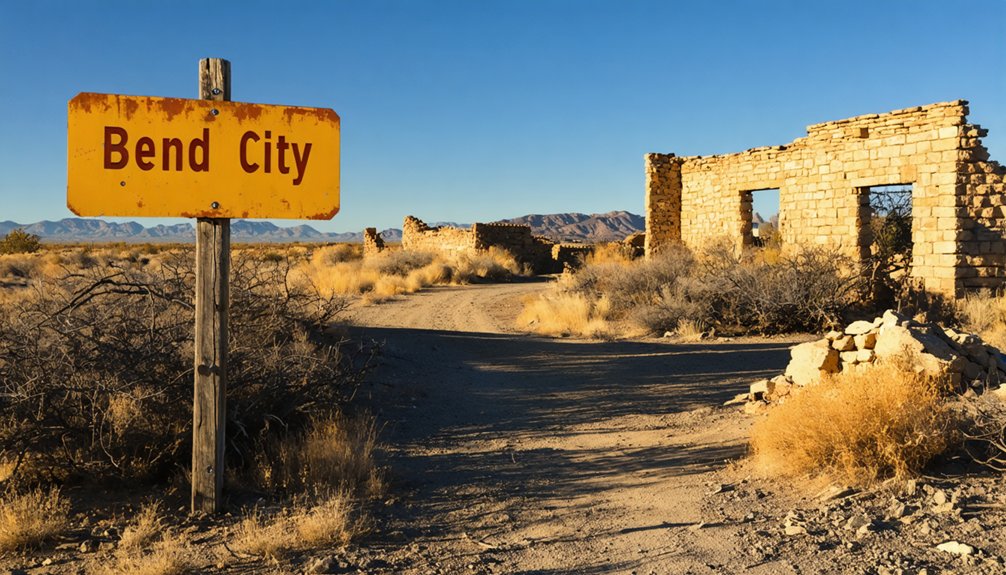
When you walk the site today, you’ll find Bend City has surrendered most of its story to time and sandy soil, leaving only faint clues for those sharp enough to spot them.
Scatter-pattern debris tells the tale — heavy iron scraps, square nails, and displaced stones mark where structures once stood.
Train your eye on low, irregular mounds rising from the desert floor, because those subtle humps are likely the melted remains of adobe walls that photographs from 1932 still showed standing.
Scattered Ruins And Remnants
Although little remains of Bend City’s once-bustling streets, you’ll find the site rewards patient eyes and a genuine curiosity for California’s buried past. Urban decay here isn’t dramatic—it’s whispered through the landscape in fragments of mining relics and quiet mounds of melted adobe.
Watch closely for:
- Dissolved adobe walls barely rising above sandy soil
- Scattered square nails hinting at vanished timber structures
- Heavy iron scraps left behind by miners who never returned
- Out-of-place stones marking foundations swallowed by desert
- An arrastra—a hand-powered ore-grinding mill connecting you directly to the 1860s rush
Photographs from 1932 still captured standing walls and stone stairways. Today, those traces have nearly surrendered to the earth, making every discovery feel genuinely earned.
Identifying Adobe Mounds
Adobe mounds are Bend City’s most reliable surviving feature, and once you know what to look for, you’ll start reading the desert floor like a map.
The adobe structures didn’t collapse cleanly — they melted. Decades of sun, wind, and occasional rain dissolved their walls back into the earth, leaving low, rounded earth mounds that blend almost perfectly into the sandy terrain.
Walk slowly and scan for subtle rises that seem slightly too symmetrical for natural ground. These gentle humps once anchored homes, businesses, and the daily rhythms of a mining community.
Crouch down and you’ll sometimes spot the compressed, layered texture that separates man-made adobe from ordinary soil. The desert reclaimed this town quietly, but it left enough behind for a sharp-eyed explorer to find.
How to Reach Bend City via Mazourka Canyon Road
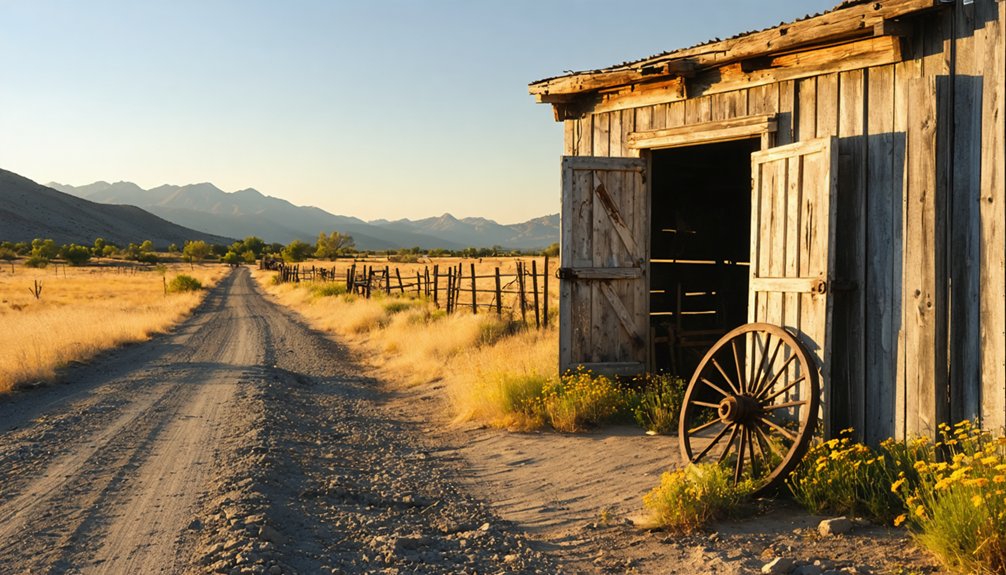
Mazourka Canyon Road winds out of Independence and leads you straight to one of Inyo County’s most quietly haunting corners, where Bend City once thrived along a great curve in the Owens River. Standard 2WD vehicles handle the route fine, making this slice of mining history surprisingly accessible.
Mazourka Canyon Road leads to Bend City’s ghost, where the Owens River once shaped a thriving mining town.
- Launch from Independence, following Mazourka Canyon Road east
- No high-clearance vehicle required under typical conditions
- Watch for geological features shaped by the seismic upheaval of 1872
- Coordinates 36.81917°N, 118.13056°W anchor your navigation precisely
- Visit anytime, though spring and fall offer the most comfortable conditions
The road delivers you into open desert solitude, where the land itself carries the memory of a town the earthquake quietly erased.
Best Time of Year to Visit Bend City
Once you’ve locked in your route along Mazourka Canyon Road, timing your visit can shape everything about what you find there. Technically, you can roll out anytime — the site stays open year-round.
Spring pulls the strongest case, when wildflower season softens the desert floor and the light falls gold across whatever adobe mounds remain. You’ll read the land more clearly then.
Summer turns brutal fast in Inyo County, so if you go, start early and carry water.
Winter snow can dust the Inyos and close higher routes, but mild winter days offer raw, quiet solitude that suits a ghost town perfectly.
Whatever season you choose, bring patience — Bend City doesn’t announce itself. You’ll need sharp eyes and a genuine hunger for history to find what’s left.
Is Bend City Worth the Drive?
Whether Bend City earns the drive depends entirely on what you’re chasing. If you hunger for raw mining history and seismic storytelling written into the land itself, it delivers. The 1872 earthquake impact reshaped this valley permanently — and you’ll feel that absence standing where a thriving town once bent along the Owens River.
- Square nails and iron scraps mark where miners built their futures
- Adobe mounds whisper of lives interrupted by earthquake impact
- An arrastra stands as silent evidence of serious mining history
- A river that simply moved, erasing the town’s entire purpose
- California Historical Landmark #209 confirms this ground truly mattered
You won’t find manicured attractions here. You’ll find honest ruins demanding your imagination — exactly what freedom-seekers on California’s eastern edge come looking for.
Nearby Inyo County Ghost Towns Worth Combining
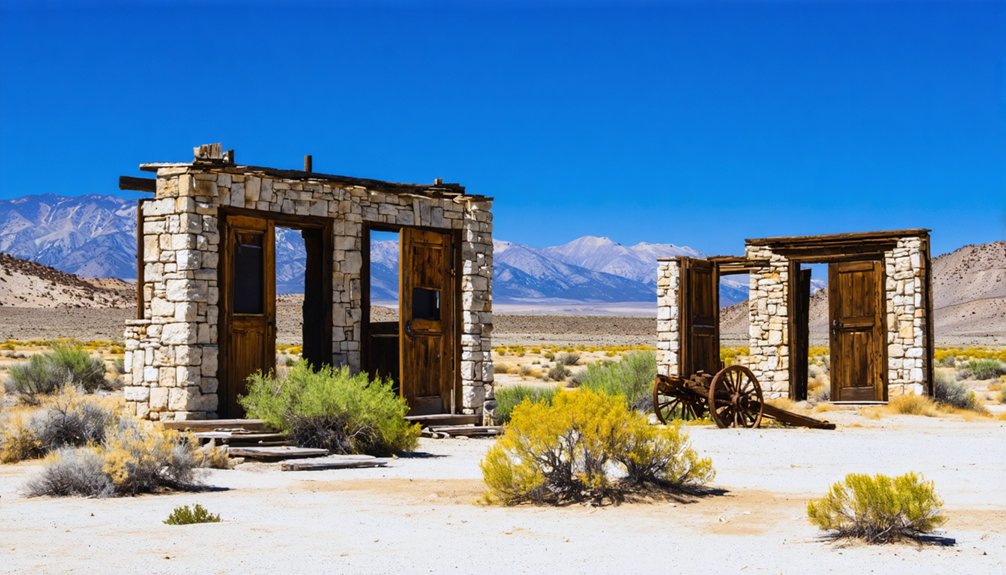
Inyo County rewards ghost town seekers who push beyond a single stop, scattering abandoned mining settlements across its eastern Sierra landscape like broken ore across a stamp mill floor.
From Bend City, you can push south toward Cerro Gordo, a silver and lead camp clinging to the Inyo Mountains above Owens Lake, where mining relics including ore buckets and headframes still define the skyline.
Swing north toward Bodie’s quieter cousins tucked into volcanic geological features shaped by ancient upheaval.
Independence sits central, making it your natural basecamp for threading these sites together efficiently.
Each stop compounds the story — earthquakes, river shifts, boom cycles, and sudden silence.
You’re not just visiting ruins; you’re tracing the raw, unfiltered arc of California’s mining frontier on your own terms.
What to Bring When Exploring Bend City’s Ruins
Exploring Bend City demands preparation, because what remains here hides rather than announces itself — square nails half-buried in sandy soil, iron scraps half-swallowed by desert brush, adobe mounds that look like natural rises until you crouch beside them.
Seasonal wildflower displays carpet the valley floor, and local wildlife moves freely across this unfenced land. Come ready to read the terrain closely.
- Sturdy walking shoes for sandy, uneven ground
- Polarized sunglasses to cut desert glare while scanning soil
- A field notebook to sketch or record what you find
- Water for at least a half-day desert excursion
- A camera with a macro lens to capture small artifacts and wildflower detail without disturbing either
Leave everything exactly as you find it — the ruins belong to the land now.
Bend City’s Place in California Ghost Town History
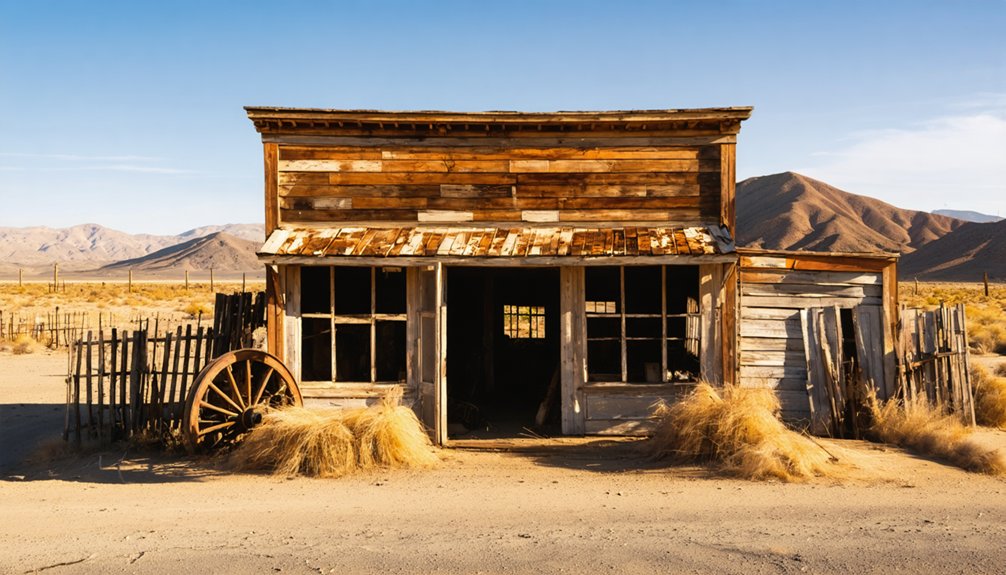
Few ghost towns in California carry the layered weight of Bend City — a settlement that rose out of the eastern Sierra Nevada in 1863, briefly challenged for county-seat status, and then lost its reason for existing not to economic bust alone, but to the earth itself shifting beneath it.
The 1872 earthquake redirected the Owens River, stripping the town of its geographical purpose overnight. What urban development once promised here — commerce, county governance, permanence — vanished with the changed riverbed.
Today, Bend City stands as California Historical Landmark #209, a quiet symbol of cultural preservation in a state that too often paves over its past. When you walk this site, you’re not just visiting ruins — you’re reading a chapter of California history written in sandy soil and silence.
Frequently Asked Questions
Is Camping Permitted Near the Bend City Historical Site?
The knowledge doesn’t confirm camping regulations near Bend City. You’ll want to check with Inyo County authorities before pitching your tent — historical preservation rules may shape what’s permitted on this evocative, earthquake-scarred ground.
Are There Any Guided Tours Available at Bend City?
No guided tours exist at Bend City, California Historical Landmark #209, so you’ll explore its historical significance solo. Tour options are nonexistent, but that raw freedom lets you uncover melted adobe ruins and century-old secrets entirely on your own terms.
Does Bend City Have Cell Service or Emergency Contacts Nearby?
Don’t count on cell coverage in this remote Inyo County canyon. Before you roam Bend City’s forgotten adobe ruins, share your itinerary and locate Independence’s emergency services—freedom tastes sweeter when someone knows where you’ve wandered.
Is the Bend City Site on Public or Private Land?
The knowledge doesn’t confirm whether Bend City’s land is public or private, so verify before you visit. Its historical significance and preservation efforts make it worth researching—you’ll want clear access rights before exploring this hauntingly free frontier.
Has Bend City Ever Been Featured in Films or Documentaries?
The available knowledge doesn’t confirm Bend City’s historical significance as one of California’s notable filming locations. You won’t find it on Hollywood’s radar—yet its raw, forgotten mystery makes it worthy of your own personal documentary adventure.
References
- https://www.ghosttowns.com/states/ca/bendcity.html
- https://en.wikipedia.org/wiki/List_of_ghost_towns_in_California
- https://www.youtube.com/watch?v=QC3NEZsCSpQ
- https://www.ghosttowns.com/states/ca/caalpha.html
- https://en.wikipedia.org/wiki/Category:Ghost_towns_in_Inyo_County
- https://a.osmarks.net/content/wikipedia_en_all_maxi_2020-08/A/List_of_ghost_towns_in_California
- https://www.legendsofamerica.com/ca-deathvalleyghosttownscalifornia/
- https://kids.kiddle.co/Bend_City
- https://fr.wikipedia.org/wiki/Liste_des_villes_fantômes_en_Californie