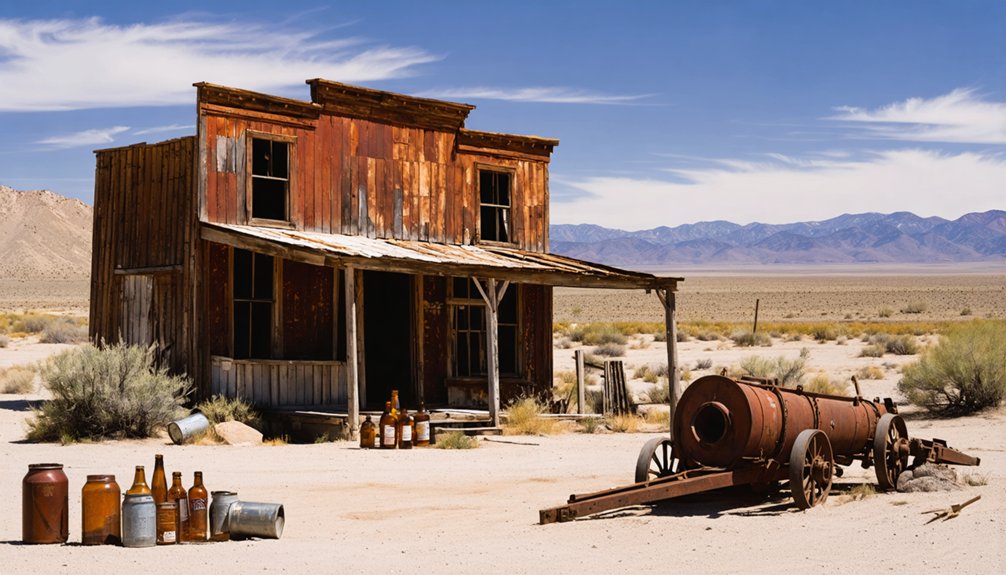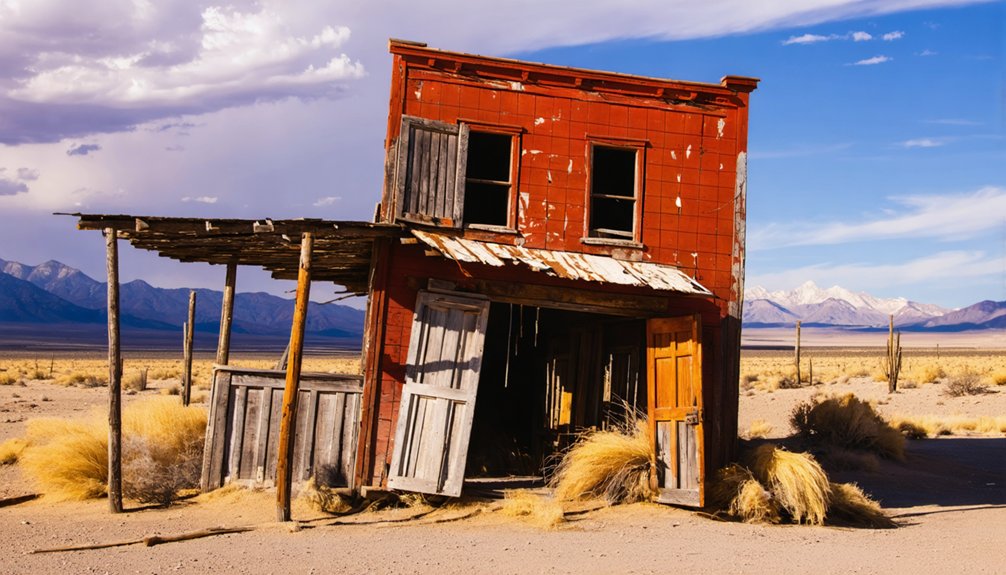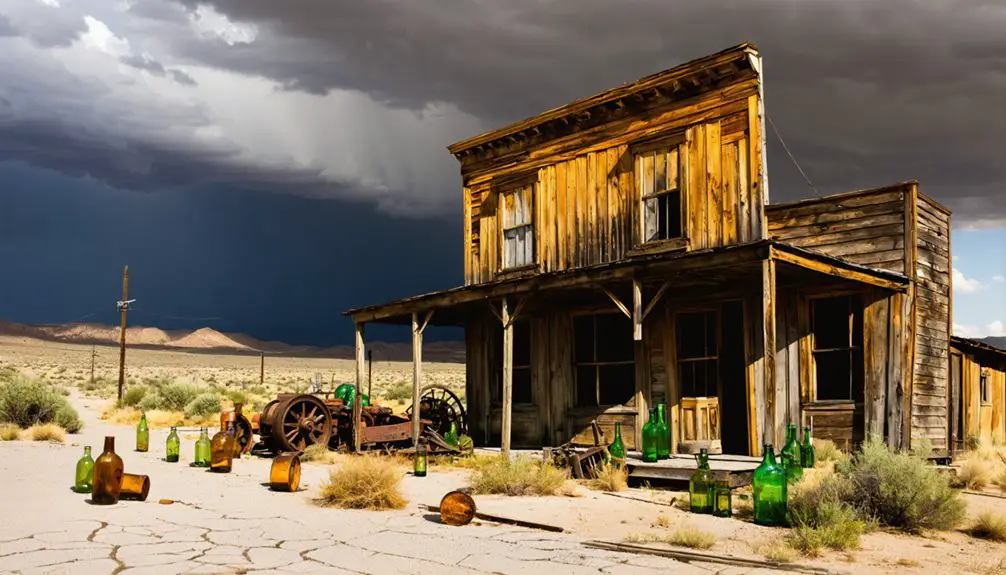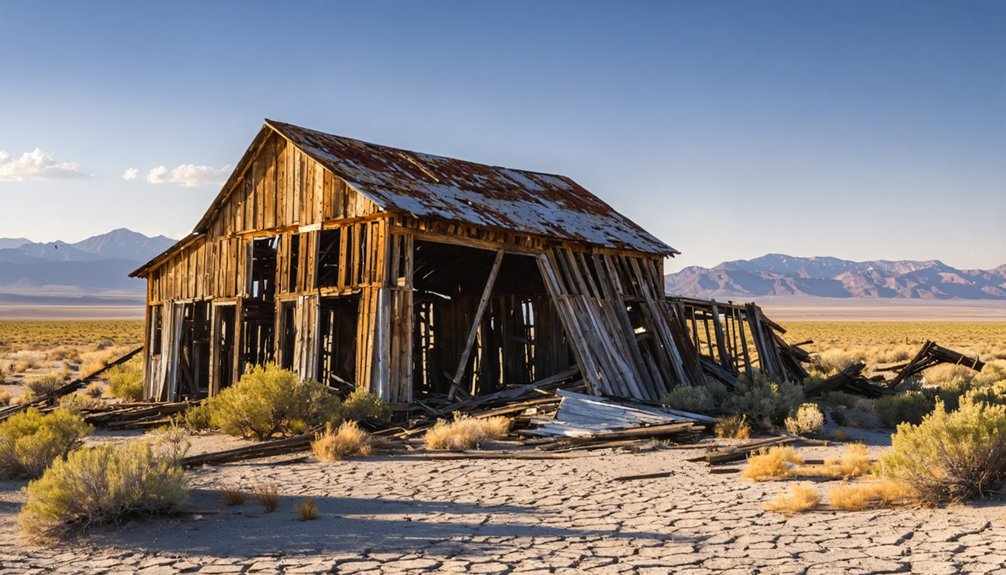
Planning a ghost town road trip to Beowawe, Nevada means exiting I-80 west of Carlin and heading five miles south on State Route 306 — no off-road vehicle required. You’ll find weathered buildings, the haunting Maiden’s Grave Cemetery, and a landscape shaped by Paiute tradition and railroad history. Spring and fall offer the most comfortable conditions for exploring. Beowawe’s layered past runs deeper than it first appears, and there’s plenty more to uncover ahead.
Key Takeaways
- Beowawe sits 5 miles south of Interstate 80 on State Route 306, fully accessible via paved road for standard 2WD vehicles.
- Founded in 1868 alongside the Central Pacific Railroad, Beowawe once supported 60 residents before declining into a quiet ghost town.
- The name “Beowawe” derives from the Paiute language, meaning “gateway,” reflecting deep Native American cultural roots predating European settlement.
- Key stops include the haunting Maiden’s Grave Cemetery, a nearby geothermal power plant, and weathered original frontier-era buildings.
- Spring and fall offer the most comfortable visiting conditions, though the paved route remains accessible year-round despite temperature extremes.
What Is Beowawe and Why Does This Nevada Ghost Town Exist?
Tucked into the high desert of Eureka County, Nevada, Beowawe is a ghost town that’s somehow never fully died. The Central Pacific Railroad put it on the map in 1868, drawing Chinese laborers, settlers, and merchants into a remote canyon framed by high mountain walls.
That canyon setting isn’t just scenic — it carries historical significance, as the Paiute name “Beowawe” translates roughly to “gate” or “gateway,” perfectly describing the landscape.
Where Is Beowawe, Nevada?
Beowawe sits in Eureka County, Nevada, about 5 miles south of Interstate 80 on State Route 306 — a paved, two-lane road that’s easy enough to handle in a standard passenger vehicle. You’ll exit I-80 west of Carlin and head south through open ranching country that stretches toward high mountain ridgelines.
The town rests at 4,695 feet in a cool semi-arid climate, making it genuinely comfortable during spring and fall visits. Summers run hot, winters cool — so pack accordingly. While you won’t find local cuisine options in town, the surrounding landscape rewards wildlife photography enthusiasts with sweeping desert terrain and dramatic canyon formations.
The canyon mouth itself frames those mountains beautifully, giving you a natural gateway that earns Beowawe its Paiute name.
How to Get to Beowawe From I-80
To reach Beowawe, you’ll exit I-80 west of Carlin and head south on State Route 306 for about 5 miles.
The route follows a paved, two-lane rural road that’s fully accessible for standard 2WD vehicles, so no specialized transportation is necessary.
You’ll find the drive straightforward, though you should prepare for temperature extremes since the area experiences hot summers and cool winters.
Exit I-80 Near Carlin
Getting to Beowawe is straightforward — exit I-80 west of Carlin and head south on State Route 306, a paved two-lane road that’ll carry you about 5 miles into the valley. Your standard passenger vehicle handles it easily, so no special equipment needed.
As you descend toward the valley floor, you’ll notice the canyon walls flanking the landscape — the same natural gateway that gave Beowawe its Paiute name, meaning “gate.” Those high mountain ridges framed the path for Northern Paiutes, railroad workers, and California-bound emigrants long before you arrived.
Keep your eyes open as you roll in. Local legends cling to these roads, and historical artifacts from the railroad era still surface occasionally around the community. You’re driving into living history, not just a dot on a map.
Travel South On SR-306
Once you’ve exited I-80 west of Carlin, you’ll head south on State Route 306 — a paved, two-lane road that cuts straight through the high desert toward Beowawe, roughly 5 miles down the valley. The drive is straightforward and accessible for any standard passenger vehicle, so no off-road gear is necessary.
As you roll south, high mountain ridges frame both sides of the road, naturally forming the canyon gateway that gave Beowawe its Paiute name. That dramatic landscape hints at the local legends and layered history waiting ahead.
You’re passing through territory once traveled by Northern Paiutes and California-bound emigrants alike. Keep your eyes open — this corridor carried historical artifacts, people, and stories long before the railroad ever arrived.
Road Conditions And Accessibility
Reaching Beowawe from I-80 is invigoratingly straightforward — you’ll exit west of Carlin and head south on State Route 306, a paved, two-lane rural road that carries you about 5 miles down into the valley.
No special vehicle is required; your standard 2WD handles this route comfortably, leaving you free to focus on the landscape unfolding around you.
As you descend toward the canyon’s mouth, the high mountains frame a natural gateway steeped in local legends and frontier history.
The road stays accessible year-round, though summers run hot and winters cool, so pack accordingly.
Once you arrive, you’ll find scattered historical artifacts and remnants of a railroad-era community that refuse to be forgotten, rewarding the curious traveler willing to venture just a few miles off the interstate.
How a Railroad Stop Built : and Then Nearly Erased : Beowawe
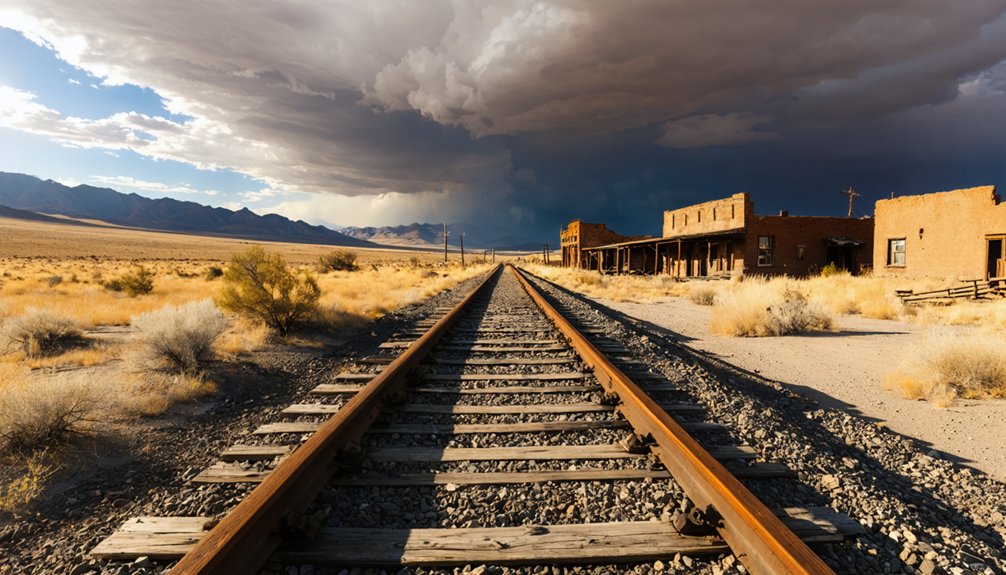
When you trace Beowawe’s origins, you’ll find the Central Pacific Railroad’s 1868 arrival fundamentally called the town into existence, drawing Chinese construction workers as its first wave of residents.
By 1881, the community had grown enough to support 60 residents, a store, a school, and a post office — a modest but functioning town anchored entirely to railroad activity.
Once that economic engine slowed, however, Beowawe’s population quietly collapsed, leaving only a handful of people behind and earning the town its ghost town reputation.
Central Pacific Railroad Arrives
The Central Pacific Railroad’s arrival in 1868 transformed Beowawe from a quiet Paiute campsite into a legitimate railroad stop almost overnight. Chinese construction workers flooded in, local legends took root, and historical artifacts from that era still echo through the landscape today.
Picture yourself standing where those early settlers once stood:
- Steam engines rolling through the canyon gateway, rattling every building
- Chinese laborers driving spikes into fresh Nevada earth under a blazing sun
- A general store stocked with supplies for railroad workers and passing emigrants
- A schoolhouse rising from desert soil, signaling permanent settlement
Beowawe’s Brief Population Boom
By 1881, Beowawe had grown into something resembling a real town — 60 residents, a functioning store, a school, and a post office all packed into a canyon gateway that had been empty desert just years before. The railroad had practically conjured a community from nothing, and for a brief window, it worked.
But railroads give, and railroads take. As the industry shifted and traffic patterns changed, Beowawe’s historical significance faded alongside its population. The early 1900s stripped the town down to a handful of stubborn holdouts.
Local legends kept the spirit alive — stories of Chinese railroad workers, Paiute camps, and emigrants chasing California dreams. You’re visiting a place that burned bright, collapsed fast, and somehow never fully disappeared.
Decline After Railroad Era
Railroads built Beowawe, and railroads nearly finished it. Once the construction crews moved on, the town’s purpose faded fast. The historical artifacts left behind tell a quiet story of rapid decline — empty buildings, abandoned storefronts, and local legends of a community that refused to completely disappear.
Picture the town’s unraveling through these four stages:
- Crews departed, leaving silent streets where Chinese railroad workers once gathered.
- Businesses closed, stripping away the store and post office that once anchored daily life.
- Residents scattered, dropping the population from 60 to just a handful.
- Nature reclaimed, weathering structures into the sparse Nevada landscape.
Yet Beowawe survived. Ranching kept it breathing when the railroad stopped caring, giving you a genuine ghost town that still pulses with stubborn life.
What Does “Beowawe” Actually Mean?
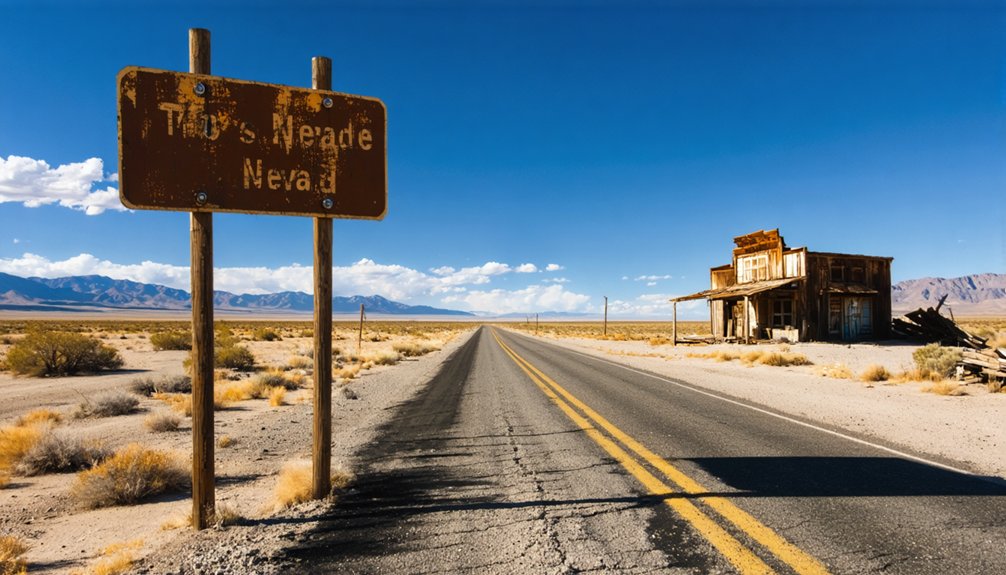
Rooted in the Paiute language, “Beowawe” most likely translates to “gate” or “gateway” — a fitting name for a town sitting at the mouth of a canyon flanked by towering mountains that form a natural passage to the west.
Beowawe: a Paiute word meaning “gateway,” perfectly suited for a town nestled at the mouth of a mountain canyon.
The Northern Paiutes had camped in this area for generations before the railroad ever arrived, giving the land deep cultural significance long before American settlers claimed it.
Local legends offer a more colorful alternative meaning. Some local Shoshone suggest “Beowawe” describes someone with a large posterior — a story that’ll make you smile as you’re driving down State Route 306.
Whether you embrace the geographical interpretation or the humorous one, the name carries genuine history. Either way, you’re rolling into a place that meant something to people long before the tracks were laid.
What Still Survives in Beowawe Today
Though Beowawe carries the “ghost town” label, it hasn’t fully surrendered to the past. You’ll find a community still breathing, shaped by local legends and quiet cultural significance. Here’s what survives:
- Active ranching operations — working land that connects today’s residents to Nevada’s rugged frontier identity
- A geothermal power plant — modern industry humming beside century-old history
- Maiden’s Grave Cemetery — a haunting, evocative site where stories of early emigrants rest permanently in the desert soil
- Scattered original buildings — weathered structures standing as honest reminders of what once was
Fair warning: one road tripper rates Beowawe as not worth the detour if dramatic ruins are your goal.
But if raw, unpolished history speaks to you, Beowawe delivers something genuine.
Is This Nevada Ghost Town Worth the Drive?
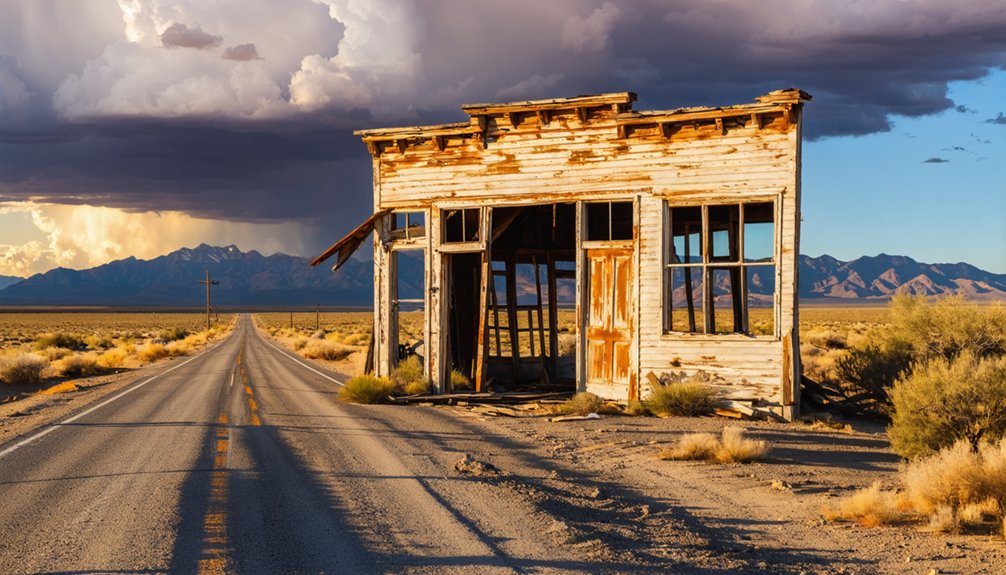
Whether Beowawe earns a spot on your road trip itinerary depends entirely on what you’re chasing. If you’re hunting dramatic ruins or a packed historical site, you’ll likely leave underwhelmed. One source bluntly rates it as not worth the trip.
But if you’re drawn to open roads, local legends rooted in Paiute culture, and scenic views of canyon-framed high desert terrain, Beowawe quietly delivers. You’re driving a paved two-lane road off I-80, making it an effortless detour. The nearby Maiden’s Grave Cemetery adds a haunting layer worth exploring.
Beowawe rewards travelers who appreciate subtlety over spectacle. It’s a living ranching community with a ghost town’s bones, sitting at nearly 4,700 feet where the land itself tells the story.
What’s Near Beowawe Worth Stopping For?
While Beowawe itself offers limited remains, you’ll find worthwhile stops nearby to round out your road trip. Just outside of town, Maiden’s Grave Cemetery offers a haunting glimpse into the lives of early emigrants who never completed their journey west.
You can also swing through Carlin on your way back to I-80, where the small railroad town adds historical context to the region’s Central Pacific Railroad heritage.
Maiden’s Grave Cemetery
If you’re making the drive to Beowawe, Maiden’s Grave Cemetery is worth adding to your itinerary. This quiet, historic site carries local legends and folklore stories that connect you to the region’s raw, untamed past. Standing among the weathered markers, you’ll feel the weight of lives lived on the frontier.
Here’s what makes this stop unforgettable:
- Weathered headstones carved with names and dates that tell forgotten stories
- Open Nevada landscape stretching endlessly around the cemetery’s borders
- Frontier-era burial traditions visible through the grave arrangements and markers
- A haunting stillness that makes history feel immediate and real
It’s a short detour that rewards curious travelers with something no museum can replicate — authentic, unfiltered history on open ground.
Carlin’s Nearby Attractions
After soaking in the stillness of Maiden’s Grave Cemetery, you’ll find that the area around Beowawe has more to offer than its ghost town status suggests.
Carlin sits just west of your I-80 exit point and serves as a solid base for exploring the region. Local legends tied to the Northern Paiute and early railroad workers give the landscape a layered, living history that rewards curious travelers.
Climate considerations matter here — hot summers demand water and sun protection, while cool winters call for layered clothing.
The nearby geothermal power plant offers a glimpse into modern energy harnessed from ancient earth activity, contrasting sharply with Beowawe’s weathered remains.
Don’t rush through — this stretch of northern Nevada quietly rewards those willing to slow down and look closer.
When Is the Best Time to Visit Beowawe?
Beowawe’s cool semi-arid climate means you can visit anytime of year, though the hot summers and cool winters are worth factoring into your plans.
Here’s what each season brings:
- Spring – Mild temperatures make exploring historical artifacts and the surrounding canyon landscape comfortable and rewarding.
- Summer – Expect intense heat, but longer daylight hours give you more time to chase local legends and photograph remaining structures.
- Fall – Cooling temperatures and golden desert hues create dramatic scenery perfect for unhurried exploration.
- Winter – Cold, quiet, and raw, winter strips the landscape bare, giving the ghost town an authentically eerie atmosphere.
Recent road trips in June and July 2022 confirmed the paved road stays accessible year-round, so your timeline is entirely your call.
What to Bring on a Beowawe Road Trip
Since Beowawe offers no museums, visitor centers, or roadside amenities, you’ll need to arrive fully self-sufficient and ready to explore on your own terms. Pack water, snacks, and sun protection for hot summer visits, or layers for cool winters — the semi-arid climate demands respect.
Beowawe offers no amenities — arrive self-sufficient, respect the climate, and explore entirely on your own terms.
Bring a camera to document the few remaining buildings and nearby Maiden’s Grave Cemetery, where cultural significance runs deep among Nevada’s pioneer history. A notebook helps you capture historical insights as you wander through what remains of this once-active railroad community.
Download offline maps before leaving Carlin, since rural connectivity is unreliable. Your standard passenger vehicle handles the paved two-lane road easily, so no off-road gear is necessary.
Come curious, come prepared, and Beowawe rewards you with an authentically raw Nevada experience.
Frequently Asked Questions
What County Was Beowawe Originally Located in Before Boundary Changes?
You’ll find that Beowawe originally sat in Lander County before historical boundary shifts moved it into Eureka County. Ghost town preservation efforts today keep this fascinating community’s rich, freedom-inspiring heritage alive for adventurous road trippers like you.
What Is the Elevation of Beowawe, Nevada?
High and dry, you’ll find Beowawe sits at 4,695 feet (1,431 m)! This elevation adds to its ghost town history charm, making it one of Nevada attractions worth exploring on your freedom-seeking road trip.
Did Beowawe’s Population Ever Exceed 200 Residents at Peak?
No, Beowawe’s population never exceeded 200 residents at its peak! When you’re exploring ghost town tourism, you’ll find its historic population trends remained surprisingly small, making this intimate Nevada community a uniquely enchanting stop on your adventure.
Is the Road to Beowawe Accessible by Standard 2WD Vehicles?
You’ll have no trouble reaching Beowawe in your standard 2WD vehicle! The paved, two-lane rural road makes off road adventures accessible without special equipment, rewarding you with scenic viewpoints as you head south from Interstate 80.
Does Beowawe Currently Have Any Functioning Community Services or Facilities?
You’ll find Beowawe still has functioning community services! It’s got a public library, a geothermal power plant, and a mining operation. Historical landmarks like Maiden’s Grave Cemetery and local events keep this ranching community actively alive today.
References
- https://www.youtube.com/watch?v=gih2nx_4fFM
- https://www.nevadaghosttownsandmininghistory.com/portfolio-2/beowawe
- https://en.wikipedia.org/wiki/Beowawe
- https://www.ghosttowns.com/states/nv/beowawe.htm
- https://landingaday.wordpress.com/2015/05/25/beowawe-nevada-revisited/
- https://nvtami.com/2025/01/16/exploring-elko-county-ghost-towns/
- https://vi.wikipedia.org/wiki/Danh_sách_phố_ma_tại_Nevada