If you’re planning a ghost town road trip to Twining, New Mexico, you’ll find a fascinating site where a copper boom rose and collapsed by 1895, leaving almost nothing behind. Located five miles southeast of Costilla in Taos County, it’s easily accessible via 2WD roads along NM 196. Today, a modern ski resort occupies the former mining grounds. There’s far more to this layered history than its quiet mountain landscape reveals.
Key Takeaways
- Twining, New Mexico, is located five miles southeast of Costilla along NM 196, accessible via 2WD roads without needing a specialized vehicle.
- Founded in 1893 as Amizette, Twining was a short-lived copper, gold, and silver mining town that collapsed by 1895.
- No above-ground structures remain; a modern ski resort now occupies the former mining site, offering a unique historical contrast.
- Visit during spring, fall, or winter for optimal exploration, as peak ski seasons may limit access to the area.
- Nearby ghost towns like Elizabethtown and Cerro complement Twining’s history, making them ideal stops on a road trip itinerary.
Where Is Twining, New Mexico, and How Do You Get There?
Tucked into the mountains of Taos County, New Mexico, Twining sits at coordinates 36.59472°N 105.45028°W, roughly five miles southeast of Costilla along NM 196 near the original Amalia mining town. You’ll find it easily accessible via 2WD roads, so you don’t need a specialized vehicle to make the journey.
The route winds through stunning high-country terrain where local wildlife roams freely alongside dramatic landscapes that once inspired prospectors and pioneers. Although Twining itself has virtually no historic landmarks remaining above ground, the drive alone rewards you with sweeping mountain views and a genuine sense of rugged independence.
Use grid number 2 on regional maps to navigate confidently. Today, an active ski resort occupies the former mining site, so plan your visit around resort operations for the best access.
How Twining Went From Copper Boom Town to Abandoned Ghost Town
Once you arrive at what’s now a bustling ski resort, it’s hard to imagine that Twining once hummed with the ambitions of copper miners and East Coast financiers. Established in 1893, the town started as Amizette before New Jersey banker Albert C. Twining financed copper, gold, and silver extraction operations.
The mining legacy unraveled quickly. Twining embezzled funds and landed in prison. William Fraser, who’d discovered the copper ore, was shot and killed by partner Jack Bidwell over stolen investment cash. With leadership gone, the mine closed by 1895.
Cabins were hauled off to Taos, and the mill burned in 1932, erasing every last structure. Historical preservation efforts never took hold here, leaving nothing behind but slopes, snow, and a forgotten story beneath your boots.
What’s Left of the Twining Ghost Town Today?
If you’re hoping to find crumbling foundations or weathered timbers, Twining will disappoint you — virtually nothing remains of the original mining town. The cabins were relocated to Taos after mining ceased, and the mill burned down in 1932, erasing the last standing structure. No historical artifacts, streets, or community landmarks survived.
Today, a modern ski resort occupies the entire site, transforming what was once a copper mining district into groomed slopes and lodges. There are no preservation efforts protecting what little history existed here — nature and development claimed everything.
What you’ll find is stunning mountain scenery in Taos County. If you visit, embrace the landscape itself as your connection to Twining’s brief, turbulent past rather than expecting tangible remnants.
Why Road Trippers Still Make the Drive to Twining
Despite the lack of ruins, road trippers keep finding reasons to make the drive out to Twining — and honestly, the absence of preserved history is part of the appeal. You’re standing where a copper boom collapsed under embezzlement and gunfire, and that historical significance hits differently when nothing’s left to distract you.
Sometimes the most powerful history is the kind that leaves nothing behind to soften the blow.
Here’s why the drive stays worth it:
- Photography opportunities — dramatic mountain terrain frames every shot beautifully.
- Open road access — 2WD roads mean no specialized vehicle required.
- Seasonal variety — spring, fall, and winter each offer distinct landscapes.
- Layered storytelling — a ghost town beneath an active ski resort creates a genuinely unique contrast worth experiencing firsthand.
You don’t need ruins to feel history. Sometimes empty land says everything.
When to Visit Twining Ghost Town
Timing your visit to Twining shapes the entire experience. Spring, fall, and winter offer the most rewarding conditions, with mild temperatures that let you explore freely without summer’s intense heat slowing you down. The roads are 2WD-accessible year-round, so you don’t need a specialized vehicle to make the journey.
Keep in mind that an active ski resort now occupies the site, so peak winter ski seasons can limit where you roam. Visiting during the shoulder seasons gives you breathing room to reflect on the historical significance of what once stood here.
You won’t find much — preservation efforts couldn’t save the mill, the cabins, or the community. But standing on that land, knowing its violent and turbulent past, still delivers something powerful.
Ski Resort Access, Road Conditions, and What to Expect on Site
Reaching Twining is straightforward — standard 2WD vehicles handle the roads without trouble, so you won’t need a truck or SUV to make the trip. Use grid number 2 on regional maps to navigate NM 196 from Costilla.
Once you arrive, expect a modern ski resort rather than mining relics or historical artifacts — the site’s past is fundamentally invisible.
Here’s what you’ll encounter on site:
- Active ski resort infrastructure dominating the former mining district
- No standing structures — cabins were relocated to Taos long ago
- No mill remains — it burned completely in 1932
- Possible underground mine features buried beneath resort development
Plan around peak ski seasons if you want unrestricted exploration of the surrounding landscape.
Other Ghost Towns You Can Visit on the Same Trip as Twining
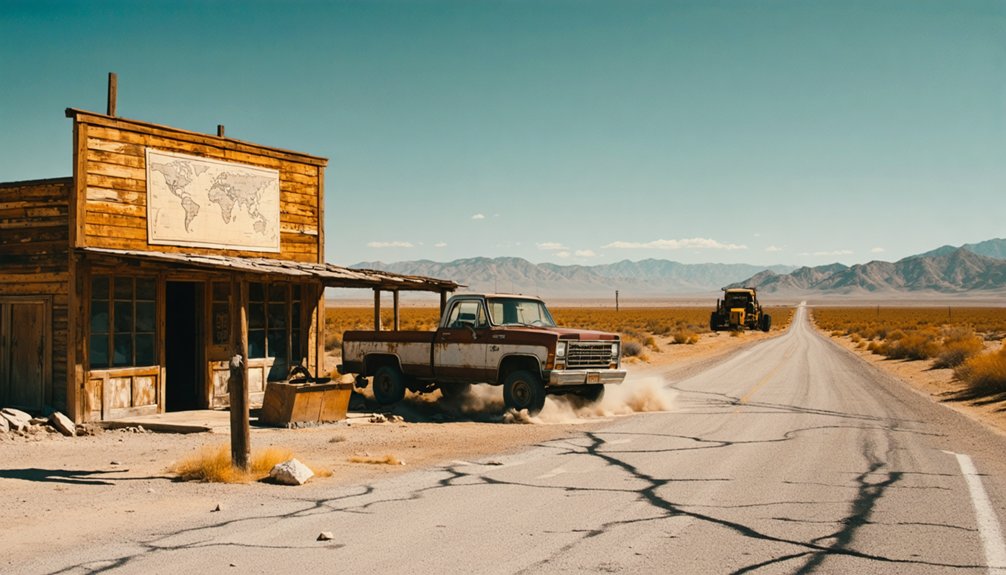
Twining’s near-total erasure makes it a quick stop, which means you’ve got time to fold other ghost towns into the same road trip across northern New Mexico’s mineral-rich past.
Twining vanishes fast — use the time you save to chase the region’s other forgotten boomtowns.
Elizabethtown, northeast of Taos near Eagle Nest, once thundered with placer and hard-rock activity, and its cemetery and scattered foundations still reward curious visitors. You’ll find historical mining techniques on full display through surviving stamp mill remnants and shaft evidence.
Cerro also sits within striking distance, offering solitude and local wildlife encounters, including mule deer and hawks drifting across open ridgelines.
These towns share Twining’s copper, gold, and silver heritage yet retain far more physical texture. Linking them into a single loop lets you build a richer, more complete picture of the region’s boom-and-bust story.
Frequently Asked Questions
Was Twining Originally Known by a Different Name Before Being Renamed?
Yes, you’ll find Twining’s local history fascinating — it was originally called Amizette! This name change history dates to 1893, when Albert C. Twining financed the copper, gold, and silver mining district, inspiring the town’s lasting rename.
What Metals Were Mined in the Twining Mining District?
You’d find endless riches buried beneath Twining’s earth — copper, gold, and silver! The mining history here involved remarkable metallurgical processes, extracting these three metals from lodes that once made this district a thrilling frontier of bold, free ambition.
Who Financed the Original Copper Mining Operations at Twining?
You’ll find that Albert C. Twining, a New Jersey banker, financed the original copper mining operations. He’s woven into local ghost town legends, funding historical mining techniques until his embezzlement conviction tragically unraveled everything he’d built there.
Are the Twining Mining Disasters Connected to the Dawson, New Mexico Explosions?
You won’t find connections between Twining’s hauntings legends and Dawson’s explosions. Unlike Dawson’s coal dust disasters, Twining’s abandoned structures hold copper, gold, and silver mysteries—two completely separate, chilling chapters in New Mexico’s dark mining history.
How Many Miners Died in the 1913 Dawson Mining Disaster?
You’ll find that the 1913 Dawson mining disaster claimed 263 miners’ lives in the Stag Cañon Mine No. 2—a haunting chapter in historical mining accidents that reshaped mining safety standards you can’t afford to overlook.
References
- https://en.wikipedia.org/wiki/Twining
- https://www.ghosttowns.com/states/nm/twining.html
- https://www.santafenewmexican.com/news/local_news/n-m-ghost-towns-twin-mining-disasters-still-echo-a-century-later/article_67f5fff6-a26a-11ed-84d1-27e47ae3af47.html
- https://www.kmitch.com/Taos/towns.htm