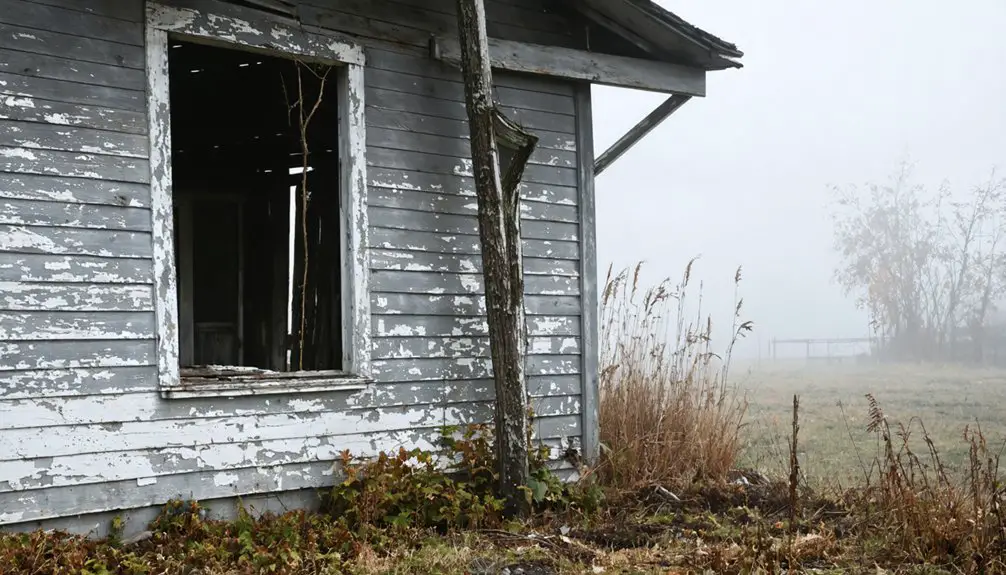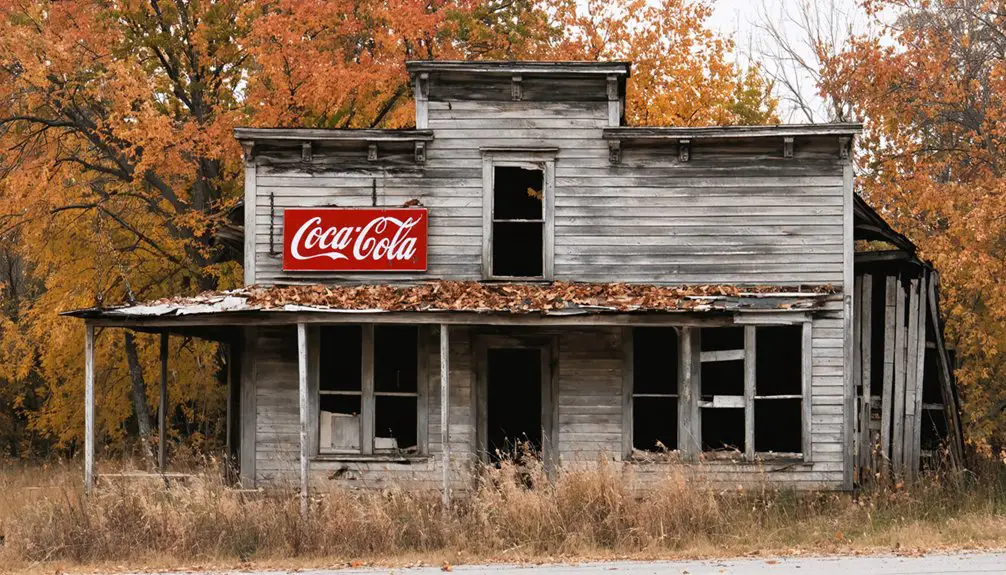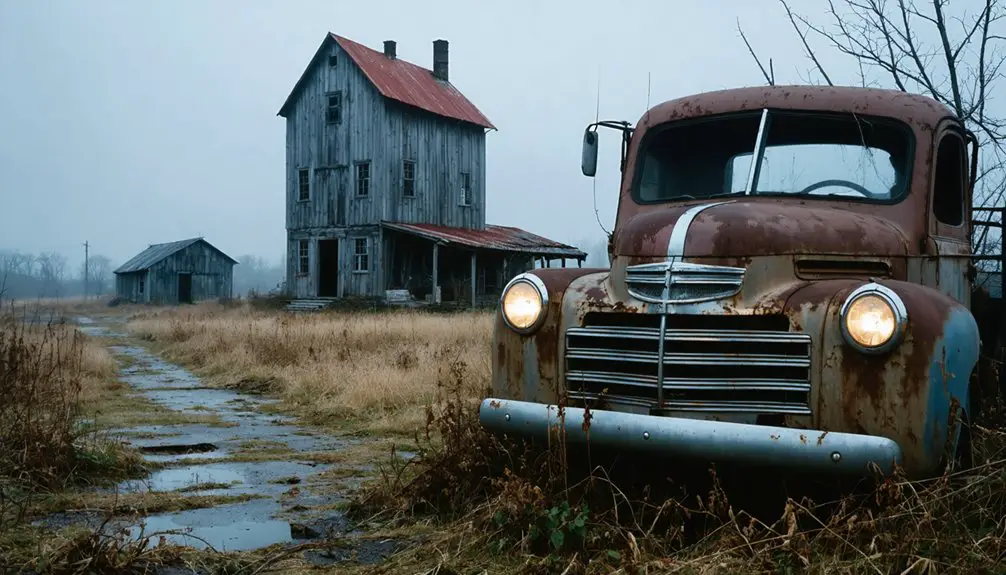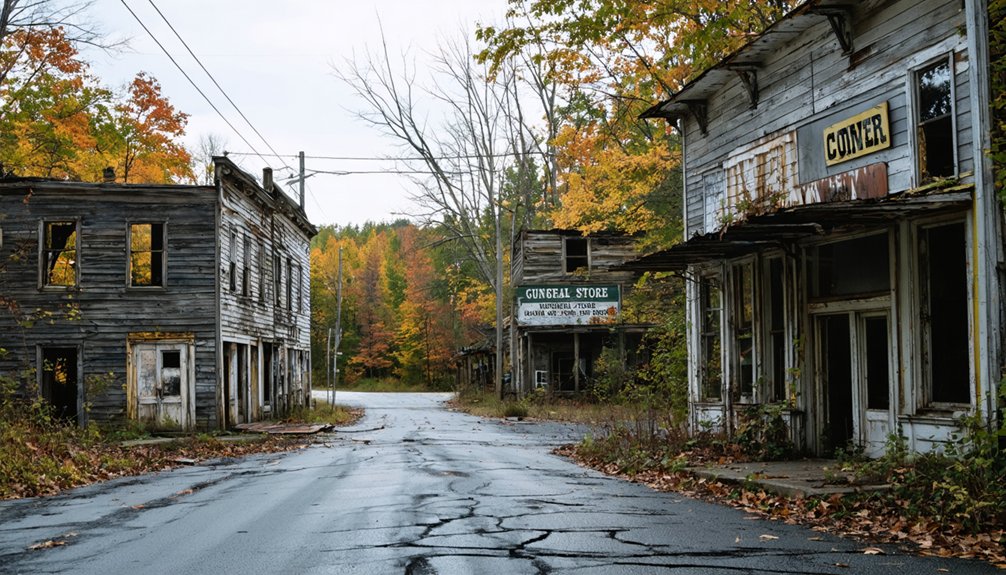
Planning a ghost town road trip to Berringer Corners means embracing raw, unfiltered history in Missaukee County, Michigan. You won’t find welcome signs or visitor centers here — just a quiet rural intersection slowly reclaimed by forest. This lumber-era community vanished when Michigan’s logging boom went bust, leaving behind little more than whispers of the past. Grab offline maps, pack your curiosity, and treat every unmarked backroad as a potential discovery. There’s far more to uncover than you’d expect.
Key Takeaways
- Berringer Corners is a ghost town in Missaukee County, Michigan, with no signage, visitor centers, or preserved structures at the site.
- Bring offline maps, as navigation apps may not recognize the location, which is likely a rural intersection reclaimed by forest.
- Michigan’s lumber boom created and abandoned many communities like Berringer Corners once forests were depleted in the late 1800s.
- Missaukee County hosts several nearby ghost towns, making it ideal for building a multi-stop exploration route in one trip.
- Engage locals at diners and fuel stops for regional legends, and treat unmarked intersections as potential discoveries along the route.
What Is Berringer Corners and Why Visit?
Tucked away in Missaukee County, Berringer Corners is a Michigan ghost town that exists today more in historical records than on the ground — and that’s exactly what makes it worth visiting. You won’t find visitor facilities, interpretive signs, or curated walking trails here.
What you’ll find instead is raw, unfiltered history tied to Michigan’s lumber-era boom-and-bust cycle — a settlement that rose, served its purpose, and quietly disappeared.
That absence is the appeal. Historical preservation at Berringer Corners isn’t happening inside a museum; it’s happening through the act of seeking the place out yourself.
If you crave destinations that reward curiosity over convenience, this forgotten Missaukee County site belongs on your road trip map. It’s history on your own terms.
Michigan’s Lumber Boom and the Rise of Missaukee County Ghost Towns
Before the forests vanished, Michigan’s Lower Peninsula was one of the most aggressively logged regions in North America. During the mid-to-late 1800s, historical logging operations swept through counties like Missaukee, fueling rapid settlement and economic activity.
Before the forests fell, Michigan’s Lower Peninsula was stripped bare — one of North America’s most aggressively logged regions.
Mill towns, supply depots, and crossroad communities appeared almost overnight, drawing workers and entrepreneurs chasing timber wealth.
When the trees ran out, the people left. Railroad routes shifted, mills closed, and abandoned settlements multiplied across the landscape. Missaukee County became home to several of these forgotten places, including Berringer Corners, which faded from active community to little more than a name on historical records.
Understanding this boom-and-bust cycle gives your road trip real meaning. You’re not just driving through rural Michigan — you’re tracing the collapse of an entire economic era.
No Signage, No Museum: What You’ll Actually Find at Berringer Corners
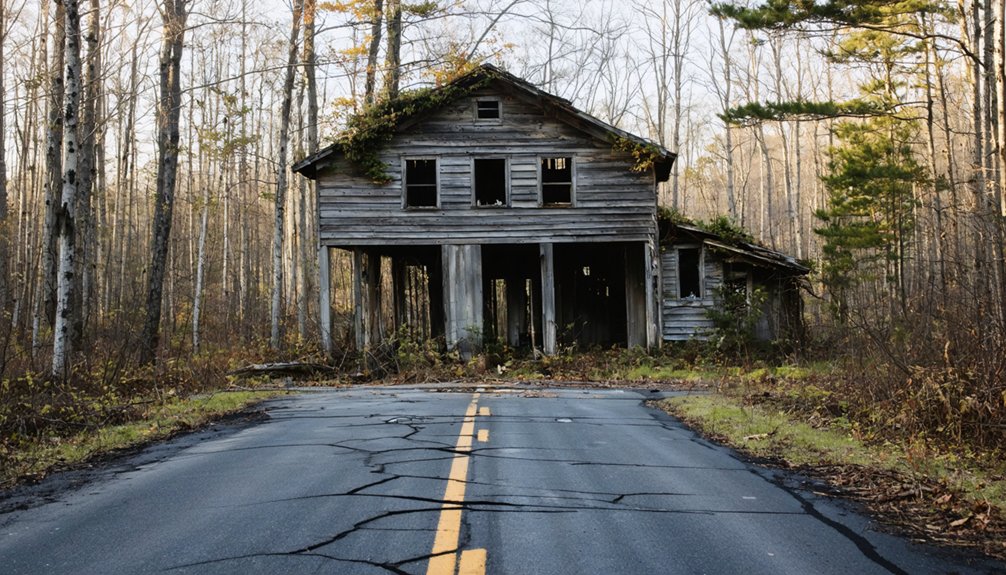
Knowing the history is one thing — standing at the actual site is another. Berringer Corners won’t greet you with interpretive panels, a visitor center, or roped-off historical artifacts. You’re stepping into unstructured territory — likely a quiet rural intersection where forest has reclaimed what logging-era settlers once built.
Don’t expect preservation efforts to have produced maintained structures or marked foundations. What you’ll find instead is atmosphere: the silence of a place that once buzzed with industry and now exists mainly in county records and ghost-town lists.
Bring offline maps, because standard navigation apps won’t acknowledge it meaningfully. Pack curiosity over expectations. The reward here isn’t a curated experience — it’s the raw, freeing satisfaction of locating a place most people have completely forgotten.
Nearby Michigan Ghost Towns Worth the Detour
Berringer Corners doesn’t have to be your only stop — Missaukee County and the surrounding northern Michigan region hold plenty of other forgotten settlements worth weaving into your route. Northern Michigan’s lumber-era collapse left dozens of communities scattered across county maps, each carrying its own community legends about booms that burned bright and vanished fast.
You can push toward the Keweenaw Peninsula for mining-era ruins where historical preservation efforts have documented what little remains, or swing west toward the Sleeping Bear region where ghost towns hide beneath second-growth forest. County road maps become your best tool here — cross-reference statewide ghost-town lists, cluster stops geographically, and stay flexible.
The reward isn’t a polished museum trail; it’s the raw satisfaction of tracing a forgotten Michigan on your own terms.
How to Build Your Missaukee County Ghost Town Route
Pulling those county road maps out of the glovebox is where your Missaukee County route actually takes shape. Start with Berringer Corners as your anchor point, then scan statewide ghost-town lists to cluster nearby stops efficiently. You’re not chasing museums here — you’re tracing historic preservation through scattered foundations, overgrown lots, and faded place names that locals still whisper about.
Those local legends often point you toward spots that never make official lists, so talk to people at diners and fuel stops. Build your route loosely, because road conditions near former lumber settlements can change fast. Prioritize offline maps, give yourself flexible timing, and treat every unmarked intersection as a potential discovery. The route rewards curiosity far more than it rewards rigid scheduling.
Frequently Asked Questions
Is a Permit Required to Visit Ghost Town Sites in Michigan?
Most ghost town sites don’t require permits, but you’ll want to verify land ownership first. If it’s private property, always get permission. Respecting historical preservation guarantees these forgotten places remain accessible for future freedom-seeking explorers like you.
What Is the Best Time of Year to Visit Berringer Corners?
Like sap rising in spring, late spring through early fall is your sweet spot for visiting Berringer Corners. You’ll navigate historical preservation sites more easily, enjoy Michigan’s tourist attractions nearby, and uncover traces of this lumber-era ghost town comfortably.
Are There Campgrounds or Lodging Options Near Missaukee County Ghost Towns?
You’ll find several camping options and lodging accommodations near Missaukee County, giving you the freedom to explore ghost towns your way. Choose rustic campsites or cozy local inns to base your adventure comfortably.
Can Children Safely Explore Michigan Ghost Town Locations Like Berringer Corners?
Yes, children can explore Michigan ghost towns like Berringer Corners, but you’ll want to supervise them closely. Embrace the haunted legends, respect historical preservation, and watch for uneven terrain, hidden foundations, and overgrown paths throughout your adventure.
Are Ghost Town Coordinates Available Through Michigan Historical Society Resources?
Like ancient cartographers charting unknown worlds, you’ll find the Michigan Historical Society offers limited coordinates for historical landmarks like Berringer Corners, but their preservation efforts can guide your search through county records and statewide ghost-town documentation.
References
- https://www.facebook.com/groups/1282668961809379/posts/4124934584249455/
- https://en.wikipedia.org/wiki/List_of_ghost_towns_in_Michigan
- https://www.visitkeweenaw.com/blog/post/our-top-7-keweenaw-ghost-towns-to-explore/
- https://www.nps.gov/slbe/learn/historyculture/ghosttowns.htm
- https://kids.kiddle.co/List_of_ghost_towns_in_Michigan
- https://vi.wikipedia.org/wiki/Danh_sách_phố_ma_tại_Michigan
- https://www.ghosttowns.com/states/mi/mi.html