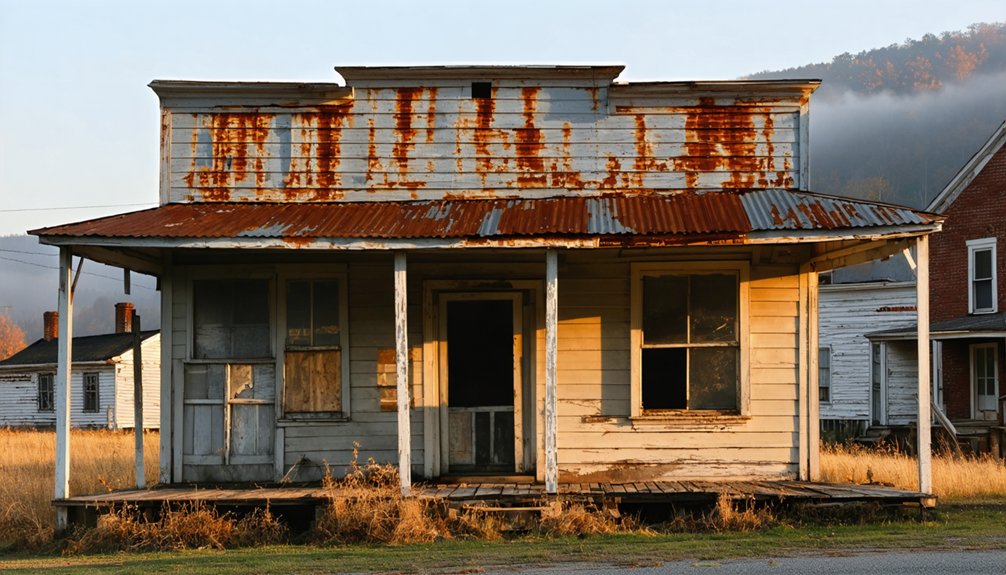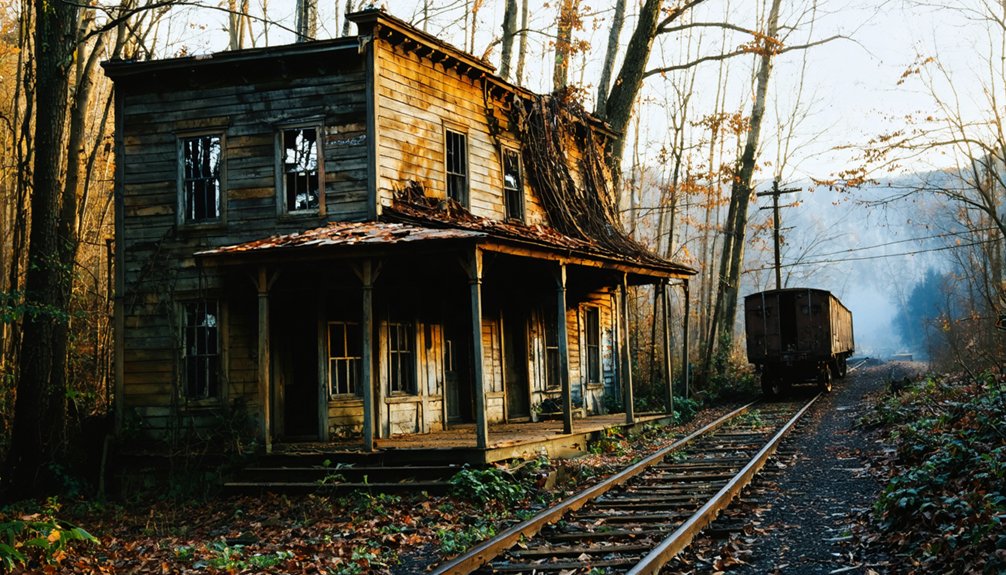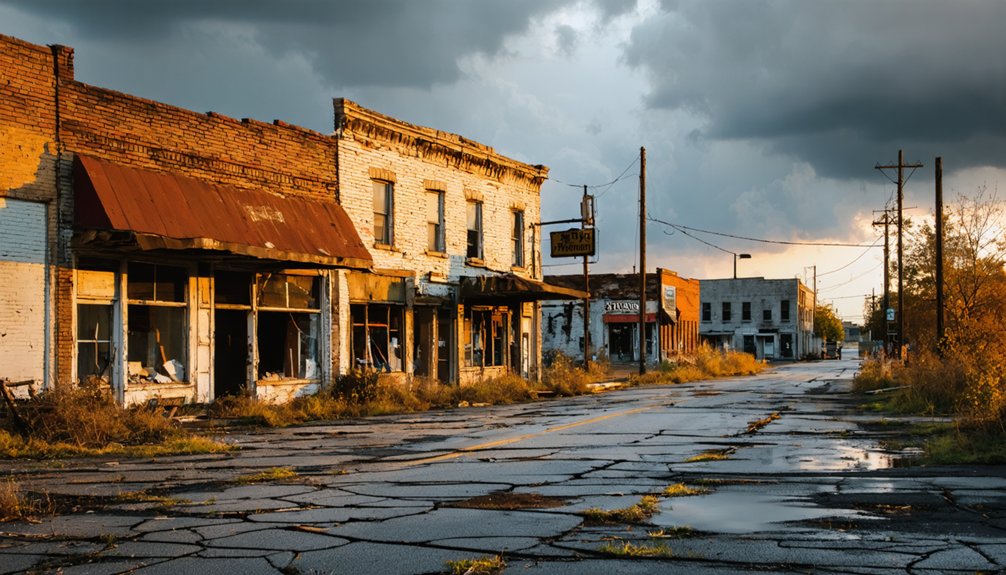
When you visit Birmingham Point in Marshall County, Kentucky, you’re stepping over a town that an entire lake swallowed whole. Founded in the mid-1800s, Birmingham once housed nearly 900 residents before racial violence, economic decline, and the TVA’s Kentucky Dam project erased it by 1944. During low-water periods, ghostly foundations and street outlines still surface beneath Kentucky Lake. Check TVA water levels before you go, and keep exploring — there’s far more to this story than the shoreline reveals.
Key Takeaways
- Birmingham, Kentucky, a once-thriving river town of nearly 900 residents, was deliberately submerged beneath Kentucky Lake by 1944 due to TVA dam construction.
- Ruins including concrete foundations and street outlines occasionally surface near Birmingham Point during late winter to early spring low-water periods.
- Access Birmingham Point via U.S. Highway 641 in Marshall County, Kentucky, using GPS coordinates due to minimal signage in the rural area.
- Check TVA lake level data before visiting, as water fluctuations make ruins visible only seasonally and unpredictably throughout the year.
- Bring water shoes for shoreline exploration and combine the trip with broader Marshall County ghost town history for a richer experience.
What Was Birmingham, Kentucky Before the Lake?
Before Kentucky Lake swallowed it whole, Birmingham, Kentucky was a thriving river town with real ambition. Founded in the mid-1800s and named after Birmingham, England, the town dreamed of an iron-powered industrial future. Its Tennessee River location fueled commerce, timber work, and regional trade.
At its peak, you’d have found nearly 900 residents living among five churches, two schools, two hotels, and multiple stores. The historical architecture reflected a community built to last. Birmingham shipped poultry, hickory nuts, and mussels to outside markets, fielded a local baseball team, and earned a reputation as one of Marshall County’s most essential towns.
Local legends still carry the weight of what was lost here, including stories of community pride, racial violence in 1908, and a way of life erased by rising water.
Why Did Birmingham’s Community Collapse Before the Flooding?
Though Birmingham’s drowning beneath Kentucky Lake tends to dominate its story, the town had already begun unraveling decades before the Tennessee Valley Authority announced a single dam. Urban decline crept in through violence and economic factors that stripped the community of its people and purpose long before the waters rose.
On March 8, 1908, night riders raided Birmingham’s African American neighborhoods, triggering a mass exodus that permanently reshaped the town’s population and social fabric. That racial violence didn’t just harm residents — it gutted a working community.
Meanwhile, shifting timber markets and declining river commerce weakened the economic foundation Birmingham had depended on since the 1840s.
How Did the TVA Erase an Entire Kentucky Town?
When the TVA announced the Kentucky Dam project in 1938, Birmingham’s fate was sealed. You can imagine the shock residents felt as they learned they’d have to abandon homes, businesses, and generations of community roots.
TVA’s Kentucky Dam Announcement
In 1938, the Tennessee Valley Authority dropped news that would effectively sign Birmingham’s death warrant: Kentucky Dam was coming, and the town was in the flood zone. Residents received relocation orders and watched urban decay set in almost immediately. Buildings came down, businesses closed, and families packed up generations of cultural heritage to start over somewhere else.
The TVA framed it as progress — flood control, electricity, economic development for the region. But for Birmingham’s residents, it meant erasing a community that had survived a Civil War, industrial booms, and racial violence. You can almost feel the weight of that loss when you stand at the lake’s edge today, knowing an entire town lies beneath the water just below your feet.
Residents Forced To Relocate
Relocating an entire town is never clean or simple, and Birmingham’s erasure was no exception. Once the TVA confirmed Kentucky Dam’s construction, residents faced an unforgiving deadline — pack up, move out, or get swallowed by the rising lake.
Families dismantled homes, churches closed their doors, and businesses shuttered permanently. Some residents relocated only to face displacement again when Lake Barkley later reshaped the region.
What the TVA didn’t account for was local folklore — the stories, memories, and generational roots that can’t be boxed and hauled away.
Historical preservation efforts have kept Birmingham’s story alive, but the physical town vanished beneath Kentucky Lake by 1944. You’re now visiting a community erased by federal infrastructure, and that weight is worth carrying with you to Birmingham Point.
Birmingham Disappears Underwater
How does an entire town disappear? The Tennessee Valley Authority announced Kentucky Dam’s construction in 1938, and Birmingham’s fate was sealed.
By 1944, the dam’s completion raised Kentucky Lake’s waters over everything residents had built across nearly a century — churches, storefronts, homes, and streets all surrendered to the rising flood.
Unlike typical urban decay, Birmingham didn’t crumble slowly. It vanished deliberately, swallowed by one of the largest man-made lakes in the eastern United States.
What you’ll find today lives somewhere between history and local legends — a submerged world occasionally resurfaces during low-water periods, exposing old foundations and ghostly street lines near Birmingham Point.
You’re not imagining things when you see those ruins. You’re actually glimpsing a real town the government erased from the map.
What Ruins Are Still Visible Beneath Kentucky Lake?
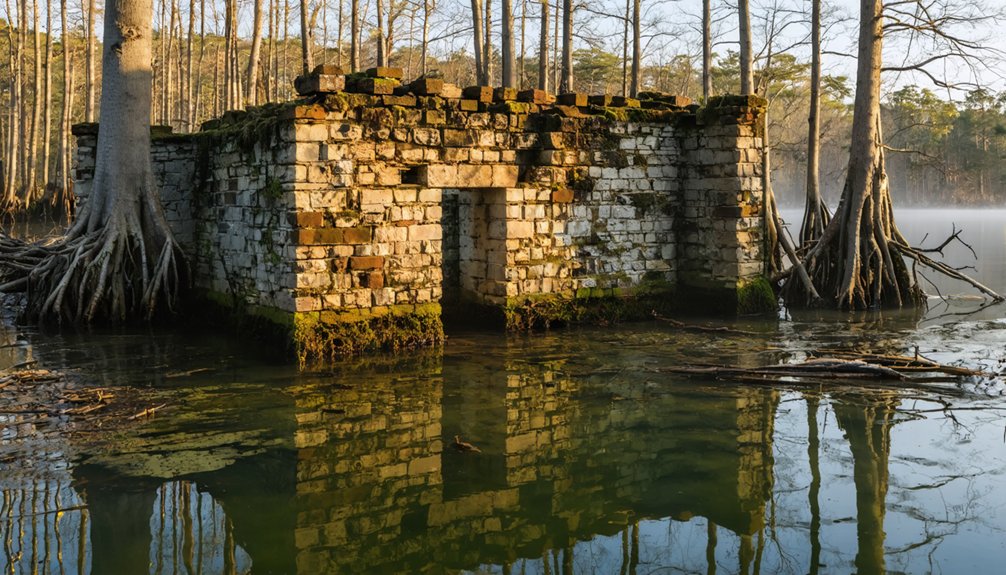
When Kentucky Lake’s water levels drop, you’ll get a rare glimpse into Birmingham’s submerged past. Head to Birmingham Point, where low-water conditions occasionally expose old foundations, streets, and structural remnants that once defined this thriving river community.
These historical artifacts connect you directly to a town that vanished in 1944.
Underwater visibility varies by season and lake levels, so timing matters. Conditions aren’t guaranteed, meaning you’re chasing something genuinely unpredictable — which makes the experience feel like real exploration.
When the lake cooperates, you’ll see concrete foundations and ghostly outlines of streets emerging from the waterline.
Don’t expect a polished exhibit. Birmingham rewards patient, curious travelers willing to read the landscape carefully and imagine the 900-person community that once stood right where you’re standing.
When Do Birmingham’s Foundations Actually Resurface?
Timing your visit around lake levels is the difference between seeing Birmingham and just seeing water. Kentucky Lake’s levels fluctuate seasonally, and late winter through early spring typically brings the lowest readings. That’s your window.
Lake levels determine everything. Visit late winter through early spring for your best chance at seeing Birmingham.
When the water drops enough, foundations from Birmingham’s historical architecture break the surface near Birmingham Point, giving you a rare look at streets that once supported river commerce, trade, and everyday life.
Summer levels generally swallow everything again. Check the Tennessee Valley Authority‘s lake level data before you go — they publish current and projected readings online.
You’re not guaranteed a dramatic reveal, but planning around low-water periods dramatically improves your odds.
Come prepared to explore on your own terms, because no tour guides or guardrails exist out here.
How Do You Get to Birmingham Point?
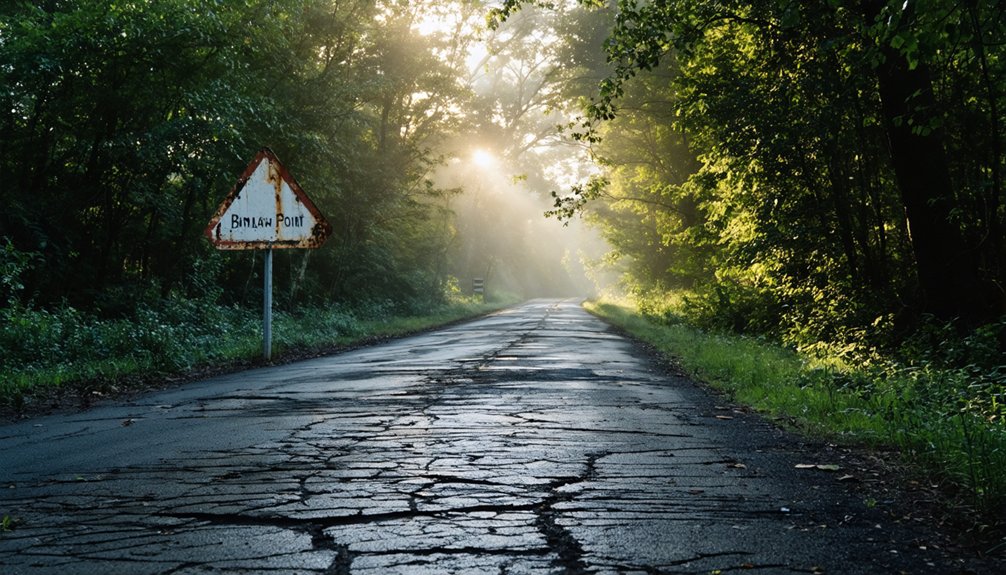
Birmingham Point sits in Marshall County, Kentucky, and you’ll reach it by heading toward the Kentucky Lake shoreline off U.S. Highway 641. Once you’re near the water’s edge, you’re standing above historic architecture that time and the TVA buried decades ago.
Local legends swirl around these shores, and the drive itself cuts through quiet countryside worth exploring.
Pack smart before you head out:
- Check lake levels through the TVA’s website before committing to the trip
- Use GPS coordinates for Birmingham Point, since rural signage is minimal
- Bring water shoes if you plan to walk exposed shoreline during low-water periods
- Combine the stop with Marshall County’s broader lake history for a fuller road-trip experience
What Other Lost Communities Are Worth Seeing on a Kentucky Lake Road Trip?
Once you’ve mapped out Birmingham Point, it’s worth knowing that Kentucky Lake swallowed more than one community when the TVA flooded the Tennessee River valley in the 1940s. Several small towns and settlements vanished beneath the same rising water, making the entire lake corridor a corridor of underwater archaeology waiting for low-water seasons to reveal its secrets.
Communities like Johnsonville and other rural settlements lost homes, churches, and cemeteries to the flood zone. Historical preservation efforts vary by site, so you’ll want to research current conditions before you go.
Some locations have roadside markers or cemetery relocations that give you tangible ground to stand on. Pairing these stops with Birmingham makes your road trip feel less like sightseeing and more like genuine historical recovery work.
Frequently Asked Questions
Was Birmingham, Kentucky Ever Officially Recognized as a Historic Landmark?
You won’t find Birmingham, Kentucky officially recognized as a historic landmark, but its submerged streets embody urban decay and ghost town preservation, inviting you to explore its haunting, watery depths during low-water conditions at Birmingham Point.
Are There Guided Tours Available for Exploring Birmingham Point?
No formal guided tours exist for exploring Birmingham, but you’ll love venturing out independently! You can roam Birmingham Point freely, uncovering submerged secrets when water levels drop, connecting directly with history on your own adventurous terms.
Is It Legal to Remove Artifacts Found at the Birmingham Site?
You shouldn’t remove artifacts from Birmingham’s submerged site. Legal considerations make artifact removal potentially illegal under federal and state preservation laws. Respect the history — you’ll keep the ghost town’s mystery alive for every future explorer who visits.
What Is the Best Time of Year to Visit Birmingham Point?
Like a secret whispered by the lake, fall offers you the best visit—low water reveals Birmingham’s ghostly ruins, seasonal weather stays mild, and visitor crowds thin out, giving you pure, unfiltered freedom to explore.
Are There Local Museums in Marshall County Dedicated to Birmingham’s History?
You won’t find a museum solely dedicated to Birmingham, but you’ll discover local archives and community events in Marshall County that actively preserve and celebrate the submerged town’s fascinating, complex history.
References
- https://en.wikipedia.org/wiki/Birmingham
- https://www.fourriversexplorer.com/birmingham-kentucky/
- https://thebutcheredwriters.com/birmingham-kentucky-the-town-under-water/
- https://www.onlyinyourstate.com/trip-ideas/kentucky/underwater-ghost-town-ky
- https://www.youtube.com/watch?v=gELufUoh_CQ
- https://decorhint.com/lost-kentucky-town-still-holds-the-memories-of-long-forgotten-days/
- https://www.al.com/bhammag/2019/10/8-spooky-stories-about-birminghams-haunted-past.html
- https://www.marshallcountydaily.com/2016/08/08/a-walk-through-history-by-justin-lamb-sponsored-by-four-pigs-restaurant-6/