Bitter Creek, Texas doesn’t exist on any modern map, but it’s real enough in history. Settled in the early 1880s by ranching families in northeastern Nolan County, it briefly roared back to life after an oil strike in 1923 before fading to near-nothing by the 1950s. Today, nature has swallowed every trace. You’ll want to base yourself in Sweetwater and bring your curiosity — because there’s far more to this vanished town than silence alone.
Key Takeaways
- Bitter Creek, Texas, is an abandoned ghost town in northeastern Nolan County with no preserved structures, markers, or visible ruins remaining.
- Base your trip in Sweetwater, Texas, which offers lodging, dining, and access to county deed and survey records for research.
- The town was founded in the early 1880s as a ranching community and experienced a brief oil boom following a 1923 discovery.
- Navigate southward from Sweetwater using county maps, and consult local residents for geographical clues or legends about the site.
- Document landscape features like abandoned fences, creek beds, and soil stains, as nature has fully reclaimed the land.
What Was Bitter Creek, Texas?
Although most people have never heard of Bitter Creek, Texas, the town once represented everything the frontier West promised — open land, hard work, and the hope of something lasting. Settled in the early 1880s by the Bardwell and Montgomery families, it grew as a ranching community in northeastern Nolan County, drawing its name from a nearby stream with mineral-rich, unpalatable water.
Its historical significance lies in how completely it mirrors the arc of Texas frontier life — from hopeful settlement to oil boom in 1923, then slow abandonment by the 1950s. Sadly, no preservation efforts ever took hold here. The land has returned to natural terrain, the exact location now unknown.
What remains is a story worth chasing, even if the town itself has vanished.
Where Is Bitter Creek Located Today?
Knowing the story of Bitter Creek is one thing — finding it’s another challenge entirely. The exact location is lost to time, but you can still orient yourself using these research anchors:
Knowing the story of Bitter Creek is one thing — finding it is another challenge entirely.
- Nolan County, Texas — your starting jurisdiction for any records search
- Sweetwater, Texas — the nearest modern town, sitting north of the general area
- Northeastern Nolan County — the broadly accepted region where the settlement stood
- County deed and survey records — your best tools for tracing historical artifacts tied to early land ownership
No preservation efforts have maintained any visible structures, and the land has returned to open range. You won’t find markers or ruins waiting for you.
What you’ll find instead is open sky, quiet terrain, and the freedom of chasing a town that history swallowed whole.
How Bitter Creek Went From Ranch Town to Ghost Town
What started as a ranching foothold in the early 1880s didn’t stay simple for long. The Bardwell and Montgomery families built something real here — a working community shaped by open land and mineral-bitter water that gave the town its name.
Then 1923 changed everything. Oil discovery brought outside workers, fast money, and a brief boom that reframed Bitter Creek’s identity overnight. You can feel the cultural significance in that shift — a quiet ranch settlement suddenly caught in Texas’s wildcatting frenzy.
But boom cycles don’t hold. Without economic diversity or strong historical preservation efforts, the town had no anchor. By the 1950s, only five people remained.
The frontier community that once represented true independence had quietly slipped into silence, leaving only a name and a mystery behind.
There’s Nothing Left to See: Here’s Why It’s Still Worth the Drive
There’s no marker waiting for you, no crumbling storefront to photograph, no maintained trail leading anywhere meaningful — and that’s exactly what makes Bitter Creek worth finding.
There’s no marker, no trail, no crumbling proof — and that absence is exactly what makes it worth finding.
Preservation challenges and historical myths often distort ghost town stories. Here, the silence is honest.
You’re pursuing something real:
- A settlement founded in the 1880s by ranching families who carved life from unforgiving terrain
- An oil boom in 1923 that briefly rewrote the town’s identity
- A population of five by the 1950s — the quiet math of abandonment
- An exact location nobody knows — the land reclaimed, the boundaries erased
Sweetwater anchors your route. Beyond that, you’re charting history without guardrails. That freedom — unscripted, unmarked — is the whole point of coming here.
How to Use Sweetwater as Your Base for the Bitter Creek Trip
Sweetwater sits just north of where Bitter Creek once stood, making it your most logical launching point for this stretch of Nolan County history. You’ll find lodging and dining there that the ghost town itself could never offer, even in its busiest oil-boom days.
Before you leave, pull up a county map and trace your route south, since Bitter Creek’s exact location is lost to time and the land won’t announce itself when you arrive.
Sweetwater’s Central Location Advantage
Because Bitter Creek’s exact location has been lost to time, you’ll want a reliable anchor point for your trip—and Sweetwater, sitting just north of where the community once stood in northeastern Nolan County, fits that role naturally.
Sweetwater gives you real logistical freedom while you chase historical myths surrounding this vanished ranching settlement. Preservation challenges mean there’s no marked trail leading you there, so working outward from Sweetwater makes practical sense.
Use Sweetwater as your base for these four reasons:
- Fuel, food, and lodging are readily available
- Local libraries hold regional historical records
- County roads fan southward toward the search area
- Residents sometimes carry generational knowledge of lost settlements
You’re not chasing a museum—you’re chasing a ghost. Sweetwater keeps you grounded while the search stays open.
Nearby Lodging And Dining
Between meals, stop into the Pioneer City-County Museum, where historical artifacts from Nolan County’s frontier era help frame what you’re actually chasing in those empty fields.
Sweetwater isn’t glamorous, but it’s functional, honest, and deeply rooted in West Texas character — exactly the kind of base camp that matches the freedom-driven spirit of ghost town exploration.
Mapping Your Departure Route
Since Bitter Creek’s exact location has been lost to time, you’re not steering toward a destination so much as orienting yourself toward a general pocket of northeastern Nolan County — and Sweetwater makes that disorientation manageable.
Use Sweetwater as your operational hub by following these four steps:
- Pull historical preservation records from the Nolan County courthouse before leaving town.
- Head south from Sweetwater along rural county roads toward northeastern Nolan County’s open rangeland.
- Talk to locals — local legends sometimes hold geographical clues that no map preserves.
- Document everything you observe — abandoned fence lines, dry creek beds, mineral-stained soil.
You’re chasing a town that vanished quietly. The freedom in that search is exactly the point.
Ghost Towns Near Sweetwater Worth Combining Into One Trip
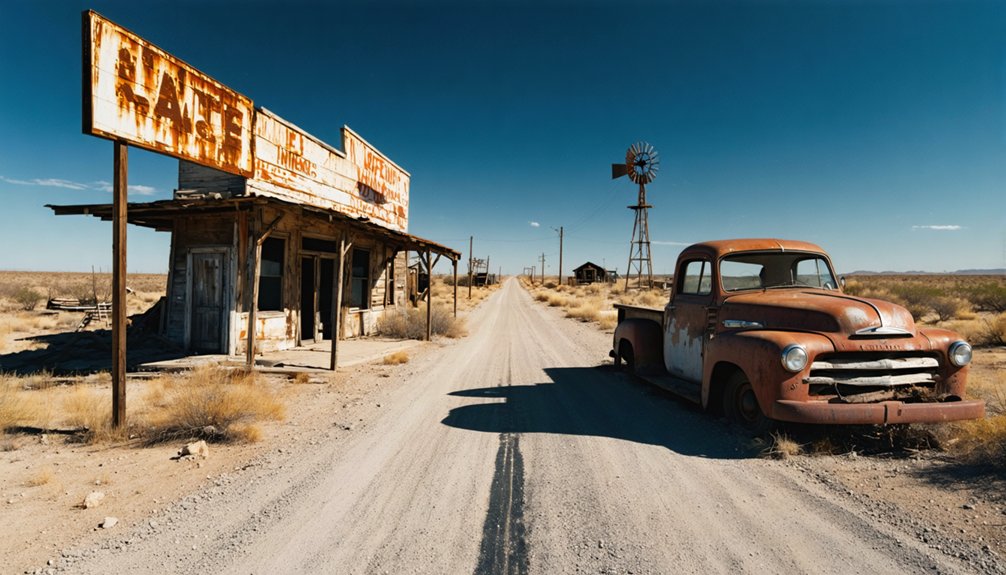
While Bitter Creek’s exact location remains a mystery, the surrounding Nolan County region rewards ghost town enthusiasts who don’t mind doing a little digging. Sweetwater serves as your natural anchor point, and from there, you can branch outward into communities that share Bitter Creek’s historical context — frontier settlement, oil booms, and quiet collapse.
West Texas ghost towns rarely survive with much infrastructure, but the stories embedded in the land make the drive worthwhile. You’re not looking for museums or preservation efforts here — you’re reading the landscape itself.
Combine your Bitter Creek search with nearby rural stops, talk to locals in Sweetwater, and check county historical records before you leave. The region reveals itself slowly, but it doesn’t disappoint those willing to look.
Frequently Asked Questions
Who Were the Original Families That First Settled Bitter Creek, Texas?
The Bardwell and Montgomery families first shaped Bitter Creek’s settlement origins in the early 1880s. When you’re tracing ghost town history, you’ll find their pioneering ranching roots planted the seeds of this now-vanished Texas frontier community.
What Made the Water at Bitter Creek Unpalatable for Early Settlers?
Mineral deposits made the water contamination unbearable for early settlers—yet they stayed. You’d have tasted that bitter, unpalatable stream and still carved out a life, trading comfort for freedom on Texas’s untamed frontier.
How Many People Still Lived in Bitter Creek During the 1950S?
By the 1950s, you’d find only five residents still clinging to Bitter Creek. That haunting figure drives ghost town tourism and reminds you why historic preservation matters — some communities fade before anyone thinks to save them.
Is the Land Where Bitter Creek Once Stood Privately Owned Today?
Yes, you’re likely looking at private land ownership today. The soil beneath Bitter Creek’s forgotten story is probably working ranch or farm ground — ghost town preservation here means chasing history through records, not roaming freely.
When Exactly Was Oil First Discovered in Bitter Creek, Texas?
Like a spark igniting dry grass, oil first struck Bitter Creek in 1923, forever changing its quiet ranching roots. You’ll find this turning point central to the ghost town attractions and historic landmarks defining this lost community’s story.
References
- https://en.wikipedia.org/wiki/Bitter_Creek
- https://de.frwiki.wiki/wiki/Bitter_Creek_(Texas)