Planning a ghost town road trip to Bloomington, South Dakota means tracking down a frontier settlement that outlaws violently destroyed by 1877. You’ll find the barren site five miles north of Vermillion along a small creek, with no signs, no structures, and no visitor center waiting for you. Bring a reliable GPS and a solid regional map before you head out. Stick around to uncover everything you need to know before you go.
Key Takeaways
- Bloomington sits five miles north of Vermillion, making Vermillion the ideal base for planning your ghost town road trip route.
- The site is barren with no signage or structures, so bring GPS or detailed regional maps for accurate navigation.
- Research Bloomington’s violent 1877 destruction by outlaws beforehand to enrich your experience at this unmarked, unpreserved site.
- Incorporate nearby historical stops along a southeastern South Dakota route to build a fuller, connected frontier narrative.
- Extend your trip westward to explore South Dakota’s broader ghost town landscape, including over 600 abandoned Black Hills settlements.
What Was Bloomington, South Dakota?
Before it vanished from the map, Bloomington was a small frontier settlement in Brown County, South Dakota, tucked along a creek just five miles north of Vermillion. Its historical significance lies not in slow economic decline but in something far more abrupt — outlaws destroyed the town, cutting its story short by 1877.
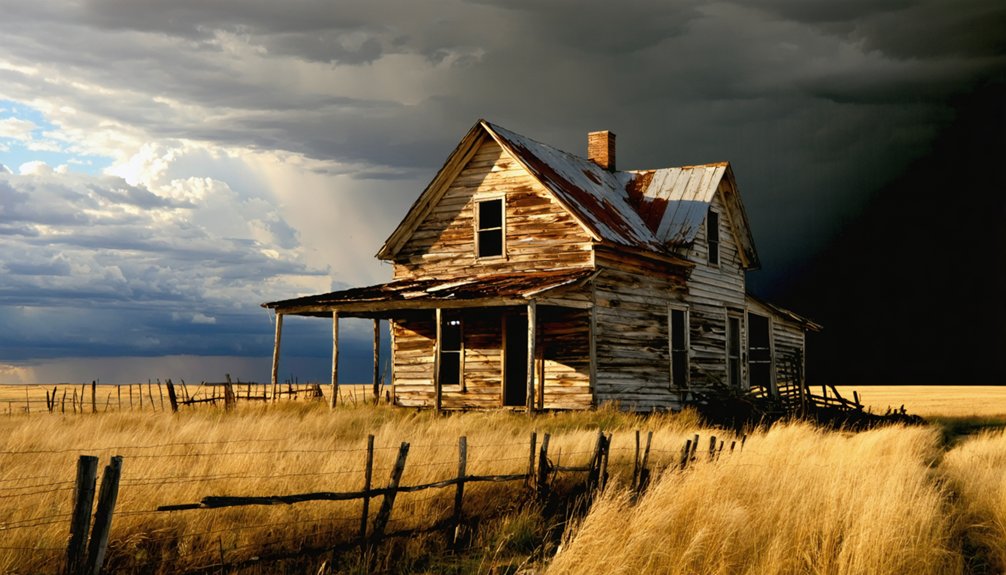
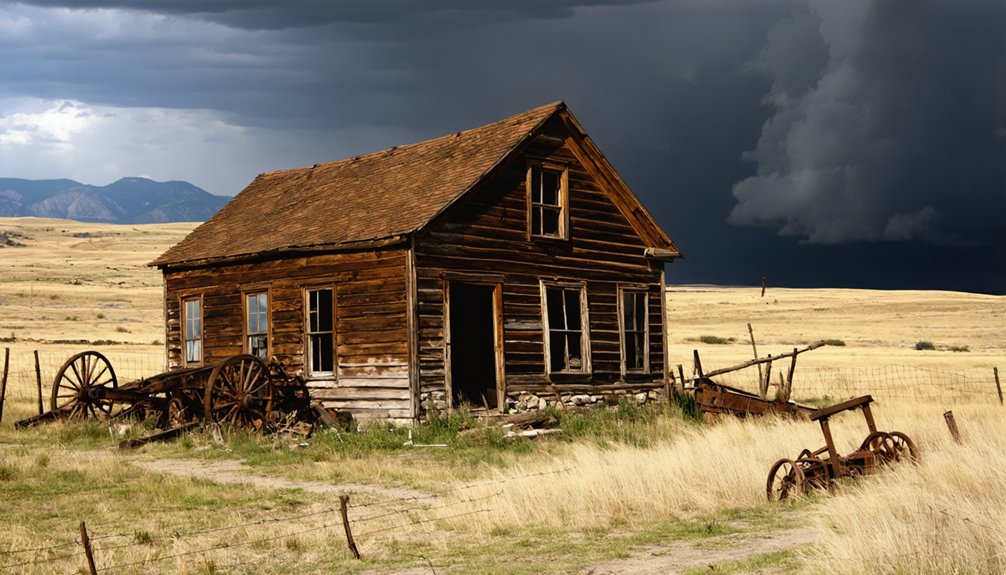
You won’t find a preserved historic district or a marked trail here. Its preservation status is simply listed as barren, meaning the landscape has reclaimed whatever once stood there. No museum interprets its past, and no visitor center greets curious travelers.
What remains is the story itself — a brief, violent chapter in frontier history. If you’re drawn to raw, unpolished history rather than curated attractions, Bloomington’s backstory alone makes it worth tracking down.
Where Is the Bloomington Ghost Town Site?
Tucked five miles north of Vermillion along a small creek, the Bloomington site sits in southeastern South Dakota — far from the Black Hills ghost towns that dominate most road trip itineraries. This placement makes it an off-the-beaten-path stop for travelers who prefer raw history over polished tourist corridors.
Don’t expect signage or a visitor center when you arrive. Bloomington is listed as barren, meaning the landscape has largely reclaimed what once stood there. You won’t find preserved structures or curated displays of historical artifacts.
No signage. No visitor center. Just open ground where a town once stood — and the silence that replaced it.
Instead, you’ll find open ground shaped by local legends of outlaw destruction and frontier-era collapse.
Use Vermillion as your base. From there, you’re just a short drive from standing on the ground where a town once existed — and violently ended.
Why Outlaws Destroyed Bloomington by 1877
What exactly drove outlaws to destroy Bloomington remains unclear, but the outcome isn’t — by 1877, the town was gone. Frontier violence shaped countless settlements across South Dakota, and Bloomington became one of its casualties.
Historical outlaw tactics during this era ranged from raids and intimidation to outright destruction, leaving communities with little chance to recover. Bloomington’s fate was final, earning it a “barren” classification in ghost-town records.
No rebuilding followed, no reinvention saved it. When you visit the site today, you’re standing where a community once tried to hold its ground against dangerous, lawless forces.
That tension between freedom and chaos defined the frontier. Bloomington’s story reminds you that not every settlement survived the brutal reality of life on the 1870s American frontier.
How Do You Plan a Road Trip to Bloomington, South Dakota?
Bloomington’s town site sits five miles north of Vermillion on a small creek, giving you a simple geographic anchor for your trip. You can use Vermillion as your base and build a southeastern South Dakota route that connects other historical stops along the way.
Since the site is barren with no formal visitor center, you’ll want to research the surrounding region’s history before you go so the landscape tells its story once you arrive.
Locating Bloomington’s Town Site
Finding Bloomington’s town site is straightforward once you orient yourself around Vermillion, South Dakota. Head five miles north of Vermillion, and you’ll reach the small creek area where the town once stood.
Use Vermillion as your primary anchor point, since local landmarks in and around the city help you calibrate your route before venturing into open terrain.
Keep these travel tips in mind: the site is listed as barren, meaning you won’t find standing structures or marked trails guiding your way. Bring a detailed regional map or a reliable GPS app, and confirm road conditions before you leave.
The landscape itself tells the story — a quiet creek, open ground, and the silence of a settlement destroyed by outlaws and reclaimed by time.
Building Your Southeast Route
Since Bloomington sits near Vermillion in southeastern South Dakota, you’ll want to build your road trip around a regional loop rather than treating the site as a standalone detour. Vermillion itself offers historical anecdotes tied to early frontier settlement, giving your drive meaningful context before you head five miles north toward Bloomington’s barren site.
Because preservation challenges leave little visible at Bloomington, pairing it with other southeastern South Dakota stops makes the journey worthwhile. Plan flexible driving time, bring a reliable map, and research county road conditions before heading out.
The region rewards travelers who move at their own pace, connecting scattered sites into a coherent frontier narrative. Your route becomes less about destinations with developed amenities and more about reading a landscape shaped by hard, often violent history.
What You’ll Actually Find at the Barren Bloomington Site
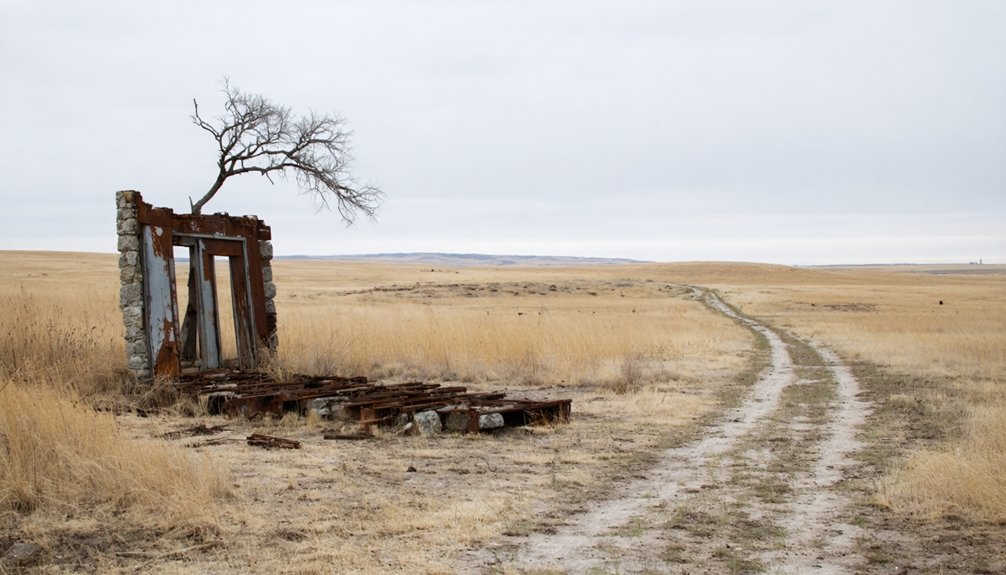
When you arrive at the Bloomington site, don’t expect much to greet you — the town is listed as barren, and that word carries real weight here. No preserved buildings, no marked trails, no visitor center waiting with brochures.
What ended here in 1877 ended violently, destroyed by outlaws in a way that left little behind for time to protect.
You won’t uncover historical artifacts scattered across a tidy museum floor. Instead, you’ll stand on open ground near a small creek, five miles north of Vermillion, letting local legends fill the silence.
That freedom to imagine — to reconstruct a vanished community from almost nothing — is exactly what draws serious ghost-town explorers to places like this. Bring your curiosity, because that’s your primary tool here.
Which South Dakota Ghost Towns Should You Add to Your Route?
Bloomington makes a compelling starting point, but South Dakota’s ghost-town landscape stretches far beyond one barren creek bed. Pair your southeastern route with stops that carry their own historical legends — towns shaped by railroad collapse, mining busts, and frontier violence.
Etta offers a contrast, having shifted into a tourism stop rather than fading into silence like Bloomington. As you plan your route, account for preservation challenges across the state; many sites lack markers, maintained structures, or visitor infrastructure.
The Black Hills region alone holds well over 600 abandoned settlements, giving you serious options if you extend your trip westward. Cross-reference compiled ghost-town lists, check road accessibility, and prioritize sites that align with your historical interests.
South Dakota rewards the curious traveler willing to explore beyond the obvious.
Frequently Asked Questions
Is Private Land Permission Required to Visit the Bloomington Ghost Town Site?
Before you saddle up and ride out, confirm private land access and secure visitor permissions first — the Bloomington site sits on unverified terrain, so you’ll want landowner approval before exploring freely.
What County Roads Provide the Closest Access to the Bloomington Site?
The available sources don’t specify which county roads provide the closest access, but you’ll want to explore routes heading five miles north of Vermillion, where historic remnants and photo opportunities await your adventurous spirit.
Are There Nearby Lodging Options When Visiting the Vermillion, South Dakota Area?
You’ll find cozy lodging in Vermillion just when you need it most. The town’s historic architecture charms wandering spirits like you, and local festivals might coincidentally align with your ghost town adventure, making your stay unforgettable.
What Time of Year Offers the Best Conditions for Visiting Bloomington?
You’ll find the best conditions for exploring Bloomington’s ghost town history in late spring or early fall. Mild temperatures let you freely roam the area, investigate abandoned buildings, and connect with the site’s rugged, outlaw-destroyed past.
Are There Any Local Historians or Archives Documenting Bloomington’s Outlaw History?
Like dust settling on forgotten trails, the ghost town legends of Bloomington remain sparse. You won’t find dedicated outlaw history records, so explore Vermillion’s local archives and South Dakota State Historical Society for your best leads.
References
- https://en.wikipedia.org/wiki/List_of_ghost_towns_in_South_Dakota
- https://www.powderhouselodge.com/black-hills-attractions/fun-attractions/ghost-towns-of-western-south-dakota/
- https://www.sdpb.org/rural-life-and-history/2023-08-21/some-black-hills-ghost-towns-and-their-origins
- https://www.sdhspress.com/journal/south-dakota-history-2-2/some-black-hills-ghost-towns-and-their-origins/vol-02-no-2-some-black-hills-ghost-towns-and-their-origins.pdf
- https://openprairie.sdstate.edu/etd/4061/
- https://kids.kiddle.co/List_of_ghost_towns_in_South_Dakota
- https://www.youtube.com/watch?v=ixU9RtyCThg
- https://www.youtube.com/watch?v=OLIeBp7ZpE8