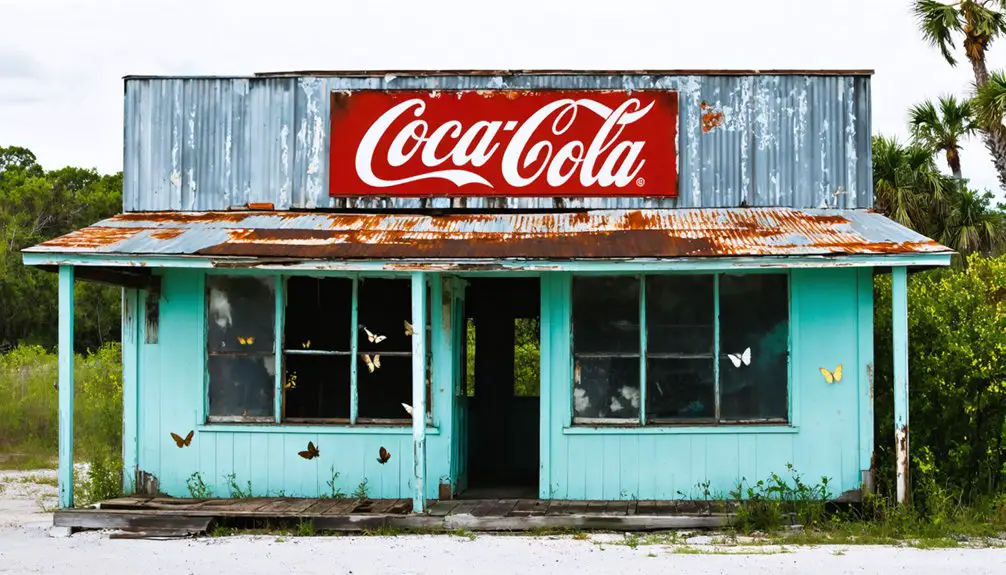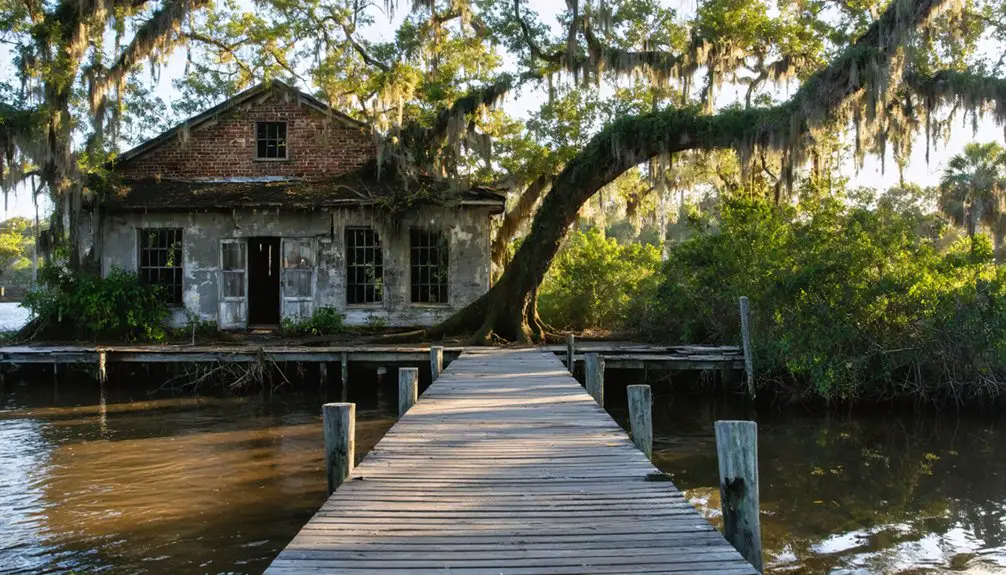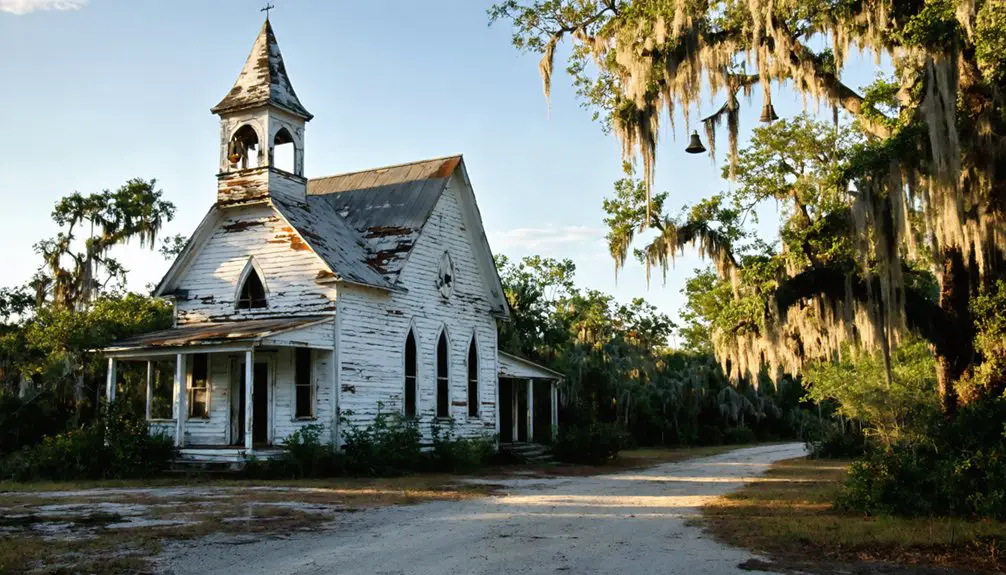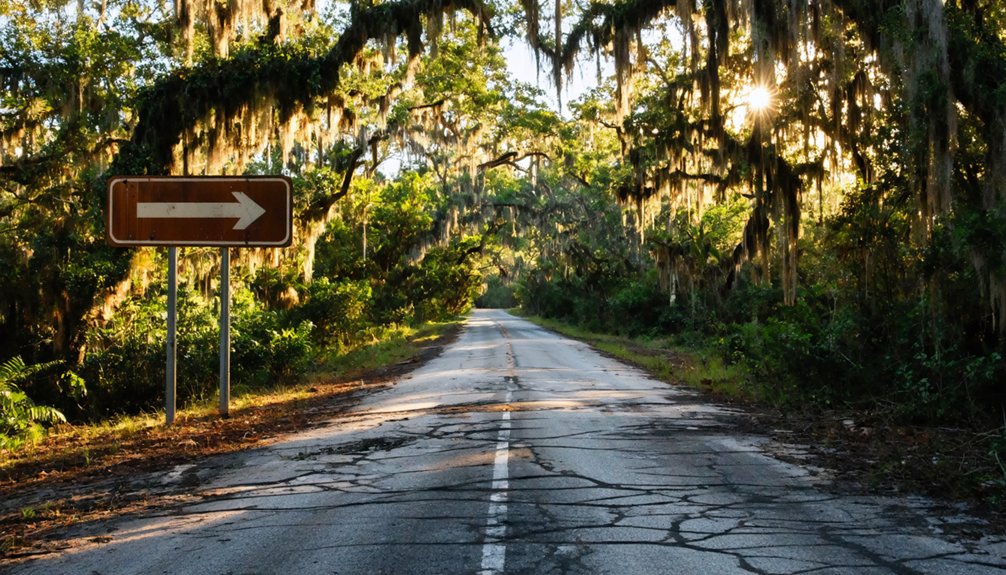
Planning a ghost town road trip to Brewster, Florida starts with heading south on State Road 37 from Mulberry about 10 miles until a towering smokestack breaks the horizon. You’re looking at what’s left of a phosphate company town American Cyanamid built, controlled, and quietly erased by 1962. Scattered ruins, abandoned structures, and eerie open fields reward curious explorers willing to wander. Stick around and you’ll uncover everything you need to make this road trip count.
Key Takeaways
- Brewster, Florida, is a former phosphate mining town founded in 1910, now abandoned, featuring ruins, scattered buildings, and a prominent smokestack landmark.
- Access Brewster by heading south on State Road 37 from Mulberry approximately 10 miles, using the smokestack as your visual guide.
- Pack sturdy shoes, water, sunscreen, insect repellent, and a camera, as the site offers no visitor amenities or polished infrastructure.
- Pair your visit with the Mulberry Phosphate Museum, located 10 miles north, for historical context about Bone Valley’s phosphate industry.
- Brewster is part of a broader ghost town network including Achan and Phosphoria, making it ideal for an extended regional road trip.
What Was Brewster, Florida?
Once a thriving phosphate mining company town, Brewster, Florida packed schools, a movie theater, a medical clinic, a post office, and even a swimming pool into a community that peaked at around 800 residents.
Founded in 1910 and controlled largely by American Cyanamid, it operated as a self-contained world built around phosphate extraction deep in Polk County.
Why American Cyanamid’s Closure Ended Brewster in 1962
When American Cyanamid’s mining operations began winding down in the late 1950s, Brewster’s fate was already sealed. The company controlled everything — housing, services, and employment — so when the mine closed officially in 1962, the entire town went with it.
Residents faced a hard choice: buy their homes at a discount and move them elsewhere or lose them to demolition. Many houses rolled down the road to Fort Meade, Bartow, and Mulberry, carrying Brewster’s community legacy into neighboring towns.
The historical significance here isn’t subtle. A town of nearly 800 people simply ceased to exist because one company decided it was done. That’s the raw reality of company-town life — your freedom was always borrowed, never truly yours.
What’s Left to See at the Brewster Town Site
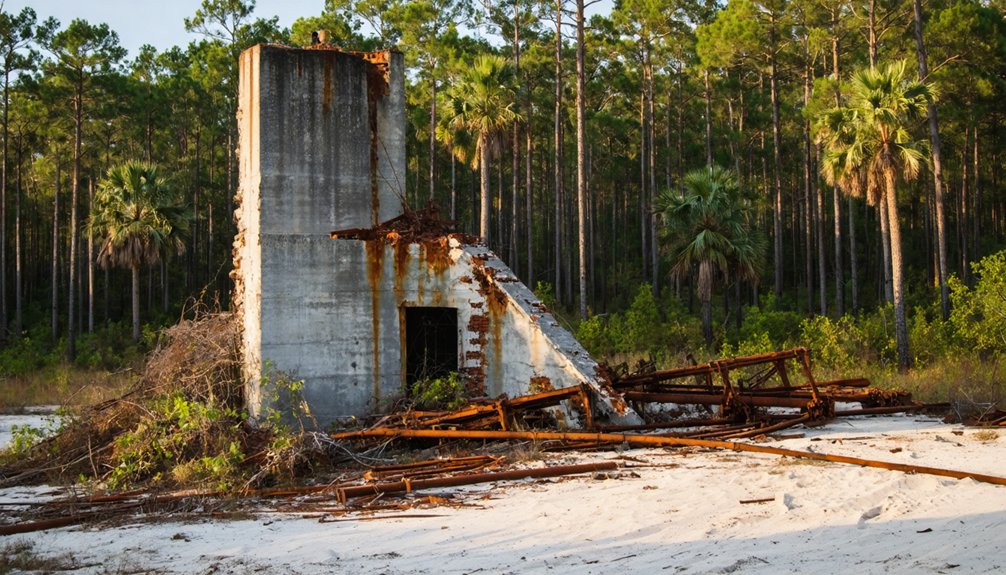
When you pull up to the Brewster town site today, the first thing you’ll spot is the towering smokestack from the former power plant, rising above the flat Florida landscape like a sentinel marking what once stood there.
You’ll find scattered abandoned buildings and ruins throughout the area, giving you plenty of material if you’re there for ghost-town photography.
Industrial remnants from the power plant, drying plants, and chemical operations still break up the open fields, connecting you directly to Brewster’s phosphate-mining past.
The Iconic Smokestack
Though little remains of Brewster’s once-bustling company town, the old smokestack from the former power plant still rises above the surrounding fields, giving you a striking focal point the moment you arrive at the site. It’s one of the few standing monuments to historical preservation in an area where demolition claimed nearly everything else.
The stack dominates the flat Polk County landscape, making it easy to spot from the road and impossible to ignore once you’re standing near it. Don’t expect visitor amenities here — there are no interpretive signs, restrooms, or parking lots.
What you’ll find instead is raw, unfiltered history standing quietly against the sky, making Brewster an ideal stop for ghost-town photographers and anyone who appreciates exploring Florida’s forgotten industrial past on their own terms.
Abandoned Buildings And Ruins
Beyond the smokestack, a handful of abandoned buildings and scattered ruins still break the silence across the old town site. You’ll find remnants of the former power plant, drying facilities, and industrial structures slowly surrendering to Florida’s relentless vegetation.
The saloon building reportedly still bears the Brewster name, giving you a rare, tangible connection to the town’s working-class past.
Urban decay here isn’t eyesore — it’s evidence. Every crumbling wall and rusted beam tells part of a story that official records can’t fully capture.
Historic preservation efforts remain minimal, so what you see today may not exist tomorrow. Bring your camera, move carefully through the grounds, and respect the site.
Brewster rewards curious, self-directed explorers willing to read a landscape rather than a museum placard.
Industrial Remnants Remaining
What remains at Brewster reads like an industrial archaeology puzzle scattered across open Florida scrubland. You’ll spot the old smokestack standing defiantly against the sky, a powerful marker of the former power plant that once drove the entire operation. It’s the site’s most striking piece of historical architecture, visible before you even stop the car.
Beyond the smokestack, fragments of the drying plants, main office, chemical plant, and repair shops survive in various states of collapse. These ruins carry the community legacy of hundreds of workers who built their lives around this industrial core.
You’re fundamentally walking through layers of phosphate-boom history without a guided tour or admission fee. Bring a camera, watch your footing, and let the remnants tell their story on their own terms.
How to Find the Brewster Site Off State Road 37
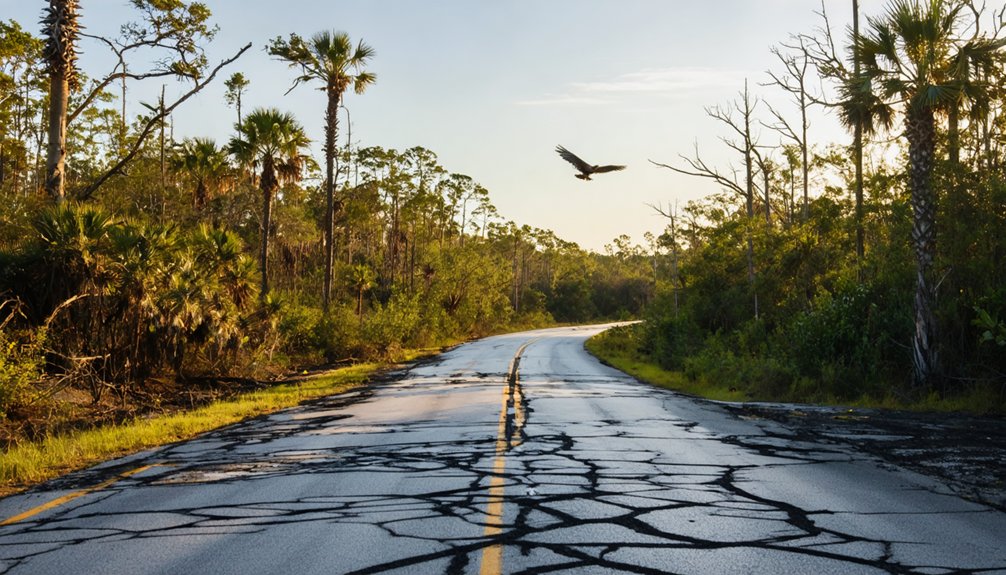
To reach the Brewster site, head south on State Road 37 from Mulberry about 10 miles until the landscape opens into fields and scattered ruins.
You’ll want to keep your eyes up, because the old smokestack from the former power plant rises above the tree line and serves as your most reliable landmark.
Once you spot it, you’re fundamentally at the heart of what remains of this long-abandoned phosphate company town.
Navigating State Road 37
State Road 37 is your primary route into the heart of Florida’s old phosphate country, and it’ll carry you directly through the corridor where Brewster once stood. Running south from Mulberry, you’ll travel roughly 10 miles before reaching the former town site near Bradley Junction.
Watch for the old roadway alignment branching off the main corridor — that’s where the community once thrived at 143 feet above sea level.
The road itself tells part of the story. You’re passing through land where historical preservation efforts have been minimal, yet the community impact of Brewster’s rise and collapse still echoes across the landscape.
Keep your eyes open for the smokestack rising above the fields — it’s your clearest signal that you’ve arrived.
Spotting The Smokestack Landmark
Once you’ve passed Bradley Junction heading south on State Road 37, start scanning the horizon for a tall smokestack cutting above the flat, open fields — it’s the most reliable visual anchor for the former Brewster site.
That stack once served the power plant supporting a full mining operation and a community of nearly 800 residents.
Without it, you’d likely miss the site entirely. Historic preservation efforts here are minimal — town relocation claimed most structures after Brewster’s 1962 closure, with homes hauled off to Mulberry, Bartow, and Fort Meade.
What’s left are scattered ruins and open land.
Pull over safely, get your bearings, and let the smokestack guide you in. It’s the clearest signal that you’ve found one of Florida’s most overlooked ghost towns.
Is Brewster Worth Visiting as a Day Trip?
Brewster isn’t a polished roadside attraction with paved walkways and interpretive signs — it’s a raw, fading remnant of Florida’s phosphate boom, and that’s exactly what makes it compelling. If you value historical preservation and off-the-beaten-path exploration, this ghost town delivers something most curated sites can’t — authentic atmosphere.
You’ll find ruins, open land, and a smokestack that still commands attention decades after the town’s 1962 closure. Local legends about the company town’s segregated neighborhoods and displaced families add real human weight to what you’re seeing.
Pair the visit with a stop at the Mulberry Phosphate Museum nearby, and you’ve built a focused, rewarding day trip. Brewster rewards curious, self-directed travelers who don’t need a gift shop to feel the history.
What to Pack for Brewster’s Open-Site Conditions
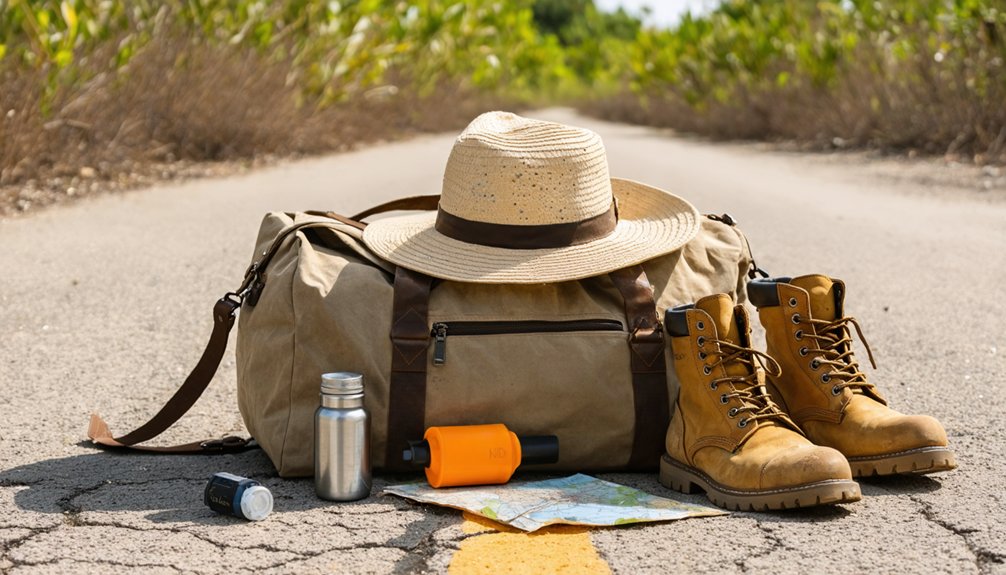
Because Brewster offers open land, scattered ruins, and no maintained facilities, what you pack will directly shape how comfortable and productive your visit turns out to be.
Wear sturdy closed-toe shoes since the terrain includes uneven ground, debris, and industrial remnants.
Bring water, sunscreen, and insect repellent because Florida’s heat and bugs won’t wait.
Pack a charged camera to document preservation challenges firsthand — deteriorating structures and fading industrial landmarks won’t last indefinitely.
A printed map or downloaded offline directions help since cell service can be unreliable along rural State Road 37.
Carry a notebook if historical context matters to you; recording observations about ruins and remnants adds meaning to what you’re seeing.
Pack light, stay aware of your surroundings, and respect the site’s fragile condition.
Should You Pair Brewster With the Mulberry Phosphate Museum?
After you’ve packed your bag and pointed yourself toward Brewster’s open fields and crumbling smokestacks, consider adding one more stop that’ll turn a good road trip into a genuinely complete one. The Mulberry Phosphate Museum sits about 10 miles north and delivers exactly what Brewster can’t — structured exhibits, local folklore, and a curated look at Bone Valley’s phosphate boom.
Where Brewster shows you raw preservation efforts frozen mid-collapse, Mulberry gives you the full story behind why towns like Brewster existed at all. You’ll understand the industry, the workers, and the environmental legacy that eventually transferred much of this land to Florida’s state ownership.
Together, both stops create a layered, honest picture of central Florida’s phosphate history that neither site achieves alone.
Other Bone Valley Ghost Towns to Add to Your Brewster Route
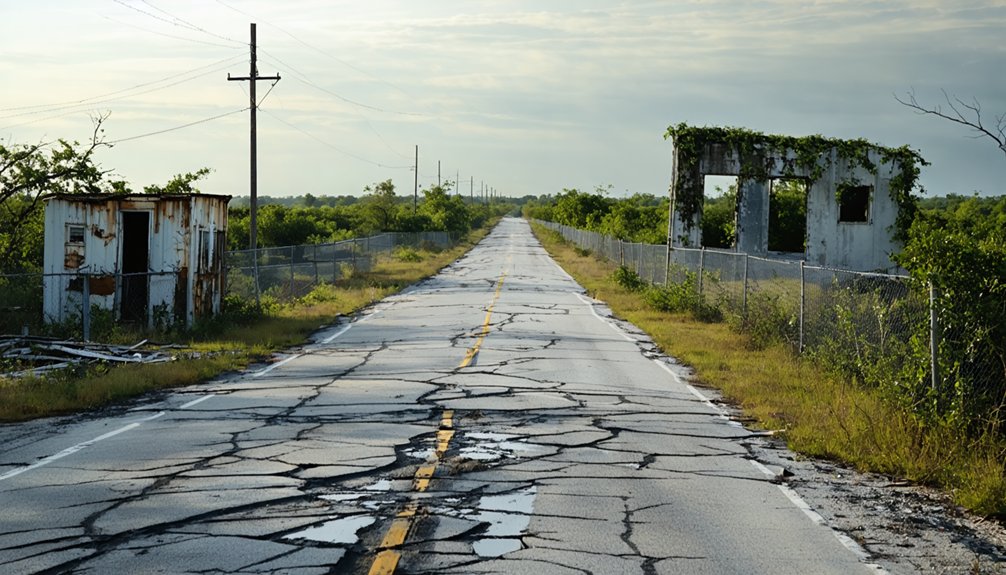
Once you’ve traced Brewster’s ruins and absorbed the phosphate boom’s human cost, the surrounding Bone Valley region rewards you with more ghost towns worth routing through. This stretch of central Florida holds layered stories of boom-and-bust settlements where historical preservation remains fragile and incomplete.
Towns like Achan and Phosphoria once thrived on the same mining economy that built and erased Brewster. Local legends thread through these communities — tales of relocated houses, vanished schools, and workers who simply moved on when the companies did.
You’ll find fewer landmarks than stories, which makes independent exploration rewarding. Keep a map, watch for unmarked ruins along county roads, and treat each site as a fragment of a larger, largely forgotten industrial Florida that shaped the region’s modern landscape.
Frequently Asked Questions
What Was Brewster’s Peak Population Before the Town Shut Down?
At its peak, Brewster hummed with 800 residents — now you’ll find it’s a ghost town tourism gem of abandoned landmarks, where a once-thriving community’s echo invites you to explore its silent, fascinating ruins.
When Was Brewster’s Post Office Established and When Did It Close?
You’ll find that Brewster’s post office was established in 1913 and closed in 1961, giving this Florida landmark nearly five decades of service before joining the ranks of America’s historic ghost towns lost to time.
Was Brewster, Florida a Racially Segregated Town During Its Operation?
Like two rivers never allowed to merge, Brewster’s historic architecture tells a divided story — yes, it was racially segregated. You’ll find local legends whispering of separate neighborhoods housing white and Black workers throughout the town’s operation.
Who Owned the Brewster Land After American Cyanamid Left Florida?
After American Cyanamid’s departure, you’ll find the state of Florida took ownership of Brewster’s land—a significant shift in historical land ownership tied directly to environmental impact damages American Cyanamid owed. The Mosaic Company later assumed control.
What Company Originally Founded Brewster Before American Cyanamid Took Over?
You’ll find that Amalgamated Phosphate originally founded Brewster before American Cyanamid took over in 1918. Exploring this ghost town’s abandoned sites reveals layers of fascinating history, connecting you to the raw, untamed legacy of Florida’s phosphate boom.
References
- https://en.wikipedia.org/wiki/Brewster
- https://www.facebook.com/groups/1410604355754362/posts/2937359259745523/
- https://floridatrailblazer.com/2017/07/11/brewster-ghost-town-in-polk-county/
- https://www.youtube.com/watch?v=o_tOYaC1cz8
- http://www.gribblenation.org/2018/09/ghost-town-tuesday-brewster-florida.html
- https://www.youtube.com/watch?v=s_lFGoAuiBE
- https://1flminingtown.weebly.com/brewster.html
- https://www.paranormalghostsociety.org/Ghost Town Of Brewster.htm
- https://ufndnp.domains.uflib.ufl.edu/ghost-towns-of-florida-ufndnp/