Planning a ghost town road trip to Calvin Center, Michigan means visiting one of America’s most powerful stories of Black freedom and resilience. Located in Cass County at 41°51’31″N 85°56’54″W, this community was built by free Black settlers in the 1830s and sheltered over 1,500 freedom seekers on the Underground Railroad. Bring water, printed maps, and good walking shoes since cell service is unreliable. There’s so much more to this remarkable place than you’d expect.
Key Takeaways
- Calvin Center, a historic free Black settlement in Cass County, Michigan, served as a major Underground Railroad station sheltering over 1,500 freedom seekers.
- Located at 41°51’31″N 85°56’54″W, the site is accessible via county roads; check road conditions before visiting.
- Bring water, snacks, printed maps, and a camera, as cell service is unreliable and signage is minimal.
- Chain Lake Church remains a key landmark, symbolizing the community’s faith, resilience, and organized resistance during the Underground Railroad era.
- Pair your visit with nearby ghost towns like Alcona and Amble to experience Michigan’s broader, layered historical landscape.
Why Calvin Center Is Unlike Any Other Michigan Ghost Town
When you think of Michigan ghost towns, you probably picture abandoned copper mines, collapsed lumber mills, and rusted railroad tracks — but Calvin Center’s a different story entirely. This Cass County settlement wasn’t built around extraction or industry.
Free Black pioneers built it in the 1830s as a community rooted in ownership, dignity, and self-determination. You’ll find historical architecture that once housed Black-owned farms, businesses, and the enduring Chain Lake Church.
Built by free Black pioneers in the 1830s, Calvin Center stands as a monument to ownership, dignity, and self-determination.
Local folklore here isn’t about hauntings — it’s about over 1,500 freedom seekers who passed through on their way to Canada. That’s the Underground Railroad’s living memory embedded in these grounds.
No other Michigan ghost town carries that weight, that purpose, or that particular brand of hard-won American freedom.
The Underground Railroad Legacy That Built Calvin Center
When you walk through Calvin Center, you’re stepping into a community that sheltered over 1,500 freedom seekers on their journey to Canada, making it one of the Midwest’s most essential Underground Railroad stations since the 1830s.
The Black families who built this settlement didn’t just find refuge here — they planted roots, running their own farms and businesses that turned Calvin Center into a self-sustaining, thriving community.
You can still feel that legacy at Chain Lake Church, a surviving landmark that quietly anchors the town’s remarkable history of Black freedom, faith, and resilience.
Freedom Seekers’ Safe Haven
How does a small Michigan township become one of the most essential lifelines in American history? Calvin Center did it by opening its doors wide to over 1,500 freedom seekers journeying toward Canada. You’re walking ground where local legends weren’t myths — they were real people risking everything for liberty.
This tight-knit free Black community turned Calvin Township into a strategic Underground Railroad station, quietly sheltering those fleeing bondage throughout the 1830s and beyond. Unlike polished tourist attractions built around comfort, Calvin Center offers something rawer and more powerful — authenticity.
Every trail, every weathered structure whispers stories of courage and collective resistance. When you visit, you’re not just sightseeing; you’re bearing witness to one of freedom’s most remarkable chapters written right here in Cass County.
Black-Owned Community Roots
Before the term “Black-owned” became a rallying cry, Calvin Center was already living it. Back in the 1830s, free Black settlers built farms, ran businesses, and established landmarks like Chain Lake Church — all on their own terms.
You’re not just looking at abandoned structures when you visit; you’re witnessing community resilience in its most powerful form. These weren’t people waiting for permission to thrive. They created it.
Historical preservation efforts here carry extra weight because this community proved that freedom wasn’t just an idea — it was farmland, commerce, and fellowship. When you walk these grounds, you’re stepping into a legacy that predates the modern movement by nearly two centuries.
That deserves more than a passing glance.
Chain Lake Church Legacy
Standing at the heart of Calvin Center’s story, Chain Lake Church wasn’t just a place of worship — it was a lifeline. Freedom seekers moving north leaned on this sanctuary as a trusted stop along the Underground Railroad. When you visit today, you’re walking through living art preservation — walls that once sheltered over 1,500 people chasing something most of us take for granted.
The church holds community stories that no textbook fully captures. Families gathered here, organized here, and built something extraordinary together. It wasn’t just faith that kept this congregation strong — it was a shared hunger for freedom and dignity.
As you stand inside or beside this landmark, let yourself feel the weight of what was quietly accomplished here.
How to Get to Calvin Center in Cass County, Michigan
You’ll find Calvin Center tucked away in Calvin Township, Cass County, Michigan, at coordinates 41°51’31″N 85°56’54″W. Sitting quietly at an elevation of 830 feet.
Standard passenger vehicles can handle the county roads leading to the site, but you’ll want to check current road conditions before heading out, since some access points near private historic properties require permission.
Pack your patience alongside your map, because this isn’t a polished tourist destination with GPS-friendly signage — it’s a genuine piece of forgotten history waiting for you to find it.
Calvin Center Location Overview
Tucked away in Cass County, Michigan, Calvin Center sits within Calvin Township at coordinates 41°51’31″N 85°56’54″W, resting at an elevation of 830 feet. You’re stepping into land that once hummed with purpose, freedom, and community.
Established in the 1830s, this settlement became one of the Midwest’s earliest free Black communities, where over 1,500 freedom seekers passed through on their journey to Canada.
The Eastern Time Zone (UTC-5) governs your scheduling here, so plan accordingly. While you explore, you’ll find opportunities for wildlife observation along Cass County’s quiet rural roads.
Nearby spots also offer local cuisine worth sampling before you dive deeper into the history. Calvin Center doesn’t shout for your attention — it waits, quietly, for those willing to listen.
Driving Routes And Access
Once you’ve got your bearings on Calvin Center’s place in history, getting there is the next step. Calvin Center sits within Calvin Township, Cass County, Michigan, and you can reach it via standard county roads without needing a specialized vehicle.
You’ll want to pull up current road conditions before heading out, since some access points near private historic properties shift seasonally. When you’re scoping out sightseeing spots like Chain Lake Church and the historical markers, keep your eyes open for designated pull-offs rather than parking roadside on narrow rural stretches.
Parking tips matter here because there’s no developed lot waiting for you.
Calvin Center operates on Eastern Time, so plan your daylight hours accordingly. Arriving with enough light means you’ll catch every detail those pioneer-era structures silently carry.
Road Conditions And Tips
Getting to Calvin Center means plotting Cass County’s rural road network, where paved county roads give way to narrower stretches that shift with the seasons. Before you roll out, keep these tips close:
- Check road conditions seasonally, as spring thaws can make unpaved stretches rough and muddy.
- Confirm access permissions before stepping onto private historic properties.
- Pack your camera gear for wildlife photography opportunities along the wooded rural corridors.
- Stop in nearby towns for local cuisine before heading into Calvin Township’s quieter, less-serviced roads.
You’re traversing land where freedom seekers once moved through shadows, so respect the ground you’re covering. Standard passenger vehicles handle most routes well, but arriving prepared lets you focus on the history rather than the logistics.
What Remains at Calvin Center Today
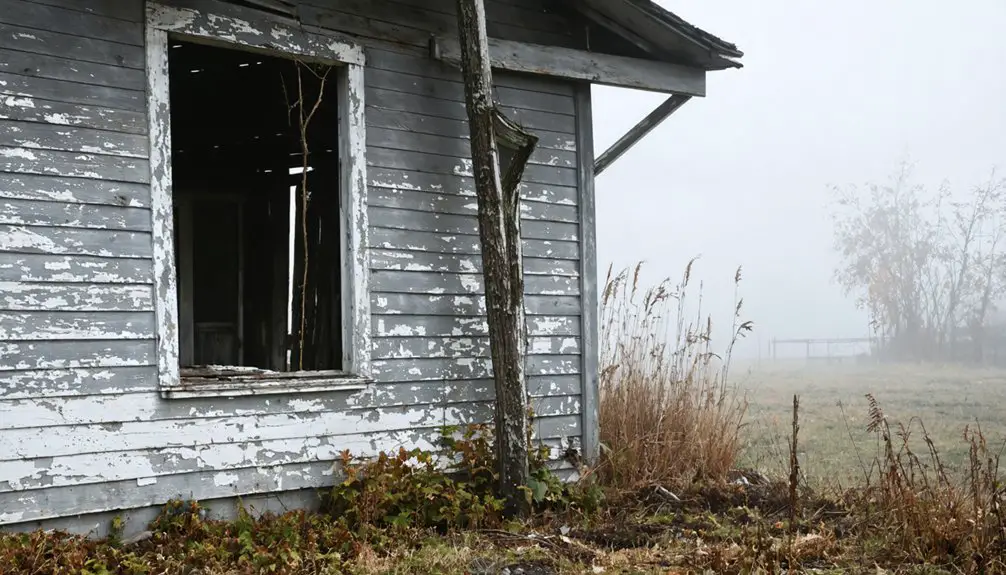
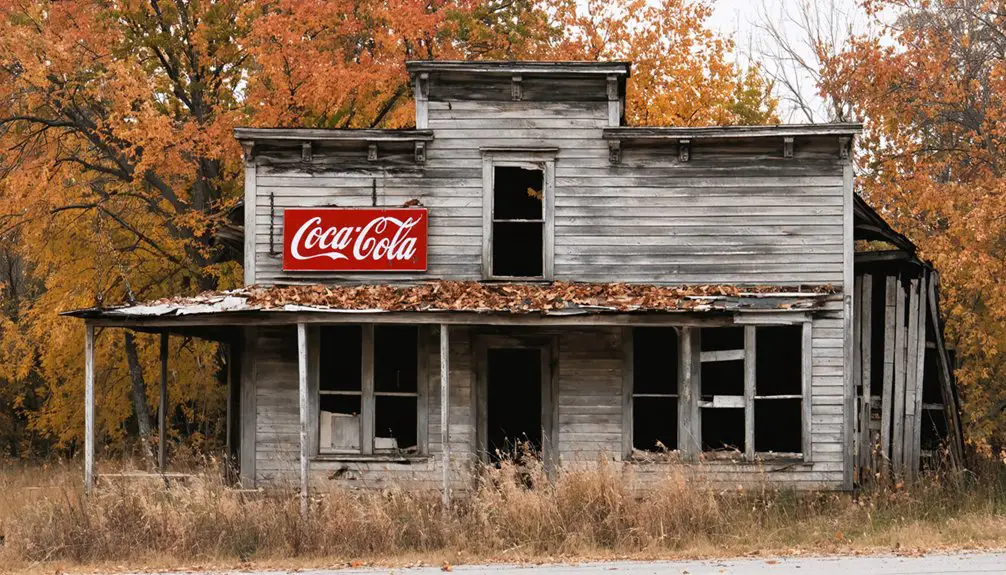
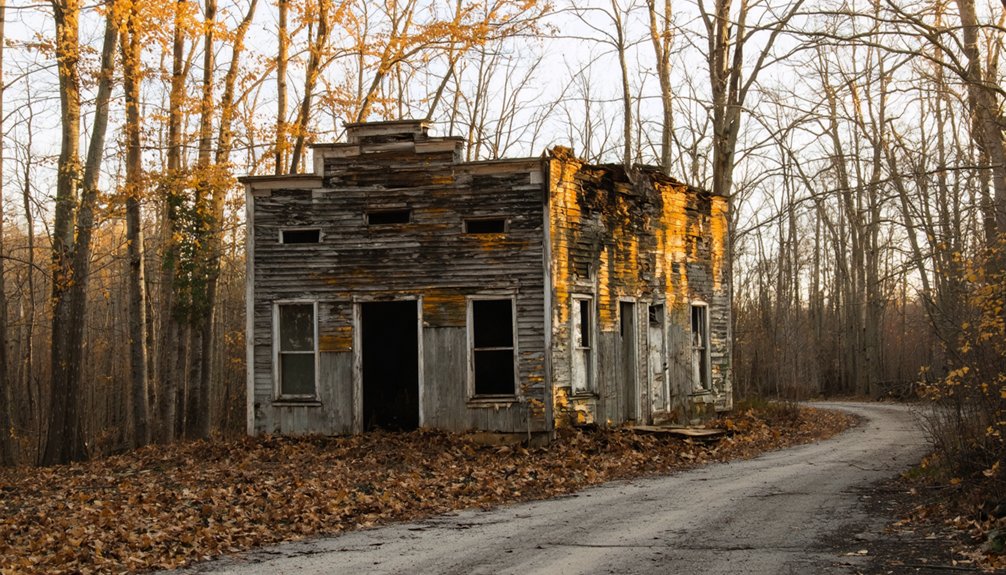
Although time has quietly reclaimed much of Calvin Center, you’ll still find original churches, township halls, and pioneer homes that have stood since the mid-1800s. This historical architecture tells a story far deeper than most ghost towns can offer.
You’re walking ground where freedom seekers once found safety, where Black-owned farms flourished, and where an entire community built something extraordinary against impossible odds.
Chain Lake Church still stands as a surviving landmark, grounding you in that legacy.
Historical markers scattered throughout the site give you real context rather than local legends or ghost stories.
What remains here isn’t haunted by fiction — it’s powered by truth.
Calvin Center preserves a remarkable chapter of American freedom that deserves your full attention when you arrive.
What to Pack for a Calvin Center History Road Trip

Packing smart makes all the difference when you’re heading to a site like Calvin Center, where developed tourist infrastructure is fundamentally nonexistent. These travel tips and packing essentials keep you focused on the history rather than scrambling for supplies.
Arrive prepared—Calvin Center has no tourist infrastructure, and scrambling for supplies means missing the history.
- Water and snacks – No vendors exist nearby, so bring enough for your full visit.
- Printed maps and directions – Cell service can be unreliable in rural Cass County.
- Comfortable walking shoes – You’ll navigate uneven terrain around pioneer-era structures.
- A journal or camera – Calvin Center’s Underground Railroad legacy deserves documentation beyond memory.
You’re visiting ground where freedom was literally built from scratch. Honor that spirit by arriving prepared, present, and ready to absorb every quiet, powerful detail this settlement still offers.
Michigan Ghost Towns Worth Visiting Near Calvin Center
While Calvin Center anchors your road trip with its profound Underground Railroad legacy, Michigan’s surrounding region holds other ghost towns that’ll deepen your sense of the state’s layered past. Towns like Alcona and Amble carry their own agricultural history, where abandoned farmsteads and overgrown fields whisper stories of communities that once fed entire regions.
Local legends follow these places like shadows, giving each stop its own distinct character. Unlike Quincy Mine, now preserved as a national park, these quieter sites demand your imagination to fill the silence. You’ll piece together lives, livelihoods, and losses just by walking the grounds.
Together, these towns form a powerful road trip circuit that honors Michigan’s complex, deeply human history beyond any single community’s story.
Frequently Asked Questions
What Time Zone Should I Follow When Scheduling My Calvin Center Visit?
You’ll want to follow Eastern Time (UTC-5) when scheduling your visit to Calvin Center’s historical architecture. It’s the perfect zone for chasing local legends and embracing the freedom this remarkable settlement’s storied past truly deserves!
Are There Any Documented Ghost Sightings or Supernatural Events at Calvin Center?
Don’t hold your breath — no documented ghost sightings or supernatural legends exist at Calvin Center. Unlike typical haunted locations, this site lets you freely connect with its powerful, real history of freedom seekers and Black pioneering spirit.
How Many Freedom Seekers Did Calvin Center Help Reach Canada?
You’ll be amazed that Calvin Center’s Underground Railroad helped over 1,500 freedom seekers reach Canada! Its historical significance can’t be overstated — this remarkable settlement actively guided courageous souls toward the freedom they so desperately deserved.
What Are the Exact GPS Coordinates for Navigating to Calvin Center?
You’ll find Calvin Center’s historical landmarks at 41°51’31″N, 85°56’54″W, elevation 830 ft. Navigate there and let local legends of freedom-seekers guide your soul through this remarkable, nostalgic Michigan sanctuary where liberation’s echoes still whisper.
How Does Calvin Center Compare to Preserved Ghost Towns Like Copper Town?
Comparing Calvin Center’s character contrasts sharply with Copper Town’s curated historical preservation. Copper Town retains 12 structured tourist attractions, while Calvin Center’s raw, unrestored freedom legacy whispers authentically to you through silent pioneer-era landmarks you’ll genuinely feel.
References
- https://www.youtube.com/watch?v=7-vjuqiGWJU
- https://en.wikipedia.org/wiki/List_of_ghost_towns_in_Michigan
- https://www.lowellmuseum.org/ghost-towns.html
- https://kids.kiddle.co/List_of_ghost_towns_in_Michigan