Planning a ghost town road trip to Mountain City, Nevada means heading to a near-abandoned settlement along Highway 225, just 16 miles south of the Idaho border. You’ll find a town that once roared with nearly 1,000 residents and twenty saloons by 1870, now home to barely 15 souls. Pack everything — fuel, food, water, and emergency supplies — because nothing’s waiting for you there. The full story of Mountain City’s gold, silver, and copper legacy runs much deeper than it first appears.
Key Takeaways
- Mountain City, Nevada, a near ghost town with 12–15 residents, sits along State Route 225, roughly 16 miles south of the Idaho border.
- The town has no gas stations, grocery stores, or restaurants, so pack fuel, food, water, emergency supplies, and cash before arriving.
- Visit between late May and October to avoid winter road closures, snow, and ice that make access dangerous or impossible.
- Explore remnants of 1870s saloons, gold and silver mining infrastructure, and 1930s copper operations scattered throughout the townsite.
- Cell service is unreliable, so bring offline navigation tools and thoroughly plan your route through the remote, rugged terrain beforehand.
Is Mountain City, Nevada a True Ghost Town?
Although Mountain City carries the weathered soul of a ghost town, it hasn’t fully surrendered to abandonment. Officially classified as “Near Ghost Town,” it still shelters 12 to 15 hardy souls who’ve chosen life on the edge of civilization.
Mountain City hasn’t fully surrendered — 12 to 15 hardy souls still call this near ghost town home.
You’ll find historical artifacts scattered across this former boomtown, silent witnesses to an era when nearly 1,000 miners crowded twenty saloons back in 1870. Local legends whisper of fortunes won and lost before the population collapsed to just 20 residents by 1882.
That stubborn persistence separates Mountain City from Nevada’s fully abandoned sites. Ranching replaced mining, keeping a fragile heartbeat alive.
When you roll through on NV 225, you’re not visiting a relic — you’re encountering a community that refuses to disappear.
The Boom-and-Bust History Behind Mountain City
When you trace Mountain City’s origins, you’ll find ore discoveries in 1869 ignited a fierce rush that swelled the population to nearly 1,000 people and packed the streets with twenty saloons.
Only to collapse by 1872 as miners chased richer strikes elsewhere. A brief copper revival in the 1930s brought Rio Tinto’s operations to the area for roughly a decade before fading just as quickly.
What ultimately kept Mountain City alive wasn’t mineral wealth at all — it was ranching, a quieter but steadier force that held the community together long after the booms burned out.
Mining Sparked Early Growth
Ore discoveries in 1869 ignited Mountain City’s first boom, drawing hundreds of miners into this remote Nevada canyon almost overnight. Gold, silver, and copper fueled wild ambitions, and by 1870, nearly 1,000 people had carved out a rough settlement complete with twenty saloons.
You’re looking at classic boom cycles playing out in real time — fortune seekers arrived fast and left faster. By 1872, the richest veins had thinned, and by 1882, only about 20 residents remained.
The mining history didn’t end there, though. The 1930s brought a second surge when Rio Tinto’s copper operations briefly revived the town for roughly a decade. Each boom left its mark on the landscape, and today you can still find remnants scattered across this canyon worth exploring.
Ranching Sustained The Town
After the miners packed up and moved on, ranchers quietly claimed what the booms left behind. Agricultural development rooted Mountain City into Nevada’s landscape, keeping the settlement breathing long after the saloons went dark. You’re visiting a place where cultural preservation lives in fence lines and cattle trails, not museum cases.
What ranching gave Mountain City:
- A reason to stay when gold and silver ran dry
- Working land that outlasted every boom-and-bust cycle
- Community identity beyond extraction and speculation
- Generational knowledge woven into the Owyhee River valley
- A living landscape you can still ride through today
This isn’t a frozen ghost town — it’s a place that adapted, survived, and kept moving forward on its own stubborn terms.
How to Reach Mountain City on Highway 225
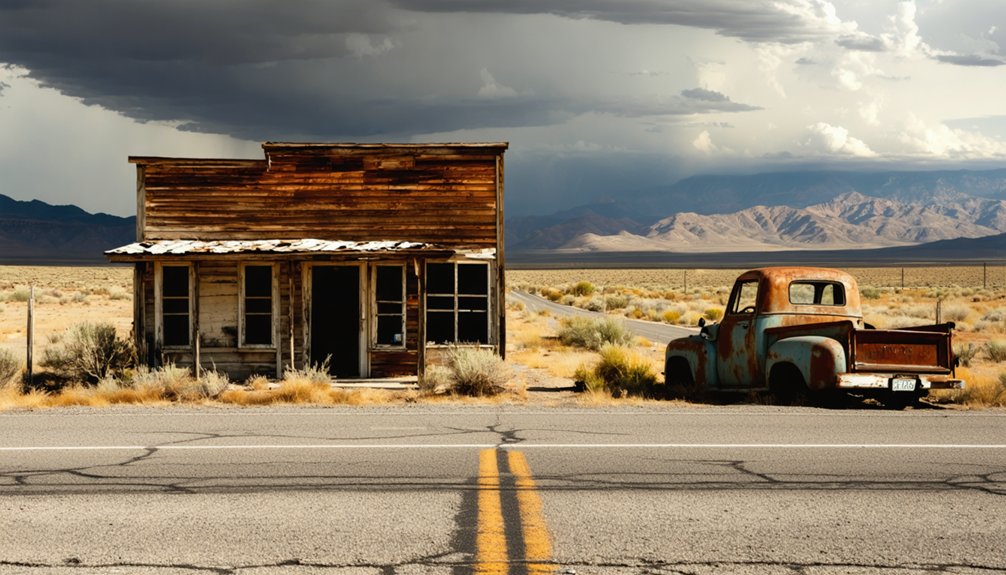
You’ll find Mountain City along State Route 225, roughly 16 miles south of the Idaho border in Elko County, a two-lane ribbon of asphalt that traces the Owyhee River through high desert terrain.
Once you’re within town limits, the highway becomes Davidson Street, putting you on the same ground where miners once crowded twenty saloons during the 1870s boom.
At 5,607 feet in elevation, you should check road conditions before you go, especially in winter, and factor in a 60.6-mile drive south to your next major stop.
Highway 225 Route Details
Highway 225 cuts through the high desert of northeastern Nevada like a lifeline connecting forgotten history to open road. You’ll travel through raw terrain where local wildlife roams freely and scenic viewpoints reward every mile you push north.
- Mountain City sits roughly 16 miles south of the Idaho border.
- Highway 225 becomes Davidson Street inside town limits.
- Elevation hits 5,607 feet, so check winter road conditions before departing.
- Driving south covers 60.6 miles to the next major stop.
- The route runs through Humboldt-Toiyabe National Forest territory.
This corridor doesn’t coddle you — it challenges you. You’re crossing land that swallowed entire boom towns and spit out ghost stories. Keep your fuel tank full, your eyes open, and your schedule loose.
Driving Distance And Elevation
Knowing exactly how far you’re pushing into Nevada’s high desert makes the difference between a smooth run and a roadside scramble. Mountain City sits 16 miles south of the Idaho border on Highway 225, and driving south from town covers another 60.6 miles to the next major stop.
You’re climbing to 5,607 feet, where winter conditions can shut down your plans fast. That elevation shapes everything — the outdoor activities available each season, the gear you’ll need, and even what local cuisine options remain realistic when supply runs are rare.
Pack accordingly before you roll out. This remote corridor rewards prepared travelers with raw high-desert freedom, but punishes the unprepared with empty tanks and no signal to call for help.
Mountain City’s Surviving Structures and Historic Remnants
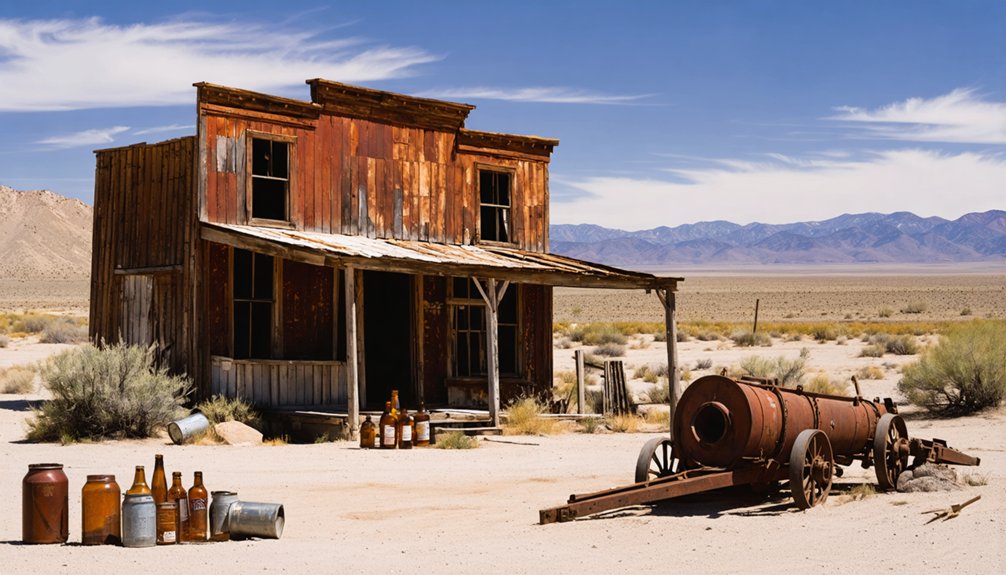
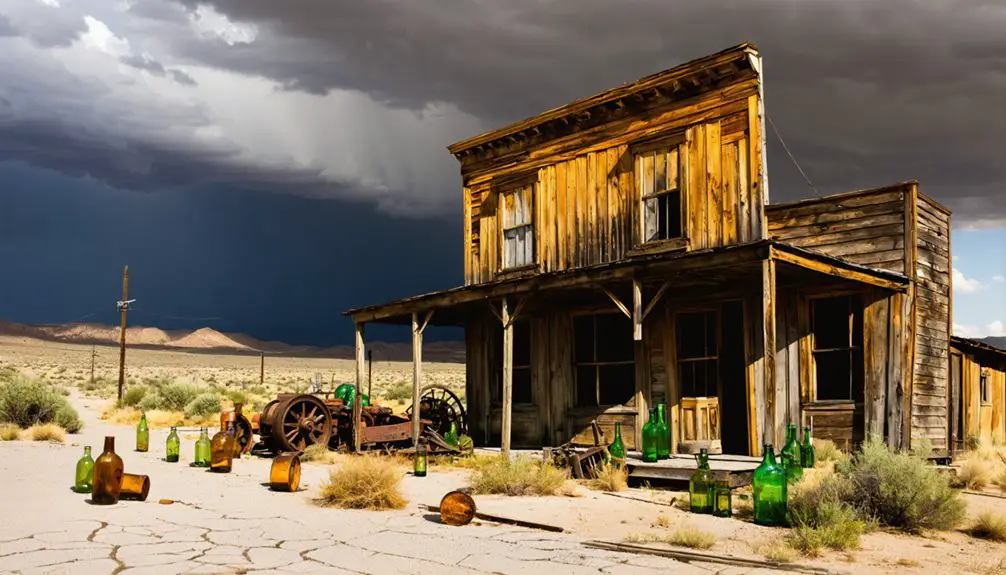
Though Mountain City never fully emptied out, the bones of its wilder days still jut through the landscape if you know where to look. Abandoned structures and historical artifacts scatter across the terrain, rewarding curious explorers willing to wander beyond the pavement.
Here’s what you can still find:
- Remnants of saloons that once served nearly 1,000 rowdy miners
- Copper mining infrastructure left behind from Rio Tinto’s 1930s operation
- Building foundations marking where a boomtown once roared
- Artifacts connecting visitors to gold, silver, and copper extraction eras
- Tangible evidence of Mountain City’s rapid rise and dramatic decline
You’re not walking through a museum—you’re reading a landscape that lived hard and fast. Bring curiosity, respect the remnants, and let the history hit you raw.
Wild Horse Reservoir: The Real Draw Near Mountain City
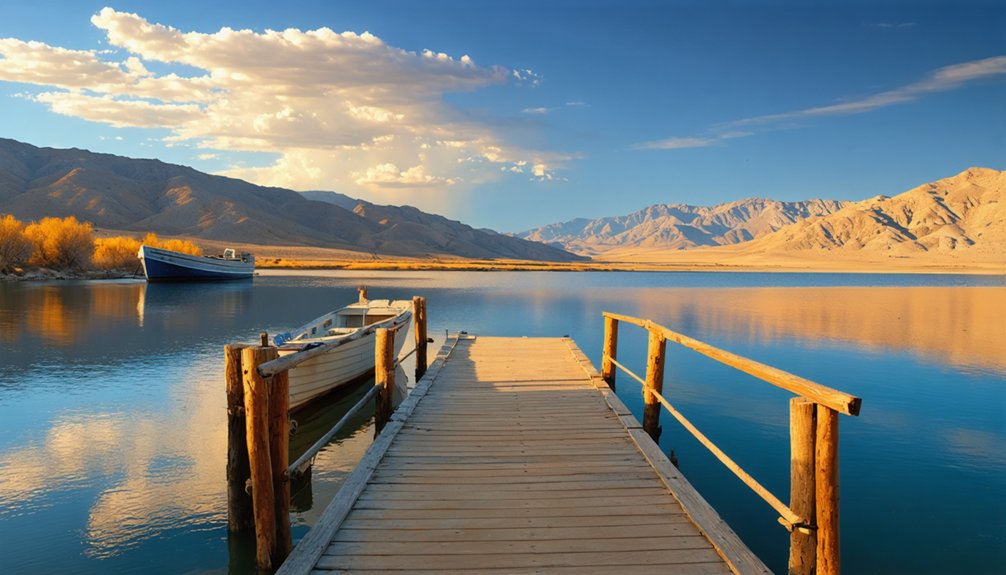
Shift your gaze from crumbling foundations and rusted copper relics, and you’ll find that the real magnet pulling visitors to this remote corner of Elko County isn’t history—it’s water.
Wild Horse Reservoir draws anglers, boaters, and wanderers who crave open skies and untamed shoreline. Local wildlife thrives here—expect pronghorn, migratory birds, and the occasional mule deer threading through sagebrush at dawn.
The reservoir’s surrounding high desert landscape shifts dramatically with climate variations, delivering brutal winters at 5,607 feet and surprisingly vivid summers that reward the prepared traveler.
Mountain City’s small businesses exist largely to serve these visitors, not ghost town pilgrims.
Think of the reservoir as your base camp—raw, liberating, and completely indifferent to comfort. That’s exactly why it calls to you.
Ghost Town Stops Near Mountain City on Highway 225
Highway 225 doesn’t just connect towns—it strings together the bones of Nevada‘s past. If you’re already in Mountain City, you’re positioned to chase more ghost town history.
Elko County holds local legends and historical artifacts that reward curious travelers who push further down the highway.
- Palisade – A railroad-era ghost town infamous for staged gunfights that fooled passengers.
- Rhyolite – Nevada’s most celebrated ghost town, sitting between Las Vegas and Death Valley.
- Humboldt-Toiyabe National Forest – Frames abandoned mining corridors worth exploring.
- Elko County archives – Document local legends tied to boom-and-bust settlements.
- Forgotten Nevada resources – Provide directions and historical context for regional ghost towns.
Each stop deepens your understanding of Nevada’s relentless, restless history.
Mountain City’s Elevation and Winter Road Conditions
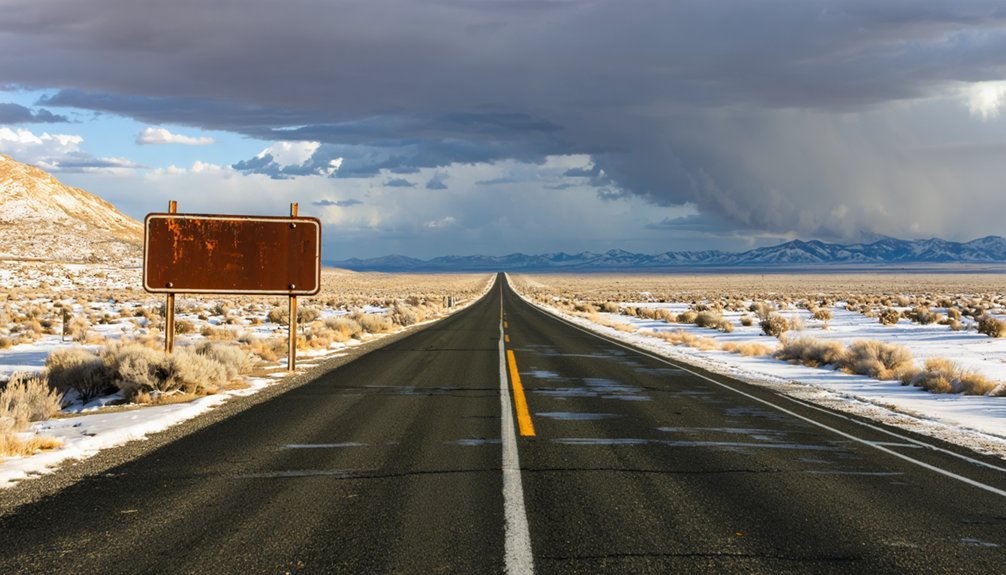
Sitting at 5,607 feet, Mountain City doesn’t forgive casual winter planning. The local climate shifts fast at this elevation, turning State Route 225 into a genuine test of preparation. Snow and ice can close or complicate the highway without much warning, and you won’t find a tow truck waiting around the corner.
These elevation challenges mean you should check road conditions before you leave, not after you’ve already committed to the canyon. Pack extra fuel, warm layers, and emergency supplies — the nearest substantial town sits over 60 miles south.
Mountain City’s remoteness is exactly what makes it compelling, but that same isolation punishes the unprepared. Respect the altitude, plan your timing, and the road rewards you with open country few travelers ever bother to find.
You’ll Need to Bring Everything: Mountain City Has Almost Nothing
With only 12 to 15 people calling Mountain City home, you won’t find a gas station, grocery store, or restaurant waiting when you arrive. This near-ghost town rewards self-reliant adventurers who come prepared.
Local wildlife outnumbers residents, and community events are practically nonexistent.
Pack everything before you roll in:
- Fuel – fill your tank before leaving Elko
- Food and water – no stores operate here
- Emergency supplies – remote terrain demands preparation
- Cash – small businesses near Wild Horse Reservoir may not accept cards
- Navigation tools – cell service is unreliable on NV 225
Mountain City doesn’t apologize for what it lacks. That raw, unfiltered solitude is exactly the point. Come ready, or don’t come at all.
Best Time of Year to Visit Mountain City
Elevation shapes everything at Mountain City. Sitting at 5,607 feet, winters hit hard on NV 225, turning mountain roads treacherous and cutting off casual exploration. You’ll want to arrive between late May and October, when conditions open the landscape rather than fight you.
Summer brings the sweet spot. Local wildlife moves freely through Humboldt-Toiyabe National Forest, and the Owyhee River corridor rewards patient observers. You won’t find cultural festivals here — Mountain City’s too small for that — but Elko County hosts genuine Western gatherings worth timing your trip around.
Fall edges out summer for serious road trippers. Cooler temperatures, thinner crowds, and dramatic high desert light make abandoned mining remnants feel genuinely haunted. Come prepared, stay flexible, and let the remoteness work in your favor.
Frequently Asked Questions
What Is the Current Population of Mountain City, Nevada?
Like a dying ember, Mountain City’s ghost town history flickers—you’ll find only 12–15 souls calling it home. Yet mountain city attractions and wild freedom still pulse through its rugged, adventurous heart.
What Phone Number Can Visitors Call for Local Mountain City Information?
Call 775-763-6622 to get local Mountain City information before you venture out! You’ll uncover details about historical landmarks, local dining options, and everything you need for your free-spirited, adventurous journey into Nevada’s rugged, storied frontier.
What Commodities Were Primarily Mined in Mountain City Throughout Its History?
You’ll uncover gold, silver, and copper — ancient ore deposits that once drew thousands, now silent. Historical mining methods shaped Mountain City’s wild destiny, transforming barren earth into boomtown riches before fading into rugged, liberating solitude.
How Far Is Mountain City From the Idaho Border?
You’re only 16 miles from Idaho’s border as you cruise scenic routes into Mountain City! This short stretch on State Route 225 connects you to historic landmarks steeped in Nevada’s wild, adventurous mining legacy.
What River Runs Through Mountain City, Nevada?
The Owyhee River runs through Mountain City. You’ll find its currents echo a mining legacy and ghost town history — proof that water, like freedom, outlasts every boom, bust, and abandoned dream carved from Nevada’s rugged earth.
References
- https://www.forgottennevada.org/sites/mountaincity.html
- https://en.wikipedia.org/wiki/Mountain_City
- https://westernmininghistory.com/towns/nevada/mountain-city/
- https://www.nvexpeditions.com/elko/mountaincity.php
- https://www.nevadaappeal.com/news/2019/dec/24/once-the-crossroads-of-far-northeastern-nevada-mou/
- https://travelnevada.com/ghost-town/
- https://nvtami.com/2025/01/16/exploring-elko-county-ghost-towns/