Planning a ghost town road trip to Camchester, Kansas, means chasing a settlement that barely left a footprint. It started as Cameron, a small trading post of around 300 residents, before renaming in 1900 and closing its post office by 1903. No markers, ruins, or landmarks survived. You’ll need county records, plat maps, and offline navigation to even confirm the site. If you’re ready to uncover why Camchester vanished so completely, there’s much more to discover ahead.
Key Takeaways
- Research Camchester’s location using county records, historic plat maps, and USGS topographic maps before visiting, as no roadside markers exist.
- Confirm land ownership through the county clerk’s office to avoid trespassing, since the site likely sits on private property.
- Bring offline maps and a high-clearance vehicle, as rural section-line roads are unmarked and conditions vary significantly.
- Expect minimal physical remains; wooden structures decayed, foundations crumbled, and farmland reclaimed the site over time.
- Plan your visit promptly, as the constantly changing landscape may obscure remaining historical traces with each passing season.
What Made Camchester a Kansas Ghost Town?
Although Camchester never had the chance to grow old, its disappearance tells a story that’s deeply familiar across the Kansas frontier. What started as Cameron, a trading post humming with nearly 300 residents, a saloon, lumberyard, and three grocery stores, reinvented itself as Camchester in 1900 after the original post office closed.
Camchester never grew old, but its brief life as Cameron still echoes across the Kansas frontier.
That rename didn’t save it. By March 1903, Camchester’s post office had shut down too, and the settlement faded into the plains.
Post offices anchored frontier towns. Without one, communities lost their administrative identity and often their population. Camchester left behind no celebrated historic landmarks, no widely circulated local legends, just a compressed timeline that captures how brutally fast Kansas settlements could rise and vanish.
That’s exactly what makes it worth chasing.
How Camchester Compares to Other Kansas Ghost Towns
Camchester wasn’t the only Kansas town that burned bright and disappeared fast, but comparing it to other ghost towns helps you appreciate what made its collapse so sharp.
Many Kansas ghost towns survived long enough to leave ruins, cemeteries, or stone foundations worth photographing. Camchester didn’t. Its post office closed by 1903, leaving almost no physical trace behind.
Towns like Ingalls or Nicodemus had stronger anchors — railroads, land grants, cultural significance tied to specific communities. Camchester had commerce but no staying power.
That absence makes historic preservation nearly impossible here. You won’t find a marker or a museum.
What you’ll find instead is open prairie and a story worth knowing — proof that the frontier didn’t always leave monuments behind.
Where the Camchester Townsite Is Located
You’ll find the Camchester townsite in Kansas by starting with county records and historic plat maps that pin down its general area before you ever hit the road.
Once you’re out there, rural county roads can be unmarked and disorienting, so download offline maps and cross-reference them with historical sources before you leave.
Confirming the exact site often takes fieldwork, since little to no visible evidence may remain, and you’ll want to verify land ownership to avoid trespassing on private property.
Finding The General Area
Where exactly do you start looking for a town that fundamentally vanished before 1910? Historical mapping and land ownership records are your sharpest tools. Kansas county plats from the 1890s and early 1900s can pinpoint where Cameron and Camchester once stood, giving you real coordinates to chase.
Start your research here:
- Search Kansas historical society archives for township plats showing the original Cameron settlement
- Cross-reference land ownership records at the county courthouse to identify the former townsite boundaries
- Compare early USGS topographic maps against modern satellite imagery for landscape clues
- Contact local genealogical societies, since they often hold unpublished maps and firsthand accounts
You’re not chasing a landmark. You’re chasing a footprint, and that requires digging through documents before you ever hit the road.
Once you’ve pulled the plats and cross-referenced the land records, the next step moves you off the archive floor and onto gravel. Rural Kansas county roads don’t always match what your GPS expects, so download offline maps before you leave pavement behind.
Local road conditions shift fast after rain, turning packed dirt into something your sedan wasn’t built for. Drive a truck or high-clearance vehicle if you can. Watch for unmarked section-line roads that dead-end at fenced pastures.
Scenic detours along the way reveal rolling tallgrass terrain worth stopping for, but don’t let them pull you too far off your plotted route. Keep your county plat map on the seat beside you and treat each road sign as a confirmation, not a surprise.
Confirming The Exact Site
Pinning down the Camchester townsite takes more than a confident hunch and a full tank of gas. Historical records and land survey documents are your sharpest tools before you ever leave the driveway.
- Pull county plat maps from local historical societies or Kansas Memory archives.
- Cross-reference land survey records with the 1900 post office establishment date.
- Contact the county clerk’s office to confirm whether the site sits on private property.
- Compare Cameron-era maps against Camchester references to trace the naming shift.
Don’t assume a roadside marker will guide you in. Most former townsites offer zero signage and zero ceremony.
Doing your homework before departure means you’re chasing something real, not just driving gravel roads and hoping the prairie gives something up.
Why Almost Nothing Remains at the Camchester Site
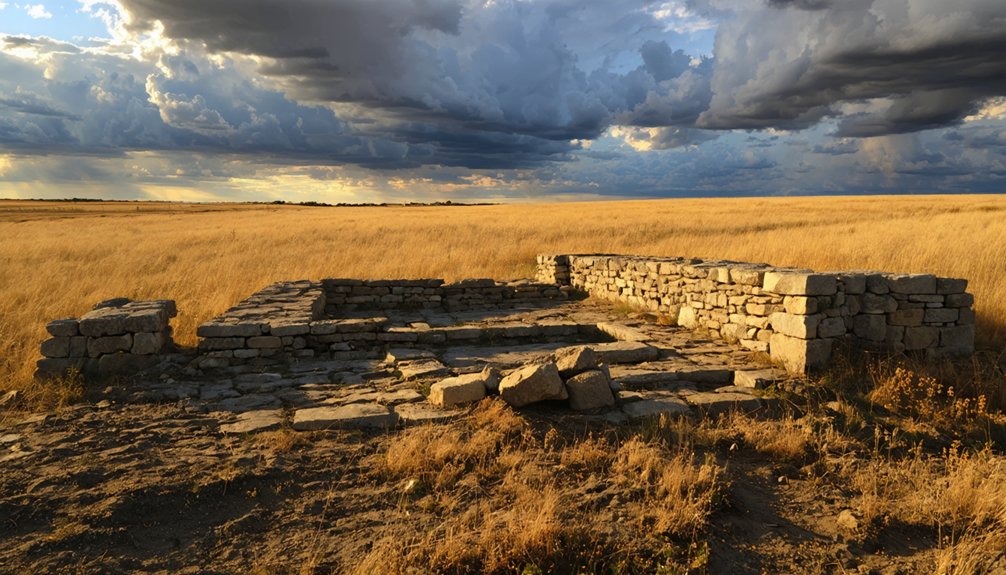
Though Camchester’s post office lasted only three years before closing in 1903, the site’s near-total disappearance isn’t surprising once you understand the settlement patterns of late-19th-century rural Kansas. Frontier towns built around commerce and postal service often vanished just as fast as they rose.
When the economic engine stalled, residents simply moved on, taking nearly everything with them. Wooden structures rotted, foundations crumbled, and farmland eventually reclaimed what little remained. You won’t find historical artifacts scattered conveniently across an open field.
Visitor access to the general area may be possible, but expect unmarked, privately held land with no signage pointing you toward anything definitive. Camchester’s erasure reflects the raw, unsentimentally efficient way the frontier discarded settlements that couldn’t sustain themselves.
That brutal honesty is part of what makes exploring it worth the drive.
Nearby Kansas Ghost Towns Worth Adding to Your Route
Camchester works best as one stop on a longer ghost town circuit because rural Kansas rewards travelers who string multiple vanished settlements into a single efficient route.
County plat maps reveal dozens of forgotten communities nearby, each carrying its own local folklore and fragments of historic architecture worth documenting.
Before you finalize your route, scout these additions:
- Bazine – retains structural remnants that illustrate late frontier building styles
- Beeler – carries strong local folklore tied to early homesteader struggles
- Ness City surroundings – offer scattered historic architecture from the same settlement era
- Utica – provides a comparable post office decline story with visible townsite evidence
Linking these stops turns a single afternoon detour into a full road trip that captures the raw, disappearing landscape of western Kansas.
How to Document What Little Remains at Kansas Ghost Towns
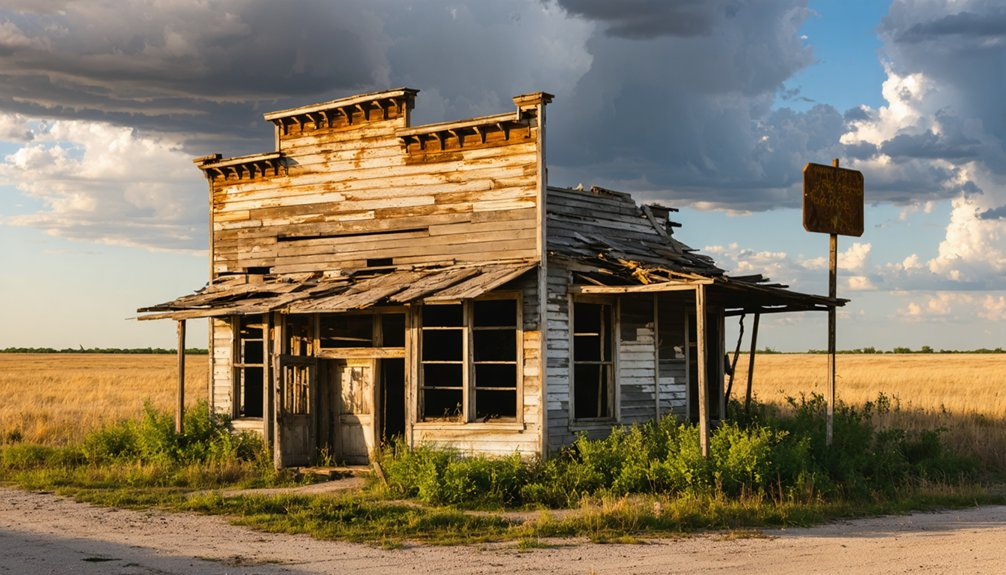
Once you’ve mapped your multi-stop route through western Kansas, you’ll want a solid documentation plan before you leave the car, because ghost town sites offer little margin for error—miss a detail in the field and it’s gone when you drive away.
Bring a camera, a notebook, and downloaded historical photographs to compare against what’s actually standing. That visual contrast alone tells a powerful story.
GPS-tag every structure, foundation, or fence line you spot, and record compass directions so your notes stay spatially accurate.
Talk to locals whenever possible—local legends often point you toward features no county map shows.
At Camchester, where physical evidence is scarce, those layered details become your entire record.
Document everything, because the landscape won’t wait for a return visit.
Frequently Asked Questions
What Is the Best Time of Year to Visit Camchester?
Imagine hitting Camchester’s dusty trails in late spring — you’ll dodge harsh seasonal weather and avoid visitor crowds entirely. April and May offer mild temps, wide-open skies, and perfect light for capturing Kansas ghost town history on your own terms.
Are There Any Lodging Options Near the Camchester Townsite?
You won’t find lodging directly at this remote site, so you’ll want to explore nearby small towns for accommodations. They often offer rich local legends and ties to historic preservation, fueling your adventurous spirit freely.
Who Was Milton S. Foster, Camchester’s First Postmaster?
Like a lone pioneer planting a flag, Milton S. Foster stepped into postal history as Cameron’s first postmaster on June 2, 1893, carrying the historical significance of connecting a frontier community to the wider world.
Is the Camchester Site Accessible by Standard Passenger Vehicles?
You’ll want to verify road conditions before heading out for this urban exploration adventure. County roads near historical preservation sites like Camchester can challenge standard vehicles, so checking local maps and records first keeps your journey safe and rewarding.
Are Guided Ghost Town Tours Available in This Part of Kansas?
You won’t find formal guided tours here, but you’ll uncover historical artifacts and local legends on your own terms. Explore freely, chart your own course, and let Camchester’s mysterious past fuel your independent adventure.
References
- https://en.wikipedia.org/wiki/List_of_ghost_towns_in_Kansas
- https://legendsofkansas.com/kansas-ghost-town-list/
- https://www.kcur.org/arts-life/2022-04-09/ghost-towns-are-all-around-kansas-city-if-you-know-where-to-look
- https://www.ksgenweb.org/KSHarper/towns/cameron.htm
- https://www.hhhistory.com/2019/05/ghost-towns-of-kansas.html
- https://www.youtube.com/watch?v=KBXINX0xqnU
- https://esirc.emporia.edu/server/api/core/bitstreams/eee1d0eb-8529-4e95-a732-12dc55fd687d/content
- https://www.youtube.com/watch?v=wocJ7F-jdrs
- http://kansasghosttowns.blogspot.com/
- https://www.youtube.com/watch?v=OyBXD18P_j4