Ransomville, Kansas, gives you a rare look at a coal boomtown that climbed and collapsed within three decades. Founded in 1881 by J. H. Ransom, the settlement once supported 300 residents, five coal shafts, and 1,000 tons of monthly production. Today it’s quiet farmland near Williamsburg, with a few original structures still standing roadside. If you’re planning a stop, there’s more to know about getting there, what to expect, and which nearby ghost towns pair perfectly with this one.
Key Takeaways
- Ransomville sits approximately two miles northeast of Williamsburg, Kansas, accessible via Old U.S. 50 Highway after exiting I-35.
- The site is private farm property, so view remaining structures respectfully from the road without trespassing.
- Plan 30 to 45 minutes for your visit, with spring and fall offering the most comfortable conditions.
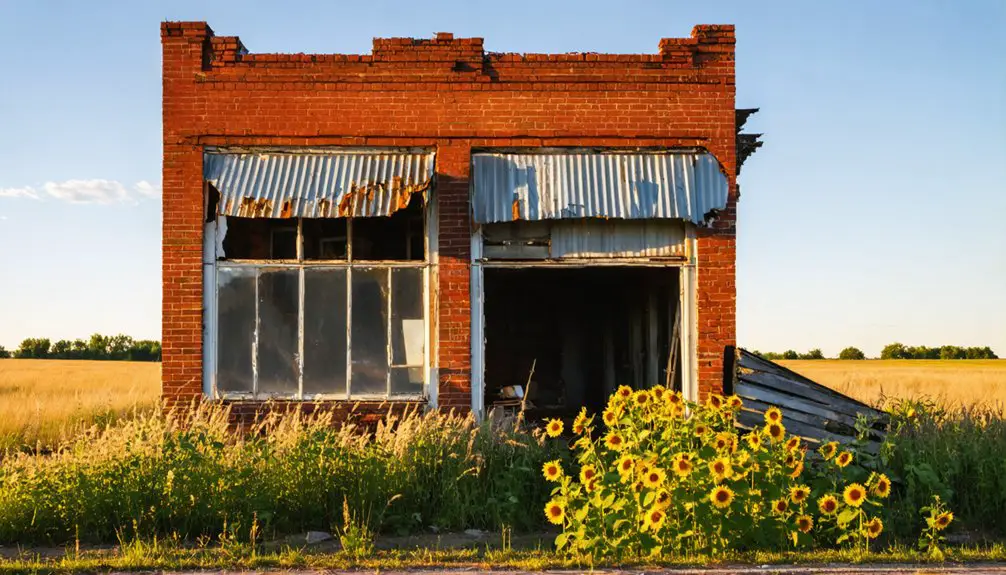
- Some original structures, including the Ransom house and former store building, remain visible on the property.
- Combine your visit with nearby ghost towns like Lehigh, Scammon, and Frontenac to create a regional heritage route.
What Was Ransomville, Kansas?
Tucked into Franklin County, Kansas, Ransomville was a coal mining town that sprang to life in 1881 when J. H. Ransom established a store and post office atop a productive coal field. He leased the land, sank shafts, and built a community from scratch.
At its peak, the town supported roughly 300 residents, 65 houses, and five operating shafts producing around 1,000 tons of coal monthly. The Atchison, Topeka & Santa Fe Railroad kept commerce moving, making Ransomville the most productive mining settlement in Franklin County.
Historical architecture from that era, including Ransom’s own house, still reportedly stands near the site. Local legends tie the town’s fate directly to its founder — when Ransom died in 1914, the mines closed, and Ransomville quietly vanished.
How Ransomville Went From Coal Boomtown to Ghost Town
At its peak in the 1880s, Ransomville supported at least five coal shafts, each about 50 feet deep.
These shafts produced roughly 1,000 tons of coal per month with a workforce of around 60 men.
That output reportedly exceeded every other Franklin County mine combined, making Ransomville a genuine regional powerhouse fueled almost entirely by coal and rail demand.
When founder James H. Ransom died in September 1914, the mines closed with him.
The post office shut down the following June, and the town simply emptied out.
Coal Mining Boom Years
Five shafts drove deep into the Franklin County earth by 1886, each sinking about 50 feet down to reach the coal seams that made Ransomville hum with purpose.
At peak production, miners pulled roughly 1,000 tons of coal per month from the ground, outpacing every other Franklin County mine combined.
Around 60 men worked those shafts, and the Atchison, Topeka & Santa Fe Railroad carried the coal outward, connecting this small camp to broader markets.
The mining technology of the era was straightforward but effective, relying on shaft excavation and rail transport to move product efficiently.
Historical preservation efforts remind us that this output wasn’t trivial — Ransomville briefly punched above its weight, transforming raw prairie land into one of southeast Kansas’s most productive coal operations.
Mine Closure And Decline
Ransomville’s boom had a hard ceiling, and it came down fast. When founder James H. Ransom died in September 1914, the mines closed that same year, and the town’s mining history effectively ended overnight. There was no pivot, no backup plan. The post office shut down on June 30, 1915, cutting the last thread of formal town function.
Town decline followed a pattern you’ll recognize across Kansas’s coal belt — once the economic engine stops, people leave quickly. Families packed up, the rail traffic dried up, and those 65 houses gradually emptied.
What had supported 300 residents in its prime couldn’t survive without the coal. Today, that entire arc from founding to ghost town spans barely three decades, making Ransomville a sharp, defining example of a boom-and-bust mining settlement.
Where Is the Ransomville Townsite Located Today?
You’ll find the Ransomville townsite in Franklin County, Kansas, roughly two miles northeast of Williamsburg near U.S. 50 and Hamilton Road.
To get there, leave I-35 near Williamsburg and head north along Old U.S. 50 Highway, where open farmland and rural roads set the tone for the detour.
Keep in mind that the former townsite is now private farm property, so you’re visiting for historical context rather than a developed attraction.
Franklin County Ghost Town
Tucked into the rural landscape of Franklin County, Kansas, the former Ransomville townsite sits approximately two miles northeast of Williamsburg, near the intersection of U.S. 50 and Hamilton Road. You’ll reach it by heading north on Old U.S. 50 Highway after leaving I-35 near Williamsburg.
Today, the site operates as a private farm, so you won’t find a developed attraction or preserved district waiting for you. Instead, you’re stepping into open country where mining history quietly lingers beneath the agricultural surface.
A few structures, including the Ransom house and former store building, reportedly still stand on the property. Don’t expect accessible historical artifacts on display, but the surrounding landscape tells the story of a classic Kansas boom-and-bust coal town worth knowing.
Near Williamsburg, Kansas
If you’re plotting this detour on a map, the Ransomville townsite sits approximately two miles northeast of Williamsburg, Kansas, near the intersection of U.S. 50 and Hamilton Road. You’ll typically approach by leaving I-35 near Williamsburg and heading north along Old U.S. 50 Highway.
Rolling through open farmland that stretches toward the horizon, you’ll notice the landscape setting the scene for Ransomville’s history. Don’t expect a preserved historic district or formal historical preservation efforts here. The former townsite now operates as a private farm, so visibility is limited to scattered remnants rather than accessible ruins.
Local legends about Ransomville’s coal-boom past carry more weight than any standing infrastructure. Think of this stop as a contextual detour — a place where you absorb history through landscape rather than signage, pairing it with nearby Franklin County destinations like Ottawa or Williamsburg itself.
Private Farm Property
What remains of Ransomville today sits quietly behind the boundary of a working private farm, where the coal-boom townsite has long since traded shaft headframes for crop rows and fence lines.
Historical preservation here isn’t a museum program — it’s incidental, shaped by whatever the land’s owners have chosen to keep standing rather than tear down.
You’ll spot remnants, including the Ransom house and a former store building, but don’t expect open access. This is private property, and you need to respect that boundary.
Your best move is pulling off nearby, taking in the rural landscape, and letting the historical context you’ve researched do the interpretive work.
Freedom-seeking road trippers understand that some stories reveal themselves from a respectful distance rather than up close.
How to Reach Ransomville From I-35
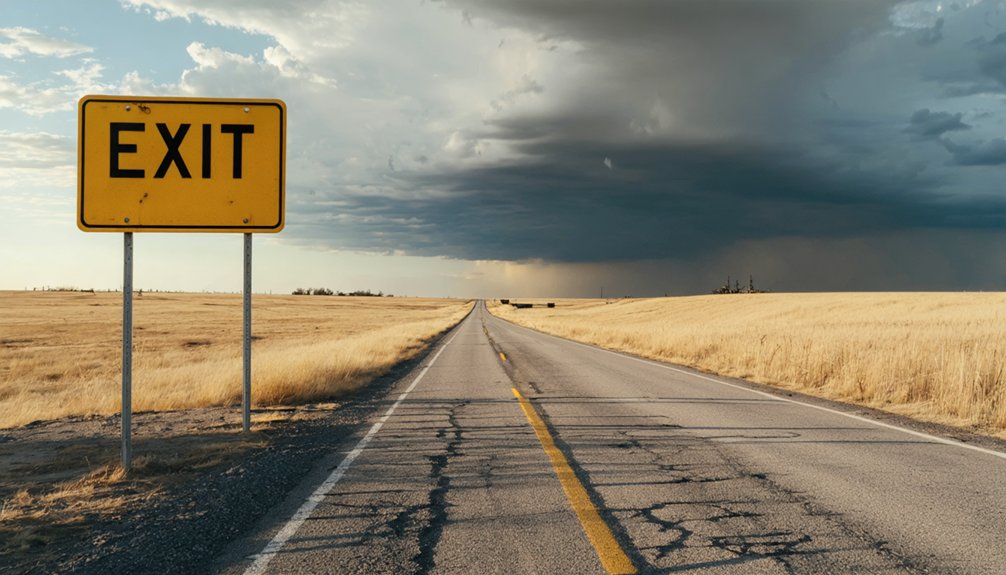
Reaching Ransomville starts with exiting I-35 near Williamsburg, Kansas, where you’ll head north on Old U.S. 50 Highway. From there, you’re looking for the intersection of U.S. 50 and Hamilton Road, roughly two miles northeast of Williamsburg.
Exit I-35 near Williamsburg, head north on Old U.S. 50, and find the Hamilton Road intersection two miles northeast.
The drive itself rewards you with open rural scenery — rolling farmland, wide skies, and the kind of quiet roads that make Kansas road trips worth taking.
As you approach the former townsite, you’re entering ground shaped entirely by mining history, where coal shafts once ran fifty feet deep and trains hauled out a thousand tons monthly.
The site sits on private farm property today, so respect those boundaries and take in what context the landscape offers from the road.
What Can You Still See at the Ransomville Site?
When you arrive at the Ransomville site, you won’t find a preserved historic district, but you can still spot the Ransom house and a few other structures standing near what was once a bustling coal camp.
The former store and post office building sits on the north side of the property, giving you a tangible connection to the town’s 1880s origins.
Keep in mind that the entire townsite now operates as a working farm, so you’re viewing history through an agricultural lens rather than a developed ghost-town attraction.
Remaining Buildings On-Site
Although Ransomville has long since faded into farmland, a few structural remnants still anchor the site’s history. You’ll find the Ransom house still standing, a quiet survivor of urban decay that once bustled with mining-era life.
The former store and post office building reportedly remains on the north side of the property, giving you a rare touchstone for historical preservation in an otherwise vanished town.
Keep in mind that the entire site now operates as a private farm, so you won’t wander freely through open ruins. What you can do is view these structures from the road and absorb the contrast between what Ransomville once was and what it’s become.
These buildings don’t shout history, but they whisper it clearly enough to make the detour worthwhile.
Farm Surrounds Former Townsite
What greets you at the Ransomville site today is open farmland, the kind of quiet agricultural spread that gives no immediate hint of the coal shafts and frame cottages that once defined this corner of Franklin County. The former townsite now functions as a working farm, folding Ransomville’s industrial past into Kansas’s broader agricultural history.
Rural landscapes have completely reclaimed what was once a modest but productive mining camp. You’re not walking into a preserved district or a marked heritage site. Instead, you’re standing on private property where everyday farming operations continue.
That shift from coal camp to cultivated land tells its own story about how quickly boom economies dissolve. Respect the private access boundaries, absorb the context, and let the open fields remind you how thoroughly the land reclaims its own.
Is the Ransomville Site Open to Visitors?
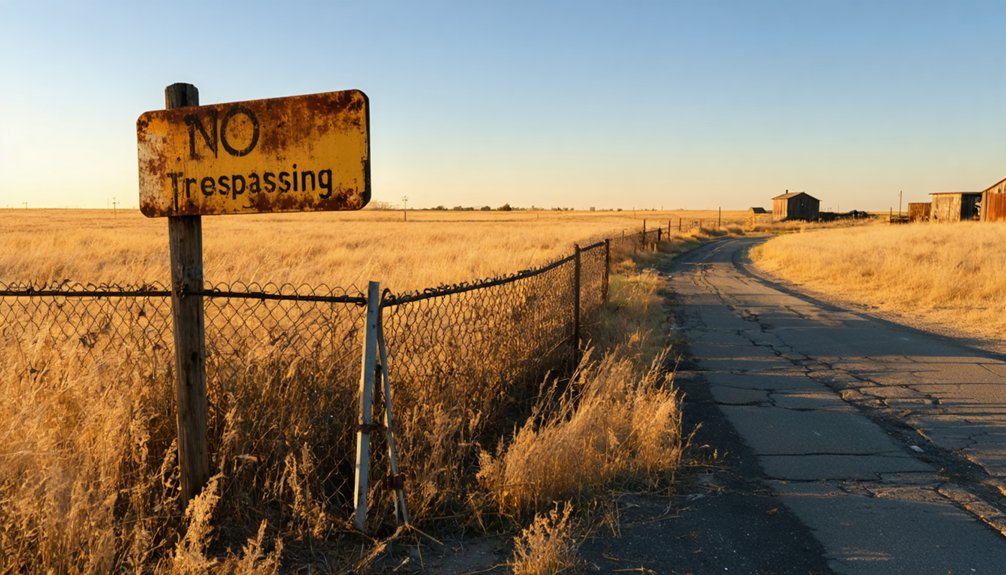
Since the Ransomville townsite now operates as a private farm, you can’t simply pull up and wander the grounds. Respecting that boundary matters, both legally and ethically. The land is privately owned, and there’s no designated visitor access, parking area, or interpretive signage welcoming curious travelers.
The Ransomville townsite is privately owned farmland — no visitor access, no parking, no welcome mat.
That said, you don’t need to set foot on the property to appreciate the mining history embedded in this location. Viewing the site from the road still connects you to Ransomville’s story.
Ghost town preservation here isn’t about maintained ruins — it’s about context. You’re standing near where 60 miners once extracted 1,000 tons of coal monthly.
Before visiting, consider researching whether local historical societies have arranged any access or can point you toward additional Franklin County resources.
What’s the Best Season to Visit Ransomville?
Timing your visit to Ransomville around Kansas weather makes a real difference in what you’ll experience along these rural Franklin County roads. Spring and fall offer the clearest conditions for exploring open farmland, spotting remnants near the old townsite, and taking in scenic viewpoints across the surrounding countryside.
Mild temperatures let you move freely, stop often, and absorb the historical preservation context this site deserves without battling summer heat or icy winter roads. Summer works if you start early and carry water, but midday heat on exposed farm roads can cut your exploration short.
Winter visits are possible on dry days but limit visibility and road access. Fall is the strongest choice, pairing comfortable weather with dramatic open-sky landscapes that frame the ghost town’s quiet legacy perfectly.
How Long Does a Ransomville Stop Actually Take?
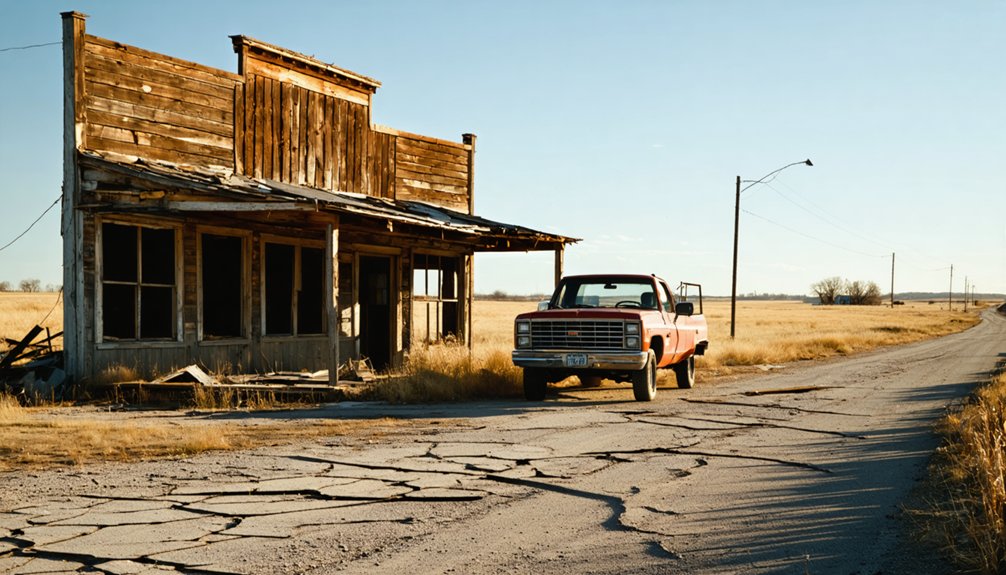
Once you’ve locked in your ideal season, the next practical question is how much road trip time to actually budget for the Ransomville stop. Honestly, plan for about 30 to 45 minutes.
The site sits on private farmland, so you’re viewing remnants from the roadside rather than walking a developed historic preservation trail. You’ll spot the old Ransom house and the former store building, and you can pause to imagine the five shallow mining shafts and the rudimentary mining technology that once pulled 1,000 tons of coal monthly from this quiet stretch of Franklin County.
There’s no visitor center slowing you down. Pair Ransomville with nearby Williamsburg or Ottawa to build a full day, and you’ll leave feeling like you genuinely uncovered something forgotten.
What Else Is Worth Seeing Near Ransomville in Franklin County?
Franklin County rewards a little extra driving time, so while you’re already out near Ransomville, pull into Ottawa, the county seat. The historic downtown square, the Dietrich Cabin, and the Old Depot Museum offer genuine context for the region’s settlement era.
Ottawa, the Franklin County seat, rewards the short detour with a historic downtown square, the Dietrich Cabin, and the Old Depot Museum.
Williamsburg, just a couple of miles from the Ransomville site, is a quiet rural stop that helps frame how these small Franklin County communities developed around rail lines and agricultural commerce.
Historical preservation efforts across Franklin County keep local legends alive, from coal-boom stories to frontier homesteading accounts you won’t find in mainstream travel guides.
You’re free to piece together your own route, connecting these stops into a half-day heritage loop that gives Ransomville’s ghost town narrative the surrounding context it genuinely deserves.
Which Other Southeast Kansas Ghost Towns Pair Well With Ransomville?
Southeast Kansas hides a surprising number of ghost towns that share Ransomville’s boom-and-bust DNA, making it easy to string together a compelling road trip across the region. Lehigh and Carbondale carried similar mining history, rising fast on coal seams and collapsing when demand shifted.
Farther south, you’ll find forgotten settlements where historical architecture still hints at ambition that once felt permanent. Scammon and Frontenac in Crawford County round out the picture, offering deeper mining history tied to immigrant labor and industrial-scale operations.
Each stop adds a distinct chapter to the same story Ransomville tells. You’re fundamentally following the collapsed spine of a regional economy, connecting dots between shafts, rail lines, and communities that burned bright, then quietly disappeared into the Kansas landscape.
Frequently Asked Questions
Was Ransomville Ever Considered for Historic Preservation or Landmark Status?
Like a needle in a haystack, you won’t find clear historical preservation efforts or landmark status for Ransomville. Ghost town tourism drives its appeal, but historical preservation efforts haven’t formally recognized this faded Kansas mining settlement.
Did Any Ransom Family Descendants Remain in Franklin County After 1915?
The knowledge doesn’t confirm whether Ransom family descendants stayed in Franklin County after 1915. You’d uncover those connections through genealogical research or local family reunions, where living relatives might still share fascinating stories about Ransomville’s forgotten legacy.
Are There Any Photographs or Maps of Ransomville During Its Mining Peak?
Like buried treasure, historical photographs and maps of Ransomville’s mining peak are scarce. You’ll find limited visual records documenting town development and mining technology, so you’re best exploring Kansas historical society archives and Franklin County local collections.
What Type of Coal Was Mined at Ransomville, and How Was It Graded?
The available records don’t specify coal grading or mining techniques used at Ransomville. You’ll find the knowledge focuses on output volumes and shaft depths, leaving those finer operational details undocumented—a mystery you’re free to explore further!
Did Ransomville Ever Have a Church, Saloon, or Other Community Gathering Place?
The records don’t confirm a church or saloon, but you’ll find ghost town legends hint at community remnants beyond the mines. Ransomville’s modest cottages, post office, and school likely served as its true gathering places.
References
- https://abandonedkansas.wordpress.com/2022/02/02/ransomville-kansas/
- https://legendsofkansas.com/ransomville-kansas/
- https://www.youtube.com/watch?v=SyTlkr_4aFM
- https://en.wikipedia.org/wiki/Ransomville
- https://www.ghosttowns.com/states/ks/ransomville.html
- https://legendsofkansas.com/kansas-ghost-town-list/
- https://en.wikipedia.org/wiki/List_of_ghost_towns_in_Kansas
- https://www.ghosttowns.com/states/ks/ks.html