Planning a ghost town road trip to Clairmont, New Mexico means heading into Catron County’s remote high desert to find one of the Southwest’s most forgotten frontier relics. Start in Glenwood, drive 19 miles northeast toward Copper Creek, and use GPS coordinates 33.44472°N, 108.77944°W since cell service is unreliable. You’ll find two weathered log cabins and a crumbling corral waiting exactly as history left them. Keep exploring to uncover everything you need to make this trip unforgettable.
Key Takeaways
- Clairmont, New Mexico, is a remote ghost town in Catron County, approximately 19 miles northeast of Glenwood, accessible by standard 2WD vehicles.
- Navigate using GPS coordinates 33.44472°N, 108.77944°W, and download offline maps since cell service is unreliable throughout the area.
- The site features two weathered log cabins and a corral near Copper Creek, with no signs, parking lots, or guided tours available.
- Explore carefully, as structures show significant decay including cracked beams and sagging corners, and wildlife like deer and lizards inhabit the area.
- Pair Clairmont with Lake Valley Historic Townsite, open Friday–Sunday, 9 a.m.–2 p.m., for a contrasting managed preservation experience nearby.
What Is Clairmont, New Mexico?
Tucked into the remote landscape of Catron County, New Mexico, Clairmont is a ghost town that began as a small mining camp around 1822, developed beside Copper Creek, and never quite became the thriving settlement its early prospectors had envisioned. It survived into the late 1880s before fading into obscurity.
Today, you’ll find two sturdy log cabins and a corral standing as quiet reminders of the camp’s brief existence. While formal preservation efforts are minimal, these structures give you a rare, unfiltered look at frontier life.
Don’t expect historical artifacts behind glass or guided tours. Clairmont offers something rawer — an honest, open-air encounter with a forgotten past that rewards curious travelers willing to seek it out on their own terms.
What Survives at the Clairmont Ghost Town
When you finally reach Clairmont, the site itself answers the question of what survived simply and honestly: two log cabins and a corral. No interpretive signs. No visitor center. Just sturdy, weathered structures standing beside Copper Creek, quietly holding their ground against decades of neglect.
These aren’t polished historical artifacts behind protective barriers. They’re raw remnants of a mining camp that never quite fulfilled its promise. Preservation efforts here are minimal, meaning the site stays close to its natural, forgotten state — which is exactly what draws backcountry explorers to places like this.
You’ll want to move carefully and respectfully through the site. What little remains is fragile.
Clairmont rewards the traveler who appreciates honest ruins over curated history, offering freedom to experience the past without anyone narrating it for you.
How To Get To Clairmont From Glenwood
Start your drive in Glenwood, a small town in Catron County that serves as your most practical launching point for reaching Clairmont.
From there, you’ll head northeast roughly 19 miles until you near the Copper Creek area, where the old mining camp once stood.
The route is accessible by 2WD, but you’ll want to watch your mileage carefully since the site sits in remote, lightly marked backcountry terrain.
Starting Point In Glenwood
Glenwood serves as your natural jumping-off point for reaching Clairmont, sitting roughly 19 miles southwest of the ghost town along a route accessible by a standard 2WD vehicle. This small New Mexico community offers your last reliable stop for fuel and supplies before heading into the backcountry.
From Glenwood, you’ll navigate northeast toward Copper Creek, where the ghost town’s surviving log cabins and corral wait quietly in the landscape. The area sees little foot traffic, so you’ll likely have the ruins to yourself.
Keep preservation efforts in mind as you explore — historical artifacts tied to Clairmont’s 1822 mining origins are fragile and irreplaceable. Treat the site with care, document what you find with photos, and leave everything exactly as you discovered it.
Driving Northeast 19 Miles
Once you’ve stocked up in Glenwood, the 19-mile drive northeast toward Clairmont takes you deeper into the quiet backcountry of Catron County. The route follows a 2WD-accessible road, but don’t let that fool you into expecting a smooth, well-marked path. Signage is minimal, and the landscape grows increasingly remote as Copper Creek draws near.
The drive itself reflects Clairmont’s historical significance — a journey that mirrors the isolation prospectors once accepted when chasing mineral wealth in the 1800s. That same remoteness now creates preservation challenges, leaving the site largely unprotected and easy to overlook.
Keep your coordinates handy: 33.44472°N, 108.77944°W. Arriving prepared means you’ll spend less time *orienteering* and more time exploring what little remains of this forgotten mining camp.
Locating Copper Creek Access
Finding Copper Creek access means orienting yourself from Glenwood’s center and heading northeast along a 2WD-accessible road that cuts through Catron County’s sparse backcountry. The creek marks the edge of Clairmont’s historical mining footprint, where preservation challenges have left little signage to guide you.
Use these four reference points:
- Start at Glenwood’s main road junction as your zero point
- Travel northeast approximately 19 miles through open high-desert terrain
- Watch for Copper Creek as your primary natural landmark confirming proximity
- Pinpoint coordinates 33.44472°N, 108.77944°W on your GPS before departing
Cell service is unreliable here, so download offline maps beforehand. The road remains passable for standard vehicles, but remote conditions demand self-sufficiency. Arrive prepared, and Copper Creek’s setting will reward your effort.
What the Site Actually Looks Like When You Arrive
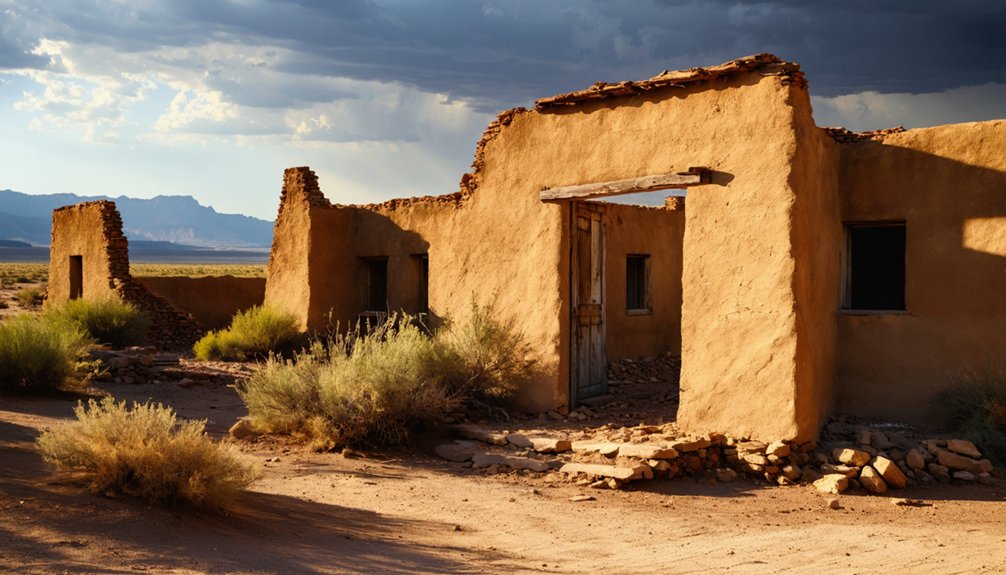
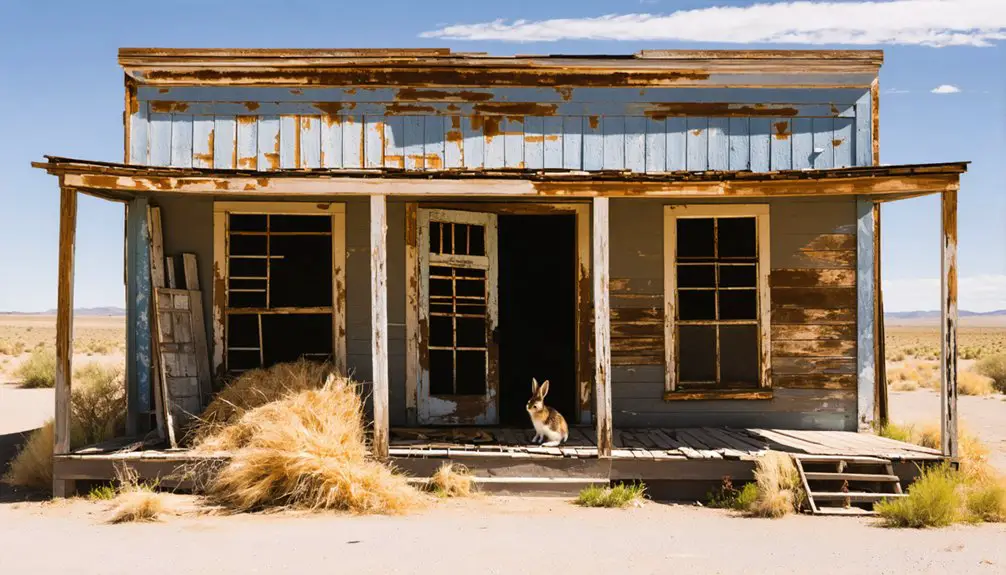
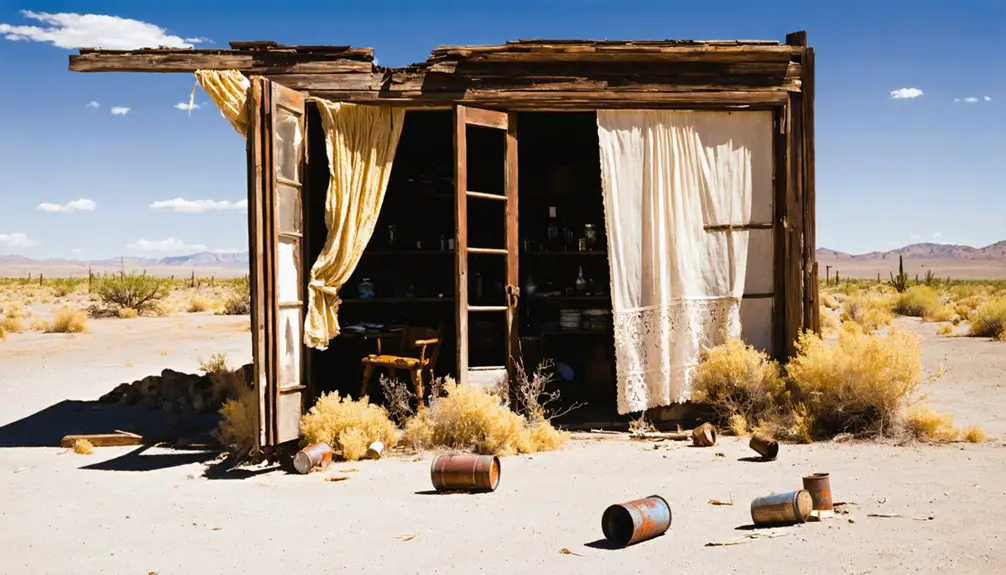
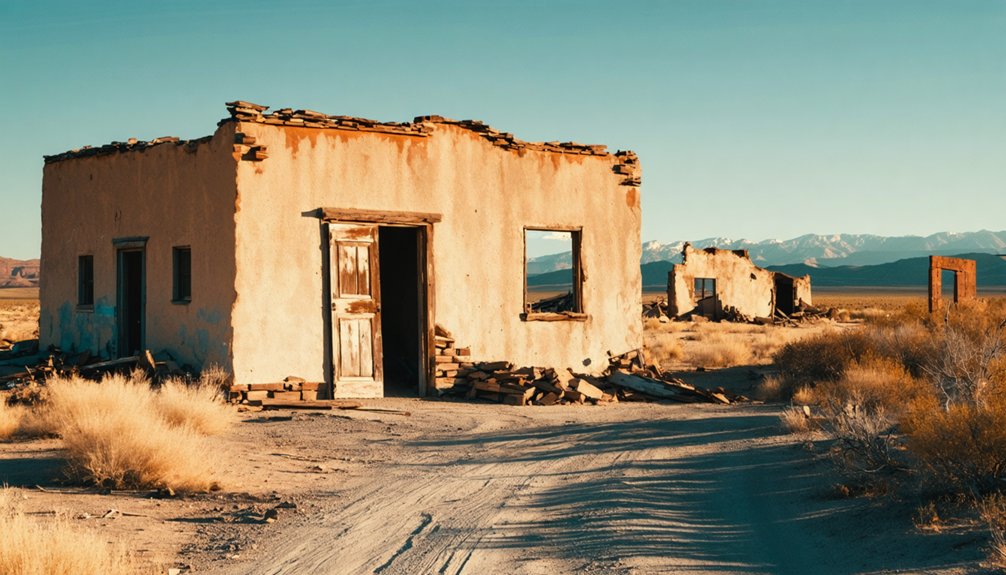
When you pull up to Clairmont, don’t expect a sign, a parking lot, or a trail map — this is raw backcountry New Mexico. What greets you instead is open terrain near Copper Creek, two weathered log cabins still standing with surprising stubbornness, and a corral that hints at the daily life once lived here.
The cabins are the centerpiece. Their hand-hewn logs carry over a century of exposure, and preservation challenges are visible in every cracked beam and sagging corner.
Local wildlife has claimed the surrounding landscape, so you’ll likely share the space with birds, lizards, or the occasional deer.
Nothing is roped off or labeled. You’re walking through history on its own terms — unfiltered, unscripted, and entirely worth the detour.
Nearby Ghost Towns That Pair Well With a Clairmont Visit
Clairmont pairs naturally with a broader sweep through southwestern New Mexico’s ghost-town circuit, and Lake Valley Historic Townsite makes one of the strongest additions to your itinerary. Managed by the BLM, Lake Valley offers a more structured look at mining history with open hours Friday through Sunday, 9 a.m. to 2 p.m.
Lake Valley Historic Townsite pairs perfectly with Clairmont, offering BLM-managed preservation open Friday through Sunday, 9 a.m. to 2 p.m.
Here’s what makes this pairing work:
- Contrast — Clairmont shows raw, unmanaged ruins while Lake Valley demonstrates active ghost town preservation.
- Context — Both sites reflect New Mexico’s 19th-century mineral rush culture.
- Accessibility — Lake Valley’s maintained access complements Clairmont’s backcountry feel.
- Pacing — Visiting both fills a rewarding full-day itinerary without overextending your route.
Together, they give you the full spectrum of what southwestern New Mexico’s ghost-town landscape delivers.
Other New Mexico Ghost Towns Worth the Drive
New Mexico’s ghost-town map stretches well beyond Clairmont and Lake Valley, and if you’ve already committed to a backcountry road trip, you’d be doing yourself a disservice by stopping there.
Towns like Mogollon, White Oaks, and Chloride each tell their own story of boom-and-bust mining culture. Mogollon preserved remnants tied to historical mining techniques like hard-rock silver extraction, giving you real context for what drew prospectors into these rugged mountains.
White Oaks offers standing structures and a stronger ghost town preservation effort, making it easier to interpret the past without a guide.
Chloride sits quietly in the Black Range, rewarding curious travelers who don’t need paved roads or posted hours.
New Mexico’s backcountry keeps giving if you’re willing to keep driving.
Frequently Asked Questions
Is There an Entrance Fee to Visit Clairmont Ghost Town?
No entrance fee stands between you and Clairmont’s raw historical preservation. You’ll roam freely among weathered log cabins, capturing stunning photography opportunities without paying a cent — just bring your adventurous spirit and respect for this remote, untamed ghost town.
Are Pets Allowed When Visiting Clairmont in Catron County?
No specific pet policies are documented for Clairmont’s remote site. You’ll find minimal visitor amenities here, so bring water for your pets, keep them leashed, and respect this wild, untamed ghost town landscape freely.
What Is the Best Time of Year to Visit Clairmont?
Spring and fall offer you the best weather for exploring Clairmont’s rugged backcountry terrain. Avoid summer’s intense heat and winter’s rough roads. Peak season travelers enjoy mild temperatures, making your ghost town adventure truly unforgettable.
Is Camping Permitted Near the Clairmont Ghost Town Site?
Specific camping regulations for Clairmont aren’t confirmed, but you’ll find nearby campgrounds within the surrounding Gila National Forest, where you can sleep under star-filled skies and wake up ready to explore this remote ghost town.
Are Guided Tours of Clairmont Available for Visiting Groups?
Like a lone trail with no guide, you’re on your own here — no guided exploration or historical preservation tours are available at Clairmont. You’ll freely chart your own course through its rustic log cabins and corral.
References
- https://www.youtube.com/watch?v=F6XnKRldDco&vl=en-US
- https://www.blm.gov/visit/lake-valley-historic-townsite
- https://en.wikipedia.org/wiki/Clairmont
- https://kids.kiddle.co/Clairmont
- https://www.ghosttowns.com/states/nm/clairmont.html