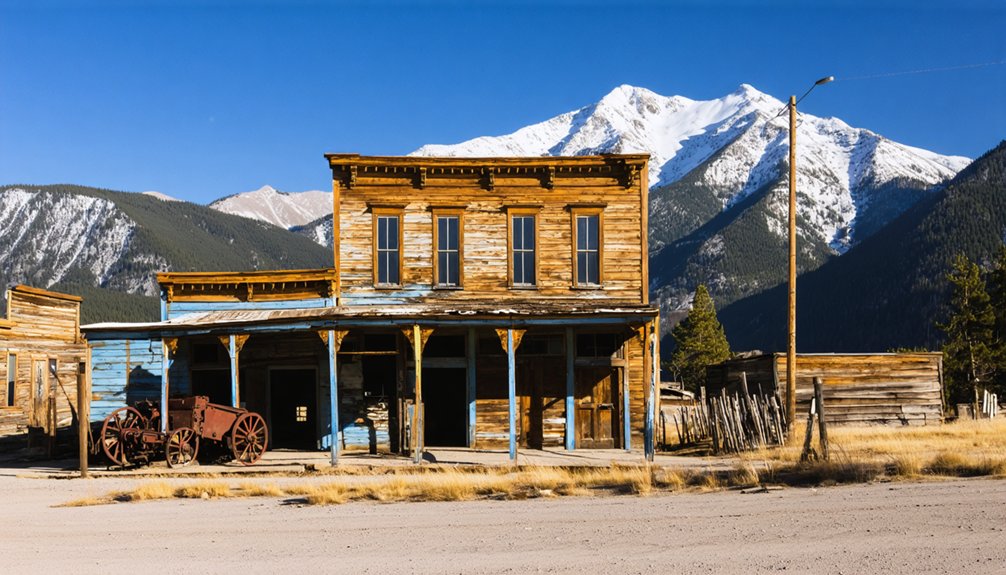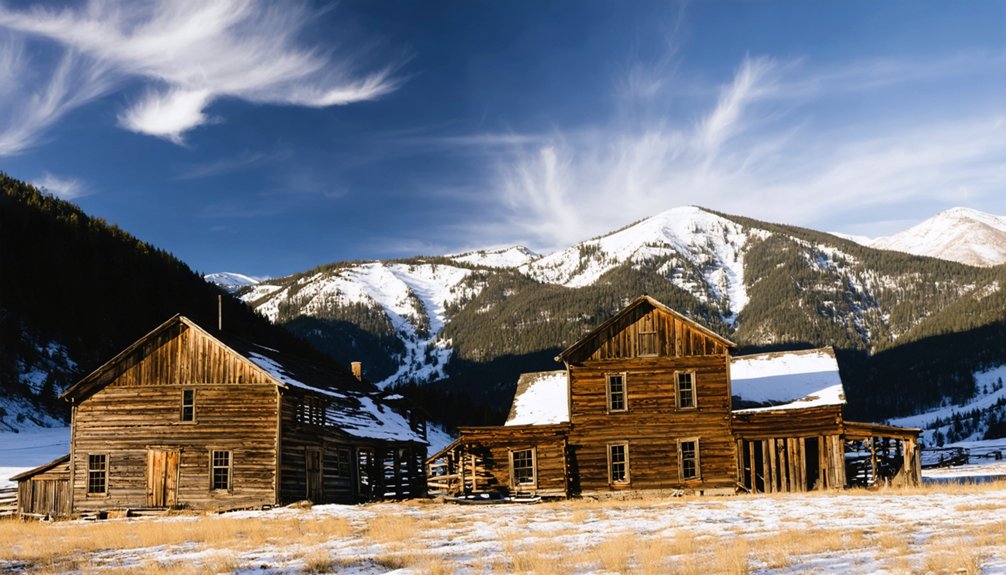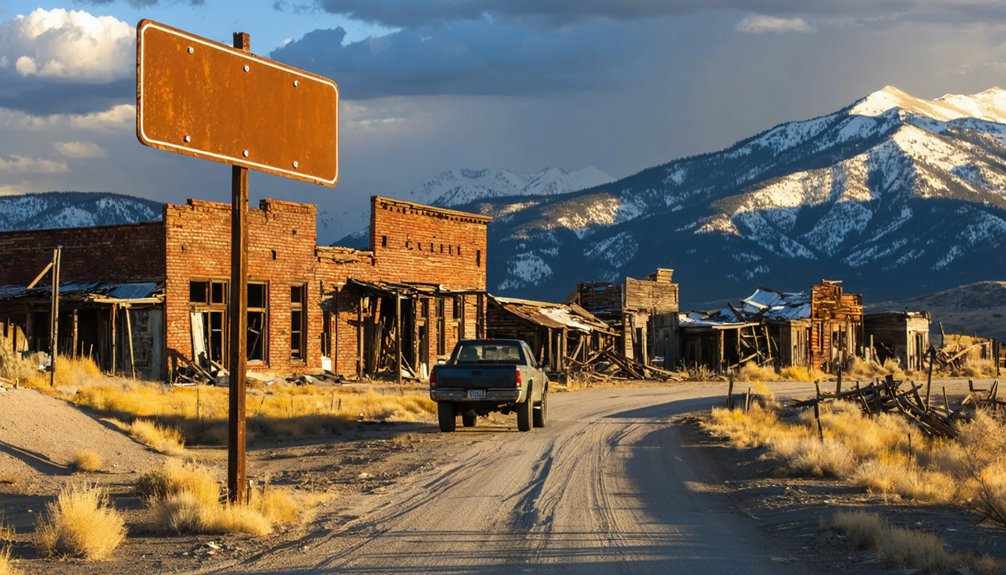
Planning a ghost town road trip to Climax, Colorado starts with basing yourself in Leadville and heading north on Highway 91 to Fremont Pass. At 11,342 feet, you’ll find sweeping alpine views, interpretive signs, and haunting industrial remnants of a town that once supplied three-quarters of the world’s molybdenum. Weather changes fast up here, so pull over often and stay alert. There’s far more to this vanished world than meets the eye at first glance.
Key Takeaways
- Climax sits at 11,342 feet on Fremont Pass along Highway 91, making it an easy drive-through stop between Leadville and Copper Mountain Resort.
- Use Leadville as your base, incorporating the National Mining Hall of Fame for historical context before visiting Climax.
- The town was deliberately erased by 1962; only scattered industrial buildings and active mining infrastructure remain visible today.
- Climax once supplied 75% of the world’s molybdenum, making it a globally significant mining site worth exploring.
- Weather changes rapidly at high altitude, so pull over frequently, stay alert, and plan stops at scenic overlooks along US-91.
Why Climax Belongs on Your Colorado Ghost Town List
When most people picture a Colorado ghost town, they imagine crumbling saloons and weathered storefronts frozen in time — Climax flips that image entirely. Instead of historical architecture frozen mid-decay, you’ll find an industrial giant that swallowed its own town whole.
Sitting at 11,342 feet on Fremont Pass, Climax once supplied three-fourths of the world’s molybdenum and held records as the highest post office and railroad station in the country.
Local legends speak of an entire community relocated, homes physically moved to Leadville before 1965. The original townsite no longer exists — the mine expansion erased it in 1962.
That erasure is precisely what makes Climax compelling. You’re not touring ruins; you’re standing where a vanished world once operated at full speed.
Where Climax, Colorado Sits on the Map
Finding Climax on a Colorado map is half the adventure. You’ll spot it on Fremont Pass along the Continental Divide, wedged between Leadville and Copper Mountain at roughly 11,342 feet. It’s a raw, open stretch of alpine country where local wildlife roams freely and scenic viewpoints stretch toward distant ridgelines.
Use these landmarks to orient yourself before you go:
- Highway 91 runs directly through the pass, making Climax an easy drive-through stop
- Leadville sits just south, offering lodging, food, and ghost town context
- Copper Mountain Resort marks the northern boundary, keeping you anchored on the map
You’re fundamentally threading the Continental Divide, which means weather shifts fast and the landscape rewards drivers who stay alert and pull over often.
The Molybdenum Mine That Built the Town of Climax
When you dig into Climax’s history, you’ll find that molybdenum — a metal that hardens steel and withstands extreme heat — put this remote mountain town on the map.
At its peak, the Climax Mine supplied roughly three-fourths of the world’s entire molybdenum output, making it the largest operation of its kind on the planet. That staggering production fueled wartime industries and global steel manufacturing.
Transforming a high-alpine pass into one of Colorado’s most industrially significant sites.
Molybdenum’s Industrial Importance
Though it sounds like something from a chemistry textbook, molybdenum is the mineral that literally built Climax. This tough, silvery element transforms ordinary steel into something extraordinary, and local legends say miners once called it “moly” like an old friend.
Mining technology advanced rapidly here because the demand never stopped.
Molybdenum’s industrial reach is staggering:
- Steel hardening: It strengthens steel used in bridges, pipelines, and military equipment
- Wartime production: Both World Wars drove explosive demand, putting Climax on the map globally
- Modern manufacturing: It remains essential in aerospace, automotive, and energy industries today
At its peak, Climax supplied roughly three-fourths of the world’s molybdenum. You’re not just visiting a ghost town — you’re standing on ground that shaped global industry.
Mine’s Peak Production Era
At its peak, the Climax Mine didn’t just dominate the molybdenum market — it owned it, supplying roughly three-fourths of the world’s entire output. That’s an almost unimaginable concentration of industrial power sitting at over 11,000 feet on the Continental Divide.
When you drive Fremont Pass today, you’re rolling through living mining history. During peak production, the operation fueled wartime steel manufacturing and reshaped global supply chains from a remote Colorado mountainside.
The Denver, South Park and Pacific Railroad’s railroad legacy made it all possible, hauling ore down from elevations most trains never dared climb.
This wasn’t a small-town operation that got lucky — it was a world-class industrial force carved into alpine terrain. That scale is exactly what makes Climax worth pulling over for.
How the Mine Expansion Erased Climax’s Entire Townsite
Few ghost towns vanished as deliberately as Climax did. The mine needed room to grow, so the company simply erased the townsite. By 1962, buildings were razed, and remaining homes were relocated to Leadville’s West Park before 1965. No artillery defenses or local legends saved the settlement from progress — profit made the call.
Here’s what the expansion wiped out:
- The original residential neighborhoods where miners and families built daily life
- The post office that held the highest-elevation title in the U.S. from 1919 to 1974
- The community infrastructure that once supported thousands of workers
You won’t find preserved streets or restored storefronts here. What you’ll find instead is active mining infrastructure sitting where an entire town once stood.
The Elevation Records That Made Climax Famous
Climax didn’t just sit high in the Rockies — it held the records to prove it. At roughly 11,342 feet on Fremont Pass, the Climax post office earned the title of highest elevation post office in the United States from 1919 until 1974.
The Denver, South Park and Pacific Railroad station here also claimed the title of highest railroad station in North America. These weren’t just historical artifacts of civic pride — they were genuine bragging rights carved into the Continental Divide.
When you pull over at the scenic viewpoints along Fremont Pass today, you’re standing where those records were set. That wind hitting your face? That’s what record-breaking elevation actually feels like.
Let the altitude sink in before you drive on.
What Survives at Climax Today
Decades of mine expansion have stripped away almost everything that once made Climax a functioning town. Historical preservation here means roadside markers and industrial remnants rather than restored buildings. Still, the scenic viewpoints from Fremont Pass make the stop worthwhile — you’re standing above 11,000 feet on the Continental Divide.
Here’s what you can actually expect to find:
- Mining infrastructure: Active facilities dominate the landscape, reminding you this isn’t a preserved ghost town
- Scattered company buildings: A few structures remain in operational use, though none are open to visitors
- Historical markers: Small signs acknowledge the town’s record-setting past
Don’t expect to wander streets or peek through windows. Climax rewards the curious traveler who appreciates raw industrial history framed by stunning high-alpine scenery.
How to Plan Your Road Trip to Climax, Colorado
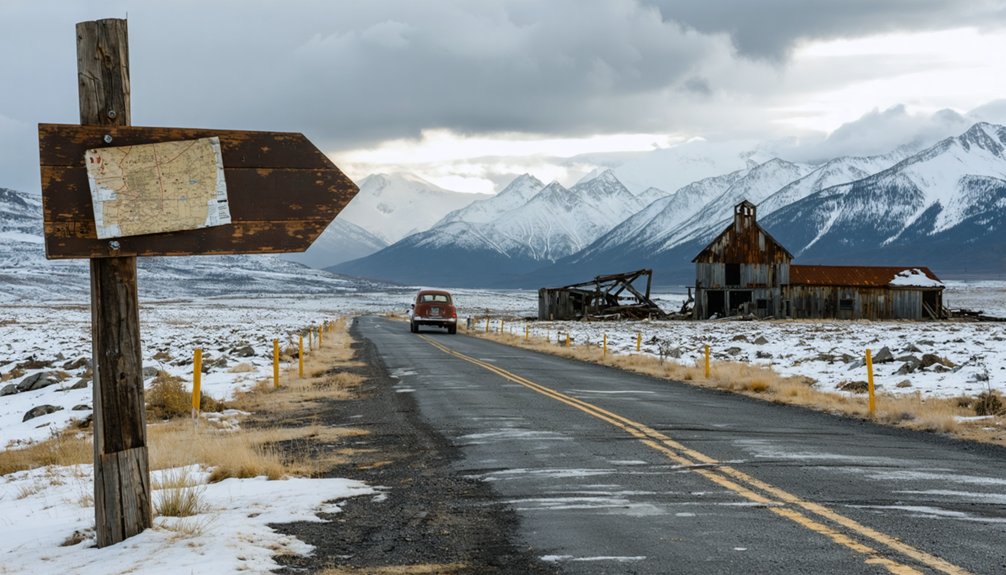
Once you know what’s waiting at Climax, getting there becomes the next part of the adventure. Base yourself in Leadville, a living historic town with local cuisine ranging from hearty mountain comfort food to craft beer stops worth lingering over.
From there, Highway 91 north carries you straight up to Fremont Pass and the Climax site in under 20 minutes.
Pull over at the scenic viewpoints along the pass to take in the raw alpine landscape before you reach the mining infrastructure. You’re crossing the Continental Divide at over 11,000 feet, so give yourself time to breathe and photograph the terrain.
Climax itself is a drive-through experience, so pair it with Leadville’s deeper history to build a full day worth making the trip for.
Using Leadville as Your Base for the Climax Ghost Town Drive
Leadville sits just 15 miles south of Climax, making it the ideal overnight anchor for your Fremont Pass ghost town drive. You’ll find hotels, restaurants, and a rich mining history that deepens the Climax story before you even leave town.
From Leadville, you can drive north on US-91 and hit scenic viewpoints and historic markers along the way.
Pack your Leadville base with these stops:
- National Mining Hall of Fame — context for everything you’ll see at Climax
- Fremont Pass overlook — sweeping high-alpine views at 11,318 feet
- Historic markers along US-91 — quick roadside reads connecting railroad and mining history
You’re not just visiting a ghost town. You’re tracing a vanished community from the comfort of a well-positioned mountain town.
Frequently Asked Questions
Did Any Climax Residents Protest When the Town Was Demolished in 1962?
The records don’t confirm protests, but you’ll find ghost town legends hinting at tension. Mining history shows residents relocated to Leadville’s West Park before 1965, suggesting the company quietly managed displacement without documented public resistance.
What Happened to the Climax Post Office Building After It Closed in 1974?
The records don’t tell you what happened to that post office building — it’s vanished like a ghost town preservation dream. No historic site designation saved it, so you’re left chasing echoes across Fremont Pass’s windswept, breathtaking silence.
Can Visitors Legally Enter the Current Climax Mine Property Today?
You can’t freely enter the active Climax Mine property today — it’s privately controlled. For ghost town preservation and mining history exploration, you’ll experience Climax best from roadside pullouts along Fremont Pass, where the industrial landscape tells its own powerful story.
What Railroad Line Served the Climax Station on Fremont Pass?
You’ll love knowing the Denver, South Park and Pacific Railroad served Climax Station, carrying railroad history to breathtaking heights on Fremont Pass — a remarkable piece of history preservation that once crowned North America’s highest rail stop.
Did the 1959 Miners’ Strike Result in Any Lasting Labor Agreements?
The knowledge doesn’t confirm lasting labor agreements from the 1959 strike, but you’ll feel the labor union impacts and mining industry legacy echoing through Climax’s abandoned streets — that strike accelerated the town’s dramatic decline forever.
References
- https://en.wikipedia.org/wiki/Climax
- https://www.uncovercolorado.com/ghost-towns/climax/
- https://mesacountylibraries.org/2024/10/nifty-names-ghost-towns-of-western-colorado/
- https://www.allsummitcounty.com/history_museums/climax_ghost_town.php
- https://kids.kiddle.co/Climax
- https://www.colorado.com/cities-and-towns/climax
- https://www.wikiwand.com/en/articles/Kokomo
- https://www.uncovercolorado.com/towns/climax/
- https://en.wikipedia.org/wiki/List_of_ghost_towns_in_Colorado
- https://it.wikipedia.org/wiki/Climax_(Colorado)