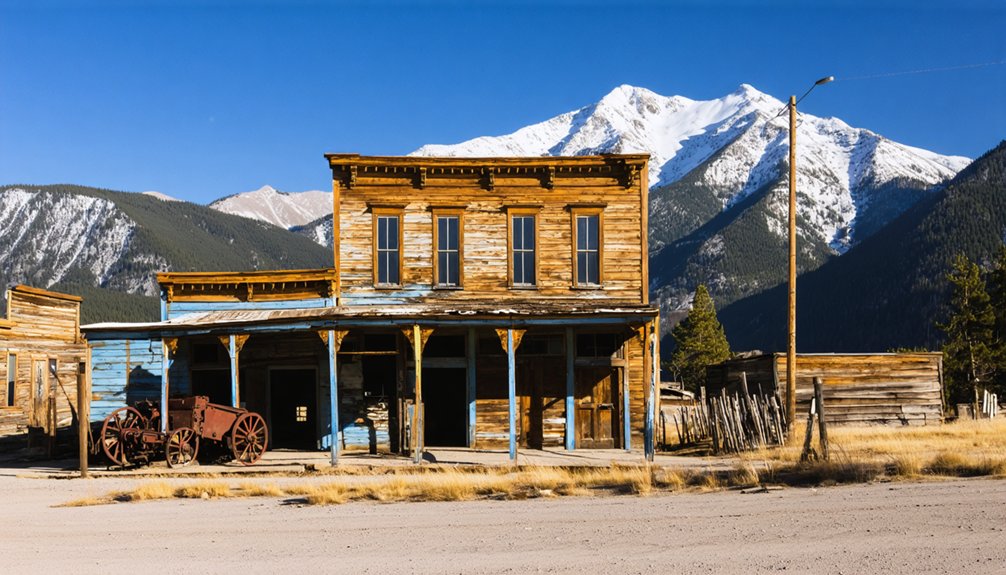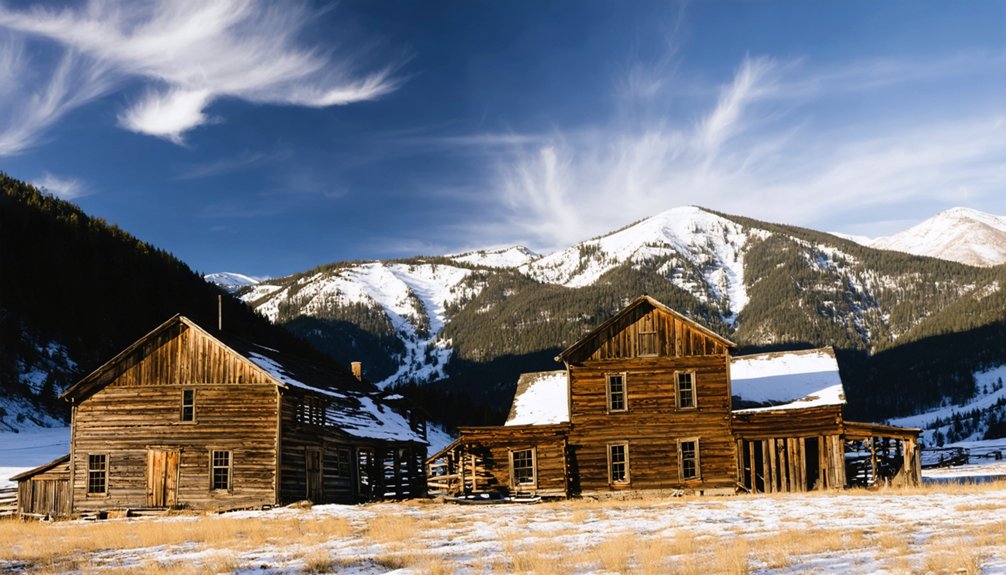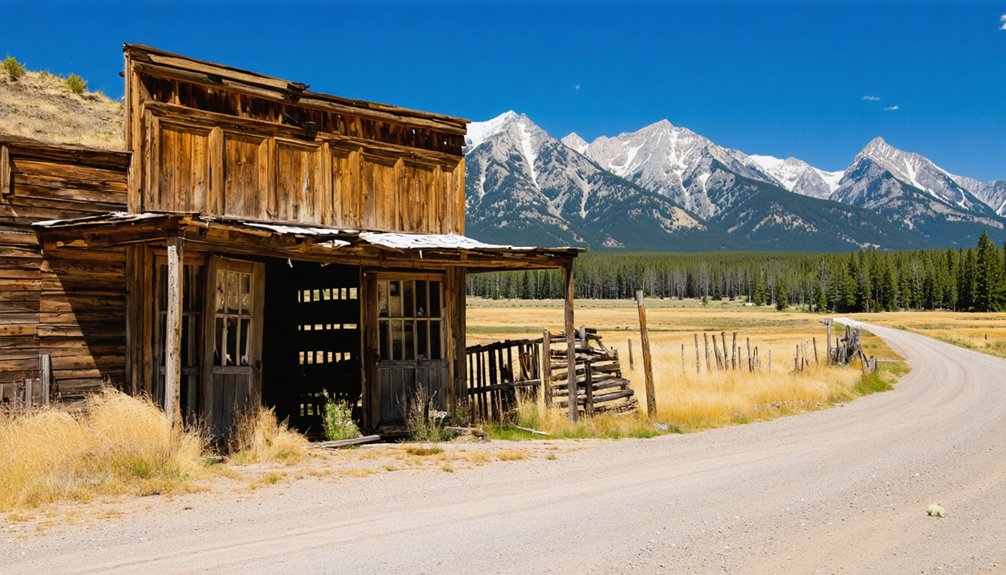
To plan your ghost town road trip to Colfax, head south from Raton on I-25, then take US Highway 64 west for about 24 miles through stunning high-desert scenery. You’ll pass buffalo roaming Vermejo Ranch, historic Santa Fe Trail markers, and the weathered remnants of a silver and gold boomtown that thrived for decades before its mines ran dry. Stick around, because there’s far more frontier history waiting to be uncovered.
Key Takeaways
- Colfax Ghost Town in northeastern New Mexico features stone ruins and remnants of a silver and gold rush boomtown within the Sangre de Cristos.
- From Raton, drive south on I-25, then west on US Highway 64 for approximately 24 miles on fully paved, accessible roads.
- Pack sturdy hiking boots, water, sunscreen, layered clothing, a first aid kit, and a high-clearance vehicle for rugged terrain.
- Late spring through early fall offers the best conditions, with summer providing long days and fall offering cooler, pleasant temperatures.
- Nearby attractions include Dawson Cemetery, Elizabethtown ruins, Cimarron’s St. James Hotel, and Cold Beer’s historic green chile cheeseburgers.
What Is Colfax Ghost Town and Why Visit?
Tucked into the rugged landscape of northeastern New Mexico, Colfax Ghost Town is a crumbling relic to the silver and gold rush that once drew prospectors deep into the Sangre de Cristos. You’ll find stone ruins, collapsed cabins, and echoes of a boomtown that thrived, then vanished when the veins ran dry.
Local folklore surrounds the settlement’s rise and fall, adding mystery to every weathered wall you explore. Unlike heavily commercialized ghost towns, Colfax feels raw and largely untouched, rewarding visitors who crave authentic frontier history over staged attractions.
Preservation efforts have helped protect key structures and historical markers, giving you real context for what once stood here. If you value open roads, forgotten history, and wide-open country, Colfax belongs on your itinerary.
How Silver and Gold Built: and Abandoned: Colfax
Silver and gold did more than just draw men west — they built Colfax from nothing and then walked away without looking back.
Silver and gold built Colfax from nothing — then walked away without looking back.
Prospectors flooded the Sangre de Cristos armed with picks, dynamite, and relentless ambition. Their mining techniques carved tunnels deep into the mountains, pulling out enough wealth to sustain a thriving settlement for decades.
Then the veins ran dry.
When profits vanished, so did the people. Wooden structures surrendered to wind and rot, while stone ruins held their ground. What you see today exists largely because of quiet preservation efforts that protected select remnants from total collapse.
Walking through Colfax, you’re standing inside a real consequence — a town that silver built, gold sustained, and exhaustion erased. That raw honesty is exactly why the place pulls you in.
How to Get to Colfax From Raton
Your ghost town adventure begins in Raton, where you’ll hop onto US Highway 64 heading west from I-25. You’ll cruise roughly 24 miles through stunning high desert scenery, catching glimpses of buffalo roaming Ted Turner’s Vermejo Ranch along the way.
Before long, the rugged remnants of Colfax appear near the junction of US 64 and NM 445, marking the end of your straightforward drive on fully paved roads.
Starting Point: Raton
Once you’ve arrived in Raton, getting to Colfax is a straightforward drive that’s full of scenery worth slowing down for. Head south on I-25, then take US Highway 64 west. The road is fully paved, making it accessible without a specialized vehicle for the main route.
As you cruise west, keep your eyes open for wildlife encounters along Ted Turner’s Vermejo Ranch, where buffalo roam freely near the highway. It’s one of those unexpected roadside moments that makes the drive feel like more than just transit.
Scenic viewpoints emerge as the Sangre de Cristos rise ahead, framing the landscape in dramatic elevation. After roughly 24 miles, you’ll reach the junction of US 64 and NM 445, putting you right at Colfax’s doorstep.
Taking US Highway 64
Heading west on US Highway 64 from Raton puts you on one of New Mexico’s most rewarding drives, covering roughly 24 miles of fully paved road to Colfax.
You’ll take I-25 south before turning west onto US 64, where the Sangre de Cristos gradually rise ahead of you like a promise.
Keep your eyes open along the route — buffalo from Ted Turner’s Vermejo Ranch roam nearby, adding a wild, untamed feel to the landscape.
As you get closer to Colfax, local folklore about silver strikes and abandoned mining techniques starts feeling less like legend and more like living history.
Watch for the junction of US 64 and NM 445, your landmark for reaching the ghost town.
Arriving At Colfax
Few drives in New Mexico build anticipation quite like the final stretch into Colfax. You’ll travel approximately 24 miles west of Raton on US Highway 64, watching the Sangre de Cristos rise steadily ahead. Keep your camera ready for wildlife photography opportunities along Ted Turner’s Vermejo Ranch, where buffalo roam freely beside the highway.
As you approach the junction of US 64 and NM 445, you’re entering territory rich with local folklore — stories of prospectors, stagecoach riders, and vanished fortunes echo across this landscape.
The road stays paved the entire way, making access straightforward. Stop at Cold Beer before pushing further into the ghost town ruins.
You’ll feel the shift immediately — civilization thins, history thickens, and Colfax opens up on its own terms.
Buffalo, Mountains, and What You’ll See on US 64
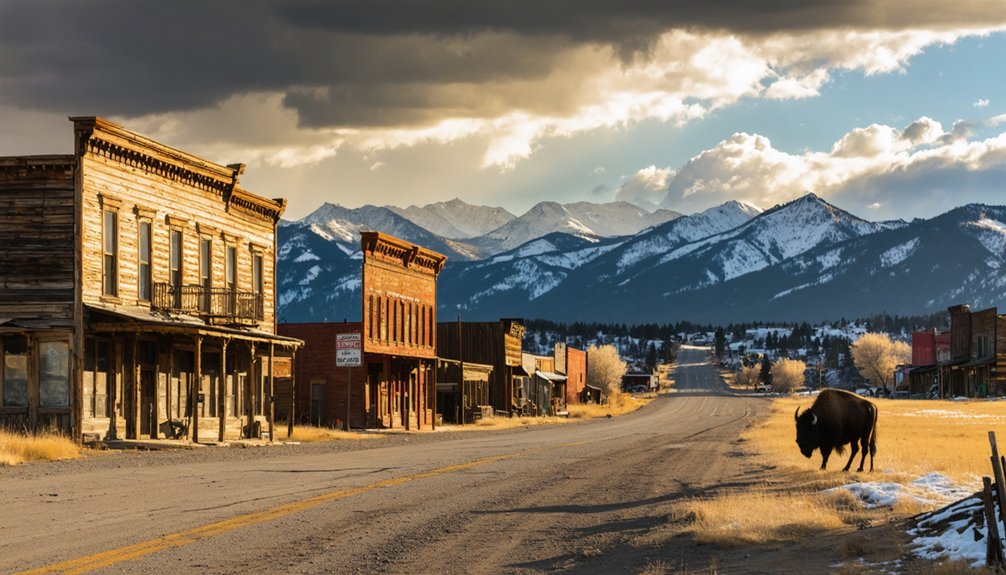
As you drive west on US 64 from Raton, the landscape opens up into a sweeping high-desert panorama with the Sangre de Cristos rising dramatically in the distance. The open range stretches endlessly, and if you’re paying attention, you’ll spot buffalo roaming Ted Turner’s Vermejo Ranch along the roadside. It’s a genuine wildlife photography moment that most travelers don’t expect on a ghost town run.
Local legends say these lands carry the spirits of prospectors and trail riders who pushed through long before pavement existed. The mountains ahead aren’t just scenery — they’re the same peaks those miners chased for silver and gold.
Keep your camera ready and your speed reasonable. This stretch of highway rewards the curious traveler who takes their time.
Stop at Cold Beer Before You Reach Colfax
Before you reach the ghost town, you’ll want to pull over at Cold Beer, a quirky roadside community that’s been serving travelers since Prohibition. The historic bar and diner there have kept their frontier spirit intact, drawing locals and visitors alike with no-frills charm and cold drinks.
Order a green chile cheeseburger with fries, fuel up, and get ready for the final stretch to Colfax.
Historic Bar And Diner
On your way to Colfax, you’ll want to pull over at Cold Beer, a small New Mexico community that’s home to a historic bar and diner that has been serving travelers since Prohibition. This roadside gem carries decades of frontier character, and preservation efforts have kept its original atmosphere remarkably intact.
You’ll find green chile cheeseburgers and cold drinks waiting inside, fueling you for the ghost town exploration ahead. Locals are happy to share urban legends tied to the bar’s colorful past, from bootlegging stories to tales of outlaws passing through.
It’s the kind of stop that transforms a simple road trip into something memorable. Don’t rush through — soak in the history before continuing west toward Colfax’s ruins.
Green Chile Cheeseburgers Await
Cold Beer’s historic bar isn’t just about atmosphere and bootlegging lore — it’s also where you’ll find one of New Mexico’s most satisfying roadside meals. Order a green chile cheeseburger with fries and you’ll immediately understand why local cuisine here punches well above its weight. The roasted green chile hits with smoky heat, layered over a thick, juicy patty that fuels you for the ghost town exploration ahead.
Grab a window seat or step outside — the scenic viewpoints stretching toward the Sangre de Cristos remind you exactly why you took this road. You’re not rushing anywhere. Eat slow, take it in, and let the landscape settle around you before you push west toward Colfax and whatever remains of its forgotten past.
Old Mining Cabins, Stone Ruins, and What Survives at Colfax Ghost Town
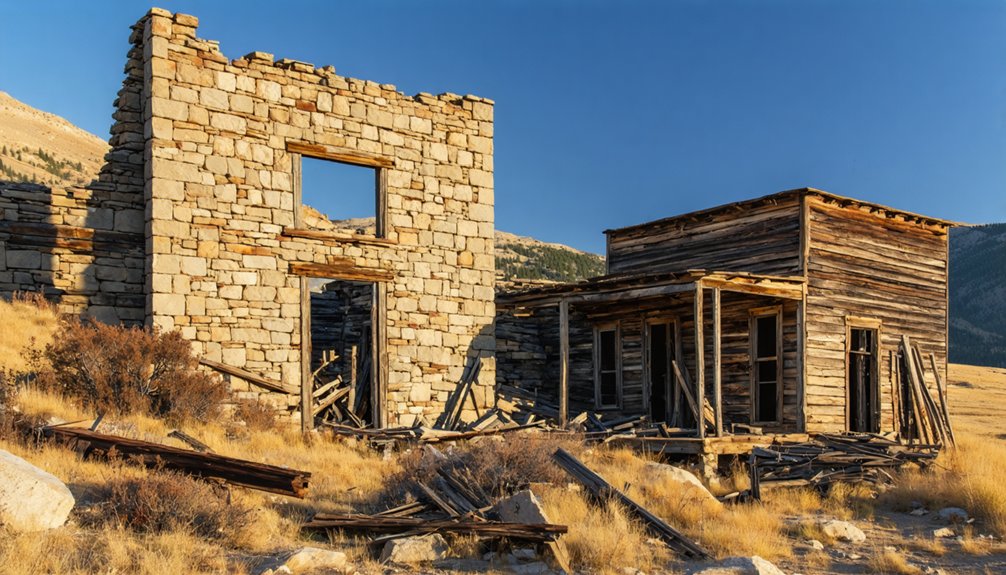
As you wander through Colfax Ghost Town, the stone ruins and collapsed wooden cabins tell a quiet story of boom-and-bust mining life. You’ll spot scattered mining equipment half-buried beneath decades of sediment, remnants of a workforce that once pulled silver and gold from these mountains.
The rock formations surrounding the site frame the ruins dramatically, reminding you just how rugged this landscape truly is.
Most wooden structures haven’t survived the elements, but the stonework holds on stubbornly. Walls lean at odd angles, doorways open onto empty sky, and foundations outline where entire lives once unfolded.
Walking these grounds, you’re free to piece together the story yourself. No velvet ropes, no crowds — just open land, crumbling history, and the quiet satisfaction of discovering something most travelers drive right past.
The Dawson Cemetery and Santa Fe Trail Markers
Just past the Cold Beer stop on US 64, you’ll spot the turnoff for the Dawson Cemetery, one of the most sobering and historically rich stops on this route.
As you continue west, roadside markers trace the path of the Santa Fe Trail, connecting you to the wagon trains and frontier commerce that once defined this corridor.
The nearby Clifton House site anchors the story of the Barlow Sanderson stagecoach line, reminding you that Colfax wasn’t just a mining outpost but a node in a much larger network of westward movement.
Dawson Cemetery Access Points
After stopping at Cold Beer for a green chile cheeseburger, you’ll spot the Dawson Cemetery almost immediately on US 64. The entrance sits just off the highway, making it one of the easiest access points along your route west from Raton.
Pull over and walk the short path leading into the grounds. You’ll encounter scenic overlooks framing the Sangre de Cristos ahead, giving you a powerful sense of the frontier landscape early settlers crossed.
Keep your eyes open for wildlife sightings, as deer and pronghorn frequently move through the surrounding terrain.
The paved highway gets you close, but a high-clearance vehicle helps if you want to explore the rougher side roads branching deeper toward the historic markers commemorating the Barlow Sanderson stagecoach line and Santa Fe Trail.
Santa Fe Trail Markers
Continuing west along US 64, you’ll notice historic markers rising from the landscape that connect this stretch of highway to the legendary Santa Fe Trail. These weathered signs mark the route where Barlow Sanderson stagecoaches once carried passengers through rugged frontier territory.
Pull over at the Clifton House site to absorb one of the most rewarding scenic viewpoints along your drive, where the Sangre de Cristos frame the horizon dramatically. Explorers who crave authentic experiences will appreciate standing where traders and prospectors once passed.
Before pushing deeper into ghost town country, stop at Cold Beer for local cuisine — green chile cheeseburgers remain a regional staple worth savoring. These trail markers aren’t decorative afterthoughts; they’re tangible proof that this corridor shaped the American Southwest’s identity.
Stagecoach History Nearby
Beyond the Cold Beer stop, the Dawson Cemetery appears almost immediately, marking one of the most sobering stops along your US 64 route. Nearby, historic markers honor the Barlow Sanderson stagecoach line, which once thundered through this corridor connecting frontier communities.
You’ll feel the raw freedom of the open West standing among mining relics and crumbling ghost town architecture that time hasn’t fully erased.
Three highlights worth your attention here:
- Barlow Sanderson markers – Identify the exact stagecoach route cutting through the landscape
- Clifton House site – A former traveler’s rest stop now commemorated roadside
- Mining relics – Scattered stone remnants revealing the region’s demanding industrial past
Each stop adds unmistakable depth to your understanding of this untamed corridor.
What to Pack for a Colfax Ghost Town Visit?
Packing smart makes all the difference when you’re heading out to explore Colfax Ghost Town. Bring sturdy hiking boots for rough terrain and a high-clearance vehicle for unpaved side roads. Pack plenty of water, sunscreen, and snacks since services are sparse once you leave Raton behind.
If wildlife photography interests you, carry a telephoto lens to capture buffalo roaming Ted Turner’s Vermejo Ranch along US 64. A notebook helps you document local folklore shared by guides covering the Santa Fe Trail and stagecoach heritage.
Wear layered clothing since mountain temperatures shift quickly near the Sangre de Cristos. Toss in a first aid kit, offline maps, and a fully charged phone. Freedom out here rewards preparation, so don’t leave anything essential behind.
Dawson, Cimarron, and Ghost Towns to Visit Near Colfax
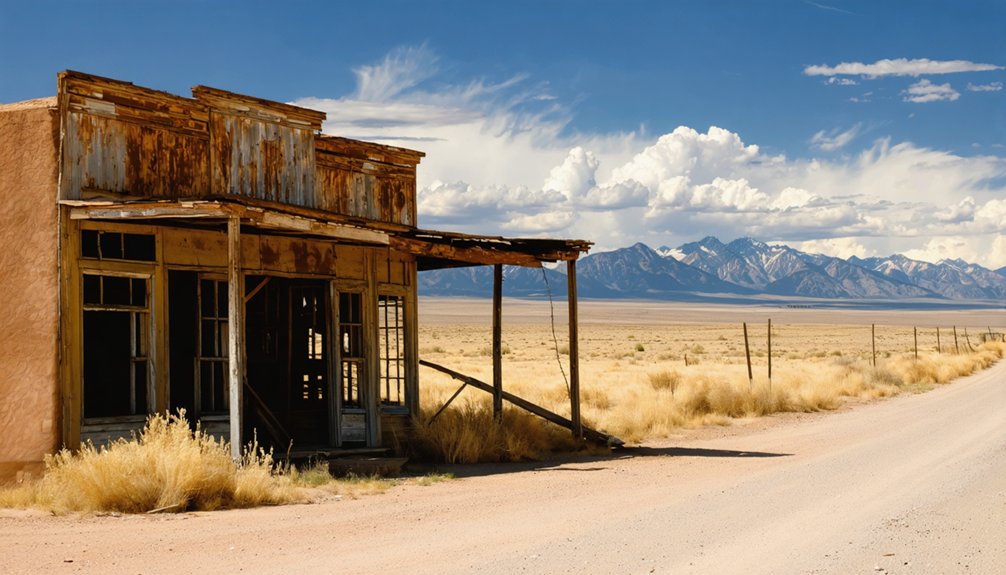
Once you’ve explored Colfax, the surrounding region rewards curiosity with several ghost towns worth adding to your route. Mining history runs deep across northeastern New Mexico, and ghost town preservation efforts mean you’ll find remarkable remnants still standing.
The region surrounding Colfax rewards curiosity — ghost towns, mining history, and remarkable remnants still standing throughout northeastern New Mexico.
Here are three nearby destinations worth your time:
- Dawson – A coal mining community where the cemetery preserves the memory of two devastating mine explosions from the early 1900s.
- Cimarron – A former frontier town featuring the historic St. James Hotel, where outlaws and legends once crossed paths.
- Elizabethtown – New Mexico’s first incorporated town, built during a gold rush, now scattered with stone ruins and quiet trails.
Each stop deepens your understanding of the frontier West and makes your road trip genuinely unforgettable.
When Should You Actually Visit Colfax Ghost Town?
Timing your visit to Colfax can make or break the experience. Late spring through early fall offers the best conditions for exploring ruins and absorbing the historical preservation efforts scattered across the site. Summer days stay long, giving you maximum daylight to photograph crumbling stone structures and read the trail markers without rushing.
Avoid winter if possible — snow buries details and rough side roads become impassable. Fall strikes the ideal balance, cooling temperatures while keeping roads accessible.
Weekdays beat weekends if you crave solitude among the ruins. Local folklore runs deepest when you wander without crowds, letting the silence speak for itself.
Locals near Cold Beer often share stories freely during slower hours, so stop in, grab a green chile cheeseburger, and listen.
Frequently Asked Questions
Are There Any Entrance Fees to Visit Colfax Ghost Town?
You’ll find no entrance fees at Colfax Ghost Town — one of thousands of free U.S. historic sites! Historical preservation keeps ruins accessible, but mind visitor safety on unstable structures as you freely explore this fascinating frontier remnant.
Is Camping Allowed Overnight Near the Colfax Ghost Town Site?
The knowledge doesn’t confirm camping regulations or overnight permits near Colfax. You’ll want to contact local authorities before pitching your tent. Freedom-seekers should always verify rules to guarantee an unforgettable, uninterrupted adventure under New Mexico’s brilliant, starlit skies!
Can Children Safely Explore the Ruins at Colfax Ghost Town?
Like all great adventures, Colfax rewards the bold but demands respect — you can bring children, though you’ll want to take proper safety precautions around unstable ruins to guarantee historical preservation efforts and young explorers both remain protected.
Are Pets Allowed When Visiting Colfax Ghost Town and Surrounding Trails?
You’ll find no strict pet regulations blocking your furry companion from exploring Colfax’s trails, but pet safety’s your responsibility. Keep them leashed near ruins, watch for rough terrain, and guarantee they’re hydrated throughout your adventure.
Is There Cell Phone Service Available Near Colfax Ghost Town?
You’ll likely find little to no cell service near Colfax Ghost Town, so take proper safety precautions before heading out. Download offline maps, tell someone your plans, and embrace the freedom of truly disconnected exploration!
References
- https://www.nationalgeographic.com/travel/article/ghost-towns-colorado-road-trip
- https://www.onlyinyourstate.com/trip-ideas/colorado/co-ghost-town-road-trip
- https://tranquiltrekker.com/central-colorado-ghost-towns-independence-pass/
- https://worldjournalnewspaper.com/traveling-the-cimarron-circle/
- https://www.4x4explore.com/dest/dest_ghst.htm
- https://www.youtube.com/watch?v=zX27iwQ6P6w
- https://www.myscenicdrives.com/places/colorado/pagosa-junction-ghost-town
- https://newcountry991.com/the-ultimate-ghost-town-road-trip-through-colorado/
- https://www.denvergazette.com/2021/04/10/well-preserved-colorado-ghost-towns-part-one-e685bbf9-a1d1-550d-99ec-f3361caf5150/
- https://www.youtube.com/watch?v=8QWmACBsznI