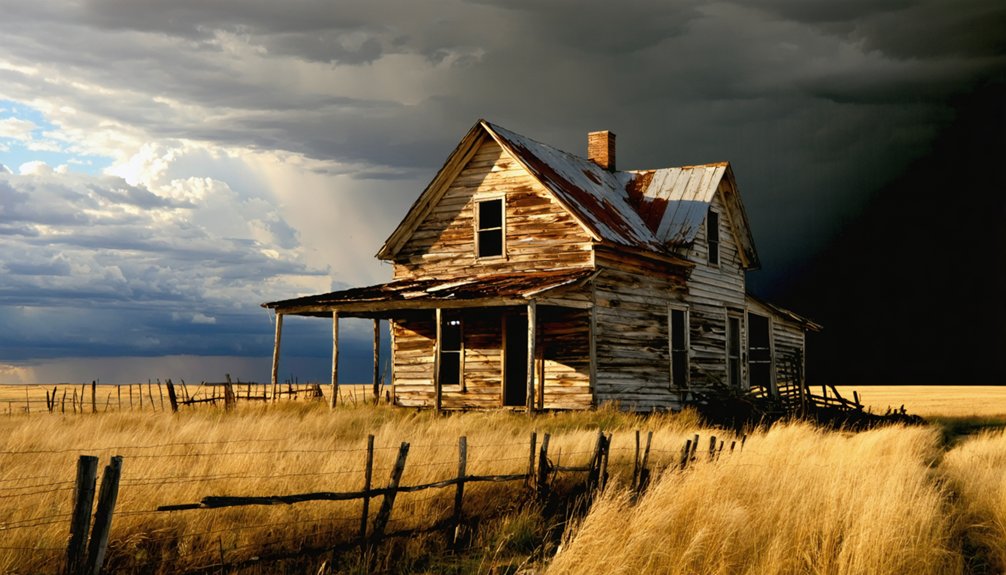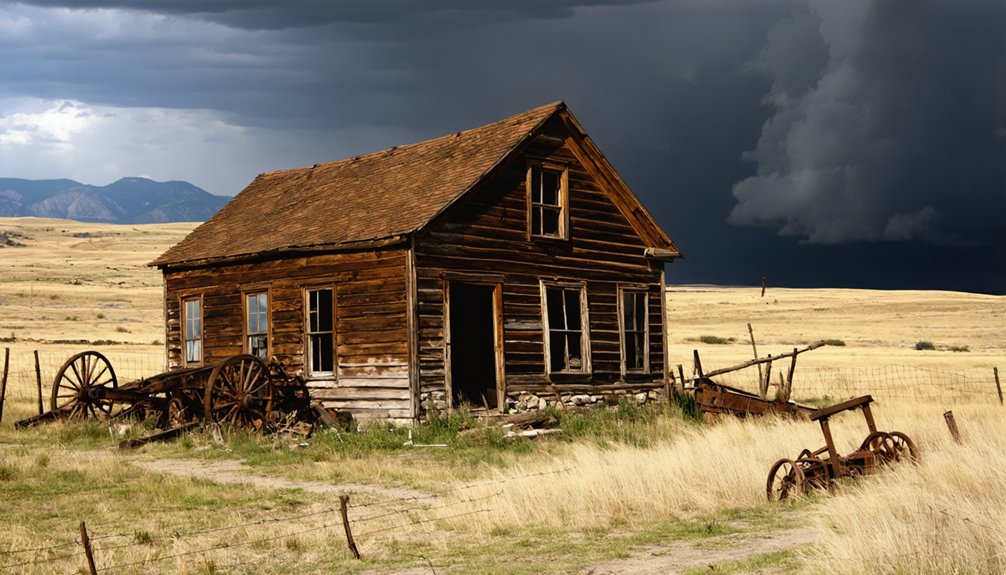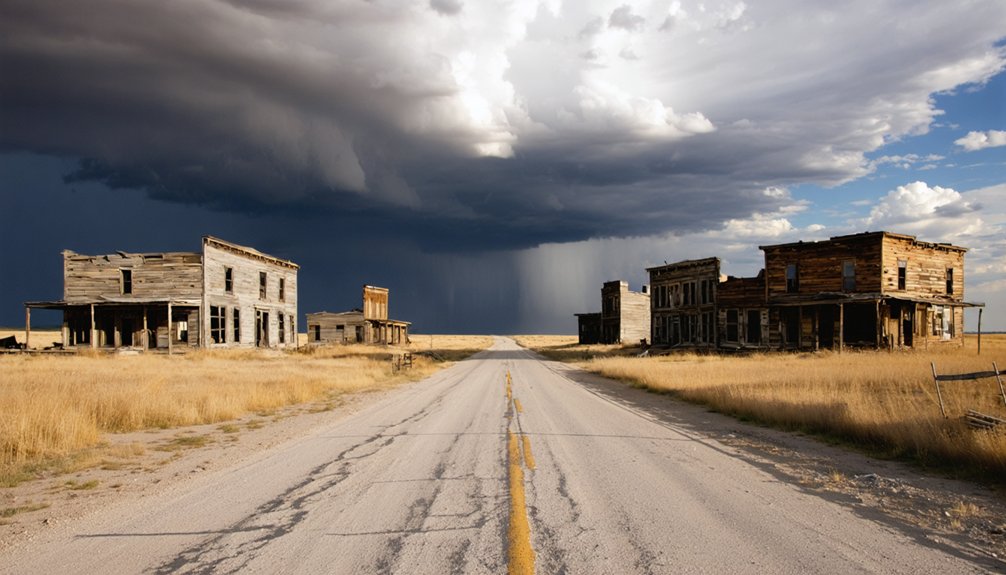
Sylvan City, South Dakota doesn’t appear in any verified historical record, geographical database, or state archive — it’s fundamentally a phantom destination. Don’t let that stop your adventure, though. The Black Hills region is packed with authenticated ghost towns like Scenic, Galena, and Spokane, where structures from the 1890s still stand. Plan your trip between June and September for the best conditions. Stick around, and you’ll discover everything you need to explore these remarkable sites responsibly.
Key Takeaways
- Sylvan City, South Dakota, does not exist in any verified geographical database, historical archive, or tourism guide, making it an unvisited phantom destination.
- Instead, visit verified ghost towns like Scenic, Galena, and Spokane, which feature authentic 1890s structures and documented histories.
- Travel via I-90 west to Rapid City, then Highway 385 south, and park at Spokane Creek Campground or Forest Service Road 330.
- Visit between June and September, with early mornings recommended to avoid thunderstorms and ensure safer, clearer exploration conditions.
- Use trusted sources like the South Dakota State Historical Society, Atlas Obscura, and Legends of America to plan accurate, verified itineraries.
Did Sylvan City, South Dakota Ever Really Exist?
When you start digging into South Dakota’s ghost town history, Sylvan City simply doesn’t turn up. No coordinates exist in geographical databases, and the South Dakota State Historical Society archives contain zero records of it.
You won’t find it in tourism guides, historical legends, or even obscure folklore myths circulating among ghost town enthusiasts.
That absence matters. South Dakota hosts genuinely documented ghost towns — Scenic, Galena, Spokane, and others — each with verified founding dates, standing structures, and rich mining histories.
Sylvan City has none of that paper trail.
If you’re craving an authentic abandoned-town experience, you deserve accurate information, not a phantom destination.
Skip the dead end and redirect your road trip energy toward sites that actually reward your curiosity, your boots, and your time.
Real South Dakota Ghost Towns to Visit Instead
South Dakota’s ghost town map is full of places worth your time, and the good news is they come with real history, real coordinates, and real structures still standing. Skip the urban legends and head somewhere you can actually explore.
Scenic, Galena, and Spokane all carry deep mining history rooted in silver, graphite, and quartz. Spokane sits at N43.840657, W103.376041, accessible via Forest Service Road 330, with moderate trails and standing 1890s buildings waiting for you.
Keystone alone anchors 11 documented ghost towns ranging from abandoned camps to semi-inhabited settlements. Custer launched a full gold rush in 1870.
These places don’t need myth to be compelling — they’ve earned their reputation through documented history you can walk through yourself.
Best Season to Visit Black Hills Ghost Town Sites
Late spring through early fall gives you the best window for exploring Black Hills ghost town sites, with June through September offering the most reliable trail conditions and daylight hours.
Afternoon thunderstorms peak in July and August, so start your hikes early to maximize visitor safety and avoid exposed ridgelines during lightning.
September delivers cooler temperatures, lighter crowds, and sharp visibility that enhances historical accuracy in your photography. You’ll capture structures and landscape details without harsh midday glare washing everything out.
Avoid winter visits entirely. Snow and ice make moderate trails genuinely dangerous, and reduced daylight limits your exploration window considerably.
Spring thaw creates muddy, unstable conditions through May. If you’re chasing that open-road freedom, September remains your strongest bet for a rewarding, safe Black Hills ghost town experience.
How to Reach the Black Hills Ghost Town Region
Reaching the Black Hills region puts you on some of the most scenic highway corridors in the American West. From the east, take I-90 west through Rapid City, then head south on Highway 385 directly into the heart of Black Hills mining history.
From the south, US-18 connects you through hot springs country before climbing into forested terrain.
Once you’re in the region, Forest Service Road 330 opens up rugged access to verified ghost town sites like Spokane, where historical preservation efforts protect standing structures from the 1890s.
Keep your tank full, since gas stations thin out quickly beyond Custer. Navigation apps may lose signal on backcountry roads, so download offline maps before you leave.
Freedom out here rewards preparation.
Standing Structures and Trails at Spokane Ghost Town
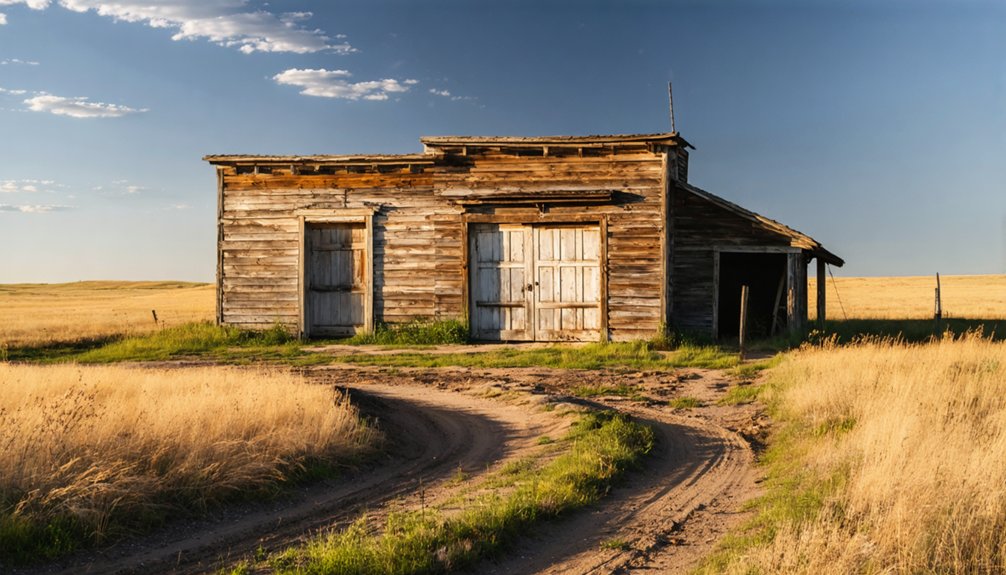
Once you’ve navigated Forest Service Road 330 and parked at Spokane Creek Campground, the ghost town reveals itself through a moderate hiking trail that winds toward coordinates N43.840657, W103.376041. Trail accessibility here is straightforward for most hikers, though sturdy shoes remain essential.
What you’ll find at the end rewards the effort. Several significant historic buildings from the 1890s still stand, offering rare glimpses into South Dakota’s quartz and silver mining era. These structures represent active historical preservation — fragile remnants that exist only because previous visitors respected the rules.
Don’t touch, remove, or disturb anything you encounter. Artifacts, bottles, and debris stay exactly where they are. Bring water, sun protection, and a flashlight. You’re walking through a living record, and that record deserves your full respect.
Where to Park, Camp, and Stage Your Visit
Spokane Creek Campground serves as your natural base of operations — park here, set up camp, and you’ve already solved two logistical problems at once. Forest Service Road 330 also provides off-road parking if you’re rolling in with a rugged vehicle and want closer trail access.
Stage your visit around these four essentials:
- Park at Spokane Creek Campground or Forest Service Road 330
- Pack water, snacks, sun protection, sturdy shoes, a flashlight, and a first aid kit
- Respect historical preservation laws — removing artifacts carries real legal consequences
- Explore moderate hiking trails leading directly to coordinates N43.840657, W103.376041
Tourism development in this region depends on visitors who treat these sites responsibly. Your freedom to roam here tomorrow relies on how carefully you tread today.
Silver, Mica, and Quartz: What Miners Left Behind
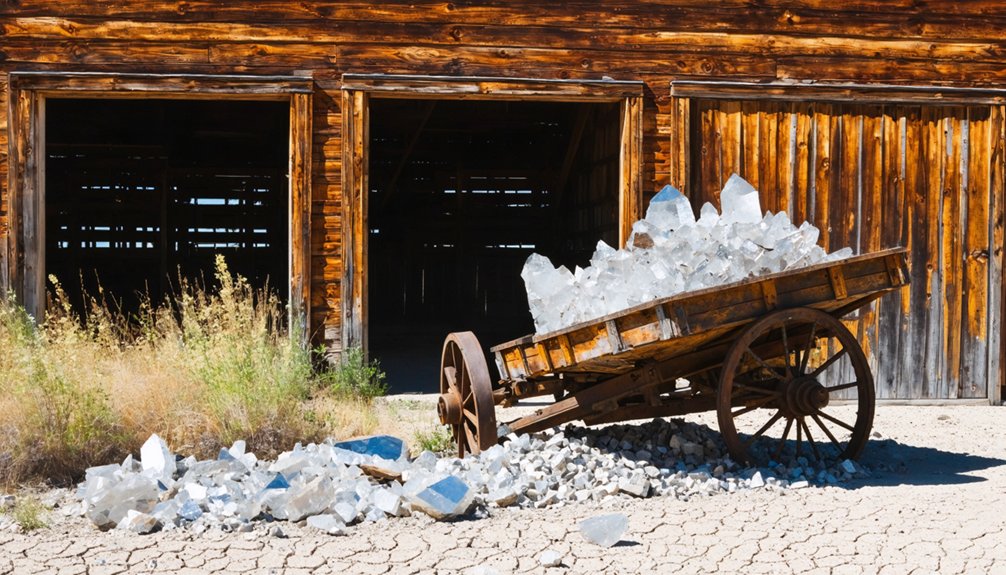
The miners who worked this district chased gold — but what they actually pulled from the earth tells a more complicated story. Silver, mica, and quartz dominated mineral extraction here, outpacing the gold deposits that originally drew prospectors west.
Quartz veins sparked early excitement, yet mica sheets and silver ore became the district’s more reliable yields.
Walking these grounds today, you’re standing inside a landscape that still carries that history. Scattered evidence of digging, processing, and hauling remains embedded in the terrain.
Historical preservation laws protect everything you see — and for good reason. Each fragment connects you to the real economic story of this place.
Look closely, photograph freely, but leave every piece exactly where you find it. That’s how this story survives for the next traveler.
What to Bring to a South Dakota Ghost Town Site
Before you set foot on any ghost town trail, pack smart — your comfort and safety depend entirely on what’s in your bag.
Visitor safety isn’t an afterthought out here. These sites are remote, rugged, and unforgiving.
Historical preservation also means you’re responsible for leaving everything exactly as you found it.
Pack these four essentials:
- Water and snacks — hydration keeps you sharp and moving
- Sun protection — shade is scarce across open South Dakota terrain
- Sturdy shoes and a flashlight — uneven ground and dark structures demand both
- First aid kit — accidents happen far from help
Take only photos. Removing artifacts is illegal and permanently damages the historical record these sites represent.
Don’t Take Anything: Laws That Protect These Sites
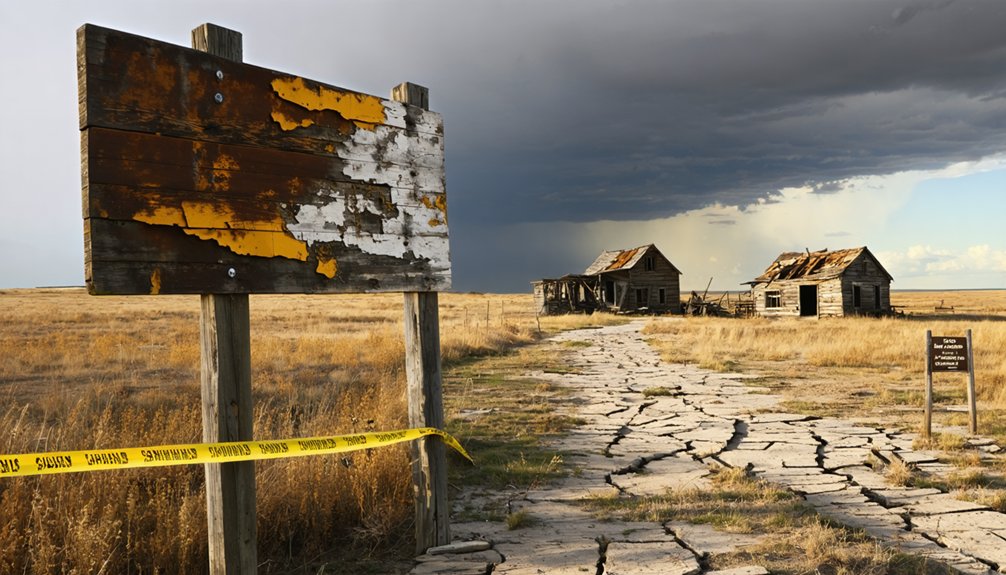
Every artifact you see at a South Dakota ghost town site is protected by law — and taking even a single bottle or rusted nail can result in serious fines. Artifact theft isn’t just illegal; it permanently erases history that can never be recovered. Preservation laws exist to keep these sites intact for future generations who deserve the same experience you’re having right now.
Forest Service regulations specifically forbid removing any object from protected historical sites. You’re free to explore, photograph, and absorb everything around you — but you must leave it all exactly as you found it.
Think of yourself as a witness, not a collector. Take only photos, leave only footprints, and you’ll help ensure these remarkable places survive long after your visit.
Where to Find Verified South Dakota Ghost Town Records
Researching South Dakota ghost towns doesn’t have to feel like digging through a mineshaft blindfolded — several reliable sources make the process straightforward. Before you hit the road, verify your destinations and ditch ghost town myths that send travelers chasing nonexistent sites.
Historical accuracy matters when you’re planning real miles.
Start with these four trusted resources:
- South Dakota State Historical Society (history.sd.gov) — official town dates and archival records
- Wikipedia’s Ghost Towns in South Dakota category — verified entries with subcategories
- Atlas Obscura — detailed guides to five confirmed South Dakota ghost towns
- Legends of America — historical narratives covering mining camps statewide
Cross-referencing these sources keeps your itinerary grounded in fact, not folklore, so you spend your time exploring real history instead of dead ends.
Frequently Asked Questions
Are Children Allowed to Explore South Dakota Ghost Town Sites Safely?
Like little explorers on a grand adventure, your children can safely visit South Dakota’s ghost towns! Prioritize visitor safety and historical preservation by packing water, sturdy shoes, and a first aid kit while supervising them closely throughout.
Can I Photograph Ghost Town Structures for Commercial or Professional Use?
You can photograph ghost town structures, but you’ll want to obtain photography permissions for commercial use. Respect historical preservation laws, avoid trespassing, and check with local Forest Service offices to make sure your shoot stays completely legal.
Are Pets Permitted on Hiking Trails Leading to South Dakota Ghost Towns?
Pet regulations vary by trail, so you’ll want to check specific trail restrictions before heading out. Generally, you can bring leashed pets on many South Dakota hiking trails, but always confirm local Forest Service rules first!
Do Any South Dakota Ghost Towns Offer Guided Tours or Ranger Programs?
Hit the ground running — you’ll find some South Dakota ghost towns offer guided tours and ranger programs focused on historical preservation and visitor safety, helping you explore authentically while respecting these remarkable sites responsibly.
Is Cell Phone Reception Reliable Near Black Hills Ghost Town Locations?
Cell phone coverage in the Black Hills ghost town areas is spotty at best. You’ll often find weak signal strength in remote canyons and forested trails, so download offline maps and notify someone of your plans before heading out.
References
- https://en.wikipedia.org/wiki/List_of_ghost_towns_in_South_Dakota
- https://blackhillsatvdestinations.com/ghost-towns/
- https://www.ghosttowns.com/states/sd/sd.html
- https://en.wikipedia.org/wiki/Category:Ghost_towns_in_South_Dakota
- https://www.atlasobscura.com/things-to-do/south-dakota/ghost-towns
- https://commons.wikimedia.org/wiki/Category:Ghost_towns_in_South_Dakota
- https://history.sd.gov/archives/towndates.aspx
- https://www.youtube.com/watch?v=pd1B0OQE-U8&vl=ja
- https://myxoadventures.com/the-ghost-town-of-spokane-south-dakota/
- https://openprairie.sdstate.edu/etd/4061/