Before you pack your bags for Idaho, here’s what you need to know — Garnet Ghost Town is actually tucked into Montana’s Garnet Mountain Range, about 30–35 miles east of Missoula. It’s a real gold rush relic, with over 20 weathered wooden structures still standing from the 1870s boom. You’ll need a $3 entry fee, a printed map, and a sense of adventure. Stick around, and you’ll uncover everything that makes this remote Montana treasure worth the drive.
Key Takeaways
- Garnet Ghost Town is actually located in Montana’s Garnet Mountain Range, approximately 30–35 miles east of Missoula, not Idaho.
- Over 20 wooden structures remain, including log cabins, a three-story hotel, and a dry goods store preserved by the BLM.
- Summer offers optimal road access; winter requires skis or snowmobiles, so always verify BLM road conditions before visiting.
- A $3 entrance fee applies, waived on Garnet Appreciation Day, the third Saturday of June each year.
- Nearby historic stops include Phillipsburg, Granite Ghost Town, and Drummond, enriching your Montana mining history road trip.
What Is Garnet Ghost Town and Where Is It Located?
Although the article title places it in Idaho, Garnet Ghost Town actually sits in Montana, nestled in the Garnet Mountain Range roughly 30 to 35 miles east of Missoula. Gold discoveries in the 1870s ignited the region’s mining history, and by 1895, a full town had taken shape.
Despite what its name suggests, Garnet Ghost Town belongs to Montana — born from gold rush ambition in the rugged 1870s.
Prospectors named it after the ruby-colored garnets scattered across the surrounding terrain.
Today, you’ll find over 20 wooden structures still standing on Bureau of Land Management property. Preservation efforts by the BLM and the Garnet Preservation Association keep this remote site intact for independent explorers like you.
It’s raw, weathered, and unapologetically isolated — exactly the kind of place that rewards those willing to chase history down an 11-mile winding mountain road.
Garnet’s Gold Rush History and the Legends Left Behind
When gold surfaced in the Garnet Range during the 1870s, prospectors didn’t walk — they ran. By 1895, Garnet had transformed from wilderness into a working town, carrying dreams, danger, and mining legends that still echo through its rotting walls.
Three historical moments define Garnet’s wild arc:
- 1870s — Gold discovery ignites a full-scale rush into Montana’s remote mountains
- 1897 — A post office opens, signaling Garnet’s brief but real civilization
- Decline — Prospectors abandoned Garnet for easier silver deposits elsewhere, leaving ghost stories baked into every abandoned cabin
You can almost feel that desperation walking through the ruins today. The isolation that killed the town is exactly what preserved it — raw, unfiltered, and completely yours to explore.
How to Get to Garnet Ghost Town From Missoula
Tucked about 30 miles east of Missoula, Garnet Ghost Town rewards the drive with an 11-mile winding mountain road that feels like it’s unwinding time itself — larch-lined, rough, and deliberately remote. You’ll head northeast from Missoula, following BLM-managed routes toward the Garnet Mountain Range, where mining history carved an entire civilization into these hills.
Summer gives you the cleanest access — cars and RVs handle the road well. Come winter, you’ll need skis or a snowmobile. Check BLM road conditions before leaving; storms close access fast.
Pack your own supplies. Nothing’s waiting for you up there except standing cabins, preservation efforts frozen mid-decay, and roughly 20 wooden structures refusing to disappear. Pay the $3 entrance fee and explore freely.
What You’ll See Inside Montana’s Most Intact Ghost Town
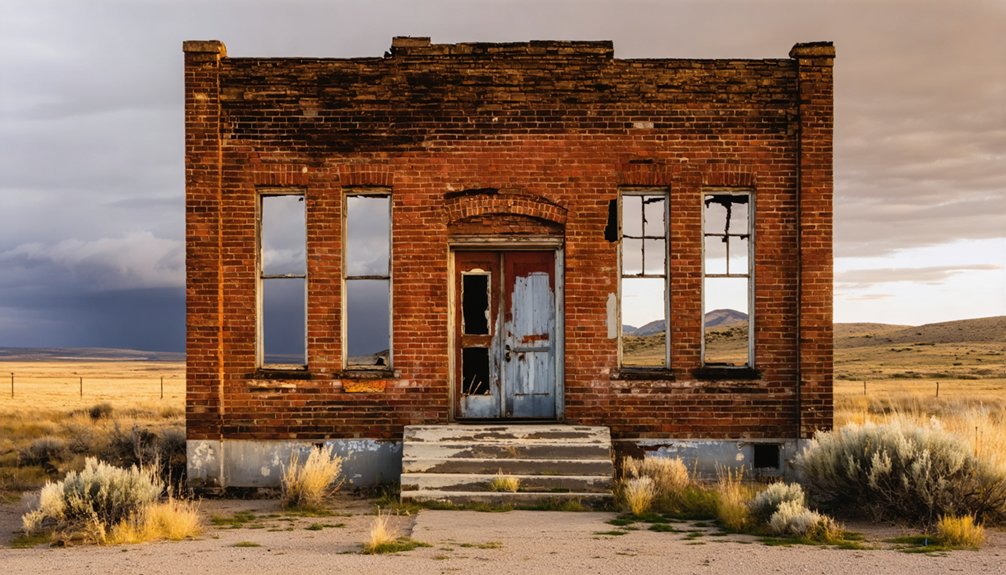
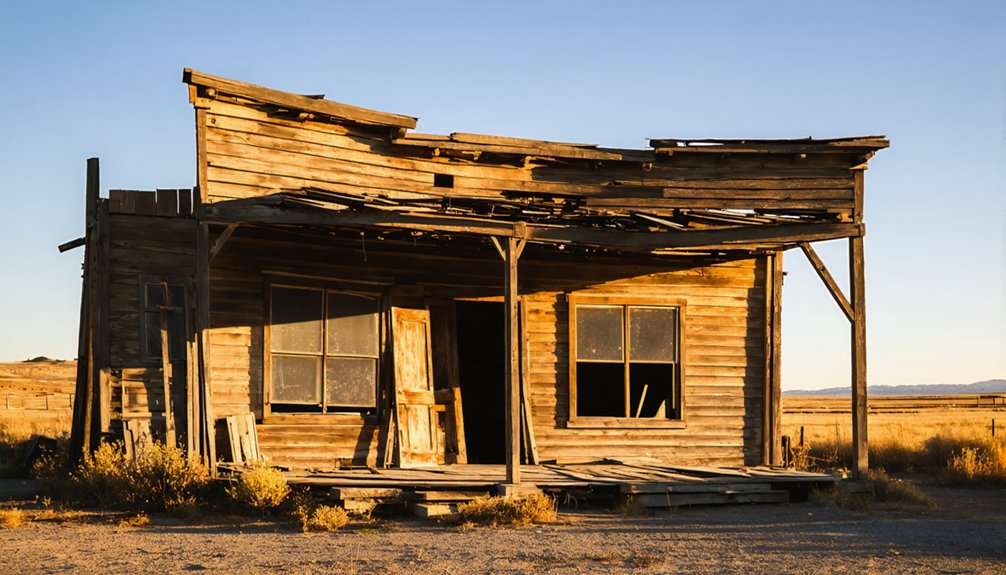
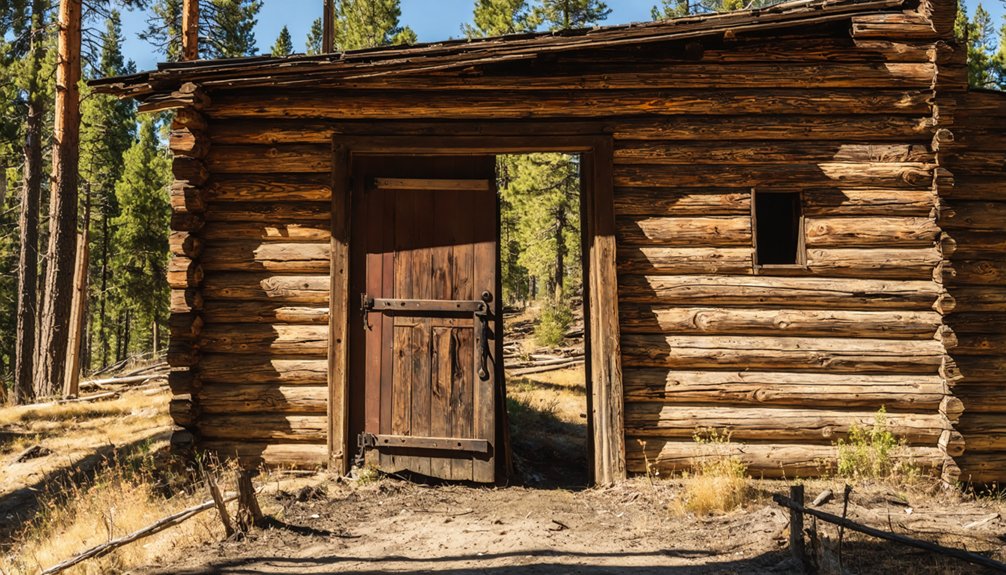
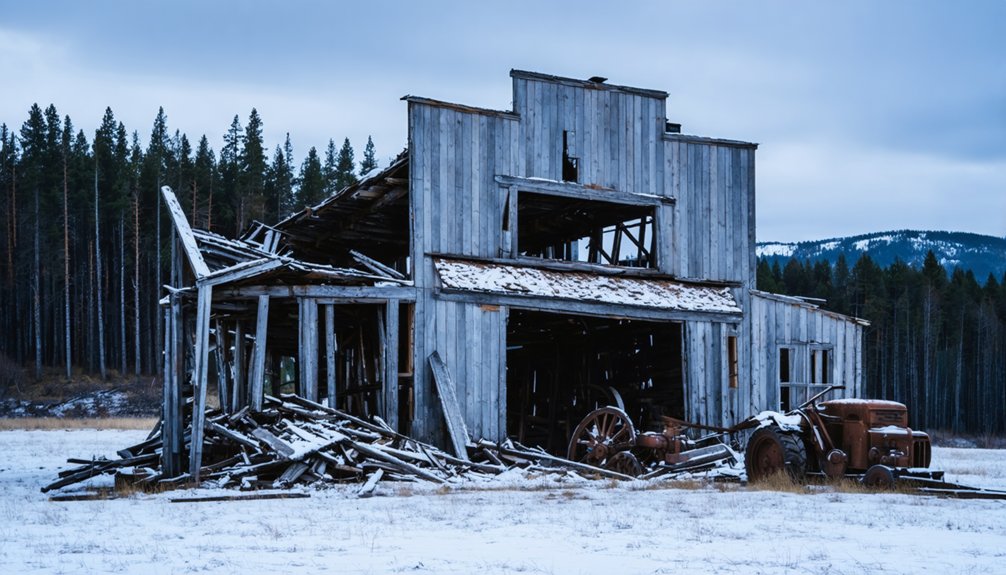
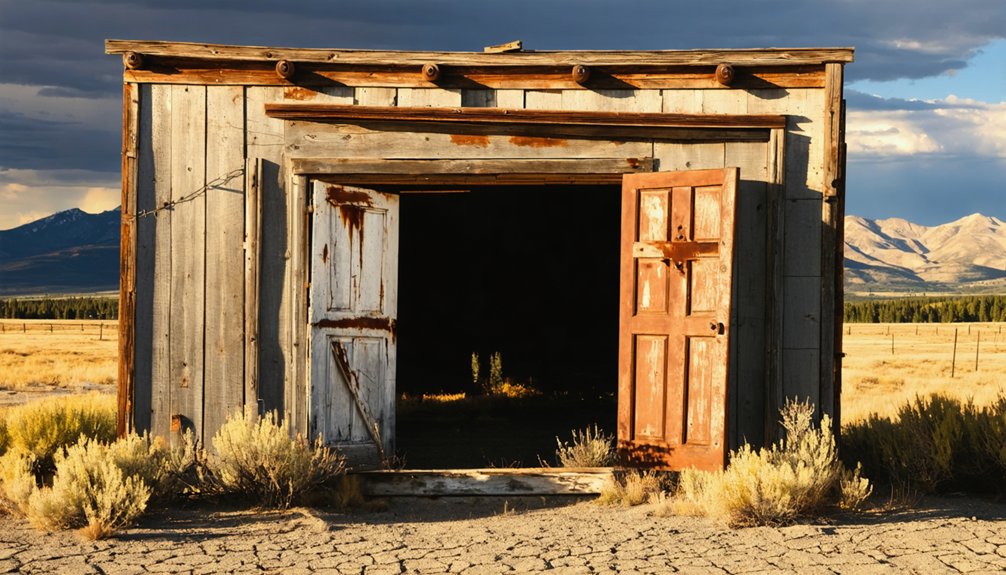
Once you step past the entrance, over 20 wooden structures rise around you — log cabins, a three-story hotel, and a dry goods store, all locked in a permanent state of decay that somehow hasn’t finished the job. Haunted legends cling to every warped floorboard and rusted hinge, making exploration feel genuinely charged.
Over 20 wooden structures frozen mid-collapse, haunted legends seeping through every warped floorboard and rusted hinge.
Preservation efforts by the BLM and Garnet Preservation Association keep this site standing, so you’re walking through living history rather than rubble.
Don’t miss these highlights:
- The three-story hotel — its skeletal frame still commands the hillside
- Log cabins — intimate glimpses into a miner’s harsh daily survival
- The dry goods store — shelves stripped bare, yet powerfully atmospheric
Respect what remains. Nothing leaves with you.
The Best Time to Visit Garnet Based on Road Access and Season
Garnet doesn’t make access easy, and that’s part of its character. Seasonal accessibility shapes your entire trip, so plan accordingly.
Summer offers the clearest roads, welcoming cars and RVs along the winding 11-mile mountain route. That’s your best window for unrestricted exploration.
Weather considerations get serious by fall and winter. Early storms blanket the Garnet Range quickly, leaving crisp snow that closes standard vehicle access. If you’re visiting outside summer, you’ll need skis or a snowmobile — and the willingness to earn your arrival.
Spring thaws can leave roads muddy and unpredictable. Always check BLM road conditions before heading out.
Garnet rewards the prepared traveler, not the careless one. Choose your season wisely, and this remote Montana mountain town delivers an experience few ghost towns can match.
How Much Garnet Costs to Enter and What the Rules Are
Stepping into Garnet costs just $3, a small price for walking through one of America’s best-preserved ghost towns — though that fee gets waived entirely on Garnet Appreciation Day, held every third Saturday of June.
You’ll want to respect the site’s strict preservation rules, since looters have already stripped away countless artifacts that once told this mountain town’s story. Touch nothing, remove nothing, and let Garnet’s permanent state of decay speak for itself.
Garnet’s Entry Fee Details
- $3 entrance fee applies year-round for standard visits.
- Free entry on Garnet Appreciation Day — the third Saturday of June — making it the perfect budget-friendly window to explore.
- No artifact removal — BLM rules strictly prohibit taking anything from the site.
The Bureau of Land Management enforces these rules to keep Garnet intact for future explorers. Respect them, and this frozen-in-time mountain settlement stays wild and authentic for everyone chasing its history.
On-Site Visitor Rules
Beyond the entry fee, a few ground rules shape how you’ll move through this preserved slice of Montana’s mining past. You’re free to explore the 20-plus standing structures, but touching or removing artifacts is strictly prohibited. Looters already stripped much of Garnet’s original inventory, deepening its preservation challenges, so every remaining object carries irreplaceable historical weight.
Respect the buildings’ fragile frameworks — enter only structures marked as accessible. Haunted legends thrive here precisely because the atmosphere remains undisturbed, frozen in authentic decay.
Pets must stay leashed, protecting both wildlife and the site’s integrity.
BLM rangers and Garnet Preservation Association volunteers patrol regularly, so violations don’t go unnoticed. Treat this ghost town like the open-air museum it truly is, and the experience rewards you richly.
Scenery and Wildlife Along the Garnet Range Road
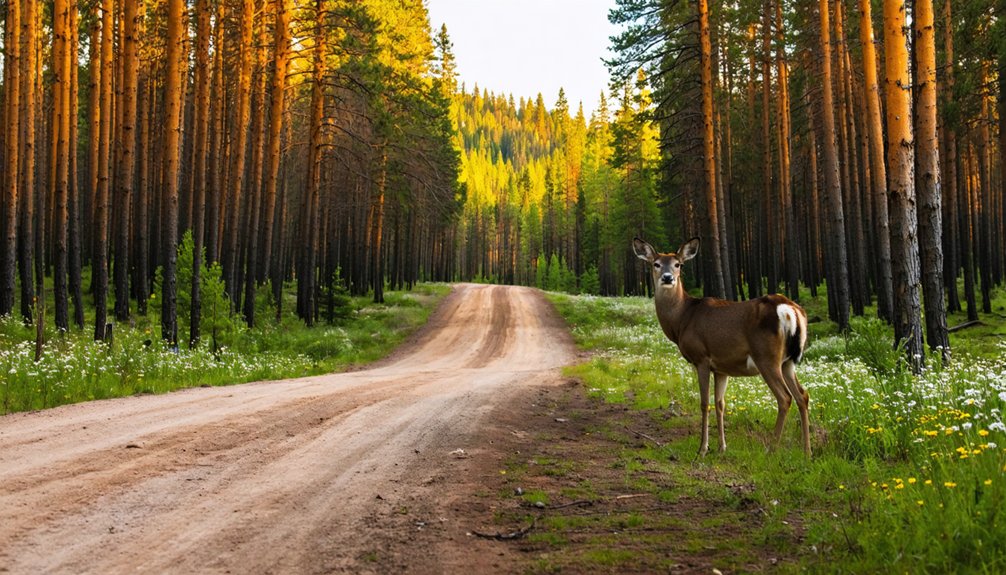
The 11-mile winding road into Montana’s Garnet Range sets the tone long before you reach the ghost town itself. Golden larch needles carpet the path in autumn, and early storms dust everything white. This corridor is a thriving wildlife habitat where freedom feels tangible.
Watch for:
- Mule deer and elk moving through timber stands flanking the road
- Scenic vistas opening across mountain ridgelines, revealing untamed northwestern Montana wilderness
- Bald eagles and hawks riding thermals above the Garnet peaks during seasonal migrations
You’re driving through living history here — the same remote terrain that exhausted prospectors and swallowed whole communities. The isolation that doomed Garnet’s miners now rewards you with raw, unfiltered landscape few travelers bother to chase.
What to Pack for a Remote Montana Ghost Town Visit
Garnet offers no gift shop, no concession stand, and no cell signal — so you’ll need to arrive self-sufficient. Pack water, trail snacks, and layered clothing, since mountain weather shifts fast in the Garnet Range.
Sturdy boots matter; the terrain’s uneven, and the buildings demand careful footing. Bring a camera to document historical artifacts you can’t touch — preservation techniques protect every weathered board and rusted hinge from further decay.
A printed map helps since digital navigation fails at elevation. Cash covers the $3 entrance fee.
If you’re visiting outside summer, check BLM road conditions beforehand — snow closes access fast. You’re stepping into Montana’s raw, forgotten history, and respecting that means leaving everything exactly as you found it.
Montana Stops Near Garnet Worth a Detour
While Garnet sits in Montana — not Idaho, despite what the article title suggests — that happy geographic surprise means you’ve got real Montana treasures within easy reach.
Missoula, just 30–35 miles west, rewards you with vibrant culture, the Historic District, and the University of Montana’s storied campus.
From there, you can push deeper into the region’s mining heritage by tracing the old prospector routes northeast toward other remnant boomtowns, or wind through the golden larch corridors of the Garnet Range for one of the American West’s most scenic detours.
Missoula’s Must-See Spots
Since Garnet sits just 30–35 miles east of Missoula, you’d be shortchanging yourself by skipping Montana’s most vibrant gateway city. Missoula rewards curious travelers who appreciate historic preservation and mining history woven into everyday life.
Before hitting that winding mountain road, explore these three stops:
- Historical Museum at Fort Missoula – Uncover frontier-era artifacts and regional mining history that contextualizes your Garnet visit perfectly.
- Downtown Missoula’s Higgins Avenue District – Walk streets lined with preserved 19th-century architecture, independent bookshops, and locally owned breweries fueling your adventurous spirit.
- Clark Fork Riverfront Trail – Stretch your legs along this scenic corridor before ascending into mountain isolation.
Missoula isn’t just a pitstop — it’s the living prologue to Garnet’s haunting, silent story.
Nearby Historic Mining Towns
Montana’s historic mining corridor doesn’t end at Garnet — it sprawls across the region, offering ghost town enthusiasts a rich circuit of abandoned boomtowns worth weaving into your road trip. Head toward Phillipsburg, where silver strikes once drove frenzied prosperity and ghost town legends still cling to crumbling storefronts.
Granite Ghost Town, perched high in the Sapphire Mountains, rewards the determined traveler with haunting structural remnants from its silver-boom peak. Both sites showcase evolving mining techniques — from placer panning to hard-rock shaft extraction — that defined Montana’s rugged economic identity.
Each stop layers your journey with deeper historical texture, connecting Garnet’s gold-era story to a broader regional narrative. You’re not just driving roads here — you’re tracing the bones of Montana’s restless, mineral-hungry past.
Scenic Montana Detour Routes
Why stop at Garnet when Montana’s backroads keep pulling you deeper into its storied wilderness? The mountain scenery alone justifies every detour, and ghost town legends echo through every canyon you’ll cross. Push further and let Montana reward your curiosity.
- Bearmouth Area – A rugged river corridor along I-90 where old railroad camps once thrived; pull over and imagine the hustle of 19th-century freight lines.
- Drummond – A quiet ranching town with deep pioneer roots, sitting beneath open skies that remind you why settlers pushed west.
- Philipsburg – A remarkably preserved mining town offering sapphire mining, historic saloons, and architecture straight from Montana’s silver boom.
Each stop deepens your understanding of the region’s restless, gold-chasing past.
Why Garnet Ghost Town Belongs on Any Montana Road Trip
Few ghost towns capture the rugged spirit of the American West quite like Garnet, and if you’re mapping out a Montana road trip, it deserves a prominent spot on your itinerary.
Nestled in the Garnet Mountain Range roughly 30 miles east of Missoula, this remarkably preserved site lets you walk freely through over 20 standing structures, including a three-story hotel and log cabins that define authentic ghost town architecture.
You’ll also encounter remnants of mining equipment scattered across the landscape, connecting you directly to the gold rush era of the 1870s.
Unlike overly curated historical sites, Garnet exists in an honest state of decay, raw, isolated, and unapologetic.
That authenticity is exactly what makes it unforgettable for anyone craving genuine frontier history on open roads.
Frequently Asked Questions
Is Garnet Ghost Town Actually Located in Idaho or Montana?
Like a compass pointing true north, Garnet Ghost Town sits firmly in Montana, not Idaho! You’ll discover remarkable ghost town architecture and rich historical mining heritage roughly 30 miles east of Missoula — so chart your adventurous course accordingly!
Can Children Participate in Ranger-Led School Tours at Garnet?
Yes, your kids can join ranger-led school tours at Garnet! Park rangers and volunteers actively lead these educational programs, bringing historical preservation to life and letting children explore Montana’s wild, storied past firsthand.
Are Snowmobiles Available for Rent Near Garnet During Winter Months?
Imagine riding where 1890s miners once trudged through snow. Snowmobile rentals near Missoula, Montana fuel your winter adventure to Garnet — you’ll carve through icy mountain trails, reaching this hauntingly preserved ghost town on your own wild terms.
Has Garnet Ghost Town Ever Been Featured in Paranormal Investigation Shows?
You won’t find confirmed paranormal investigation show features at Garnet, but its haunted legends and reported paranormal encounters make it ripe for exploration. You’re free to uncover Montana’s most mysteriously preserved ghost town yourself!
Is the Garnet Preservation Association Accepting Volunteers or Donations Currently?
You’ll want to contact the Garnet Preservation Association directly to explore current volunteer opportunities and donation options—they’re actively protecting Montana’s most hauntingly preserved ghost town, ensuring future adventurers can walk those weathered, history-soaked streets just like you.
References
- https://www.facebook.com/groups/northidaholife/posts/3621893498054698/
- https://www.eenews.net/articles/spooky-blm-town-lives-in-state-of-arrested-decay/
- https://pamleblancadventures.com/ghost-town-of-garnet-montana/
- https://www.doityourselfrv.com/garnet-ghost-town/
- https://nbcmontana.com/news/montana-moment/garnet-ghost-town-where-time-stands-still-08-11-2023