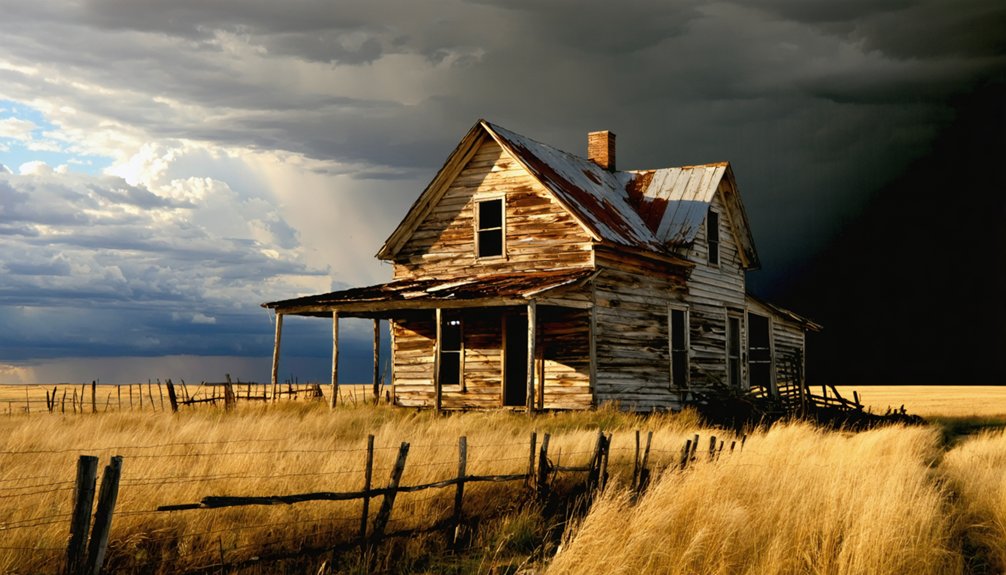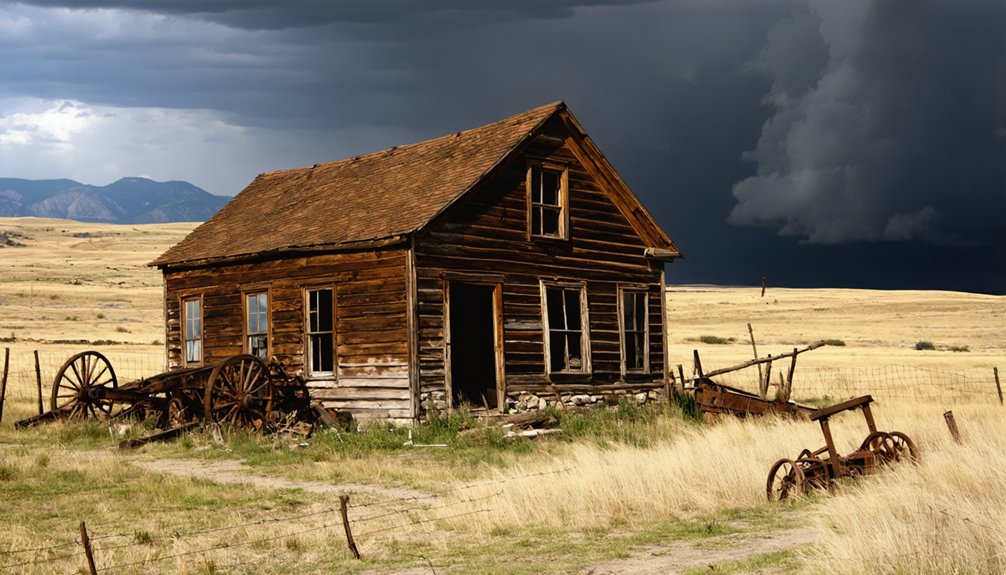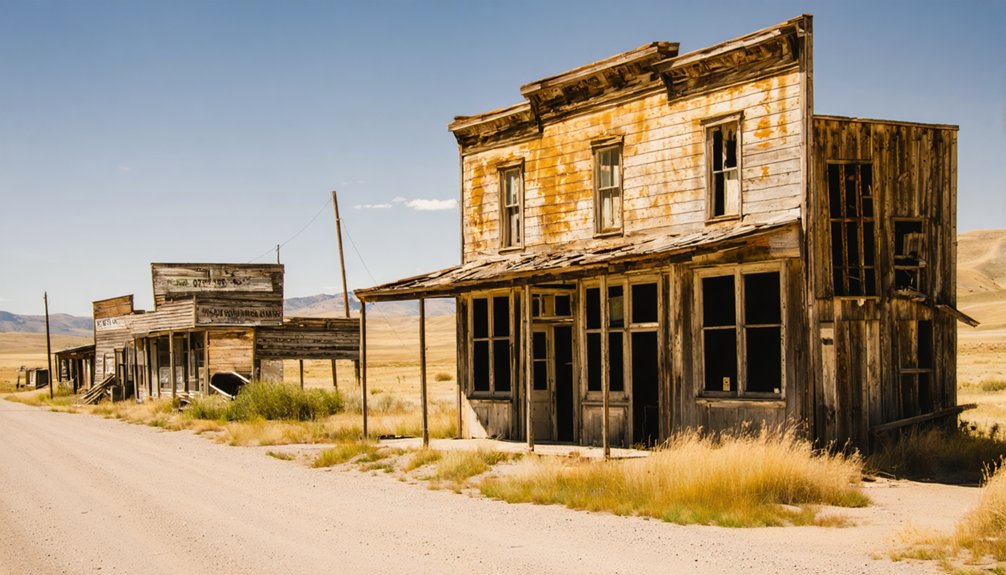
If you’re searching for Golden Centre, South Dakota, you won’t find it — it doesn’t exist. The ghost town you’re looking for is Golden City, a 19th-century mining camp now submerged beneath Sheridan Lake in Pennington County. Founded during the Black Hills gold rush, it briefly served as the county seat before disappearing underwater. The Black Hills region holds over 21 documented ghost towns worth exploring, and there’s much more to uncover about planning your ultimate road trip.
Key Takeaways
- Golden Centre doesn’t exist; the correct site is Golden City, a submerged ghost town beneath Sheridan Lake in Pennington County, South Dakota.
- Access Sheridan Lake via U.S. Highway 385 through the Black Hills, with shoreline and boat access available for exploring submerged ruins.
- Visit during May or September for mild temperatures, fewer crowds, and optimal visibility conditions for viewing underwater remnants.
- Plan a 3–5 day itinerary, including nearby ghost towns like Owanka, Ardmore, and Wetonka, grouped by geographic proximity.
- Pack water, sun protection, polarized sunglasses, and binoculars; never remove artifacts, as preservation laws strictly protect the site.
Golden Centre Doesn’t Exist: Here’s What You’re Actually Looking For
If you’ve been searching for Golden Centre, South Dakota, you won’t find it — because it doesn’t exist. The name likely stems from urban legends or a simple mix-up with a real place worth knowing.
Historical accuracy points you toward Golden City, a 19th-century mining camp that served as Pennington County’s first county seat from 1877 to 1878.
Golden City, a 19th-century mining camp, held the title of Pennington County’s first county seat from 1877 to 1878.
Founded during the Black Hills gold rush, Golden City eventually became known as Sheridan before the entire settlement disappeared beneath Sheridan Lake.
You’re not chasing a myth for nothing, though. The actual site sits at approximately 43.15°N, 101.75°W, and Sheridan Lake offers genuine access to that submerged history.
Swap the fictional name for the real one, and your road trip suddenly has a legitimate, fascinating destination.
Golden City, South Dakota: The Ghost Town That Started It All
Before Sheridan Lake swallowed it whole, Golden City stood as one of the Black Hills’ most consequential mining settlements. Founded during the late 19th-century gold rush, it earned the title of Pennington County’s first county seat from 1877 to 1878. Miners flooded the area chasing fortunes from local hills and streams, building a community that briefly thrived before the boom collapsed.
Today, that history sits beneath the lake’s surface. Historical accuracy matters here — you’re not visiting a standing ghost town but a submerged one. Preservation efforts have kept records alive, giving you access to maps, photographs, and documented accounts of Golden City’s brief but significant life.
Visit Sheridan Lake’s shoreline and imagine what once buzzed beneath your feet.
Where the Real Site Sits on the Black Hills Map
Pinpointing the submerged site of Golden City means steering to Sheridan Lake in Pennington County, South Dakota, where GPS coordinates of approximately 43.15°N, 101.75°W place you directly above what was once the Black Hills’ first county seat.
The lake’s surface conceals the remnants of a thriving mining camp that peaked during the late 19th-century gold rush. Standing at the shoreline, you’re looking down at history rather than across it.
Historical preservation laws make artifact removal strictly illegal here, so don’t let curiosity push you toward disturbing what lies beneath.
Instead, bring a kayak or canoe and explore the water’s edge, where shallow areas occasionally reveal ghostly outlines of the former settlement beneath the surface.
Your camera’s your best tool here.
How to Visit the Sunken Ruins at Sheridan Lake
To reach Sheridan Lake, take U.S. Highway 385 south through the Black Hills until you spot the lake’s shimmering surface marking what was once Golden City’s bustling streets.
You can view the submerged ruins from the shoreline or a boat, where on clear days the ghostly outlines of old foundations emerge beneath the water.
Before you head out, pack sturdy shoes, water, sun protection, and a first aid kit, since the terrain around the lake’s edge can be uneven and unpredictable.
Reaching Sheridan Lake
Sheridan Lake sits in Pennington County, South Dakota, and it’s your gateway to one of the Black Hills’ most hauntingly unique ghost town experiences — a settlement swallowed entirely by water.
From Rapid City, head south on Highway 385 for roughly 25 miles until signs direct you toward Sheridan Lake Recreation Area. The drive takes under an hour, winding through ponderosa pine forests that open dramatically at the shoreline.
Once you arrive, you’ll find boat launches, shoreline trails, and clear vantage points ideal for lake exploration. On calm days, peer beneath the surface where submerged history quietly waits — remnants of Golden City resting below.
Pack binoculars, water, and sturdy shoes, and arrive early to claim the best viewing spots before crowds settle in.
Viewing The Submerged Ruins
Once you’re standing at Sheridan Lake’s shoreline, the real treasure lies beneath the water’s surface — the sunken remnants of Golden City, the Black Hills’ most unusual ghost town.
On calm, clear days, you can sometimes glimpse submerged landmarks through the water, offering a haunting window into 19th-century mining life. This site represents a rare opportunity to witness underwater archaeology without diving equipment — just sharp eyes and good lighting conditions.
Visit during early morning when sunlight penetrates at low angles, reducing surface glare and improving visibility.
Bring polarized sunglasses to cut through water reflection.
The coordinates 43.15°N, 101.75°W will guide you precisely to the best viewing points.
Safety And Preparation Tips
Exploring the sunken ruins of Golden City requires smart preparation before you set foot on Sheridan Lake’s shoreline. Pack water, snacks, and sun protection, since the open landscape offers little shade. Wear sturdy shoes to handle uneven, rocky terrain around the lake’s edge, and carry a flashlight if you’re exploring at dusk. A basic first aid kit handles unexpected scrapes or stumbles.
Historical preservation matters here, so don’t remove artifacts, bottles, or debris — South Dakota law prohibits it, and violating that law undermines the site’s cultural value.
Your safety precautions should also include checking weather conditions before you arrive, as afternoon storms roll through the Black Hills quickly. Respect posted signs, stay aware of your surroundings, and you’ll enjoy a rewarding, responsible visit to this fascinating submerged landmark.
The Best Black Hills Ghost Towns to Add to Your Route
While Golden Centre isn’t a verified stop on any official South Dakota ghost town map, the Black Hills region more than makes up for it with over 21 documented boom-and-bust settlements worth adding to your route.
Owanka and Ardmore both reward curious travelers with raw, unfiltered glimpses into frontier life.
Wetonka offers a semi-inhabited experience where past and present collide.
For historical accuracy, cross-reference your stops with official state records before heading out.
Preservation efforts across the region depend on visitors who respect boundaries, skip the artifact collecting, and stick to photographing what they find.
You’ve got the freedom to explore — use it responsibly.
Each town tells a story that survives only if you leave it exactly as you found it.
What to Bring for a Black Hills Ghost Town Road Trip
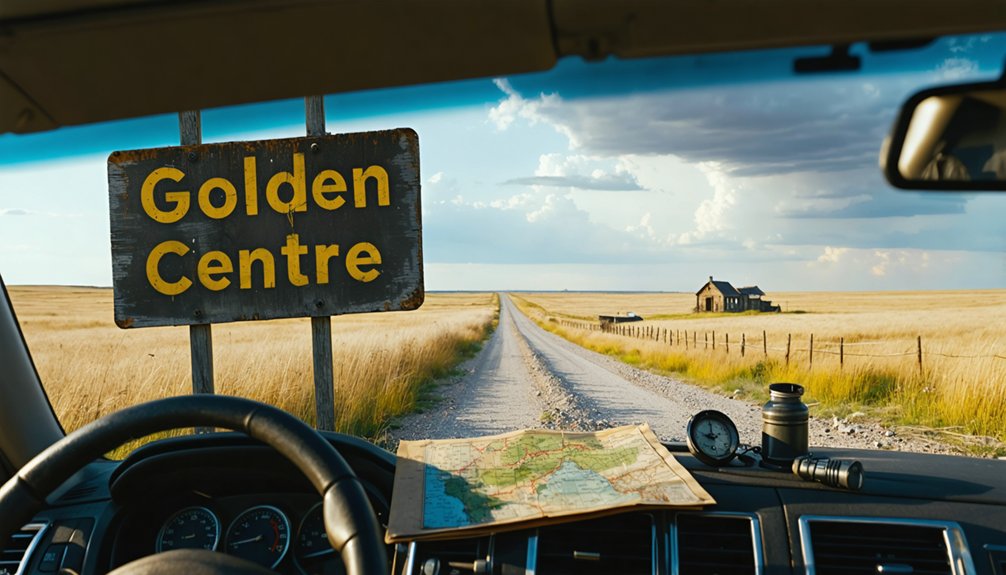
Packing smart makes the difference between a rewarding day out and a miserable one cut short. You’ll want sturdy shoes for uneven terrain, a flashlight for shadowed structures, and a first aid kit for unexpected scrapes.
Carry enough water and snacks to stay energized across multiple stops, and don’t skip sun protection — the Black Hills sun hits hard.
Leave your collection bags at home. Historical preservation isn’t just a guideline out here; it’s the law. Artifact protection means keeping every bottle, fragment, and relic exactly where you find it, so future explorers experience the same raw history you’re discovering.
Bring a camera instead. You’re here for freedom and connection to the past — photograph everything, take nothing, and the experience stays honest.
How Many Days Does a Black Hills Ghost Town Road Trip Need?
A Black Hills ghost town road trip typically takes three to four days to cover the region’s most compelling sites without feeling rushed.
You can realistically visit two to three locations per day, factoring in drive times, exploration, and photography stops.
Map your itinerary around geographic clusters — like grouping Sheridan Lake, Owanka, and Ardmore — so you’re not backtracking across the region unnecessarily.
Ideal Trip Duration
Planning a Black Hills ghost town road trip doesn’t require weeks on the road — three to five days gives you enough time to explore the region’s most compelling abandoned settlements without rushing. You’ll move at your own pace while respecting historical preservation efforts at each site.
Consider structuring your days around these priorities:
- Day 1–2: Explore Golden Centre and nearby abandoned mining camps
- Day 3: Visit Sheridan Lake and its submerged historical landmarks
- Day 4: Discover Owanka and Ardmore’s ghost town remnants
- Day 5: Flexible buffer day for unexpected discoveries or weather delays
The region’s tourist infrastructure supports comfortable travel, with lodging and supply stops accessible throughout Pennington County. Five days lets you explore freely without cutting experiences short.
Daily Site Visits
How you divide your days across the Black Hills ghost town circuit determines whether you leave feeling satisfied or shortchanged. Dedicate at least one full day per major site so you’re absorbing mining history rather than rushing through it.
Sheridan Lake deserves a morning — stand at the water’s edge and consider that an entire town rests beneath the surface. Owanka and Ardmore each reward slower exploration, where ghost town legends emerge through crumbling foundations and faded signage.
Save your afternoons for driving the connecting routes, which reveal abandoned homesteads and unmarked sites not listed on any map.
Two to three days gives you breathing room without overstaying your momentum. Structure each day loosely — freedom-seekers rarely benefit from rigid hourly schedules on open roads.
Planning Your Itinerary
Getting the day count right before you leave home turns a scattered drive into a focused journey. For a Black Hills ghost town road trip centered on historical accuracy and a rich visitor experience, three to five days hits the sweet spot.
Build your itinerary around these priorities:
- Day 1–2: Explore Sheridan Lake, where Golden City now rests beneath the water.
- Day 3: Drive through Owanka and document its weathered structures.
- Day 4: Hit Ardmore for its abandoned mining camp atmosphere.
- Day 5: Loop through Wetonka for a semi-inhabited contrast.
You’ll move at your own pace without rushing past the details that matter. Flexibility keeps the trip honest and the discoveries genuine. Plan loose, but plan smart.
What’s Actually Illegal at South Dakota Ghost Town Sites
Before you start poking around abandoned structures and pocketing that rusted bottle cap, know that South Dakota law strictly prohibits removing artifacts, debris, or any historical items from ghost town sites. These legal restrictions exist to protect what little remains of these communities. Artifact protection isn’t bureaucratic overreach—it’s how future generations get to experience the same history you’re exploring today.
Beyond removal, trespassing on privately owned ghost town land without permission carries real legal consequences. Many sites, including Owanka, sit on private property. You’ll want to check ownership before wandering past any posted signs.
Document everything with your camera. Leave everything else exactly where you found it. Your freedom to explore these sites tomorrow depends on how responsibly you treat them today.
The Best Time of Year to Hit the Black Hills Ghost Towns
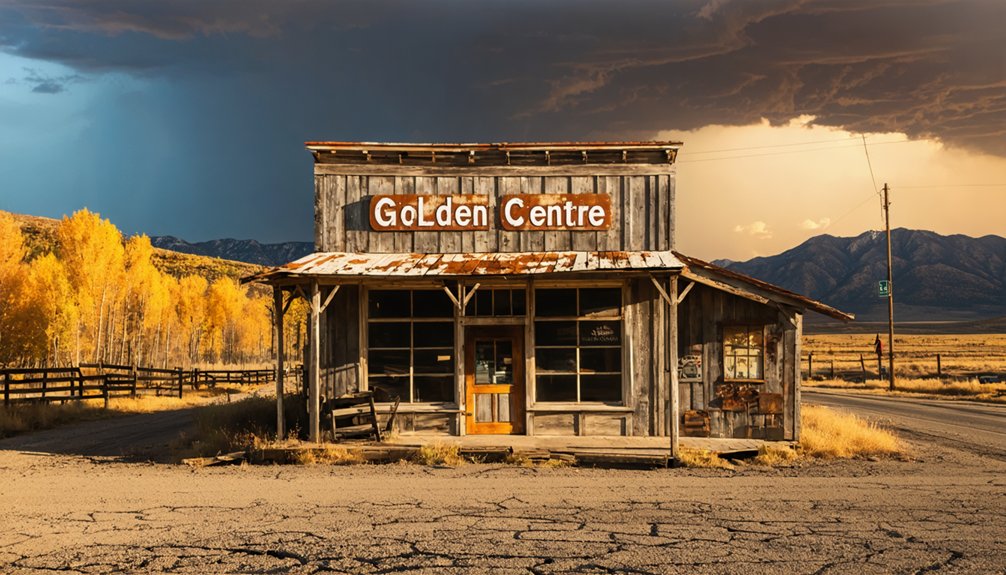
Late spring through early fall gives you the best window for exploring Black Hills ghost towns, with May and September standing out as the sweet spots. You’ll dodge brutal summer heat while enjoying longer daylight hours perfect for photography and exploration.
May and September offer the sweet spots for Black Hills ghost town exploration, balancing mild temperatures with long, photography-friendly daylight hours.
Historical preservation efforts also benefit when fewer crowds trample sensitive sites.
Plan your visit around these seasonal advantages:
- May: Mild temperatures, minimal crowds, and wildflowers framing abandoned structures
- June–August: Long days maximize exploration time, but carry extra water for visitor safety
- September: Cooler air, stunning foliage, and uncrowded trails make this the prime month
- Avoid winter: Snow and ice create dangerous conditions and limit site accessibility
Whatever month you choose, arrive early, stay aware of your surroundings, and respect every boundary you encounter.
Frequently Asked Questions
Can Children Safely Explore Black Hills Ghost Town Sites With Families?
Yes, you can safely explore Black Hills ghost towns with kids! Prioritize child safety by wearing sturdy shoes, carrying water, and respecting historical preservation rules — don’t touch artifacts, stay on trails, and supervise children near unstable structures always.
Are There Guided Ghost Town Tours Available in the Black Hills Region?
You’ll find guided ghost town tours throughout the Black Hills region! Several tour operator options support historical preservation while leading you through fascinating abandoned settlements, letting you explore freely with expert knowledge guiding your adventurous journey.
Is Photography Permitted at All South Dakota Ghost Town Locations?
With 21+ Black Hills ghost towns documented, you’ll find photography’s generally permitted, but historical preservation rules vary by site. Check photography restrictions before visiting, as some privately owned locations require landowner permission before you snap those stunning shots.
Do Any Black Hills Ghost Towns Offer Overnight Camping Nearby?
You’ll find overnight camping near Black Hills ghost towns like Sheridan Lake, where you can immerse yourself in historical preservation and discover local legends of Golden City’s submerged past beneath star-filled skies.
Are Black Hills Ghost Town Roads Accessible for Standard Passenger Vehicles?
“Better safe than sorry!” Road conditions vary, but you’ll find most Black Hills ghost town routes accessible for standard passenger vehicles. Check vehicle requirements beforehand, as some rugged trails demand higher clearance for safe, adventurous exploration.
References
- https://en.wikipedia.org/wiki/List_of_ghost_towns_in_South_Dakota
- https://www.ghosttowns.com/states/sd/sd.html
- https://en.wikipedia.org/wiki/Category:Ghost_towns_in_South_Dakota
- https://openprairie.sdstate.edu/etd/4061/
- https://www.powderhouselodge.com/black-hills-attractions/fun-attractions/ghost-towns-of-western-south-dakota/
- https://www.youtube.com/watch?v=_0WNYsFLSLA
- https://familydestinationsguide.com/eerie-town-south-dakota/
- https://www.reddit.com/r/AbandonedPorn/comments/1fpvutj/ghost_town_in_south_dakota/
- https://www.legendsofamerica.com/south-dakota-ghost-towns/
- https://ghost-towns.close-to-me.com/states/south-dakota/