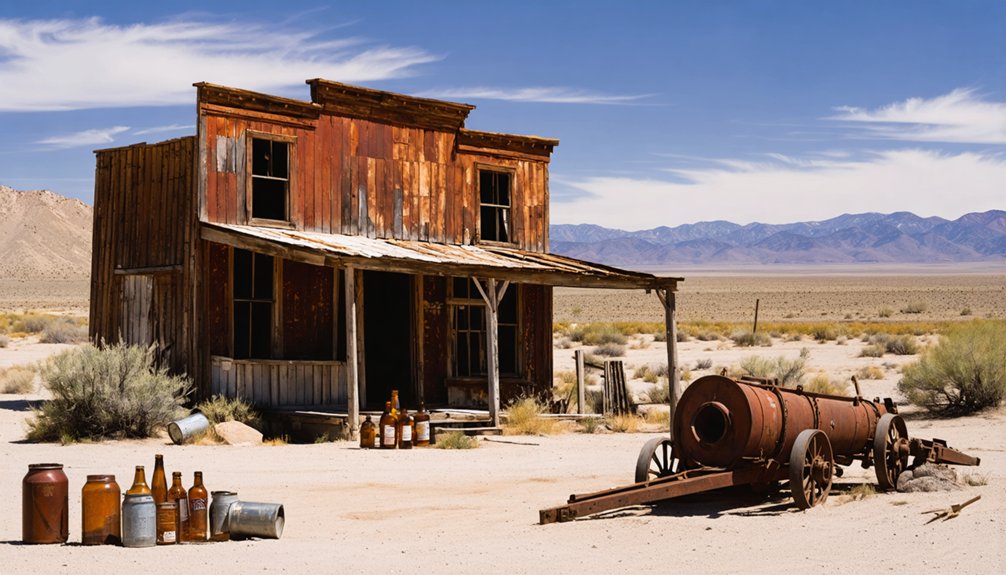
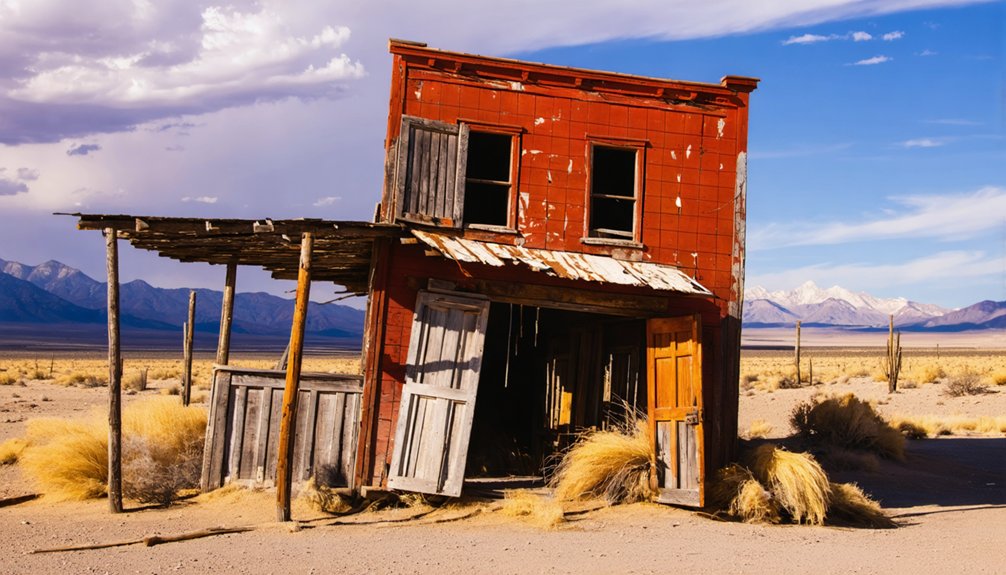
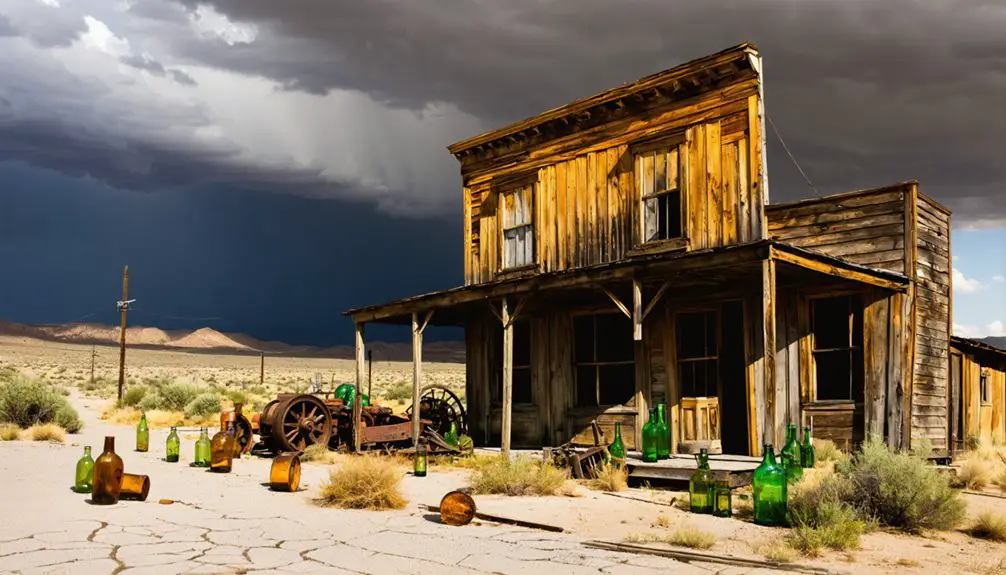
Planning a ghost town road trip to Dolly Varden, Nevada, starts with timing your visit between June and September, when dry roads make the remote Dolly Varden Mountains accessible by standard 2WD vehicle. You’ll cross into Nevada near the Utah border along Highway 93, traversing high desert terrain to reach this forgotten silver and gold boomtown. Pack water, food, fuel, and a paper map since there’s zero cell service out here. There’s far more to this haunting destination than you’d expect.
Key Takeaways
- Dolly Varden is a remote Nevada ghost town in the Dolly Varden Mountains, accessible via 2WD roads from Utah Highway 93.
- Visit between June and September when roads are dry, weather is stable, and standard vehicles can navigate safely.
- Pack at least two days’ worth of water, extra fuel, a paper map, and emergency supplies due to zero cell service.
- Avoid winter visits, as heavy snowfall blocks access routes for months and creates serious survival risks in this desolate area.
- The site features 16 mineral claims, rusted equipment, crumbling structures, and authentic artifacts from a brief 19th-century silver and gold mining boom.
Where Is Dolly Varden, Nevada?
Tucked away in the remote Dolly Varden Mountains near the Utah border, Dolly Varden, Nevada is about as desolate as it gets. This forgotten corner of the Silver State sits within the Southern Rocky Mountain system, far from crowds and noise.
You’ll find yourself surrounded by rugged terrain that once drew ambitious miners chasing fortune in the late 19th century. Today, scattered historical artifacts and rusting mining equipment are your primary companions here.
The isolation is the point — this isn’t a destination for those craving convenience. It’s a place for those who want raw, unfiltered history on their own terms.
If you value wide-open freedom and genuine solitude, Dolly Varden delivers an experience you simply won’t find anywhere else.
The Mining Boom That Built Dolly Varden
That desolate landscape you’re standing in wasn’t always so quiet. In the late 19th century, Dolly Varden roared to life as a mining boomtown, drawing ambitious prospectors chasing silver and gold through these rugged mountains.
Miners employed demanding techniques to extract precious ore, using hand drilling, blasting, and stamp mills to process their haul. The work was brutal, dangerous, and relentless.
Hand drills, dynamite, and stamp mills — the tools of men who carved wealth from unforgiving rock.
If you look carefully around the site today, you’ll still spot historical artifacts scattered across the terrain — rusted equipment, crumbling foundations, and remnants of machinery that once powered this ambitious operation.
The boom didn’t last. Like most Nevada mining towns, Dolly Varden burned bright and faded fast, leaving behind only silence and the stubborn ghosts of those who dared to stake their claim here.
16 Mineral Claims and a Ghost Town Frozen in Time
What remains of Dolly Varden today tells a surprisingly specific story — the site consists of 16 mineral claims and little else, a skeletal outline of ambition frozen in the high desert air. You’re walking through living mining history here, where historical preservation isn’t curated or polished — it’s raw and unapologetic.
Few structures survive, but that absence speaks volumes. The ghost town doesn’t need grand monuments to communicate its past; the silence does that work for you. Those 16 claims represent real men, real gambles, and real consequences.
You’ll feel the weight of that when you’re standing there with nothing but wind and open sky. It’s exactly the kind of unfiltered freedom that no museum can replicate.
What’s Left to See at the Ghost Town Today
Few ghost towns lay their bones as bare as Dolly Varden does. When you arrive, you’ll find a sparse collection of weathered structures slowly surrendering to the mountain elements.
Historical artifacts — rusted equipment, crumbling foundations, and scattered debris — tell the story of miners who once chased fortune in these remote hills.
You won’t find manicured pathways or guided tours here. This is raw, unfiltered history waiting for those willing to seek it out.
Local legends whisper about the ambitious souls who built this place and vanished just as quickly.
Bring your camera and your curiosity. Walk the grounds carefully, respect what remains, and let the silence do the talking.
Dolly Varden rewards independent explorers who appreciate history without the polish.
How to Get to Dolly Varden From Utah
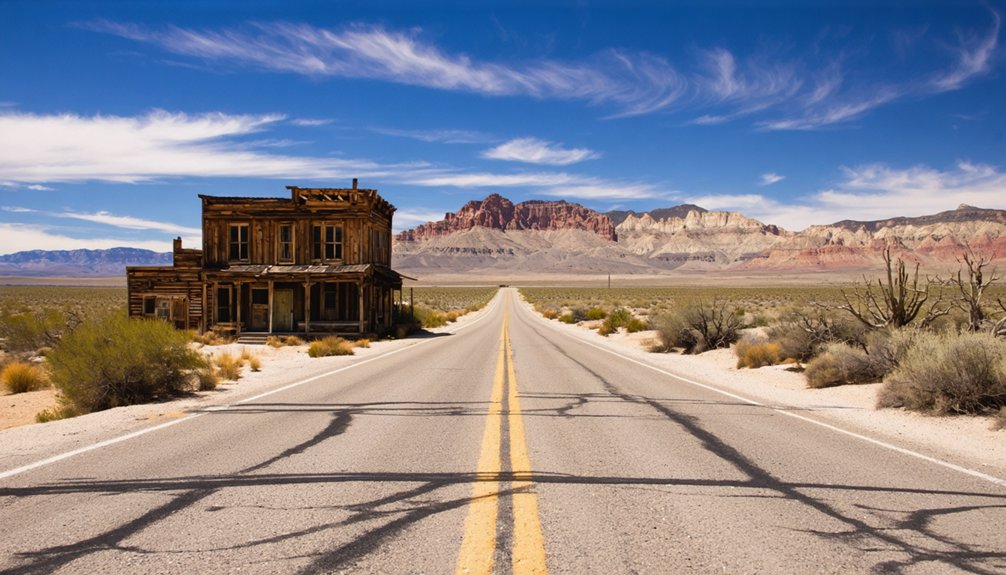
If you’re coming from Utah, you’ll find the most convenient border entry points along Nevada’s eastern edge, where Highway 93 serves as your primary corridor into the region.
The 2WD road access makes the drive manageable without a specialized vehicle, though you should check seasonal conditions before heading out, as winter snow can quickly close routes.
Depending on your Utah starting point, expect a driving distance that puts you deep into Nevada’s remote high desert terrain, so fuel up and pack supplies before you go.
Utah Border Entry Points
Nestled near the Utah border, Dolly Varden is accessible via a 2WD road, making it a straightforward drive for most vehicles. As you cross into Nevada from Utah, you’ll find the route surprisingly manageable, opening up a world of historic preservation and raw desert freedom.
The Dolly Varden Mountains rise dramatically ahead, signaling your arrival into genuinely remote territory.
You’ll want to enter from the Utah side, following the desert road westward into the heart of the Dolly Varden Mountains.
Keep your eyes open for wildlife observation opportunities along the way — mule deer and pronghorn frequently roam these open stretches.
Fuel up before leaving Utah, as services disappear completely once you commit to this desolate but breathtaking corridor leading toward Nevada’s forgotten ghost town.
Road Conditions From Utah
Once you cross into Nevada from Utah, the 2WD road leading to Dolly Varden is straightforward but demands your attention. The terrain shifts gradually as you push deeper into the Dolly Varden Mountains, and you’ll want to keep your speed controlled on loose gravel stretches.
Watch for wildlife sightings along the route — mule deer and jackrabbits frequently cross these open desert corridors.
The road rewards patient drivers with dramatic mountain scenery before revealing the site’s historic architecture, including weathered remnants that have survived decades of harsh winters.
Pack extra water, check your fuel before leaving Utah, and carry a physical map. Cell service disappears quickly out here.
Summer offers the most reliable road conditions, while winter snow can make access genuinely dangerous.
Driving Distance From Utah
How far you’ll actually drive depends on your starting point in Utah, but most visitors approaching from the west side of the state face a journey of roughly 50 to 100 miles once they cross the Nevada border into the Dolly Varden Mountains region.
Plan your mileage around these key checkpoints:
- Utah border crossing – Your gateway into Nevada’s open terrain
- Dolly Varden Mountains approach – Where historical artifacts begin telling silent stories along the roadside
- Final stretch into town – Where local legends say the mountains themselves guided early miners
You’re trading civilization for raw freedom, so fuel up beforehand. The 2WD road handles the distance reasonably well, making this ghost town genuinely reachable without specialized equipment.
When to Visit Dolly Varden
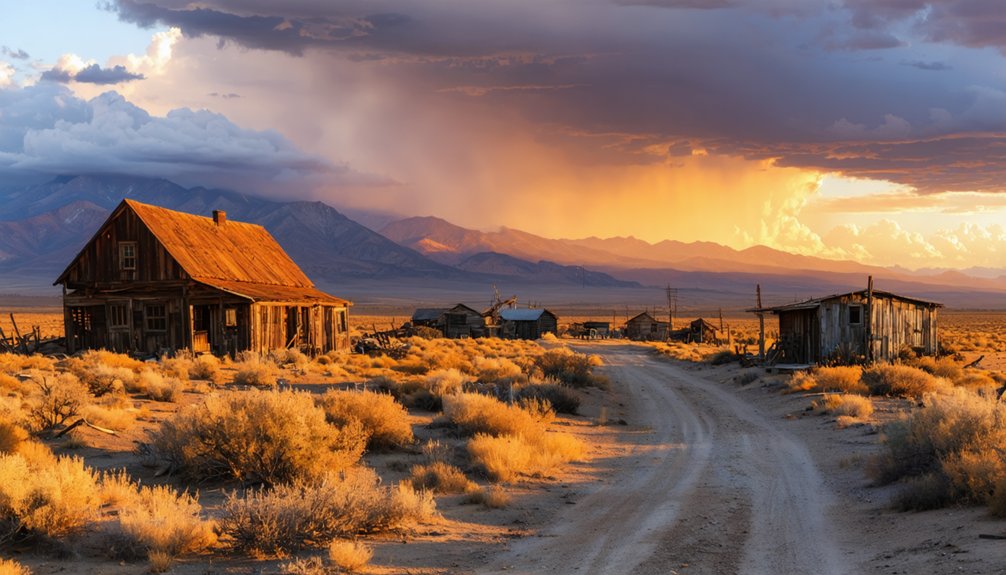
If you’re planning a trip to Dolly Varden, timing is everything — summer months offer the most pleasant conditions for exploring this remote ghost town.
Winter brings heavy snowfall to the Dolly Varden Mountains, making roads treacherous and potentially impassable even by 2WD.
Aim for late spring through early fall to make the most of your visit while the weather’s on your side.
Best Months To Visit
Timing your visit to Dolly Varden makes all the difference, since the ghost town sits high in the Dolly Varden Mountains where winter brings heavy snowfall that can make access difficult or impossible. Plan around these *ideal* windows to explore historical artifacts and support informal preservation efforts:
- June through July – Mild temperatures and dry roads make navigation easy via the 2WD access route.
- August through September – *Arguably* the best months, offering stable weather and stunning mountain scenery without summer’s peak heat.
- Early October – A narrow but rewarding window before snow arrives, offering dramatic fall colors across the landscape.
Avoid November through April entirely. The mountains don’t forgive poor timing, so plan smart and you’ll experience Dolly Varden’s eerie, untamed freedom on your terms.
Winter Weather Challenges
Winter transforms Dolly Varden into an unforgiving place, where heavy snowfall blankets the Dolly Varden Mountains and cuts off the 2WD access route entirely.
Winter storms roll in fast and without mercy, trapping unprepared travelers in an already desolate landscape.
Snow accumulation in these mountains runs deep, making the roads impassable for months at a stretch.
If you’re craving the freedom to explore this ghost town on your own terms, don’t gamble with a winter visit.
You’ll find yourself stuck, stranded, or worse.
The Dolly Varden Mountains don’t forgive poor planning.
Save this adventure for late spring through early fall, when the roads open back up and the ruins are actually reachable.
Winter here isn’t romantic—it’s a genuine survival risk.
Summer Climate Advantages
Summer opens Dolly Varden up in ways no other season can. The roads clear, the mountains breathe, and you’re free to explore this ghost town on your own terms. Here’s why summer is your best shot at experiencing Dolly Varden fully:
- Wildlife encounters become frequent as deer, raptors, and small desert mammals move actively through the Dolly Varden Mountains.
- Scenic overlooks reward hikers with sweeping views toward Utah’s border, offering dramatic high-desert panoramas you simply can’t access under winter snow.
- Road accessibility peaks during summer, letting standard 2WD vehicles reach the site without risk.
You’ll want to arrive early morning to beat afternoon heat. Summer hands you the freedom to roam this desolate landscape completely and comfortably.
No Services, No Signal: What to Bring
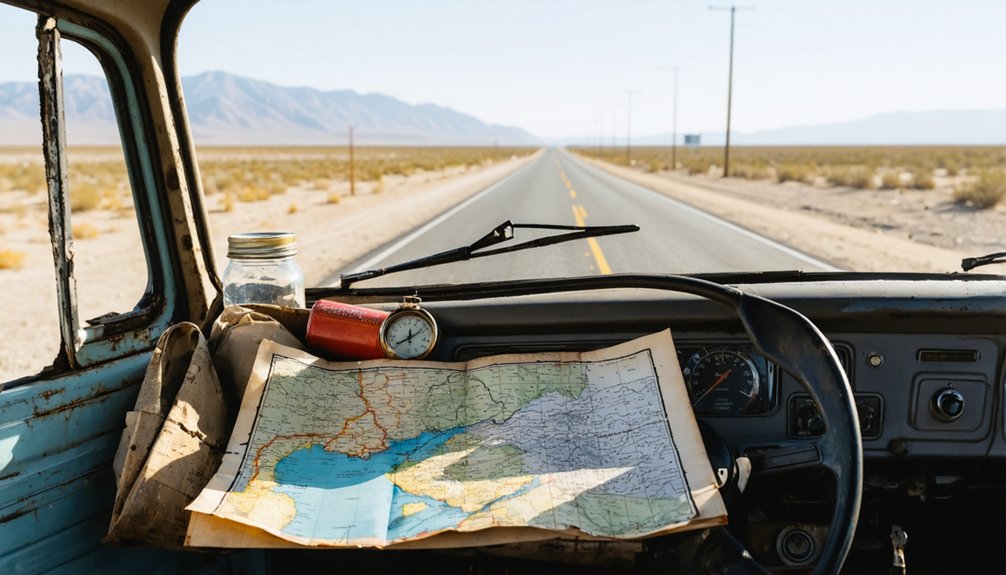
Because Dolly Varden sits in a remote stretch of the Dolly Varden Mountains near Utah, you’ll find zero services, no cell signal, and no one nearby if something goes wrong. That freedom comes with responsibility. Pack enough water for at least two days, plus extra food, fuel, and a paper map since digital navigation won’t save you out here.
Bring a first-aid kit, jumper cables, and a spare tire in solid condition. You’re visiting a site of historical preservation, so leave modern amenities like convenience stores and roadside assistance behind mentally before you go.
A portable power bank, emergency blanket, and basic tools round out your kit. Prepare thoroughly, and you’ll enjoy every desolate, magnificent mile Dolly Varden has to offer.
Frequently Asked Questions
Is Camping Allowed Overnight at the Dolly Varden Ghost Town Site?
The knowledge doesn’t confirm overnight camping, but with 16 mineral claims to explore, you’ll want to linger! Scout wildflower sightings and historical photo spots freely across this desolate ghost town before checking local regulations for camping permissions.
Are There Any Guided Tours Available for Dolly Varden Ghost Town?
There aren’t any official guided exploration tours available for Dolly Varden. You’ll enjoy independent historical preservation adventures through this desolate ghost town, discovering remnants of its late 19th-century mining boomtown past entirely on your own terms.
Can You Legally Collect Rocks or Minerals at Dolly Varden?
Before you pocket a single stone, know that rock collection laws and mineral extraction regulations apply here. Dolly Varden’s 16 mineral claims mean you’ll need proper authorization before collecting any rocks or minerals legally.
Is Dolly Varden Located on Private or Public Land?
You’ll find Dolly Varden’s land ownership tied to its 16 mineral claims, suggesting private interests. However, historical preservation efforts may affect access, so you should verify current public or private land status before visiting.
Are Pets Allowed When Visiting the Dolly Varden Ghost Town?
Ironically, the desolate ghost town’s pet regulations aren’t strictly enforced — there’s nobody around to care! Animal restrictions remain unclear, but you’re free to bring your furry companion exploring Dolly Varden’s forgotten, windswept ruins.
References
- https://www.ghosttowns.com/states/nv/dollyvarden.htm
- https://www.youtube.com/watch?v=ge1a5vZJbb8
- https://www.miningnewsnorth.com/story/2020/06/26/northern-mining-history/the-valuable-lessons-of-kitsault-valley/6338.html
- https://www.youtube.com/watch?v=3MUkoT2VB58
- https://smallcapsteve.substack.com/p/a-visit-to-the-golden-triangle-the
- https://repository.mines.edu/entities/publication/9fdfed85-2040-4448-9519-a6df5528a473
- https://wiifishingresort.fandom.com/wiki/Dolly_Varden?action=history
- https://www.unbc.ca/sites/default/files/sections/northwest/2015-10-28-ghosttownsofnorthwestbcfrompasttopresent.pdf
- https://propertyfile.gov.bc.ca/reports/PF882351.pdf
- https://amebc.ca/a-silver-lining-the-historic-dolly-varden-silver-camp/