Planning a ghost town road trip to Golden, New Mexico starts with jumping on the Turquoise Trail, a 54-mile scenic byway off NM 14. You’ll explore the site of America’s first gold rush west of the Mississippi, dating back to 1825. Walk the grounds of the San Francisco Church, browse the historic Henderson Store, and soak in the eerie quiet of crumbling ruins. Spring and fall offer the best conditions, and there’s plenty more to uncover ahead.
Key Takeaways
- Golden, NM hosted the first gold rush west of the Mississippi in 1825, making it a historically significant ghost town worth visiting.
- From Albuquerque, take I-40 east to Tijeras, then NM 14 north for 15 miles to reach Golden efficiently.
- Visit the San Francisco Catholic Church and Henderson Store, the town’s most notable surviving historic landmarks.
- Plan a 30–45 minute stop in Golden, ideally combining it with nearby Madrid and Cerrillos along the Turquoise Trail.
- Visit in spring or fall for mild weather; bring water, snacks, and offline maps due to limited cell service.
Golden, New Mexico: A Ghost Town Worth the Detour
If you’re driving the Turquoise Trail between Albuquerque and Santa Fe, Golden, New Mexico is a detour that earns its stop. Sitting quietly in the Ortiz Mountains along NM 14, this small settlement carries serious historical significance as the site of the first gold rush west of the Mississippi River. Gold was discovered here in 1825, and the town’s mining history shaped New Mexico’s earliest boom-and-bust economy long before statehood.
Today, only about 24 residents call it home, but the remains tell the story well. You’ll find a photogenic church, scattered ruins, and the Henderson Store, family-owned since 1918. Golden isn’t a dramatic ruin crawl — it’s a quiet, honest slice of frontier history that rewards curious travelers who slow down.
The First Gold Rush West of the Mississippi Started Here in 1825
When you walk through Golden today, you’re standing on ground that sparked the first gold rush west of the Mississippi River back in 1825. That discovery put this small New Mexico settlement on the map decades before California’s famous 1849 rush ever captured the nation’s imagination.
Like many mining towns, Golden rode a relentless cycle of boom and bust as ore veins flourished, thinned, and ultimately faded.
Gold Discovered In 1825
Before the California Gold Rush captured the world’s imagination, prospectors were already scrambling through the Ortiz Mountains right here in Golden. Gold discovery in 1825 made this spot the first gold rush west of the Mississippi River, decades before Sutter’s Mill became a household name.
That mining history reshaped everything. Settlers flooded in, camps sprouted fast, and Golden transformed from a quiet desert stretch into a buzzing early American frontier. You’re standing on ground where independent fortune-seekers staked their claims long before the government drew clean borders across the West.
The boom didn’t last forever, but the significance did. When you visit Golden, you’re not just passing through a ghost town — you’re tracing the roots of American westward ambition at its earliest and rawest point.
First Western Gold Rush
That 1825 discovery didn’t just put Golden on the map — it sparked the first gold rush west of the Mississippi River, beating California’s famous frenzy by more than two decades. Prospectors flooded the Ortiz Mountains chasing fortune, and Golden quickly became one of New Mexico’s earliest gold camps.
You’re walking through a place where American mining history actually began. The cultural heritage runs deep here, layered beneath every crumbling adobe and weathered stone.
Local legends about lost veins and forgotten strikes still circulate among the handful of residents who call Golden home today.
Understanding this context transforms your visit. You’re not just passing through a quiet roadside stop — you’re standing at the origin point of western gold mining ambition.
Boom-And-Bust Mining Cycles
Golden’s mining history didn’t follow a straight line — it lurched forward and backward through cycles of wild optimism and sharp decline. Strikes brought rushes of prospectors, makeshift camps, and fast money. Then the ore ran thin, prices dropped, or better strikes elsewhere pulled everyone away. The town emptied just as quickly as it had filled.
You’ll feel those rhythms when you walk Golden today. Ghost town preservation efforts have kept a few structures standing, but the gaps between them tell the real story — buildings that once housed a booming population simply vanished. What’s left gives you an honest picture of how mining communities lived and collapsed.
Golden doesn’t dramatize its past; it just shows you the evidence and lets you draw your own conclusions.
The San Francisco Church, Henderson Store, and Ruins Still Standing
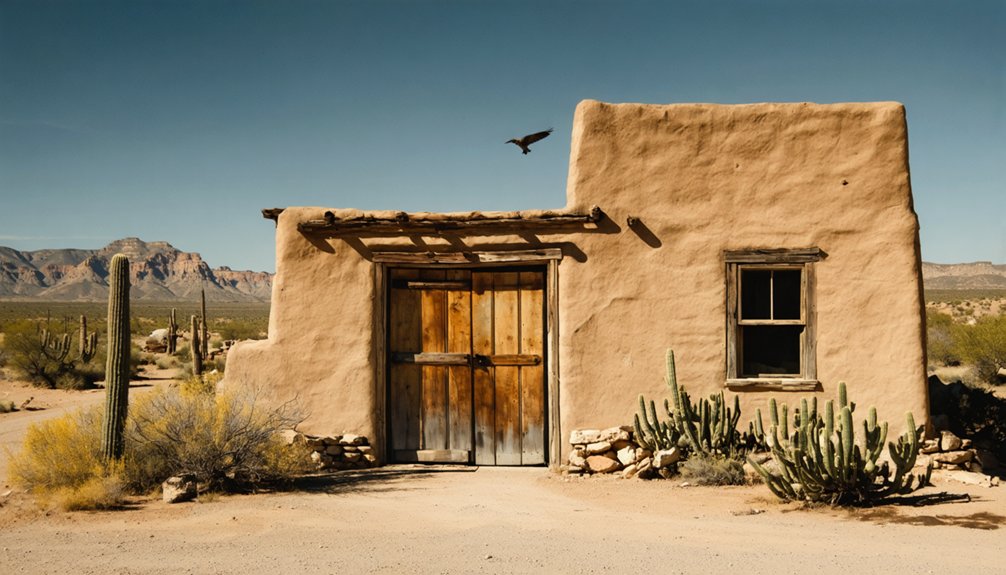
Though Golden has dwindled to fewer than two dozen residents, what remains tells a vivid story of the town’s mining past. The San Francisco Catholic Church stands as the most striking survivor, its adobe walls framed by mountain vistas and seasonal wildflower blooms that make it one of the most photographed stops along the Turquoise Trail.
You’ll also want to swing by the Henderson Store, a family-owned landmark operating since 1918 that feels notably unchanged. Scattered ruins and crumbling foundations dot the surrounding area, quietly marking where miners once built their lives.
Walk carefully around these structures since age makes them unpredictable. Together, these remnants reward curious travelers who value authentic history over polished attractions.
How Long Should You Spend in Golden?
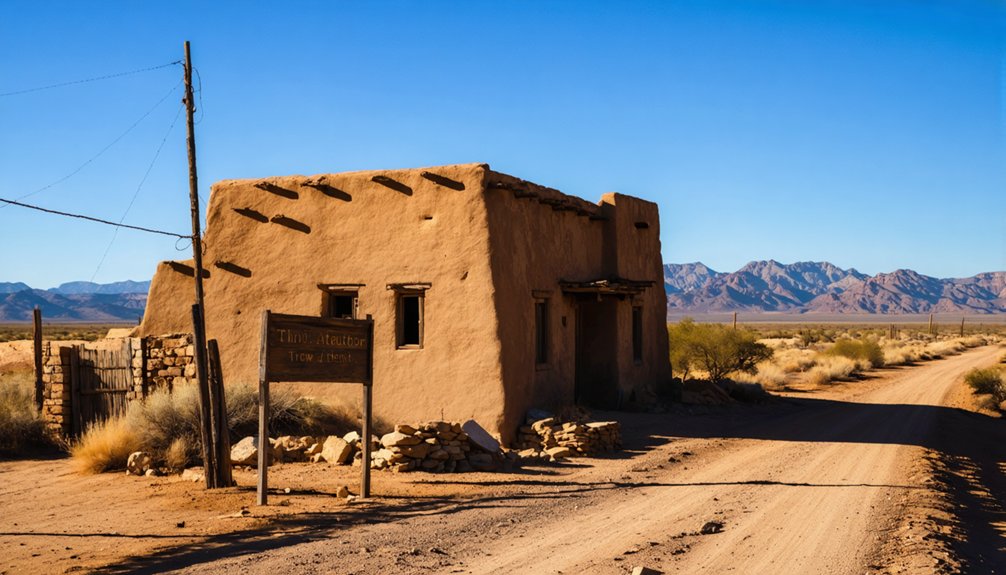
Golden rewards a quick stop of thirty to forty-five minutes, giving you enough time to photograph the church, browse the Henderson Store, and soak in the quiet atmosphere without rushing.
If you’re already driving the Turquoise Trail, you can easily fold Golden into a half-day loop that includes Madrid and Cerrillos just a few miles up the road.
Pairing these three stops stretches your trip into a fuller experience without adding significant distance or driving time.
Quick Stop Or Longer
Most visitors find that an hour or two covers everything Golden has to offer, but that’s not necessarily a reason to rush through. Walk the grounds around San Francisco Catholic Church, browse the Henderson Store, and let the quiet settle in. Historical preservation moves slower here, and that pace is part of the appeal.
If scenic detours interest you, build in extra time. Madrid sits just ten miles north, and Cerrillos is close behind. Stringing these stops together transforms a quick visit into a rewarding half-day loop.
You’re not chasing a packed itinerary — you’re reading a landscape shaped by gold rushes and faded ambition. Stay as long as the place holds your attention, then move when you’re ready.
Pairing Nearby Town Visits
If you’re threading Golden into a broader Turquoise Trail day trip, the math works easily in your favor. Madrid sits just 10 miles north and rewards an extra hour with its galleries, live music venues, and local cuisine that punches well above a ghost town’s typical offerings.
Cerrillos adds another layer of weathered charm shortly beyond that. Together, these three stops build a natural rhythm — Golden anchors your historical curiosity, Madrid feeds your appetite and artistic photography instincts, and Cerrillos deepens the frontier atmosphere.
The entire stretch runs roughly 54 miles of scenic NM 14, making a relaxed loop from Albuquerque genuinely manageable. Keep your pace unhurried, let the landscape dictate your stops, and you’ll return home with full memory cards and a satisfied sense of discovery.
Is Golden, New Mexico Safe to Visit?
Like most ghost towns, Golden comes with a few practical safety considerations worth knowing before you visit. Some structures are old and unstable, so stick to designated paths and respect any posted warnings. Local legends make the crumbling walls feel alive with history, but that doesn’t mean they’re safe to lean against or enter.
Preservation efforts help protect what little remains, so avoid touching or removing anything you find. Check whether any areas sit on private property before wandering off the main road. Cell service can be spotty out here, so download offline maps ahead of time.
Bring water, snacks, and a full tank of gas. A little preparation keeps your ghost town adventure enjoyable rather than stressful.
What to Bring for the Turquoise Trail Drive
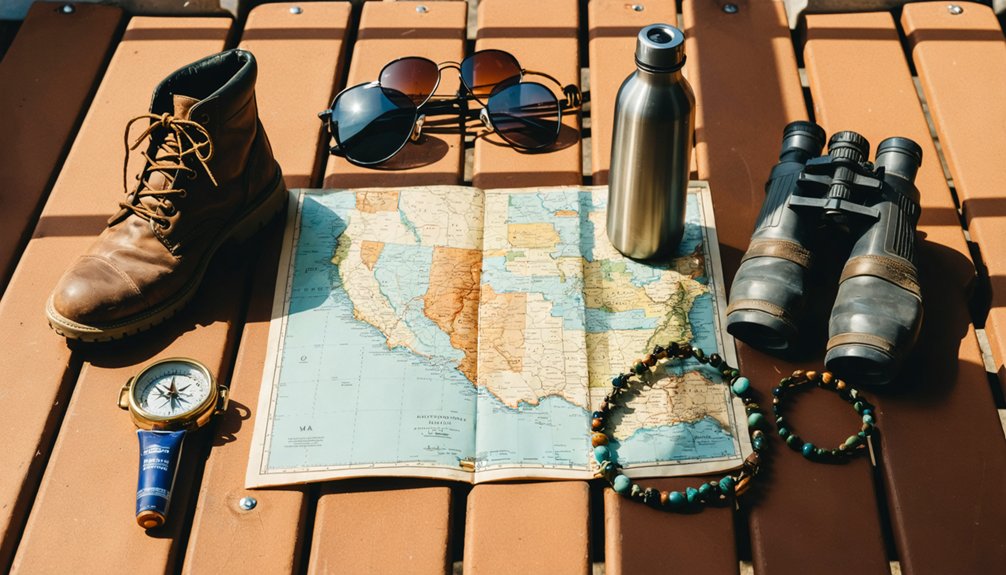
Packing smart makes the Turquoise Trail feel effortless rather than improvised. Bring water, snacks, and a full gas tank before leaving Albuquerque or Santa Fe, since services thin out quickly along NM 14. Download offline maps because cell service gets spotty near Golden and surrounding areas.
Fill your tank, pack your water, and download offline maps before the Turquoise Trail swallows your signal.
Carry cash for the Henderson Store, where local craftsmanship shows up in handmade goods that cards won’t always cover. A camera earns its weight here — the San Francisco Catholic Church and scattered ruins reward anyone serious about documenting historical preservation on the road.
Wear sturdy shoes if you plan to walk near older structures, and check weather conditions before heading out. Seasonal changes affect road quality.
Pack light, stay flexible, and let the route move at its own pace.
How to Get to Golden on the Turquoise Trail
Once you’ve stocked the car, getting to Golden is straightforward from either Albuquerque or Santa Fe. From Albuquerque, head east on I-40 to Tijeras, then take NM 14 north roughly 15 miles.
From Santa Fe, drive south on NM 14 about 10 miles past Madrid. Either direction places you on the Turquoise Trail, a 54-mile National Scenic Byway built for unhurried driving between historical landmarks and scenic viewpoints.
The route rewards drivers who resist rushing. Rolling high desert terrain and mountain backdrops make every stretch worth absorbing slowly.
Golden sits in the Ortiz Mountains, so elevation shifts subtly as you approach. Download offline maps before leaving since cell service can disappear quickly.
Plan the full loop as a day trip, and you’ll have time for Madrid and Cerrillos too.
Best Time of Year to Drive the Turquoise Trail
Spring and fall are your best bets for driving the Turquoise Trail, offering mild temperatures, clear skies, and manageable crowds.
Summer brings intense heat and the occasional monsoon that can turn dirt roads slick, so you’ll want to check conditions before heading out.
If you’re hoping to skip the tourist rush around Madrid and Cerrillos, a weekday visit in late April or early October hits the sweet spot.
Ideal Seasons For Visiting
Although New Mexico’s high desert can surprise you with dramatic weather swings, the Turquoise Trail rewards visitors most generously in spring and fall, when mild temperatures make long stretches behind the wheel genuinely comfortable. April through early June brings wildflowers and clear skies, giving you ideal conditions for stopping at scenic viewpoints along NM 14.
September and October cool things down after summer monsoons, revealing crisp air and golden light that photographers love.
Summer works if you start early and avoid afternoon thunderstorms, but midday heat can make outdoor exploration draining.
Winter occasionally brings snow, which adds atmosphere but complicates road conditions.
Whatever season you choose, the route’s commitment to historical preservation means Golden’s church, ruins, and Henderson Store remain quietly waiting, ready to reward anyone who shows up.
Weather And Road Conditions
Knowing when Golden beckons is only half the equation—understanding what the road itself does in each season keeps your trip from becoming an adventure you didn’t plan for. Local weather patterns shape NM 14 dramatically throughout the year.
Summer monsoons roll in fast, turning dirt shoulders slick and occasionally flooding low-lying stretches.
Winter brings ice and snow to the Ortiz Mountains, making traction and visibility real concerns.
Spring thaws can leave road surfaces cracked and uneven.
Fall delivers the most forgiving seasonal road conditions—dry pavement, mild temperatures, and clear sightlines through the high desert.
Whatever season you choose, check the New Mexico Department of Transportation road alerts before departing, download offline maps, and carry water. The Turquoise Trail rewards preparation.
Avoiding Crowds And Heat
Fall edges out every other season on the Turquoise Trail, and the reasons stack up fast. Temperatures drop into the comfortable range, the crowds thin out, and the light turns golden in a way that flatters Golden’s historic architecture beautifully. You’re not fighting summer heat or icy winter roads — you’re just driving free.
Spring runs a close second. Wildflowers push through the desert floor, and the cool mornings make stopping to explore ruins genuinely pleasant.
Avoid July and August if you can. Heat peaks, afternoon monsoons roll in fast, and the glare works against you at every turn.
Whatever season you choose, pair your drive with local cuisine in Madrid before or after Golden. That rhythm — food, history, open road — makes the whole trip click.
Pair Golden With Madrid and Cerrillos
Because Golden sits almost perfectly between Madrid and Cerrillos on NM 14, you can hit all three stops in a single Turquoise Trail drive without backtracking.
Golden’s central position on NM 14 makes visiting Madrid and Cerrillos a clean, backtrack-free drive.
Madrid brings color and creative energy, with its repurposed mining buildings now housing galleries and cafés that reflect strong local architecture and community-driven historical preservation.
Cerrillos offers a rawer, quieter atmosphere with adobe structures and an old turquoise mining past that rewards slow walkers and curious eyes.
Golden anchors the middle of this trio with its San Francisco Catholic Church and the Henderson Store, giving you genuine contrast between the towns.
Each stop feels distinct, so you won’t experience repetition.
Plan roughly half a day for all three, and you’ll leave with a well-rounded picture of what the Turquoise Trail actually offers.
Golden as a Full Day Trip From Albuquerque
If you’re driving from Albuquerque, Golden works beautifully as the centerpiece of a full day out rather than just one quick stop among three. The Turquoise Trail covers roughly 54 miles of NM 14, offering scenic viewpoints through the Ortiz Mountains that reward a slower pace.
Leave early, stop in Golden to explore the San Francisco Catholic Church and Henderson Store, and let historical preservation guide your curiosity through what remains of this 1825 gold camp.
From there, continue north to Madrid and Cerrillos before looping back. The full round trip runs approximately 150 miles, fitting comfortably into daylight hours.
Bring water, download offline maps, and keep your tank full. The route is built for freedom, not rushing.
Frequently Asked Questions
Is There an Entry Fee or Permit Required to Visit Golden?
You don’t need an entry fee or permit to visit Golden! However, you’ll want to respect historical preservation efforts and follow visitor regulations, especially near private property or unstable structures. Enjoy your freedom responsibly!
Are Pets Allowed When Exploring Golden’s Ruins and Grounds?
Golden’s pet policies are an open road — no known animal restrictions exist, but you’ll want to keep your furry companion leashed, respect private property, and make certain they’re safe around unstable structures.
Can You Camp Overnight Near Golden, New Mexico?
You won’t find designated campgrounds in Golden itself, but you’re free to explore nearby overnight accommodations and check local camping regulations for surrounding areas, giving you the freedom to rest and roam the Turquoise Trail.
Does the Henderson Store Still Sell Anything to Visitors Today?
Imagine stumbling upon a dusty bottle filled with local legends — that’s the Henderson Store’s magic. It’s been family-owned since 1918, and you’ll likely find historical artifacts, curiosities, and goods that connect you to Golden’s living past.
Are There Guided Ghost Town Tours Available Along the Turquoise Trail?
The knowledge doesn’t confirm official guided tours, but you’ll find Turquoise Trail attractions rich with ghost town history you can explore independently. Drive at your own pace, stop freely, and let Madrid, Cerrillos, and Golden tell their own stories.
References
- https://www.newmexico.org/places-to-visit/ghost-towns/
- https://www.unscaledtravelshow.com/new-mexico-ghost-towns-guide-road-trips/
- https://mossandfog.com/exploring-new-mexicos-ghost-towns-on-a-road-trip/
- https://www.youtube.com/watch?v=paA32uV3atI
- https://medium.com/gone/ghost-towns-biker-joints-and-eerie-landscapes-driving-new-mexicos-turquoise-trail-7c01aa961e3
- https://santafe.com/new-mexico-road-trip-ghost-towns/
- https://newmexicotravelguy.com/new-mexico-ghost-towns/
- https://abq.news/2024/05/trippin-on-theturquoise-trail/
- https://www.santafe.org/things-to-do/road-trips/turquoise-trail-and-madrid/