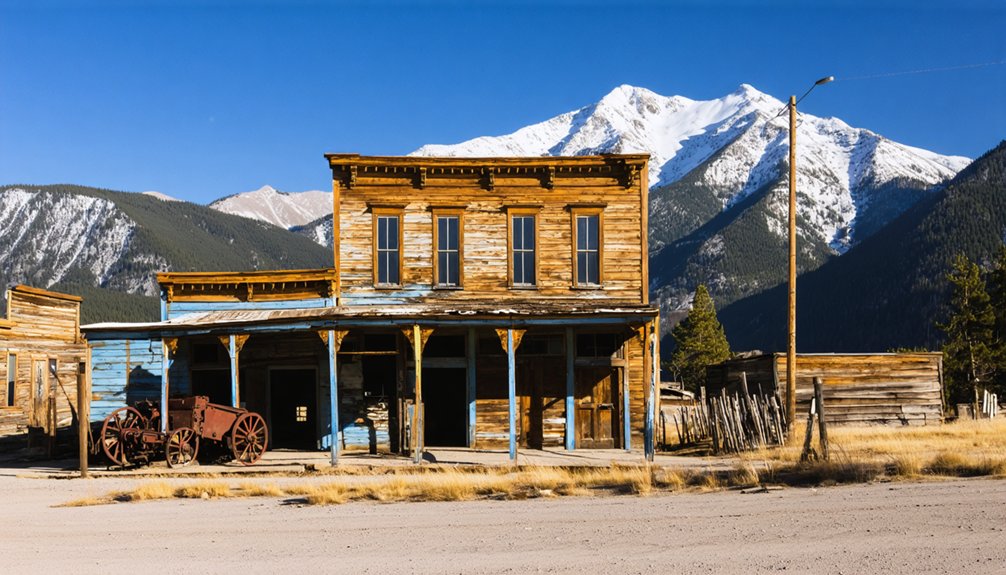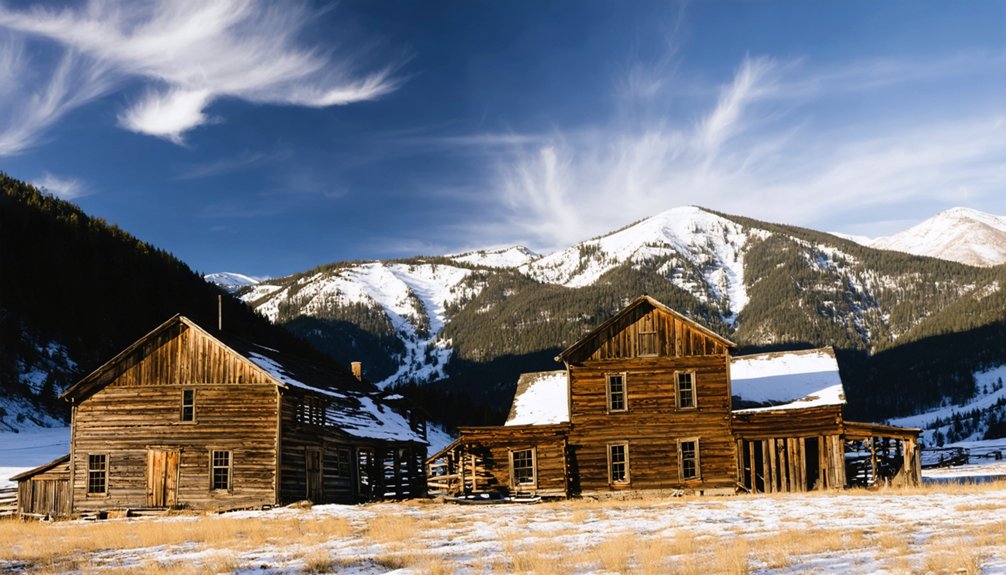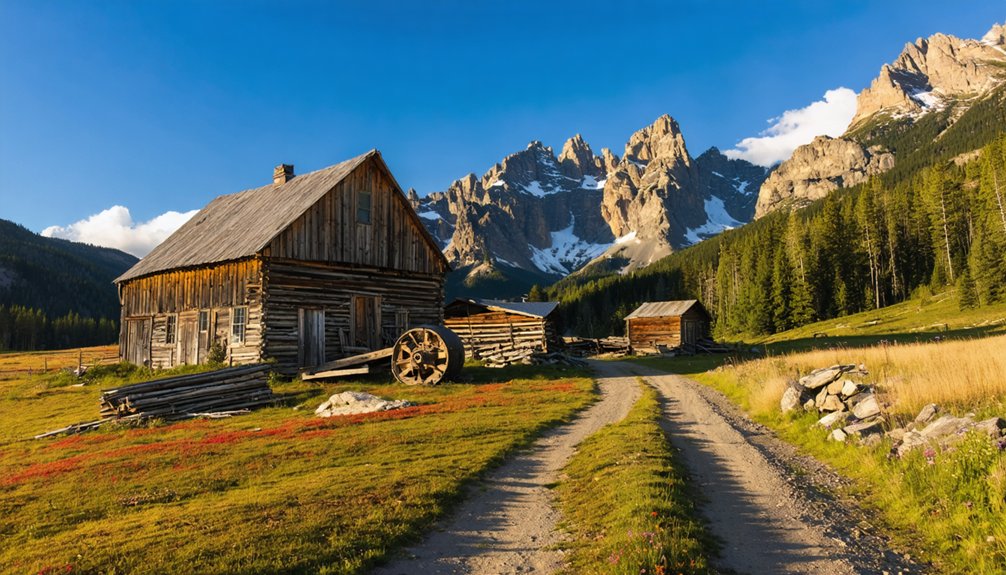
Planning a ghost town road trip to Gothic, Colorado starts with a 7-mile drive north of Crested Butte on Gothic Road. You’ll climb to 9,485 feet in the West Elk Mountains, where over 40 historic buildings from an 1879 silver boom still stand. Standard 2WD vehicles handle summer and fall conditions easily, but bring your own fuel and food since there are no services. Keep exploring to uncover everything Gothic has to offer.
Key Takeaways
- Gothic, Colorado, a historic silver mining ghost town, sits at 9,485 feet in the West Elk Mountains, about 7 miles north of Crested Butte.
- Standard 2WD vehicles handle Gothic Road comfortably in summer and fall; high-clearance 4×4 is needed beyond Gothic toward Crystal Mill.
- Summer and fall offer the best road trip experience, with hiking, biking, wildflower viewing, and easier driving conditions.
- The Town Hall visitor center and over 40 preserved historic buildings highlight Gothic’s mining past and its current role as a research hub.
- No services exist in Gothic, so fuel up and grab meals in Crested Butte before making the 7-mile drive north.
What Makes Gothic, Colorado Worth the Drive
Tucked away at 9,485 feet in Colorado’s West Elk Mountains, Gothic isn’t your average ghost town—it’s a living piece of history that’s still actively shaping science. Its historical significance dates back to 1879, when silver miners flooded the area and built a thriving community of 1,000 residents.
When the boom collapsed, Gothic didn’t simply fade—it transformed. Since 1928, the Rocky Mountain Biological Laboratory has turned this abandoned townsite into a hub for ecological research, drawing scientists studying climate change, pollination, and high-altitude ecosystems.
You’ll find over 40 historic buildings still standing, serving researchers rather than collecting dust. Gothic sits just 8 miles north of Crested Butte, making it an accessible yet genuinely wild destination worth every mile of the drive.
What to Know Before You Go: Road Conditions and Vehicle Requirements
Getting to Gothic is half the adventure, but you’ll want to come prepared. From Crested Butte, head north on the main street to 6th Street, turn left, and follow Gothic Road roughly 7 miles to the townsite.
Getting to Gothic is half the adventure — head north from Crested Butte and follow Gothic Road seven miles.
During summer and fall, your standard 2WD vehicle handles the route comfortably. However, if you’re pushing further across Schofield Pass toward Crystal Mill, you’ll need a high-clearance 4×4 — that road is narrow and unforgiving.
Slow down for wildlife encounters along the way, as deer and elk frequently cross the path.
Before heading out, fuel up and grab a meal from local dining spots in Crested Butte, since Gothic offers no services.
Winter travelers should plan for skis, snowshoes, or a snowmobile instead.
How to Get to Gothic From Crested Butte
Reaching Gothic from Crested Butte is a straightforward and scenic drive that takes roughly 15 to 20 minutes. You’ll travel through stunning mountain vistas and seasonal wildflower blooms that make the journey just as rewarding as the destination.
Follow these steps to get there:
- Head north on Crested Butte’s main street toward 6th Street and turn left.
- Connect onto Gothic Road, which leads directly to the townsite.
- Drive approximately 7 miles north along the road, enjoying the surrounding West Elk peaks.
- Arrive at the Gothic townsite, sitting at 9,485 feet elevation.
During summer and fall, a standard 2WD vehicle handles the route comfortably. You don’t need special equipment—just a full tank and a sense of adventure.
Historic Buildings, Trails, and Research Labs Inside Gothic
Once you arrive at Gothic, you’ll find more than 40 historic buildings still standing—a rare glimpse into a silver mining town frozen in time. These structures now serve as housing and laboratories for field biologists studying high-altitude ecology and climate change.
Over 40 historic buildings stand frozen in time, now housing scientists unraveling the mysteries of high-altitude ecology.
The Town Hall doubles as a visitor center, giving you a window into both Gothic’s past and its scientific present.
Step outside and you’ll discover the legendary 401 Trail, a 14-mile route wrapping around the townsite that’s perfect for hiking and mountain biking.
Historic preservation efforts protect every structure within the 270-acre conservation easement, ensuring the site stays intact for future researchers and visitors alike.
Keep your eyes open for local wildlife roaming freely across this remarkable landscape—it’s one of Gothic’s most unforgettable rewards.
The Best Seasons to Visit Gothic, Colorado
Timing your visit to Gothic makes all the difference in what you’ll experience. Seasonal weather shapes every trail, road, and research activity happening around this remarkable ghost town. Here’s what each season offers:
- Summer: Prime time for hiking, biking the 401 Trail, and spotting local wildlife among wildflowers in full bloom.
- Fall: Crisp air delivers stunning mountain views and quieter trails perfect for independent exploration.
- Winter: Nordic skiing, snowshoeing, and fat biking let you experience Gothic’s raw, untouched silence.
- Spring: Melting snowpack makes roads unpredictable, so check conditions before heading out.
Summer and fall remain the most accessible seasons for standard vehicles. Winter visits reward adventurous travelers willing to earn the solitude.
Plan around seasonal weather, and Gothic delivers something unforgettable every time.
Frequently Asked Questions
What Silver Minerals Were Historically Mined in Gothic, Colorado?
With 1,000 residents once thriving here, you’ll find Gothic’s mineral extraction history remarkable! Silver ore varieties like wire silver, ruby silver, pyrite, and galena were actively mined, fueling Colorado’s legendary 1879 silver boom.
When Did the Rocky Mountain Biological Laboratory Take Over Gothic?
In 1928, you’ll find the Rocky Mountain Biological Laboratory claimed Gothic’s abandoned architecture, transforming haunted legends into living science. They’ve turned crumbling ghost town relics into thriving research hubs, giving this wild, free-spirited place an incredible second life.
Is There a Conservation Easement Protecting the Gothic Townsite?
Yes, you’ll find a 270-acre conservation easement actively protecting Gothic’s entire townsite, making it Colorado’s first of its kind! This land preservation effort guarantees the site’s scientific, educational, and environmental integrity remains intact for future generations.
What County Is the Gothic Ghost Town Located In?
Even if you’re unsure where to start your ghost town photography journey, you’ll find Gothic town history in Gunnison County, Colorado — a free-spirited destination waiting to reward your adventurous soul with breathtaking discoveries.
How Many Historic Buildings Remain Standing at Gothic Today?
You’ll find over 40 historic buildings still standing at Gothic, a proof to remarkable preservation efforts. These structures keep the ghost town history alive, serving today’s researchers as functional housing and laboratories.
References
- https://www.uncovercolorado.com/ghost-towns/gothic/
- https://en.wikipedia.org/wiki/Gothic
- https://k99.com/gothic-colorado-is-a-ghost-town-in-more-ways-than-one/
- http://www.historycolorado.org/grant-news/2006/01/01/gothics-ghosts
- https://www.denvergazette.com/2017/05/04/the-second-life-of-gothic-ghost-town-b1ec8883-f228-5e3e-aaff-ba164aa97275/
- https://www.youtube.com/watch?v=HVJmfy_n6H8
- https://www.historycolorado.org/story/2021/10/29/lynching-gothic-colorado
- https://mesacountylibraries.org/2024/10/nifty-names-ghost-towns-of-western-colorado/
- https://www.historycolorado.org/sites/default/files/media/document/2018/ColoradoMagazine_v38n2_April1961.pdf
- https://www.cpr.org/2020/07/16/the-colorado-ghost-town-of-gothic-has-a-history-thanks-to-this-century-old-laboratory-now-it-has-a-future-too/