Planning a ghost town road trip to Greenridge, Illinois means driving along State Highway 4 between Nilwood and Girard in Macoupin County, where an entire coal mining community once stood. The Green Ridge Mining Company built this town around the turn of the century, but when the mine closed in 1923, Greenridge vanished fast. Today, you’ll find nothing but open farmland and silence. Stick around to uncover the full, fascinating story behind this forgotten Illinois community.
Key Takeaways
- Greenridge sits along Illinois State Highway 4 between Nilwood and Girard in Macoupin County, roughly two miles north-northeast of Nilwood.
- No structures, markers, or ruins remain—expect only open farmland and vacant land where the mining town once stood.
- The nearby defunct railroad corridor serves as a key navigational landmark when exploring the otherwise featureless site.
- Greenridge is historically notable as the 1902 birthplace of JBL audio pioneer James Bullough Lansing, originally named James Martini.
- Pair your visit with stops in Nilwood or Girard, and explore the nearby original 1926 Route 66 alignment for added historical context.
Where Did Greenridge, Illinois Actually Stand?
If you trace your finger along Illinois State Highway 4 between the small towns of Nilwood and Girard in Macoupin County, you’ll land almost exactly where Greenridge once stood — roughly two miles north-northeast of Nilwood, in what’s now Nilwood Township.
Trace Illinois State Highway 4 between Nilwood and Girard — somewhere in between, Greenridge once existed.
The town’s mining history shaped its very layout: residents lived on the west side of the road while the mine operation dominated the east. A railroad line once ran nearby, connecting the settlement to the wider world.
Today, urban decay has claimed everything — no structures, no residents, just open land where a functioning community once existed. If you’re craving an honest look at how quickly a place can vanish, Greenridge delivers that reality without any romanticizing.
The landscape itself tells the story better than any marker ever could.
The Coal Mine That Built: and Abandoned: This Town
Everything you see — or don’t see — at Greenridge traces back to one company: the Green Ridged Mining Company, which built this town from scratch at the turn of the century. They put up the houses, laid out the streets, and kept residents employed.
The west side of Route 4 became home to workers and their families, while the east side housed the mine operation itself.
That mining legacy defined every aspect of life here. When the mine closed in 1923, industrial decline hit fast and hard. Residents packed up and moved to neighboring towns, leaving behind whatever roots they’d planted.
The post office had already shuttered in 1919. Within years, Greenridge fundamentally ceased to exist — erased not by disaster, but by the simple end of its only purpose.
Why the Mine Closed and the Population Vanished
Coal mines don’t last forever, and Greenridge learned that lesson the hard way. When the Green Ridged Mining Company shut down operations in 1923, the town’s entire reason for existing disappeared overnight.
Mining decline hit fast and hit hard — without the mine, there were no jobs, no income, and no reason to stay.
Population movement followed almost immediately. Families packed up and relocated to nearby communities, leaving behind empty houses and quiet streets.
The post office had already closed in 1919, an early sign that things were unraveling. By the mid-1920s, Greenridge existed in name only.
When you visit today, you’ll find open land where a working town once stood — a powerful reminder of how completely a community can vanish when its single industry disappears.
JBL’s James Bullough Lansing Was Born in Greenridge
Before the mine closed and the town faded from the map, Greenridge left behind one unexpected legacy: it was the birthplace of James Bullough Lansing, the man whose name now graces JBL speakers found in concert halls, recording studios, and living rooms around the world.
Born James Martini on January 14, 1902, Lansing entered the world in a coal mining town that most historical maps barely acknowledge today. When you visit the site and scan the landscape for mining relics, it’s striking to think that someone who reshaped modern audio was born here, among the same company-owned houses and mine works that vanished decades ago.
Greenridge gave the world a sonic pioneer before disappearing itself — that contrast makes the stop genuinely worth your time.
What Greenridge Looked Like During Route 66’s Early Years
When Route 66 was officially designated in 1926, Greenridge was already a town in steep decline — the Green Ridged Mining Company had shuttered operations three years earlier, and most residents had packed up and moved on.
If you’d driven through during those early Route 66 years, you’d have passed a quiet, hollowed-out settlement straddling what’s now Illinois Route 4. The west side held the residential streets; the east side, the mine site — a classic industrial history layout common to Midwestern mining towns.
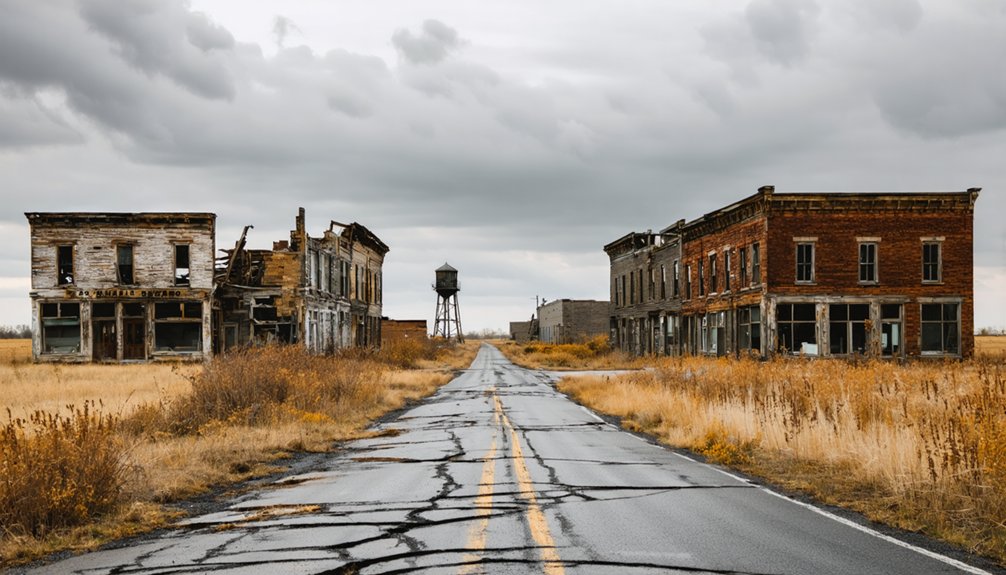
A handful of structures may have still stood, but the post office had already closed in 1919. Greenridge represents what happened to countless mining towns when the resource dried up — Route 66 rolled right past a community already fading into silence.
What’s Actually Left at the Greenridge Site Today
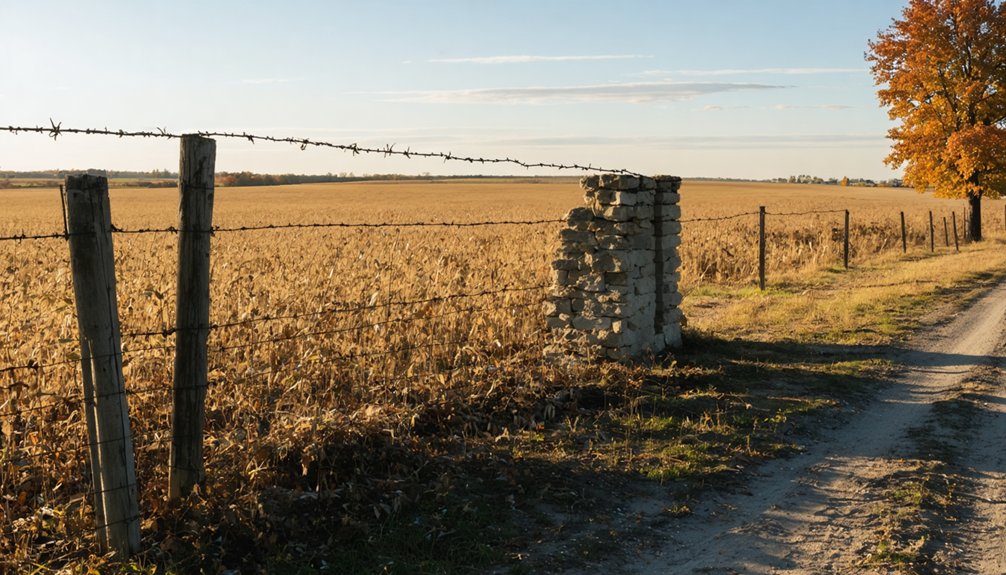
When you arrive at the Greenridge site today, you’ll find an open, vacant landscape where a coal mining community once stood — no structures, no residents, nothing to mark the town’s former presence.
The years since the mine closed in 1923 have erased nearly every trace of the 65 houses, store, and school that reportedly once defined this community.
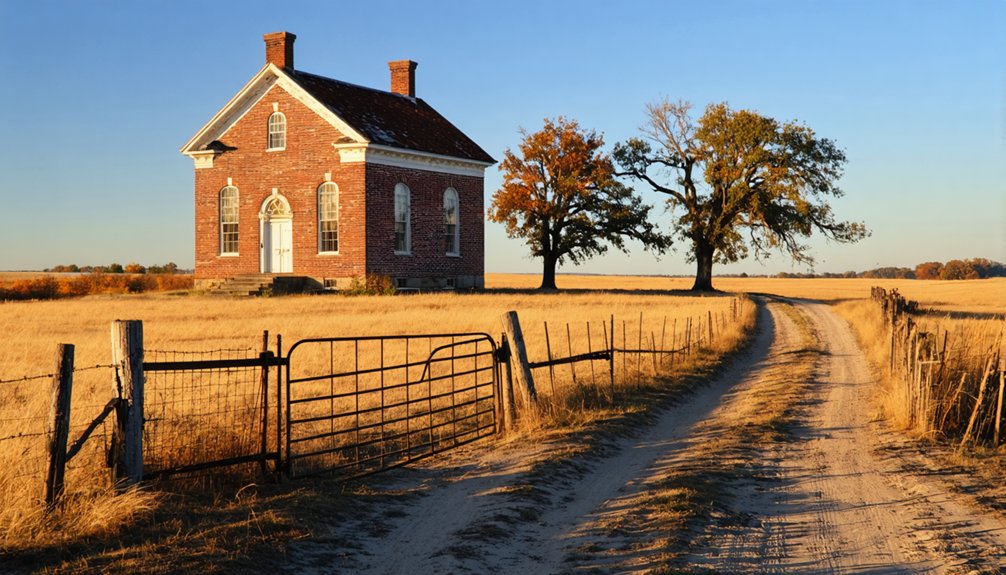
One account does mention a single house that remained near the former downtown area for a time, though even that last remnant appears to have since disappeared.
An Open Vacant Landscape
If you’re expecting to find crumbling foundations, weathered storefronts, or any visible trace of a town, Greenridge will surprise you with its absence. The landscape stretches open and quiet, offering almost nothing to confirm that hundreds of people once lived and worked here.
The mining history that built this community left behind no visible scars, no machinery, no markers.
Ghost town preservation isn’t a factor here because there’s simply nothing left to preserve. One account mentions a single house standing near the former town center at some point, but even that’s gone now.
What you’ll find instead is open Illinois farmland, fresh air, and the quiet satisfaction of standing somewhere most people have completely forgotten. That emptiness is the whole point.
No Structures Remain
Though the name “Greenridge” still appears on historical maps and ghost town lists, nothing on the ground confirms a town ever stood here. No foundations, no ruins, no markers — just open land along Route 4. The historical significance of this site rests entirely in records, not remnants.
Lansing’s birthplace carries real weight in audio history, yet you won’t find a single plaque acknowledging it.
Preservation challenges here aren’t about saving crumbling buildings — they’re about preventing total erasure from memory. Without physical anchors, the town exists only in county histories and ghost town databases.
When you stop here, you’re fundamentally standing in an absence. Bring your research, because the landscape offers nothing on its own. That silence, though, tells its own honest story.
One House Reported
What little remains at Greenridge today barely qualifies as a footprint. After historical mining operations collapsed and town abandonment took hold in the early 1920s, the landscape swallowed nearly everything. You won’t find foundations, storefronts, or street grids marking where families once lived. The open ground along Route 4 gives almost no indication a working community ever stood here.
One account does mention a single house remaining near what was once the town’s center, though even that may now be gone. If you’re driving through, you’ll likely pass the site without realizing it. That invisibility is exactly what makes Greenridge so striking — a town that housed hundreds has left behind almost nothing for you to hold onto.
How to Find the Greenridge Ghost Town Site
Tracking down the Greenridge site is straightforward once you’re on Illinois Route 4, situated between the small towns of Nilwood and Girard in Macoupin County. Look for open, vacant landscape where a coal mining community once stood. Local legends suggest the west side of Route 4 held the residential area, while the mine occupied the east side.
Follow these steps to navigate the site effectively:
- Drive Route 4 approximately two miles north-northeast of Nilwood.
- Watch for flat, empty ground where 65 houses once stood.
- Compare historical photographs against what remains — fundamentally nothing.
- Note the defunct railroad corridor running nearby.
You’re fundamentally reading the land itself. No markers guide you, so bring county maps and sharp eyes.
Nearby Route 66 Stops Worth Adding to Your Drive
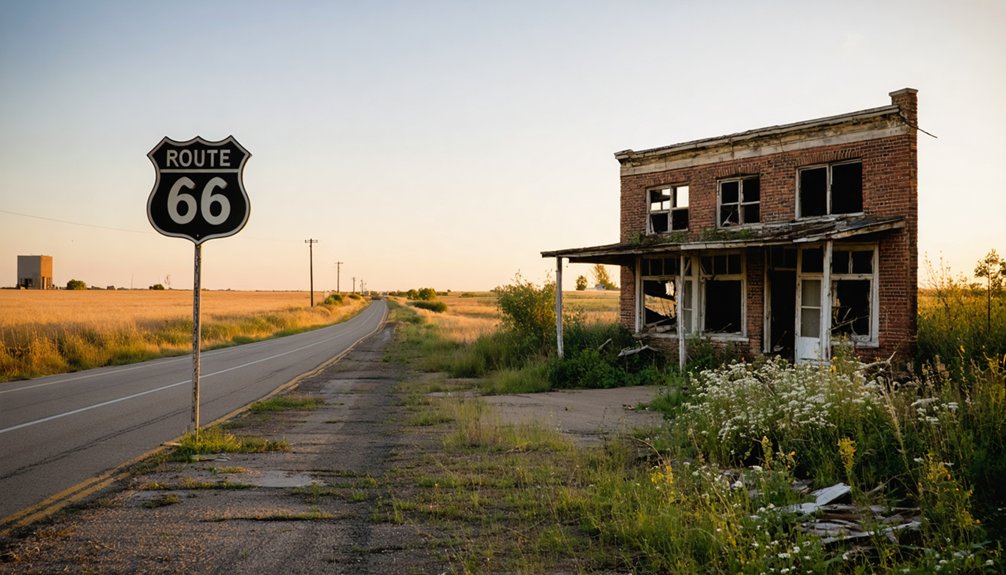
Once you’ve finished reading the land at Greenridge, Route 4 puts you in easy reach of the original Route 66 corridor, where the ghost town’s story connects to a broader stretch of early American highway history. Head toward Nilwood or Girard and you’ll find yourself tracing the 1926 alignment that once carried travelers past this fading coal settlement.
Both towns carry echoes of mining history and railroad remnants from the same industrial era that built and ultimately abandoned Greenridge. Girard offers a preserved downtown worth a short walk, while Nilwood gives you quiet, unfiltered prairie atmosphere.
Together, these stops let you experience the corridor as a living timeline, moving from vanished community to surviving small towns, all within a few miles of each other.
Frequently Asked Questions
Is There an Admission Fee to Visit the Greenridge Ghost Town Site?
You’ll pay no admission fee to explore Greenridge’s open landscape. You’re free to roam where historical artifacts once thrived, honoring preservation efforts as you discover this vanished coal mining ghost town along historic Route 66.
What Is the Best Time of Year to Visit Greenridge?
Like time itself fading away, Greenridge reveals its soul best in autumn. You’ll find ideal seasonal weather and best photography opportunities when golden light kisses the empty landscape, perfectly capturing freedom’s quiet, haunting beauty.
Are There Any Guided Tours Available of the Greenridge Area?
You won’t find formal guided tour options or tour booking availability for Greenridge, but that’s part of its wild appeal! You’re free to explore this vanished coal town independently, uncovering its fascinating Route 66 ghost town history on your own terms.
Is the Greenridge Site on Public or Private Land?
Land ownership details aren’t confirmed, and access restrictions aren’t documented, so you’ll want to research before you visit. Treat the site respectfully, assume it’s private land, and always seek permission before you explore.
Are There Any Local Events Celebrating Greenridge’s History Nearby?
You won’t find dedicated events celebrating Greenridge, but you can explore nearby Girard and Nilwood for local folklore festivals and historic landmarks that’ll connect you to the region’s rich coal-mining and Route 66 heritage.
References
- https://www.youtube.com/watch?v=dV1Q41xepBA
- https://drloihjournal.blogspot.com/2022/09/lost-towns-of-illinois-greenridge-illinois.html
- https://www.youtube.com/watch?v=ZxZhuzNkxE8
- https://en.wikipedia.org/wiki/List_of_ghost_towns_in_Illinois
- https://drloihjournal.blogspot.com/search/label/Lost Towns of Illinois
- https://drloihjournal.blogspot.com/p/lost-towns-of-illinois-series.html
- https://macoupin.illinoisgenweb.org/history/greenridge.html
- https://sites.rootsweb.com/~iltttp/ghosttowns.htm
- https://www.youtube.com/watch?v=-XJb1Q88hNo
- https://freepages.rootsweb.com/~gtusa/history/usa/il.htm