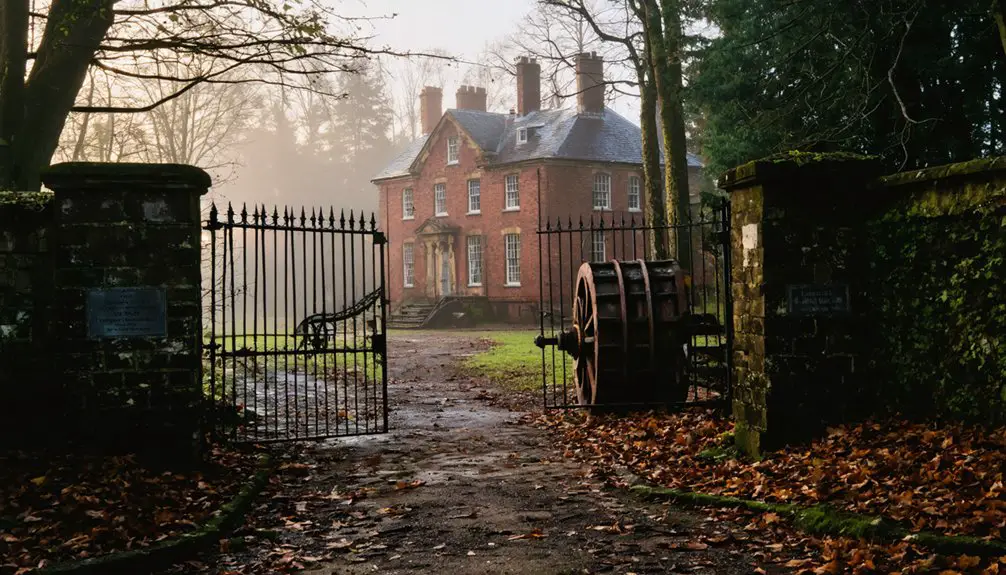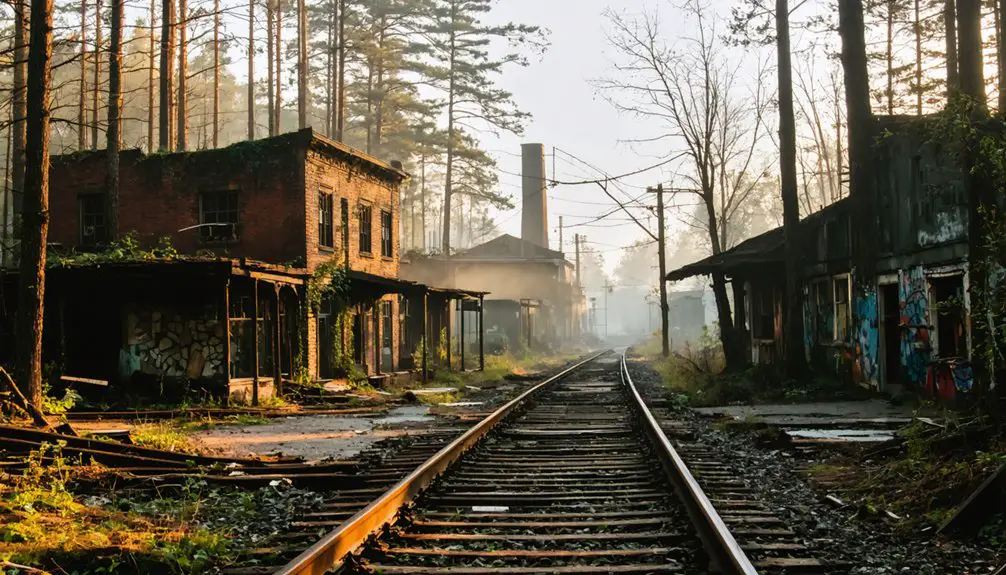
Port Elizabeth, New Jersey makes the perfect base camp for a Pine Barrens ghost town road trip. Established in 1785 and sitting at the intersection of Routes 47 and 55, this tiny town of 455 residents puts you within easy reach of Fries Mill, Harrisville, and Atsion. Each site tells a different story of industrial collapse and forest reclamation. Pack your gear, download your offline maps, and get ready to uncover everything these haunted ruins have to offer.
Key Takeaways
- Port Elizabeth (pop. 455), established 1785, serves as the ideal base camp for exploring Pine Barrens ghost towns and abandoned ruins.
- Visit Fries Mill, Atsion, and Harrisville in that order for the most efficient route through key historical sites.
- Download offline maps and carry a printed topo map, as cell service is unreliable beyond Route 47.
- Wear long pants, closed-toe boots, and DEET repellent to protect against ticks in dense Pine Barrens vegetation.
- Pack at least 2 liters of water per person and high-energy snacks, as local services are extremely limited.
Port Elizabeth: Your Base Camp for Pine Barrens Ghost Towns
Though it isn’t a ghost town itself, Port Elizabeth makes the perfect launching point for exploring the abandoned industrial ruins scattered across the South Jersey Pine Barrens. This small unincorporated community, laid out in 1785, sits at the intersection of Routes 47 and 55, giving you direct road access to forgotten mill sites and crumbling company towns nearby.
With a population of just 455 at last count, Port Elizabeth moves at a quiet pace, letting you focus on the journey ahead. You’ll find it easy to plan day trips from here, chasing local legends tied to bog-iron villages and paper-mill ghost towns.
Expect wildlife encounters along wooded trails, where deer, birds, and Pine Barrens creatures share the same forgotten landscape you’ve come to explore.
Fries Mill’s Pine Barrens Ruins and What Survives Today
When you turn off the pavement and follow the old railroad crossing near Port Elizabeth-Cumberland Road (646), you’re stepping into what remains of a late-1700s sawmill community that once fed the region’s bog-iron industry. Forest restoration is actively reclaiming the site, but enough industrial history survives to make the hike worthwhile.
Step off the pavement and into the remnants of a late-1700s sawmill community still worth the trek.
Here’s what you’ll find at Fries Mill today:
- Sawmill and grist mill remnants partially swallowed by sand and vegetation
- Furnace ruins that hint at the site’s broader manufacturing past
- Wooded trail systems threading past river edges and railroad traces
John Fry purchased the operation in the 1870s, giving the site its current name.
Come prepared with bug protection, sturdy footwear, and enough time to explore slowly.
Harrisville: A Pine Barrens Ghost Town Frozen in 1891
Fries Mill gives you ruins still in the process of being reclaimed, but Harrisville tells a sharper story—one with a definitive ending. The paper mill failed in 1891, and the town simply stopped. Nobody rebuilt it. Nobody repurposed it. That kind of clean break is rare, and it’s exactly what makes Harrisville worth the detour from Port Elizabeth.
Walking the site, you’ll see urban decay frozen at a specific moment in history. The forest has moved in, but the bones of the mill community remain readable. Unlike sites buried under later development, Harrisville benefits from a setting where historic preservation happens naturally through isolation.
You can still visualize the layout of an actual working town—and feel the weight of everything that disappeared when the economy collapsed around it.
Atsion’s Mansion and the Pine Barrens Bog Iron Story
When you visit Atsion, you’re stepping into the heart of the Pine Barrens bog iron industry, where 19th-century workers extracted iron-rich ore from the Mullica River’s swampy ground and fed a full company town built around smelting and forging.
You’ll find the site organized around what was once a self-contained industrial layout, with housing, industry, and commerce all clustered to serve the furnace operation.
Today, the mansion ruins anchor the site visually, giving you a concrete focal point for imagining the scale of wealth and ambition that once drove this isolated community.
Bog Iron Origins Explained
Before you reach Atsion’s surviving mansion, it helps to understand what built it: bog iron. This naturally occurring iron ore formed in the Pine Barrens’ acidic wetlands, and iron mining here once powered an entire regional economy.
- Bog iron deposits formed slowly through chemical reactions in swamps and stream beds, making the Pine Barrens uniquely rich in harvestable ore.
- Iron mining fueled company towns like Atsion, where smelting and forging operations drew workers, families, and infrastructure deep into the forest.
- Once the industry collapsed, forest reclamation began immediately, swallowing roads, buildings, and ironworks beneath pine and cedar growth.
Understanding this cycle makes Atsion feel less like a ruin and more like a window into an ambitious, ultimately fragile industrial world you can still walk through today.
Atsion’s Company Town Layout
Once you step into Atsion, the layout of a full 19th-century company town snaps into focus around you. The mansion stands as the clearest survivor, giving you an immediate sense of how wealth and industry once organized this remote Pine Barrens settlement.
Workers smelted and forged bog iron drawn from the Mullica River, feeding an operation that shaped daily life here for decades.
Then industrial decline hit, and the community collapsed around that same mansion. Today, forest preservation has quietly absorbed most of what remained, with trees and sand reclaiming the edges of the site.
What you’re left with is a landscape that lets you move through history freely, reading the ruins on your own terms without crowds or fences interrupting the experience.
The Mansion Ruins Today
Before you explore, keep these points in mind:
- The mansion ruins remain partially intact, giving you a readable sense of the original layout.
- Surrounding grounds reveal traces of the broader company-town footprint.
- The forested setting amplifies the contrast between past industry and present stillness.
Walk the site slowly. You’ll leave understanding exactly why Atsion anchors every serious Pine Barrens ghost-town conversation.
Directions From Port Elizabeth to All Three Ghost Towns
Starting your ghost-town crawl from Port Elizabeth is straightforward, since the Route 47 and Route 55 junction puts you within striking distance of all three sites. Head north on Route 47 to reach Fries Mill, parking near Port Elizabeth-Cumberland Road (646) by the old railroad crossing before hiking into the wooded preserve.
Start at the Route 47 and Route 55 junction in Port Elizabeth — Fries Mill sits an easy drive north.
For Atsion, take Route 55 north, then connect to Route 206 heading into the Pine Barrens interior.
Harrisville requires a short detour through Wharton State Forest, accessible from Route 679. Each site rewards historical preservation efforts differently — Fries Mill hides industrial bones in dense forest, Atsion displays its mansion boldly, and Harrisville breathes local legends into crumbling walls.
Plan driving time between stops carefully, since forest trail walks add significant time at each location.
The Best Order to Visit All Three Pine Barrens Sites
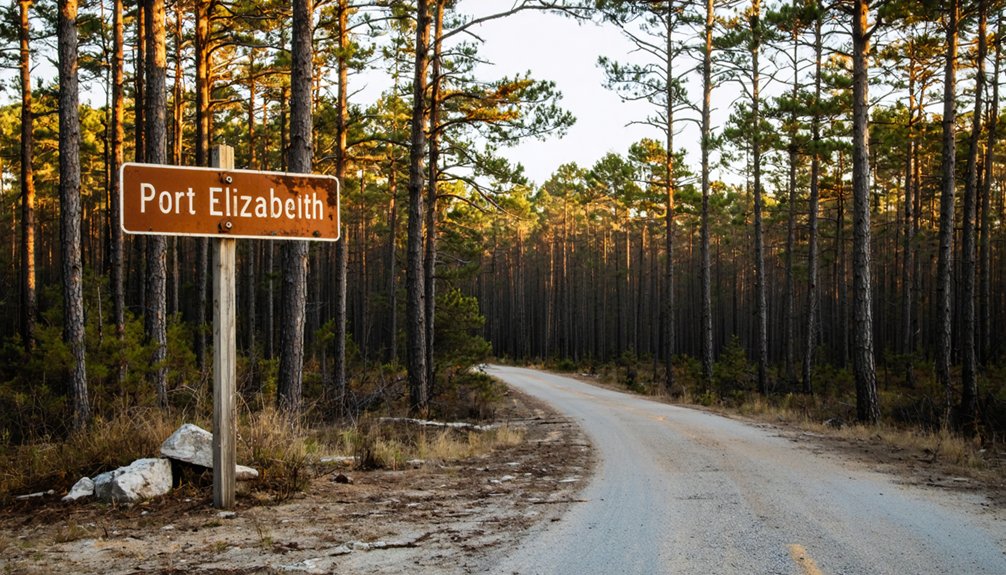
Knowing the route is only half the battle — the order you visit these three sites shapes how much ground you’ll cover without burning out. Start at Fries Mill while your energy’s fresh, since the trail demands real walking through dense woods.
Then push toward Atsion, where the mansion ruins and open layout reward a midday stop.
Save Harrisville for last — its quiet, collapsed edges hit differently once you’ve built context through local folklore and historic preservation stories collected earlier in the day.
- Fries Mill: heaviest hiking, best tackled first
- Atsion: structured ruins, ideal for a midday break
- Harrisville: most atmospheric, strongest emotional payoff at day’s end
This sequence keeps fatigue manageable while building narrative momentum across all three stops.
What to Pack for a Pine Barrens Ghost Town Day Trip
Before you head out to explore Fries Mill, Atsion, and Harrisville, packing smart will make or break your day. Wear long pants and sleeves, bring heavy-duty bug spray, and lace up sturdy hiking boots, since Pine Barrens trails mix soft sand, wet edges, and overgrown paths.
Download offline maps and carry a printed trail reference, then load your bag with at least two liters of water and high-energy snacks, because you’ll cover real ground between ruins.
Clothing And Bug Protection
What you wear on a Pine Barrens ghost town day trip can make or break the experience. Skip medieval fashion sensibilities and anything loose or flowing — the trails demand practical, protective clothing. Summer footwear should be closed-toe hiking boots, never sandals, since roots and uneven ground dominate every path.
- Long pants and sleeves: Dense vegetation means ticks are a real threat. Lightweight, breathable fabrics keep you cool without sacrificing coverage.
- Bug repellent with DEET: Pine Barrens summers are brutal for mosquitoes. Apply before you leave the car.
- Gaiters or tucked socks: Sealing the gap between boots and pants blocks ticks from crawling upward.
Dress smart, and you’ll spend your energy exploring ruins instead of battling the landscape itself.
Navigation And Trail Tools
Cell service drops fast once you leave Route 47 and push into the Pine Barrens, so you’ll want navigation tools that don’t rely on a signal. Download offline maps through an app like AllTrails or Maps.me before you leave Port Elizabeth. A printed topo map of the Fries Mill and Harrisville areas adds reliable backup when your battery drains in the heat.
Trail navigation here isn’t always straightforward. Paths wind through dense forest, sand traces, and old railroad grades where markers are sparse. A handheld GPS unit keeps you oriented without guesswork.
Carry a small notebook too. Documenting what you find at these ruins supports historical preservation and sharpens your own understanding of each site’s story. These places deserve more than a quick photo.
Snacks And Water Essentials
Staying hydrated in the Pine Barrens isn’t optional — it’s how you finish the day on your feet. Trails near Fries Mill and Harrisville push through humid, buggy terrain where shade isn’t guaranteed. Pack smart before you leave Port Elizabeth’s Route 47 corridor.
- Carry at least two liters of water per person — more in summer heat
- Bring high-energy snacks like nuts, jerky, or fruit rather than relying on local cuisine stops along the way
- Skip the cultural festivals calendar for day-trip snacking — most rural roads near these ruins have zero services
A small insulated bag keeps everything fresh during longer drives between sites. Your energy level directly controls how much ground you cover — and these ruins reward every extra mile you push.
Frequently Asked Questions
Is Photography Permitted at the Pine Barrens Ghost Town Ruins?
Grab your daguerreotype and snap away! Photography restrictions are generally relaxed at Pine Barrens ruins, but you’ll want to check drone usage policies locally, as aerial rules can vary across preserved land.
Are Any of These Ghost Town Sites Wheelchair Accessible?
Unfortunately, you’ll find these Pine Barrens ghost town sites lack formal mobility accommodations or accessible pathways. Rough forest trails, sand, and uneven ruins dominate each location, so you’ll want to plan alternative arrangements if mobility’s a concern.
Can You Camp Overnight Near Port Elizabeth or the Ghost Towns?
You’ll find camping options near the Pine Barrens ghost towns, but check camping regulations carefully before pitching your tent. Pet restrictions vary by preserve, so confirm rules ahead to keep your adventure free and hassle-free.
Do Any Ghost Town Sites Charge an Admission or Parking Fee?
Like Thoreau wandering freely through wild places, you’ll find most sites don’t charge fees. Historical preservation efforts keep Fries Mill, Atsion, and Harrisville accessible, though Atsion may request parking fees. Local legends await without breaking your budget.
Are Pets Allowed on the Trails Leading to These Ruins?
You’ll typically find pets welcome on Pine Barrens trails, but you’ve got to keep leash requirements in mind. Prioritize pet safety by packing water and checking trail rules before heading into the wooded ruins.
References
- https://www.youtube.com/watch?v=q-hpzGfUjlQ
- https://pinelandsalliance.org/learn-about-the-pinelands/pinelands-history-and-culture/ghost-towns-of-the-pine-barrens/
- https://rsftripreporter.net/gone-goner-ghost-towns-new-jersey-pine-barrens-part/
- https://www.pinelandsadventures.org/explore-the-pine-barrens/gateway/
- https://en.wikipedia.org/wiki/List_of_ghost_towns_in_New_Jersey
- https://www.tripadvisor.com/ShowUserReviews-g46627-d15555017-r644857344-Fries_Mill_Ruins-Millville_New_Jersey.html
- https://www.youtube.com/watch?v=I3eK5MYDLbw
- https://www.youtube.com/watch?v=SekQXHSFFfc