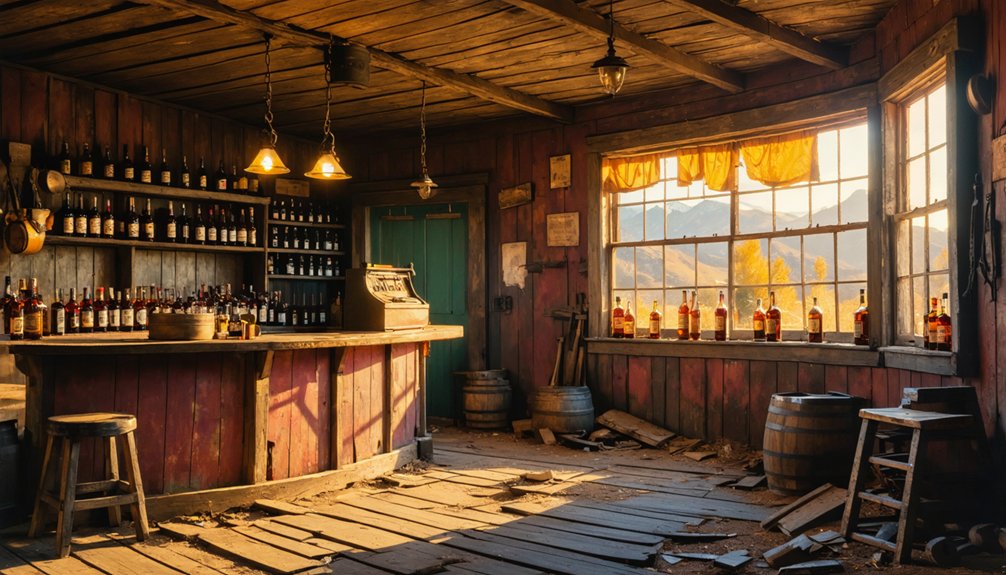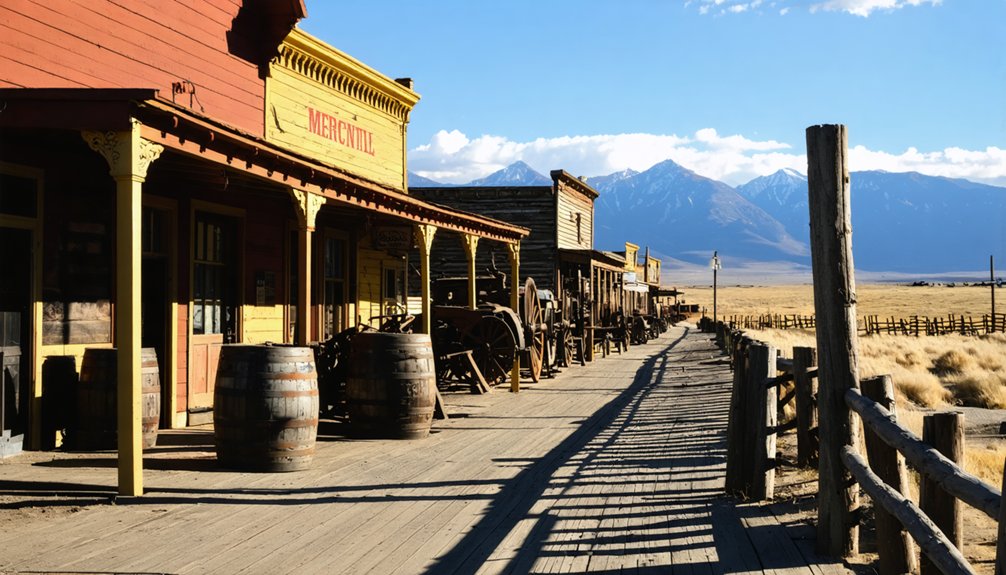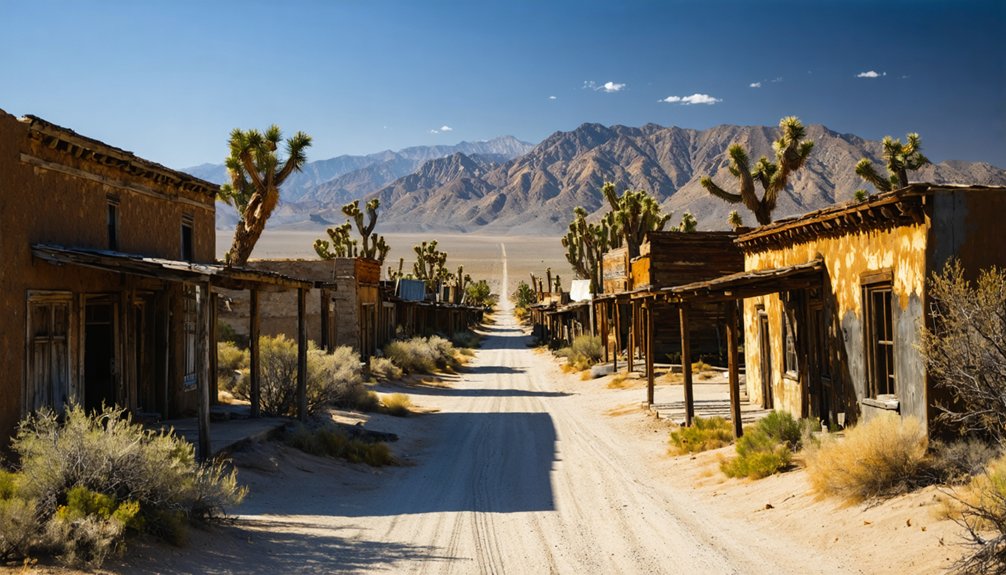
Planning a ghost town road trip to Greenwater, California means chasing one of the Mojave Desert’s most spectacular boom-and-bust stories. In just four years, this copper camp exploded to 2,000 residents and $140 million in investment before collapsing into sun-baked silence. You’ll need a capable vehicle, plenty of water, and a full tank before heading south of Dante’s View on gravel roads. Stick around, and you’ll uncover everything you need to plan the perfect desert ghost town adventure.
Key Takeaways
- Greenwater sits south of Dante’s View, accessible via a gravel road requiring a capable vehicle, full fuel tank, and careful advance planning.
- Almost nothing remains of Greenwater today, so visitors should prioritize the historical experience over expecting visible ruins or structures.
- Pack essentials including water, spare tires, offline maps, and sun protection, as no services exist at or near the remote site.
- Pair Greenwater with nearby ghost towns like Rhyolite, Nevada, or Panamint City for a more rewarding regional ghost town road trip.
- Greenwater’s entire boom-and-bust cycle lasted barely four years, making its story a compelling example of early 20th-century desert mining speculation.
What Made Greenwater the Greatest Copper Camp on Earth
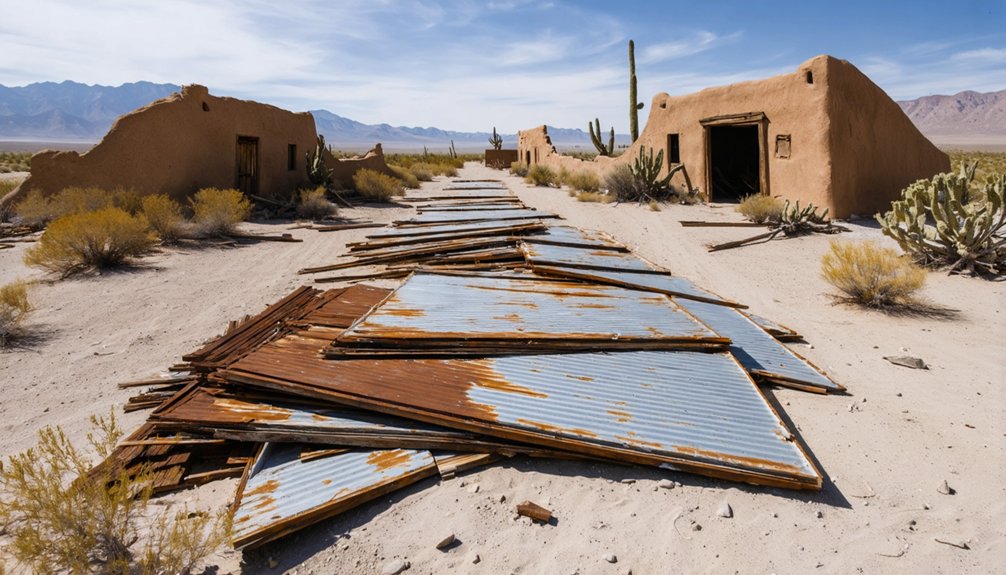
When copper ore was discovered in the hills east of Death Valley in 1905, promoters wasted no time crowning Greenwater the “Greatest Copper Camp on Earth.” The claim wasn’t modest, but neither was the frenzy it sparked.
Copper rushes like this one drew dreamers, schemers, and serious investors alike. Charles Schwab was among those who took notice, lending the camp an air of legitimacy that fueled an investor frenzy across the country.
Dreamers and schemers flooded in — but so did Charles Schwab, and that made all the difference.
Companies capitalized the district at a staggering $140 million, and shares sold fast. Greenwater sat on the eastern edge of Inyo County, south of Dante’s View, baking under relentless desert sun.
You’d have found 2,000 people living mostly in tents, convinced they’d landed at the center of the next great American fortune.
What’s Actually Left at Greenwater Today
After all that fevered speculation and tent-city chaos, almost nothing survives at Greenwater today. The abandoned structures that once housed saloons, banks, and restaurants were dismantled and hauled off to Shoshone and Zabriskie, leaving the desert to reclaim whatever remained.
Some accounts say two crumbling ruins still stand; others say you’ll find nothing at all.
What you’ll find are desert remnants scattered across a remote, sun-baked valley south of Dante’s View, accessible by gravel road. The silence itself tells the story.
You’re standing where 2,000 people once chased copper fortunes that never materialized. Bring water, check your tires, and manage your expectations.
Greenwater rewards curious, self-reliant travelers who value history over spectacle, and who understand that absence can be just as powerful as ruins.
How Fast Greenwater Boomed and Collapsed
Greenwater’s entire arc—from copper strike to ghost town—lasted barely four years. Mining speculation fueled a wild population surge, pulling nearly 2,000 people into a remote Death Valley desert almost overnight. Then it collapsed just as fast.
Here’s how the timeline broke down:
- 1905 – Copper strike triggers immediate excitement and land claims
- 1906 – Boomtown peaks with tents, saloons, newspapers, and a bank
- 1907 – Businesses start closing as ore production disappoints investors
- 1908–1909 – Last mines shut down; buildings get hauled away to Shoshone and Zabriskie
You’re looking at one of history’s fastest boom-and-bust cycles. Investors lost tens of millions chasing stock-market hype over real copper. Greenwater didn’t fade—it vanished.
How to Reach the Greenwater Ghost Town Site
To reach the Greenwater ghost town site, you’ll head south of Dante’s View and follow the Greenwater Valley gravel road into one of Death Valley’s most remote corners.
The road demands a capable vehicle, patience, and a full tank of gas, since services are few and distances between them are long.
Once you commit to the drive, you’re trading pavement for raw desert history.
Getting To Greenwater
Reaching Greenwater means committing to remote desert travel, so you’ll want to plan your route carefully before leaving pavement behind. The site sits south of Dante’s View, accessed via the Greenwater Valley gravel road in Inyo County. Expect rough conditions and zero services once you’re out there.
- Fuel up before leaving paved roads — the nearest stations are miles away.
- Check road conditions — gravel surfaces shift seasonally and after storms.
- Carry extra water — historically, water was hauled in and sold for $15 a barrel here.
- Research the site — surviving historical artifacts are nearly nonexistent, but understanding the mining techniques and copper-strike history makes the landscape speak.
Go prepared, and the desert rewards your effort with raw, unfiltered history.
Road Conditions And Access
Once you’ve fueled up and packed your water, the road itself becomes the next challenge. Greenwater sits south of Dante’s View, accessible via a gravel road through Greenwater Valley. It’s rough, remote, and unforgiving — exactly the kind of terrain that rewards prepared travelers and punishes unprepared ones.
Before you roll out, handle your vehicle maintenance. Check your tires, brakes, and coolant, because breakdown support doesn’t exist out here. A high-clearance vehicle is strongly recommended.
Weather considerations matter just as much. Desert heat can spike dangerously fast, making morning departures smarter than afternoon ones.
Flash flooding after rain can render gravel roads impassable without warning.
Cell service is fundamentally nonexistent, so download offline maps, tell someone your plans, and move through this landscape with deliberate confidence.
What to Pack for Greenwater’s Heat, Gravel Roads, and No Services
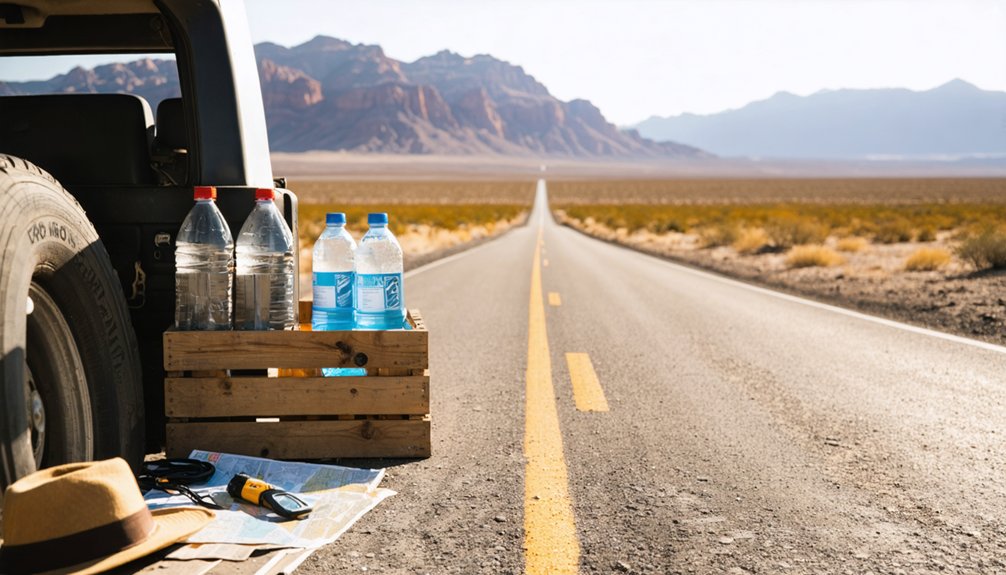
Greenwater sits deep in the Mojave heat with no gas stations, no water taps, and no cell signal to bail you out if something goes wrong, so packing smart isn’t optional—it’s what gets you back home. The desert rewards preparation and punishes shortcuts.
The desert doesn’t forgive shortcuts—pack smart or pay the price.
Watch for desert wildlife on the gravel roads, and follow campfire safety rules if you’re staying overnight nearby.
Pack these four essentials before you roll out:
- Water – Minimum one gallon per person, per day
- Spare tire and jack – Gravel roads eat tires without warning
- Paper maps or downloaded offline GPS – No signal means no navigation
- Sun protection – Hat, sunscreen, and lightweight long sleeves block brutal afternoon rays
Nearby Ghost Towns Worth Pairing With Greenwater
If you’re already making the drive out to Greenwater, you’re perfectly positioned to hit several other ghost towns that round out the region’s boom-and-bust story. Rhyolite, Nevada sits just across the state line and offers the most dramatic surviving ruins in the area, including a three-story bank shell and a bottle house you can actually photograph.
Further south, Ballarat’s desert camp and the rugged ruins of Panamint City reward the adventurous traveler willing to push deeper into the backcountry.
Rhyolite’s Ghostly Remains
While Greenwater’s remains have nearly vanished into the desert floor, the nearby ghost town of Rhyolite gives you something far more tangible to explore. Like Greenwater, Rhyolite collapsed under mining speculation and rapid town abandonment, but it left behind striking ruins that tell the story powerfully.
Don’t miss these four standout features:
- The Cook Bank Building – Three-story concrete walls still rise dramatically against the Nevada sky.
- The Bottle House – Built from 50,000 Busch beer bottles by a creative resident.
- The Train Depot – A beautifully preserved reminder of Rhyolite’s ambitious peak.
- The Open-Air Museum – Ghostly sculptures installed among the ruins add an unexpected, eerie dimension.
Rhyolite rewards curious travelers who crave history with a raw, unfiltered edge.
Ballarat Desert Camp
Tucked into the Panamint Valley west of Death Valley, Ballarat offers a desert ghost town experience that complements Greenwater’s story of boom-and-bust speculation. Like Greenwater, Ballarat grew fast and collapsed faster, driven by mining speculation and brutal desert conditions, including extreme water scarcity that made daily survival a logistical challenge.
You’ll find more tangible remains here than at Greenwater — crumbling adobe walls, rusted equipment, and weathered structures that still haunt the landscape. A caretaker occasionally lives on-site, adding an unexpected human element to your visit.
Ballarat served as a supply hub for nearby gold mines in the late 1800s, giving it a layered history worth exploring. Pair it with Greenwater to build a fuller picture of desert mining ambition gone wrong.
Panamint City Ruins
From Ballarat, the ghost town trail pushes deeper into the Panamints with a site that demands far more effort to reach but rewards that effort with dramatic ruins. Panamint City collapsed after a short silver boom in the 1870s, but its mining legends and ghost town myths still pull explorers into Surprise Canyon today.
You’ll hike several miles through rugged terrain to reach what’s left.
Here’s what you’ll find:
- Collapsed stone walls from mill operations
- A tall smokestack still standing against the canyon
- Scattered machinery frozen in the desert
- Evidence of a town that once held 2,000 residents
Pair this stop with Greenwater to understand how quickly boom-and-bust cycles consumed entire communities across the Mojave Desert.
Frequently Asked Questions
Was Greenwater Ever Officially Incorporated as a Town or City?
Greenwater never got officially incorporated—it collapsed too fast! You’re exploring a raw, unpolished legend where ghost town preservation barely applies and tourism development never took root. Freedom-seekers, that’s what makes this adventure so authentically wild.
What Other Names Did Greenwater Go by During Its Boom?
Coincidentally, you’ll find Greenwater wore three names during its mining boom history: Kunze, Ramsey, and Greenwater itself. As you chase ghost town tourism adventures, knowing these aliases helps you uncover the full, wild story hiding in Death Valley’s desert.
Did Any Famous Historical Figures Actually Live in Greenwater?
No famous residents called Greenwater home, but you’ll discover that major investor Charles Schwab fueled its wild speculation. Though it lacks historic landmarks today, its legendary boom-and-bust story still ignites your adventurous spirit!
Are There Any Museums Dedicated to Greenwater’s Mining History?
Like sand slipping through your fingers, Greenwater’s history left no dedicated museums behind. You’ll find mining relics and historical landmarks scattered across nearby Death Valley sites, where the desert itself becomes your most adventurous, open-air museum.
Was Greenwater the Only Copper Camp in Death Valley?
Greenwater wasn’t Death Valley’s only copper camp, but it’s the most legendary! You’ll discover fascinating ghost town preservation sites and scattered mining equipment remnants throughout the region, fueling your adventurous spirit as you roam these wild, untamed desert landscapes freely.
References
- https://www.nps.gov/deva/learn/nature/greenwater-valley-mining-history.htm
- https://www.facebook.com/groups/MojaveHistory/posts/2294298837712931/
- https://www.facebook.com/groups/1260383784042739/posts/26410938751893895/
- https://en.wikipedia.org/wiki/Greenwater
- https://digital-desert.com/greenwater/
- https://www.youtube.com/watch?v=pVs9fPx8Fp0
- https://www.youtube.com/watch?v=T6MMPEA-DXU
- https://www.nps.gov/deva/learn/historyculture/death-valley-ghost-towns.htm
- https://www.ghosttowns.com/states/ca/greenwater.html
- https://www.destination4x4.com/greenwater-california-ghost-town/