Planning a ghost town road trip to Hall City, Florida means chasing a nearly invisible piece of history deep in south-central Florida’s wilderness. Founded in 1910 as a strict temperance community, Hall City collapsed by the mid-1920s, leaving behind little more than overgrown citrus groves, faint road traces, and a still-flowing artesian well. You’ll need coordinates, land owner permission, and the right gear before you go. Stick around to uncover everything you need to make this forgotten detour worth your while.
Key Takeaways
- Hall City, founded in 1910 as a planned temperance community, is located near Hwy 29/27 at coordinates 26.87833°N, 81.32639°W.
- Contact Lykes Brothers Corporation for land access permission before visiting, as the site sits behind fenced, restricted boundaries.
- Bring binoculars, a camera, printed maps, long sleeves, and water, as cell signals are unreliable at the remote site.
- Pair Hall City with nearby natural sites like Fort Drum Marsh, the Caloosahatchee River, and J.N. “Ding” Darling Refuge.
- Little remains beyond an active artesian well and faint road traces, making this a windshield history stop rather than walkable ruins.
What Was Hall City, Florida?
Although it vanished long before most people had ever heard of it, Hall City once represented an ambitious vision for south-central Florida. Rev. George F. Hall founded it in 1910 as a planned temperance community, complete with dreams of Hall University and a self-sustaining population.
Hall City was gone before most ever knew it existed — a temperance dream swallowed by Florida wilderness.
His son, G. Barton Hall, managed daily operations until roughly 1925, when the town quietly collapsed under the weight of limited commerce and too few residents.
At its peak, about 100 people called it home. Today, urban legends have replaced street signs, and modern preservation efforts never materialized to save what little remained.
You won’t find standing buildings or guided tours here — just overgrown land, a fenced perimeter, and a history worth chasing on your own terms.
The Rise and Fall of Hall City’s Temperance Town
When Rev. George F. Hall founded Hall City in 1910, he wasn’t just building a town — he was engineering a moral blueprint, complete with a strict no-alcohol policy and plans for Hall University.
His son, G. Barton Hall, ran the settlement through the early 1920s, but the community never attracted enough residents, commerce, or jobs to sustain itself, topping out at around 100 people before the momentum stalled.
Hall City’s Ambitious Origins
Few ghost towns carry a backstory as bold as Hall City’s. In 1910, Rev. George F. Hall, a retired Disciples of Christ minister from Chicago, carved an entire planned community out of south-central Florida wilderness. He envisioned a strict temperance town where no alcohol would ever touch a resident’s lips.
His son, G. Barton Hall, managed daily operations from 1910 until around 1925.
The ambitions didn’t stop there. Plans included Hall University, turning this remote Florida outpost into an educational hub.
Local legends and urban legends surrounding the town paint a picture of idealism colliding hard with Florida’s unforgiving reality. The community peaked at roughly 100 residents before commerce stalled, jobs dried up, and people simply left.
The Temperance Town Dream
Temperance wasn’t just a rule in Hall City — it was the entire identity of the town. Rev. George F. Hall built this community around a dry lifestyle, and that vision shaped everything.
Local legends say the town’s strict code attracted idealists but repelled the commerce needed to survive. Picture what Hall City promised:
- Tree-lined streets where no saloon would ever open its doors
- A university campus rising from the Florida flatlands
- A self-sufficient community thriving on principle alone
None of it lasted. By the 1920s, the dream had collapsed under the weight of isolation and limited opportunity.
Urban legends romanticize Hall City’s downfall, but the real story is simpler — ambition without economic foundation guarantees disappearance. You’re now visiting proof of that hard truth.
Decline And Abandonment
By the early 1920s, Hall City’s collapse wasn’t dramatic — it was quiet, steady, and almost inevitable. No commerce took root. Jobs stayed scarce. Without economic momentum, residents drifted away, leaving behind little more than overgrown traces and a flowing well that outlasted everything else.
You won’t find urban legends of sudden disaster here — just a slow unraveling. The ambitious university never materialized. The temperance ideals, while noble, couldn’t substitute for opportunity.
By 1925, G. Barton Hall’s hands-on management had ended, and the town followed shortly after.
Visitor experiences today confirm what historical records suggest — almost nothing physical survives. The land returned to wilderness, swallowed by citrus groves and Florida brush. Hall City didn’t burn out; it simply faded until the plan became a footnote.
What’s Actually Left at Hall City Today
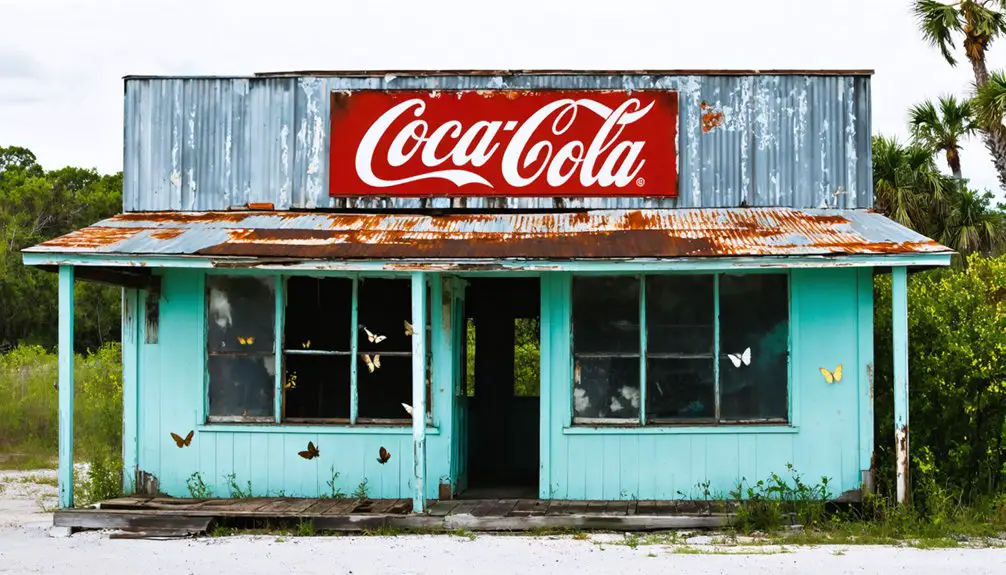
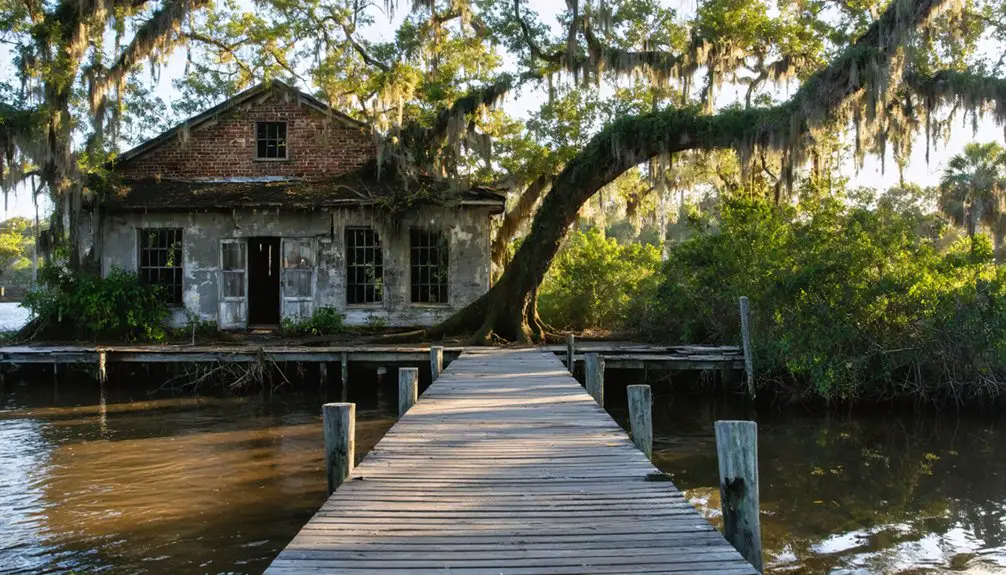
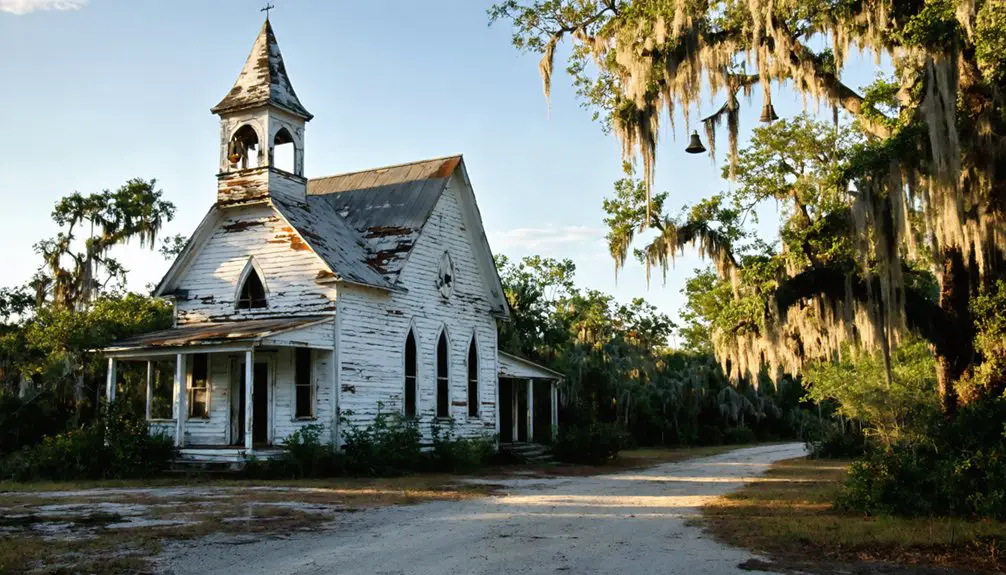
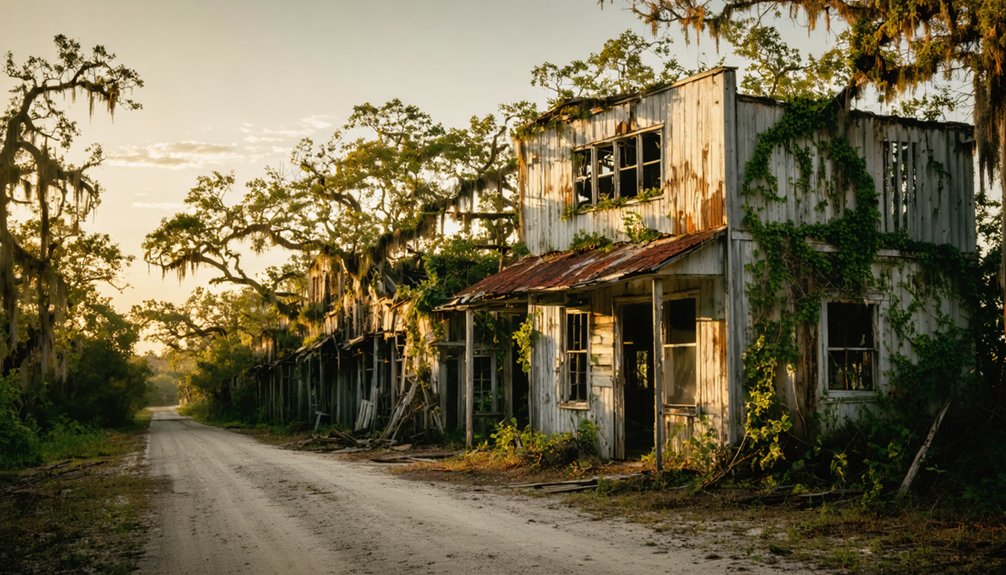
If you’re expecting crumbling buildings or dramatic ruins, Hall City will humble your expectations fast. Today, you’ll find little if any physical evidence of the settlement, with overgrown citrus groves and old road traces swallowing nearly every trace of the planned community.
The most notable survivor is a flowing well that was still reportedly active decades after the town collapsed, making it the one tangible link you can connect to Hall City’s ambitious but short-lived past.
Minimal Ruins Remain
What you’ll find at Hall City today is, in a word, almost nothing. No modern developments mark the landscape, and no urban legends draw curious crowds.
What remains is raw, quiet, and almost entirely reclaimed by nature:
- A flowing artesian well that still pushes water to the surface, the most tangible survivor of the entire settlement
- Faint traces of old roads cutting through dense, overgrown citrus groves
- Absolute silence where 100 residents once built homes, schools, and temperance-era dreams
You won’t find standing buildings or interpretive signs. The land has swallowed Hall City almost completely.
That erasure is exactly what makes it compelling — you’re reading a landscape instead of a ruin, piecing together ambition from absence.
The Flowing Well
Among the few tangible remnants of Hall City, the artesian well stands alone — still pushing water to the surface more than a century after the town’s collapse. It’s a striking detail in an otherwise erased landscape, and it’s sparked more than a few urban legends among ghost town enthusiasts who imagine lost civilization buried beneath the overgrowth.
No formal preservation efforts protect the well, so its continued flow owes more to geology than to human care. When you stand near that spot — if you’ve secured proper permission — you’re witnessing something rare: a working piece of 1910 infrastructure outlasting every building, road, and ambition that surrounded it.
That single flowing well does more storytelling than any crumbling wall ever could.
Can You Still Visit Hall City?
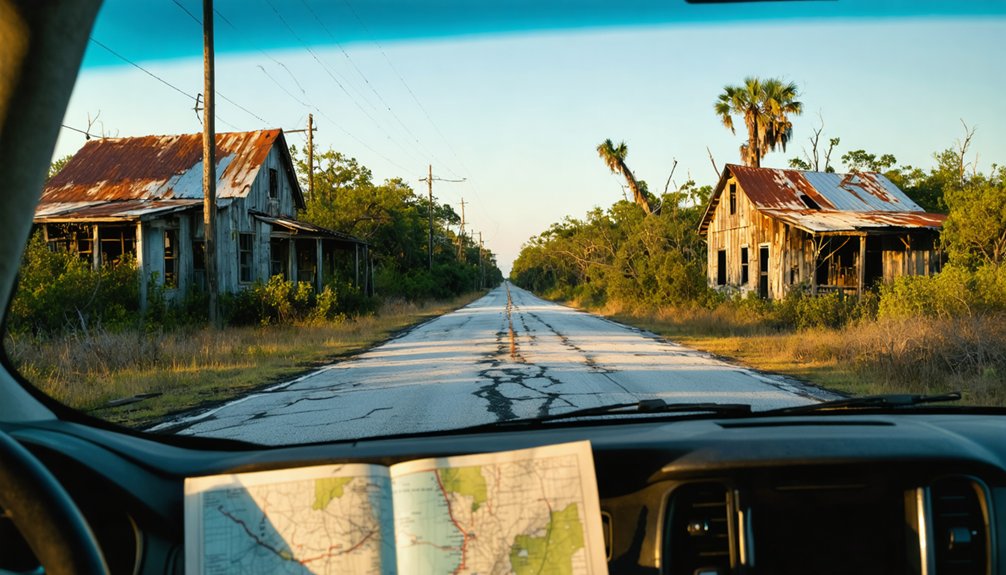
Visiting Hall City today isn’t as simple as pulling off the highway and wandering around. Local folklore keeps the legend alive, but preservation challenges and private ownership mean access is genuinely restricted. Lykes Brothers Corporation controls the land, and fencing signals that trespassing isn’t welcome.
Before you go, keep these realities in mind:
- Fenced boundaries block the overgrown interior, leaving you to view the site from the dirt road approach near Hwy 29/27.
- No signage exists — you’ll navigate purely by coordinates and instinct.
- Permission is essential — contact the landowner before attempting anything beyond a slow drive-by.
Treat Hall City as a windshield history stop, absorb the quiet, and let your imagination reconstruct what once stood there.
How to Find Hall City on Your Road Trip
Finding Hall City requires trading familiar highway markers for coordinates and dirt road instincts. Head south toward Palmdale and locate the Hwy 29/27 junction, which serves as your primary landmark.
From there, a dirt road carries you toward what little remains of this forgotten settlement.
Don’t expect signage or a visitor entrance — you’ll navigate by coordinates (26.87833°N, 81.32639°W) alone.
Local legends describe a flowing well and overgrown citrus groves as the site’s only surviving traces, though urban legends suggest more may be hidden beneath the vegetation.
Your 2WD vehicle handles the route fine, but confirm land ownership before leaving pavement.
Lykes Brothers Corporation controls much of the property, meaning the fenced perimeter might be your closest legal vantage point.
What to Bring When the Site Is Fenced and Overgrown
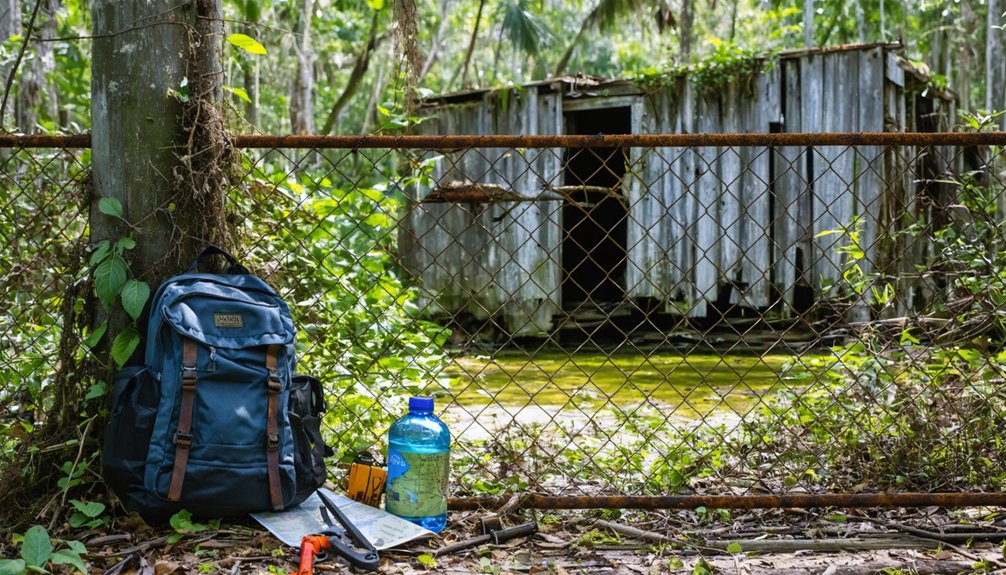
When the destination is fenced and overgrown, what you pack determines how useful the trip actually is. Hall City won’t greet you with signage or open gates, so you’ll need to arrive prepared.
- Binoculars – Scan beyond the fence line without trespassing, spotting overgrown traces of old roads where local legends say a thriving temperance town once stood.
- A charged camera – Document whatever preservation efforts have naturally frozen in time, from tangled citrus groves to the remnants of that once-flowing well.
- Printed coordinates and a paper map – Rural Florida kills cell signals fast, and you can’t afford to guess.
Wear long sleeves, bring water, and respect the property boundary. Observation is your tool here, not exploration.
Nearby Ghost Towns and Historic Sites Worth Pairing
Since Hall City alone won’t fill a full day, pairing it with nearby historic sites turns a short stop into a genuine backroads itinerary. Glades and Hendry counties hold pockets of history that haven’t yet surrendered to modern development, giving you real contrast between what Florida once was and what it’s becoming.
Swing through Ortona to explore its lock area along the Caloosahatchee River, where old infrastructure tells a quieter story than any urban legends could.
Fort Drum Marsh offers a nature detour that breaks up the driving.
If you’re willing to push farther, Boca Grande carries its own layered history worth the extra miles.
String these stops together and you’ve built a road trip that actually earns the freedom you came looking for.
Nature Detours Within Range of Hall City
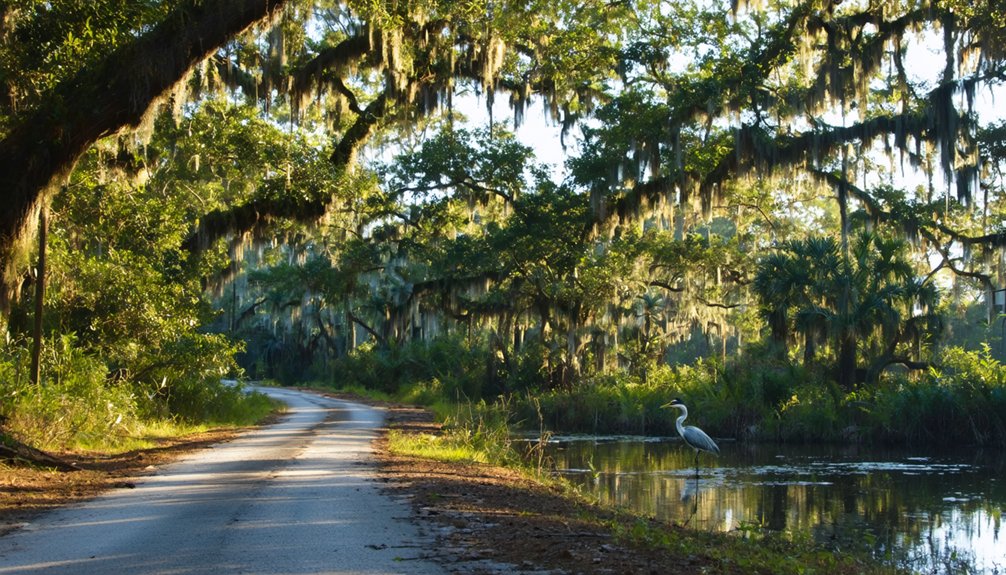
South-central Florida rewards you with genuine wilderness once you step away from the pavement, and Hall City’s remote location puts several strong nature detours within easy reach.
- Fort Drum Marsh – Paddle or walk through open wetlands where local flora crowds the water’s edge and wildlife sightings include wading birds and gators drifting through sawgrass.
- Caloosahatchee River corridor near Ortona – Follow the slow-moving water through cypress canopy, where Spanish moss filters the light and river turtles surface beside your boat.
- J.N. “Ding” Darling National Wildlife Refuge – Drive the wildlife loop on Sanibel Island and spot roseate spoonbills, mangrove tunnels, and coastal shorebirds concentrated in one remarkable stretch.
Each stop delivers raw Florida scenery that perfectly balances the historical weight of a ghost-town day.
Planning a Full Glades County Ghost Town Day Trip
Glades County rewards patient explorers who build their day around more than one stop, and Hall City fits naturally into a broader ghost-town circuit rather than standing alone as a destination. Pair it with other Hendry and Glades County historic sites to fill your itinerary with genuine substance.
Research urban legends tied to the region beforehand, since local stories often reveal details that official records miss. Modern developments have reshaped much of south-central Florida, but pockets of forgotten history still surface along backroads if you know where to look.
Start early, navigate by coordinates, and confirm land ownership before you arrive. Keeping your route flexible lets you swap stops as conditions dictate, giving you the freedom a road trip like this genuinely deserves.
Frequently Asked Questions
Who Currently Owns the Land Where Hall City Once Stood?
Lykes Brothers Corporation owns virtually every inch of this ghost town history. You’ll find the abandoned landmarks locked behind fences, so you’ve got to secure permission before exploring this hauntingly forgotten slice of Florida’s past.
Was Hall University Ever Actually Built Before the Town Failed?
You won’t find evidence Hall University was ever actually built — it remained a vision lost to ghost town history. The ambitious plan faded alongside Hall City’s abandoned structures, leaving behind dreams that never materialized in Florida’s rural backroads.
How Many People Lived in Hall City at Its Peak Population?
You’ll find that Hall City’s ghost town history peaked at roughly 100 residents before its decline. These abandoned landmarks once represented big dreams, but that small population couldn’t sustain the ambitious temperance community through the 1920s.
What Denomination Was Reverend George F. Hall Affiliated With?
You’ll find that Reverend George F. Hall was a Disciples of Christ minister. This historical ghost town’s abandoned landmarks trace back to his retired Chicago ministry, making Hall City’s temperance roots even more fascinating to explore.
Is a 2WD Vehicle Sufficient for Reaching the Hall City Area?
Like a trusty steed, your 2WD vehicle meets Hall City’s vehicle requirements — but brace yourself for road conditions on the final dirt road stretch, so drive cautiously and you’ll reach the area just fine.
References
- https://en.wikipedia.org/wiki/Hall_City
- https://www.ghosttowns.com/states/fl/hallcity.html
- https://urbexunderground.com/ghost-towns-in-florida/
- https://floridastateonline.com/ghost-towns-in-florida/
- https://www.narcity.com/miami/17-abandoned-ghost-towns-you-must-visit-in-florida
- https://www.ghosttowns.com/states/fl/fl.html
- https://www.magersandquinn.com/product/GHOST-TOWNS-IN-FLORIDA/7400817
- https://en.wikipedia.org/wiki/List_of_ghost_towns_in_Florida
- https://lugaresquever.com/hall-city
- https://www.florida-backroads-travel.com/florida-ghost-towns.html