Planning a road trip to Hanford, Washington means stepping into one of America’s most extraordinary ghost towns. Unlike towns that faded with time, the government erased Hanford in just weeks during 1943 to build the Manhattan Project’s plutonium-producing B Reactor. You can tour the reactor free of charge, explore preserved remnants, and walk ground that shaped world history. Pack sturdy boots, book your tour early, and there’s far more to this remarkable story ahead.
Key Takeaways
- Book the free B Reactor Tour online well in advance, as reservations fill quickly for this four-hour guided experience.
- Drive from Seattle (3.25 hours), Portland (3.5 hours), or Spokane (2 hours), using Richland as your base.
- Rent a car to efficiently navigate Hanford’s expansive, scattered sites and ghost town remnants.
- Wear hiking boots and layered clothing to handle uneven terrain and unpredictable weather conditions.
- The preserved schoolhouse and B Reactor offer striking insight into Hanford’s sudden, history-altering evacuation in 1943.
What’s Left of Hanford Ghost Town Today?
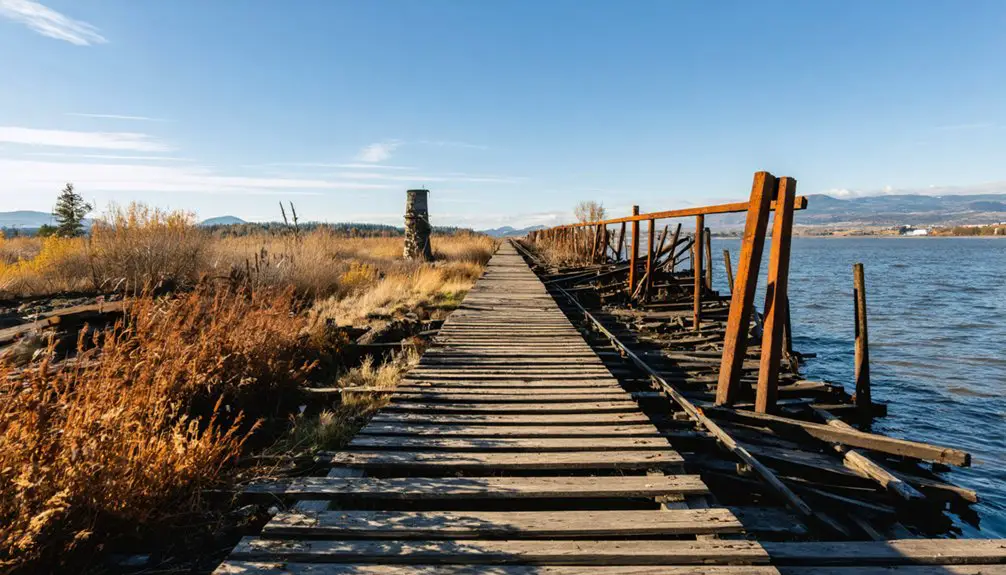
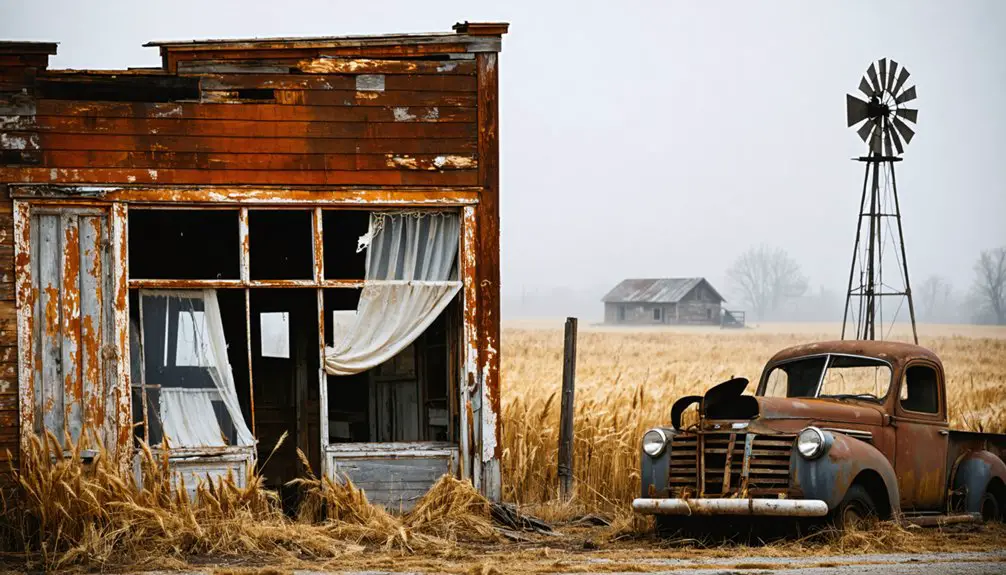
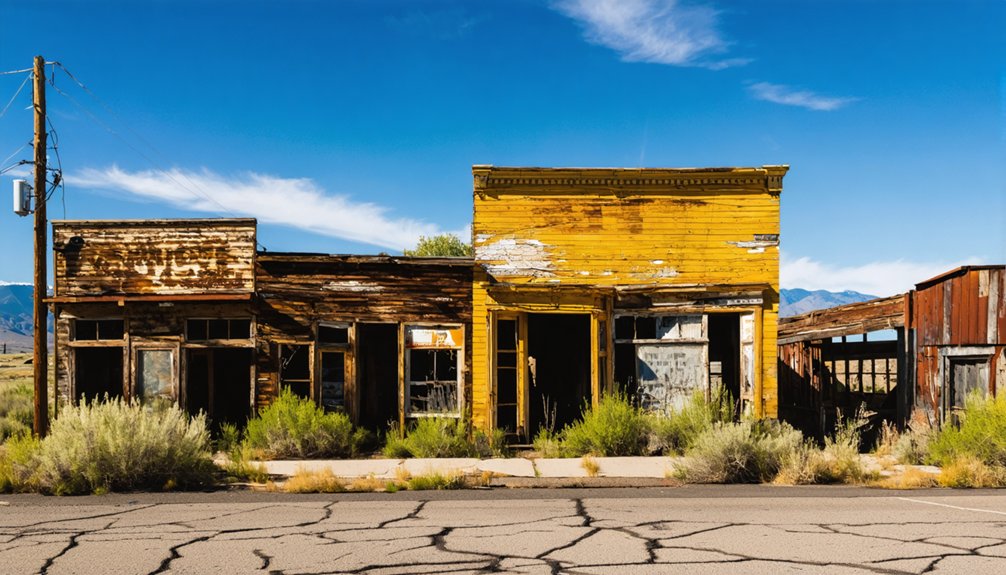
Although little remains of the original town, Hanford’s scattered structures still tell a quiet story of the community that once thrived here. You’ll find a plateau dotted with remnants of a rural agricultural center, where a preserved school building stands as one of the most striking survivors. It reflects how families lived, learned, and built their daily lives before the government’s rapid wartime displacement.
Don’t expect ancient artifacts or underground tunnels — Hanford’s power lies in its quiet, open landscape and the weight of its sudden erasure. The site now sits within a national historical park, preserving what little remains.
Walking across the open grounds, you’ll feel the contrast between the town’s ordinary past and its extraordinary, history-altering end.
How the Government Erased an Entire Town in Three Weeks
What you see standing quietly on that plateau today is the result of one of the most abrupt government actions in American history. In 1943, Washington officials ordered Hanford’s residents out — fast. Urban abandonment happened practically overnight:
- Residents received evacuation orders with minimal warning
- Families had only weeks to pack lifetimes of belongings
- Homes, farms, and businesses were surrendered without negotiation
- The entire community vanished to make room for Manhattan Project nuclear production
Historical preservation efforts now help you understand what was lost. Walking those grounds, you’ll feel the weight of that forced departure — a moment when government authority overrode individual freedom completely.
The preserved school building stands as a quiet reminder that real families built real lives here before everything was erased.
Hanford’s Role in the Manhattan Project and the B Reactor
The same land that swallowed Hanford’s families whole became ground zero for one of history’s most consequential scientific projects. The B Reactor, built here during World War II, produced the plutonium used in the first nuclear weapon ever detonated. That’s the weight of nuclear history you’ll feel walking through this place.
You can book a free B Reactor Tour, though you’ll need advance reservations. Plan for four hours, including bus rides and site time. Rangers guide you through the Cold War-era facility where decisions shaped global power for decades. The tour connects directly to the Manhattan Project’s secret operations, giving you rare access to a facility most Americans never knew existed.
Book early — spots fill fast.
Book the B Reactor Tour Before You Go
Securing your spot on the B Reactor Tour takes just minutes online, but waiting too long means missing out entirely — reservations fill well before peak season. This free tour honors both historical preservation and cultural significance at one of America’s most consequential sites.
Here’s what you need to know before booking:
- Cost — The tour is completely free, so budget concerns won’t hold you back.
- Advance booking — Reserve your spot early; slots disappear fast.
- Time commitment — Block out 4 hours, covering bus rides and on-site exploration.
- What to expect — You’ll walk through the secret Manhattan Project facility firsthand.
Don’t let this rare opportunity slip away. Book online, confirm your reservation, and prepare for an unforgettable experience rooted in American history.
Guided Tours Cover the Ghost Town and B Reactor in Four Hours
Guided tours at Hanford pack both the ghost town and the B Reactor into a single four-hour experience, so you won’t need to coordinate separate visits or logistics. Your guide walks you through scattered remnants that carry real archaeological significance, connecting the rural community’s sudden erasure to the larger Manhattan Project story.
You’ll see the preserved school building and understand how historical preservation efforts protect what little remains of this vanished town. The B Reactor portion takes you inside the world’s first full-scale nuclear reactor, where the weight of wartime decisions becomes tangible.
Bus rides between locations are included in those four hours, so you’re moving efficiently the entire time. Remember, the tour is free, but you must book your reservation in advance.
Driving to Hanford From Seattle, Portland, and Spokane
Once you’ve locked in your tour reservation, you’ll want to map out how you’re getting there. Richland serves as your base, sitting off Interstate 82 and Route 12. From there, rural architecture and open landscape unfold along every route, setting the tone for historical preservation ahead.
Here are your driving options:
- Seattle – About 3.25 hours covering 200 miles heading southeast.
- Portland – Roughly 3.5 hours across 225 miles heading northeast.
- Spokane – The shortest drive at 2 hours over 144 miles heading west.
- Amtrak – Train service runs to Richland or Pasco if you’d rather skip the wheel.
Once in the area, rent a car — the site spreads wide, and you’ll need the freedom to explore it fully.
Where to Base Yourself for a Hanford Road Trip
Richland makes the most practical base for your Hanford road trip, sitting right at the junction of Interstate 82 and Route 12 with easy access to the surrounding region. From here, you can reach the ghost town and surrounding historical sites without wasting time backtracking.
Tourist accessibility improves considerably when you stay in Richland, since you’ll need a rental car to explore the widespread area properly. The town offers hotels, restaurants, and services that let you move freely on your own schedule.
Historical preservation efforts at Hanford mean guided tours require advance booking, so plan those reservations before you arrive. Use Richland as your launching point each morning, and you’ll cover the B Reactor, the ghost town remnants, and the broader Manhattan Project landscape efficiently.
Pair Hanford With These Nearby Tri-Cities Stops
While you’re in the area, the Tri-Cities offer plenty of stops worth adding to your itinerary. You can follow the Tri-Cities Wine Trail through a stretch of Washington wine country, tasting your way through local varietals at family-owned wineries.
After the vineyards, head down to the Columbia River Waterfront, where you’ll find scenic walking paths, restaurants, and a relaxed vibe that contrasts nicely with Hanford’s haunting history.
Tri-Cities Wine Trail
After exploring Hanford’s haunting history, why not uncork the region’s equally rich wine culture along the Tri-Cities Wine Trail? This thriving wine scene carries its own cultural significance, reflecting the land’s transformation from nuclear secrecy to celebrated viticulture.
Here’s what you’ll enjoy along the trail:
- Taste award-winning reds and whites at family-owned wineries scattered across Benton County.
- Explore vineyard landscapes shaped by the same desert terrain surrounding Hanford’s historical preservation sites.
- Engage with passionate winemakers who’ll share stories about the region’s agricultural roots.
- Sample diverse varietals, from bold Cabernets to crisp Rieslings, unique to Washington’s Columbia Valley appellation.
You’ll leave with a deeper appreciation for how this remarkable region reinvented itself beyond its complex past.
Columbia River Waterfront
Just a short drive from Hanford’s historical preservation sites, the Columbia River Waterfront offers an invigorating contrast to the ghost town’s quiet desolation. You’ll find stunning river views stretching across the water, where the Columbia flows with an unhurried power that’s shaped this region for centuries.
Waterfront history runs deep here — Indigenous peoples, fur traders, and settlers all depended on this river long before nuclear facilities defined the landscape. Walk the paved paths along the shoreline, grab a bite at one of the casual waterfront restaurants, or simply sit and watch the current move.
After absorbing Hanford’s somber story, the open air and flowing water feel genuinely restorative. It’s the kind of unscripted stop that makes a road trip feel worth every mile.
Wear Sturdy Shoes and Plan for Fast-Changing Weather

When you visit Hanford’s open plateau, you’ll want sturdy shoes to handle the uneven ground and scattered remnants of the original townsite.
The high desert landscape sits at 123 meters elevation, where temperatures can swing sharply and wind rolls in fast, so layer up and bring rain gear even on clear mornings.
Pack light but smart, because the terrain and weather won’t wait for you to improvise.
Footwear For Rough Terrain
Since Hanford’s open terrain can shift from dusty and dry to cold and windy in a matter of hours, you’ll want to pack wisely before heading out. Archaeological exploration across this historic plateau demands footwear that keeps you stable and comfortable throughout historical preservation efforts.
Choose gear that handles unpredictable conditions:
- Ankle-support hiking boots protect against uneven ground and loose gravel scattered across the site.
- Moisture-wicking socks prevent blisters during extended walks between scattered remnants.
- Waterproof materials shield your feet if unexpected rain rolls through quickly.
- Thick rubber soles provide traction on dry, cracked earth common to the elevated plateau.
Pack layers alongside your boots, since temperatures can drop sharply without warning, turning a pleasant afternoon into a cold, challenging trek.
Preparing For Weather Shifts
Weather at Hanford doesn’t follow a polite schedule, and your boots are only part of the battle. At 123 meters above sea level on an open plateau, conditions shift fast — morning calm can turn into afternoon wind and dust without warning. You’ll want layers you can strip or add quickly while exploring remnants tied to local legends and Manhattan Project history.
Unlike Historical reenactments held in controlled environments, Hanford exposes you to raw, unscripted conditions. The same wind that scatters dust across the old schoolyard has been doing so for decades.
Check forecasts the night before, pack a lightweight windbreaker, and carry water. The site rewards prepared visitors who move freely through the terrain without battling avoidable discomfort.
Why Hanford Ghost Town Is Unlike Any Other in the American West
Most ghost towns in the American West faded slowly — mines dried up, droughts hit, or railways bypassed them — but Hanford’s story is something else entirely. This town didn’t decline through urban decay or neglect. The government simply erased it — fast and deliberately.
Most ghost towns faded slowly. Hanford didn’t fade — the government erased it, fast and deliberately.
Here’s what sets Hanford apart:
- Residents had only weeks to vacate their homes in 1943
- The entire community was cleared for a top-secret Manhattan Project nuclear facility
- Historical preservation efforts now protect remaining structures, including a standing schoolhouse
- It’s one of the only American towns purposely erased in the modern era for national security
You won’t find another ghost town carrying that kind of weight. Hanford isn’t just abandoned — it was sacrificed, making your visit genuinely unlike anything else on a western road trip.
Frequently Asked Questions
What Are the GPS Coordinates for Hanford Ghost Town?
Like ancient mapmakers charting new worlds, you’ll find Hanford Ghost Town at 46.58370, -119.38800. Fire up your GPS, explore incredible historical landmarks, and capture stunning photography opportunities at this hauntingly free, unforgettable slice of American history!
Is the B Reactor Tour Free to Attend?
Yes, the B Reactor Tour’s free, but you’ll need to book in advance! You’ll enjoy a four-hour visitor experience uncovering the historical significance of this Manhattan Project secret site, including bus rides and hands-on exploration.
Can You Reach Hanford by Amtrak Train Service?
You can’t reach Hanford directly by rail travel, but Amtrak’s scenic routes drop you off in nearby Richland or Pasco, where you’ll then need a rental car to explore the widespread ghost town area freely.
What Elevation Is the Hanford Ghost Town Located At?
You’ll find Hanford’s ghost town sitting at 123 meters elevation, where historical significance meets mining history. You’ll walk ancient ground, you’ll breathe untamed air, and you’ll uncover a landscape shaped by freedom’s restless, pioneering spirit.
Is a Rental Car Necessary for Exploring the Hanford Area?
You’ll want a car rental for your road trip planning around Hanford, as the area’s pretty widespread. Without your own wheels, you can’t freely explore this fascinating ghost town and its scattered remnants.
References
- https://advntrtrac.home.blog/2019/05/05/washingtons-ghost-town-road-trip/
- https://seattlerefined.com/lifestyle/ghost-town-road-trip-7-locations-8-hours
- https://www.route97.net/highlands
- https://aroundus.com/p/9784815-hanford
- https://en.wikipedia.org/wiki/Hanford
- https://rovingvails.com/road-trip-itineraries/hanford-tours-washington/