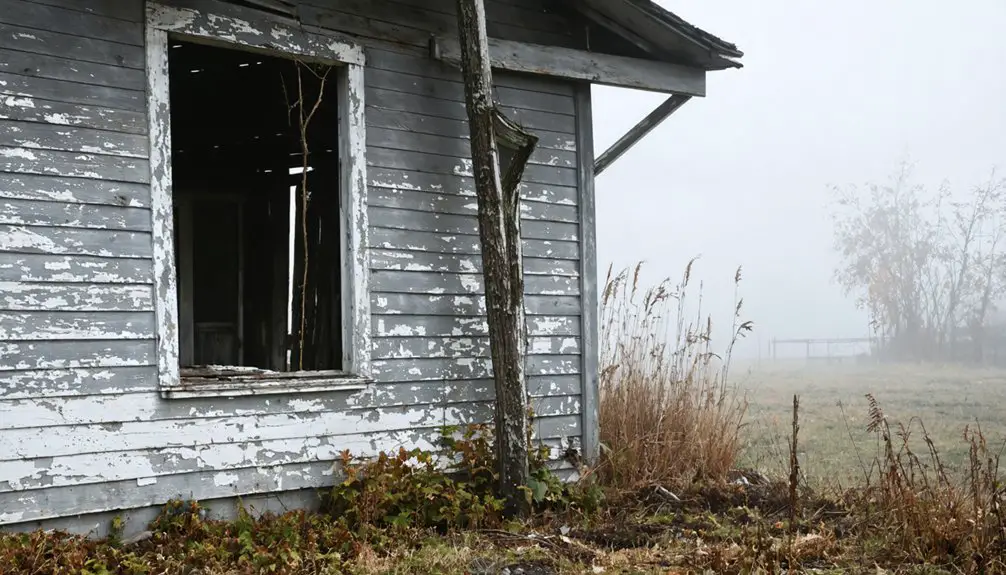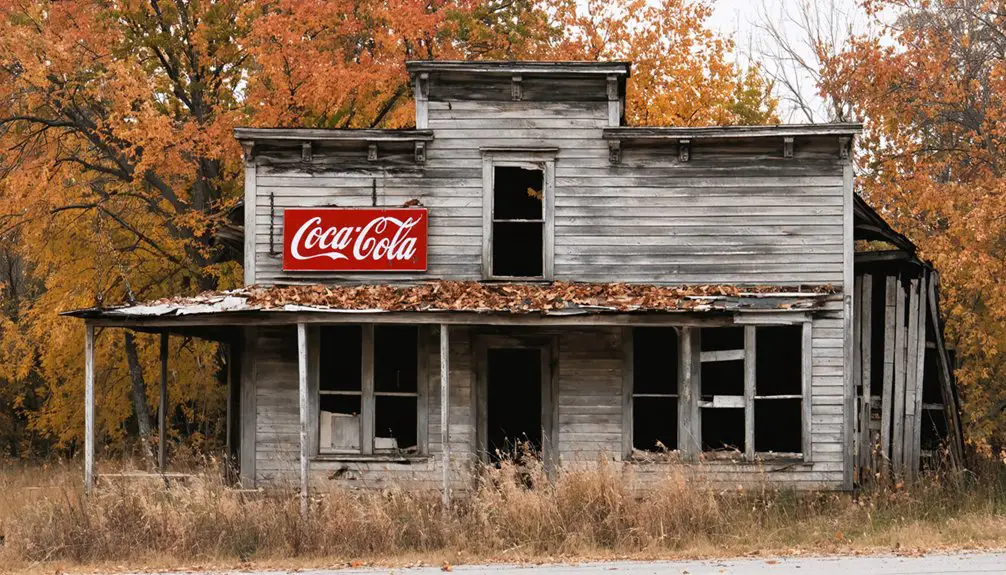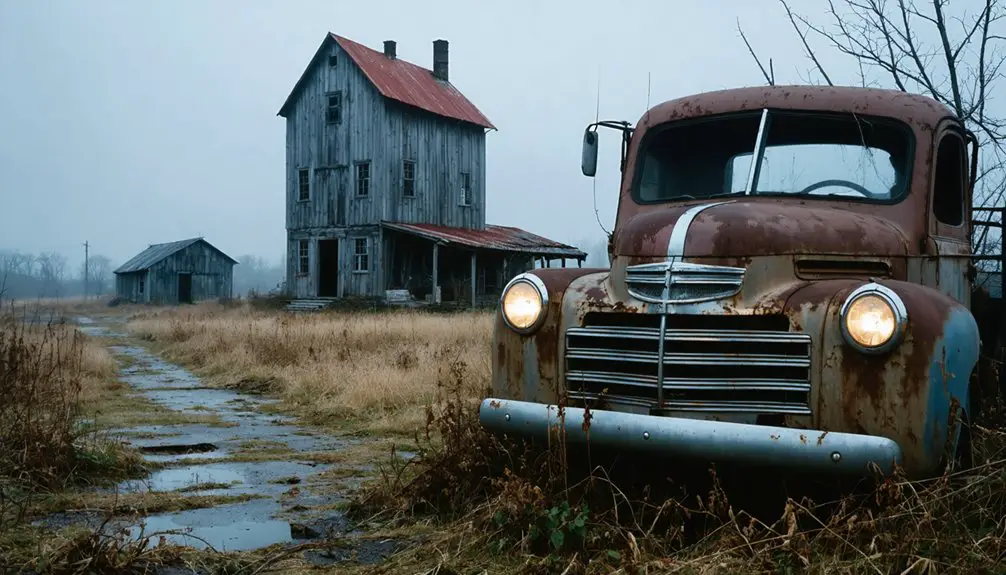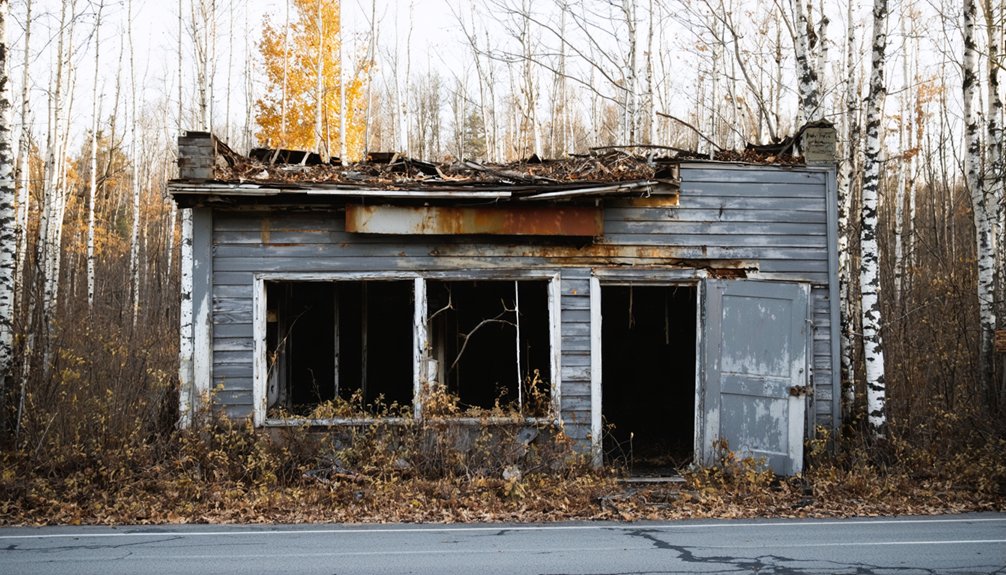
Herron, Michigan isn’t your typical ghost town—it’s a haunting stretch of ruins, hidden mine shafts, and overgrown foundations deep in Alpena County‘s woods. Founded in 1920 and abandoned after a deadly 1952 methane explosion killed five men, the site demands serious preparation before you visit. You’ll need offline maps, sturdy boots, and a healthy respect for concealed hazards. Stick around, and you’ll uncover everything you need to explore Herron safely and meaningfully.
Key Takeaways
- Herron, Michigan, founded in 1920, is a ghost town abandoned after a deadly 1952 mine explosion killed five workers.
- Reach Herron via Alpena County roads using offline maps, as cell service is unreliable in this remote area.
- Contact the Michigan Nature Association for access permissions before exploring the overgrown ruins and surviving structures.
- Hidden open mine shafts drop 25+ feet beneath vegetation; probe the ground with a walking stick to avoid falls.
- Bring sturdy boots, headlamps, a first aid kit, whistle, and handheld radio for safe exploration of the site.
What Kind of Ghost Town Is Herron, Michigan?
Although Herron, Michigan started as a bustling mining town, today it’s a quiet, nature-reclaimed ghost town where crumbling ruins and open mine shafts tell the story of a community that once thrived on iron ore, gold, and uranium extraction.
Where iron ore, gold, and uranium once fueled a thriving town, nature has quietly reclaimed the ruins.
Fred Herron founded the town in 1920, and it quickly grew into a regional hub supported by the Boyne City, Gaylord & Alpena Railroad.
Its cultural significance runs deep — two general stores, modest family homes, and a Methodist church once anchored daily life here.
Now, overgrowth swallows those same structures, creating real preservation challenges that make exploration both fascinating and dangerous.
You’ll find designated trails weaving through the reclaimed landscape, but open shafts hide beneath vegetation, demanding your full attention as you move through this forgotten slice of Michigan’s industrial past.
How the 1952 Mine Explosion Ended Herron for Good
On October 30, 1952, a methane gas explosion tore through the outskirts of Herron, killing five men and sealing the town’s fate. Six men had descended into the long-abandoned gold mine searching for uranium when a spark from water pumps ignited trapped methane gas.
Two men working 180 feet below never stood a chance. Three others at the shaft’s opening perished alongside them. Only John Pastuszka survived, shielded by a nearby tool shed.
The tragedy accelerated Herron’s abandonment almost overnight. Families who’d built lives around its mining history quietly packed up and left.
Today, you’ll walk past railroad remnants and reclaimed ruins that hold this story in silence. The explosion didn’t just kill five men — it extinguished an entire community’s reason to stay.
What Still Stands at the Herron Townsite Today
Decades after the 1952 explosion, nature has quietly swallowed most of what Herron once was — yet fragments of the townsite still push through the overgrowth if you know where to look.
Industrial decay has transformed this once-active mining community into a hauntingly beautiful landscape of historical remnants waiting to be discovered.
Watch for these surviving features as you explore:
- Open mine shafts dropping 25+ feet, hidden beneath dense vegetation
- Deteriorated building foundations from the former general stores and houses
- Ruins of the Methodist church that once anchored community life
- Old apple trees marking where families once gathered in backyards
- Visible railroad infrastructure connecting Herron to its Boyne City, Gaylord & Alpena Railroad past
Move carefully — the ground holds more history than it appears.
How to Get to Herron, Michigan
To reach Herron, you’ll head into Alpena County in Michigan’s Lower Peninsula, where county roads guide you toward this forgotten industrial ghost town.
Once you’re in the area, you can navigate the site using designated exploration trails that wind past reclaimed ruins and overgrown structures.
The remaining railroad infrastructure from the Boyne City, Gaylord & Alpena Railroad also serves as a historical landmark that helps orient you as you explore the grounds.
Finding Herron’s Railroad Access
Reaching Herron, Michigan isn’t as straightforward as punching an address into your GPS — this ghost town demands a bit of old-fashioned navigation.
The Boyne City, Gaylord & Alpena Railroad infrastructure still anchors the site’s cultural significance, guiding explorers through preservation efforts that keep history visible.
Use these trail access tips before heading out:
- Follow remaining railroad corridor markers to orient yourself on approach
- Download offline maps — cell service is unreliable in this remote area
- Note that designated trails traverse reclaimed abandoned structures safely
- Watch for posted “Private Property” signage and respect boundaries
- Contact the Michigan Nature Association beforehand to confirm access permissions
Treating this journey like a true expedition — not a casual drive — rewards you with an authentic connection to Michigan’s raw industrial past.
Navigating Designated Exploration Trails
Once you’ve locked in your access permissions and oriented yourself along the railroad corridor, the real navigation begins — stepping onto the designated trails that wind through Herron’s overgrown ruins. These paths exist for good reason, balancing cultural preservation with minimizing environmental impact on the fragile site.
Stay on marked routes to avoid hidden mineshafts dropping 25 feet or more beneath tangled vegetation. Nature has aggressively reclaimed Herron’s structures, making off-trail wandering genuinely dangerous.
Watch for old apple trees — they signal former backyards and help you orient yourself among the collapsed buildings.
Bring a detailed map, sturdy boots, and a hiking partner. The trails reward patient explorers with glimpses of mine shaft openings, deteriorated townsite buildings, and the quiet weight of lives once lived here.
Reaching Alpena County Roads
Getting yourself to Herron means steering toward Alpena County in northeastern Michigan — not the west side of the state, despite what some sources suggest. You’ll find this forgotten settlement tucked inland, surrounded by local flora that’s quietly swallowed former streets and yards whole.
Plan your route using these practical markers:
- Follow US-23 north toward Alpena as your primary corridor
- Watch for county road signage pointing inland from the Lake Huron shoreline
- Use the Boyne City, Gaylord & Alpena Railroad’s remaining infrastructure as directional reference
- Note cultural landmarks like historic churches or old commercial buildings as orientation points
- Download offline maps since cell service gets unreliable fast
You’re driving into raw Michigan wilderness, so fuel up, pack supplies, and embrace the open road ahead.
Open Mine Shafts and Hidden Dangers at Herron
Nature has quietly swallowed much of Herron’s past, but don’t let the overgrown landscape fool you — hidden beneath tangled brush and vegetation lie open mine shafts and wells capable of dropping you 25 feet or more without warning.
Beneath Herron’s overgrown silence, hidden shafts wait — one wrong step could swallow you whole.
The vertical shafts once plunged 280 feet deep, and many remain dangerously uncapped beneath decades of growth.
As you explore mining relics and town remnants scattered across the site, watch every step carefully. Deteriorated buildings present their own structural risks, and posted “Private Property” or “Keep Out” signs demand your respect.
If you’re uncertain about access, contact the Department of Natural Resources directly. Your freedom to explore this haunting landscape depends entirely on your awareness — one careless moment near these concealed hazards could turn your road trip tragic.
Research Herron’s History Before You Go

Before you set foot near those concealed shafts and crumbling structures, arm yourself with something equally important — context. Understanding Herron’s historical preservation and cultural significance transforms a curiosity visit into a meaningful experience.
Dig into these resources before hitting the road:
- Houghton County Historical Museum in Lake Linden holds records on local families and abandoned settlements
- Carnegie Museum of the Keweenaw in Houghton archives ghost town histories and community stories
- Michigan Tech University staff assist researchers exploring Keweenaw-area industrial heritage
- Keweenaw National Historical Park volunteers share context starting at Calumet headquarters
- Local residents often carry firsthand knowledge no archive can replicate — ask them directly
You’ll read the ruins differently when you understand what once stood there.
Ghost Towns Near Herron Worth Adding to Your Route
Once you’ve walked Herron’s overgrown lots and stood at the edge of those silent shafts, you’ll find the Upper Peninsula pulls you deeper — because the Keweenaw Peninsula alone holds dozens of ghost towns that rival Herron’s haunted atmosphere and industrial past.
These sites showcase striking urban decay, where collapsed engine houses and rusted machinery have surrendered to wildlife habitats thick with deer trails and nesting birds. Towns like Central, Mandan, and Delaware offer crumbling foundations, open mine portals, and eerie quiet that rewards curious travelers willing to leave paved roads behind.
Connect your route through Calumet, stopping at Keweenaw National Historical Park headquarters for trail guidance. Each stop adds another layer to Michigan’s industrial story — raw, forgotten, and completely worth your time.
What to Bring When Mine Shafts Are Hidden Under Overgrowth

Before you step foot near Herron’s overgrown mineshafts, you’ll want sturdy boots, trekking poles, and a reliable flashlight to navigate terrain where 25-plus-foot drops hide beneath thick vegetation.
Watch your footing constantly, probe uncertain ground ahead of you, and never explore alone since the deteriorated structures and concealed shafts can shift or collapse without warning.
Pack a fully charged phone, a first aid kit, and emergency contact information so you’re prepared if the unexpected happens far from help.
Essential Safety Gear
Exploring Herron’s overgrown townsite means walking terrain where dangerous mine shafts and abandoned wells hide beneath decades of vegetation, ready to swallow an unsuspecting step. You’ll want the right gear before you ever leave the trailhead, especially when wildlife encounters can startle you off balance near crumbling edges.
- Trekking poles for probing soft ground before committing your full weight
- Steel-toed boots with ankle support to handle unstable debris and hidden voids
- Headlamp with spare batteries for peering into dark shaft openings safely
- Bear spray for unexpected wildlife encounters in dense overgrowth
- Camera with wide-angle lens for photography tips around low-light ruins without leaning dangerously close
Stay on visible paths, move deliberately, and never explore alone.
Navigating Hidden Hazards
Herron’s vertical mine shafts once plunged 280 feet into the earth, and while nature has softened their edges with decades of overgrowth, they haven’t gotten any shallower. Open shafts and wells now hide beneath tangled brush, offering 25-plus-foot drops to the unprepared explorer. You’ll want a sturdy walking stick to probe suspicious ground before committing your weight.
Local legends warn of deceptively stable-looking terrain that suddenly gives way. Wear ankle-supporting boots and bring a bright flashlight to identify disturbed soil patterns around historical architecture like deteriorating foundations and collapsed pump houses.
Travel with a companion who knows your planned route. The freedom to explore this industrial ghost town depends entirely on your respect for its invisible dangers — move deliberately, stay alert, and never rush.
Emergency Preparedness Essentials
When hidden mine shafts can swallow you whole without warning, your pack becomes your lifeline. Herron’s overgrowth conceals 25+-foot drops, and local legends warn that the land reclaims the careless. Art preservation enthusiasts documenting ruins face the same raw dangers as casual explorers. Pack smart and move freely.
- First aid kit with splint and compression bandages
- Headlamp with extra batteries for peering into dark shaft openings
- Whistle and handheld radio since cell service fails here
- Trekking poles to probe suspicious ground before stepping
- Detailed topographic map because digital GPS isn’t reliable in remote terrain
Tell someone your exact route before you leave. Freedom means knowing your limits, respecting the site’s dangers, and returning home with your stories intact.
Frequently Asked Questions
Who Founded Herron, Michigan, and What Year Was It Established?
Fred Herron founded this mesmerizing town in 1920, and you’ll discover its historical landmarks steeped in local legends. You’re stepping into Michigan’s rugged industrial past, where freedom-seekers like you uncover stories hidden within abandoned ruins.
What Railroad Connected Herron to the Broader Regional Commerce Network?
You’ll discover that the Boyne City, Gaylord & Alpena Railroad connected Herron to railroad trade routes, fueling regional commerce and transforming this small Michigan mining town into a thriving industrial hub worth exploring today.
What Minerals Beyond Gold Were Workers Searching for in 1952?
Imagine the thrill of discovery! Beyond gold, you’ll find that workers were searching for uranium in 1952, showcasing Herron’s mineral diversity and rich mining history — a daring quest that tragically ended in catastrophe.
What Religious Building Once Served the Families Living in Herron?
You’ll find that a central Methodist church once held religious significance for Herron’s mining families, representing remarkable historical architecture that anchored community life, offering spiritual refuge to hardworking souls who carved their livelihoods from Michigan’s unforgiving earth.
Who Survived the 1952 Explosion, and Why Were They Spared?
Of six men present, only John Pastuszka survived—haunting stories and survivor testimonies reveal he’d positioned himself beside a tool shed, shielding him from the methane blast that claimed five lives that fateful day.
References
- https://www.visitkeweenaw.com/things-to-do/museums-history/ghost-towns/
- https://www.youtube.com/watch?v=YYm9FXZ4mCk
- https://lostinmichigan.net/the-herron-explosion/