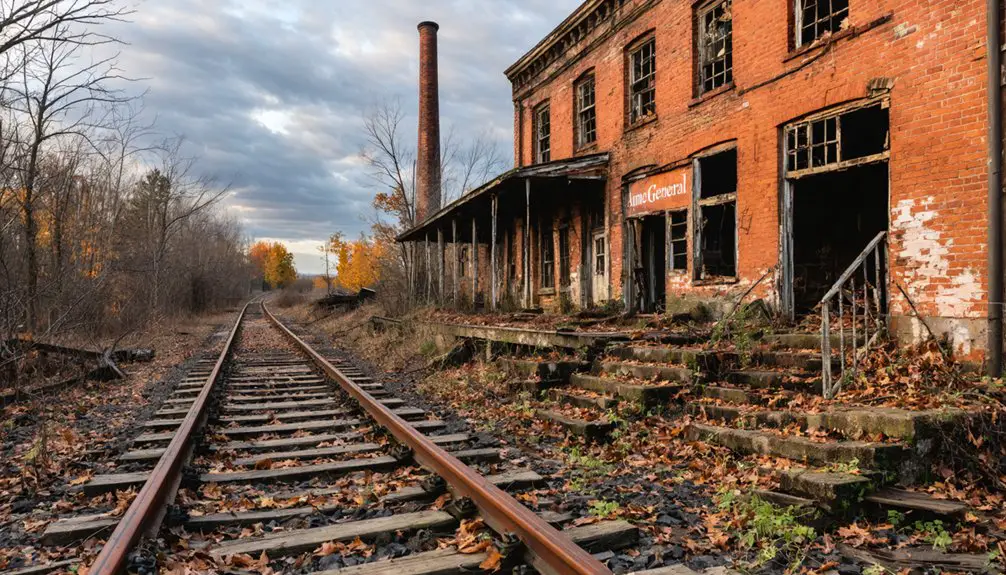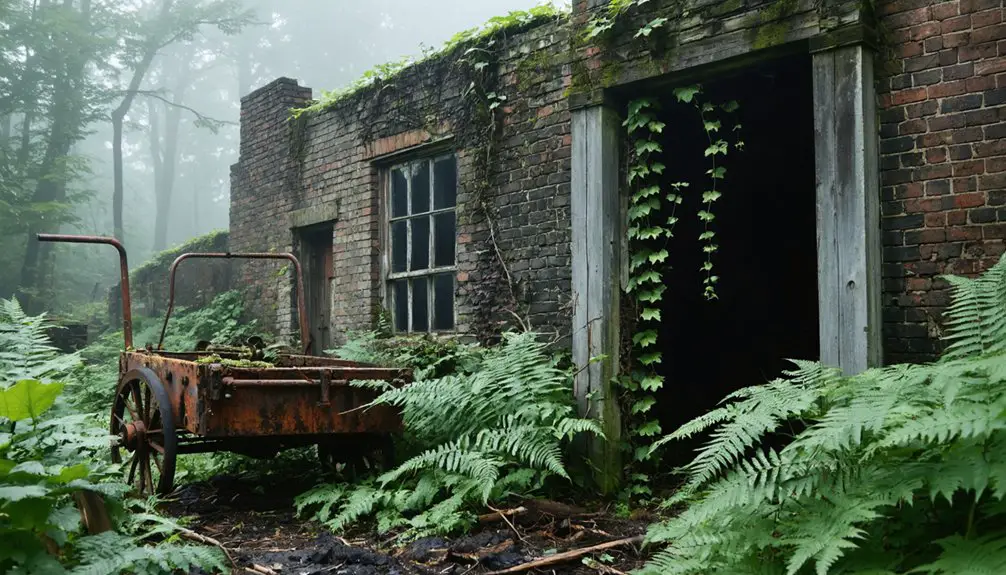
Planning a ghost town road trip to Tartown, Pennsylvania means venturing deep into Michaux State Forest in Adams County, where a lost community lies drowned beneath a reservoir created by the Waynesboro Dam. You’ll need a permit from the Waynesboro Borough Authority before setting foot on the site. Crumbling stone foundations and submerged ruins emerge when water levels drop, offering haunting glimpses into the past. Keep exploring to uncover everything you’ll need for this unforgettable trip.
Key Takeaways
- Tartown is an extinct Pennsylvania community in Michaux State Forest, partially submerged by the Waynesboro Dam on Antietam Creek.
- Before visiting, obtain an access permit from the Waynesboro Borough Authority, which owns the land.
- No public roads reach Tartown; park at forest entry points and hike trails toward Antietam Creek.
- Visible remnants include stone foundations, crumbling walls, and submerged stonework exposed during low water levels.
- Pack hiking boots, navigation tools, first aid supplies, and inform someone of your itinerary before entering the forest.
What Is Tartown and How Did the Waynesboro Dam Erase It?
Tucked away in Adams County, Pennsylvania, Tartown was once a small unincorporated community that’s since vanished from the map — literally. The Waynesboro Dam, built on the East Branch of Antietam Creek, flooded part of the original settlement, erasing its historical context beneath a reservoir that still exists today.
What remains sits within Michaux State Forest on land owned by the Waynesboro Borough Authority, classified now as an extinct locality.
When you explore this forgotten place, you’re walking through layers of local legends and lost daily life. The dam’s reservoir swallowed homes, roads, and memories, leaving only scattered ruins above the waterline.
Understanding what happened here makes your visit feel less like a hike and more like uncovering a piece of Pennsylvania’s quietly buried past.
Do You Need a Permit to Visit Tartown?
Before you lace up your boots and head into Michaux State Forest, you’ll need to sort out access permissions. The land containing Tartown’s ruins belongs to the Waynesboro Borough Authority, meaning you can’t simply wander in without clearance. Contact the Authority directly to secure your access permit before visiting.
This requirement exists partly for historical preservation — protecting what little remains of Tartown from damage or disturbance. Don’t let the permit process discourage you, though. It’s a straightforward step that keeps the site accessible for future explorers hungry for local legends and forgotten history.
Forest trails surrounding the area remain publicly accessible through Michaux State Forest entry points, but the reservoir-adjacent ruins demand official permission. Respect the process, and you’ll earn a genuinely unrestricted experience worth every step.
How To Reach Tartown Through Michaux State Forest
Once you’ve secured your permit from the Waynesboro Borough Authority, reaching Tartown means traversing Michaux State Forest’s trail network on foot. Park at one of the forest’s designated entry points and follow the trails toward the East Branch of Antietam Creek. No public roads lead directly to the site, so you’re entirely on your own two feet from here.
Expect forested hills, shifting elevations, and terrain that demands solid footwear. Keep your eyes open for local wildlife — deer and small mammals frequently cross these paths.
As you approach the reservoir’s edge, remnants of the former settlement begin appearing through the trees. The Waynesboro Dam reservoir has swallowed part of Tartown, so stay alert near the water’s edge where the ground can be unstable.
What Structures and Submerged Ruins Remain at Tartown?
As you push deeper into the tree line toward the reservoir’s edge, the landscape starts telling Tartown’s story through scattered remnants rather than standing structures. The Waynesboro Dam’s reservoir swallowed a significant portion of the original settlement, leaving historical artifacts buried beneath the waterline.
What you’ll find above ground consists mostly of stone foundations, crumbling walls, and overgrown cellar holes hidden within Michaux State Forest’s thick vegetation.
Above ground, stone foundations, crumbling walls, and overgrown cellar holes whisper through Michaux State Forest’s thick, consuming vegetation.
The environmental impact of the dam’s construction fundamentally erased Tartown’s built identity, making visible remnants rare and fragmented. Water levels occasionally shift, briefly exposing submerged stonework along the East Branch of Antietam Creek’s edges.
You’re fundamentally reading a settlement’s ghost through geological and structural whispers rather than preserved buildings, which makes every discovered fragment feel genuinely significant.
What Should You Pack for a Safe Tartown Road Trip?
Since Tartown sits deep within Michaux State Forest with no facilities or direct road access, you’ll need to pack smart before hitting the trails.
Bring sturdy hiking boots, layered clothing, a topographic map, plenty of water, and high-energy snacks to handle the rugged, elevation-changing terrain.
For safety, you should always carry a first aid kit, a charged emergency device or satellite communicator, and a flashlight, since emergency services are severely limited this far into the forest.
Essential Gear and Supplies
Before you head out to Tartown’s remote ruins, packing the right gear can mean the difference between a memorable adventure and a dangerous ordeal. Michaux State Forest’s steep trails demand sturdy, ankle-supporting hiking boots and moisture-wicking layers, since mountain weather shifts fast.
Carry these essentials:
- Navigation tools – a printed trail map and compass, since GPS coordinates for Tartown’s historical landmarks aren’t publicly listed
- Water and snacks – no facilities exist on-site
- First aid kit – emergency services run limited deep in the forest
- Flashlight or headlamp – daylight visits are safest, but darkness arrives quickly
- Notebook or camera – local legends surrounding Tartown’s submerged past deserve documentation
Always inform someone of your itinerary before entering.
Freedom favors the prepared traveler.
Safety and Emergency Items
When you’re traversing Tartown’s isolated ruins inside Michaux State Forest, your safety kit isn’t optional gear—it’s your lifeline. Emergency services reach this remote terrain slowly, so you’re responsible for your own well-being.
Pack these essentials before chasing historical artifacts and local legends through Tartown’s forested remains:
- First aid kit with blister treatment and wound care
- Waterproof navigation tools, including a paper map and compass
- Headlamp with extra batteries for unexpected delays near dusk
- Emergency whistle and signal mirror for distress situations
- Water purification tablets since no clean water sources exist onsite
- Fully charged satellite communicator where cell signals disappear completely
- Emergency thermal blanket for rapid mountain weather changes
Freedom means preparation. Know your exit routes before exploring, and always tell someone your planned itinerary.
What Adams County Stops Are Worth Adding Near Tartown?
While Tartown’s eerie remnants make for a compelling destination, Adams County’s surrounding area offers plenty of stops that’ll round out your road trip nicely. Gettysburg sits nearby, giving you access to the National Cemetery and its deeply moving historical tours — a perfect contrast to Tartown’s quiet abandonment.
Tartown’s eerie quiet meets Gettysburg’s weight of history — two haunting destinations, one unforgettable Adams County road trip.
You’ll also find historic museums throughout the area that explore Pennsylvania’s layered past, from Civil War battles to rural community life.
When hunger hits, local dining options in Gettysburg and surrounding towns serve everything from classic American fare to regional specialties, so you won’t go hungry between explorations.
If you’re craving more outdoor time, Straban Township‘s hiking and cycling routes keep the adventure going. Adams County rewards curious travelers who take time to explore beyond a single destination.
Frequently Asked Questions
What Is the Best Time of Year to Visit Tartown?
You’ll find late spring and early fall offer the best seasonal weather for your Tartown adventure. These seasons provide stunning photography opportunities, with vibrant foliage framing the haunting ruins beautifully while you explore freely.
Are There Guided Tours Available for Tartown Ghost Town Visits?
Guided tours aren’t officially available, but you can explore freely, uncover ruins independently, and seek historical insights by contacting the Waynesboro Borough Authority for access permits before venturing into Michaux State Forest’s untamed, adventurous terrain.
Can You Camp Overnight Near the Tartown Ruins in Michaux?
You’ll need to check Michaux State Forest’s camping regulations before pitching your tent near Tartown. Overnight restrictions may apply near reservoir-owned land, so contact the Waynesboro Borough Authority to guarantee your adventure stays completely unrestricted and freely enjoyed.
Is Tartown Suitable for Children or Elderly Visitors to Explore?
Tartown’s trails aren’t a walk in the park—steep terrain and unstable reservoir edges make it challenging for children and elderly visitors. You’ll find historical preservation efforts more rewarding through family friendly activities in nearby Gettysburg instead.
Are Drones Permitted Over the Tartown Reservoir and Forest Area?
You’ll need to check local drone regulations before flying over Tartown’s reservoir and forest. Michaux State Forest and Waynesboro Borough Authority both govern aerial photography here, so contact them directly to secure proper permissions first.
References
- https://en.wikipedia.org/wiki/Tartown
- https://en.wikipedia.org/wiki/Hunterstown