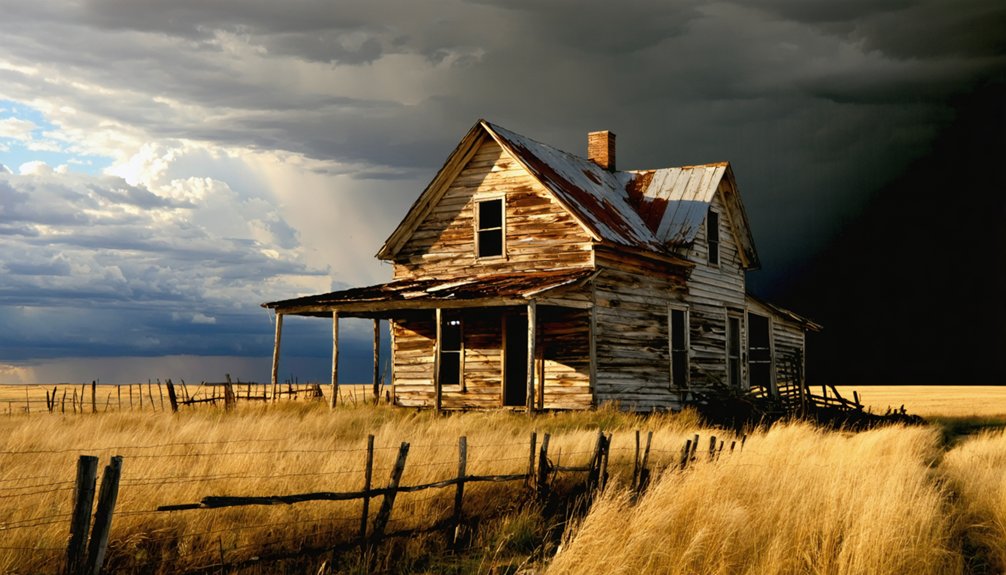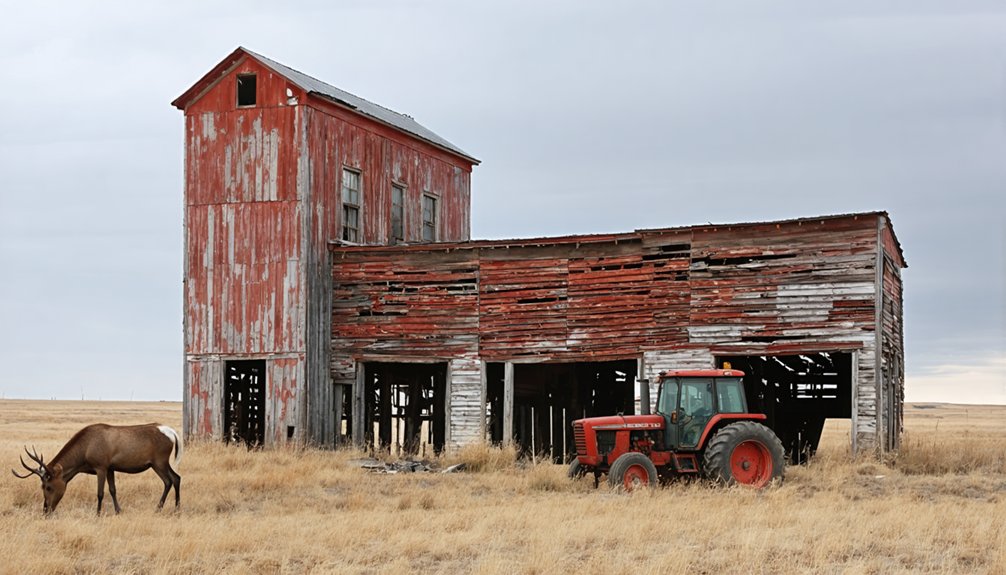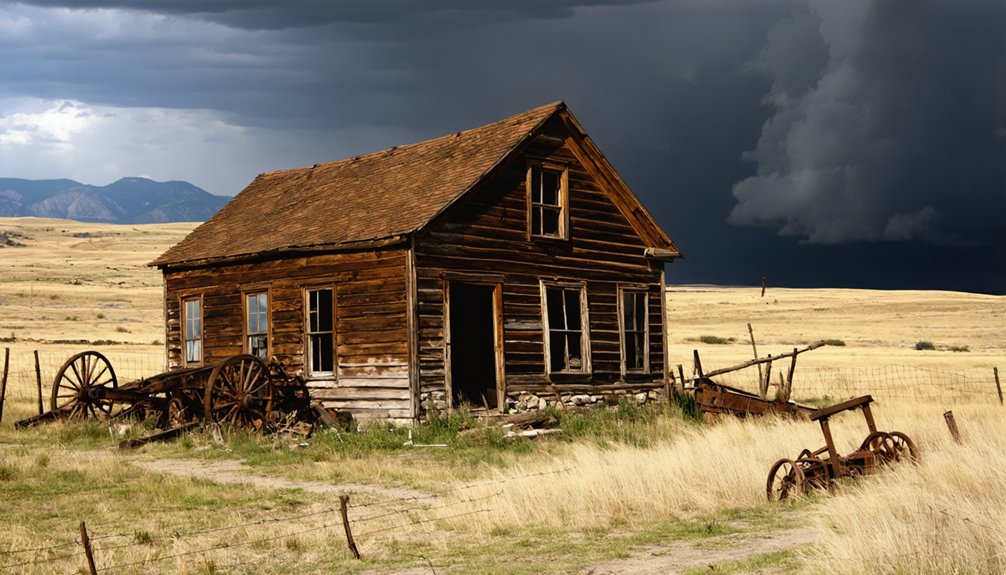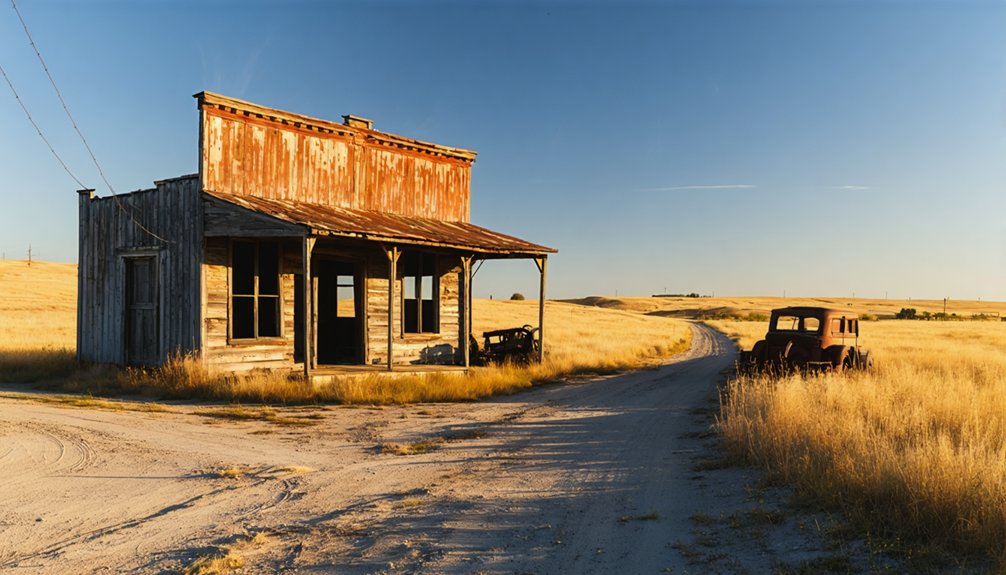
If you’re planning a ghost town road trip to Ivanhoe, South Dakota, you’re already headed in the wrong direction. Ivanhoe is actually a quiet Iowa ghost town sitting along the Cedar River, near Highway 1 between Solon and Mount Vernon. After 160 years, only three remnants survive: a cemetery, a bridge, and a quarry. If South Dakota ghost towns are your real destination, verified sites like Ardmore and Awanka are worth your time — and there’s much more to uncover ahead.
Key Takeaways
- Ivanhoe is located in Iowa, not South Dakota, so travelers searching for it as a South Dakota ghost town will head in the wrong direction.
- The town sits along Highway 1 near a Cedar River crossing, between Solon and Mount Vernon, Iowa.
- Only three remnants survive after 160 years: a cemetery with six stone markers, the Cedar River bridge, and a nearby sand quarry.
- For genuine South Dakota ghost town experiences, consider verified sites like Ardmore, featuring 15–25 abandoned buildings, or Awanka near Rapid City.
- Before any ghost town road trip, confirm site coordinates, road conditions, and accessibility through South Dakota’s official historical society resources.
Is Ivanhoe Really a South Dakota Ghost Town?
Before you load up the car and head to South Dakota, there’s a critical detail worth knowing: Ivanhoe isn’t a South Dakota ghost town at all. Geographic confusion has surrounded this name, leading to historical inaccuracies that could send you chasing a destination that simply doesn’t exist in the Black Hills.
The real Ivanhoe sits in Iowa, nestled on the northeast side of a Cedar River crossing on Highway 1, between Solon and Mount Vernon. South Dakota’s official ghost town registry doesn’t list Ivanhoe anywhere.
The state’s 600-plus abandoned towns focus on mining and railroad history, not this Iowa settlement. If you’re craving authentic freedom on a ghost town road trip, you’ll need to redirect your route and your research before hitting the open road.
Where Ivanhoe Ghost Town Actually Is
If you’re searching for Ivanhoe, you’ll need to point your GPS toward Iowa, not South Dakota.
The real Ivanhoe sits on the northeast side of a Cedar River crossing along Highway 1, tucked between the small towns of Solon and Mount Vernon.
You won’t find it on any South Dakota ghost town registry, because it simply doesn’t exist there.
Iowa, Not South Dakota
Despite what the article title suggests, Ivanhoe’s ghost town isn’t in South Dakota at all — it’s tucked away in Iowa, sitting on the northeast side of a Cedar River crossing along Highway 1, between the towns of Solon and Mount Vernon.
Geographic misinformation spreads easily, and historical myths about ghost town locations can send you hundreds of miles in the wrong direction. South Dakota’s official ghost town registry doesn’t list Ivanhoe anywhere, and no Black Hills records connect to it either.
If you’re chasing this particular piece of forgotten history, you’ll need to redirect your route entirely toward Iowa. The real Ivanhoe sits quietly along that Cedar River corridor, waiting for curious travelers willing to chase accurate coordinates rather than romanticized, misplaced legends.
Cedar River Crossing Location
Once you’ve corrected your coordinates from South Dakota to Iowa, the Cedar River crossing on Highway 1 becomes your landmark. Ivanhoe sits on the northeast side of that crossing, tucked between Solon and Mount Vernon.
Geographic verification matters here — wrong state means a wasted drive across hundreds of miles.
Before bridges existed, ferries carried travelers across the Cedar River at this exact spot. That ferry crossing fundamentally defined Ivanhoe’s entire purpose and brief existence.
Today, a modern bridge spans the same water, quietly replacing that original infrastructure.
Historical accuracy rewards you with something tangible at this location. The surrounding landscape still carries evidence of the town’s footprint, and the Ivanhoe Sand Pit operates nearby under Wendling Quarries Inc.
You’re standing where a real community once breathed.
Between Solon And Vernon
Sandwiched between Solon and Mount Vernon along Highway 1, Ivanhoe’s actual resting place sits firmly in Iowa — not the Black Hills of South Dakota you might’ve originally mapped. That geographic confusion is understandable; the name carries a rugged, frontier-era appeal that fits South Dakota’s ghost town mythology perfectly. But historical accuracy demands you recalibrate your route entirely.
This Iowa corridor along the Cedar River is where Ivanhoe quietly faded into memory, leaving behind only a small cemetery, a bridge, and an operating quarry. You won’t find it on South Dakota’s official ghost town registry because it simply doesn’t belong there.
If you’re chasing authentic abandoned history, knowing exactly where you’re headed keeps you from burning miles on a road trip built on a geographical myth.
What’s Left of Ivanhoe’s Ghost Town Site Today
When you arrive at the Ivanhoe site today, you’ll find only three physical remnants surviving after 160 years of decline. The most poignant stop is the small cemetery, where roughly half a dozen stone markers still stand — though one has worn completely beyond reading.
You’ll also notice the bridge spanning the Cedar River crossing, which replaced the original ferry system that once made Ivanhoe an essential stop for travelers.
Surviving Physical Remnants Today
Though time has erased nearly everything that once made Ivanhoe a functioning community, three physical remnants still anchor the site to its mid-19th-century past.
Historical accuracy matters here — what you’ll actually find isn’t a dramatic ruin but a quiet, honest snapshot of abandonment.
A small cemetery holds roughly half a dozen stone markers, one worn completely unreadable by weather and time. Walk among them and you’re standing inside the town’s only true memorial.
The Cedar River bridge marks where ferries once carried travelers across the water.
Finally, the Ivanhoe Sand Pit, now operated by Wendling Quarries Inc., occupies land the original settlers once called home.
These aren’t conventional tourist attractions, but they’re real.
For independent explorers, that raw authenticity makes the stop genuinely worthwhile.
Cemetery And Bridge Remains
Between the Cedar River bridge and a weathered cluster of stone markers, you’ll find everything Ivanhoe left behind. These two remnants represent the town’s entire legacy of historical preservation — modest, quiet, and easy to miss if you’re not paying attention.
The cemetery holds roughly half a dozen stone markers, one worn completely unreadable by time. Each surviving inscription connects you directly to the people who once built something here.
Stand among them long enough, and Ivanhoe stops feeling like an abstract footnote.
The bridge itself replaced earlier crossings, including the original ferry system that first put Ivanhoe on the map.
As tourist attractions go, neither site is dramatic — but together they frame exactly what ghost town exploring means: raw history with nothing polished over it.
South Dakota Ghost Towns Worth the Drive Instead
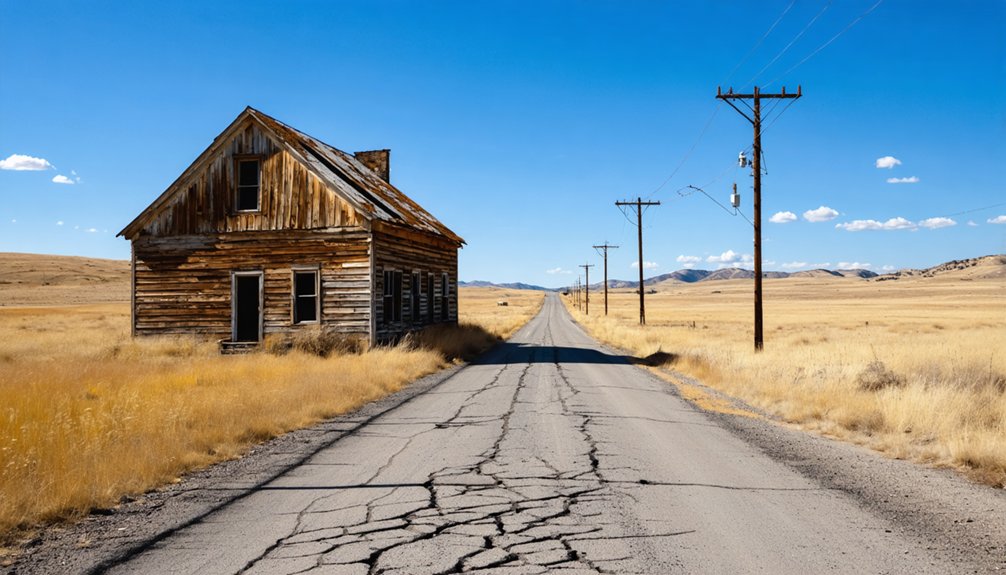
Since Ivanhoe belongs to Iowa rather than South Dakota, you’ll want a revised list of ghost towns that actually deliver on that Black Hills road trip fantasy. Historical accuracy matters when you’re burning fuel and chasing adventure, so skip the confusion and head straight to verified tourist attractions.
Ardmore offers 15–25 abandoned buildings and a population that dropped to just one soul after its 1889 founding.
Ardmore’s 15–25 crumbling structures tell the story of a once-thriving town now home to just one resident.
Awanka, settled in 1888, sits 40 miles east of Rapid City with genuine frontier character.
Mystique launched after an 1876 gold discovery and peaked near 100 residents before fading.
Each destination rewards curious travelers with raw, unfiltered history.
Check South Dakota’s historical society resources before you go, and always respect private property boundaries.
Before You Go: What Ghost Town Visitors Usually Get Wrong
Planning your route around verified destinations saves you from a wasted drive, but knowing where to go is only half the battle—you’ll also want to know what not to do once you arrive. Tourist misconceptions run rampant in ghost town culture.
Many visitors assume abandoned sites are open for exploration, but private property laws apply everywhere. Don’t pocket artifacts or disturb stone markers—historical accuracy depends on preserving what little remains.
You’ll also want to verify every town name before committing to a route, since misidentified locations like a supposed “Ivanhoe, South Dakota” don’t exist and will strand you in the middle of nowhere.
Bring water, check road conditions, and contact South Dakota’s historical society for current site access information before departure.
How to Road Trip the Black Hills Ghost Towns Without Wasting a Day
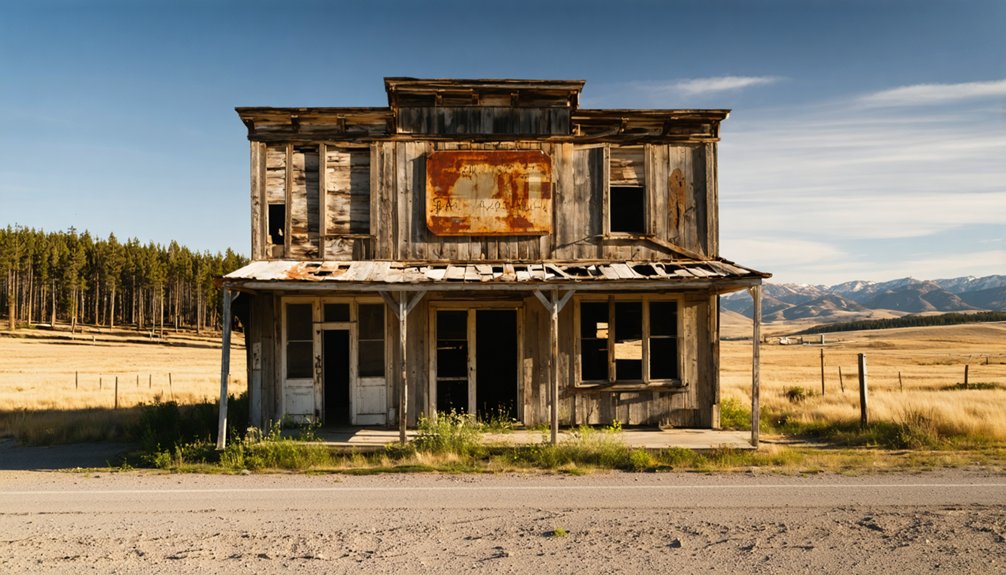
Efficient routing makes the difference between a memorable ghost town road trip and a frustrating day of backtracking on unmarked dirt roads. Start with geographic clarification before you leave home — confirm each site’s exact coordinates, access status, and road conditions.
Efficient routing separates a memorable road trip from a frustrating day lost on unmarked dirt roads.
The Black Hills scatter ghost towns across rugged terrain, so cluster stops by location rather than alphabetical order.
Head south from Rapid City toward Ardmore, swing through Mystique, then work your routes westward.
Historical accuracy matters here: some sites appear on old maps but no longer exist physically. Verify remnants before driving 40 miles to an empty field.
Carry paper maps as backup, respect private property boundaries, and build flexible windows into your schedule.
Freedom on the road means planning smart, not rigid.
Frequently Asked Questions
What Is the Best Time of Year to Visit Black Hills Ghost Towns?
You’ll find late spring through early fall’s your best window for exploring Black Hills ghost towns. Summer’s warmth fuels historical preservation efforts and local legends come alive when you’re wandering freely through Ardmore or Mystique’s weathered, story-rich remains.
Are There Guided Ghost Town Tours Available in South Dakota?
You’ll find guided ghost town tours throughout South Dakota’s Black Hills! Local outfitters take you through haunted legends and showcase preservation efforts at abandoned sites like Ardmore, letting you freely explore history with knowledgeable guides leading the way.
Can Visitors Legally Enter Abandoned Buildings at South Dakota Ghost Towns?
Like a locked door, trespassing laws bar your entry into most abandoned buildings. You must respect property ownership — entering without permission can mean fines or arrest, so always check legal access before exploring South Dakota’s ghost towns.
What Photography Equipment Works Best for Capturing Ghost Town Images?
You’ll want versatile camera gear like a wide-angle lens and tripod for ghost town shots. Master composition tips by framing abandoned structures against dramatic skies, capturing textures, shadows, and decay that tell each forgotten town’s compelling story.
Are South Dakota Ghost Town Sites Accessible for Visitors With Disabilities?
Ardmore’s flat terrain makes it one of the more wheelchair friendly sites you’ll find. You’ll discover accessible trails vary widely across South Dakota’s 600+ ghost towns, so always research each location’s terrain before visiting.
References
- https://en.wikipedia.org/wiki/List_of_ghost_towns_in_South_Dakota
- https://www.sdpb.org/rural-life-and-history/2023-08-21/some-black-hills-ghost-towns-and-their-origins
- https://kids.kiddle.co/List_of_ghost_towns_in_South_Dakota
- https://dungherder.wordpress.com/2018/03/09/abandoned-iowa-ivanhoe/
- https://www.youtube.com/watch?v=_0WNYsFLSLA&vl=es
- https://www.sdhspress.com/journal/south-dakota-history-2-2/some-black-hills-ghost-towns-and-their-origins/vol-02-no-2-some-black-hills-ghost-towns-and-their-origins.pdf