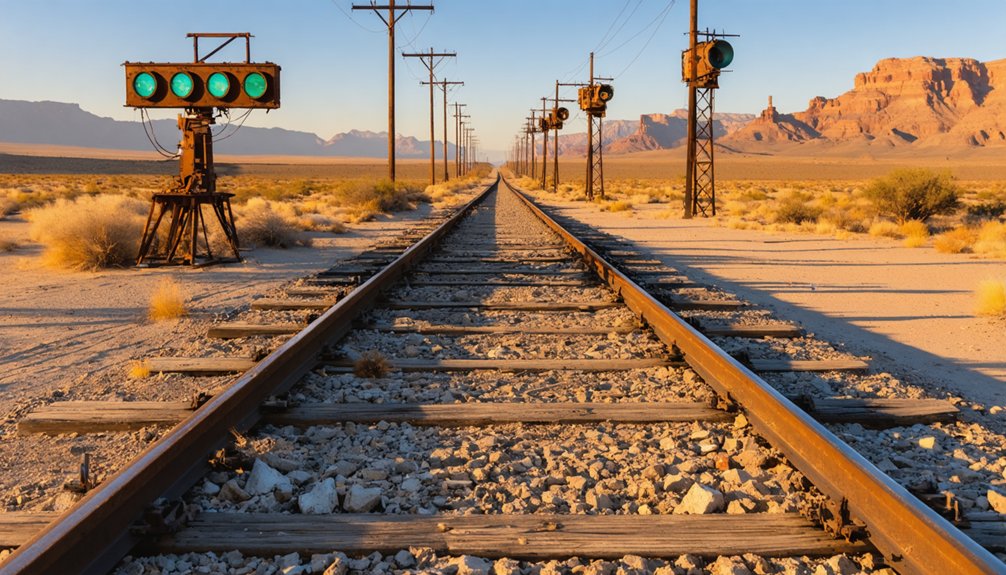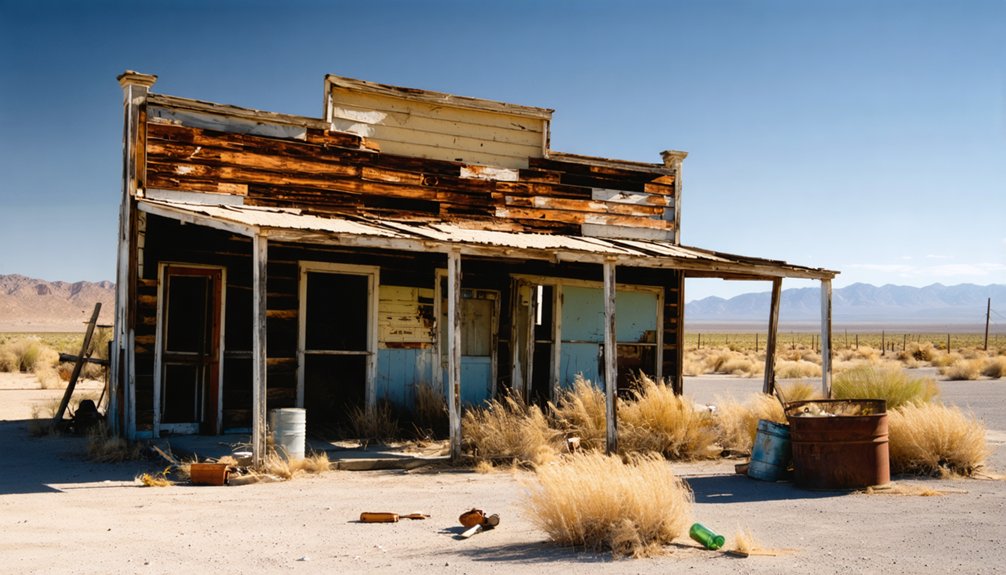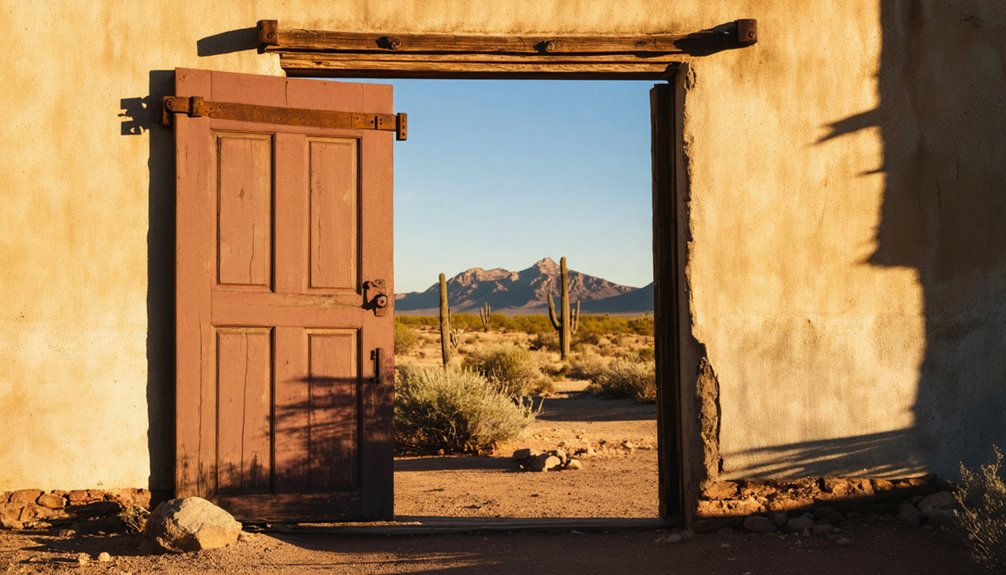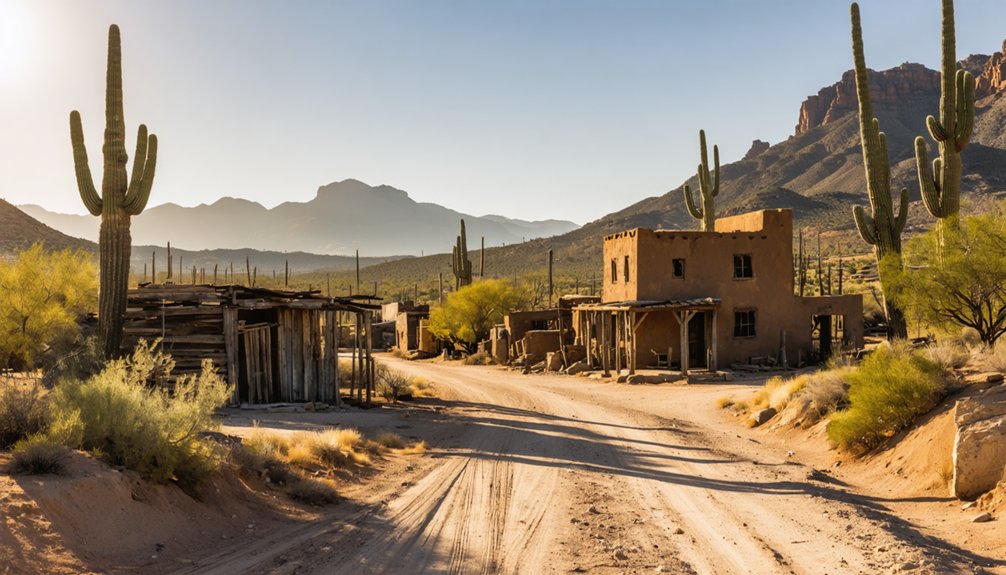
Planning a ghost town road trip to Klondyke, Arizona starts in Safford, where you’ll head northwest on Highway 70 before turning west onto Klondyke Road. You’ll need a high-clearance 4WD vehicle for the unpaved final stretch. Spring and fall offer the best road conditions and temperatures. Once there, you’ll find preserved frontier structures, a storied cemetery, and easy access to Aravaipa Canyon Wilderness — and there’s far more to this remote desert gem than first meets the eye.
Key Takeaways
- Klondyke sits between the Galiuro and Santa Teresa Mountains in Graham County, Arizona, reachable via Highway 70 from Safford, then Klondyke Road.
- The final stretch of road is unpaved, requiring a high-clearance 4WD vehicle due to ruts, loose rock, and potential washouts.
- Key landmarks include the well-preserved Klondyke General Store, original frontier buildings, and a historic cemetery with graves dating to 1900.
- Spring and fall offer the best visiting conditions, with mild temperatures, dry roads, and optimal wildlife sightings near Aravaipa Canyon.
- Combining a Klondyke visit with a permitted hike through adjacent Aravaipa Canyon Wilderness creates a rewarding full-day cultural and nature experience.
Why Klondyke, Arizona Is Worth the Remote Drive
Tucked between the Galiuro and Santa Teresa Mountains in Graham County, Klondyke sits at the kind of remote crossroads that rewards curious travelers willing to trade pavement for scenery. You’ll find scenic vistas that stretch across Aravaipa Valley, framed by rugged peaks and high-desert terrain that feels genuinely untouched.
The town traces its local history back to 1900, when miners returning from the Klondike Gold Rush staked their claim here, building a community around lead, silver, and cattle. At its peak, nearly 500 people called it home.
Today, only a handful remain, leaving behind original structures, a historic cemetery, and stories worth chasing. If you crave open land, honest history, and the freedom to explore somewhere most travelers never find, Klondyke delivers exactly that.
How to Get to Klondyke From Safford
To reach Klondyke from Safford, you’ll head approximately 12 miles northwest on Highway 70 before turning west onto Klondyke Road.
The paved portion of that drive is the easy part — the final stretch into town turns to unpaved road, so you’ll want a high-clearance or 4WD vehicle to handle the rough terrain comfortably.
Don’t underestimate the remoteness of this route, as the roads leading out of Klondyke remain unpaved in every direction.
Route From Safford
Getting to Klondyke from Safford is straightforward at first, but the final stretch will remind you that you’re heading somewhere genuinely off the beaten path. Head northwest on Highway 70 for roughly 12 miles, then turn west onto Klondyke Road.
That paved confidence fades quickly once the road turns to dirt, and you’ll want a high-clearance or 4WD vehicle to handle the final miles comfortably. As you push deeper into Aravaipa Valley, the Galiuro and Santa Teresa Mountains frame your drive with rugged beauty.
Keep your eyes open for local wildlife along the roadside and take note of historical landmarks marking the valley’s mining past. The remoteness isn’t a drawback here — it’s exactly the point.
Road Conditions Warning
Once Klondyke Road turns to dirt, the conditions shift from inconvenient to genuinely demanding. Ruts, loose rock, and washboard stretches make a high-clearance vehicle essential — 4WD is strongly recommended. Don’t assume a dry day guarantees an easy drive; desert hardpan can hide soft spots, and a single rainstorm transforms the road quickly.
You’re moving through active wildlife habitat here, so watch for animals crossing, especially at dawn and dusk. Drive slowly, stay alert, and give yourself more time than you think you need.
The payoff justifies the effort. Historical landmarks like the Klondyke General Store and the nearby cemetery wait at the end of that rough road, and few crowds stand between you and them.
Come prepared, and the isolation becomes a reward.
What Kind of Vehicle Do You Need for the Drive In?
Once you leave the paved stretch of Highway 70 and turn onto Klondyke Road, the pavement disappears and the terrain takes over.
You’ll want a high-clearance vehicle at minimum, and a 4WD truck or SUV gives you the best shot at handling the unpaved road comfortably, especially after rain.
Don’t attempt the drive in a standard sedan—the road conditions can shift with the seasons, and getting stranded miles from a near-ghost town isn’t the adventure you’re looking for.
Road Conditions Ahead
How you get to Klondyke matters just as much as the destination itself. Once you leave Highway 70 and turn onto Klondyke Road, the pavement disappears. You’re trading smooth asphalt for rough, unpaved terrain that demands a high-clearance or 4WD vehicle.
Road safety isn’t optional out here — it’s essential. Loose gravel, washouts, and uneven surfaces can quickly humble an unprepared driver. If your everyday car sits low to the ground, consider a vehicle rental before the trip. Many rental agencies offer SUVs and trucks built for exactly this kind of backcountry travel.
Summer heat bakes the ground hard and dry, while winter rains can soften the road into something far less forgiving. Plan smart, choose the right vehicle, and the drive becomes part of the adventure.
Recommended Vehicle Types
Whether you’re hauling camera gear or just chasing history, the vehicle you drive to Klondyke can make or break the trip. Klondyke Road turns unpaved well before you reach town, and the terrain demands more than a standard sedan can handle. A high-clearance vehicle gets you through most conditions, but a 4WD setup gives you real confidence when the road gets rough or rain softens the dirt.
You’ll want that capability once you’re moving between the general store, the cemetery, and spots tied to local legends like the Power family saga. Protecting your freedom to explore means arriving prepared. A capable rig keeps you focused on the historical artifacts and stories around you rather than worrying about whether you’ll make it back out.
How Klondyke Boomed, Busted, and Nearly Disappeared
Klondyke’s rise was fast, fueled by miners who’d come back from the Klondike Gold Rush around 1900 with prospecting in their blood and ambitions for the Arizona desert. They built a real town — school, church, saloon, general store, post office — and at its peak, around 500 people called it home.
Miners fresh from the Klondike built a real town here — and for a moment, 500 people called it home.
Lead and silver mining drove that early momentum, layered with cattle ranching as the economy matured.
Then the Great Depression hit, cutting the population in half. The post office closed in 1955, and by the mid-1980s, only a handful of residents remained. Today, fewer than 50 people live nearby.
Yet ghost town preservation efforts have kept structures standing, giving you a rare window into that mining history without the place vanishing entirely from the map.
The Klondyke General Store and Surviving Structures Worth Seeing
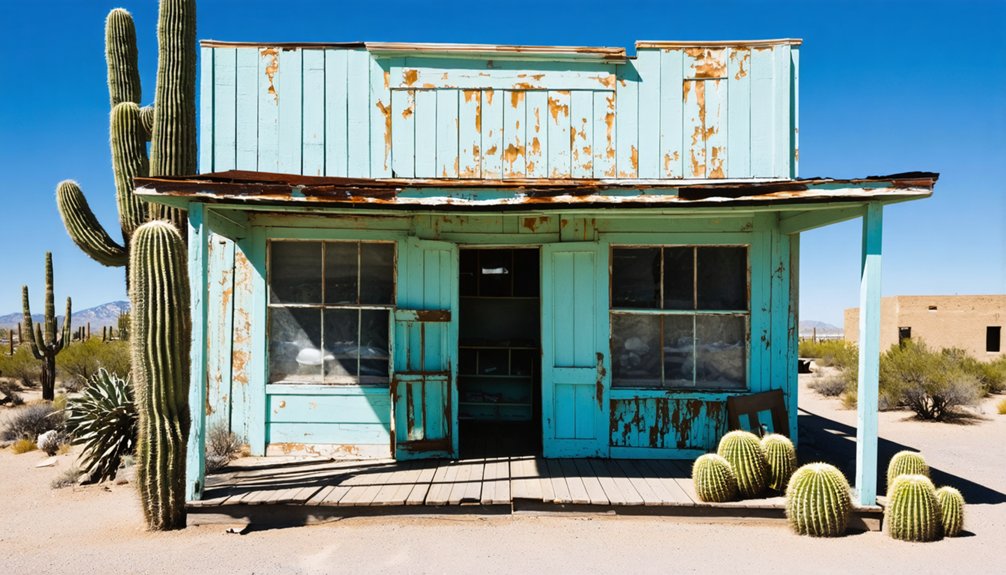
What’s left of Klondyke isn’t just rubble and rusted wire — the Klondyke General Store stands as one of the most recognizable surviving structures, preserved well enough that visiting feels less like archaeology and more like stepping into a paused moment.
Its historic architecture quietly tells the story of a town that once had real ambitions. Beyond the store, many original buildings still hold their shape, giving you a rare chance to read the town’s layout as it actually existed.
Local legends cling to these walls, especially around the Power family’s presence in the area. Walk the grounds, study the details, and let the structures speak.
Klondyke rewards the curious traveler who slows down long enough to actually look.
The Power Family Tragedy That Defined Klondyke
Among the stories written into Klondyke’s walls and grounds, one stands apart from the rest — the Power family tragedy, a violent chapter from 1918 that locals haven’t forgotten and history hasn’t let go. A deadly confrontation between the Power family and U.S. marshals left multiple men dead and sparked one of Arizona’s most dramatic manhunts.
The incident became inseparable from Klondyke’s identity, woven into its mining history and frontier character. Today, you can visit Power’s Cabin south of town, a preserved site that puts you directly inside that story.
The Klondyke Cemetery, just southeast of town, holds graves of the Power family, giving ghost town preservation a deeply human weight. These aren’t just landmarks — they’re reminders that real lives shaped this remote desert community.
What the Klondyke Cemetery Reveals About Its Past
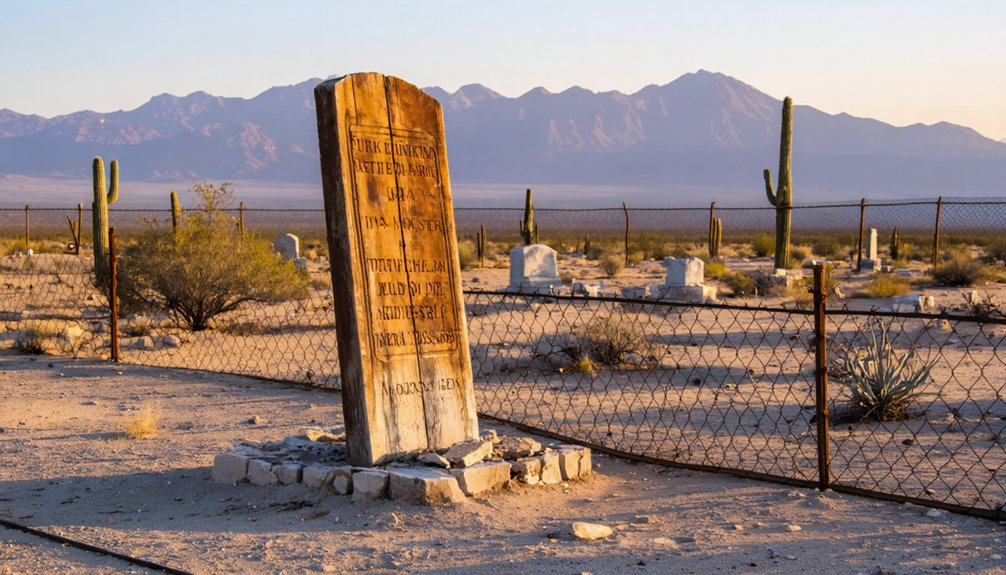
Just southeast of town, the Klondyke Cemetery holds more than graves — it holds a compressed timeline of the community’s rise and fall. When you walk through it, you’re reading Klondyke’s story in stone. The headstones function as historical artifacts, marking the miners, ranchers, and families who built this remote valley community around 1900.
Among the cemetery legends that draw visitors, the graves of the Jeff Power family stand out most prominently. Their presence connects directly to the violent 1918 shootout that scarred the town’s identity. You’ll find the markers weathered but legible, grounding the tragedy in something tangible.
Standing here, you feel the weight of a place that once held 500 people and now holds only silence — and these quiet, enduring stones.
How Aravaipa Canyon Makes Klondyke Worth a Full Day Trip
Tucked beside Klondyke’s eastern edge, Aravaipa Canyon Wilderness transforms a ghost town detour into a full day’s adventure. You’ll wade through a year-round creek corridor sheltering remarkable local wildlife, including desert bighorn sheep, black hawks, and javelinas moving freely through towering canyon walls.
The contrast is striking — you move from historic preservation at the general store and cemetery straight into raw, untamed wilderness within minutes. The Bureau of Land Management limits daily permits to protect this fragile ecosystem, so you’ll want to book access in advance.
Pair your morning exploring Klondyke’s surviving structures with an afternoon canyon hike, and you’ve built an itinerary that satisfies both your history curiosity and your hunger for open, unfiltered landscape. One road trip, two completely different rewards.
Best Time of Year to Visit Klondyke, Arizona
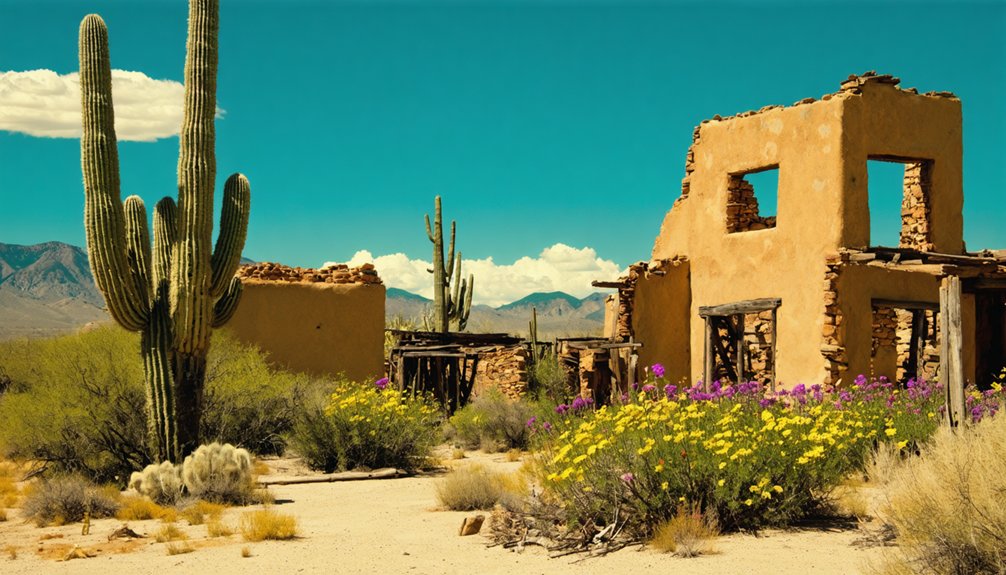
Planning around Aravaipa Canyon’s permit windows naturally leads you to a bigger question: when’s the best time to make the whole Klondyke trip worth it? Spring and fall hit the sweet spot. Temperatures stay manageable, unpaved roads dry out between monsoon cycles, and wildlife sightings along Aravaipa Creek peak as animals move through the canyon corridor.
You’ll spot deer, javelinas, and birds without fighting brutal heat.
Winter works too — mild temperatures make hiking comfortable, and the sparse desert light creates exceptional photography opportunities among the remaining historic structures and weathered tombstones at Klondyke Cemetery.
Avoid summer if possible. Monsoons can turn those dirt roads into muddy traps, and triple-digit heat turns exploration into survival.
Go when the land cooperates, and Klondyke rewards you fully.
Frequently Asked Questions
Is There Cell Phone Service Available in or Near Klondyke?
You’ll feel like you’ve fallen off the map entirely! Cell service vanishes in Klondyke’s remote wilderness, leaving communication access nonexistent. Embrace the freedom of disconnection, but plan ahead — notify someone of your trip before you venture in.
Are There Any Overnight Camping Options Close to Klondyke?
You’ll find camping options nearby at Aravaipa Canyon Wilderness, where you can embrace true freedom under open skies. Pack your camping gear, secure campsite reservations in advance, and you’re set for an unforgettable overnight desert adventure.
Can Visitors Enter the Klondyke General Store During a Visit?
Once home to 500 souls, the Klondyke General Store’s historic preservation keeps local legends alive. You’ll want to confirm current access before visiting, as this remote survivor doesn’t guarantee open doors to every freedom-seeking explorer.
Is There a Fee to Visit Aravaipa Canyon Wilderness Near Klondyke?
Yes, you’ll need permits required for canyon hiking in Aravaipa Canyon Wilderness. The Bureau of Land Management charges a small fee, so grab your permit in advance and embrace the stunning, rugged freedom awaiting you there.
Are Pets Allowed on Trails and Sites Around Klondyke?
Before your furry companion trots through sun-baked desert trails, check pet safety rules carefully—trail restrictions vary by site. Aravaipa Canyon Wilderness typically restricts pets, so you’ll want to confirm current regulations before arriving.
References
- https://www.ghosttowns.com/states/az/klondyke.html
- https://southernarizonaguide.com/klondyke-arizona-ghost-town/
- https://www.onlyinyourstate.com/experiences/arizona/abandoned-mining-town-az
- https://www.youtube.com/watch?v=T2l2zBIUyuE
- https://www.youtube.com/watch?v=Q0nhnYcjDE0
- https://www.youtube.com/watch?v=LqWSzUSAnNw
- https://southernarizonaguide.com/things-to-do-in-graham-county/
- https://southernarizonaguide.com/ghost-towns-southern-arizona/
- https://www.youtube.com/watch?v=zTHDrycoEGM
- https://en.wikipedia.org/wiki/List_of_ghost_towns_in_Arizona