Plan your Lewiston, Wyoming ghost town road trip as part of a larger South Pass loop that includes South Pass City, Atlantic City, and Miner’s Delight. You’ll need a high-clearance vehicle for the dirt roads off WY-28, and summer’s your best window before snow locks everything down. Lewiston itself sits on private property, so you’re viewing from the fence line. Stick around—there’s more to this route than most travelers ever discover.
Key Takeaways
- Lewiston is best visited as part of a loop including South Pass City, Atlantic City, and Miner’s Delight for a full ghost town experience.
- High-clearance vehicles are essential, as reaching Lewiston requires navigating dirt roads with ruts, loose gravel, and seasonal washouts off WY-28.
- Visit between late spring and early fall for dry roads and safe access, as winter snow makes routes impassable.
- The Lewiston townsite is private property; view the two surviving structures and foundations from boundary lines to avoid trespassing.
- Allow a full day to properly explore the entire South Pass ghost town corridor and its rich mining history.
Why Lewiston, Wyoming Belongs on Your Ghost Town List
When most ghost town hunters think of Wyoming’s South Pass area, South Pass City gets all the attention — but Lewiston, sitting quietly at 7,800 feet near the southern tip of the Wind River Range, deserves a place on your itinerary.
Founded after gold and silver strikes in the mid-1870s, this former mining camp once drew nearly 500 residents chasing fortune through gold panning and hard-rock extraction.
At its peak, Lewiston lured nearly 500 fortune-seekers to pan gold and chip silver from Wyoming’s unforgiving rock.
Before that, it served as a Pony Express station on Strawberry Creek in 1861.
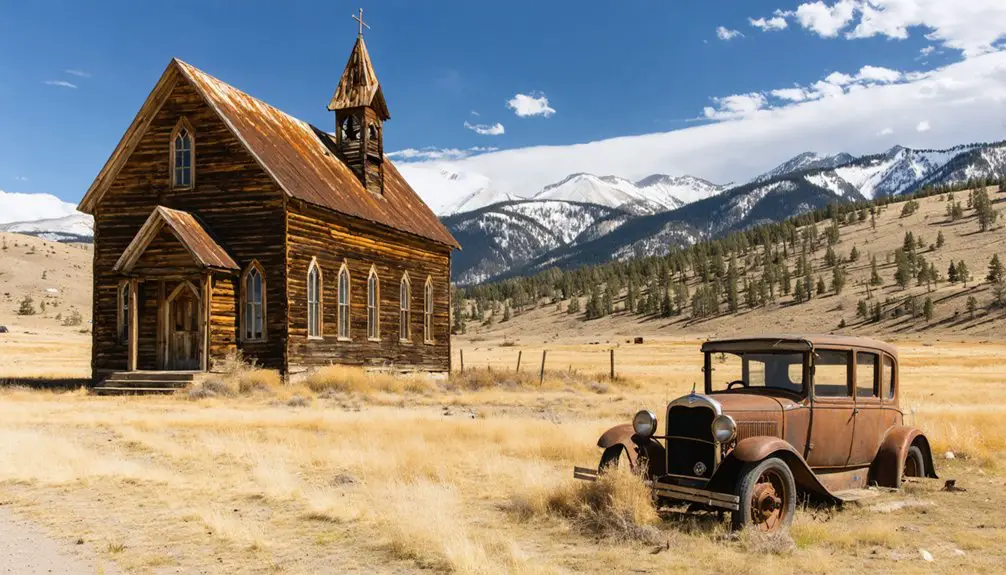
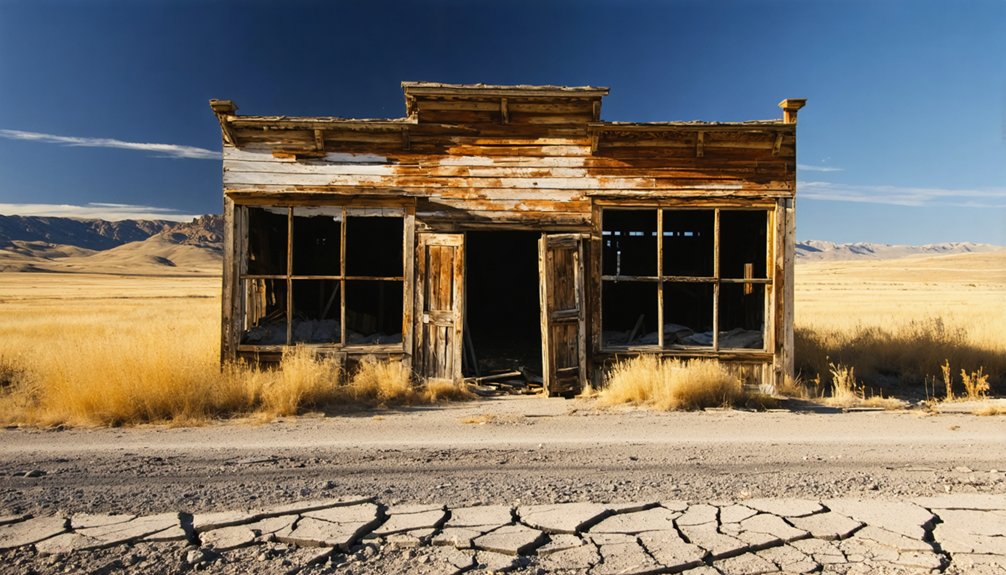
Today, two surviving structures and scattered foundations are all that remain — no historic signage, no crowds, no guardrails between you and the raw past.
That unfiltered remoteness is exactly what makes Lewiston worth the detour.
Lewiston’s Gold Rush Past and Pony Express Roots
Before the miners ever arrived, Lewiston had already carved out its place in American history as a Pony Express station on Strawberry Creek in 1861 — a brief but essential stop where riders pushed mail across the frontier at full gallop.
Then gold changed everything. By the mid-1870s, discoveries of gold, silver, and copper ore transformed this remote Wyoming corridor into a bustling camp of nearly 500 residents. Economic development moved fast and hard, drawing fortune-seekers who built stores, liveries, and lives from scratch.
But placer deposits thinned quickly, and most residents were gone within years. What remains today is a testament to cultural preservation — two weathered buildings and visible foundations quietly holding the memory of people who believed the land would reward their risk.
What’s Left to See at the Lewiston Townsite Today?
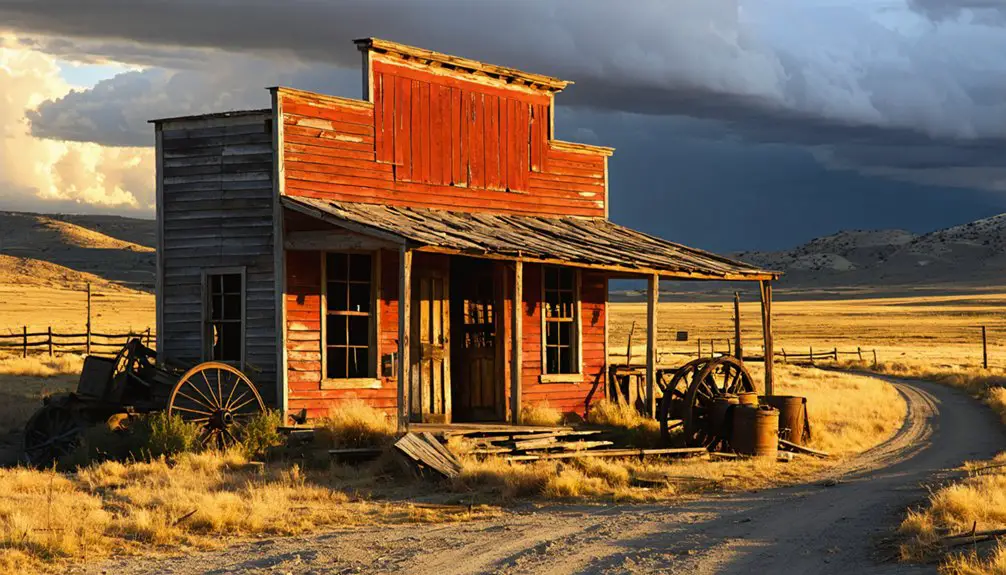
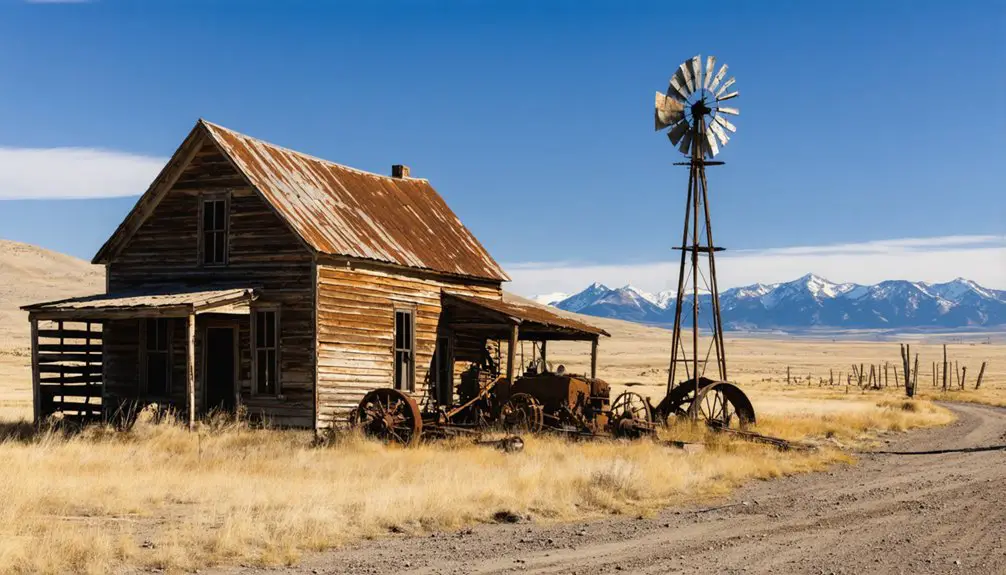
Though little survives at Lewiston today, what’s still standing carries real weight. You’ll find two structures holding their ground — the old Gustin store building and a weathered livery. These aren’t polished historical artifacts behind velvet ropes; they’re raw survivors of a vanished era.
Foundations still trace where buildings once stood, and mine ruins scatter the surrounding terrain. Follow Strawberry Creek about a half mile and you’ll reach the old mill site.
Preservation efforts here are minimal, which means the landscape feels genuinely untouched. That freedom comes with responsibility, though — the townsite sits on private property behind fencing, so you’re viewing from the boundary.
Respect those limits, take in what you can see, and let the silence do its work.
Don’t Miss the Mill Site Half a Mile Down Strawberry Creek
Once you’ve walked the townsite boundary, don’t pack up and leave — follow Strawberry Creek about a half mile downstream and you’ll reach what’s left of the old mill site. This spot carries its own quiet weight, separate from the fenced townsite behind you.
Standing here, you’re closer to where the real industrial heartbeat once ran. Ore came down, machinery thundered, and men chased promises embedded in rock. What remains now belongs to the language of ghost town legends — rusted, weathered, and worth every step.
Think of visiting as a form of art preservation. You’re witnessing what time hasn’t fully erased. The creek still moves, the ruins still stand, and that combination tells a story no museum display ever quite captures.
The Private Property Boundaries Every Visitor Needs to Know
The mill site rewards curiosity, but the fenced townsite behind you carries a clear message you shouldn’t ignore. The Lewiston townsite sits on private property, and those fences aren’t suggestions. Respect them.
You’ll still capture compelling photography tips by working from the boundary lines — frame the Gustin store building and livery structure through the fence, using morning light to pull detail from weathered wood. Distance often sharpens a ghost town’s loneliness better than proximity.
Wildlife encounters are genuinely possible here. Pronghorn and mule deer move through the sagebrush without warning, so keep your camera ready between shots of the structures.
Trespassing risks your access and damages the site’s future for every explorer who follows you. The freedom to wander starts with knowing exactly where you must stop.
Best Time to Visit Lewiston, Wyoming
Timing your visit to Lewiston makes all the difference between a rewarding side trip and a frustrating dead end. Summer’s dry months keep the dirt roads off WY-28 passable and give you the clearest views of the surviving structures and foundations.
Winter snow at 7,800 feet can shut down access entirely, so you’ll want to plan your ghost town loop between late spring and early fall.
Summer Offers Best Access
Summer is your best window for reaching Lewiston, when the dirt roads off WY-28 dry out enough to handle without a fight. The high elevation sits around 7,800 feet, so even July mornings carry a chill, but the passes stay clear and the landscape opens up in a way that feels earned.
You’ll spot historical artifacts more easily when you’re not battling mud or snow drifts obscuring the foundations. Wildlife encounters are common through this stretch of Fremont County, with pronghorn moving across the sagebrush flats and hawks riding thermals above the Wind River Range.
Avoid Winter Snow
Winter closes Lewiston off without ceremony. Snow blankets the dirt roads off WY-28, and there’s no snow removal crew waiting to clear your path. At 7,800 feet, the cold settles hard and fast, turning rough terrain into something genuinely dangerous. Winter safety isn’t a formality out here — it’s the difference between reaching those two remaining buildings and getting stranded miles from help.
The Wind River Range doesn’t soften its winters for curious travelers. Ice hides beneath fresh powder, and high-clearance vehicles lose their advantage when the road disappears entirely.
If freedom means moving on your own terms, then timing matters. Don’t let an avoidable season steal the trip. Save Lewiston for summer, when the land opens up and the ghost town finally lets you in.
Getting There: Dirt Roads, WY-28, and What to Expect
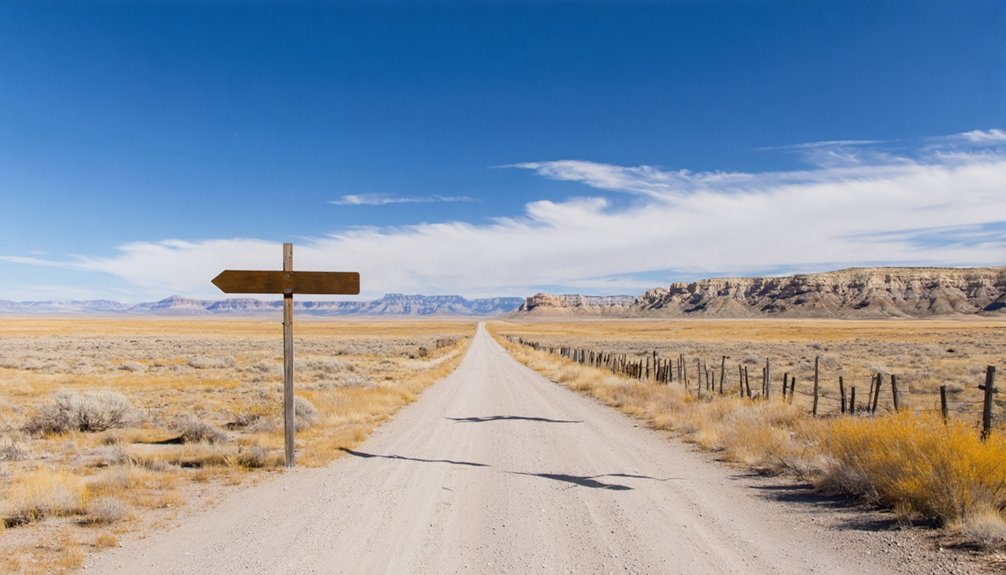
Reaching Lewiston means leaving the pavement behind on WY-28 near South Pass City and committing to dirt roads that wind through open, high-desert terrain at roughly 7,800 feet. Road condition varies with season and recent weather, so high-clearance vehicles aren’t optional here — they’re essential.
High clearance isn’t a suggestion here — it’s the price of admission to roads that don’t forgive the unprepared.
Ruts, loose gravel, and washboarding are part of the deal, and that’s exactly what keeps this corridor honest. You’re not driving toward a curated attraction. You’re tracing a route that once carried miners chasing gold and silver through the South Pass district.
When you finally reach the townsite, fenced boundaries limit direct contact with historical artifacts like the Gustin store and livery building, but foundations and mine ruins still speak clearly.
Come prepared, move deliberately, and the landscape rewards you.
What Kind of Vehicle You Actually Need for This Route
High-clearance vehicles aren’t a suggestion on this route — they’re what stands between you and a frustrating afternoon stuck in a rut somewhere between WY-28 and the Lewiston townsite.
The dirt roads leading to this remote corner of Fremont County reward drivers who come prepared. Before you leave, run through basic vehicle maintenance — check your tires, fluids, and spare. These roads don’t forgive shortcuts.
A truck or capable SUV handles the uneven terrain far better than a sedan ever could. You’re heading somewhere that guards its historical artifacts behind distance and rough road, and that’s part of the appeal.
The harder the road, the fewer the crowds, and the more the place feels like it belongs to you alone.
South Pass City, Atlantic City, and Miner’s Delight Complete the Loop
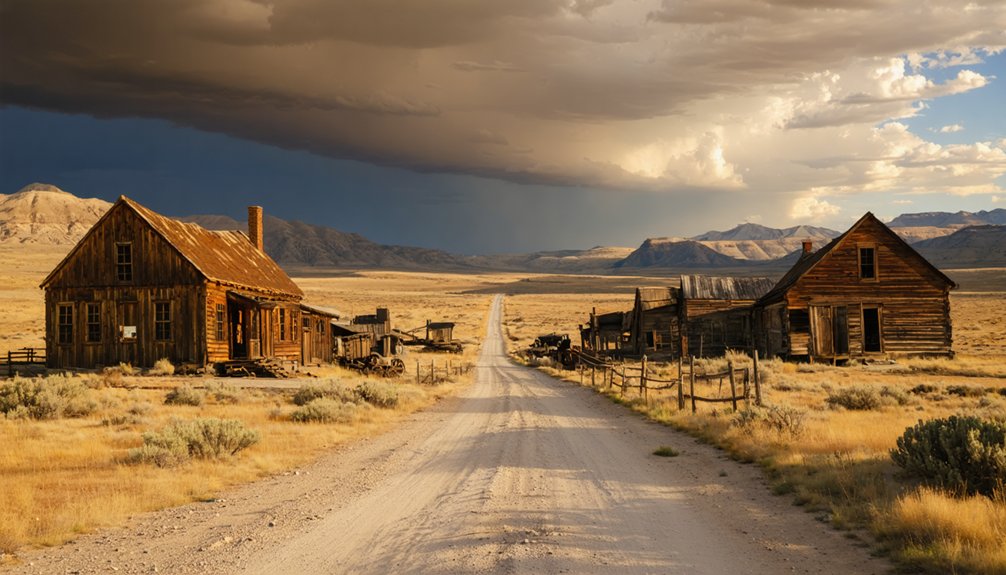
Lewiston isn’t a stand-alone stop — it’s the quiet centerpiece of a broader loop that pulls together three other ghost towns within a few miles. South Pass City anchors the route with its well-preserved storefronts and state historic site status.
While Atlantic City adds layers of hard-rock mining history that pushed deeper into the hills long after placer gold ran out. Miner’s Delight, tucked further along the corridor, rounds out the circuit with its own scatter of ruins and the kind of stillness that makes the whole region feel frozen somewhere in the 1870s.
South Pass City Overview
Once you’ve absorbed what little remains of Lewiston, the road naturally pulls you toward South Pass City, Atlantic City, and Miner’s Delight — three ghost towns that round out the South Pass corridor into something worth the drive.
South Pass City hits differently than Lewiston. It’s preserved, walkable, and rich with historical architecture that still tells the story of an 1868 gold rush that briefly made this corner of Wyoming feel like the center of the world.
Local legends of striking it rich echo through the restored storefronts and weathered saloon walls. Where Lewiston leaves you reading foundations and fencelines, South Pass City hands you something tangible — buildings you can actually step inside, history you can feel rather than imagine.
Atlantic City Mining History
A few miles from South Pass City, Atlantic City carries its own weight in gold-rush mythology — a rougher, less polished chapter of the same story. You’ll find historical artifacts scattered across a landscape that feels genuinely unfinished, as if miners simply walked away mid-sentence.
Local legends cling to the old structures here — stories of fortunes nearly made, rivalries settled in dust, and winters that broke even the most determined prospectors.
Atlantic City never fully surrendered to time the way Lewiston did. A few buildings still stand, giving you something tangible to anchor the history against.
Pair it with Miner’s Delight just down the road, and you’ve built a loop that rewards curiosity — three distinct ghost towns, one continuous story, all within striking distance of each other.
Miner’s Delight Nearby
Where the road bends past Atlantic City, Miner’s Delight waits like a footnote that turns out to be the whole story. This quiet settlement once hummed with gold extraction operations that drew fortune-seekers willing to work brutal terrain for uncertain reward.
The mining techniques here mirrored those across the South Pass corridor — placer methods giving way to harder rock work as surface gold thinned.
You’ll find weathered structures still standing, stubborn against the Wyoming wind. Paired with South Pass City’s preserved townsite and Atlantic City’s rugged character, Miner’s Delight completes a loop that feels less like a tourist circuit and more like honest time travel.
Give yourself a full day. These three stops together tell the South Pass story the way it deserves — without shortcuts.
Building Your Lewiston Road Trip: The Full South Pass Circuit
Lewiston makes the most sense as one stop on a longer loop through the South Pass ghost town corridor, not a standalone destination. String together the region’s highlights, and you’ve got a route steeped in local legends, historic architecture, and raw frontier memory.
Lewiston earns its place as one piece of a larger puzzle — not the whole picture.
Build your circuit around these anchors:
- South Pass City – a well-preserved state historic site with buildings, artifacts, and interpretive context
- Atlantic City – another gold-rush remnant with its own layered past and surviving structures
- Miner’s Delight – a quiet, atmospheric stop that rewards the curious traveler
Each site feeds into the next, painting a fuller picture of what this remote Wyoming corridor once was. Pack provisions, run a high-clearance vehicle, and give yourself a full day to do it justice.
Frequently Asked Questions
Are There Any Guided Tours Available at the Lewiston Ghost Town Site?
Ironically, where historical preservation matters most, guided tour options don’t exist. You’ll wander Lewiston’s fenced, private grounds alone, breathing in gold-rush echoes independently — true freedom, just you, crumbling foundations, and Wyoming’s vast, untamed silence surrounding you.
Can You Camp Overnight Near the Lewiston Townsite in Fremont County?
You can camp nearby, but respect historical preservation boundaries since the townsite’s fenced and private. Embrace wildlife safety as dusk settles over Strawberry Creek’s weathered memories — freedom’s yours across Fremont County’s vast, unhurried public lands.
Is There Cell Service or Emergency Contact Available Along WY-28?
Cell coverage along WY-28 is spotty and unreliable, so you’ll want to carry a satellite communicator for emergency contacts. That open, windswept corridor feels gloriously free, but it demands old-school self-reliance before you roll out.
Are Pets Allowed When Visiting the South Pass Ghost Town Corridor?
No official pet policies exist for the South Pass ghost town corridor, but you’ll want to keep leash requirements in mind—these windswept, storied trails feel wilder with your loyal companion trotting freely beside you.
What Photography Rules Apply When Shooting From Outside the Fenced Boundary?
You’re free to shoot from outside the fenced boundary without permits. Respect outdoor photography ethics—don’t cross onto private land. Capture those weathered walls and forgotten foundations, honoring fenced boundary regulations while preserving Lewiston’s haunting, timeless spirit through your lens.
References
- https://www.ghosttowns.com/states/wy/lewiston.html
- https://www.legendsofamerica.com/wy-ghosttowns/
- https://ghosttownsoftherockies.com/towns/lewiston/
- https://en.wikipedia.org/wiki/List_of_ghost_towns_in_Wyoming
- https://ghosttowntrails.com/wyoming
- https://haunttracker.com/haunted-places/wyoming/
- https://sites.rootsweb.com/~wytttp/ghosttowns.htm
- https://travelwyoming.com/blog/stories/post/5-wyoming-ghost-towns-you-need-to-explore/
- https://www.wyomingcarboncounty.com/blog/123-5-ghost-towns-to-explore
- https://ghosttownarchive.com/wyoming/